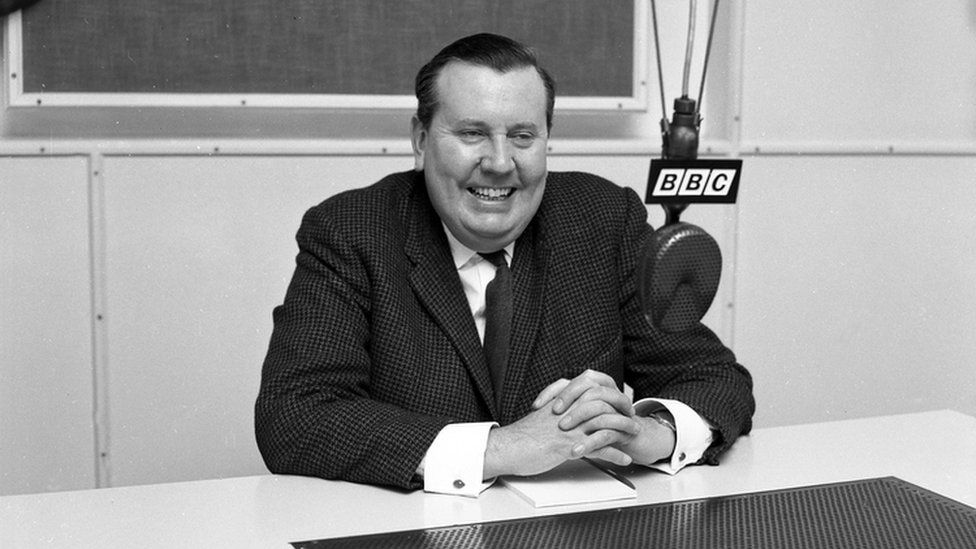
Today marks 100 years since the birthday of English composer SirMalcolmArnold.
Arnold has always had a chequered relationship with the concert-going and record-buying public. He was too often seen as a vulgar composer, or someone who couldn’t resist a musical prank, which his work with Deep Purple, in the Concerto for Group and Orchestra of 1969, and his involvement in the Gerard Hoffnung concerts did little to dispel. Writing a piece that included parts for three vacuum cleaners (A Grand, Grand Overture) was a bridge too far for some. His personality is often cited too, for Arnold – who suffered consistently from poor mental health – gained a bad reputation amid his struggles with alcohol and financial problems.
Yet beneath the humour beat a deeply caring musical heart that revealed itself in a myriad of different compositions. The nine symphonies speak with power and concentrated thought of his struggles, and though many still lie dormant the success of the Fifth at the BBC Proms this year said much for the musical quality in the mind behind it.
Arnold mastered many forms, writing concertos for most of the principal orchestral instruments, chamber music that is still all too rarely heard, and stage works that are only just being properly discovered. The Dancing Master, winner of a BBC Music Magazine award this year thanks to a recent recording on Resonus, is testament to that, while the film music has started to get its due reward. The Bridge On The River Kwai, The Inn of the Sixth Happiness and Hobson’s Choice are all fine scores.
Since I am writing this from holiday in Cornwall, I have chosen to focus on some of the pieces Arnold wrote in his time living at St Merryn. The first one is a light-hearted treasure, The Padstow Lifeboat – with a striking written-out part intended to include the foghorn.
The piece was written in 1967 to commemorate the lifeboat’s inauguration, with Arnold still discovering more local musical appeal having not long moved from London. Due in part to the success of the piece, it was not long before he was made Bard of the Cornish Gorsedd in 1968. It is a lively, humourous march that can’t help but raise a smile!
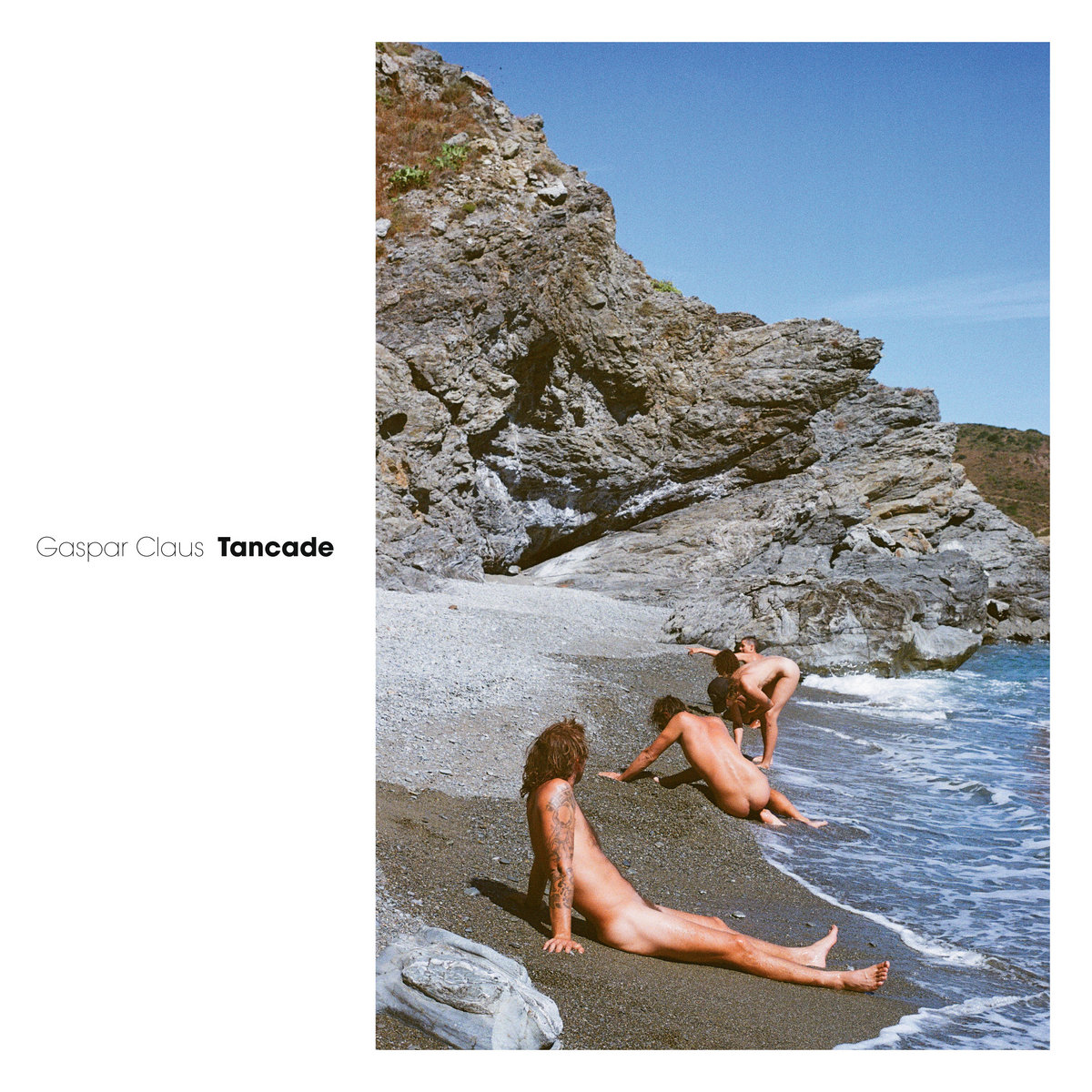
Tancade is an imaginary beach, portrayed here by a single instrument – the cello of Gaspar Claus. With technical imagination and a little bit of electronic trickery he has made an entire album with the cello, using every millimetre to conjure up wooden and metallic sounds to add depth and shade to his musical pictures.
What’s the music like?
Ghostly harmonics and trills on the outer reaches of the cello usher in Une île, which is a brief contemplation in front of the waves. Un rivage portrays the gentle lapping of water through the pizzicato (plucking) across the strings, with a slow, lamenting figure that plays out in several parts.
These first two tracks are an indication of the powerful, meditative qualities Claus brings to his work, employing great imagination to get the sounds he wants.
2359 is a great example, playing out like a game of pinball with small musical ideas pinging across the sound picture as bigger, distorted waves threaten disruption. Meanwhile E.T. (Extra Terre Version) has a ghostly presence, with Claus playing two short fragments of arpeggios together but at a distance of a microtone, creating a disquieting mood in spite of the birdsong in the background.
1999 is a foreboding presence, Claus expanding the intimacy of the solo cello into quasi-orchestral sounds. Ô Sélénites goes a step further, using a wide array of textures to portray a lunar environment. Finally Mor des mystères amoureux finds relative stillness, with sustained harmonics and pizzicato flicking lazily in the breeze before a brief but affecting spoken word passage from Lyna Zouaoui.
Does it all work?
Yes, thanks to Claus’s imagination and deep knowledge of the capabilities of the cello. He creates very personal and meaningful ideas, but against bigger backdrops the listener can dive into.
Is it recommended?
It is, especially for lovers of solo cello music by Bach – Claus offers an interesting and viable alternative for the instrument as it is now.
Last week Arcana published an interview with Orpheus Chamber Orchestra violist Dov Scheindlin, in recognition of his time with the orchestra and their significant birthday. 50 years is a long time for a chamber orchestra, let alone a conductor-less one! Joining the celebrations, Deutsche Grammophon have released a 55-CD box set of all the orchestra’s recordings for the label.
Arcana have drawn on personal experience to select a playlist of recordings from the orchestra too, mostly from the DG archive. They range from a perky Haydn symphony to sparky Stravinsky pieces, from the wonderful open-air freshness of Grieg‘s Holberg Suite to the instinctive genius of Brad Mehldau‘s recently-released variations.
If I had to pick a favourite it would be a quite wonderful disc of Respighi orchestral works, crowned by an account of Trittico Botticelliano, a set of three orchestral responses to Botticelli pictures that is both colourful and intensely moving. Listen to the third picture, The Birth of Venus, and you will see what I mean:
Rossini Guillaume Tell – Overture (1829) Mozart Violin Concerto no.5 in A major K219 (1775) Berlioz Le carnaval romain, Op.9 (1844) Prokofiev Romeo and Juliet – Suite no.2 Op.64ter (1936)
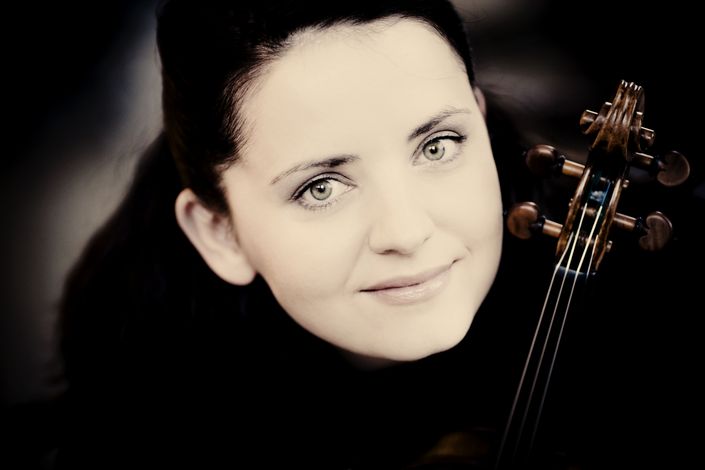
Baiba Skride (violin, below), City of Birmingham Symphony Orchestra / Andrew Gourlay (above)
Symphony Hall, Birmingham Wednesday 13 October 2021, 2pm
Written by Richard Whitehouse; Picture of Andrew Gourlay (c) Kaupo Kikkas, Baiba Skride (c) Marco Borggreve
This afternoon’s concert by the City of Birmingham Symphony Orchestra saw an unexpected but welcome return from Andrew Gourlay (replacing an indisposed François Leleux) for this diverse programme as worked much better as a concert than it might have appeared on paper.
Its fame as a novelty item in cartoons et al can easily obscure the innovative qualities of the Overture to William Tell, last and most ambitious of Rossini’s operas, in terms of its eliding between curtain-raiser and symphonic poem; which latter aspect Gourlay emphasized in this evocative but cohesive account – whether in the ruminative calm of its opening section with the CBSO cellos eloquently fronted by Eduardo Vassallo, a scrupulously controlled ‘storm’ episode, a not unduly mawkish ‘lullaby’ then a closing galop free from Hollywood overkill.
Mozart was barely out of his teens on writing his Fifth Violin Concerto, if not the finest then certainly the most eventful of his cycle through such as the soloist’s alluring first entry in the opening Allegro with music not directly related to either of the main themes and rendered by Baiba Skride with real finesse. Equally successful was her succinct yet ideally proportioned cadenza prior to its close; after which, the Adagio had elegance without excessive sweetness. In the final Rondeau, others may have made more of that contrast between graceful lyricism and the robust humour of its central section’s stylized Turkishness, but Skride brought these into complete accord and, with Gourlay securing limpid playing from a scaled-down CBSO, this was a persuasive performance of music whose felicities can easily be taken for granted.
Formerly ubiquitous as a concert-opener, Berlioz’s Roman Carnival – the inspired recycling of music from his opera Benvenuto Cellini – launched the second half to striking effect. If the soulful introduction took a little time to settle (doubtless occasioned by a soon extinguished onstage rebellion before Gourlay’s return), what ensued was not lacking rhythmic elan or that scintillating interplay of orchestral timbres as was Berlioz’s gift to the orchestra. Effecting a tangible crescendo into the blazing peroration, Gourlay undoubtedly saved the best until last.
Ad hoc selections from Prokofiev’s Romeo and Juliet rarely provide a satisfying second half, making one of three suites the composer extracted from his ballet the more viable option. Of these the Second Suite is the best overview, and this account quickly found its stride with a visceral take on the music which opens Act Three, the grinding progress of Montagues and Capulets proving no less forceful. Juliet as a young girl exuded the right insouciance and pathos, as did Friar Laurence that of earnest authority. The lithe Dance made a telling foil to Romeo and Juliet before parting, its fraught rapture potently conveyed here, then Dance of the girls with lilies made for an appealingly wistful entrée into Romeo at Juliet’s grave with its searing anguish that only gradually subsides into expectant calm towards the close.
Gourlay had previously directed a fine account of Rachmaninov’s Third Symphony with this orchestra and the Prokofiev confirmed his prowess in Russian music. The CBSO, meanwhile, returns next Wednesday for a varied American programme with the saxophonist Jess Gillam.
Further information on the CBSO’s current season can be found at the orchestra’swebsite. For more on Baiba Skride, clickhere – and for more information on Andrew Gourlay, head to the conductor’s website
Various venues in Oxford, Sunday 10 October. Artists as listed below
Written by Ben Hogwood from online streams
“There is no better way to get to know Stenhammar than the songs”, says pianist and scholar of the composer Martin Sturfält. With around half of the composer’s output delivered on this third day of the Oxford Lieder Festival, it was the ideal opportunity to get to know the Swedish composer, 150 years on from his birth. Arcana dipped its toe in four of the online events.
Celebrating Stenhammar, placed second in the substantial quintet of concerts, seemed the best place when approaching this series online. Taking the form of a seminar with musical examples, it doubled as the ideal introduction to the composer and an extremely useful and interesting top-up for those with working knowledge.
Beginning, naturally, with two songs, we were able to enjoy the clear voice of soprano Agnes Auer, giving with Sturfält a radiant account of I Skogen (In The Forest), which they countered with the distracted Adagio.
A panel of Sturfält, Daniel Grimley and Leah Broad then proceeded to give valuable historical context to Stenhammar’s work, brimming over with enthusiasm for the increased exposure his music has enjoyed of late. Broad explained the composer’s continued resolve to compose accessible tonal music in the wave of modernism sweeping Europe, renouncing Schoenberg and Strauss but striking out instead for a clarity of expression. This could be seen in helpful parallels drawn with Swedish art and politics of the time.
Auer illustrated why the fuss is justified, with a special account of Klockan (The Bell), one of Stenhammar’s finest songs stopping time as she sang. Later on Lutad Mot Gärdet (Leaning On The Fence) was a lovely illustration of how the composer’s relative simplicity could fuel profound feelings, especially through the clear tones of this singer.
In between Sturfält played the rather lovely Sensommarnätter (Late Summer Nights) Op.33. This suite captured both the clear light and furtive movements of nature at that time of year, but also found a metaphor for the late summer of life. Though written in 1914 the suite had been in Stenhammar’s mind for some time, and the performance here caught the essence of the five pieces, a tantalising combination of certainty amid darker thoughts and feelings.
Before this the day had begun with a broader celebration of Nordic song, in the company of young artists – soprano Siân Dicker, tenor Alessandro Fisher, mezzo Lotte Betts-Dean and pianist Keval Shah, who proved an excellent guide. As he said, nature provided the drama itself – and these examples, from contemporaries of Stenhammar, brought little-known names to the surface in illustration of the depth of songwriting talent in the Nordic countries in the 20th century.
Adolf Fredrik Lindblad’s Höstkvällen made a strong impact through Betts-Dean, as did Kuula’s slightly troubled Syystunnelma and a slightly playful Serenad from Erik Bergman. Here, Fisher and Shah portrayed the falling leaves with little flourishes. Betts-Dean also caught the unpredictable directions of Grieg‘s Autumn Songs. Definitely a song of two halves, it held the realisation that summer is over and winter is making a play for our affections. Meanwhile the remarkable Sibelius song Norden pushed Dicker’s voice to its limit, successfully, and she also shone in Merikanto and Madetoja.
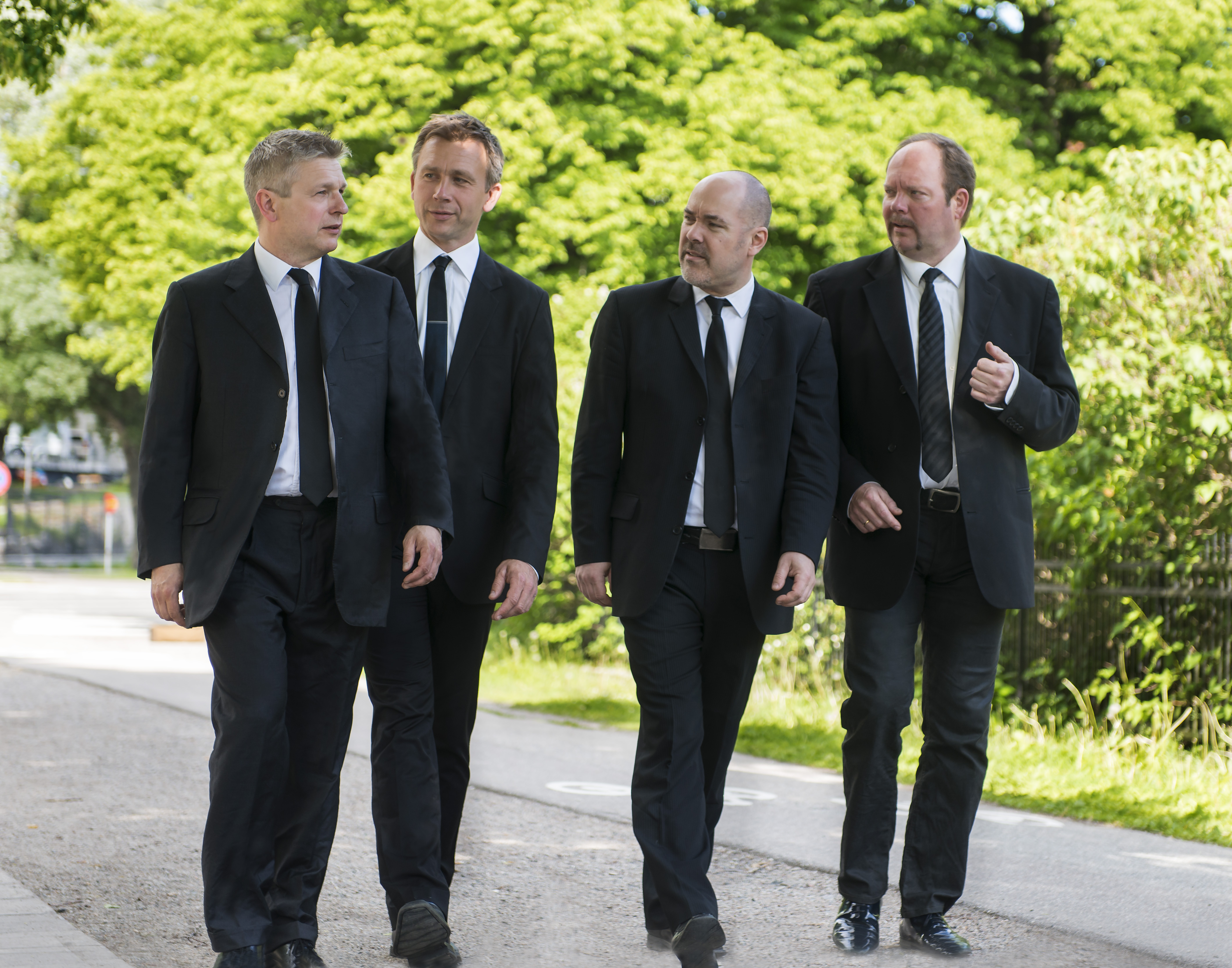
The third concert, subtitled A Swedish Sensation, featured the Stenhammar String Quartet in a tense Elegy and brisk Intermezzo from Lodolezzi sjunger (Lodolezzi sings). Then they were joined by Lotte Betts-Dean for a fascinating set of five songs from Henri Marteau. The viola crept upwards before a portrayal of how the ‘quiet drops fall to earth from the clouds’ was brilliant in Thränentropfen, while the exultant In dem Garten meiner Seele found the ‘magic voice of a violin’ from first violinist Peter Olofsson at the end. Betts Dean set a very high standard, with wonderful tone and full voice in Sonnenlied, pushing to her upper range with impressive poise and power.
The quartet then proceeded to give a fluent account of their namesake’s String Quartet no.4, showing its ready inspiration in a first movement that delighted in a good many tunes, the instruments engaged in confident dialogue. The influence of Mendelssohn could be found in this busy activity, but the richly coloured Adagio made a more lasting mark, Olofsson’s passionate solo floating above the waves created by the other three instruments. There was a busy scherzo with a particularly bright fugal episode, high on energy, before touches of humour imbued the finale with positive spirits. Again, the dialogue between the four was intimate and entertaining.
The fourth concert, given in a starry Saint John the Evangelist church, included a complete performance of Stenhammar’s cycle Songs and Moods. The object of this concert was to show off Stenhammar’s talents to the full in the company of the best possible artists for the task. Agnes Auer returned, while Swedish soprano Camilla Tilling and baritone Jakob Högström gave fully idiomatic performances, all paired with festival director Sholto Kynoch, who had somehow found the time to rehearse the challenging piano parts!
The route to Stenhammar came by the way of Lindblad, Rangström, Nordqvist, Alfvén, Linde and Peterson-Berger, and was again illuminating in its selections. The darker shades of Ture Rangström’s Pan received a nice, airy delivery from Tilling, while Alfven’s Saa tag mit Hjerte was the most affecting song so far with its simple yet searching message and melody. Bo Linde’s Äppelträd och päronträd (The apple tree and the pear tree) sprang forward with renewed energy, while Peterson-Berger set a mood of longing with När jag för mig själv, and the poignant lyric “I think of a friend whom I will never find”.
After six very fine songs from Stenhammar himself – Ingalill Op.16/3 testing the upper range of Tilling and Fylgia Op.16/4 clinging urgently to its subject – we heard Högström in Songs and Moods Op.26. This fulsome baritone was beautifully projected, supported by a crystal clear piano part. There was a sharply rendered portrait of the butterfly orchid that stood out, then a staccato Miss Blonde & Miss Brunette which proved the most substantial song. Kynoch was certainly kept very busy! To the land of bliss was brilliantly judged, tripping along like a slightly tipsy dance, while Prins Aladdin af Lampan, with several twists and turns, wrought its way to a powerful climax.
Tilling returned for more of the composer’s single songs, with Vid fönstret Op.20 offering poignant words on ageing, then Månsken (Op. 20/4) a clear portrayal of the forest. For an encore, soprano and baritone linked in Swedish.
This was an absolutely fascinating day, too much to take in one sitting but consistently revealing when watched back on the different streaming sites. Great credit should go to the video production team, for the songs were expertly filmed, but also to the panelists and performers for clearly relishing their chance to show their respect for one of Sweden’s best-loved composers. This day will surely have won Wilhelm Stenhammar many new friends.
For further information on this year’s Oxford Lieder festival, you can visit the event’s website here






 Arcana.fm