Unknown's avatar

About Arcana

My name is Ben Hogwood, editor of the Arcana music site (arcana.fm)

Talking Heads: Beethoven 250 – Cyprien Katsaris

interview by Ben Hogwood

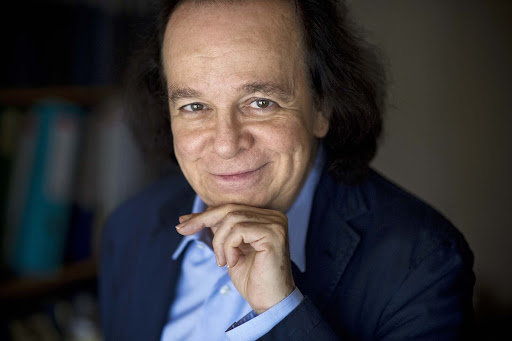
Celebrated pianist Cyprien Katsaris is on the phone to Arcana from Paris. We are to talk about the music of Beethoven, which he has celebrated with the release of a fascinating new box set, exploring a number of different corners of the composer’s piano output. Not for him a disc of sonatas – this includes some of Beethoven’s earliest and latest works, plus familiar utterances in unexpected guises, for instance Saint-Saëns’ and Musorgsky in arrangements of movements from the string quartets.

Cyprien is an extremely generous interviewee, and our chat is punctuated by musical examples given on the piano of his Paris apartment. He is also incredibly good-humoured and engaging. We begin the interview by discussing his first experiences of Beethoven’s music, which on the way reveal important aspects of his upbringing.

“We used to live in French Cameroon in the 1950s”, he says, “and I was raised there because my family emigrated from Cyprus. My parents were among the few people who had an LP collection, and I remember very well my first Beethoven listening was the Pastoral symphony and the Ninth, because they had those LPs. This could explain why I went into recording the transcriptions by Liszt of the nine Beethoven symphonies in the 1980s for Teldec, because since I was a kid I loved that music. I was always wondering if it was possible to enjoy this music with my own fingers on the piano, so you can guess the shock when I found out about those transcriptions, which were published by the French publisher Durand.”

He is a natural storyteller who draws some unexpected parallels. “As you might also guess, when you like something and you can’t get it, you want it more. It’s like having a girlfriend who is very beautiful, but when I walk down the street and I see another woman I want her even more because I know that I cannot get her. When I say this to my girlfriend she laughs, you know?! The same thing happened with the Pastoral symphony, and that could be the explanation for my very strong attraction towards transcriptions. I always try in my life to keep a balance in my concert programmes and recordings between normal, standard repertoire and forgotten pieces or transcriptions.”

His contribution to Beethoven’s anniversary is A Chronological Odyssey, a set of six CDs available on his own Piano 21 label. “The idea came to me in April last year, because I was wondering what to do for the 250th anniversary. Doing the 32 sonatas again did not seem like a good idea. There are so many, and I was told there are more than 70 versions. The idea was to do this chronological odyssey, mixing standard repertoire and transcriptions, and I also had a photocopy of the Kreutzer Sonata arranged for piano. I have had that for several years, and received it from a musicologist at the Beethoven-Haus in Bonn. He told me that the second movement was arranged by Carl Czerny. Nobody knows who did the other two movements, maybe Czerny and maybe someone else, and I was wondering if I should record it. That was the perfect combination, and the Spring Sonata too. They sound so nice on the piano. I only found out then that the Mozart and Beethoven sonatas, and the cello sonatas, are not written for violin and piano, but for piano with violin.”

We turn to Beethoven’s output of sonatas for solo piano. “As you know there are not 32 sonatas but 35”, he tells me, “because you have to include the first three ones that Beethoven wrote, known as the Electoral sonatas. I also wanted to include a rarity, the 2 Preludes in all 12 major keys. There is also the small Ritterballet, a commission from Count Waldstein. On the day of the premiere the Count said to the audience that he was the composer! It’s crazy. There is a piano transcription by Beethoven himself.”

Katsaris does also include some well-known works, such as the Moonlight and Appassionata sonatas. “I made a selection of eight sonatas in addition to the youth sonatas, and I tried to be careful about the combination of personal ideas and the information written by Beethoven himself on the score, considering that the pianos now are different to his years. For example, in the last movement of the Appassionata Sonata, it says Allegro ma non troppo, and almost all the big names who recorded or played it played it too fast! This is not what Beethoven wants. Of course it is a temptation to do that, but it’s not what he wrote!” By way of illustration he sings the theme. “These little details are important, in order to respect the wishes of the composer.”

A good deal of detective work has resulted in the unearthing of some unusual arrangements. “I have spent all those years – I’m 69 now – and I have been in libraries, specialist shops of antique scores, and sometimes you are lucky and sometimes not so lucky. Saint-Saëns, by the way, his anniversary is next year. He died in 1921, on 16 December – the exact anniversary of when Beethoven is supposed to have been born. I had invitations for a Beethoven recital in Bonn in May and September, where I was going to play the Symphony no.9 in a two-piano version with my good friend Etsuko Hirose. She lives in Paris, and won the Martha Argerich competition. We were going to play the Symphony no.9 together, and then I have an invitation on 16 December into the Beethoven Haus with several musicians playing a piece each. I hope the confinement t will allow us to do this. Saint-Saëns arranged for piano three movements from string quartets, and Musorgsky two movements from the last quartet, Op.135. It’s quite fascinating, and also the Wagner transcription of the Symphony no.9. It’s not as good as the Liszt version, but Wagner discovered the music of Beethoven when he was 18 years old, and he claimed that Beethoven and Shakespeare were visiting him in his dreams. He copied the Fifth and Ninth symphonies entirely, and transcribed the Fifth, so I wanted to include that transcription. It also allowed me to cover all the scores in my collection. Some of them I was not even aware of!”

There were more arrangements to come. “I found out about Louis Winkler, who made these great transcriptions of the Spring Sonata and some other pieces, and as I explained in the booklet, he did a lot and transcribed so many things! There was also Franz Kullak who transcribed the last movement of the Violin Concerto. It’s all very fascinating, and the idea was to have a chronological order from the very first transcription when Beethoven was 11 or 12 years old, up to the very last one. I didn’t even know that Beethoven wrote the short canons which he used to call a musical joke, which is very interesting and funny!”

He recounts his thoughts on Beethoven’s first work. “The very first piece is based on a march by Dressler. They didn’t find out where this march comes from, and I remember a German musicologist told me 25 years or so ago in Berlin that we pianists only play 2% of everything which has been published for the piano in the 19th century. Anyway, this piece is variations by a kid, and it could be considered in the beginning a little bit boring. I decided to change the tempi of the variations to make it a little bit more interesting, but this is not of course the only way to perform this piece. You can stay in the same tempo, like the theme. My argument is that when you consider Beethoven was a great improviser, like Mozart, Chopin, Bach or Liszt, the problem of composing music is that you have just one version put down in writing. For example, Chopin, when he played the same piece again, would change tempi, dynamics, the notes, even – we found several versions.”

The same applies here. “When you look at Beethoven maybe I am maybe the first pianist who recorded the four versions of that famous theme of the last movement of the Eroica Symphony. He wrote it first as a dance, part of a group of dances for orchestra with piano arrangements, and then he used it again as the last number of his ballet The Creatures of Prometheus. Then he uses it again in the last movement of the Eroica Symphony, and his Eroica Variations Op.35. It shows that sometimes they have these different ideas about a theme. We know he was a great improviser, and from the writings of Carl Czerny that he played quite fast and full of fire. I think that allows some freedom, especially in the Variations, and especially those that could become a little bit boring if you don’t add something a little bit more spicy. Of course Beethoven was a kid, and his teacher probably told him to keep the same tempo, but I think there is a probability that if Beethoven played that piece as an adult he would play it in a different way to when he was under the guidance of that teacher. What a pity we didn’t have recordings earlier!”

Cyprien also includes the Fantasy, published as Op.77 in Beethoven’s output. “What a difficult piece!” he exclaims. “This is a perfect example of what could have been an improvisation of Beethoven, right? It is a very interesting piece, and not often performed unfortunately. I don’t know if that is because it’s difficult. Is it because when a pianist wants to include the music of Beethoven in a program it’s always sonatas, and sometimes variations, and almost nothing else? I found out that some colleagues don’t even know about the existence of this piece. It’s a pity because it’s a great piece, and it’s interesting to have an overview between the first sonata and the last one.”

He has a special place for the last of Beethoven’s 32 sonatas, published as Op.111. “The last sonata is of course this great masterpiece. It’s all written in the booklet to the release, but it is expressing so much of what were the feelings and philosophy of Beethoven. With the Fantasy, you have at the end this strange theme which could be an embryo of the Ninth Symphony and the Ode To Joy theme. The same thing happened with Mozart. We are going to release the complete concertos in a few months, live recordings made in Salzburg, and one theme he used in his Piano Concerto no.8 in C major K246, and this theme he uses again a little bit differently in a later concerto, also in C major, and again in his last C major concerto, no.25. It’s so interesting to find out about all these connections. I remember about 15 years ago I made a CD devoted to the family of Mozart, the father and his son. I recorded one of the three sonatas of Leopold Mozart, which is a strange situation because he was a violinist but has not left any violin pieces! I found in his Piano Sonata in C major that the second movement contains some elements which are obviously used again by Mozart the son when he wrote the divine slow movement of the Piano Concerto no.21. This means that he remembered the slow movement of his father’s sonata.”

Katsaris is on something of a roll. “When I met your former prime minister Tony Blair at a dinner, I went to the piano of my friends and I improvised. First, I played the British national anthem, and then I improvised on the Warsaw Concerto, and Rule Britannia, and I asked him how many times did you meet the Queen in those Tuesday meetings? He could not remember because he did not write it down. But you know that Beethoven wrote variations on God Save The King and Rule Britannia, don’t you? On one of my CDs called Album d’un voyager, I recorded a piece, a set of variations on Rule Britannia composed and published in London something like 200 years ago by a French composer called Latour. He was established in London, and that was in my collection of old scores. Many people were writing fantasies, potpourris and variations on old tunes from Wales, England and Scotland.”

Our time is sadly up – which gives me time for one last question, on how Cyprien has reacted to lockdown conditions. “I am practising continuously”, he says with characteristic enthusiasm, “even without the confinement. I practise every day of the year. Life is too short and I have too many scores to still learn before I pass away! I have decided I will not pass away for several decades more. I practise every day except for the day of the concert. If you have a nice dinner in the evening you will spoil it by having a dinner before, so I always do not play on the day of the concert itself. The confinement here does not concern me at all.”

Beethoven: A Chronological Odyssey is a 6D anthology of the composer played by Cyprien Katsaris, and released by Piano 21. You can listen to the collection on the Spotfy link below, and you can explore purchase options at the Presto website
Talking Heads: Beethoven 250 – Chen Reiss

interview by Ben Hogwood

If you ask a classical listener to name their favourite works by Beethoven, it is unlikely that the vocal works will sit towards the top of their list. This is partly due to the invention and inspiration of Beethoven’s instrumental works, but also because the vocal works have been rendered unfashionable, and therefore easy to dismiss, for decades.

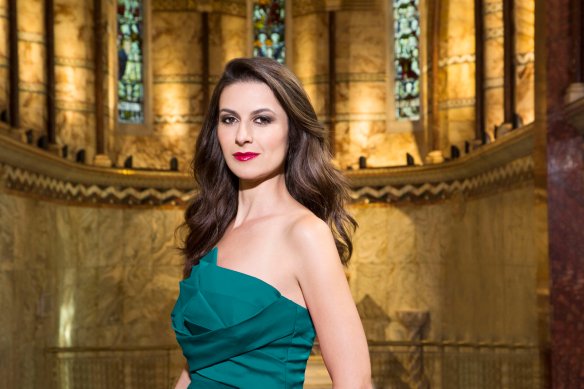
While Arcana have been listening to the works of Beethoven it has emerged that this verdict on the vocal works is less than fair. With that in mind it seemed only right to seek out a performer whose love for the vocal works of Beethoven has really come to the fore in this, the composer’s 250th anniversary year. Soprano Chen Reiss has made a number of contributions, headed by a disc of arias for Onyx Classics with the Academy of Ancient Music and Richard Egarr. In the course of our discussion Reiss, born in Israel and now living in the UK, sheds new light on these neglected works.

Our chat finds Reiss on holiday. “I’m on vacation! she says excitedly. “I have two children, and I have been locked down with them in Vienna since March, and we couldn’t go anywhere. Now they have been to school for a bit but not full time, it was an arrangement of three days a week, something like that. Since the end of June they are on vacation completely, and it has been quite a challenge at times, as parents. Luckily I wasn’t working, so I could deal with it, but I’m not used to being a 24-7 mum!”

She responds warmly to my observations on the vocal works heard so far. “I’m very glad to hear you saying that. Beethoven has such a reputation of writing badly for the voice, which I don’t understand. His writing is challenging, that is true, and that may have kept a lot of singers away from his music – but the music is fantastic, you know, as he is a genius after all. Anything that he writes, even if it is not the best in his standards, is much better than many other composers. When I did the research for my CD, it was also a surprise for me how few recordings there are of his vocal music. Everybody is recording the Ninth Symphony and Fidelio, but only these. With the arias that are on my CD, a lot of them are early works, that were not published in Beethoven’s lifetime. After the research that I did with some scholars, I found he approved the pieces to be published, and they just didn’t manage to happen. Each aria has an interesting story behind it. That was the reason why I did this CD, not just because it’s Beethoven year but because of a strong belief that these arias belong in the main repertoire and should be performed as often as Ah! Perfido.”

Her reference is Beethoven’s most popular work for solo voice. “Everybody is singing Ah! Perfido, and I agree that the form and dramatic development of the piece is probably the most complete. It was written later, but the earlier pieces are also excellent, and very interesting. Beethoven was a revolutionary composer, and you have one foot in the classical tradition, maybe Haydn or Mozart, and the other foot is already in the future. Maybe the sound of the early pieces reminds us more of Haydn – not Salieri, in my opinion – and even though he wrote them before he started with Haydn he knew his music and was very much in the period. We shouldn’t forget that Beethoven wrote those works around 1790, when Haydn was still active. The music of Mozart was also very much known to Beethoven, and so you hear the influence of those masters.”

Her opinion of the pieces, as a singer, has never been in doubt. “I do think they belong in the main repertoire, not only because they are good vocally. Maybe you need to practice them a little more, but then you would practice a Donizetti aria too. Of course you have the Italian masters, where the music sits in the voice much more authentically than Beethoven, because he wasn’t really in my opinion thinking vocally at this point, it was instrumentally. For example, the concept of ‘solfeggio’ in the voice, that is the transfer between the register of the mid voice to the high voice, it didn’t exist with Beethoven! Many times he writes in that particular part of the voice, which is not so comfortable, and this is why one needs to have a clear tone, and not just a dramatic plan but a vocal one too. This is a challenge, but it is the case for the music of Bach too. It’s not like Beethoven is the only one. Bach writes in a very instrumental way, and there are some recitatives that lie in the solfeggio area and are not so comfortable. Beethoven is not the only composer to do it.”

Reiss has done a good deal of background reading. “I found from research that Beethoven did not do it on purpose to upset the singers, not at all. He actually had contact with the singers and constantly spoke with them, and he wanted to get their input and improve his writing for the voice. In my opinion this is also the reason he went to have lessons with Salieri, and we shouldn’t forget that when he took these lessons he was already an established composer. He felt that to write for the voice was not as natural for him as writing for the piano, which was his instrument. He chose Salieri, who was the master in Vienna at writing for the voice, and I think that although musically there was no comparison with the genius of Beethoven, Salieri had a skill of writing for the voice. That was why Beethoven studied with him.”

When performing Beethoven, Reiss is keenly aware of the role played by her allies. “The other challenge in Beethoven is not so much for the singer but more for the conductor. In many of the pieces he writes for the voice in a very low register, and not very loud, but he would write passages where the orchestra is really loud. Beethoven was relying on the fact that he would have good conductors conducting his music, and that they would know how to balance. His writing is very dramatic, in Ah! Perfido especially, but also in Primo amore.”

She elaborates on the latter piece, an earlier work for soprano and orchestra. “You really need a good conductor for this piece because of the dynamics and the balance. There are a lot of different sections in this aria, and they have very different characteristics, so it is really down to the conductor to create magic and for the orchestra to be very soft and transparent, but also to give the oomph and the drama when needed. We definitely rely on the conductor!”

This approach extends further. “My arguments here also apply to the Missa Solemnis”, she says. “I have spoken with several big conductors, and they have said it is really not an easy piece to conduct, and that it is very challenging because of the balancing. The orchestra is large and there is a quartet of singers, so in order not to cover them you have to really take a delicate approach. When the music is written as forte the orchestra does not have to blast, it has to be relative to the quartet of voices that you have. You really rely on the fact that you have a good conductor to give the right interpretation of what is on the page.”

Would this explain why Beethoven’s vocal works were not so well known; that he had trouble finding the right conductor for them as much as the right singers? “I am not sure what the reason is”, she says honestly. “There is an aria on the CD from the Cantata on the Accession of Emperor Leopold (Fliesse, Wonnezähre, fliesse!) and there is a rumour I read that orchestras of the time did not want to play it because it was unplayable. For an orchestra of today that is no problem, because our technical level is higher than it was 200 years ago. Physically it was a problem, but that became musical too. You need very sensitive musicians to play it, because it is very technically challenging not just for the soprano but for the soloists in the orchestra – the cello and the flute solos are not easy. Beethoven was a challenging composer, he wanted to push the boundaries as much as he could. The pianists back then found his music challenging, maybe not so much now because if you play Rachmaninov or something then Beethoven is not quite so difficult.”

Reiss expands her thinking to consider other operatic composers. “I do agree that Verdi or Puccini wrote for the voice in a more confident way, but I’m now learning Zaïde, the early Mozart opera, and I’m finding similar challenges to Beethoven. There are long phrases where you need impeccable breath control, which in my opinion is not easier for the voice. That is no reason not to sing it, though! Primo amore shows what I love about Beethoven, in that he was very human. He writes about very fundamental feelings and he writes about them with his heart on his sleeve. It is romantic but not pathetic, it is substantial and filled with feeling. Today they would probably give him Prozac, because he was someone with very grand feelings! Those feelings are very true, there is no melodrama. I don’t want to insult other composers, but there are others who were melodramatic. Some of the French and Italian composers wrote on a very grand scale.”

The accompanying interview for Chen’s Beethoven release features not just conductor Richard Egarr’s clear enjoyment of the music, but also Reiss talking about how she really identified with how Beethoven was feeling, and that he felt he was reflecting what a lot of us feel in relationships and romantic situations in his music. “He was misfortunate with love”, she says, “but then who could stand up to his standards? At first, I chose the arias that I thought were good for my voice and also good dramatically. I find the orchestras love them too, as it gives them the possibility to shine. If you think of a composer like Donizetti, it’s not as challenging for the orchestra, and I think they like challenges. There is so much character in the writing for the orchestra in these pieces, not so much ‘oom-pah oom-pah’ as there is in Salieri or a lot of the Italian composers of that time. Here the orchestral players are just as important as the singer. I really enjoyed working with Richard and the Academy of Ancient Music, because they took this role and played with real gusto and passion.”

On the Odradek release, Chen sings the substantial aria Tremate, empi, tremate (Tremble, guilty ones, tremble) with tenor Paul Armin Edelmann and bass Jan Petryka. “My ambition was try to record or sing the Beethoven music that is suitable for my voice”, she explains. “In July this summer I was supposed to do the Missa Solemnis, which I have never performed before. Unfortunately it was cancelled because of COVID, but I did learn the piece. Other than that I managed to do everything. I sang in Lenore, which was marvellous, and then Fidelio itself, and these arias. The only thing I didn’t do was this trio, so I’m very glad that we found the possibility to record it in another city. It was a coincidence that I met Thomas Rösner, the conductor. It was in Liege where I was singing, two years ago, and he said, ‘I’m doing a disc with the Piano Concerto arrangement of the Violin Concerto, do you think we could do something?’ We thought we could do the Mozart aria Ch’io mi scordi di te?, and I said, ‘Listen, there is a Beethoven trio I would really like to record’. When I did this Tremate it reminded me a little of the trio in Fidelio with the Father and the two lovers. Marzelline is thinking that Fidelio is a man, and she’s in love with him, and the father basically gives his blessing. It is of course a different story altogether, but the ending is very dramatic. I think it’s a very good piece to perform as an encore in a concert, wouldn’t you agree?”

Given the way the voices combine, and the dramatic third part, she has a strong point. “Yes. I think it is very well conducted, with the middle part which has these beautiful long lines. I think it is an early piece, and of course Beethoven has these dramatic parts, which come later, but he also has a very good sense of lyricism and melodic beauty, a pureness which reminds me very much of Mozart and Haydn. You see it in these early works that he was more classical, and then he became much more dramatic. The third version of Fidelio, which we play today, is much more dramatic than the first two versions because I think the magic aspect was less interesting for him ten years later. Then he was more interested in the political aspect of the scene. He steps away from a beautiful sound to make music in the service of the emotion, rather than in the service of just beauty, which we have more with Donizetti.”

She considers once again the operatic works of Beethoven’s contemporaries. “Of course Mozart also wrote operas with political aspects. It’s really interesting with Zaïde, which I’m learning at the moment. It is an early piece, but he presents the conflict between East and West, the Christians and the Muslims. It’s amazing how nothing has changed in the tension between the regions, and between people who come from different cultures and mentalities. We have not really changed. Of course, today we are much more politically correct. Back then the European culture, manners and way of life was seen as superior to the Turks, for example, or the Muslims. Mozart was always talking about these things politically, but I think the music always has to sound beautiful and eloquent. In Beethoven the drama and the emotion are very much in the foreground.”

Reiss’s Immortal Beloved program finishes with perhaps Beethoven’s best-known solo vocal piece. “Ah, Perfido! is a real joy to sing”, she says passionately. “What is so great about these pieces is that lighter voices can sing them. It depends what approach you take – do you take the Baroque approach, the Classical approach, or do you take the more Romantic, Wagnerian approach? Are you presenting where he is coming from, or where he is going to? In my case, doing this CD, I was presenting with where he was coming from. I started with an early piece from 1791, and I finished with the later Ah! Perfido. It is about showing his development as a composer for the voice, how he maxed out his way in writing for voices.”

Has Chen recorded many of the songs with piano? “I haven’t done those this year, I have concentrated more on the orchestral pieces. My friends at the opera were struggling with them. I do think that people who claim it is really difficult to sing Beethoven perhaps approach from heavier productions such as Wagner and Verdi. My idea was that if you approach the instrumental, classical / baroque approach – in German we call it ‘schlicht’, which means ‘simple’. The voice production has to be more like you would sing Mozart, and when you approach from that direction it is easier to manage the ‘solfeggio’ and his vocal lines, which are often instrumental. If you sing with a lot of weight on the voice then you might find the songs quite tiring, because they do not always lie in the sweet part of the voice. But, if you approach them with a little less vibrato but still a warm sound – but not heavy – then I think you sing them much more easily.

Given some of the versions heard in our journey through listening to Beethoven’s works, this makes sense. “Or even Schubert”, offers Reiss. “A lot of people who sing Beethoven like Wagner, why not sing like Schubert? After all he was a contemporary, and again Schubert could be sung in a Romantic way. That doesn’t mean you have to sing Beethoven in a Baroque way, as he was a very Romantic composer. If you go in the direction of Schubert it would be much more manageable. I don’t think Beethoven would have expected a Wagner sound, it was not the way they sang in Vienna back then. This is how we often play his symphonies, for example, with a very rich sound, but instruments are different from back then, the piano now is different from how it was back then. The voice is not.”

Outside of the vocal music, what would Reiss class as her favourite Beethoven? She hesitates, laughing a little. “For me, the Piano Concertos. I really love these – number one, four and five. I am a frustrated pianist, and it is an instrument that can express so much. I wish I had the patience when I was seven or eight to practice more!”

Chen Reiss’s Beethoven album Immortal Beloved is out now on Onyx. You can listen to clips and explore purchase options from the Onyx website

Chen Reiss also appears on Voices, an album of works by Beethoven and Mozart under the direction of conductor Thomas Rösner. You can read about it and listen to clips on the Odradek website. Meanwhile the soprano’s own website is here

Switched On – Charles Webster: Decision Time (Dimensions Recordings)

reviewed by Ben Hogwood

What’s the story?

Not many producers could come back with an electronic music album 19 years after the last one. Yet that is exactly what Charles Webster has done with Decision Time, ‘following up’ his widely acclaimed 2001 opus Born On The 24th July. Webster is very highly respected in dance music circles of course – he learned his trade as an engineer with Juan Atkins and Kevin Saunderson, then moved to San Francisco in the 1990s and recorded under the pseudonym Presence as well as his own name.

Decision Time, as with the previous album, is curated by Webster but features an array of vocal talent, from established dance music royalty Shara Nelson and Terra Deva to South African talent Sio, Thandi Draai and Sipho.

What’s the music like?

Classy. Very little would seem to have changed for Webster in two decades of writing, which is of course an extremely good thing. Webster writes music of real feeling but with meticulously detailed production, so he can create a smoky atmosphere through deep house or more urban soul, brought to life by the chosen vocalist.

Shara Nelson’s guest turn, This Is Real, is heat soaked and emotive, while Sio’s second track Love Lives has a wide open production with intimate vocals. This is a trick Webster manages on several occasions, including Secrets Held, an atmospheric piece of soul where vocalist Emilie Chick draws the ear in.

It is in the deep house tracks where he really plays the winning cards though, the shuffling beats of I Wonder Why twinned with evocative, spacious keyboards, and the tougher beat of Music given a lovely wide perspective before Thandi Draai’s excellent vocal comes in. Webster uses an accordion sound in the middle which works beautifully.

Closing the album are two contributions from Ingrid Chavez, The Spell and The Second Spell. Chavez wrote the spoken word element of Madonna’s Justify My Love, and she appears with Burial, who gets a rare co-production credit on the second of a pair of pieces that crackle with atmosphere. If anything, Chavez’ vocals are better here than with Madonna!

Does it all work?

Very much so. Webster is still a master of creating vivid scenes with his music, be they in smoky, street-based soul or in hot weather deep house music. His use of orchestration is sublime, as is his knack of pacing in the music.

Is it recommended?

Heartily. It has made me revisit the older releases I have from Webster in my collection – and if you’re already a convert then you will need no persuading to buy. If the name Charles Webster is new to you, though, make sure you waste no time getting acquainted with his sublime music!

Stream

Buy

Switched On – Chihei Hatakeyama & Dirk Serries: Black Frost (Glacial Movements)

reviewed by Ben Hogwood

What’s the story?

This is the second collaboration on the Glacial Movements label between Chihei Hatakeyama and Dirk Serries, a follow-up of sorts to their album The Storm Of Silence in 2016. Like that release, Black Frost has four tracks and runs for just over 40 minutes, expanding their already widescreen approach of guitars and electronics.

Chihei Hatakeyama is a musician and sound artist currently living on the edge of Tokyo, and has many releases under his belt both as a solo artist and as part of the duo Opitope, with Tomoyoshi Date. Dirk Serries, meanwhile, is an experienced ambient artist based in Belgium who has built up an impressive CV of collaborations through work on an ongoing Microphonics series.

What’s the music like?

Simple – but that word should not be taken lightly. It is simple in the sense that the music is very simple to listen to. Each track largely hangs on a specific pitch, and no effort is required on the part of the listener to reach a meditative calm. In fact the less effort made, the more effective the ambience is. And yet, if the ear moves in for a closer take, the layers and subtle oscillations / variations reveal themselves, and the 40 minutes can be seen as a single unit, one gigantic four-part chord progression.

The textures are wonderfully airy and cool, polar in their chilled temperature but with a hazy warmth too. In terms of colour the music has sharper outlines and more piercing tones than the blue wisps of The Storm Of Silence – hence the dark overtones of the cover.

Those dark colours become more evident in third track Breen, which gives off an icy residue, but they don’t take root as such – and Frossen Luft closes out the quartet with more drawn-out pitches which eventually disappear into the middle distance.

Does it all work?

Yes. As anyone familiar with Glacial Movements releases will know, the ambience is of the deeply immersive kind, ideal for the end of a working day, the beginning of a new one, or an antidote to the fast and worrisome pace of life we are faced with from time to time.

Is it recommended?

For sure. Anyone enjoying previous music from this source will not need further encouragement, for Black Frost ends up as the ideal complement to The Storm Of Silence. It may be darker in countenance but it still ends up in the same, contemplative space.

Stream

Buy

Talking Heads: Augusta Read Thomas

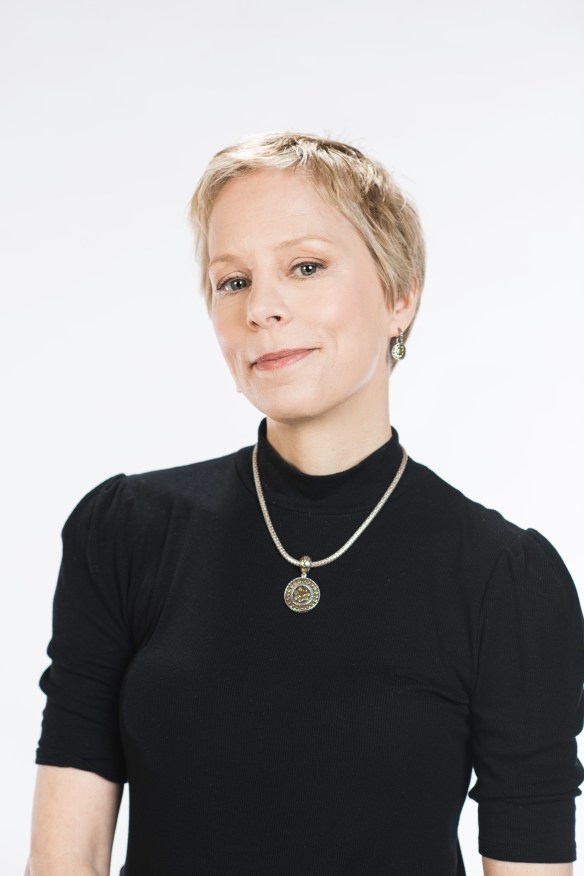
Augusta Read Thomas (picture (c) Anthony Barlich)

On an autumnal day, Arcana has time with composer Augusta Read Thomas, known affectionately as ‘Gusty’ to her friends. The nickname is more than appropriate, since Gusty is speaking to us from her Chicago home. In a year that has been testing at best, she has taken the time to talk through her new album The Auditions, released by Nimbus in October. The collection proves an ideal introduction to her music, including as it does pieces for brass quintet, carillons and a ballet score for ensemble, The Auditions – of which more later.

Our interview subject is bubbly, engaging and intensely focused – rather like her music. The bubbly aspect is in part related to the recently announced result of the US presidential election. “The year has been so out of body, as we both know in lots of ways, but I’m so happy about Biden and Harris. Then we hear about Pfizer and the vaccines, and as such I feel better. In Chicago we’ve been having record temperatures, and it’s been 75 degrees, like a July day! It has been perfectly sunny, day after day after day, the best November weather I can remember in 30 years, which is definitely a bonus. Right now it’s insanely beautiful outside!”

Is her work as a composer affected by the weather? “Yes, I think so – not so directly as writing dark music on a rainy day, but I do feel that the sun is really a giver of energy. I mean that globally, over a lifetime, not a day-to-day thing. There is energy from the sun that I feel. I don’t know how it translates into the music, but it is a real feeling in my body. For instance, sometimes in my little apartment there is a slant of sun that comes through and I’ll move my chair to sit in it. It feels so beautiful to be having that sunlight and then the slant is moving, so you move the chair a little bit. Then it goes beyond the window, but I will gravitate to sunlight!” The Auditions release encounters different forms of light as you journey through it. “Absolutely. I think that nature is really a great teacher. If you’re going to write a piece of music, you should just look at a tree, and it will tell you a lot. Look at the snowflakes and all the differences in their swirls, then a flower, or a garden – or even DNA, the way that cells reproduce; the ocean. I’ve been telling my students this for decades – look outside, there’s a great teacher right there in the window. It’s really true. If you were to go to my website and just read titles of my works on the alphabetical index, a lot of them are to do with the sun, the moon, nature or spirituality. It is the perfume of my whole catalogue. This CD has evocations of light, or ripple effects like those in the ocean. It is like the caprice of birds, and their beauty – the difference between hummingbirds, flying from the north all the way to the south, and the majesty of the swans.”

We move on to discuss the ballet itself. The Auditions is the idea of moving from this other spiritual space, which is the arcs nos. 1,3, 5 and 7 of the auditions, and then these very earthy, playful jazzy bits. It is like going from the cosmos down to the earth and then back up in the ending. You definitely feel the rise in those arcs. The ballet is modelled on the instrumentation used by Copland’s Appalachian Spring. “It was the 75th anniversary of Appalachian Spring”, she confirms, “and the commission was for an anniversary ballet, with the Martha Graham Dance Company set and costumes, which was amazing. Her choreography for Appalachian Spring was very stylized and of its time – a period piece which was wonderful and absolutely fabulous. Then there was an intermission and then The Auditions. I had to use more or less the same instrumentation, and I added the percussion, a trombone, and a saxophone, so that when you got to my piece it was like smelling a different kind of like world right away. The dance company has many bookings for the show with the two together, but of course they all got postponed. They are touring the show though.”

The list of composers commissioned by the Martha Graham Dance Company is a roll call of some of the 20th century’s finest. “Martha Graham really had a tradition of working with living composers”, she says, “and some great works exist in repertoire because of it. I feel really fortunate to have been receiving this commission. I spent a year on the piece – it’s so detailed, nuanced and sculpted in terms of the form. I worked really closely with the choreographer. In parentheses, there’s a broadcast going out to New York on Sunday night. One of them is going up on my website today, so a lot of people will be able to actually see what the dancing was like. I love it, and wish I could send it over!”

That must be a boon in these times where performances have been scarce or even non-existent. “Absolutely”, she agrees. “One of the other pieces on the disc is Plea For Peace, and there is a version where the solo is played by flute, trumpet and violin. That version just aired on 55 television stations all over the country! That’s a big deal in America, to have things out on the television, but in a pandemic it’s just golden.”

Read Thomas studied with two figureheads of 20th century classical music, Oliver Knussen and Pierre Boulez. “I believe that Oliver Knussen is an ‘A’ list composer”, she says affectionately. “I would put Chopin and Debussy and Ravel on that list, all the greats. I want to say that as loud as possible and I also think, amazingly, he was a great conductor and teacher – he was unbelievable. All of that stems from the central core of being a great musician. Very few people are both – you have some conductors who compose OK, and then you have some composers who conduct, but he was both.”

She fondly remembers their meeting. “When I was in second year college in America, I would have been 21-22 say, he heard a bunch of my music. He invited me to be a fellow at Tanglewood, which in America is a very big deal. So, I was at least ten years younger than the other fellows. We would go through my scores and we would sing the lines, and he taught me a lot about nuance and form and when he was very detailed. Then he brought me back for a second year at Tanglewood, because normally you’re only allowed to go once, and then a third year. I learned a lot from him, and then we continued our friendship. I commissioned his piece Requiem: Songs For Sue, and I brought him to the Chicago Symphony. I have a beautiful score he wrote to me and we would share CDs of people’s music. He did my Helios Choros with the Cleveland Orchestra and also the National Symphony, and he brought my piece In My Sky At Twilight to the Queen Elizabeth Hall with the London Sinfonietta. He just supported me over all those years, and in my little modest way I tried to support him too. We could speak on the phone for a long time about pieces of music. It was a friendship, but I do consider my teacher because in the time I had with him, he taught me a lot but I learned a lot from his music. I studied his music and I teach it too. He was just a great artist.”

Having been fortunate to see Knussen in concert at the Proms, with his visionary programming, it was clear how music was a sharing experience for him. “Totally”, she agrees. “Towards the end of his life, when he did the Scriabin Poem of Ecstasy, he called me up and said, ‘You’ve got to hear this!’ It had all the extra players and stuff, so of course I listened and then I listened again. And then after a step I listened again to that Prom. At the end he did the Piano Concerto by Phil Cashian. For many summers I taught at Tanglewood, and he was a frequent guest. A great, great person.”

Of Boulez, Read Thomas is similarly enthusiastic. “The Chicago Symphony invited me to be their composer in residence, and that came about because Boulez and Barenboim reportedly liked my music. I was young, and it was in the mid-1990s. I was 32 or something like that. Just before that I was commissioned to write a piece, called Words Of The Sea. It’s a four movement piece for orchestra, and it’s easy to find the audio of it. I sent in my manuscript on huge pieces of paper and rolled it, and Xeroxed it, rolled it into the tube and sent it off. I got a call saying they had sent it to Boulez with about twelve other pieces. Then about a month later they called up and said ‘Out of a pile of 12 he’s only going to play one…but it’s yours!’”

Boulez conducted the world premiere of Words Of The Sea, and the two met over the manuscript. “It was a great premiere”, she recalls, “and then that night we had this dinner party with the orchestra, and he turned to me and said he would like to commission another piece. So I did a piece called Orbital Beacons. He was so generous, like he bothered to look at my piece and program it, and it was around this that they invited me to be a composer in residence. He nominated me for a prize for the Siemens Foundation, which I won. It is a generous prize! Then he did the premiere of In My Sky At Twilight, and recorded it as well as taking it to Lucerne. There were lots of different projects.”

Read Thomas’ stories are given with great affection and gratitude. “What I liked about him, and also Knussen, is that they would play my tempos. They were both so precise. I remember with Boulez there was one little thing with In My Sky At Twilight, and he said, ‘I think you have the oboe as mezzo forte there, I think it should be mezzo piano.’ I looked, and said, ‘I think you’re right. So the whole group is sitting there and I remember he had this little box with his pens, so he went into his pen box and opened it, looked around and then he took out the red little red pencil. Then he went on to the score and crossed it out and changed it to mezzo piano. It was very precise, and all about getting it right. The players loved him. They played perfectly and with such artistry. It was a teeny change but it was reflective of the fact that my scores are so detailed.” Knussen’s operating method were not too dissimilar. “Olly was also very precise. I remember when we did In My Sky At Twilight at the South Bank Centre, I said to him, ‘Ollie, it feels too slow – can we keep it going so many bars?’ He looked at me and said, ‘Let me think about it.’ Then, at the show, he did it slower! He came up to me afterward, and said ‘I did it slower! You see, it really works!’ He went with the musicality, and the harmonic rhythm of things.”

Moving back to The Auditions, we discuss the programming of the CD release itself. Was it tricky to get in the right order? “You’re absolutely right. I sat with the engineer and we tried it in lots of different ways. We decided to start with the brass quintet because it’s such a good performance, and it’s very hard! They make it sound easy, but it’s tricky – and it just blasts out of the machine. I’ve been listening to jazz my whole life, so while I am a classical composer, I speak a lot about jazz and my process is very full of improvisations and so forth. What I like about that is starting with be-bop. When you put it in a brass quintet, it’s like, ‘What’s going on?’ You know, there’s no other brass quintet that sounds like that piece, there are no folksong arrangements or church chorales. It’s pure protein in terms of material, a bite size thing that shows lots of different sides of me. The chords are jazz chords, but end up sounding like Stravinsky or Messiaen in this context, like Bebop meets Ravel.”

The next piece presents a contrast. “We thought after the intensity of that to go for the intimacy of Plea For Peace. It’s a beautiful recording, made by Chicago Symphony Orchestra members. You go into this other world, and for the contrast that seemed to be a good place to put that reflection.”

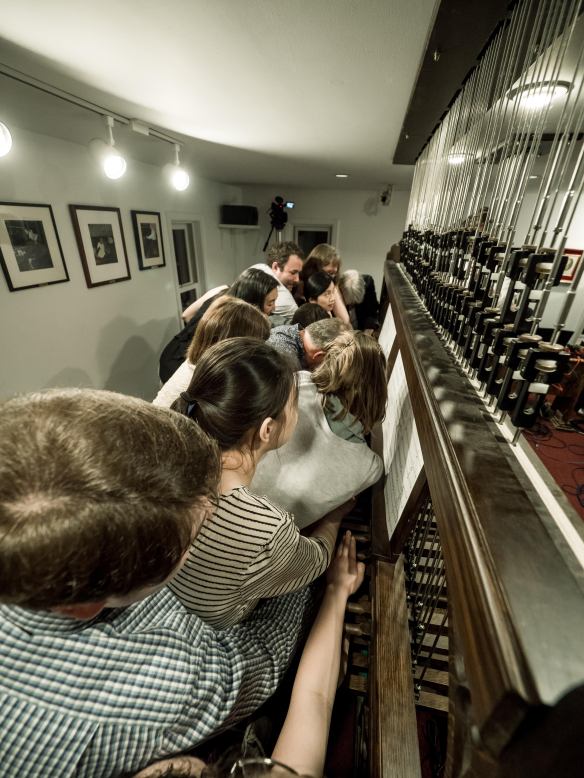
“It’s Ripple Effects next!” she says excitedly. This is a piece for 72 bells, and Renske Vrolijk’s wonderful picture above should be examined when listening to the piece, where each player is clambering over one another to get all the notes played in the final chord. “Some of those bells wouldn’t fit in my room!” she laughs. “One of the interesting things about this piece is that most carillon players play solo. They climb all the way up the tower and they sit there alone, they don’t see their audience, and by the time they get down whoever heard them as walked away. It’s very lonely, and there’s not much repertoire that’s not for solo carillon. Also, a lot of the repertoire is arrangements of a chorale or a song or something. What was really interesting to me was that the first version brought all those people together. The humanity made it very special for that instrument. The two player version is on this recording. It’s tricky, they’re going non-stop with their feet and hands. It multiplies in a way, it sounds like an orchestra in the way it goes, because of the way the bells ring. It’s such an interesting sound world, and again, like the brass quintet, there is no piece that sounds like that – it’s very singular in the carillon repertoire.”

While these pieces are for very different instrumental forces, Read Thomas notes the importance of a connecting thread. “I try to imbue all my pieces with the ‘Gusty’ personality, so if you hear a piece of mine you’re not going to say, ‘Oh well, that sounded like warmed-over minimalism, or retro movie music, or spectralism layer three. There are no categories, it’s just my music. With Plea For Peace, what’s interesting about that piece is it’s just a crescendo, but when you use a text, like post-Hiroshima, or an ancient poet, or a political figure, it narrows. When you make it just a vocalise, the piece means the same in South Korea as it does in North Korea, and as it does in Africa, Azerbaijan or Kansas. That was a big decision, to make it a vocalise, but I think it cuts so much deeper. It feels risky to do it, but in the deepest human way it is like a cry from the heart. While that piece is very total, I still think of it as very singular.”

The Auditions roll-call continues with Two Thoughts About The Piano, with Read Thomas effusive about her soloist. “Daniel Pesca was fabulous. His technical skills are outrageous, but he’s an artist, he sculpts the form as crescendos, and also the repeated notes are hard. He really did a great job. I appreciate his touch.” That is followed by Selene, arranged for percussion quartet and winds. “This is an arrangement that Cliff Colnot made”, says Read Thomas. “He took the string parts and put them in the winds, but the percussion parts are identical. I do think it works, there are certain things like when you get those bass clarinet and bassoons, it’s such a cool colour. I think it’s a very successful arrangement; the credit for it should go to him for the wind parts.”

From vivid experience, Read Thomas’s music consistently creates a picture in the listener’s mind. “One of the things that’s also really interesting to me in my practice and life, is how much, for example, Johann Sebastian Bach can fit into two minutes. If you take one movement of The Well Tempered Clavier, one of the Preludes and one of the Fugues – it’s two minutes, but there is a whole universe there. It starts and there’s just not a note out of place. I’ve really taken that to heart in my music, like the first movement of the Brass Quintet – four minutes is it, that’s all you need to paint the picture. We are matching the material to the duration, and to look at Bach’s Goldberg Variations, some of those movements are less than a minute, but there’s a whole universe there. I guess if I had to summarise, generally I’m a poet and not a novelist. I write shorter pieces with every word in place, every dash, every thought, and every line break to use a poetry metaphor, every adjective too. It’s only four minutes but that really interests me. This CD in a way brings out the poet side.”

The same tenets apply with music of longer duration. “The Auditions is a longer piece, but it still breaks down into much shorter sections”, she explain. “It is a kind of pure, protein poetry. You have to edit and sculpt move the comma, so to speak. I really believe that form conserves energy, and I say that to my students all the time. It’s three words but they’re very important. If you have the material and form that are allied, a four minute piece – like Plea For Peace – projects out to a universal statement that is 20 minutes, but you say it in a very short time. That kind of craft, for lack of a better word, I learned from Oliver Knussen. He was a miniaturist also, and so was Boulez. My main model would be Bach but those other two were the same.”

Our conversation pans out to consider the past year and all its challenges. Has it been difficult a a composer? “I will answer that in two layers, if you don’t mind”, she says thoughtfully. “The first layer is that I’m very mindful that we have a lot of people on this planet without shelter, water, healthcare and food, and so on. Also, in my opinion, the systemic racism is outrageous and should have been set right centuries ago. I would like to say loud and clear, that black lives matter. There is a whole social conscience side, and it is important to state that before I say number two, because they are very much interlinked. I think that when we look back in 10 years of what was created in COVID, there is going to be a burst of creativity, which is great. For me, typically, I travel every week. For 200 days a year I’m just zooming around all the time, and I’ve been doing that for 25 years. Then, all of a sudden, I stopped, and when I was cancelling travel and hotels I was thinking, ‘how did I do this?!’ To be honest with you I have been writing, non-stop, and have had enormous focus. It has been a huge boon. I’ve also continued with online teaching, so it has been really busy. I can’t wait to share what I’ve just made with people.” It is reassuring to hear a positive benefit to the imposed isolation, but not surprising when you consider the creativity such adversity can often inspire. “It is, but for me it’s not the adversity, because I’m really trying to help in whatever way I can. For 30 years I wish there was more than 24 hours in a day, and I typically work like 16 hours a day because I like to. I like to get at least eight or nine hours’ composing and then maybe five hours of teaching and then citizenship work. I think after this, with the whole work / home / travel thing, I think a lot will change for big corporations, and for artists. We realise now that certain things really can be done.”

Finally, I have to ask about the origins of Gusty’s nickname. She smiles warmly. “I have been called that since I was a little girl, because we had ten kids in the family and I was the tenth. Since I’ve been about two it was always my name. Then, as my life developed, then it seemed better for the public to have my formal name, which was fine given name at birth. So we just ended up using that. By coincidence the initials are A-R-T. It just fell into place!”

Augusta Read Thomas’s new release The Auditions is available on Nimbus Records. To listen to clips and for purchasing options, visit the Wyastone website. The composer’s own website contains a great deal of information behind the music, with multimedia and details of future performances. To read more, click here