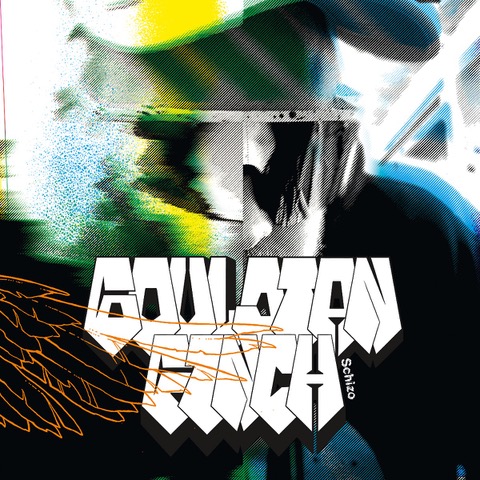
Gouldian Finch is the pseudonym under which we find Martin Horntveth, the drummer for Jaga Jazzist – where he is one of the principal members along with brother Lars. For this work, based on a commission entitled Polaroid from the Kongsberg Jazz festival in 2021, he assembles a band of similar dimensions to carry out his musical wishes- nine musicians to supervise as band leader.
This album reflects the breadth of Horntveth’s musical outlook, but hones in more on his love of jazz and jazz rock, and what he describes as “a love / hate relationship with fusion and funk.” Typically he comes out from behind the drums to play keyboards and other percussion instruments on the album, as well as producing and arranging.
What’s the music like?
If you like Jaga Jazzist, then this will be right up your street – assuming your street is home to all sorts of colourful musical twists and turns.
The overriding observation is that Horntveth loves to celebrate music itself, because Schizo bubbles over with positive energy, its riffs delivered with flair and excitement, dressed in multicoloured clothing.
The best examples of this are CAPS LOCK, a riot of colour that originally scuttles along a little furtively before blossoming into a flurry of activity, and Guilty Pleasure, which is an enormous amount of fun. The title track is made of similar stuff, a rush of musical endorphins that bottles up all the fizz Horntveth projected through his band.
There is an appealing playfulness running through the likes of Guilty Pleasure but there are slower moments too, such as the start of Spinning Pinwheel, a plaintive saxophone choir that proves to be a mask for the exuberant funk that follows. No Filter is closer to ballad territory, a nice freewheeling bit of music with the sun at its back.
Does it all work?
It does – with the caveat that you won’t always be in the right mood for music that does sometimes spill over into hyperactivity, the sonic equivalent of having too much caffeine!
Is it recommended?
It is. Schizo does indeed flit between musical moods, but it is a lot of fun.
For fans of… Jaga Jazzist, The Comet Is Coming, Moses Boyd, Ezra Collective
Listen / Buy
Published post no.2,449 – Tuesday 18 February 2025
Coleridge-Taylor Petite Suite de Concert Op.77 (1911) Cooke High Marley Rest (1933) Delius Mazurka and Waltz for a Little Girl RTIX/7, 1 & 2 (1922-3) Headington Toccata (1963) Rubbra Eight Preludes Op.131 (1967) Scott Lotus Land Op.47/1 (1905) Armstrong Gibbs Lakeland Pictures Op.98 (1940) – no.2, After Rain (Rydal Beck); no.8, Quiet Water (Tarn Howe) Baumer Idyll (1935) Mayer Calcutta-Nagar (1993)
Peter Jacobs (piano)
Heritage HTGCD131 [73’30″] Producer & Engineer Paul Arden-Taylor
Recorded 14 & 16 September 2014 at Wyastone Concert Hall, Wyastone Leys, Monmouth
Reviewed by Richard Whitehouse
What’s the story?
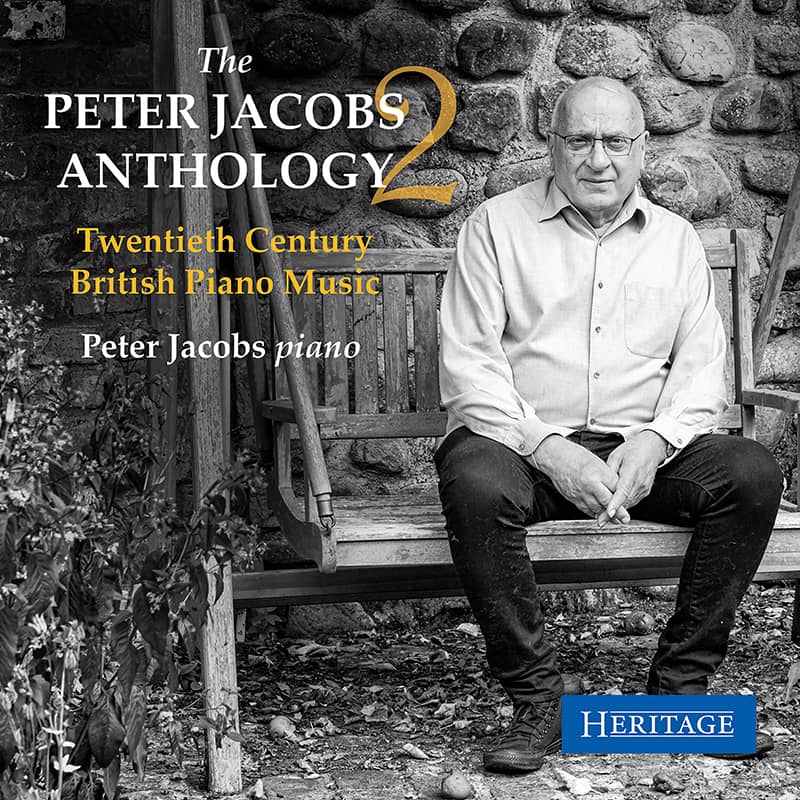
Heritage extends an already extensive discography of British music with its follow-up to the Peter Jacobs Anthology, a further volume featuring collections of or standalone miniatures with a wide range of musical idioms given focus through the persuasiveness of the pianism.
What’s the music like?
Among the miscellaneous pieces included here are Greville Cooke’s ruminative ‘portrait’ of the home of pianist (and his former teacher) Tobias Matthay, Delius’s respectively pert and fey offerings, or Christopher Headington’s scintillating study for John Ogdon. Cyril Scott’s evergreen is treated to a subtly understated reading, while two out of a set of eight by Cecil Armstrong Gibbs provide enticing evocations of Rydal Beck then Tarn Howe – their innate Englishness sounding removed from the overtly Russian manner of that from Cecil Baumer.
Forming the backbone of this collection are three sets that in themselves attest to the variety of the music featured. Best known in its orchestral guise (a recording of which can be found on Heritage HTGCD249), Samuel Coleridge-Taylor’s Petite Suite de Concert is light music of a superior kind – witness its flighty initial Caprice, its ingratiating Sonnet or its lively closing Tarantelle, though its ostensible highlight is Demande et Réponse whose alluring sentiment helped with keeping the composer’s memory alive prior to his belated rediscovery.
Other than figuring among its composer’s later works, the Eight Preludes by Edmund Rubbra could hardly have been more different. As with his Eighth Symphony written soon afterward, these short while arresting pieces likewise focus on specific musical intervals rather than any overall key scheme, though their cohesiveness heard as an integral sequence could never be in doubt. Introspective without being inscrutable, this is wholly absorbing music and Jacobs accords ample justice to what is only the second complete recording this set has yet received.
As the most unlikely inclusion, John Mayer’s Calcutta-Nagar proves nothing less than a total delight. Known primarily for his syntheses of Indian and European elements, notably through the group Indo-Jazz Fusions, Mayer wrote extensively for Western media with this collection a notable instance. Only two of its 18 pieces last over a minute, yet their capturing of places recalled from the Calcutta of the composer’s youth is absolute. Jacobs notes his favourite as being the 13th (Kali Temple), but listeners will doubtless come up with their own favourites.
Does it all work?
Yes, whether as a judiciously planned collection or an anthology from which one can select individual items as preferred. The three collections are each among the most distinctive of its kind, while they and the various individual pieces provide ready-made encores in recital. Evidently this is music which Jacobs has long included in his repertoire, the performances exuding that combination of technical finesse allied to a probing insight as have long been hallmarks of his interpretations. Those who are unfamiliar with this music are in for a treat.
Is it recommended?
Indeed, not least as the sound has a combination of clarity and warmth ideal for piano music. The pianist pens informative notes, and one hopes that there will be further such anthologies. Meanwhile, Jacobs approaches his 80th birthday (this August) with his pianism undimmed.
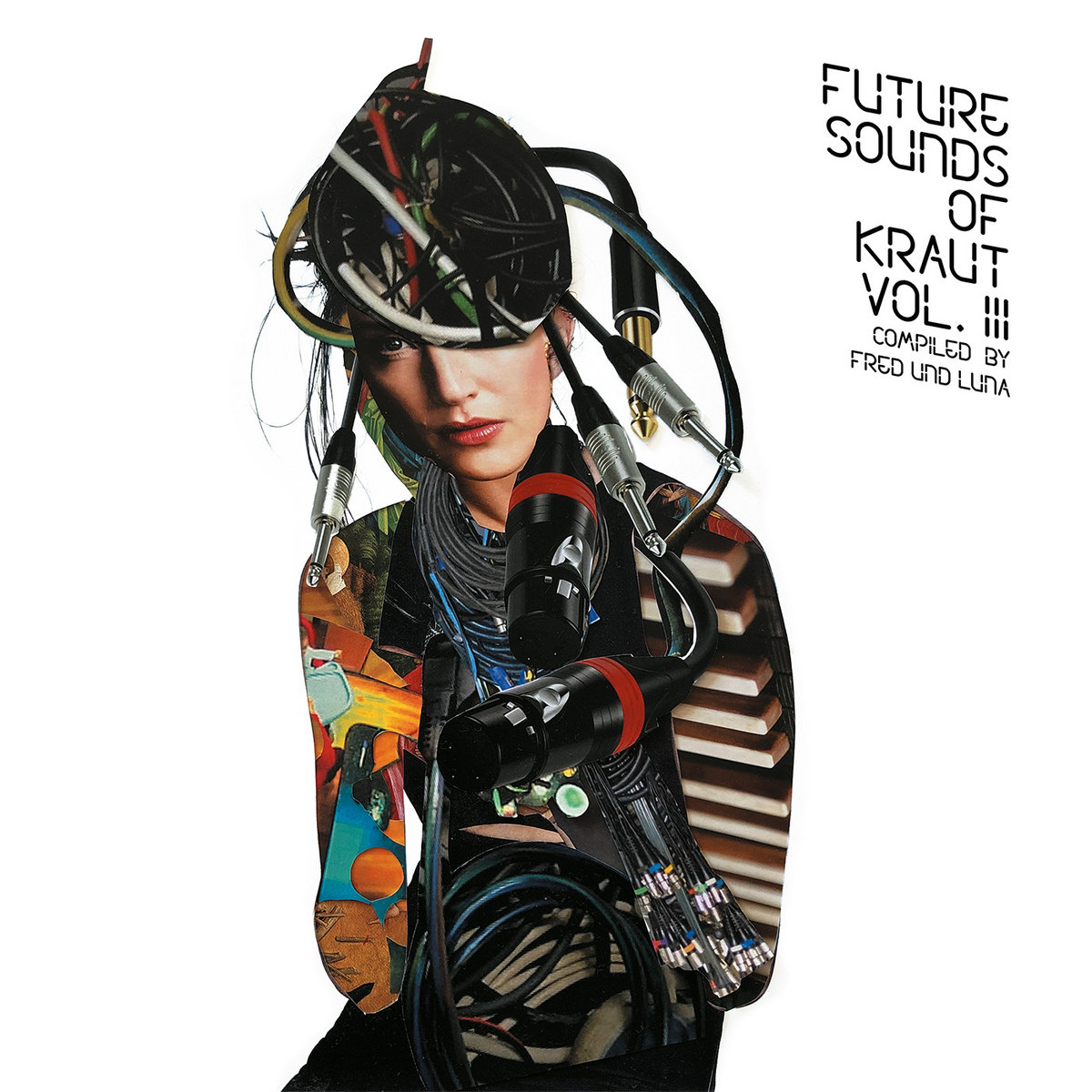
Compost Records write: “Rainer Buchmüller aka Fred und Luna sadly passed away in January 2024 after a long illness. He was a kind-hearted person, gifted artist, friend and companion. We mourn him deeply. A few days before his death, Rainer Buchmüller had sent us the track listing for Vol. 3 (and already ideas for Vol. 4), with the request to publish this posthumously, he would be very happy if his fans and all those who will be would receive a “sign of life” from him.
The tracks are all German – of course – and are drawn from the 1970s and 1980s, and Buchmüller builds on the first two volumes of the series with a third that pushes the envelope of ‘krauty’ elements still further.
What’s the music like?
This compilation is a lot of fun, the chosen tracks displaying invention, wit, charm and enough rhythmic drive to get any stubborn dancefloor on the move.
The highlights are many, beginning with Christian Nainggolan’s Nachtraucher, a really good percussive heavyweight. The grooves are infectious, no more so than on Die Wilde Jagd’s Austerlitz, an excellent, sabre tooth groove. Water Map, a Fred und Luna collaboration with Organza Ray, is a propulsive winner, with its bubbling bass, spoken word and shady trumpet.
Sula Bassana’s Space Taxi is suitably cosmic, while Die Orangen’s Lost In The Center harks back to a slow 80s electro boomer. Meine Muse, from Philipp Johann Thimm, is ghostly, while Puma & The Dolphin’s Nuances is excellent, typifying the original rhythms and humour running through this compilation.
Does it all work?
It does – a wide variety of styles and approaches make this a consistently rewarding compilation.
Is it recommended?
It is. Rainer Buchmüller had very sound instincts when it came to choosing a compilation, and this third volume of Future Sounds of Kraut complements the first two beautifully. Make sure you catch all three!
by Ben Hogwood Picture of the Naala Badu building (c) Iwan Baan
What’s the story?
Even The Horizon Knows Its Bounds has its roots in an invitation by Jonathan Wilson, curator of the Art Gallery of NSW. He commissioned Lawrence English to create a sound environment reflecting on the Naala Badu building.
English responded with what is described as ‘an atmospheric tint to visitors walking through the building throughout the year following its opening.
For his source material, English drew on artists ‘who have also operated in the orbit of the Art Gallery of NSW. These include Amby Downs, Chris Abrahams, Chuck Johnson, Claire Rousay, Dean Hurley, Jim O’Rourke, JW Paton, Madeleine Cocolas, Norman Westberg, Stephen Vitiello and Vanessa Tomlinson.
English invited the musicians to contribute to two long-form pieces, bringing them together in a continuous whole, which retains an improvisatory spirit. He then added the following note to the album:
“Place is an evolving, subjective experience of space. Spaces hold the opportunity for place, which we create moment to moment, shaped by our ways of sense-making.
Whilst the architectural and material features of space might remain somewhat constant, the people, objects, atmospheres, and encounters that fill them are forever collapsing into memory.”
What’s the music like?
Sometimes installation pieces only work in the environment for which they were designed, but that is not the case here – this music works far beyond the confines of the Naala Badu building (above).
With his associates, Lawrence English has fashioned a rather beautiful stretch of music that works beautifully as a piece of immersive ambience. It is best enjoyed in one stretch, although the album is helpfully split into sections when downloaded.
Initially a sonorous, mid-range piano spins slow but thoughtful lines over held drones that shift very slowly, surrounded by thick ambience. Yet by section V, the music has blossomed in colour, to this listener a rich, dark blue. The mood shifts during VI, a woolly backdrop supporting a fresher, cooler piano line, but then VII shifts to a lighter outlook before becoming more discordant. Ultimately a peaceful conclusion is found in VIII, the final section.
Does it all work?
It does – though if listening on headphones, be sure you have little noise around you, for sometimes the mid-range frequencies can be compromised.
Is it recommended?
It is – Even The Horizon Knows Its Bounds is an instinctive but immersive piece, greater than the sum of its parts. It is music that refuses to rush, taking its own sweet time – a valuable commodity in today’s hectic world.
For fans of… Loscil, Tim Hecker, Fennesz, Stars Of The Lid
Listen / Buy
Published post no.2,446 – Saturday 15 February 2025
by Ben Hogwood. Photo credits (c) Uwe Arens (above), Filarmonia Hungaria (Kurtág), Jean-Regis Rouston/Getty (Dietrich Fischer-Dieskau)
Seven years on from his firstinterview with Arcana, Benjamin Appl is in town. In that time a great deal has happened in the career of the Regensburg-born baritone. He has received worldwide acclaim not just for his beautiful voice but for the invention and style with which he has been creating concert programs and recording projects.
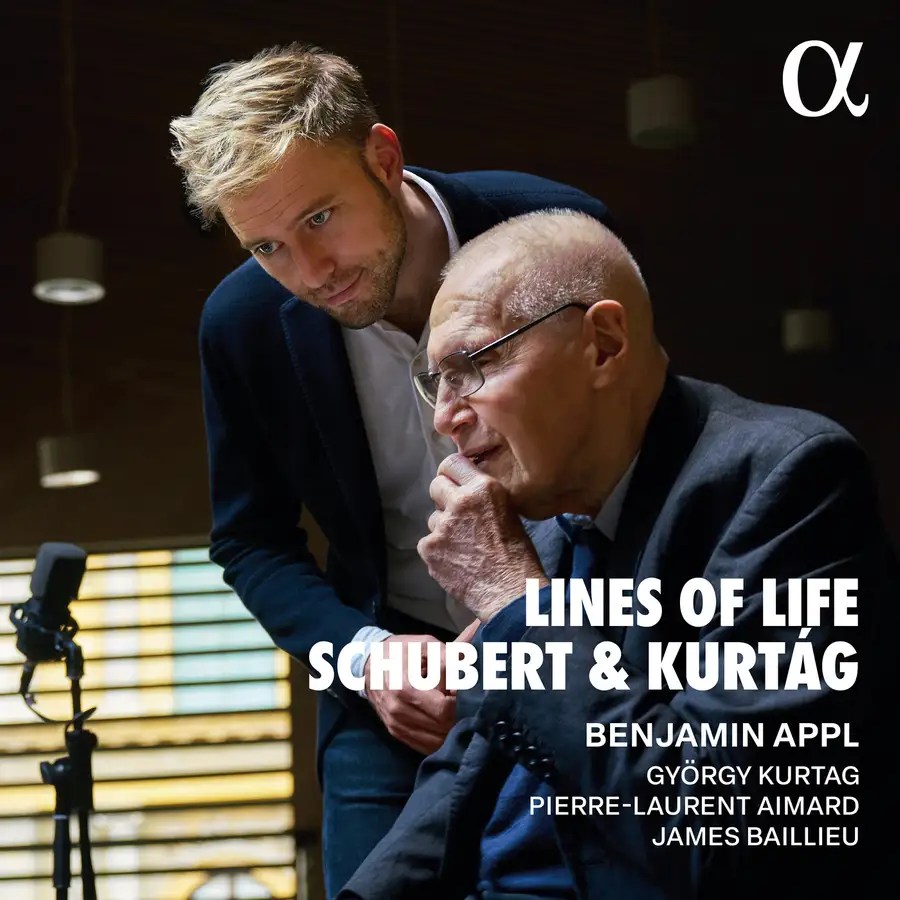
These projects form the core of our interview, principally Lines of Life – a newly released album complementing the music of Schubert and György Kurtág, with whom he has become firm friends. We will also discuss a carefully planned and fascinating tribute to Appl’s mentor, the great Dietrich Fischer-Dieskau.
Before that, however, we have the small matter of Handel’s Messiah to contemplate. Appl has just completed a performance with the Royal Liverpool Philharmonic Orchestra, not as a baritone soloist, but as a conductor. This bold step has made a lasting impact. “It was actually one of the greatest experiences of my life!” he says. “It’s interesting to be a singer, but also being able to communicate a lot with the audience through your eyes and facial expressions. You try to give a lot towards the singers in the choir, and then hope they mirror your intention back into the hall. It was very rewarding moment, musically and emotionally, and I was very happy and grateful that I got this chance, starting with a great orchestra. Let us see where this journey will lead!”
Had it always been an ambition, to conduct? “I always wanted to, from an early age”, he confirms. “I was conducting a lot of operas when I was six or seven, learning them off copy later on. I always conducted in the living room off recordings, with a baton my parents gave me for Christmas. It’s not just the beating time, it’s the psychology behind, leading people through a rehearsal and trying to get everyone in one direction – that I find the most interesting part. You have to make decisions in every second count. “With Messiah, you have 45 different numbers, and the hardest bit of conducting is starting and ending a piece, so after we agreed on Messiah I started to doubt if it was the right piece! But it was a wonderful experience, and everyone in Liverpool was incredibly supportive.”
Conducting the piece after Christmas made a refreshing change. “It was really uplifting, and as you know the story is much more than just Christmas. I also did Haydn’s Creation on January 1st in Budapest. I think that’s a wonderful piece for New Year’s Day, to be grateful about the creation of the world.”
He confesses to feeling odd with the audience behind instead of facing. “That felt very strange – and also even arriving in the concert hall. On both sides of my green room I could hear the soloists warming up, and I also started warming up! But somehow I wasn’t nervous at all. It felt very natural.” Will there be more as a conductor? “It’s something I’m interested in, particularly vocal music where I feel more familiar, and where I’m able to work with other singers and choirs.”
Appl’s mentor, Dietrich Fischer Dieskau, conducted near to the end of his life also, but he is keen to stress that is not the reason for taking up conducting at this point in his career. “It was something I wanted to do earlier on”, explains Appl, “whereas with Dietrich he started quite late.”
More of Fischer-Dieskau anon, as talk turns to 98-year old Hungarian composer György Kurtág (above), with whom Appl is now firm friends. They met in 2019. “The Konzerthaus in Dortmund decided to do a Kurtág festival”, he explains, “and the director of the hall went to Budapest to meet with Kurtág to discuss the repertoire for this festival. For Kurtág it was incredibly important to included a song cycle of six songs with poetry by Hölderlin, because that is a piece he sees as a significant one in his career. They looked into the option of who should sing it, and they selected ten baritones from around the world, who could send a recording to Kurtág. He is known for being very tricky and demanding, and the way he works with musicians, what he asks musicians to do, so he needed some months to really listen to the recordings and make up his mind.”
Gradually a shortlist emerged. “There were five left”, recounts Appl, “and then a few weeks later we were supposed to sing or record the low register of our voice. Then there were only three or four left, and then we had to record again, another page out of this song cycle. Finally I made it – and arrived in Budapest a few months later, to prepare the music for the cycle. I was incredibly nervous, because it is known that after a few minutes he might lose his interest, or that musicians really can’t cope with the intensity and the detailed work he asks to do. At the time his wife Marta was still alive, and after a few minutes she said something in Hungarian to him. He turned to me and said, “Marta says, “You are our person”.” From that moment on, we started a wonderful partnership, and I was in Budapest every few months, still working on these six songs. I understood that I would never be able to learn them at a level where he would be pleased or would respect these songs fully, and we often work just on one bar for three, four hours. My brain was absolutely exploding! In the afternoon, I came back and looked forward to focusing on bar two – but he said to me, “Let’s start from the beginning!” It’s a piece I’ve worked on for five, six years now on, and it will never be finished.”
This level of focus is truly unusual, and as Appl notes, “The wonderful thing is he is so far away from our music industry, with its budgets, timing, short rehearsals, and where it’s about finding the right piece for a small orchestra, where we can’t have 15 brass. That’s very refreshing.”
The recording process was highly unusual, with 1,300 takes required over 12 days for the finished article (above). Part of the reason for this was the sheer compression of Kurtág’s music, where he says so much in such a short space of time. “It’s a weird phenomenon, because you would think a very complicated, huge piece with thousands of interwoven lines, but when you look at the page, there is hardly anything written. It’s very bare. Nevertheless it has an ocean behind it, a very deep sea, where there’s so much to discover and to question. That’s what I find so fascinating, a paradox – but a most attractive one.”
Appl was witness to the remarkable chemistry between Kurtág and Marta when they played piano together, privately. “He has no awareness that he’s on stage. It is almost helpless, but in a way that is so real and honest, and touching.”
The new album explores more the connection Kurtág has with composers such as Schumann and, in this case, Schubert. “When I learn his music, it is like learning intervals, and you go along from one note to the next. When I worked with him for the first time, suddenly he put some harmonies underneath which completely made sense, and very often they were Schubertian harmonies. His music is close to Schubert’s, because Schubert also wrote reduced music in the score, there is not a lot. You feel very naked when you perform it. With the littlest impact he tried to have the biggest outcome. This is also music he played a lot with Marta, and she sang along, so this is a very personal connection between Kurtág and his music. He also selected the songs which we recorded, and it was wonderful to put an order together where some of these Schubert songs are like a meditation after his own short songs, while others are a break in mood and harmonics. It was a learning curve for me to work on the order.”
The learning process has been immense. “It is a question all the time. His favourite word is “Maybe?” He is someone who doubts all the time, with questions – there is such insecurity in him, and that’s the most confusing thing in the beginning. The composer should tell me how it has to be done, but actually he is always searching for the right performance, and that is something I find so fascinating, together with the composer. His understanding of the music of the world, bringing quotes from Russian literature or Chinese techniques in porcelain or Beckett, or whatever – his knowledge of the world is so incredible, and he brings parallels from different parts of the world and different art forms. It’s very, very inspiring.”
Does he use modern technology much? “No. He composes with paper, though he does use DVD and CD players. In rehearsals I brought my iPad, and it was interesting to see with a 97-year-old man, how immediately he understood how to tap and turn the pages. He’s a very open-minded person and has just started to learn Chinese. He has a super brain.”
The compositional process is very involved for Kurtág. “When he has to put a staccato dot on top of a note, you think he goes through hell – he starts shaking, and the pen goes closer to the page, and then he goes back and forward. His entire body is twisted, like Orpheus going through hell, and it’s nerve-wracking. It’s a real inner battle to compose. And that’s very inspirational.”
Appl regards him with affection, as a dear friend. “Mr Kurtág is someone you can’t have small talk with”, he observes. “To finish a sentence takes ages, because as he does in his music, he wants to use every word in the perfect way with perfect meaning. Expressing something is real work, but he shows affection, admiration, friendship in very little gestures. He leaves his house very rarely, but whenever I perform in Budapest the honour for him to come to my concerts is huge. When he appears in a concert hall all the people stand up because he’s a national hero. When you talk to a taxi driver from the airport and tell him you go to a composer called Kurtág, everyone knows him. It’s extraordinary how people appreciate him.”
Talk turns to another musical behemoth, Dietrich Fischer-Dieskau. Appl’s tribute album to him, To Dieter: The Past and Future, is due for release on 23 May. It prompts the question – how has it been possible to focus on two musical figures of such renown? “I feel incredibly grateful”, Appl says, “because those two encounters in my life are probably the most rewarding and special musical relationships, mentors I have had in my life. It’s just coincidence that their birthdays or where they stood in their life is close together.”
He talks about meeting the great German baritone. “It was really very special, as he was my absolute hero before meeting him. The first time was in a master class in Austria in 2009, where we were supposed to send suggestions of ten Schubert songs with our recording. I heard he could be quite tricky and demanding as well, so I sent a list of 30 Schubert songs. A few weeks later, back came a list of four Schubert songs, and all four were not part of my list. That was the first impression I got from him. After this masterclass, he offered me to work with him privately, and we worked regularly in his house in Berlin and Bavaria. It was an absolute gift to be together with him for six hours a day, just the two of us and a pianist.”
The repertoire choices for To Dieter are a true musical biography, with songs from Fischer-Dieskau’s father Albert and brother Klaus. “Honouring such a hero and such an incredible singer is a very tricky thing”, he explains, “because if you do his best-selling songs, he has already done them so well, so it’s hard for the next generation to do an album such as that. For me it was more important to give an insight more into who he was. I had the big pleasure of being able to go through most of his private correspondence, his love letters, contracts, diaries – all of that. While respecting privacy I wanted to give an insight into who he was, a person who had a lot of challenges in his life, a lot of things people are not so much aware of.”
He elaborates. “For me, the most important and interesting years are really his childhood in Berlin, growing up in a family where the father was a headmaster, and always wanted to become a composer. He did some singspiel, some small operas, while his brother wrote some music from an early age onwards. We also have a piece where Fischer-Dieskau appears as a poet, and some translations. There are the years in the beginning where he was as a soldier in Russia, then the years as a prisoner of war in Italy, where he was in an American prisoner of war camp, where he automatically learned most of his repertoire, and where he performed Winterreise a capella in front of 6,000 soldiers, then in 1945-46 where he was singing Russian, French and German songs all together in a recital for Germans in an American camp. These years shaped him so much, then coming to England and working with Gerald Moore, making a new export of German culture after a time of war. That, for me, is more interesting than the years we know him best, when he travelled around the world, and amazed people in the concert hall.”
There is his fascination with languages, too – which must have been hard to learn? “Absolutely. It was a good learning curve for him being in Italy for two and a half years as a prisoner of war, where he learned Italian, and where he had to communicate with the American soldiers. Generally he was just very good phonetically, singing different languages.”
Was it intimidating taking on such a program? “Absolutely! The album is not created to challenge him at all – but I know certain critics will compare the singing with him, which is always tricky. That is not my intention. There are many things that have changed – the attention of an audience, the tools and technology you have for live – so much around us has changed. Comparing musicians from different centuries is therefore a very tricky thing to do.”
It is tempting to consider how Fischer-Dieskau (above) would approach recording in today’s climate, with more bite-size musical consumption. Does Appl have to wrestle with that when performing, sticking to his principles? “I think you have to, because then you’re authentic. At the same time, I think artists have never been more challenged to be flexible, to adjust to new themes, forms of presenting, allowing cameras in hall, appearing on social media immediately. You can control certain things in our industry, but not as much as in the times of Karajan. Those times are gone and our influence and power is in other hands. You have to be flexible, but not at the price of losing authenticity.”
Is there a certain give and take, allowing projects for other people so that more personal aims can be achieved? “Absolutely, and more and more I realise – in politics or the world generally – that compromise has been, for many years, a negative. But I realise more in every field of who we are, that compromise is the only way of living together, of coexistence, of working together, of creating a career, of creating art. It’s always about compromise.”
We agree on the importance of music in these times, and our fortunate position in being able to work in and talk about it. “I hope that many people understand this and also come to this realization. If I may speak as a German during the times of the two big wars, that was a time where the concert halls were full, where people listened to music, and craved something beautiful, a world they can dive into where they are away from, from the misery they experience. People are searching for inner meaning, for peace, for being ‘careless’. Classical music is a wonderful solution for these things.”
Appl’s research and interest in the history of Germany runs deep. “I had a project with Éva Fahidi (above), a wonderful lady who unfortunately passed away one and a half years ago. She was a prisoner in Auschwitz, Jewish but also from Hungary. She wanted to become a pianist, but the Nazis broke her back in Auschwitz, so she never was able to become a musician. Nevertheless, we travelled around, and I performed while she talked about her life. It’s a topic for me as a German, particularly moving to the UK, being grateful. It’s about understanding differences, but also appreciating the things we have in common, in a time where half of the country decided to move out of the European Union. It is a time to really understand where you sit historically, how you fit into these societies, who you are and where you belong to. I think that is only possible if you think a lot about the past, and meet the older generation, to understand their point of view.”
In the time since we last met, Appl has graduated from the BBC New Generation scheme, and his career has blossomed. Has the voice changed in that time? “I think so, particularly in the last year. Normally, as a baritone, you have the big years between 40 and 50. As our physique and intellect changes, and the world around you, everything is connected, they are all influences. You want to improve your technique, but the way you see music and life influences your way of singing.”
Appl has complementary pianists, too, principally dfgd and dfgd. “I’m someone who likes working with different musical challenges. I understand other musicians who need the security and the bond working with one pianist for a long period or for the lifetime. But for me, it is like a master class, listening to what another pianist offers differently. I find there is a danger when you work always with the same people, that trust becomes comfort.”
That will never be a danger with Kurtág, presumably! “No. Artistically it is very, very difficult at times, with a level of exhaustion I’ve never experienced otherwise in my life. It’s a very unique experience.” A real balance to Messiah? “Yes. It is a wonderful thing being a musician, where every week you can focus on another wonderful experience. It’s hard to really say what music you love most, because everything has its face, and with this learning curve, with human encounters, they shape you as an artist and human being and that’s a wonderful thing. I’m very grateful.”
Lines of Life, the album of Schubert and György Kurtág, is out now on Alpha and is available on Presto Music Appl will celebrate his mentor Dietrich Fischer-Dieskau with a series of concerts with pianist James Baillieu, beginning at the Queen Elizabeth Hall on Sunday 2 March. For details of the tour, visit the Benjamin Appl website.









 Arcana.fm