Listening to Beethoven #117 – Quintet for piano and wind in E flat major Op.16


The Freyung in Vienna, from the North-West by Bernardo Bellotto (1758)

Quintet for piano and wind in E flat major Op.16 for piano, clarinet, oboe, horn and bassoon (1796-7, Beethoven aged 26)

1. Grave – Allegro ma non troppo
2. Andante cantabile
3. Rondo (Allegro ma non troppo)

Dedication unknown
Duration 28′

Listen

Background and Critical Reception

On his return to Vienna after the successful Berlin trip, Beethoven ‘settled down to a relatively calm life’, writes Daniel Heartz, ‘where he had many well-paying piano pupils, especially young ladies of noble rank. His health was good, and he was composing some of his most charming chamber music at the time.’

Examples of that charm can be found in the Quintet for piano and wind, where we find Beethoven returning to E flat major – his ‘go to’ key for wind. The work is modelled on Mozart’s Quintet in E flat major K452, completed in 1784 for the same instrumental combination of piano, clarinet, oboe, horn and bassoon. One of Beethoven’s closest friends, Hungarian cellist Nikolaus Zmeskall von Domanovecz, had the autograph score of the Mozart, from where Beethoven took his acquaintance.

Each work is similar in form, cast in three movements. There is a slow introduction to the first movement, a slow movement in B flat major, and a carefree Rondo to finish. Yet the writing itself remains individual, and Richard Wigmore observes how ‘Beethoven…characteristically sets the piano and wind quartet in opposition, so that the outer movements at times resemble a chamber concerto for piano and wind’.

Lewis Lockwood is more critical, lamenting a lack of drama and passion in the first movement when comparing it with the Sonata for piano and cello in G minor Op.5/2. ‘The quality improves in the beautiful opening theme of its slow movement’, he says, but the finale is found ‘lacking Mozart’s perfect blend of imagination and restraint’.

The quintet was premiered on 6 April 1797, at a concert in Ignaz Jahn’s restaurant in Vienna.

Thoughts

It is true, the Quintet is less dramatic than the Cello Sonata – but the two are surely written for very different audiences. This piece would have been for more domestic, intimate music making among friends rather than trying to impress royalty – and its warm textures and collaboration between the quintet confirms that.

As with all the works for wind we have encountered so far, the sonorities are lovely – right from the stately and serious introduction, given in unison by all five instruments. Soon this cuts to a jovial Allegro with winsome melodies. The second movement is a lovely contemplation, introduced by the piano before the lovely sonority of the wind instruments appears once more. There is a lovely horn solo halfway through that steals the show.

The third movement has the catchiest theme, and as it is a Rondo we hear it often, dancing with an attractive turn of foot. It is one of Beethoven’s best earworms so far.

The Beethoven and Mozart quintets fit together hand in glove, which is why they appear on disc together so often. Yet Beethoven’s is a complement rather than a copy, a charming work both to play and to listen to.

Recordings and Spotify link

Pascal Rogé (piano), London Winds [Michael Collins (clarinet), Gareth Hulse (oboe), Richard Watkins (horn), Robin O’Neill (bassoon)]

Gaudier Ensemble [(Susan Tomes (piano), Richard Hosford (clarinet), Douglas Boyd (oboe), Jonathan Williams (horn), Robin O’Neill (bassoon)

Robert Levin (fortepiano), Academy of Ancient Music Chamber Ensemble [Antony Pay (clarinet), Frank de Bruine (oboe), Anthony Halstead (horn), Danny Bond (bassoon)

There is a lovely warm glow to the Gaudier Ensemble slow movement, with flowing piano and a Rondo that dances lightly. The colours are a little sharper in the period instrument version from Robert Levin and the Academy of Ancient Music Chamber Ensemble, but this adds more primary colours to the music, with an appealing rasp to the horn and a crisp clarity to the clarinet, oboe and bassoon

Minute-long clips from the Gaudier Ensemble recording can be heard on the Hyperion website here

You can chart the Arcana Beethoven playlist as it grows, with one recommended version of each piece we listen to. Catch up here!

Also written in 1797 Haydn 6 String Quartets, Op.76 (The Erdödy Quartets)

Next up Piano Quartet in E flat major Op.16
Listening to Beethoven #113 – Duo for viola and cello in E flat major WoO 32, ‘Eyeglass Duo’


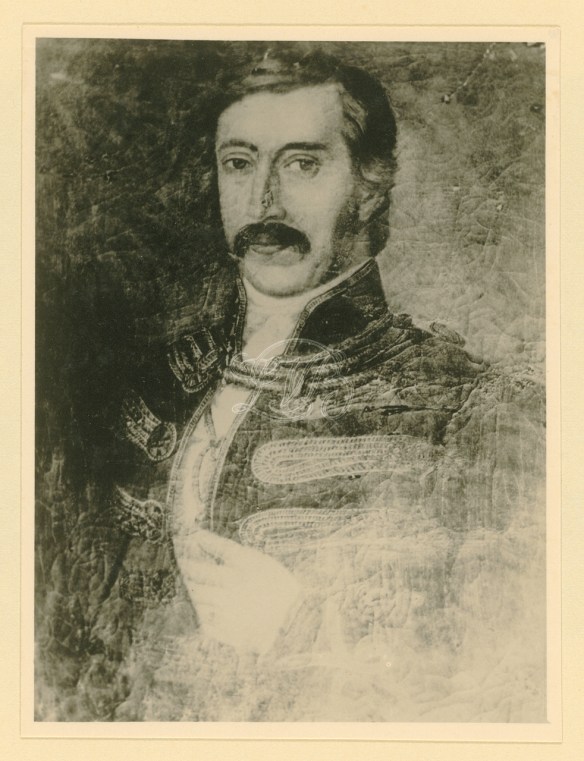
Nikolaus Zmeskall von Domanovecz, courtesy of Beethoven-Haus, Bonn

Duo for viola and cello in E flat major WoO 32, ‘Eyeglass Duo’ (1797, Beethoven aged 26)

1 Allegro
2 Minuetto

Dedication Nikolaus Zmeskall
Duration 14′

Listen

Background and Critical Reception

This is a title to raise the eyebrows – and is one of the curious corners of Beethoven’s output for sure. Perhaps fortunately the eyeglasses are not used to make any music – not directly, at any rate – rather, they refer to the wearers of the eyeglasses, Beethoven himself (viola) and Nikolaus Zmeskall (cello).

Baron Zmeskall was an accomplished cellist and a good friend of Beethoven, and the piece seems to have been written for domestic use only. It is in two lopsided movements, with a substantial first movement full of interaction between the players and a much shorter Minuetto. Richard Wigmore writes of how ‘in the minuet, with its pawky canonic trio, Beethoven suddenly pulls the rug from under the listener’s feet, by veering from E flat to a remote C flat – just the kind of comic-mysterious effect he had learnt from Haydn’.

Thoughts

Beethoven would surely have been aware that Mozart wrote two accomplished – and underrated – duos for violin and viola, and possibly of the four sonatas Michael Haydn published for the combination in the same year, 1797. Working lower down the range, Mozart also wrote a Sonata for bassoon and cello, lasting roughly the same length as this piece.

Perhaps Beethoven was aware of these when writing this highly amenable duo – which presumably appeared in large print, given the sight limitations of the players! Listening to the bright and busy Allegro, the first movement of this piece, the listener can imagine how much pleasure it brought to the bespectacled music makers. It is a lively discourse where the two instruments are treated completely as equals. The writing could easily be lifted from a string quartet, and several times I found my ear was expecting two violins to appear in harmony. The Minuetto is good fun too, including the harmonic trick noted above.

It may be intended for domestic music making only but Beethoven’s craft is all too evident, and his wit too, in this enjoyable miniature.

Recordings used

Veronika Hagen (viola), Clemens Hagen (DG)
Lawrence Power (viola), Paul Watkins (Hyperion)
Jürgen Kussmaul (viola), Anner Bylsma (cello) (Sony Classical)

Three excellent performances, bringing through the elegance of the piece, its genial nature, and also its humourous touches. Kussmaul and Bylsma, on period instruments, have a relatively grainy sound which is still appealing.

Spotify link

Veronika & Clemens Hagen

Jürgen Kussmaul, Anner Bylsma

You can listen to clips from Lawrence Power and Paul Watkins’ version on the Hyperion website

written by Ben Hogwood

You can chart the Arcana Beethoven playlist as it grows, with one recommended version of each piece we listen to. Catch up here!

Also written in 1797 Michael Haydn 4 Sonatas for Violin and Viola

Next up 12 Variations on the Russian Dance from ‘Das Waldmädchen’

Listening to Beethoven #110 – 6 German Dances for violin and piano WoO 42

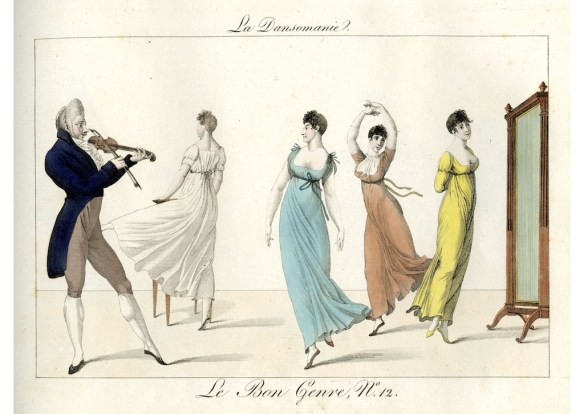
La Trénis, Contredanse by PIerre La Mésangère, British Museum

6 German Dances WoO42 for piano and violin (1796, Beethoven aged 25)

Dedication The ‘Countesses Thun’
Duration 5′

Listen

Background and Critical Reception

William Drabkin, writing in the booklet notes for the Complete Beethoven on DG, confirms the background behind these six short dances for violin and piano.

Beethoven describes them as ‘German dances, to which the two Countesses Thun and other people might dance on their heads and thereby think of their Ludwig Van Beethoven who honours them’. Drabkin confirms Beethoven sent the completed work to Vienna while he was on his concert tour of Berlin and Prague during 1795-96. He writes that ‘One of the two unnamed countesses Beethoven is likely to have intended in the dedication is Christiane, wife of his foremost patron during his first years in Vienna, Prince Karl Lichnowsky.’

The dances could be performed by piano alone, but the violin grows into its role as co-melodist as the dances progress.

Thoughts

Beethoven uses ‘safe’ homes for each of these short dances, all in a major key: F – D – F – A – D – G. They are all perky numbers that prove to be good fun, lightening the mood as they would doubtless have done of an evening.

Piano and violin share the load, the violin often using double stopping as in the drone of the rustic second dance or the attractive no.5. The fourth dance has a nice lilt to it, while no.6, the most substantial, finishes on a high.

Recordings used

David Garrett (violin), Bruno Canino (piano) (Deutsche Grammophon)
James Ehnes (violin), Andrew Armstrong (piano) (Signum Classics)

Both performances are thoroughly enjoyable. Ehnes and Armstrong have their collective foot on the accelerator that bit more, dancing with quick feet!

Spotify links

David Garrett, Bruno Canino

James Ehnes, Andrew Armstrong

Also written in 1796 Kreutzer Études ou caprices

Next up 12 German Dances WoO 13

Listening to Beethoven #108 – 12 Variations on ‘Ein Mädchen oder Weibchen’ Op.66

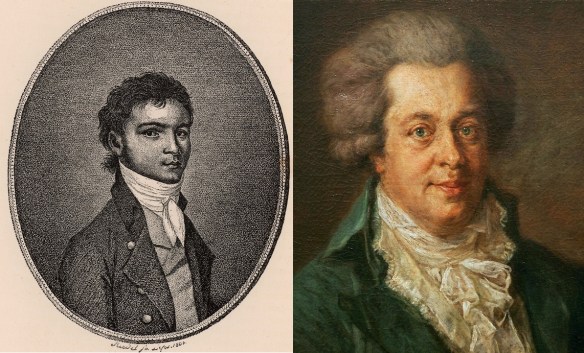
Ludwig van Beethoven and Wolfgang Amadeus Mozart (right, in a portrait by Johann Georg Edlinger)
12 Variations on ‘Ein Mädchen oder Weibchen’ from Mozart’s Die Zauberflöte Op.66 for piano and cello (1796, Beethoven aged 26)

Dedication thought to be Friedrich Wilhelm II, King of Prussia
Duration 10′

Listen

What’s the theme like?

The theme is Papageno’s aria, from Mozart’s opera Die Zauberflöte (The Magic Flute), where he expresses his desire for a wife over a glass of wine:

Background and Critical Reception

Beethoven’s flurry of activity writing for the piano and cello in 1796 yielded four works. Alongside the two groundbreaking sonatas published as Op.5 came two sets of unpublished variations, seemingly inspired by the same dedicatee and performers. The first set had fun with music by Handel, yet – as the excellent Beethoven’s Cello book reveals – this one has slightly more serious origins.

‘In all likelihood Beethoven finished these variations after his return to Vienna’, says the book. They were not published until 1819, when they were assigned the opus number 66 – overlooked when the Fifth Symphony was published ten years earlier. The book suggests Beethoven encountered The Magic Flute in Berlin, thanks to Frederick William II’s promotion. The roots of the piece, however, appear to lie in Beethoven’s competitive edge. They may have been designed in response to Abbé Gelinek, a pupil of Beethoven’s teacher Albrechtsberger and a popular piano teacher in Vienna.

Gelinek had already completed a set of ‘frivolous piano variations’ on Ein Mädchen oder Weibchen three years earlier. ‘Beethoven seems to have taken his lead from Gelinek’s six variations by producing twelve’, says the book, ‘starting in the same manner so he could eventually ‘out-compose’ his rival’. Gelinek’s is entertaining and pleasing, but not musically adventurous; Beethoven’s more assertively tests the limits of the theme and probes the possibilities for constructing a little musical drama around it. A contemporary review questioned Beethoven’s potential as a composer, for he was guilty of unusual tonal movements and ‘harmonic harshness’.

Thoughts

Beethoven has a lot of fun here. A perky introduction of the theme sees piano and cello in level partnership, with straightforward musical punctuation. Then, as the variations proceed, both instruments really start to express themselves. The piano offers a nicely weighted variation before the cello shows off its prowess in the higher register. This is Steven Isserlis’ ‘nightmarish’ second variation, the most difficult – and it’s easy to see why, with a high register and some very tricky jumps.

Once that’s over there is a lot for the cello to enjoy in rich, expressive exchanges with the piano, Beethoven’s bubbling stream of ideas showing no sign of letting up. Some are quickfire and virtuosic, others slow and profound, showing off the expressive tone of the cellist. There are also a couple of brisk marches, the second with block chords from the piano. As often seems to be the case with these pieces, the minor-key variation (the tenth) proves pivotal, a plaintive start growing into a substantial and emotional duet with unusual, questioning harmonies. Coming out of this, the two instruments have renewed energy and finish with a flourish.

Recordings used and Spotify links

Adrian Brendel (cello), Alfred Brendel (piano) (Decca)
Mischa Maisky (cello), Martha Argerich (piano) (Deutsche Grammophon)
Miklós Perényi (cello), András Schiff (piano) (ECM)
Steven Isserlis (cello), Robert Levin (fortepiano) (Hyperion)
Nicolas Altstaedt (cello), Alexandre Lonquich (piano) (Alpha)

The Spotify playlist below includes all but one of the versions listed above – with the opportunity to hear a clip from Steven Isserlis and Robert Levin’s version on the Hyperion website

Again it is Robert Levin and Steven Isserlis who get the measure of the piece, from its light hearted moments to the deep and questioning minor key variation.

Also written in 1796 Haydn Saper vorrei se m’ami, Hob.XXVa:2

Next up Ah! Perfido Op.65

Listening to Beethoven #107 – 12 Variations on ‘See The Conquering Hero Comes’ from Handel’s Judas Maccabaeus WoO 45

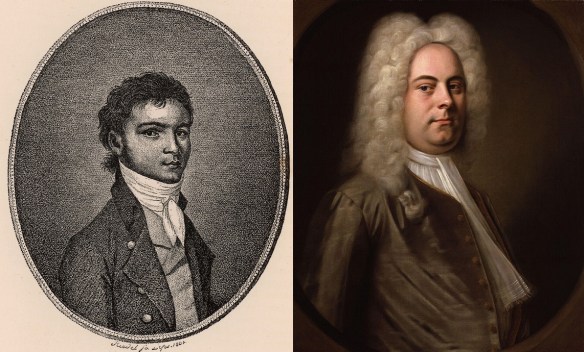
Ludwig van Beethoven and George Frideric Handel (right)

12 Variations on ‘See The Conquering Hero Comes’ from Handel’s Judas Maccabaeus WoO45 for piano and cello (1796, Beethoven aged 26)

Dedication thought to be Friedrich Wilhelm II, King of Prussia
Duration 12′

Listen

What’s the theme like?

Handel’s theme is a chorus from his oratorio Judas Maccabaeus. It is a popular tune which has been turned into a popular Christian hymn, Thine be the glory.

Background and Critical Reception

Soon after the success of his two Op.5 sonatas for piano and cello, Beethoven wrote a couple of sets of variations for the same instrumental combination. The dedicatee appears once again to have been Friedrich Wilhelm II, King of Prussia, with the cello-playing Duport brothers seemingly closely involved.

As Arcana discovered in a previous article, Beethoven’s love of the music of Handel ran deep. Later in his life he was to acquire Samuel Arnold’s first collected edition of Handel’s music (1787-97). Beethoven’s Cello – an excellent and compelling study of his music for the instrument by Marc D. Moskovitz and R. Larry Todd – has an engaging account of the work’s genesis.

It seems likely Beethoven attended a concert of Handel’s oratorio Judas Maccabaeus in Vienna in April 1794, but that his decision to use the ‘conquering hero’ theme came later. There are accounts of a concert in Berlin in 1796, when he improvised on the theme and, as Beethoven’s Cello recounts, ‘his listeners were so moved that they crowded around him and wept’. The decision to include cello ‘is not clear, but perhaps Duport played some role’, says the book.

There are twelve variations, beginning with keyboard-led music but gradually giving greater prominence to the cello. The seventh variation features a challenging display of tumbling triplets in the cello, noted by Moskovitz and Todd as having an affinity with Duport’s sixth etude. This variation is described by Steven Isserlis as the ‘one hideously difficult’ variation of the twelve.

Thoughts

Beethoven’s inspiration flows freely in this immediately likable work. The theme is memorable, one of Handel’s best tunes, and its triumphal air makes an early impact. The two instruments have an enjoyable and lightly spiced interplay, briefly turning baleful in the fourth, minor key variation but resuming its infectious optimism immediately afterwards.

The seventh variation is indeed a nasty one for the cellist, with skittish figures dancing all over the place, but then it’s the pianist’s turn, with a thundering statement. The two resume their ‘dance’, with a triumphant tenth variation – more bravura from the piano – and a substantial coda, with some slower thoughts, which leads to a subtly joyful finish.

Recordings used and Spotify links

Adrian Brendel (cello), Alfred Brendel (piano) (Decca)
Mischa Maisky (cello), Martha Argerich (piano) (Deutsche Grammophon)
Miklós Perényi (cello), András Schiff (piano) (ECM)
Steven Isserlis (cello), Robert Levin (fortepiano) (Hyperion)
Nicolas Altstaedt (cello), Alexandre Lonquich (piano) (Alpha)

The Spotify playlist below includes all but one of the versions listed above – with the opportunity to hear a clip from Steven Isserlis and Robert Levin’s version on the Hyperion website

There are some starry accounts of these variations, from father and son pairing Alfred and Adrian Brendel, from Martha Argerich and Mischa Maisky, and András Schiff with Miklós Perényi to name just three excellent versions. However it may not surprise you to learn that Steven Isserlis and Robert Levin pip them at the post with a thoroughly enjoyable account, recreating something of the air in the concert hall after Beethoven’s instinctive improvising in Berlin. Also highly commended is a new version from Alexander Lonquich and Nicolas Altstaedt.

Also written in 1796 Haydn Guarda qui, che lo vedrai Hob.XXVa:1

Next up 12 Variations on ‘Ein Mädchen oder Weibchen’ Op.66