Talking Heads – Jennifer Kloetzel

Arcana has an audience with cellist Jennifer Kloetzel, on Zoom from Nebraska. Kloetzel and pianist Robert Koenig have been spending a good deal of time with the music of Beethoven, and the fruits of their labours have just been released to critical acclaim by Avie. Beethoven: The Conquering Hero is a trible album bringing together all of the composer’s works for cello and piano. It is the completion of a long-held dream for the cellist, whose enthusiasm for her project bubbles over from the off.

“I’m still celebrating!” she says of Beethoven 250, the composer’s bicentenary having been cruelly cut up by the pandemic. “This album was supposed to be released right after the 250, but we got waylaid by the pandemic, and couldn’t get into the studio to finish. I don’t think Beethoven would care that we were late though!”

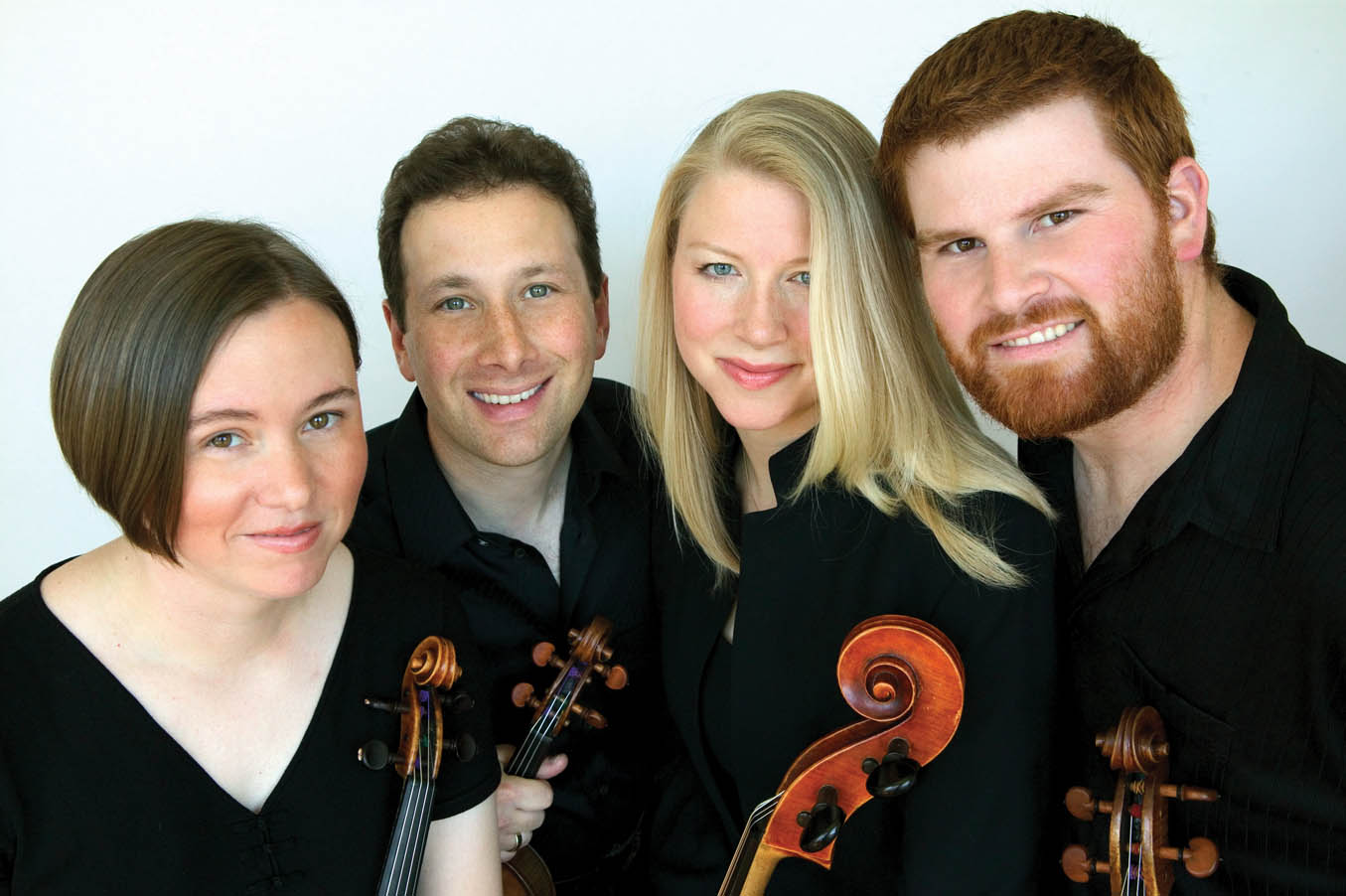
Kloetzel’s route to the Beethoven sonatas came by way of the complete string quartets, which she recorded as cellist of the Cypress String Quartet (below). “We recorded the late quartets first”, she remembers, “and then, many years later, we did the middles, and then, finally, just a quick two years before we disbanded, we did the earlies. It was fascinating to go backwards through his string quartet writing. If I had started the other way I would have thought the Op.18 quartets sound Mozartian, but seeing them from that way I saw everything that was going to happen later early on. It’s like when you look at a baby picture of somebody, it’s hard to tell what they’re going to look like as someone older, but later when you look back, you see them.”

She thought carefully of the ordering on the new cello release. “I didn’t record them straight from beginning to end, but I decided to put them in that listening order. If someone wants to sit down for three hours, they can go from 1796 to 1815, and have the experience of his writing for cello and piano with that little fun arrangement of the Horn Sonata thrown in. The thing that made me pause when I was doing that was the third, fourth and fifth sonatas, which are considered the biggest ones, and you have to wait for the entire third disc.”

Kloetzel includes the variations Beethoven wrote for piano and cello, and the ‘Conquering Hero’ title of the disc takes its name from the source of the first set of variations – Handel’s chorus See The Conquering Hero Comes, from the oratorio Judas Maccabaeus. “I had a lot of pushback on that title from people”, she says. “It’s more about Beethoven being the conquering hero, and what he conquered and became – the deafness, the lack of love. Everything after the battle with his nephew, and the fact he kept turning to music to write and express himself. That’s why I decided on the title, because in my mind, he is a conquering hero.”

Throughout the three discs, Kloetzel and Koenig (below) give off a pure enjoyment of Beethoven’s work. “I love the way things are put together, and I was reminded as I was doing this project, how clever Beethoven is. One of my favourite traits in all humans is cleverness, and Beethoven has it in spades. He’ll do something where the cello is in a certain range, and he’ll make sure that the piano parts are really not anywhere near that. When I was studying it for the recording, I would look to see where the piano part was. It is really interesting and thoughtful orchestration, carefully done. There is something perfect about that endless cleverness, and the dialogue back and forth. I was telling someone the other day that I was working on the Handel Variations, and it cracked me up that Beethoven doesn’t even give the cello the main theme until the tenth variation! Even then the piano has it in canon, low in the left hand.”

The sonatas are laced with feeling. “The G minor sonata, Op.5 no.2, has some serious drama, and I hear the Op.69 A major sonata with a degree of wistfulness and sadness, which I think brings something a little different to my interpretation, that it’s not all conquering joy. The music is so varied, too – he never does anything twice! When I was in college, I wrote a paper about the last two sonatas and how they are the turning point. They contain the hallmarks, the trills, the canons and the fugues.”

She agrees that the opening of the first of Beethoven’s two Op.102 sonatas feels like the opening of a new door. “I think so. One of the things that I find fascinating is that with both the third and fourth sonatas, he begins with solo cello. I read that Beethoven said, “Art demands of us that we never stand still.” And so he never does that same thing twice. In this case, he kind of does except it’s a really different type of melody, but it definitely is a signpost towards equal partnerships. The earlier works have a bit more weight to the piano, but of course it would have been him playing it! For almost all of that early stuff, up until about 1802, that’s the case, but after that, it’s not implied anymore. Part of the reason I find this music endlessly fascinating is that it’s always surprising, even to me, or in the way the contrast and the content is set up. If you follow the markings on his music, you find that buried treasure. So many people add in crescendos and the like, but I think he knew what he was doing!”

Kloetzel also follows Beethoven’s markings for repeats, whereby sections of the sonata movements are heard for the second time. “I included every repeat in all of these works, as I am a believer in the form, and I think that he knew what he was doing. In the G minor Sonata, the first movement has a double repeat. Now I know it makes the movement 21 minutes long, but I think it’s fascinating. I never performed it that way, but as I was studying it for the recording, I realised that he meant this!”

She confesses to playing the Second Sonata when just eight years old, which begs the question – at what age did Kloetzel actually start playing the cello? “I started at age six”, she says. “My mother is an opera singer, and in my family, I’m one of four children. You had to play piano and one other instrument. When I was five I heard the sound of the cello and I said, “I want to play”. My parents were like, “You’re too young, too little.” I begged for an entire year to play the cello, and so they finally rented a half-sized cello. After about six weeks, I get my first recital, which we have a tape of, by the way!” I did my own variations on Twinkle, Twinkle Little Star, but I couldn’t quite tune the cello, so it sounds a little modern! A few weeks later my teacher came to my mother and said, “She’s scaring me, she’s learning so fast. Please take her to Baltimore and find a teacher for her there. That’s where I did 10 years in the pre-college there, before going to the Juilliard School.”

Kloetzel and Koenig both met at Juilliard. “Bob and I were there around the same time. He was one of the collaborative pianists, playing mostly with violins. Then six years ago when I got the job at University of California in Santa Barbara, he was the person to reach out to me and say, “Hey, we have a job opening. I see your quartet is just ending.” So I applied, and as part of the audition we actually played the Third Sonata together, because he played with me for the audition. That’s six years ago, and we started playing together right away. We played the G minor Sonata just a few months later, and my mother said how she was blown away by the two of us, it was like ‘hand in glove’. I think the two of us come from a similar background of making chamber music and really listening and responding, which makes it a very special partnership. I just knew he was the person to do this with me!”

Kloetzel has two points of reference for running through Beethoven’s output from early to late – the string quartets and now the sonatas for piano and cello. Is there a noticeable development in his writing for cello? “Let’s look at Opus 59 no.1”, she says a little unexpectedly, turning to the first of the Razumovsky Quartets. “A middle period work, one of my favourite quartets – it’s such a cello quartet, with the Russian theme. It’s like the Op.69 sonata, we’re right in that same middle, heroic period where he’s using all the voices equally. When we get to the later quartets, some of the cello parts are extremely high. When we get to Op.132 there’s a whole passage where the cello is way up high, soaring in octaves with the first violin, versus Op.131 where it’s very low.”

Mention of Beethoven’s Op.131 quartet, in C# minor no less, prompts a discussion on his use of keys. “It is fiendishly difficult, outrageous!”, Kloetzel agrees. “I remember really studying the key relationships, and how many he had written in each. F major is important, with three works, and E flat major too. I don’t see that as much in the cello sonatas. My friend Will Meredith, who wrote the booklet notes, he has given lectures on what keys mean to Beethoven. That’s like the language of flowers! His point though was that these things mattered. E flat was the heroic key – and you think of Op.127.”

Jennifer has a sudden realisation. “You know what I need to do next, right? The piano trios!” It would be a wholly logical step. “I have played them all, and the string trios too! We’ll see though. Stay tuned!”

Speaking from my own perspective as a part time cellist, I am curious to find out the technical demands as the cycle of cello sonatas progresses. “I don’t find they are as demanding as the quartets because of the length of the pieces”, she says. “With the quartets you can sometimes feel like you are about to climb a mountain when you start the piece. When you have a great pianist in the cello sonatas, you don’t have to fight to get your sound out – and that’s partly Beethoven’s writing. The hardest thing in a way is making sure all the ranges make sense. I read once that Beethoven didn’t think the cello could really be a solo instrument, because it couldn’t cut through. That is fascinating to me given they were playing with a fortepiano.”

Kloetzel is convinced that Beethoven knew the right people – particularly two cellists he met at an opportune time. “I think when he met the Duport brothers, in the Prussian court, that changed his opinion. I think we have them to thank for this body of work, and with the Mozart Prussian Quartets, freeing up the cello a little bit. In between the Duport brothers and Antonin Kraft, Beethoven heard very good cellists and knew what was possible. Interestingly we don’t have a fully-fledged slow movement in the sonatas, or the Triple Concerto. It’s a very short slow movement, and he puts the cello very high, like a violin. The Fifth Sonata has the closest thing to a slow movement, it spins and then goes into the fugue. The arc of that work is difficult, because it’s a short first movement and then you have to make it work. With the fugue, I’ve heard it played wildly fast. For my masters recital at Juilliard, I did all five sonatas on one programme, with two intermissions. It was such a great journey.”

Kloetzel has received advice on the sonatas from a close friend, Steven Isserlis, who has himself recorded the sonatas. “I adore him”, she says warmly. “He’s crazy and wonderful. He gave a class to my students a couple of years ago, and we reconnected after. I met him a while back, and he gave me a very difficult lesson on the fourth sonata many years ago, when I was a student living in Prague and he came through. Boy did he read me the riot act, for not doing my homework better – but out of that was born a friendship, so that was wonderful!”

Kloetzel and Koenig’s new recording complement Isserlis and Robert Levin, on the fortepiano, rather nicely. “I purposely didn’t listen to his recording of the Horn Sonata before ours”, says Jennifer, “as I didn’t want to be influenced by it. It’s hard when you’re preparing for a big project like this. I have multiple versions of the pieces, and favourite versions for sure, but one is elegant, one is passionate, one is exciting.” As to the piano, she says, “You realise how much Beethoven was playing with textures in the five sonatas”. The Horn Sonata is rather different. “There are more long lines within the cello / horn part, and moments where it’s like ‘No, he didn’t write anything like that for the cello. That is why I loved including it. There is a version of the Kreutzer Sonata played on cello, but I’m not so sure! It’s in a different key, and Bob was not sure about the piano part either. When I was trying to put this together I wanted it to be what Beethoven himself wrote”.

Although Beethoven is a huge part of Kloetzel’s work, especially recently, so too is contemporary music. It is clearly important for her to manage a balance between the different established and new classical works. “Absolutely, because in a way we’re only playing older music. We’re historians, right? We’re putting a fresh look at a moment in history, so I feel it is very important to look at the music of today, so that we not only continue to start but when people look back, they see what’s being written today. I also I have a whole passion of finding what I like to call the ‘living Beethovens’, composers whose music is interesting, thoughtful and clever – all the elements I love in Beethoven. Only yesterday I was on the phone with a composer who’s writing a Cello Concerto for me, and she’s just at the very beginning of writing so we were talking about ideas. She likes to have inspiration from something I’m thinking about, so it becomes a personal thing. I definitely think it’s important to play, and then not only to premiere works, but to champion them, so they get recorded.”

This approach has stayed with her. “When I was in the quartet, we had a whole process for choosing composers to commission which involved three of us not knowing where the music had come from. We would listen to the pieces on a playlist, and had a voting system to give our verdict, and then we would find out the composer. We called it ‘blind listening’ and it was great; it was about listening to the core of the music.”

“Just like I get obsessed with Beethoven I get obsessed with new music too, and the same thing happened with the string quartet he himself was writing for, the Schuppanzigh Quartet! Over the pandemic I was of course playing a lot of Bach, because I could, and that was a part of what kept me going when all the concerts went away. It was difficult, when what you are destined to do is gone, and live streaming was not the same. I said to myself “If nothing else, let’s play a little bit of Bach!” I made sure I played it every day, and I started to craft a project where I was commissioning companion pieces for each of the suites. I have five of the commissioned works so far. I went to my ‘go tos’ first but then I wanted to go further afield. That’s the old and the new again.”

She elaborates on the composers writing alongside the Bach. “There is Elena Ruehr, who wrote with the First Suite, and then a French composer Philippe Berson, he is amazing. He wrote a piece titled Sarabande for the Second Suite. For the Third Suite I turned to the very first composer I commissioned for the quartet, Dan Coleman, who was a colleague of mine at Juilliard and lives in Arizona. For lives in Arizona, and then for the fourth a colleague of mine from Santa Barbara, Sarah Gibson, a young female composer and pianist, I love the piece she wrote! The Fifth Suite is proving a little difficult, that’s the one I’m still waiting for, the person I wanted to do it was just too busy. I’m going to give that a little space, but then for the Sixth Suite I commissioned Aaron Clay, an African-American bass player from Virginia who is a very fine composer. Four of those are unperformed, and I hope not too much time goes by before they are.

There are other pieces that have been postponed. “There is a concerto by Joel Friedman that was supposed to be premiered during 2020 but has been postponed for another year or so. It is a Double Concerto, Inferno, for viola and cello – based on Dante’s Inferno. It has a political theme of what was happening, you know, in our country there for a while. It’s electrified, and we have to do all sorts of insane things – there’s a whole Skrillex effect I have to do. I’ve spent a lot of time figuring out pedals, with delay and looping. I’m excited about this piece, and art demands of us that we never stand still! There are too many things I would like to do but not enough hours in the day.”

You can listen to Jennifer Kloetzel and Robert Koenig’s Beethoven: The Conquering Hero at the Avie Records website where you can also explore purchase options.

Listening to Beethoven – normal service will be resumed shortly!

from Ben Hogwood

Regular readers of these pages may have wondered what has happened to Arcana’s Beethoven listening project. I am very pleased to say that it has not finished, merely been put on pause – and will resume with the mighty Eroica symphony very soon! To whet your appetite, here is a 2016 concert performance from the Frankfurt Radio Symphony Orchestra, conducted by Andrés Orozco-Estrada:

Listening to Beethoven #207 – Andante in F major, ‘Andante favori’ WoO 57

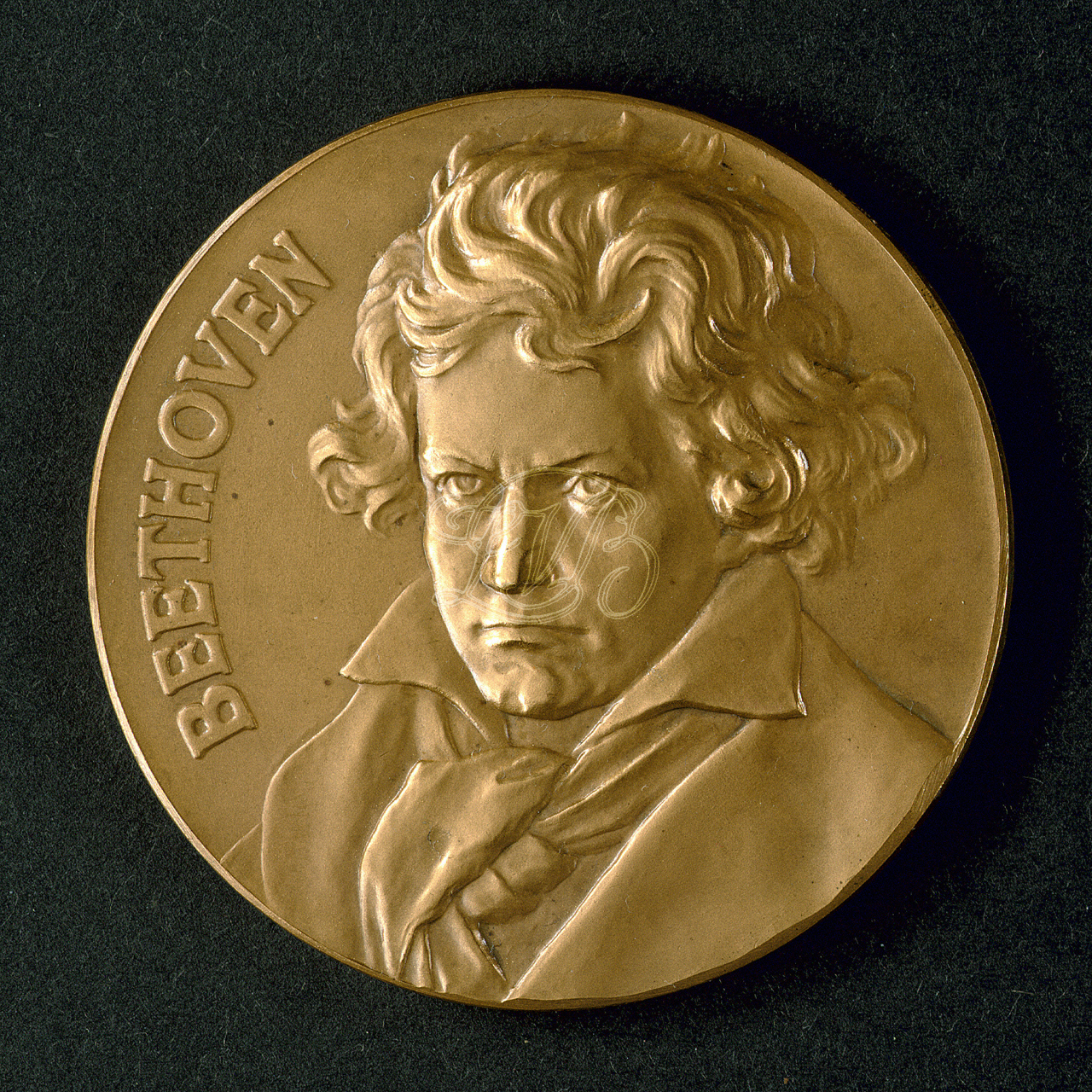
Commemorative medal for Ludwig van Beethoven, 1927 – Bronze medal from the Hungarian Ministry of Culture based on a design by József Reményi

Andante in F major WoO 57, ‘Andante favori’ for piano (1803, Beethoven aged 32)

Dedication not known
Duration 9′

Listen

written by Ben Hogwood

Background and Critical Reception

The origins for this single-movement piece lie in Beethoven’s forthcoming Waldstein piano sonata. A substantial Andante was composed as the central movement for the piece, seemingly begun in late 1803 – but was thought by many of Beethoven’s contemporaries to be too long.

Lewis Lockwood gives interesting detail on the construction of the sonata, describing the movement as ‘smooth and ingratiating’. He considers the reasons for the movement’s omission…that ‘keeping this big Andante along with the finale would have resulted in two long rondos in succession. Another was that although this ornate and conventional Andante would have furnished a quiet contrast to the dynamic first and third movements, it fell below their level of interest’.

The piece was published as a standalone work in 1804/5, gaining its title Andante favori for a second release in 1807, and won critical acclaim even as a ‘bleeding chunk’. It was replaced with a much shorter – and highly original – Introduzione.

Thoughts

It seems a little unfair to describe the Andante as ‘conventional’ and as ‘below the level of interest’ of the other two Waldstein sonata movements. It does however suit its publication as a single work, standing on its own as a subdued but subtly emotional piece of work.

There is a prayerful quality to its slowly unfolding contours, Beethoven seemingly taking tame out for deep contemplation. Once again however he delivers a main theme of melodic interest that stays in the mind soon after the first hearing. Development of this theme is typically assured, and there are contrasting elements – a faster section moving towards C major, and another where Beethoven beautifully displaces the key in to B flat major and a brightly voiced theme in octaves. There is a ‘false’ end, too, where the piece threatens to finish but has one final statement to make.

It is easy to see why the Andante favori has become a popular piece, with its thoughtful undertones easy to interpret as romantic, lovelorn thoughts. It feels, even with the restraint on show here, as though we are close to the heart of Beethoven’s matter.

Recordings used and Spotify playlist

Ronald Brautigam (BIS)
Jenő Jandó (Naxos)
Mikhail Pletnev (Deutsche Grammophon)
Alfred Brendel (Philips)
Sviatoslav Richter (Warner Classics)

Andras Schiff (ECM)

Boris Giltburg (Naxos)

There are some excellent recordings of this piece. Perhaps predictably Sviatoslav Richter finds an inner spirituality to the work, stretching it out in an almost imperceptible way. Alfred Brendel delivers a beautifully phrased and nuanced performance. Andras Schiff also finds the emotional centre of the piece, while Ronald Brautigam, playing on a ‘period’ instrument, plays more quickly but lovingly too.

You can chart the Arcana Beethoven playlist as it grows, with one recommended version of each piece we listen to. Catch up here!

Also written in 1803 Crusell Clarinet Concerto no.3 in B flat major

Next up Symphony no.3 in E flat major Op.55 ‘Eroica’

Listening to Beethoven #206 – Christus am Ölberge (Christ on the Mount of Olives), Op.85

Jesus prays

Christ on the Mount of Olives by Giovanni (aka Josef Untersberger) Date unknown

Christus am Ölberge (Christ on the Mount of Olives) Op.85 for soprano, tenor, baritone, chorus and orchestra (1803, revised 1811, Beethoven aged 32)

Dedication not known
Text Franz Xaver Huber

Duration 45′

Listen

Background and Critical Reception

For the first time since the Joseph cantata of 1790, Beethoven was ready to write another large work for chorus and orchestra. This one was to be biblical, focusing in on a specific part of Christ’s Passion, where in the moment of greatest trial on the Mount of Olives, he begs God to relieve him of his suffering.

Lewis Lockwood tells how Beethoven wrote the work in two weeks, in close collaboration with Franz Xaver Huber, editor of the Wiener Zeitung and occasional librettist. He then writes how ‘Haste is evident in the inconsistent quality of the work, which ranges from routine recitatives and reasonably effective arias for Jesus and the Seraph, to bombastic choral writing for the warriors and youths. Revising it for publication at long last eight years later, he described it defensively and apologetically to Breitkopf & Härtel as ‘my first work of that kind’ (a sacred oratorio) and, moreover, an early work…written in a fortnight in all kinds of disturbances and other unpleasant and distressing events in my life (my brother happened to be suffering from a mortal disease).”

Jan Swafford writes engagingly on the premiere of Christus, the original form given on 5 April 1803 in Vienna, in the company of the first two symphonies and the Piano Concerto no.3. There were ‘tales of long rehearsals, players already fatigued by the other works in the program’…but ‘there was still a full house.’

Early reviews were relatively positive – but although the work ‘was good and contains a few first-rate passages…a number of ideas from Haydn’s Creation seem to have found their way into the final chorus’. Perhaps unexpectedly, Beethoven’s teacher Albrechtsberger was targeted by Gustav Nottebohm for Beethoven’s ‘failure to receive thorough training in the form of the fugue’  – a statement that flies in the face of the Eroica Variations.

Swafford notes the likelihood that ‘after his Heiligenstadt crisis of the precious Autumn, Beethoven felt a personal relationship to the suffering he was depicting. His final verdict, however, is damning. ‘Though Christus has its striking moments and is nothing but skillful, it was then and would remain one of the most misconceived, inauthentic, undigested large works Beethoven ever wrote.’

Thoughts

From the outset of Christus, Beethoven’s intentions are very clear. This is to be a serious and dramatic work, showing its composer’s abilities at writing for large forces and showing off his operatic credentials. Its impact, however, is a little more patchy. The solemn, slow introduction sets the scene and holds the tension, maintained with the arrival of the tenor, who pleads for the ‘cup of suffering’ to be taken from him in an extended solo detailing his pain in long notes.

The arrival of the seraph raises the stakes still higher, and the soprano role really hits the heights in its first aria. By this point Beethoven is in the key of A flat major, a familiar centre for profound solo movements such as that written for the Pathétique sonata, with prominent parts for the wind in counterpoint. The two duet, though the operatic style is relatively jaunty for music depicting intense suffering

The intervention of Christ’s faithful disciple Peter is a dramatic statement of allegiance, and the baritone role adds real gravitas to the piece. We lead to an exultant final chorus is especially Handelian, with strong parallels to Zadok the Priest in its hymn of praise.

Beethoven’s frame of mind when writing Christus would surely have been uneven, his illnesses and deafness at the forefront. The work is a powerful reaction, and feels like a composition Beethoven needed to get out of his system. In spite of its perceived imbalances and flaws it has some powerful music, the composer searching for – and increasingly pinpointing – his voice as a ‘big work’ composer.

Recordings used

Hanna-Leena Haapamäki, Jussi Myllys, Niklas Spångberg, Turku Philharmonic Orchestra, Chorus Cathedralis Aboensis, Leif Segerstam (Naxos)
Elsa Dreisig (soprano), Pavol Breslik (tenor), David Soar (bass-baritone), London Symphony Chorus and Orchestra / Sir Simon Rattle (LSO Live)
Luba Orgonasova (Seraph), Plácido Domingo (Jesus) & Andreas Schmidt (Petrus), Deutsches Symphonie-Orchester Berlin & Rundfunkchor Berlin, Kent Nagano (Harmonia Mundi)
James King (tenor), Elizabeth Harwood (soprano), Franz Crass (bass (vocal)), Helmut Froschauer (chorus master), Wiener Symphoniker, Wiener Singverein, Wiener Symphoniker / Bernhard Klee

Recordings of Christus are thin on the ground, and in spite of some spirited accounts it perhaps needs the attention of an established ‘period’ conductor like John Eliot Gardiner. The soloists elevate Kent Nagano’s version, while the recent live account from Sir Simon Rattle and LSO forces is a dramatic one.

Also written in 1803 Salieri Gesù al limbo

Next up Andante favori in F major, WoO 57

Listening to Beethoven #205 – Der Wachtelslag WoO 129

peanuts-birds

Peanuts comic strip, drawn by Charles M. Schulz (c)PNTS

Der Wachtelslag WoO 129 for voice and piano (1803, Beethoven aged 32)

Dedication not known
Text Samuel Friedrich Sauter

Duration 3’45”

Listen

Background and Critical Reception

The guide to this song on the website of the Beethoven-Haus Bonn lists it as a ‘box office hit’. Certainly Beethoven was aware of the popularity of Der Wachtelschlag (The Call of the Quail), informing the publisher Breitkopf & Härtel in Leipzig, “I am offering you the following works for 300 gulden: A quail song, the text of which you may know. It consists of three verses, but my setting is entirely durchkomponiert (through-composed)”

For some reason the publishers did not take the song and it was released the following year by Kunst- und Industrie-Comptoir in Vienna. The autograph score hints at another dedication to Count Browne, but this did not carry over to the original.

For Susan Youens, writing booklet notes for Signum Classics, the song “belongs to the antique tradition of bird calls in music…a bird whose calls invoke God”. She compares Beethoven’s setting with a later one from Schubert. “Both men inevitably devised the same dotted rhythmic figure for the quail’s calls”. Beethoven, however, “takes the poem far more seriously and from the perspective of the human being who listens to these worshipful injunctions. Ranging farther afield tonally than his younger contemporary, Beethoven’s storms are more tempestuous (the low bass rumble of thunder is a particularly wonderful detail), his acclamations of God’s praise grander, and his pleas for God’s aid more plangent.”

Thoughts

This is surely one of Beethoven’s most descriptive and dramatic songs – and is an indication of his development into a song composer of greater experimentation. The form of the song is quite unusual, being through-composed and taking an operatic air at times. Beethoven also brings the piano and voice close together in a shared depiction of the source material.

As Youens notes above, the rumble of the piano, low in the left hand, is a brilliant dramatic touch, while the ‘recitative’ nature of some of his vocal writing brings Handel to mind (to this ear at least!). Around the time of this song Beethoven had been working on a large, dramatic score (Christus am Ölberge, to be covered shortly) and this may be a fruitful result of the inspiration from that stage work.

It certainly makes a strong impact!

Recordings used

Dietrich Fischer-Dieskau (baritone), Jörg Demus (piano) (Deutsche Grammophon)
Peter Schreier (tenor), András Schiff (piano) (Decca)
Barbara Hendricks (soprano), Love Derwinger (piano) (Arte Verum)
Christopher Maltman (baritone), Iain Burnside (piano) (Signum Classics)
Hermann Prey (baritone), Leonard Hokanson (Capriccio)

Dietrich Fisher-Dieskau is the ideal singer for this song, forcefully bringing it to life with the equally fervent tones of Jörg Demus. Yet his is not the only way to express Beethoven’s thoughts – Peter Schreier and András Schiff may be higher up the register (F major rather than D), and they glower less, but they still invest plenty of feeling in the text. The other versions listed are also very fine – including soprano Barbara Hendricks and Love Derwinger, at the same higher pitch but with a sharper tone from the singer. Christopher Maltman and Hermann Prey complete a formidable discography.

Also written in 1803 Krommer Symphony no.2 in D major Op.40

Next up Christus am Ölberge (Christ on the Mount of Olives), Op.85