In concert – Martin Fröst, Janine Jansen, LSO / Gianandrea Noseda: Lost and Found @ Barbican Hall

Martin Fröst (clarinet), Janine Jansen (violin), London Symphony Orchestra / Gianandrea Noseda

Beethoven Leonore Overture no.3 Op.72b (1806)
Beamish Distans: Concerto for violin and clarinet (UK premiere) (2023)
Prokofiev Symphony no.7 in C# minor Op.131 (1952)

Barbican Hall, London
Thursday 20 June 2024

Reviewed by Ben Hogwood Pictures (c) Mark Allan

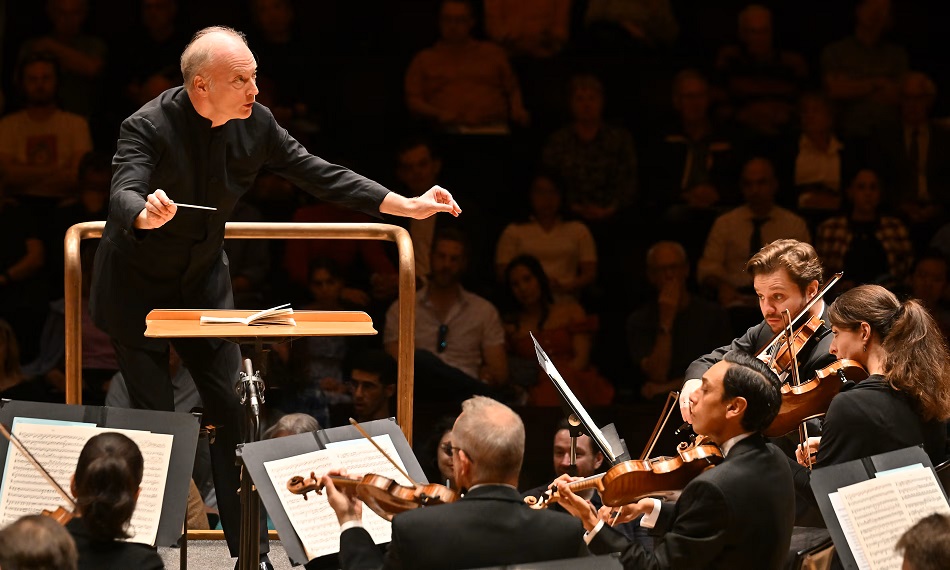
The London Symphony Orchestra and their principal guest conductor Gianandrea Noseda continued their Prokofiev symphony cycle with the elusive Seventh, prefaced by one of Beethoven’s four operatic overtures and a finally realised UK premiere.

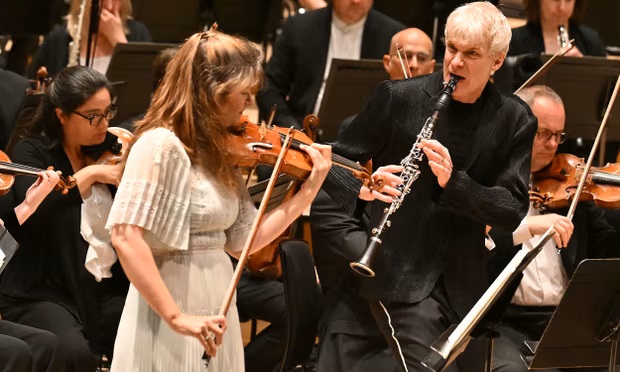
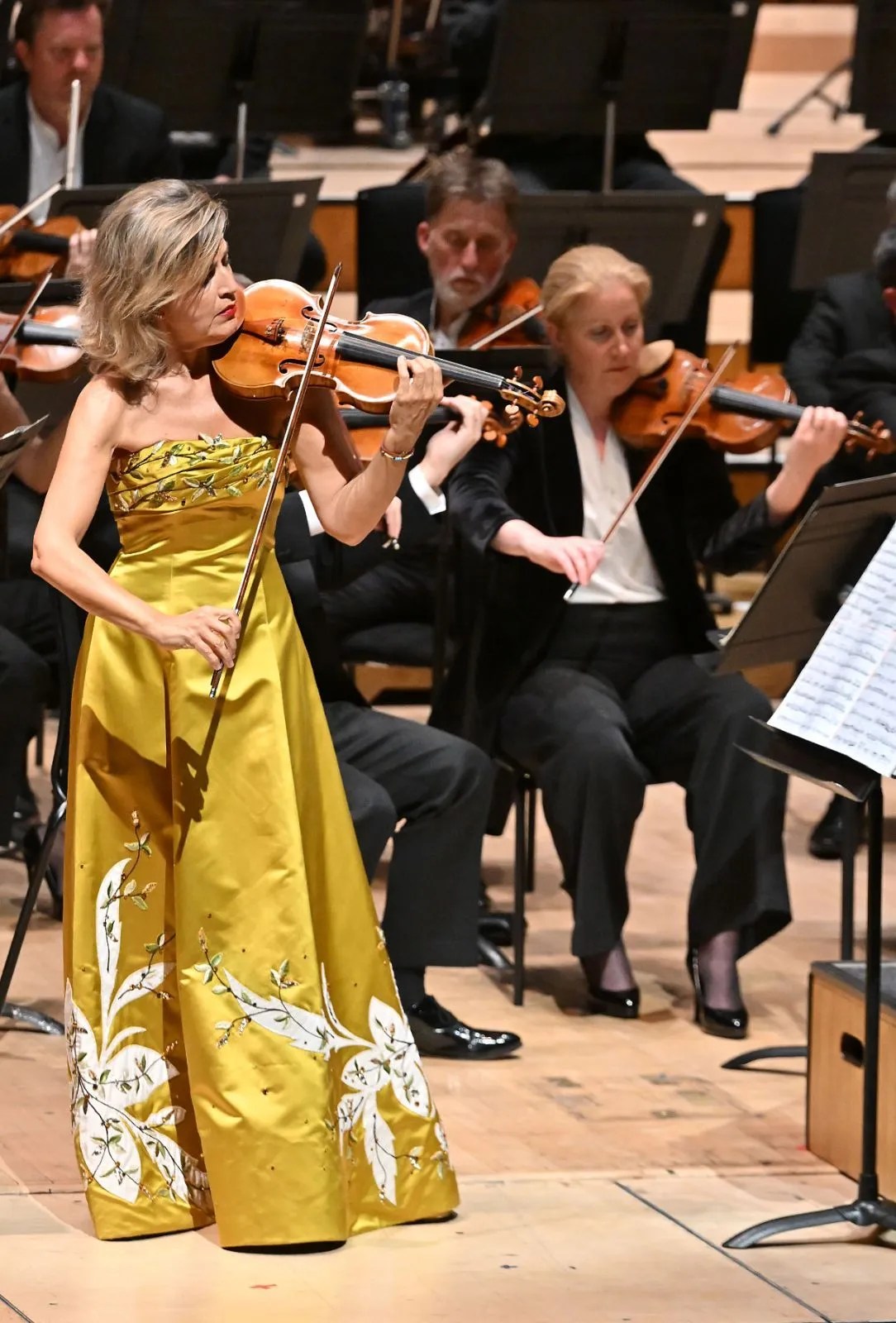
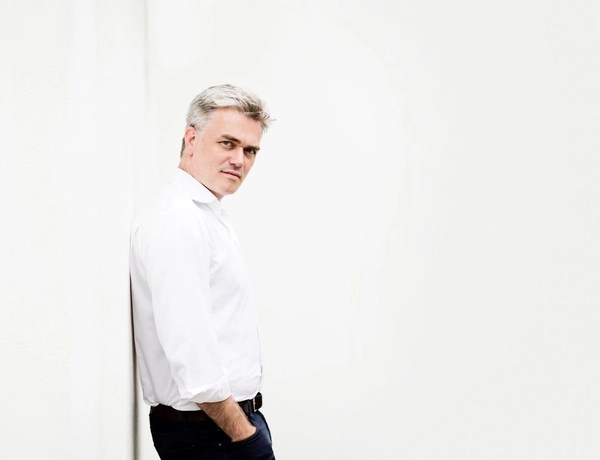
This was Distans, a co-commission between four orchestras for Sally Beamish to write a concerto for the unusual combination of clarinet and violin. Its first performance was delayed due to the pandemic, which became the inspiration for the content of the work. Themes of separation run through the three movements, drawing on the composer’s Swedish and Scottish connections. Separated from her children during lockdown, Beamish also used the forceful musical personalities of soloists Martin Fröst and Janine Jansen (both above) for inspiration.

The two began offstage, however, beckoning to each other across the Barbican Hall as Calling, the first movement, took shape. This was named in the concert notes as ‘kulning’, “the high-pitched singing of women calling the calls on remote pastures”. Beamish’s wide-angle musical lens produced an effective and touching first paragraph, the soloists eventually united on stage in music of the dance, evoking a Swedish fiddle with the full weight and energy of the orchestra in support.

Echoing, the slow second movement, explored more intense feelings of isolation through beautiful scoring, earthy cellos and metallic percussion casting a rarefied light suggesting a Swedish winter. The third movement, Journeying, was powered by an ancient march, the soloists together in spirit and melody, out in the elements with the orchestra. Although the music of beckoning reappeared, the mood was one of reunification, the soloists now at peace and content to remain on stage.

Distans made a strong impact in the hall, and Beamish’s writing for clarinet in her first major piece for the instrument made the most of Martin Fröst’s extraordinary breath control and agility. Jansen also fully inhabited the spirit of the piece, though her part often felt within that of the clarinet, and rarely used the high register. This was definitely a work to hear again, for Beamish’s sound world is a very attractive one in concert.

After the interval, Prokofiev’s Seventh Symphony was given an affectionate performance, yet one that also found the darkness lurking within. One of Prokofiev’s final works, the Seventh was written for the Soviet Children’s Radio Division, and as a result adopts a youthful stance, with commendably little room for nostalgia. Instead the composer gets up to his characteristically witty tricks, with inventive scoring enjoyed by the orchestra as woodwind doubled in octaves, and the piano and harp supplemented lower strings.

The music danced, a reminder of Prokofiev’s balletic qualities. The second movement Allegretto had poise in its first tune but a heavier swagger in the second, suggesting the unpredictable movements of older age – though an impressively powerful and assured close was reached. The following Andante enjoyed rich string colours, together with brilliant individual characterisations from oboe (Juliana Koch) and cor anglais (Clément Noël).

Yet the abiding memories came from two themes used in the outer movements. The first, a sweeping unison for orchestra, lovingly recreates the key and spirit of the composer’s first piano concerto, one of his greatest early successes – and was delivered with great charm here. The second, a cautionary motif from flute and glockenspiel resembling a ticking clock, returned like a regretful memory at the end – reminding this listener of an equivalent moment in Shostakovich’s last symphony, completed nearly 20 years later. It ended this performance on a thoughtful note, in spite of the exuberance that had gone before. The LSO were excellent throughout, presenting a convincing case for the Seventh as a bittersweet triumph, and reminding us in the process of Prokofiev’s abundance as a melodic composer.

Meanwhile Beethoven’s Leonore Overture no.3 began in a more desperate mood of resignation, the opera’s main character Florestan losing all hope in prison. Noseda – fresh from recording a symphony cycle with the National Symphony Orchestra in Washington – has very strong Beethovenian instincts, and paced this just right, with an appropriate hush falling over the hall. As the drama heightened, and an evocative offstage trumpet beckoned, the release from prison led to an outpouring of joy, sweeping us up in its forward momentum. The players were off the leash, enjoying every second.

You can find more information on further 2023/24 concerts at the London Symphony Orchestra website

Published post no.2,216 – Friday 21 June 2024

In concert – Katie Trethewey, University of Birmingham Voices, CBSO Chorus & Orchestra / Ludovic Morlot: John Luther Adams – Vespers of the Blessed Earth; Sibelius

Katie Tretheway (soprano), CBSO Chorus, University of Birmingham Voices, City of Birmingham Symphony Orchestra / Ludovic Morlot

John Luther Adams Vespers of the Blessed Earth (2021) [CBSO co-commission: UK premiere]
Sibelius Symphony no.2 in D major Op.43 (1901-02)

Symphony Hall, Birmingham
Thursday 9 May 2024

Reviewed by Richard Whitehouse

Almost eight years ago, the City of Birmingham Symphony Orchestra and Ludovic Morlot gave the UK premiere of John Luther AdamsBecome Ocean. Tonight they, with the CBSO Chorus and University of Birmingham Voices, gave that of his most recent large-scale work.

It may have been obliquely inspired by Monteverdi, but Vespers of the Blessed Earth is very much a humanist response to those ecological challenges of the present and, to this end, its texts have a concreteness and functionality which is wholly at the service of the music. Thus A Brief Descent into Deep Time sets words as depict the (reverse) geological evolution of the Grand Canyon, its emotional matter-of-factness in contrast to A Weeping of Doves with its unaccompanied setting of the call of the Papuan fruit dove in what is one of Adams’ most ravishing inspirations. Hardly less affecting is Night-Shining Clouds – an interlude, in the form of a chaconne, for strings that follows what the composer calls a ‘sub-harmonic’ series with its slowly spiralling descent to the depths for a graphic evocation of cloudly pollutants.

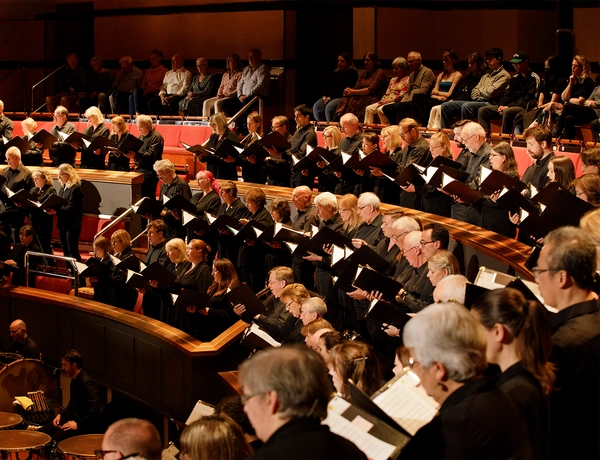
The fourth and climactic section, Litanies of the Sixth Extinction divides the choruses into four parts which between them chant the names of species in the process of or likely to face extinction – closing ominously with Homo Sapiens. It was here that an antiphonal placing of strings and percussion, along with choirs of woodwind and brass placed along either side of the upper circle, came into its own but, typically for Adams, the effect was one of cumulative if not intensifying emotion. Aria of the Ghost Bird followed with its transcribed rendering of the call from the now-extinct Kaua’i O’ō, tonight taken by Katie Tretheway (above) in what was a finale of the gentlest eloquence. It duly remained for offstage flute and chimes, here placed up in the grand tier, to see this inconsistent while always absorbing work to its wistful close.

In his thoughtful introductory remarks, Morlot spoke of the appositeness when juxtaposing Adams with Sibelius and the latter’s Second Symphony, which followed the interval, made his point admirably. Once the most popular such piece by Sibelius (and, indeed, of the last century), latter-day performances too often fight shy of its innate rhetoric or overt emotion. Without being disengaged, this account succeeded because of its methodical trajectory, not least a first movement whose restraint was never at the expense of its overall incisiveness.

With its stark contrast between conflict and consolation, the slow movement can easily fall into overkill but not here – Morlot evincing a keen sense of cohesion through to its baleful ending. The scherzo likewise secured keen cohesion from its alternate energy and raptness, then its surging transition into the finale brought an emotional frisson maintained through to an apotheosis whose grandeur never felt self-conscious or overbearing. Whether the triumph expressed is cultural or personal, the underlying essence of its affirmation was not in doubt.

It certainly set the seal on a memorable evening – one that confirmed the undoubted rapport between orchestra and conductor, while bridging the conceptual divide and almost 120 years between these pieces. Hopefully the CBSO and Morlot will be working together again soon.

Click on the link to read more on the current CBSO concert season, and on the names for more on soprano Katie Trethewey, conductor Ludovic Morlot, the University of Birmingham Voices and the CBSO Chorus. Meanwhile you can click on the name for more on composer John Luther Adams

Published post no.2,203 – Saturday 8 June 2024

In concert – Anne-Sophie Mutter, London Symphony Orchestra / Thomas Adès: Myth and Magic @ Barbican Hall

Anne-Sophie Mutter (violin), London Symphony Orchestra / Thomas Adès

Stravinsky Orpheus (1947)
Lutosławski Partita (for Violin and Orchestra) (1988)
Adès Air – Homage to Sibelius (Violin Concerto) (UK premiere) (2021-22)
Stravinsky Agon (1953-57)

Barbican Hall, London
Thursday 31 May 2024

Reviewed by Ben Hogwood Pictures (c) Mark Allan

This rewarding concert featured the imaginative programming of four works looking simultaneously backwards and forwards, with two great Stravinsky ballets framing shorter works for violin and orchestra.

Anne-Sophie Mutter (below) has forged a pioneering path for contemporary music throughout her career, and added another dedication to an illustrious list that includes Lutosławski, Penderecki, Sir André Previn and Unsuk Chin. Air – Homage to Sibelius was written in the light of her admiration for Adès’ Concentric Paths, his Violin Concerto of 2005. It is a very different work indeed, an extended meditation based on a single melody written in the slow days of lockdown in 2021. In the execution Adès brought his music unexpectedly close to that of John Tavener or Arvo Pärt, the latter’s Cantus in memoriam Benjamin Britten recalled by the solemnly descending melody. Beginning on high with the orchestral violins, this was soon joined by Mutter’s silky-smooth tones. Now the piece developed with the soloist in charge, its serene progress tinged with longing. With no brass in the orchestra the textures were light, with tuned gongs suggesting a soft breeze, before the music gained weight on the gradual descent as though nearing the bottom of a mountain. The Sibelius homage could be determined in the line and structure of the piece, and also the rarefied light that it cast adrift.

Before the interval we heard Lutosławski’s Partita, written initially for violin and piano in 1984 but orchestrated for Mutter four years later. The word ‘partita’ is interpreted by Lutosławski in its 18th century form, and this work begins with a stern Allegro giusto that comes adrift when the soloist starts to use portamento, the melody travelling through microtones. Mutter’s control here was masterful, yet the feeling of dislocation was compounded. The central Largo was powerful indeed, the violin singing a darker song, before the closing Presto brought a terrific burst of energy, the colourful orchestration prompting and cajoling. Mutter’s voice, though, spoke the loudest.

The concert had begun with a relatively rare live account of Orpheus, the second of Stravinsky’s three Greek ballets. Thomas Adès directed a compelling performance of a work whose dynamic levels remain quiet for almost the entire half hour – yet contain music of acute description and poignancy. There is dread too, which Adès brought out in the scenes where Orpheus is surrounded by the Furies, then where he met his untimely demise at the hands of the Bacchantes. With the harp of Bryn Lewis treading a solitary, elegant line, Orpheus’ lyre remained as a ghostly presence right through to the end – in spite of the efforts of the Angel of Death, brilliantly voiced by violinist and orchestra leader Benjamin Gilmore.

The concert finished with the remarkable Agon, with which Stravinsky completed his Greek trilogy and indeed entire ballet output when premiered in New York in 1957. Even in his mid-70s the composer was pushing boundaries, this time in the direction of Schoenberg’s serial technique, without compromising his dramatic instincts. With no plot, Agon is essentially a celebration of movement, Stravinsky free to explore old dance forms through the prism of twentieth century harmony and melody, with remarkably imaginative instrumentation. This performance fully revealed its genius, the Renaissance and Baroque dances given a new lease of life with orchestration turned on its head. The colours were enhanced by mandolin (Huw Davies), harp (Bryn Lewis) and percussion (Neil Percy and Tom Edwards), not to mention the superb LSO brass, wind and string sections. Double basses got in on the act, playing high in the register, the weird and wonderful sounds given gruff harmonies and comedic punctuation as the ballet unfolded. Light and shade were exquisitely explored, the advantage of having a composer-conductor such as Thomas Adès at the helm meaning no stone was left unturned. This was a memorable interpretation, capping a wholly stimulating evening of music making.

You can find more information on further 2023/24 concerts at the London Symphony Orchestra website

Published post no.2,195 – Friday 31 May 2024

In concert – Michael Collins, BBC Concert Orchestra / Martin Yates – The 17th English Music Festival @ Dorchester Abbey

Michael Collins (clarinet), BBC Concert Orchestra / Martin Yates

Carwithen Suffolk Suite (1964)
Delius Idyll de Printemps, RTVI/5 (1889)
Stanford Clarinet Concerto in A minor Op.80 (1902)
Vaughan Williams Richard II: A Concert Fantasy (1944) [World Premiere Performance]
Holst Symphony in F major H47 ‘The Cotswolds’ (1899-1900)

The Abbey, Dorchester-on-Thames
Friday 25 May 2024

Reviewed by Richard Whitehouse

This latest edition of the English Music Festival, also the first to take place entirely within the spacious ambience of the Abbey at Dorchester-on-Thames, began with the customary concert from the BBC Concert Orchestra and Martin Yates. As conceived for amateur players, Suffolk Suite by Doreen Carwithen feels nothing if not resourceful – whether in the regal opulence of Prelude, evocative poise of Orford Ness then the alternately rumbustious or genial humour of Suffolk Morris; the martial tread of Framlingham Castle bringing about a resolute close.

Recent years have seen renewed interest in Delius’ early orchestral work, Idylle de Primtemps an appealing instance of the composer harnessing Nordic influences to the impressionist style then emerging in his adopted home of Paris – resulting in this short yet atmospheric tone poem.

It was enticingly given by the BBCCO, which then partnered Michael Collins (above) for a revival of the Clarinet Concerto by Stanford. As with numerous concertante works from the period, this is a three-movements-in-one design. The preludial Allegro introduces two main themes, their development continued (albeit understatedly) in a central Andante that unfolds with mounting eloquence, before the final Allegro brings a transformed reprise of the initial themes on route to its decisive ending. As with the First Cello Concerto of Saint-Saëns or the Violin Concerto of Glazunov, this is a piece the accessibility of whose idiom belies the ingenuity of its formal thinking or appeal of its ideas, and Collins (who evidently last played the piece four decades ago) brought subtlety and insight to music which ultimately delivers more than it promises.

These EMF opening concerts regularly feature first performances, and this evening brought that of the ‘Concert Fantasy’ as adapted by Yates (above) from Vaughan Williams’ incidental music to a production of Richard II for a BBC radio production and subsequently shelved. As might be expected, this abounds in allusions to earlier VW works from the period (notably Job and the Fifth Symphony), but the skill by which the composer reflects salient events in Shakespeare’s play and ease with which these fuse into a relatively continuous whole is its own justification.

It made sense to feature a major work by Holst in this, the 150th anniversary-year of his birth as well as the 90th of his death, with his Cotswolds Symphony certainly a welcome inclusion. If the weight and intensity of its second movement, Elegy (In Memoriam William Morris), rather dwarfs those other three, this is less an issue when the overall sequence was as astutely balanced as here. Yates secured a keen response in the opening Allegro, the personality of its ideas here outweighing any short-windedness, while there was no lack of verve and grace in the Scherzo or of animation in the Finale. That Elegy, though, is the real highpoint and the BBCCO did not disappoint with the sustained plangency of its playing. Numerous of Holst’s early pieces qualify as his primary achievement pre-Planets and this is arguably the greatest.

It duly rounded-off a fine opening to this year’s EMF. Maybe a future such occasion could see the revival of Stanford’s once popular Third ‘Irish’ Symphony or, even more pressingly, the first hearing for over a century of Holst’s doubtless unfairly derided suite Phantastes?

Click to read more about the English Music Festival 2024 – and on the names for more on the artists Michael Collins, Martin Yates and the BBC Concert Orchestra. For more detail on the composers, click on the names to read more about Carwithen, Delius, Stanford, Vaughan Williams and Holst

Published post no.2,186 – Wednesday 22 May 2024

In concert – Mark Bebbington, Czech National Symphony Orchestra / Steven Mercurio: Delius, Beethoven, Smetana & Dvořák @ Symphony Hall, Birmingham

Mark Bebbington (piano, below), Czech National Symphony Orchestra / Steven Mercurio

Delius The Walk to the Paradise Garden (1906)
Beethoven Piano Concerto no.5 in E flat Op.73 ‘Emperor’ (1809)
Smetana Má vlast – Vltava (1874)
Dvořák Symphony no.8 in G major Op.88 (1889)

Symphony Hall, Birmingham
Tuesday 21 May 2024

Reviewed by Richard Whitehouse

Although it might not see the number of visiting orchestras that it once did, Symphony Hall still hosts a number of such concerts and the season’s representation ended tonight with this welcome appearance by the Czech National Symphony Orchestra and music director Steven Mercurio.

Opening with DeliusThe Walk to the Paradise Garden (from his opera A Village Romeo and Juliet) found these players evincing real affinity with its powerful if elusive idiom, Mercurio securing a poetic response from the woodwind and no mean ardour during its climactic stages.

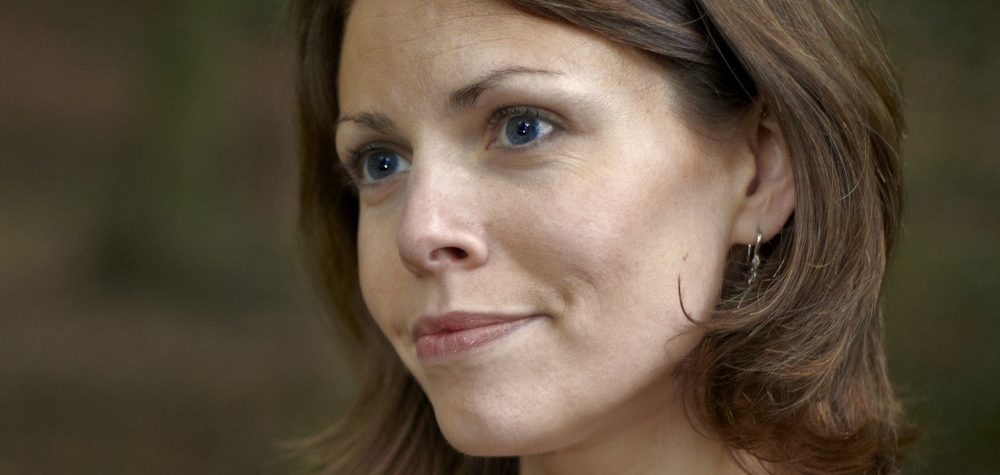
Despite coming from and being based in or around Birmingham for most of his career, Mark Bebbington (above) is less known locally than he might be and his account of Beethoven’s Emperor Concerto confirmed a sure grasp of its expansive formal structure, with his secure and never inflexible technique more than equal to its pianistic demands. After those commanding initial exchanges, the initial Allegro felt just a little under-characterized until hitting its stride in the development; from where this reading proceeded with tangible conviction through to an agile ‘anti-cadenza’ then combative coda. The Adagio’s winsome variations could have had greater inner rapture, yet the eloquence of Bebbington’s response was not in doubt while the hushed transition into the Rondo produced an emotional frisson as carried through this finale overall.

Throughout the movement, Bebbington’s scintillating pianism duly galvanized the CNSO into a forthright response right up to the life-affirming close – after which, he acknowledged the enthusiastic applause with his limpid take on Chopin’s Nocturne (no.20) in C sharp minor.

Following the interval, Czech music not unreasonably took centre-stage. The players might have been surprised by reference to the ‘Moldau’, but Mercurio directed a fluent Vltava with such passages as its wedding dance or traversal of St John’s Rapids nothing if not evocative.

Having been at the helm of the CNSO since March 2019 (in succession to the much-missed Libor Pešek), Mercurio has certainly put his own stamp on its repertoire and presentation. He gave an account of Dvořák’s Eighth Symphony (sometimes referred to as the ‘English’ due to being published by Novello, but actually the most Czech-sounding of his mature symphonies) that, if affording few revelations, underlined its structural innovations as surely as its melodic immediacy. The opening Allegro made a virtue out of eliding the customary formal divisions on route to a resounding peroration, then the Adagio was even finer for the way that its pathos and grandeur were melded into a seamless and methodical yet cumulative design; one where the composer’s Romantic instincts and his Classical inclinations find especially potent accord.

The lilting Allegretto sees Dvořák at its most felicitous – Mercurio aptly taking its boisterous pay-off as a lead-in to the final Allegro, with its variations on an easeful theme for the strings that ingeniously shadow the outline of a sonata design prior to a coda of headlong brilliance.

Conductor and orchestra duly responded with two encores – a rhythmically incisive piece by Iranian-Canadian composer Iman Habibi, then a bossa nova as gave first trumpet and CSNO co-founder Jan Hasenöhrl the spotlight and brought the whole evening gently down to earth.

Click on the names to read more about the Czech National Symphony Orchestra, conductor Steven Mercurio, pianist Mark Bebbington and composer / pianist Iman Habibi

Published post no.2,186 – Wednesday 22 May 2024