In concert – Soloists, CBSO Chorus, CBSO / Joshua Weilerstein: Robert Nathaniel Dett – The Ordering of Moses

Ives (orch. Schuman) Variations on ‘America’ (1891/1962)
Bernstein (orch. Ramin & Kostal)
 Symphonic Dances from ‘West Side Story’ (1957/61)
Dett
The Ordering of Moses (1937) [UK premiere]

Nadine Benjamin (soprano), Chrystal E Williams (mezzo-soprano), Rodrick Dixon (tenor), Eric Greene (baritone), CBSO Chorus, City of Birmingham Symphony Orchestra / Joshua Weilerstein

Symphony Hall, Birmingham
Wednesday 23 February 2022

Written by Richard Whitehouse

This evening’s concert by the City of Birmingham Symphony Orchestra was an all-American programme, centred as it was upon the first performance in this country for what is likely the most ambitious work by the African/American composer Robert Nathaniel Dett (1882-1943).

Although he gained prominence as a choral conductor (his Hampton Choir having performed for President Hoover and Britain’s Prime Minister Ramsay MacDonald), Canadian-born Dett failed to make a lasting breakthrough as composer – his death when barely 61 confining him to a footnote in American cultural history. The ‘sacred cantata’ The Ordering of Moses was a statement of intent when submitted for his MMus in June 1932. Adapted from Exodus and Lamentations, its text describes the Hebrews escaping slavery in Egypt by the parting of the Red Sea over the course of 55 eventful minutes. The brooding prelude is rich in atmospheric writing for lower woodwind and brass, while the climactic sequence draws wordless chorus and orchestra into a graphic depiction of the ‘crossing’; after which, thanks is rendered unto God in suitably festive terms – Walton’s Belshazzar’s Feast an audible precedent. Much has been made of the use of spirituals but, apart from the rallying presence of ‘Go down, Moses’, they serve more a textural and harmonic role in heightening the music’s expressive potency.

A potency owing in no small part to its vocal and choral forces. Eric Greene was predictably sonorous in his eloquence when setting the scene as ‘The Word’, while Chrystal E Williams made the most of her small if crucial part as ‘The Voice of Israel’. Most memorable, though, were those contributions of Rodrick Dixon as the impulsive and ardent Moses, then Nadine Benjamin whose Miriam exuded poignancy and fervour in equal measure. The CBSO Chorus represented ‘The Children of Israel’ in suitably implacable and ultimately affirmative terms.

The whole performance was ably handled by Joshua Weilerstein, who ensured certain more discursive episodes in the cantata’s earlier stages never hung fire and drew a lusty response from the CBSO. Astute programming, moreover, in preceding a still little-known work with staples from the American repertoire. It might not encapsulate the whole of the musical, but Bernstein’s Symphonic Dances from ‘West Side Story’ captures its essence via orchestration (with judicious assistance from Sid Ramin and Irwin Kostal) as made a suitable impact here.

Surprising that William Schuman’s bracing orchestration of the teenage Charles Ives’s bravura organ piece Variations on ‘America’ does not enjoy more regular performance this side of the pond, or perhaps the quirky and increasingly uproarious incarnations of what Weilerstein pointedly referred to as the National Anthem of Lichtenstein still rankles with home-grown listeners? Whatever the case, the conductor made a persuasive case for this engaging and effervescent music to be heard more frequently – the CBSO players remaining straight-faced throughout.

It certainly provided an irreverent curtain-raiser to an engrossing programme as may yet have blazed a trail. More little-known American music on Sunday when Weilerstein directs only a second UK outing for Florence Price’s Piano Concerto, alongside Korngold and Tchaikovsky.

For more information on the next CBSO Youth Orchestra concert, click here. For more on the composer Robert Nathaniel Dett, head to a website devoted to his work. Meanwhile click on the links for information on the artsts – Joshua Weilerstein, Nadine Benjamin, Chrystal E Williams, Roderick Dixon and Eric Greene
In concert – Jong-Gyung Park, Tonbridge Philharmonic Orchestra / Naomi Butcher – Tailleferre, Prokofiev & Rachmaninoff

tonbridge-philharmonic

Tailleferre Ouverture (1931)
Prokofiev
Romeo & Juliet Suite no.2 Op.64b (1936)
Rachmaninov
Piano Concerto no.2 in C minor Op.18 (1900-01)

Jong-Gyung Park (piano), Tonbridge Philharmonic Orchestra / Naomi Butcher

Chapel of St Augustine, Tonbridge School, Tonbridge
Saturday 19 February 2022

Written by Ben Hogwood

For the first concert of their 2022 season, the Tonbridge Philharmonic Orchestra and conductor Naomi Butcher focused on Russian Romantics, with red-blooded works from Prokofiev and Rachmaninov drawing a capacity audience to the Chapel of St Augustine.

They began with a rarity, the Ouverture of 1931 from Germaine Tailleferre, the only female member of the celebrated group of French composers known as Les Six. This attractive piece proved the ideal concert opener, a bustling five minutes of music with compact melodies and busy exchanges between the orchestral groups. Tailleferre’s skilful writing has echoes of contemporaries Ravel and Satie, even drawing a line back to Chabrier. There was plenty to admire and enjoy in the piece and in this bracing performance.

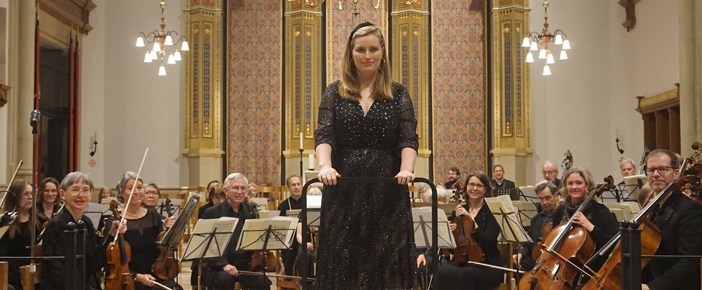
Prokofiev made three concert suites of his successful ballet Romeo & Juliet, the second of which is the most often performed. Containing six movements, it opens with the famous Dance of the Knights (known as The Montagues & Capulets in the suite) – and how refreshing to hear this in its proper context, rather than cueing up another episode of the BBC TV programme The Apprentice! The lower end of the orchestra was on fine form here, driving the music forward but never over-reaching, and Naomi Butcher (above) found just the right tempo. It was also heartening to hear the rich tones of Nicholas Hann’s tenor saxophone when the theme returned. Juliet as a Young Girl was next, taxing the strings with Prokofiev’s fiendishly difficult writing but drawing affectionate phrasing and a light touch nonetheless.

The heart of this performance lay in the two slow movements. Romeo and Juliet before parting featured a poignant flute solo from Lucy Freeman, before revealing Prokofiev’s rich orchestral palette. Ideally paced again by Butcher, the emotive phrasing brought out the best from the woodwind and brass, as well as the composer’s unique string colours. Romeo at Juliet’s grave, which closed out the suite, had an appropriately tragic undercurrent, deeply felt and lovingly phrased by the strings.

After the interval the Tonbridge Philharmonic Choir’s rehearsal pianist, Jong-Gyung Park (above), took a solo role for Rachmaninoff’s Piano Concerto no.2. As the detailed programme notes revealed, she has an illustrious background of worldwide musical experience, belying the modesty with which she took to the stage. This however was a commanding performance, Park taking the piece in her grip from those famous nine solo chords at the beginning. These were deliberately paced for dramatic effect, building the tension inexorably until the arrival of the strings who were ardent in their phrasing, the music surging forwards.

Technically Park was superb, but she was careful not to apply too much weight to her part or use the concerto as a vehicle for display, which so many pianists fall into the trap of doing. This ensured the passion essential to Rachmaninoff’s writing was always near the surface. Pianist and orchestra had a strong rapport, thanks to Naomi Butcher’s keen ear, and in the slow movement this yielded a soft-hearted performance that was not afraid to linger, making the most of the rich colours and some exquisitely phrased melodies from the pianist.

The transition to the finale was nicely done, rhythms stretched for a little while but settling into a punchy account that Park once again led from the front. This time a little acceleration went a long way, with pianist and orchestra quickly aligned. This was a tour de force performance from Jong-Gyung Park, whose love for this music shone through in an account of high class and fresh dexterity.

The Tonbridge Philharmonic will return to Tonbridge Parish Church for another imaginative program on Saturday 21 May, where music from Nielsen and Sibelius will be complemented by a rare performance of Nino Rota’s Double Bass Concerto. It promises to be an equally memorable night if the orchestra’s current form continues!

For further information on the Tonbridge Philharmonic Society click here

Online concert – English Symphony Orchestra / Kenneth Woods: The music of Saxton & Sawyers

eso-saxton-sawyers

English Symphony Orchestra / Kenneth Woods

Sawyers Remembrance (2020); Octet (2007)
Saxton
The Resurrection of the Soldiers (2016)

Wyastone Concert Hall, Monmouth
7-8 April 2021

Written by Ben Hogwood

For the latest in their online series, the English Symphony Orchestra and their conductor Kenneth Woods presented a trio of works written in the last 20 years. The music of Philip Sawyers, their Composer Laureate, featured in two contrasting pieces.

A recent work, Remembrance for Strings, made an instant impact. This deeply emotive, thought provoking piece has a hint of Elgar in its profoundly elegiac tone and scoring, but unmistakably bears Sawyers’ fingerprints as the theme evolves, gradually creeping upwards. The strings of the ESO were perfectly paced by Woods, giving the theme plenty of room and bringing the important viola and cello lines through the texture. Sawyers finds effective contrasts between notable pain points of discord and an almost complete stillness as the strings collect their thoughts, holding their collective breath in ideally weighted phrasing. This deeply affecting piece deserves to be heard much further afield, its impact comparable (if notably different) to that of Barber’s Adagio for Strings. A note for Emily Davis, the ESO guest leader, who gave a touching final solo.

Sawyers’ Octet was next, a single movement work from 2007 written for the youthful ensemble Liquid Architecture. With a scoring for clarinet, horn, bassoon, string quartet and double bass, its colours provided the ideal contrast to Remembrance, as did its series of compact melodies and increasingly busy exchanges, carefully interwoven throughout the ensemble. Written in a single movement, the Octet is an involving work, treating the eight players as soloists but exploring and enjoying their properties in smaller group discussions. Perhaps inevitably the mind is briefly cast back to Stravinsky’s work for the same number of players, but also the harmonic language of Berg and Hindemith. When all the instruments play together the dense contrapuntal writing is at its most effective, while Sawyers ensures the component melodies can be appreciated in a solo capacity too. Kenneth Woods conducted a fine account here, the ESO soloists playing with flair and sensitivity, all the while gathering momentum towards an emphatic arrival in C major. The instrumentalists’ placing, and some sensitive camera work under the direction of videographer Tim Burton, allowed heightened insight into the speed of Sawyers’ rapidly evolving ideas.

As he approaches his 70th birthday, Robert Saxton is a British composer arguably yet to receive the full recognition of which his music is surely due. The Resurrection of The Soldiers is an illustration of his ability to respond to art from another form with remarkable perception. A 12-minute tone poem for string orchestra, written in 2016 and dedicated to George Vass, The Resurrection of The Soldiers is a powerfully concentrated work, responding as it does to the final panel of Stanley Spencer’s commission for Sandham Memorial Chapel. The set of paintings result from the artist’s experiences in the British army in World War One, depicting soldiers emerging from their graves on the last day.

Clearly this depiction struck a lasting emotional chord with the composer, his response speaking initially of searing pain but progressing to a much more hopeful outcome. The upper strings of the ESO spoke powerfully here, maintaining their intensity in the long notes before digging in to an eventful exchange in the energetic central section. This culminated in a powerful chord, richly scored – and with a reverent pause from which the resurrection itself evolved with increasing surety, reaching an exultant if not un-scarred E major.

You may wish to complement the ESO’s performance with detail from the artwork itself, from the National Trust website, or you may wish to form your own images which the music powerfully imprints. Either way, do catch the whole of this compelling program, for these are three very meaningful pieces of music given in the best possible performances.

You can view this concert from 18-22 February at the ESO website, and thereafter for ESO digital supporters here

In concert – Sunwook Kim, CBSO Youth Chorus, CBSO / Mihhail Gerts: Kodály, Rachmaninoff, Debussy & Stravinsky

Mihhail-Gerts

Kodály Dances of Galánta (1933)
Rachmaninoff
Rhapsody on a Theme of Paganini, Op. 43 (1934)
Debussy
Nocturnes – Sirènes (1899)
Stravinsky
The Firebird – Suite (1919)

Sunwook Kim (piano, below), CBSO Youth Chorus, City of Birmingham Symphony Orchestra / Mihhail Gerts

Symphony Hall, Birmingham
Thursday 17 February 2022

Written by Richard Whitehouse

As Mihhail Gerts (taking over at short notice from Lionel Bringuier) said in his initial remarks, all four pieces in this concert by the City of Birmingham Symphony Orchestra were written by composers born within 20 years of each other and made for some intriguing interconnections.

Youngest of these composers, Kodály’s piece was on one level the most traditional – Dances of Galánta looking back to the Hungarian Rhapsodies of Liszt with its bringing together folk melodies in a free flowing fantasia whose larger paragraphs were judiciously shaped by Gerts so that a cumulative overall structure was always evident. The CBSO responded with alacrity to Kodály’s vivid if sometimes workaday orchestration, Oliver Janes making the most of the clarinet solo as stealthily sets the course for all that follows through to a teasing final pay-off.

By the time of Rhapsody on a Theme of Paganini, Rachmaninoff’s music had all but shed its earlier opulence for a tensile, even sardonic quality pointing up expressive contrasts between the 24 variations which fall naturally while ingeniously into a three-movement continuity. It helped that Sunwook Kim constantly brought out those subtle changes of emphasis to which the theme is put, not least when combined with the Dies irae plainchant as if to underline the darker ambivalence at work in this music. That said, the 16th and 17th variations might have been probed even more deeply, so making the famous 18th more affecting in its catharsis, but the six variations of the ‘finale’ headed with unfailing panache to the suitably deadpan close – Kim responding to the enthusiastic applause with a limpid take on Brahms’s Intermezzo in A.

Whether or not it was the earliest piece to use wordless voices as a facet of the orchestration, Debussy’s Sirènes provided a template for numerous comparably innovative works across the next quarter-century and beyond. Gerts was scrupulous as to his enfolding of the textural strands into a cohesive and diaphanous whole; one to which the CBSO Youth Chorus made a suitably ethereal contribution. Nor was this too passive a reading as it moved with notably restive intent toward a culmination which brought a necessary measure of emotional repose.

But (and to misquote Ronald Reagan’s immortal words) ‘where was the rest of it’? Debussy’s Nocturnes being as integrated a triptych as his later La Mer or Ibéria, it seemed unfortunate to jettison Nuages and Fêtes – especially as they would have added no more than 15 minutes to a relatively short programme rounded off with Stravinsky’s The Firebird. This was heard in its 1919 suite, currently returning to favour given the over-exposure of the complete ballet over recent decades. Gerts duly encouraged the CBSO to give its all – whether in the sombre Introduction and a dextrous Dance of the Firebird, the affecting poise of The Princesses’ Khorovod or animated virtuosity of Kashchei’s Infernal Dance, then a Berceuse of real pathos as merged seamlessly into a Finale which conveyed the necessary emotional frisson.

A fine showing for Gerts who, as artistic director of the TubIN Festival, ought to be invited to schedule the Estonian’s Sixth Symphony on a future appearance. The CBSO returns next week in a concert featuring a UK premiere for R. Nathaniel Dett’s oratorio The Ordering of Moses.

For more information on the next CBSO concert, visit their website. Meanwhile click on the links for information on conductor Mihhail Gerts and Sunwook Kim.

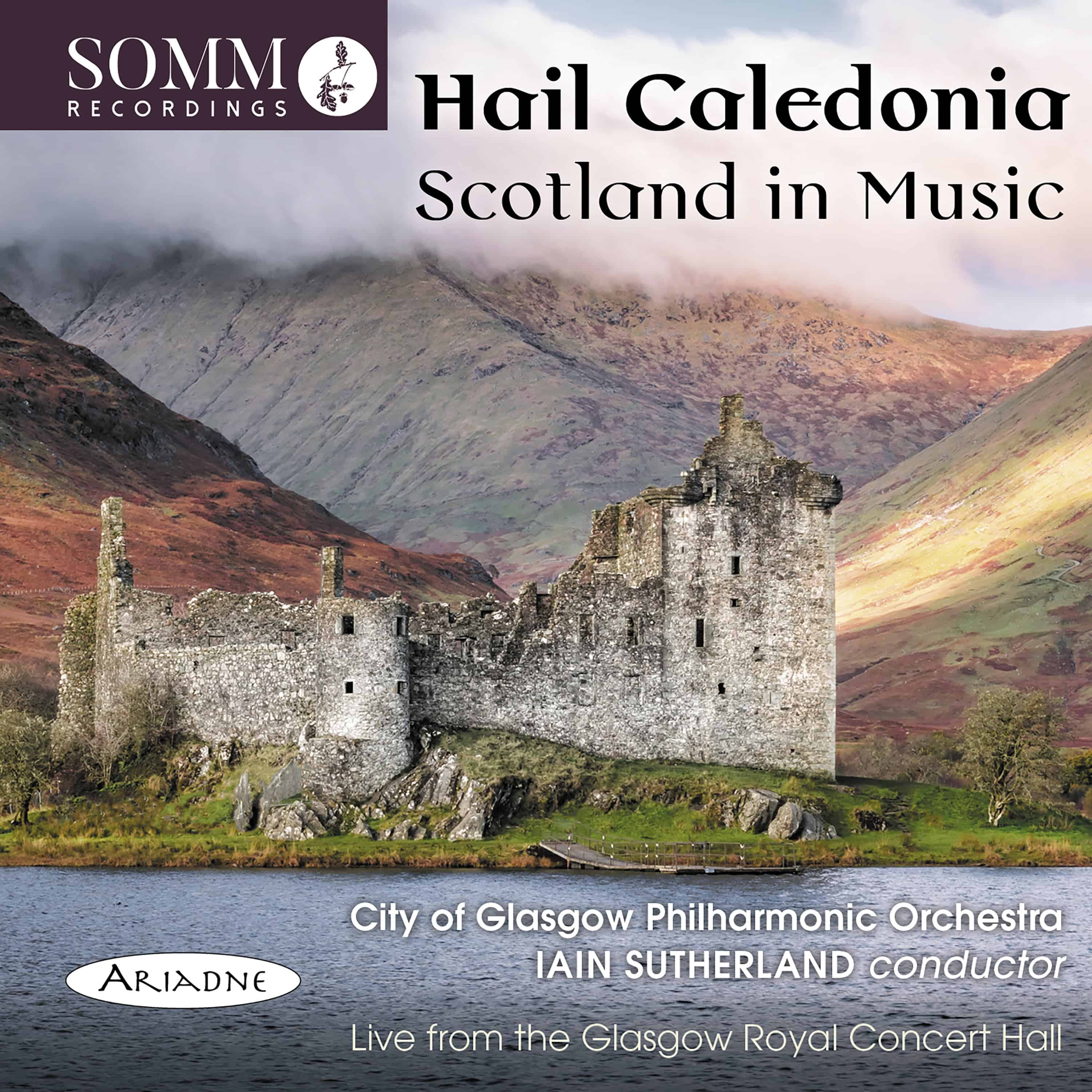
On record – Hail Caledonia: Scotland In Music (City of Glasgow Philharmonic Orchestra / Iain Sutherland) (Somm Recordings)

hail-caledonia

Trad. arr. Sutherland The Black Bear Salute
Docker Abbey Craig (1974)
Tomlinson Cumberland Square (1960)
Coates The Three Elizabeths – Elizabeth of Glamis (1944)
Mendelssohn Symphony No. 3 in A minor, Op. 56, ‘Scottish’ – Vivace non troppo (1842). Blake Take the High Road (1980)
MacCunn (arr. Sutherland) Sutherland’s Law (1886/1973)
Docker Faery Dance Reel (1958)
Sutherland Three Scottish Castles (1966)
MacKenzie (arr. composer) Benedictus, Op. 37 No. 3 (1888/1895)
Bantock Two Heroic Ballads – Kishmul’s Galley (1944)
Arnold Four Scottish Dances, Op. 59 (1957)
Williamson (arr. Sutherland) Flower of Scotland (1967)
Trad. arr. Sutherland Amazing Grace
Whyte Donald of the Burthens – Devil’s Finale/Reel o’ Tulloch (1951)

David Wotherspoon, Iain MacDonald (bagpipes), City of Glasgow Pipe Band, City of Glasgow Chorus, City of Glasgow Philharmonic Orchestra / Iain Sutherland

SOMM Ariadne 5014 [79’32”]

Digital Remastering Paul Arden-Taylor

Live performances at Royal Concert Hall, Glasgow in 1995 and 1996

Written by Richard Whitehouse

What’s the story?

SOMM releases via its Ariadne imprint this compilation of shorter pieces and arrangements which, between them, afford a wide-ranging and not at all hackneyed overview of ‘Scotland in Music’, realized with great flair by Iain Sutherland and the City of Glasgow Philharmonic Orchestra.

What’s the music like?

Whether or not the fastest regimental march in the British army, The Black Bear Salute duly launches proceedings with a gusto continued by Robert Docker’s breezy take on battle-song Scots Wha Hae in Abbey Craig. Ernest Tomlinson furthers the jollity with his amalgam of traditional Borders tunes in Cumberland Square, to which the quiet rapture of Eric Coates’s ‘Elizabeth of Glamis’ (central panel of The Three Elizabeths triptych) provides an admirable foil. The scherzo from Mendelssohn’s Scottish Symphony makes for an ideal interlude in its rhythmic vivacity and formal ingenuity, then come pieces made famous through association with television series – Arthur Blake’s atmospheric theme-tune for the soap drama Take the High Road and the corresponding sequence for crime drama Sutherland’s Law, derived from Hamish MacCunn’s overture Land of the Mountain and the Flood as has regained its place in the concert hall. Docker’s contribution to the light-music repertoire is typified by his Faery Dance Reel, a lively and infectious medley of traditional tunes that wears its heritage lightly.

Iain Sutherland displays his compositional skills (with respective nods to Arnold and Coates) in Three Scottish Castles with its evocative tribute to those of Stirling, Dunvegan (Skye) and Edinburgh. Next comes a contrasting brace of pieces – the burnished eloquence of Alexander MacKenzie’s Benedictus here followed by the unfailing extroversion of Kishmul’s Galley by Granville Bantock, whose immersion in all things Scottish was enduring. Malcolm Arnold’s Four Scottish Dances are then given a memorable reading which points up the trenchant gait of ‘Strathspey’ or the latterly inebriated progress of ‘Reel’, before ‘Hebrides’ casts a suitably rapturous spell that is summarily curtailed with the headlong energy of ‘Highland Fling’. One half of influential folk duo The Corries, Roy Williamson created his own standard in Flower of Scotland, here given an opulent arrangement comparable to that of the ubiquitous Amazing Grace – after which, the closing section from the ballet Donald of the Burthens by Ian Whyte (founder conductor of the BBC Scottish Symphony Orchestra) makes for a scintillating finale.

Does it all work?

Yes. Compilations such as this are often no more than the sum of their parts, however enticing those parts may be, but Hail Caledonia is one to sample at leisure as well as worth playing at a single sitting. It helps when the City of Glasgow Philharmonic renders all these pieces with alacrity and enthusiasm, aided by being captured on various live occasions, and owing in no small part to its founder Iain Sutherland. A familiar radio presence over several decades, he brings an authority to music whose outward flair is not without its corresponding substance.

Is it recommended?

Indeed. The remastered sound lacks nothing in realism or immediacy, while there are detailed and informative notes by composer, critic (and no doubt ecosophile) Robert Matthew-Walker. Any listeners who are looking to add such a compilation to their collections need not hesitate.

Listen & Buy

You can discover more about this release and listen to clips at the SOMM Recordings website, where you can also purchase the recording.