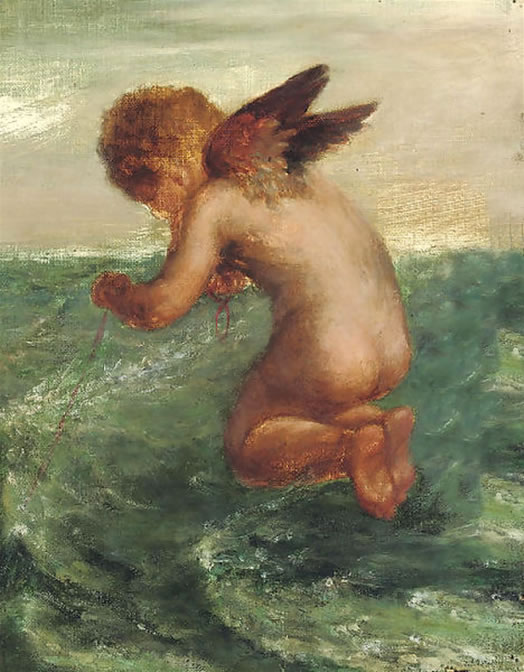
Live review – April Fredrick, Zoë Beyers, English Symphony Orchestra / Kenneth Woods: Inspired by Mahler

April Fredrick (soprano, above), Zoë Beyers (violin), English Symphony Orchestra / Kenneth Woods

Mahler (arr. Stein) Das irdische Leben (1892/1900)
Weinberg Concertino for Violin and Strings, Op. 42 (1948)
Schulhoff Suite for Chamber Orchestra, Op. 37 (1921)
Ullmann (arr. Woods) Chamber Symphony op 46a (1943/1999)

Wyastone Concert Hall, Monmouth
Recorded in 2020 for online broadcast, Wednesday 27 January 2021

Written by Richard Whitehouse

The Holocaust Memorial Day is a timely opportunity to hear music anticipatory of, inspired by or stemming from events that have defaced human history on all too many occasions, and which provided the basis for this latest online concert from the English Symphony Orchestra.

The underlying tone for this programme was set by Mahler, with one of his settings of texts from the folk collection Des knaben Wunderhorn. In pivoting between the child’s supplication and his mother’s entreaties, over the fateful strains of a ceaseless ‘treadmill’ accompaniment, The Earthly Life is one of the composer’s most evocative songs – not least its portrayal of the child’s existence running out as though this were grains of sand. April Fredrick accordingly invested the vocal part with just the right combination of ominous dread and lingering pathos.

ESO leader Zoë Beyers then took centre-stage for Weinberg‘s Violin Concertino, the product of late-1940s Soviet culture when accessibility was not just desired but prescribed. Modest in expressive scope next to those chamber works that preceded it, this work is highly appealing – not least in the deftness and subtlety with which the composer unfolds his ideas across an ingratiating Allegretto, ruminative Adagio (whose cadenza-like introduction brings the most arresting music in the whole work), then a final Allegro whose thematic interplay is nothing if not resourceful. Beyers rendered it with unfailing eloquence, making it clear just why this attractive piece – which had to wait almost half a century for a first public hearing – should now have established itself among the most often performed of Weinberg’s orchestral works.

In telling contrast, Erwin Schulhoff’s Suite for Chamber Orchestra was a pert reminder of the composer’s usage of jazz as part of a lifelong and tragically curtailed stylistic odyssey. While the faster numbers recall the wit of Poulenc’s earlier chamber music and irony of Stravinsky’s suites for theatre orchestra, the Valse Boston (its soulful violin solos hauntingly rendered by David Juritz) and Tango admit of a searching introspection to the fore in those works from Schulhoff’s last years. Qualities which are pointedly side-lined by the uproarious final Jazz.

The final work provided the culmination in every respect. Written during internment at the transit camp of Terezin (aka Theresienstadt), the Third String Quartet is Viktor Ullmann’s likely instrumental masterpiece – in terms both of its formal unity and expressive diversity – and whose transcription onto the larger canvas has been persuasively achieved by Kenneth Woods. Chamber Symphony makes a not inappropriate title, this single span drawing the contrasted movements into a seamless and finely-balanced whole – the initial theme acting as a soulful refrain between the angular scherzo with its waltz-like undertow then, after the terse development, a fugal Largo whose accrued intensity carries over into the final Rondo with its striving towards a fervent restatement of the ultimately transfigured ‘motto’ theme’.

An imposing work, given a committed reading by this orchestra under its arranger in what was an appropriate tribute for the day. The ESO’s online series is scheduled to continue on the 26th of February, with a portrait concert of the American composer Steven R. Gerber.

You can watch the concert on the English Symphony Orchestra website from 7.30pm on Wednesday 27 January 2021 here

For more information on the English Symphony Orchestra you can visit their website here

Live review – Zoë Beyers, English Symphony Orchestra / Kenneth Woods: The Roaring 20s: Decade of Melody & Mayhem

Zoë Beyers (violin), English Symphony Orchestra / Kenneth Woods

Blake (arr. Schuller) Charleston Rag (1915)
Schulhoff Suite for Chamber Orchestra, Op. 37 (1921)
Morton (arr. Schuller) Black Bottom Stomp (1926)
Krenek (arr. Bauer) Fantasie on ‘Jonny spielt auf’ (1927/8)
Milhaud Le boeuf sur le toit, Op. 58b (1920/1)

Wyastone Concert Hall, Monmouth
Recorded 9-10 November, broadcast Thursday 31 December 2020 (online)

Written by Richard Whitehouse

The English Symphony Orchestra certainly saw in the New Year with style in this attractive and enterprising programme centred on the prevalence but also the range of jazz idioms either side of the Atlantic throughout the 1920s. Its stylistic roots were acknowledged in the panache of Charleston Rag by the long-lived Eubie Blake, then the irresistible verve of Black Bottom Stomp by the lived-dangerously Jelly Roll Morton – both heard in distinctive arrangements by Gunther Schuller, whose own jazz innovations warrant revival as his centenary approaches.

Between these pieces, Erwin Schulhoff’s Suite for Chamber Orchestra was a reminder of this composer’s usage of jazz as part of a lifelong and tragically curtailed stylistic odyssey. While the faster numbers recall the wit of Poulenc’s early chamber music and irony of Stravinsky’s suites for theatre orchestra, the Valse Boston – its moody violin solos hauntingly rendered by David Juritz – and Tango admit of an introspection and pathos to the fore in those works from Schulhoff’s last years. Qualities which are here side-lined by the uproarious final Jazz.

It is almost 94 years since Ernst Krenek’s Jonny spielt auf took the German-speaking world by storm, and though its highly Viennese take on jazz lacks the satirical edge as achieved by Weill, the present Fantasie devised by Emil Bauer gives a fine overview of this opera in all its attendant strengths and weaknesses. Abetted by diaphanous orchestration (with its oddly hymnic role for harmonium), the slower sections conjure no mean expressive fervour, while the closing pages exude an affirmation which never feels brittle or forced in its demeanour.

Darius Milhaud had also fastened on to the exuberance of jazz, here with Brazilian overtones, in his ballet Le boeuf sur le toit – as heard in the rarely revived ‘cinéma-fantaisie’ version for violin and orchestra. Perhaps the often equivocal nature of the solo part has mitigated against wider acceptance, but Zoë Beyers took its technical demands confidently in her stride while remaining aware of its ‘first among equals’ status – notwithstanding the strategically placed cadenza (by no less than Arthur Honegger) that brings the soloist unashamedly centre-stage. Credit, too, to the members of the ESO (suitably attired throughout) for having rendered this music’s teasing rhythmic inflections with unfailing poise, and to Kenneth Woods for teasing the maximum finesse from out of Milhaud’s entertaining while not a little provocative score.

It was, indeed, a fine showing all round and would have been ideal before that ‘end of year’ party which circumstances have regrettably made impossible. This event was still a highly positive means of seeing out the old year and welcoming in a much to be anticipated 2021.

You can watch the concert on the English Symphony Orchestra website from 7.30pm on Thursday 31 December 2020 here

For more information on the English Symphony Orchestra you can visit their website here

Live review – Jay Reise, Davood Ghadami, English Symphony Orchestra / Kenneth Woods: The Art of Storytelling – The Warrior Violinist

Jay Reise (music), Davood Ghadami (narrator), English Symphony Orchestra / Kenneth Woods

Wyastone Concert Hall, Monmouth
Friday 18 December 2020 (online)

Written by Richard Whitehouse

Following on from its uproarious version of Lubin from Chelm [*], the English Symphony Orchestra continues its series of pieces for virtual storytelling in the guise of an old Egyptian tale – here given a contemporary twist to result in the ‘morality’ fable The Warrior Violinist.

This is a parable about being careful what one wishes for. It centres on a youth who plays the violin to exclusion of all else, then finds an even greater other love – the Pharaoh’s daughter. Imagining himself inferior, he bids the Sphinx transform him into a great warrior – in which guise he vanquishes Egypt’s enemies. The princess can love only the man she heard playing the violin and when the warrior tries to reclaim his former prowess, he finds himself unable to play – the Sphinx’s warning that no-one can be changed back having proven only too true.

Davood Ghadami is a personable and thoughtful narrator; his understatement enabling one to focus on a musical score that, even more than the previous two in this series, packs a wealth of incident into a through-composed score which is effortlessly sustained over its 18 minutes. A tribute, indeed, to the initiative of Jay Reise in having elaborated a piece written almost a decade ago for this Art of Storytelling series. Not the least of its attractions is the extensive role allotted solo violin, played here by Zoë Beyers with no mean poise and resourcefulness.

The remaining ESO musicians play with skill and sensitivity, while Kenneth Woods ensures clarity of texture even in denser passages. The production should provoke children and adults alike – and, as usual with ESO, a range of sundry material enhances the overall experience.

You can watch the concert on the English Symphony Orchestra website here

For more information on the English Symphony Orchestra you can visit their website here

For information about Auricolae, visit Kenneth Woods’ website here

Live review – Henry Goodman, English Symphony Orchestra / Kenneth Woods: The Art of Storytelling – Lubin from Chelm

David Yang (above, music), Alisa Snyder (illustrations) Henry Goodman (narrator), English Symphony Orchestra / Kenneth Woods

Wyastone Concert Hall, Monmouth
Friday 4 December 2020 (online)

Written by Richard Whitehouse

Following on last week’s arresting version of The Ugly Ducking, the English Symphony Orchestra continues its series of pieces for virtual storytelling in the guise of an old English tale here given an inimitably Jewish twist to result in the ‘morality’ fable Lubin from Chelm.

While the tale of Lazy Jack might hardly have seemed other than an English story, it works well when relocated within Ukrainian Jewish environs then decked out with Yiddish turns of phrase and Klezmer stylings. The anti-hero Lubin – put to work only at the prompting of his aging mother, who is incapable of holding on to his wages, but who enchants the daughter of Chelm’s wealthiest family – could be interpreted in various ways; that of fortune smiling on those who least expect it, yet are by no means the least deserving, is the most straightforward.

Henry Goodman certainly makes the most of this barbed whimsy, relating the narrative with audible enjoyment as he assumes the role of Yiddish storyteller with aplomb. He is abetted by David Yang’s direct and characterful score, engagingly conducted by Kenneth Woods (who undertook the expert orchestrations) and illustrated by Alisa Snyder with a true appreciation of what line drawings are capable of conveying in this context. A few linguistic ‘curve-balls’ are thrown in, without detracting from the self-effacing directness of the unfolding narrative.

The ESO musicians (shots of whom alternate with the illustrations) play with their customary skill and sensitivity, and the whole production ought to amuse as well as provoke children and adults alike. As usual with ESO, a range of supporting material enhances the total experience.

You can watch the concert on the English Symphony Orchestra website here

For more information on the English Symphony Orchestra you can visit their website here

For information about Auricolae, visit Kenneth Woods’ website here

Live review – Hugh Bonneville, English Symphony Orchestra / Kenneth Woods: The Art of Storytelling – The Ugly Duckling

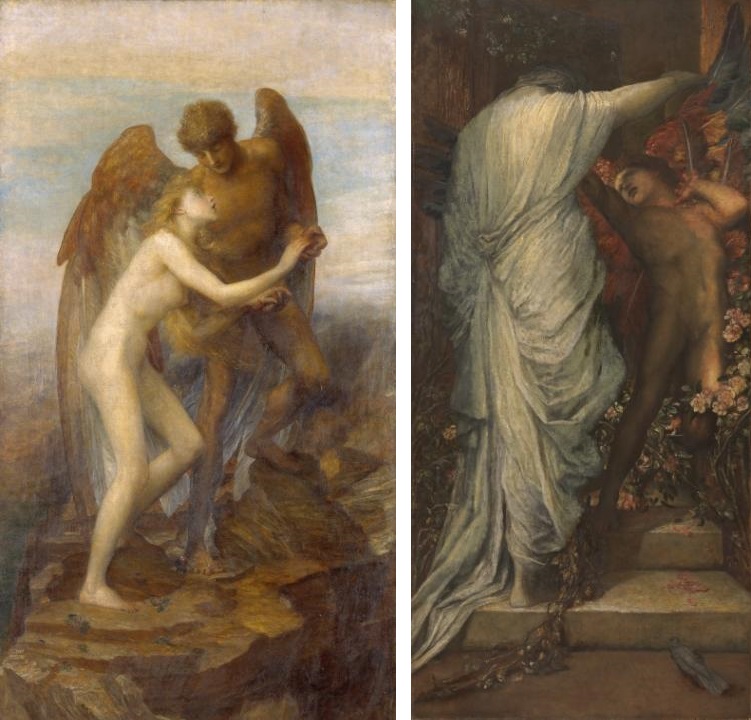
Hugh Bonneville (narrator), Wanda Sobieska (illustrations, above), English Symphony Orchestra / Kenneth Woods

Wyastone Concert Hall, Monmouth
Thursday 19 November 2020 (online)

Kenneth Woods The Ugly Duckling (after H.C. Andersen)

Written by Richard Whitehouse

The English Symphony Orchestra has demonstrated its versatility over these past few months with studio concerts of themed programmes. This latest offering takes up a line of pieces for storytelling that its conductor Kenneth Woods has pursued so ingeniously on past occasions.

Although The Ugly Duckling has retained its prominence as a children’s tale ever since Hans Christian Andersen first published it in 1843, its message has tended to be watered down with repetition. While it departs in numerous details, this retelling certainly restores those qualities of fear and anger, mixed with indignation, which remain central to the original’s conception. It helps when the bare bones of the story are conveyed so directly, with no attempt to soften or sentimentalize a narrative in which the notion of social acceptance should be paramount.

In this respect, there could hardly be a more sympathetic narrator than Hugh Bonneville, who relates the story with thoughtfulness and compassion. He is aided in this by illustrations from Wanda Sobieska as (rightly) suggest a setting far removed from comfortable domesticity; one emphasizing that harshness and struggle for survival pertinent to the natural world. Woods’s score ably sustains itself over the 18-minute whole, evoking Copland in innocent wonder but also Shostakovich in its sense of vastness and alienation – prior to a headily affirmative close.

The ESO musicians (shots of whom alternate with the illustrations) play with their customary verve and finesse, and this whole production should prove congenial for children and adults alike. As usual with ESO, a range of supporting material helps enhance the total experience.

You can watch the concert on the English Symphony Orchestra website here

For more information on the English Symphony Orchestra you can visit their website here

For information about Auricolae, visit Kenneth Woods’ website here