Alexandra Dariescu, Royal Philharmonic Orchestra / Cristian Mandeal – Romanian Centennial Concert

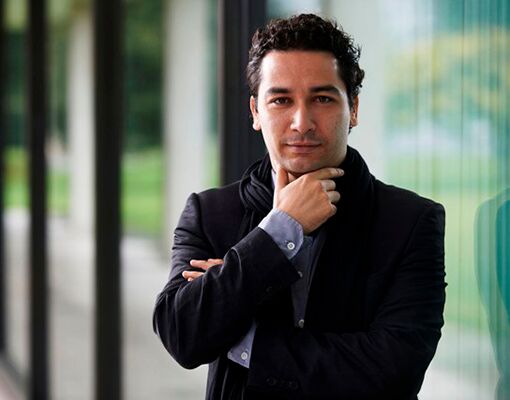
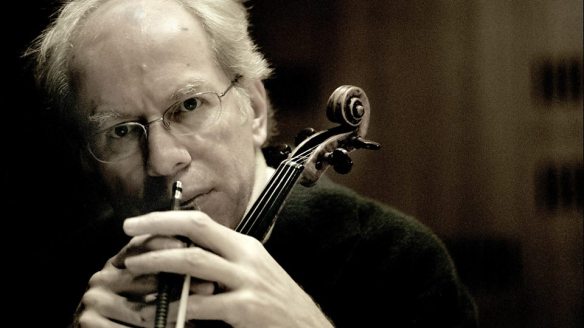
Alexandra Dariescu (piano, above), Royal Philharmonic Orchestra / Cristian Mandeal (below)

Cadogan Hall, London; Tuesday 28 November 2017 (Concert supported by the Romanian Cultural Institute)

Enescu Romanian Rhapsody No. 1 in A, Op. 11 No. 1 (1901)
Grieg Piano Concerto in A minor, Op. 16 (1868)
Lipatti Concertino in Classical Style, Op. 3 (1936)
Tchaikovsky Francesca da Rimini, Op. 32 (1876)

Reviewed by Richard Whitehouse

It has often been remarked that the death of Dinu Lipatti, in 1950 at the age of 33, robbed the musical world of a rare pianist, yet his ability as a composer was by no means inconsiderable. Such was evident throughout the modest and perfectly judged proportions of his Concertino in Classical Style, its four movements discreetly and judiciously evoking formal precedents while also offering up the subtlest of allusions to several then contemporary composers who had drawn productively on a neo-classicism inspired (both more and less directly) by Bach.

The Concertino was given here with style and no little insight by Alexandra Dariescu, who had already appeared prior to the interval for an enjoyable performance of Grieg’s perennial Piano Concerto. If the first movement lacked the last degree of formal cohesion, the extent of its expressive scope was not in doubt – not least during the wide-ranging cadenza which Dariescu dispatched with aplomb. The sentiment of the Adagio never cloyed, then the finale exuded energy and eloquence on its way to a grandiloquent but not overbearing peroration.

Both these works benefitted from the stylish and attentive accompaniment as secured, from a Royal Philharmonic Orchestra on excellent form, by Cristian Mandeal – assuredly the leading Romanian conductor of his generation. He began proceedings with Enescu’s First Romanian Rhapsody – a piece that, however much its composer might have deplored the fact, continues to represent his music to the public at large. If just a shade hesitant in the initial section, this account audibly hit its stride in a coruscating take on the breathless dance-music that follows.

The programme ended with an impressive account of Francesca da Rimini – if not the most often heard of Tchaikovsky’s symphonic poems, arguably his most involving in terms of its graphic depiction of the heroine’s love and tragic fate. Not the easiest piece to hold together, it benefitted from the conviction with which Mandeal integrated its contrasting episodes; not least the infernal storm which yields even greater terror in those cataclysmic final pages. The Cadogan acoustic strained to take this all in, but orchestra and conductor emerged triumphant.

For more concert information on the Royal Philharmonic Orchestra, head to the What’s On page on their website

You can hear a recording of the Dinu Lipatti Concertino on Spotify below, part of a disc devoted to the composer’s music by Marco Vincenzi:

London Philharmonic Orchestra / Vladimir Jurowski – An Autumn Symphony

Julia Fischer (violin, below), London Philharmonic Orchestra / Vladimir Jurowski (above)

Royal Festival Hall, London, Wednesday 29 November 2017

Chausson Poème, Op. 25 (1896)

Respighi Poema autunnale, P146 (1925)

Marx Eine Herbstsymphonie (1921) [UK premiere]

Reviewed by Richard Whitehouse

Vladimir Jurowski continues to ring the changes in terms of repertoire, with this evening’s concert by the London Philharmonic Orchestra no exception in featuring the UK premiere of Eine Herbstsymphonie, the most ambitious undertaking from Austrian composer Joseph Marx.

Although best remembered for his substantial output of songs, Marx (1882-1964) spent the decade after the First World War essaying large-scale orchestral works – chief among them being this Autumn Symphony premiered (by Felix Weingartner) in Vienna during 1922 but which went unheard as a complete entity for eight decades after its 1925 revival. Marrying impressionistic harmonies to a Mahlerian formal expansiveness, this is an evocation of its season both in descriptive and philosophical terms – in music as opulent as it is engulfing.

What it lacks is any sense of a cumulative or even over-arching momentum. Sizable forces are deployed expertly if amorphously in terms of the dense yet unvarying texture – though this was hardly the fault of the LPO, which responded to Jurowski’s incisive direction with assurance. Not least in the radiant Autumn Song – less a movement then a prelude to what follows and segueing into Dance of the Noon Spirits, an extensive intermezzo that suffers from its overly uniform waltz-time measure and corresponding lack of rhythmic contrast.

This latter failing is hardly an issue in Autumn Thoughts, a slow movement where serenely unfolding paragraphs and taciturn solos for wind and strings effect a yearning regret such as draws in the listener whatever its lack of defined melodies. After which, An Autumn Poem provides a finale of Dionysian import – the full orchestra (nine percussionists in addition to timpani and keyboards) moving through a series of increasingly heady climaxes before the music subsides into a postlude suffused with eloquent resignation though tinged by regret.

A significant work historically, then, but hardly a neglected masterpiece that warrants regular revival. Jurowski can only be commended for instigating this performance, as for encouraging so committed an orchestral response as will hopefully find its way onto the LPO’s own label.

Even so, it was the first half that brought greater rewards. With its inspiration in a typically melodramatic story from Ivan Turgenev and breathing an aura of fatalistic dread, Chausson’s Poème has made a welcome return to the repertoire and has also found its ideal exponent in Julia Fischer – her warm and caressing though never over-wrought tone teasing out those expressive nuances which lurk beneath the surface of this emotionally all-enveloping score. Whatever else, its composer experienced the essential qualities of his music in graphic terms.

Latter-day revivals have tended to pair this piece with Ravel’s jarringly contrasted Tzigane, but Fischer choice was far more apposite. Even more overlooked, Respighi’s Autumn Poem itself pursues a full-circle trajectory such as takes in reflection and animation, though one whose overall conciseness proves its own justification. Fischer duly spun the deftest of solo lines through the diaphanous and modally-inflected orchestral texture, in which Jurowski’s accompaniment was astute and affecting in equal measure. Sometimes, less really is more.

BBC SSO / Ilan Volkov – Miller, Sciarrino, Croft & Beethoven ‘Eroica’

Ilya Gringolts (violin), Juliet Fraser (soprano), Sound Intermedia (Ian Dearden and David Sheppard, sound design), BBC Scottish Symphony OrchestraIlan Volkov (above, picture James Mollison)

Symphony Hall, Birmingham, Friday 17 November 2017

Miller Round (2016)

Sciarrino Allegoria della notte (1985)

Croft Lost Songs (2017) [World premiere]

Beethoven Symphony No. 3 in E flat, Op. 55, ‘Eroica’ (1804)

Reviewed by Richard Whitehouse

Tonight’s Symphony Hall concert was hardly likely to muster a large audience, though those braving inclement weather and the chaos of redevelopment in the Centenary Square environs were rewarded with this strikingly contrasted programme from the BBC Scottish Symphony.

The first half consisted wholly of music by living composers. Canadian-born Cassandra Miller (b1976) may not yet be widely recognized in the UK, but Round demonstrated a sure feeling for orchestral sonority – drawing on a lesser known Tchaikovsky melody (rendered by cellist Gaspar Cassadó) as a ‘cantus firmus’ around which the texture gradually opens-out; taking in antiphonal trumpets and off-stage tubular bells, while maintaining its hushed aura through to the rapturous culmination. Ilan Volkov secured a committed response in this absorbing piece.

Such was no less true in Salvatore Sciarrino’s Allegoria della notte, yet the work itself was a disappointment. Sciarrino (b1947) has a knack for finding the ‘biting point’ between sardonic and ominous, but this homage to and deconstruction of Mendelssohn’s Violin Concerto (near-quotations from which inform the opening and close) was for the most part an exercise in his trademark glassy textures and frozen gestures. Ilya Gringolts handled some stratospheric solo writing with aplomb, but this remained music appreciably longer on technique than substance.

A pity that the orchestra’s absence from the next piece prompted an exodus from the hall in expectation of an interval (though the programme could have been clearer on this), as many failed to return for the highlight of this contemporary triptych. New Zealand-born John Croft (b1971) is a further composer gaining in profile, and Lost Songs should do his reputation no harm at all. These settings of ancient Greek poets (three by Sappho, two by Alcaeus and one anonymous) for solo voice conjured a remote though never arid or uninvolving sound-world, enhanced by the evocation of lyres and reed instruments through the adept manipulation of live electronics – against which Juliet Fraser was a focal-point of eloquent poise. If any ‘note of reconciliation’ rather failed to emerge, this remained an assured and involving experience.

Was a point being made by the introspection of this first half when compared to the combative presence of Beethoven’s Eroica after the interval? Such thoughts came readily to mind during Volkov’s impressive account of a work as wears its two centuries and more lightly, not least in an opening Allegro (exposition repeat excluded) that unfolded intently yet never hectically via a far-reaching development and on to a coda that brought tangible fulfilment. The Adagio then marshalled its funereal essence with equal purpose, building to an anguished fugato and finally subsiding into a numbed acceptance – countered in the scherzo with its incisive energy and its trio’s horn-led jollity. The finale’s initial stages were ideally paced, and if the broader tempo of what ensued risked momentum, the coda duly surged forth with uninhibited resolve.

Overall, a fine showing for Volkov and BBCSSO alike. Were they to give a first UK hearing for Jorge E. López’s seismic Fourth Symphony (as premiered by Volkov in Luxembourg late last year), this would be worth braving the elements and urban redevelopment alike to attend.

For more information on the BBC Scottish Symphony Orchestra, head to their website, and for Ilan Volkov, his artist website

Jean-Efflam Bavouzet, BBC SO / Sakari Oramo – Schmitt, Franck, Ravel & Sibelius Symphony no.3

Jean-Efflam Bavouzet (piano), BBC Symphony Orchestra / Sakari Oramo (above)

Barbican Hall, London; Friday 27 October 2017

Schmitt Symphony No.2 in E flat major, Op.137 (1957)

Franck Variations symphoniques (1885)

Ravel Piano Concerto in D ‘for the Left Hand’ (1930)

Sibelius Symphony No. 3 in C major, Op.52 (1907)

You can listen to the broadcast on BBC Radio 3 by clicking here (available until 26 November)

Reviewed by Richard Whitehouse

Sakari Oramo‘s Sibelius cycle continued as part of a judiciously balanced programme which opened with a rare revival of the Second Symphony by Florent Schmitt. This continues the French symphonism of Roussel and Honegger; albeit with a quirkiness of melodic thought and virtuoso handling of sizable forces to confirm Schmitt as no mere epigone. Indeed, the angular wit of the first movement suggests his willingness to confront post-war modernism head on, and if the central Lent admits warmer and even tender emotion, the finale resumes the assaultive mood with an unremitting intent through to its scabrous close. Oramo and the BBC Symphony Orchestra had the measure of this unsettling piece throughout; their responsiveness underlining that Schmitt was not one to accept the passing of his own era with even a hint of good grace.

Jean-Efflam Bavouzet (below) then joined the orchestra for two staples from the French concertante repertoire, separated in time by almost half a century. Good to see that Franck‘s Variations symphoniques has now re-established itself in UK concert programmes, as this unlikely yet successful hybrid of elements from symphony and concerto, as drawn into the pithiest of its composer’s cyclical designs, has a substance more than equal to its entertainment. Bavouzet and Oramo were especially fine in the expressive contrasts of its opening minutes, and if the rhapsodic musing at its centre seemed a little inflexible, then the effervescence of its final section too forcefully projected, there was no doubting the coherence and the ingeniousness of its composer’s response to a piano-virtuoso tradition he spent much of his life despising.

That the Franck outlines a ‘three movements in one’ formal design makes it a more than likely precursor to Ravel‘s Piano Concerto in D major, the most enduring of those left-hand works written for the redoubtable (if frequently wrong-headed) Paul Wittgenstein. Not the least attraction of tonight’s performance was its emphasizing the canniness of the balance between soloist and orchestra, such that the former was never less than audible in the context of what is the most overtly rhetorical and combative of all Ravel’s works. Add to this Bavouzet’s limpidity in the eloquent theme which returns intensified in the cadenza, not to mention Oramo’s control of momentum in the jazz-inflected animation of the scherzo, and what resulted was a reading attentive to every aspect of this masterpiece: one that justifiably brought the house down.

Sibelius’s Third Symphony is easy to underestimate as a transitional work poised between overt romanticism and renewed classicism. It was to Oramo’s credit that elements of both aesthetics were not only evident but also reconciled – not least in an opening Allegro which moved between fervency and incisiveness with no mean purpose. The highlight came with a central Andantino whose quasi allegretto marking may have been minimal, but whose opening-up of emotional space made for a riveting listen. The final movement was hardly less impressive in its purposeful equivocation between scherzo and finale, Oramo teasing resolve out of uncertainty so the hymn-like theme that eventually emerges built to a powerful apotheosis. A gripping performance, reinforced by the conviction of the BBCSO’s response.

For more concert information on the BBC Symphony Orchestra, head to their website

You can hear a recording of the Florent Schmitt made by Leif Segerstam on Spotify below:

Benjamin Baker, Salomon Orchestra / Holly Mathieson – Berg: Violin Concerto & Schmidt: Symphony no.4

Benjamin Baker (violin), Salomon Orchestra / Holly Mathieson

St John’s, Smith Square, London; Monday 16 October 2017

Richard Strauss, arr. Rodziński Der Rosenkavalier – Suite (1945)

Berg Violin Concerto (1935)

Schmidt Symphony No. 4 in C (1933)

Reviewed by Richard Whitehouse

Never an ensemble to shirk a challenge, the Salomon Orchestra’s current season continued tonight with what, aesthetically, was an almost perfectly balanced programme – and whose second half brought a timely revival (in the UK) of the Fourth Symphony by Franz Schmidt.

With its catalyst in the tragically unexpected death of his daughter, this work was consciously intended as an ‘in memoriam’ and this is reflected in a formal design as fuses the customary four movements into an unbroken continuity; expressively also in that salient themes return almost as memories being recollected. From which perspective this performance succeeded admirably – Holly Mathieson having the measure of an overall design as though akin to the ‘journey of a life’, whose ending is tangibly (thereby inevitably) anticipated in its beginning.

The exposition’s themes – the first as introspective as the second, with its Magyar overtones, surges forth – were judiciously contrasted, and if the development was a little too rhetorical, it evinced the right cumulative intensity leading into an Adagio whose anguished climax was set into relief by the inward eloquence on either side. A touch stolid rhythmically, the scherzo did not lack impetus as it headed – lemming-like – over its cliff of disaster; in the aftermath of which the reprise gradually re-established momentum as the work came resignedly full-circle.

Its unity within diversity aside, the Fourth Symphony is a stern test of orchestral skill such as the Salomon met head on. The strings evinced the burnished warmth necessary for this music, and while woodwind intonation was on occasion wanting, it did not undermine an orchestral texture through which brass emerged with the appropriate impact. The solo contributions were well taken, not least from trumpeter John Hackett and cellist Kate Valdar, and Mathieson can take considerable credit for her advocacy of a piece whose repertoire status is still not secure.

Photo credit: Kaupo Kikkas

Before the interval, Berg’s Violin Concerto had provided the ideal complement. Similarly inspired by the premature death of a woman (in this instance the teenage Manon Gropius), it also focusses on that continuum between life and death, as well as the transfiguration which may result. Here again the four movements, divided into two parts, can be difficult to make cohesive and though Benjamin Baker (above) was not lacking consistency, his rather unvaried tone leading to an expressive uniformity as made this, ultimately, an interpretation in the making.

Mathieson, though, was attentive and always responsive in support. Beforehand, she presided over an enjoyable account of a suite arranged towards the end of the Second World War from Der Rosenkavalier. Probably undertaken by the conductor Artur Rodziński, it takes in several of the highlights from Richard Strauss’s sprawling comedy – rather as does Robert Russell Bennett’s ‘symphonic picture’ derived from Gershwin’s Porgy and Bess, which likewise has the result of reducing the larger work to a succession of glib purple-patches devoid of any real context.

Rendered with aplomb, it was surely possible, even so, to find a more fitting concert-opener – Zemlinsky’s Sinfonietta would have been ideal temporally and conceptually. That aside, this evening was a fine demonstration from the Salomon and auspicious occasion for Mathieson.

For more concert information from the Salomon Orchestra, head to their website

Franz Welser-Möst‘s pioneering recording of Schmidt’s Symphony no.4, with the London Philharmonic Orchestra, can be heard on Spotify below: