
The Oberon Symphony Orchestra play Sibelius, Liszt and the Saint-Saëns ‘Organ’ Symphony

oberon-orchestraOberon Symphony Orchestra and Samuel Draper
Richard Whitehouse on the Oberon Symphony Orchestra‘s latest concert of Sibelius, Liszt and Saint-Saëns, given at their home of St James’s, Sussex Gardens, London on Saturday 17 September

Sibelius The Swan of Tuonela Op.22/2 (1895)

Liszt Les préludes (1854)

Sibelius Valse triste Op.44/1 (1903)

Saint-Saëns Symphony No. 3 in C minor, Op. 78, ‘Organ’ (1886)

Andrew Furniss (organ), Oberon Symphony Orchestra / Samuel Draper

Tonight’s concert (the fourteenth) from the Oberon Symphony had a strong element of Liszt running through it – not least a welcome revival of the symphonic poem Les préludes which, while its historical importance is undeniable, retains only a marginal place in the repertoire.

Although it started out as the autonomous overture to settings of Joseph Autran’s Les quatre éléments (the connection with Alphonse de Lamartine’s Nouvelles méditations poétiques was made later and its reasoning remains unclear), Les préludes is essentially an abstract reflection on the passage of life from aspiration to fulfilment, and Samuel Draper rightly emphasized the cyclical evolution of its themes as these outline a viable sonata design whose introduction and coda confirm the emotional distance travelled. The secondary themes are among Liszt’s most appealing and were eloquently rendered; if the stormy central development seemed inhibited, a convincing momentum was maintained from the ethereal interlude through the reprise then on to an apotheosis whose grandeur was shorn of bombast or unnecessary grandiloquence.

These latter qualities, wholly extraneous to Liszt’s thinking, had by the mid-twentieth century reduced this piece to little more than caricature: harmlessly in the case of its soundtrack to the adventure series Flash Gordon, but offensively so when the final bars were used to announce Nazi bombing successes during the Blitz. In stressing purely musical virtues, a performance such as this can only abet the work’s and the composer’s cause; hopefully Draper will have an opportunity to include another of Liszt’ s symphonic poems in these concerts before long.

When Saint-Saëns (retrospectively) dedicated his Third Symphony to the memory of Liszt, the latter’s reputation was still intact – not least in terms of its cyclical form, making this work the harbinger of an intrinsically French take on the genre that prospered over the next century.

Draper assuredly had the measure of this stealthy evolution across two parts. After a plaintive introduction, the Allegro took time to intensify towards the climactic reprise of its first theme, but the transition to the Adagio had the right expectancy and the latter movement was almost ideal in blending seraphic poise with a lucidly unfolding variation. Andrew Furniss ensured that the organ timbre was fully integrated into that of the orchestra – the Oberon being heard at its best in a scintillating account of the scherzo; after which, the finale was taken firmly in hand so that its big tune (did those smiles among the audience betray knowledge of its use as the 1977 hit ‘If I Had Words’?) emerged unhackneyed, while the fugal and pastoral episodes were drawn into a tight-knit and cumulative progression towards the resplendent peroration.

Prefacing each of these pieces in either half was music by Sibelius. For all its popularity, The Swan of Tuonela is among its composer’s most introspective statements. Draper brought out a sustained anguish in the strings, ideally complemented by plangent cor anglais playing from Bruno Bower. If the fraught climax of Valse triste was a little diffuse, the elegiac opening and close were tellingly rendered – underlining why this miniature rapidly became a worldwide success, and thus making the composer’s signing away of its copyright the more regrettable.

The next concert by the Oberon Symphony Orchestra, with a selection of Mozart’s arias and Mahler’s Fourth Symphony (soprano Anousheh Bromfield) is on Saturday 21st January 2017

Watch the previous concert from the Oberon Symphony Orchestra, with Cosima Yu as soloist in Copland‘s Clarinet Concerto:

Further information can be found at the orchestra’s website

Mariinsky Orchestra with Valery Gergiev – Prokofiev Symphonies (2)

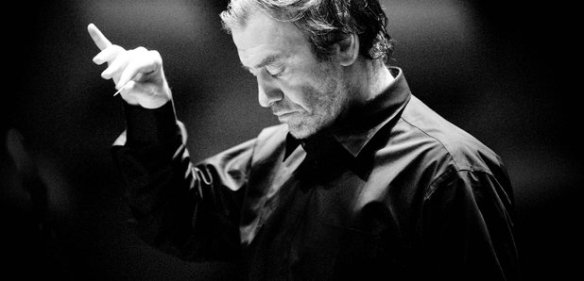
Gergiev conducts Prokofiev 2 – Kristóf Baráti (violin), Mariinsky Orchestra / Valery Gergiev (above)

Cadogan Hall, London; Tuesday 27 September 2016

The second part of this week’s heavyweight Prokofiev triptych was even more rewarding than the first.

Having been blasted into limp submission by the composer’s Second and Third Symphonies – the ‘roaring twenties’ in musical form! – it was time to move into the next decade with the much more delicate Symphony no.4.

Among the seven Prokofiev symphonies this is probably the least understood, partly because it exists in two versions. The first version, heard here, was finished in 1930 and runs for 25 or so minutes. The second, revised version is a different animal altogether, with a bigger orchestra and augmented structure that make the resultant 37-minute work a heavyweight in comparison.

It was rewarding, then, to experience the delicacy and lyricism Gergiev brought to the original score. Based on themes from the ultimately unsuccessful ballet The Prodigal Son, Symphony no.4 was full of grace and shimmering textures, with particularly excellent contributions from flute, oboe and clarinet. The plot of the ballet was on occasion directly imported, so the third movement scherzo was essentially a seduction with imaginative orchestral colour, while the slow movement was both ardent and moving. The outer movements featured a more brash approach, but one that Gergiev held together well.

Watch a performance from 2012 of Gergiev conducting the Mariinsky Orchestra in the Symphony no.4.

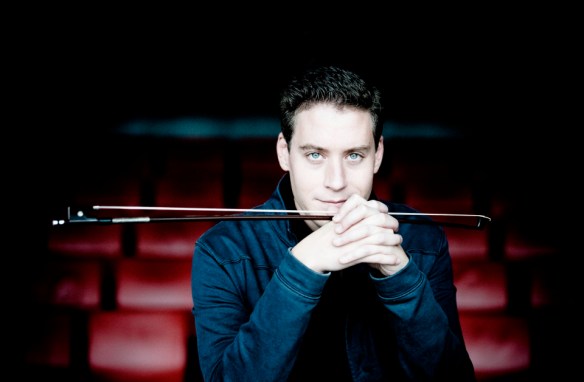
There was then a second chance to enjoy the playing of violinist Kristóf Baráti (below), who if anything outdid his first night performance. His interpretation of the Violin Concerto no.2 (1935) shone brightly, especially in the gorgeous tune of the slow movement, where a light waltz found the Mariinsky Orchestra stripped down to their bare essentials, suiting the Cadogan Hall acoustic perfectly.

The slightly drunk demeanour of the last movement was enjoyable, both violin and orchestra messing about with the rhythms to enhance the off-beat experience, while the first movement, beginning carefully on solo violin, expanded convincingly. Baráti gave us an encore of a movement from the Second solo violin sonata by Ysaÿe, but which time he had comfortably proved his stature as a very fine violinist.

Gergiev saved the best for last, a white hot performance of the Symphony no.5 (1944). On the face of it this work is an affirmative wartime symphony, but like so many pieces by Prokofiev and his contemporary and colleague Shostakovich there is a thinly veiled undercurrent of unease and turmoil. Gergiev found it immediately and pressed home the point throughout, either by making fast tempo choices for the second movement Scherzo and finale, or by deliberately leaning on some of the more painful outbursts of the slow movement.


Watch a performance from 2012 of Gergiev conducting the Mariinsky Orchestra in the Symphony no.5.

The Mariinsky orchestra were superb, led once again by some of the most authoritative and technically proficient violinists I have ever seen. Their unity of sound took the breath away at the higher points of Prokofiev’s writing, and was complemented by outstanding contributions from clarinet, flute oboe, trumpet and even orchestral piano. Gergiev could not have overseen a better performance; that it was capped with an encore of Masks from the ballet Romeo and Juliet showed us how close Prokofiev the symphonist and stage composer stayed together throughout his musical life.

Ben Hogwood

Mariinsky Orchestra with Valery Gergiev – Prokofiev Symphonies (1)

gergievIt might surprise you to learn that Prokofiev is big business right now! So much so that the forthcoming Robbie Williams single, Party Like A Russian, credits the composer as its inspiration.

It is assumed the source material will be Dance of the Knights, from Romeo and Juliet (otherwise known as The Apprentice theme tune!) but hopefully it will lead to an increase in curiosity around the composer and his music.

With unexpectedly impeccable timing, all seven of Prokofiev’s symphonies are being performed at the Cadogan Hall this week, with the best possible combination of conductor and orchestra. Valery Gergiev (above) has been leading celebrations in Russia of the 125th anniversary of the composer’s birth, and for three nights he has welded together a program of the symphonies, the two violin concertos and the Sinfonia Concertante for cello and orchestra.

A bruising first-night encounter boldly included the Second and Third symphonies, their sheer volume fairly peeling a layer off the ceiling of the hall. Both works are from the 1920s, when, like many composers, Prokofiev was intent on making as much noise as possible, working his ideas in a mechanical fashion with little room for warmth or respite.

Aggression coursed through the Symphony no.2 (1924-25), the piercing brass and biting string lines cutting through the dry acoustic and making a powerful impact. There were brief moments of respite, but even then – such as the first movement’s thump of double basses and bassoons – these were a change in colour rather than mood.

The second movement broadened its scope however, and the soaring tune Prokofiev gives to the violins offered a graceful if cold alternative. The piece is rarely heard in public and it was easy to see why, for its lopsided form and constant attack make it a challenging listen even today – but few could deny its impact.

Watch a performance from 2012 of Gergiev conducting the Mariinsky Orchestra in the Symphony no.2.

The Symphony no.3 (1928) is cut from similar cloth, but has a greater dramatic impulse. This is due to its operatic origins, with much of the source material drawn from Prokofiev’s opera The Fiery Angel. Once again the Mariinsky orchestra were superb, but the violins were sensational in their precision, playing their melodies from on high with searing intensity.

The machine of the first movement ground into action but there was deep seated passion here too, and the swooning violins took over the second movement with some weird yet rather sensual portamenti. The third movement packed a punch and led to another bruising but utterly thrilling last movement climax, where Gergiev cajoled every sinew of his orchestra to contribute. Wind and brass – especially bassoons, trumpet and horn – were all at the peak of their form.

Watch a performance from 2012 of Gergiev conducting the Mariinsky Orchestra in the Symphony no.3.

Some contrast to all this bombast was welcome in the form of Prokofiev’s Symphony no.1 (‘Classical’) (1916-17). Exquisitely crafted, it is one of his best loved pieces, with not a note out of place as it completes a wonderful modern pastiche of a Haydn symphony. Often Prokofiev’s tunes feel like they have included bags of wrong notes, but they are all so memorable – and with some well-chosen speeds Gergiev brought out the invention if not quite all of the charm.

Watch a performance from 2012 of Gergiev conducting the Mariinsky Orchestra in the Classical Symphony.

The Violin Concerto no.1 (1917-23) was equally soothing in comparison to its neighbours, and Hungarian violinist Kristóf Baráti played with assurance, charm and a frisson of attitude when the going got faster. It was the more delicate music that made this performance memorable, however, with some lovely sonorities from the orchestra as together with the violinist they painted a bright, wintry landscape.

Kristóf Baráti Photo: Marco Borggreve

Kristóf Baráti
Photo: Marco Borggreve

With a generous and challenging concert lasting more than two and a half hours you would think an encore would be far from Gergiev’s mind, but no – we were in for a final treat courtesy of Liadov’s shimmering symphonic poem The Enchanted Lake. It was a soothing come down from the emotional highs and lows of the symphonies – and only heightened the expectations for the second and third parts of this so-far exhilarating voyage.

Ben Hogwood

BBC Proms – Nielsen Fifth Symphony; Schumann Violin Concerto & Jörg Widmann’s Armonica – BBC Philharmonic / Storgårds

prom-23-1

John Storgårds conducts the BBC Philharmonic at the BBC Proms on Monday 1 August. (c) Chris Christodolou

Prom 23; Royal Albert Hall, Monday 1 August 2016

Widmann Armonica (2006) [UK premiere] [Christa Schönfeldinger (glass harmonica), Teodoro Anzellotti, (accordion)]

Schumann Violin Concerto in D minor (1853) (Thomas Zehetmair, violin)

Sibelius The Tempest – Prelude (1925)

Nielsen Symphony No.5 (1922)

Listen on the BBC iPlayer here

Tonight’s Prom brought a first visit this season from the BBC Philharmonic, conducted by its principal guest conductor John Storgårds in a wide-ranging programme which began in ethereal near-silence and ended in a blaze of affirmation rarely equalled this past century.

The relative silence was to be found in Armonica, among the most distinctive pieces by Jörg Widmann in that it features a solo role for glass harmonica – partnered here by the more abrasive sound of accordion in music which emerges into then evanesces out of focus; heard against a backdrop where indebtedness to Ligeti’s earlier orchestral works does not preclude a wealth of imaginative textures, particularly in the opening minutes. Christa Schönfeldinger and Teodoro Anzellotti interacted seamlessly, not least in those overly gestural closing pages.

prom-23-2

Christa Schönfeldinger performs Widmann’s Armonica with and Teodoro Anzellotti, John Storgårds and the BBC Philharmonic at the BBC Proms. (c) Chris Christodolou

Perhaps it was such ethereal sounds that the ailing Schumann heard over the troubled weeks prior to his final breakdown. If so, little of this otherworldliness found its way into the Violin Concerto which was his last major work. Its having been kept under wraps for eight decades, then miraculously relocated near the outset of the Nazi era, has passed into legend. Musically the piece can verge on the routine, not least a first movement whose progress is more than a little dogged due to insufficiently contrasted ideas, then a finale whose underlying polonaise rhythm abets the repetitiveness. Best is a slow movement that revisits Schumann’s ‘romanza’ idiom a last time; its enervated aura exquisitely judged by Thomas Zehetmair and Storgårds – musicians who have (uniquely?) encountered this unsettling work both as soloist and conductor.

The emotional temperature rose appreciably in the second half – first with the Prelude from the extensive incidental music Sibelius wrote for a Copenhagen production of The Tempest. Guardedly admired at first, it has latterly been hailed as a precursor of tonal innovations half a century on. While his account was not lacking for physical immediacy, Storgårds chose to emphasize those modal contours that spread across woodwind and brass as the piece moves beyond its climax towards as tenuous a resolution as any during the first half of last century.

How to wrest resolution from apparent chaos was the goal for Nielsen in his Fifth Symphony, a work that has rightly moved towards the centre of the repertoire over the past two decades. Consistency was the watchword of Storgårds’s interpretation – finding an unarguable ‘tempo giusto’ for the initial half of the first movement, its unfolding across shifting tonal planes as finely articulated as the intensifying ambivalence that suddenly clears going into the Adagio rejoinder. The climax had suitably majestic import, and it was hardly Paul Patrick’s fault if his side-drum ‘cadenza’ was outshone by John Bradbury’s plangent clarinet solo in the coda. The second movement’s propulsive opening Allegro was well judged and if Storgårds risked momentum in the curious bitonal transition, the ensuing Presto had the right headlong energy.

Nor was there any lack of focus in the fugal Andante which gradually works its way to where the earlier resolve can be regained, albeit now with a formal and expressive closure as makes possible a thrilling peroration that was superbly gauged at the end of this impressive reading.

Richard Whitehouse

BBC Proms – Of Land, Sea and Sky…

prom-15

Andrew Davis conducting the BBC Symphony Chorus and Orchestra

(c) Chris Christodolou

Prom 15; Royal Albert Hall, Tuesday 27 July 2016

Tchaikovsky The Tempest (1873)

Anthony Payne Of Land, Sea and Sky (2016) [BBC commission: World premiere]

Bruch: Violin Concerto No. 1 in G minor (1866) (Ray Chen, violin)

Vaughan Williams Toward the Unknown Region (1906)

The focal point of this evening’s Prom was a first hearing for Of Land, Sea and Sky, the latest work from Anthony Payne and a BBC commission to mark his 80th birthday in a week’s time.

Taking its departure from a description of white horses in the Rhône Valley as they seemed to merge into the surrounding water, this piece comprises eight continuous sections in which the relationship between image and illusion is considered from numerous perspectives.

Payne evidently looked at various texts before deciding to write his own: what resulted is functional in the best sense, each of the choral sections conveying its appropriate imagery without any superfluous literariness. Choral writing is less certain in that it often feels more of a textural gloss on, than integrated into orchestral writing whose clarity and resourcefulness continues from Payne’s previous large-scale works; indeed, the piece as a whole seems to unfold as a sequence of variations on the motifs set out in the opening pages, with an orchestral postlude effecting a final synthesis as the very notion of illusion is rendered in suitably elusive terms.

Of Land, Sea and Sky is typical of Payne in that its approachable (and recognizably English) while never derivative idiom is likely to yield any number of subtleties on repeated hearings. The present performance seemed an assured one, Andrew Davis securing a committed response from the BBC Symphony Orchestra and Chorus in music whose intricacy benefited from the cushioning resonance of the Albert Hall acoustic. This also marked the fourth Proms collaboration between conductor, orchestra and composer, and will hopefully not be the last.

The programme had opened with a hearing for The Tempest, Tchaikovsky’s still relatively unfamiliar symphonic fantasy inspired by, yet by no means indebted to Shakespeare’s play. The framing seascape music, with its sombre horn writing, resonates long after the music has ended, and if what comes in-between – notably the eloquent but unmemorable ‘love’ theme – finds the composer at less than his best, this was perhaps reinforced by a reading that lacked nothing in cohesion without sustaining a cumulative momentum across the piece as a whole.

After the interval, Ray Chen made his much-heralded Proms debut with Bruch’s First Violin Concerto. A little histrionic, the preludial first movement was vividly and at times ardently projected, with a heightened transition into an Adagio whose fervency was purposefully held in check. Nor, other than a slightly hectoring edge in passagework, was there much to fault in the final Allegro; despatched with a flamboyance continued in the encore – Paganini’s 21st Caprice in A, which provided ample means for Chen to display his meaningful virtuosity.

The concert ended with a welcome revival for Vaughan Williams’s Toward the Unknown Region, the composer’s first major success and a piece whose impression is greater than its modest length. If the rapt inwardness of the first half feels more successful than the fervency of what follows, Davis ensured a cumulative tension such as made the final pages – the BBC Symphony Chorus giving its all and the Albert Hall’s organ enhancing the resplendence – a fitting testimony to Walt Whitman’s conviction as to the soul’s tangibility in death as in life.

Richard Whitehouse