Wigmore Mondays – Jerusalem Quartet play Haydn & Bartók

Jerusalem Quartet [Alexander Pavlovsky, Sergei Bresler (violins), Ori Kam (viola), Kyril Zlotnikov (cello)]

Wigmore Hall, Monday 20 January 2020 (lunchtime)

You can listen to this concert on the BBC Sounds app here (opens in a new window)

Review and guide by Ben Hogwood
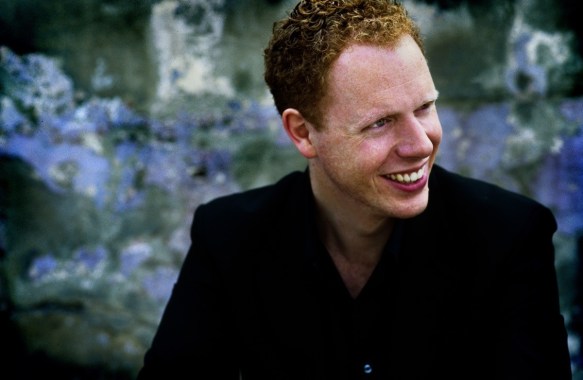
Photo of Jerusalem Quartet Felix Broede

The subtitle for this concert on the BBC Sounds website is ‘Quartet Masters’ – which is spot on when you consider the contributions both Haydn and Bartók made to this intimate form of chamber music. The string quartet – two violins, viola and cello – has presented composers with both challenge and inspiration over its 250-year existence, and even as I type this there is no sign of the form dying out.

A big part of the credit should go to Haydn, whose quartets are often used at the beginning of a program such as this. Sometimes that means the consistent quality of his work is overlooked, but there was no doubt of that happening in this performance from the Jerusalem Quartet.

Theirs was a red blooded performance, with a glossy texture to the luxurious string sound, aided by plenty of vibrato on the string. Such an approach would not have worked in the composer’s earlier quartets, but was more appropriate here for one of the six published in 1799 as the composer’s Op.76, his most mature statements yet as a quartet composer.

The ‘Fifths’ is so named because of the melodic interval Haydn uses between the two notes at the very start (2:10 on the BBC Sounds link) This motif becomes an integral part of the quartet, and as the first movement progresses it can be frequently heard. The Jerusalem Quartet’s bold performance gains more charm in the second movement (9:25), a light and relatively gentle dance. Alexander Pavlovsky’s intonation went a little awry here but not for long.

In the third movement, a darkly coloured Minuet (15:18), the quartet impress greatly, divided in two as the two violins’ melody is shadowed by the grainy tones of viola player Ori Kam and cellist Kyril Zlotnikov in impressive unison. The clouds part for a central Trio section with a rustic feel (16:44) before the obdurate theme returns (18:16) The fourth movement, initially quite furtive (19:10), blossoms into an affirmative finish.

Bartók had already confirmed his outright mastery of the string quartet form by the time he reached his Third Quartet of 1927, and the Fourth, completed a year later, achieves if anything a greater level of innovation in sound, together with strong melodic content and the use of connecting ideas between the five movements.

Bartók was obsessed with symmetrical forms, and the dimensions of the Fourth feel wholly right. Its five movements have two intensely concentrated pieces at their outer edge. Movements two and four are Scherzos – which implies they should be witty but the second is ghostly and the fourth otherworldly. The third movement is one of the composer’s classic evocations of the night, with pictorial references to insects and birds as well as dislocated elements of Hungarian folk music.

This performance was right on the money. From the start of the first movement (26:27) the tension is palpable, with a driven approach emphasising Bartók’s dissonant writing but also his melodic invention. The resolution in a pure C major is all the more telling because of it. The second movement (33:10) is marked to be played with all four players using mutes (‘con sordino’) and the ghostly entrails that result chill to the bone – in this case even on a cold January day. The four players shade their contributions exquisitely, preparing us for the central third movement (36:22), a great example of Bartók’s ‘night music’.

The emotional centre of the quartet, this is where time almost stops, and the Jerusalem Quartet captured this feeling immediately with their long, held chords and the songful lines from Kyril Zlotnikov’s cello and Alexander Pavlovsky’s violin. These held a profile close to folk melodies, the other three instruments standing watchfully by.

The fourth movement (42:50) broke us out of these nocturnal dreams, using pizzicato only (each of the four instruments required to pluck rather than use the bow) The folk-like ‘snaps’ against the board of the instrument were very effective, especially on the cello, but so was the thrumming of the violins and viola, which had an enchanting quality.

Finally the fifth movement (46:20) brings a lasting resolution, though it starts with great cut and thrust, using music of dissonance. Later a light-hearted diversion into more folk-based material breaks out, after which we head for a wholly convincing ending, summing up the whole performance perfectly.

A very fine concert, this, which was capped by an encore of the third movement (Minuet) from Mozart’s String Quartet in D minor K421 (54:24). Not only did this piece share the same key of the ‘Fifths’ quartet, it is one of a set of six quartets dedicated to Haydn, so brought the concert full circle with music of both grit and charm, rather like that of its dedicatee.

Repertoire

This concert contained the following music (with timings on the BBC Sounds broadcast in brackets):

Haydn String Quartet in D minor Op.76/5 ‘Fifths’ (1797-8) (2:10)
Bartók String Quartet no.4 (1928) (26:27)

Further listening & viewing

You can watch the Jerusalem Quartet play Bartók’s String Quartet no.4 in a live concert here:

The Jerusalem Quartet have recorded both the works played in this concert, which can be heard on the playlist link below:

Bartók’s cycle of six string quartets is one of his very greatest achievements, and you can track the development of his style by listening through chronologically. The later quartets in particular give the most reward to repeated listening, for even 100 or so years on these works are not easy to grasp straight away! The cycle from the Emerson String Quartet remains one of their best recordings:

Haydn is the father of the string quartet, and his Op.76 set – again six quartets – represents the pinnacle of his compositions for the relatively new sound world of two violins, viola and cello. These are good natured works but have considerable depth too, as this recording by the Hungarian Takács String Quartet proves:

Mozart’s six quartets dedicate to Haydn are among his finest chamber works. This recording from the Hagen Quartett includes a particularly fine account of the D minor work from which the Jerusalem Quartet took their encore:
Live review – Soloists, CBSO Chorus & Orchestra / Mirga Gražinytė-Tyla: Mahler Symphony no.8

Erin Wall (soprano, Magna Peccatrix), Natalya Romaniw (soprano, Una poenitentium), Katja Stuber (soprano, Mater Gloriosa), Karen Cargill mezzo-soprano, Mulier Samaritana), Alice Coote (mezzo-soprano, Maria Aegyptiaca), A. J. Glueckert (tenor, Doctor Marianus), Roland Wood (baritone, Pater Ecstaticus), Morris Robinson (bass, Pater Profundus), CBSO Chorus, CBSO Youth Chorus, CBSO Children’s Chorus, University of Birmingham Voices, Baltimore Choral Arts Society, City of Birmingham Symphony Orchestra / Mirga Gražinytė-Tyla

Symphony Hall, Birmingham
Saturday 18 January 2020

Mahler Symphony no.8 in E flat major ‘Symphony of a Thousand’ (1906)

Written by Richard Whitehouse

The run-up to the City of Birmingham Symphony Orchestra‘s centenary features several major choral works – none more so than the Eighth Symphony by which Mahler essayed his grandest and most-inclusive musical conception, at a pivotal juncture in the evolution of Western culture.

If more frequent performances these past few decades have made this piece less of an event than it once was, there was no lack of occasion in tonight’s rendering. Mirga Gražinytė-Tyla launched the setting of Veni, creator spiritus with an impulsiveness as held good throughout this first part. There were passing intonational flaws among the soloists, along with moments of awkward coordination between choruses and orchestra, but these were as little next to the eloquent ensemble at Qui diceris Paraclitus, the spectral interlude prior to Informa nostri corporis, the vast and cumulative fugal edifice at Accende lumen sensibus, or the ecstatic outpouring from Gloria sit Patri Domino; sustained here with an unerringly judged rhetoric as ensured that this music hit the ground running right through to its heady closing cadence.

Perhaps for this reason MG-T chose not to make a substantial pause before the setting of the final scene of Goethe’s Faust that forms the second part, enabling the accumulated intensity to carry over into this latter’s lengthy orchestral prelude with its mingled anxiety and pathos.

From its starkly evocative beginnings, Mahler’s singular take on the ultimate Enlightenment text can feel at best discursive, so it was a tribute to the conductor’s sense of overall cohesion that what can easily sprawl rarely, if ever, lost focus as the path to redemption is outlined in philosophical and, above all, musical terms. Highpoints included a notably ominous response in the Choir and Echo, a powerfully sustained solo from Morris Robinson then an equally soulful one from A. J. Glueckert, appealingly deft singing from the combined children’s and youth choirs (no hint of coyness or schmaltz here), then the exquisitely dovetailed interplay of Erin Wall, Karen Cargill and Alice Coote – during which their subtly contrasted timbres were heard to advantage against an orchestral backdrop of the greatest delicacy and poise.

Next to these, Roland Wood’s solo lacked fervour and that by Natalya Romaniw sounded a touch ill at ease, though Katja Stuber had all the rapture necessary for her brief offstage solo while Glueckert surged through his second solo on route to an orchestral interlude in which the rippling interplay of woodwind and keyboards was limpidly rendered. Even more telling was MG-T’s handling of their gradual evanescence, from where the final Chorus Mysticus emerges. Always a distinctive moment, it proved especially memorable for the way in which the massed voices unfolded their intensifying expressive curve towards those seismic closing bars – here afforded maximum impact through the conductor’s refusal to linger unnecessarily when the off-stage brass enters to bring the whole work grandly and majestically full circle.

Such reservations as there were will likely be remedied in tomorrow’s performance, yet while MG-T will doubtlessly uncover further depths and nuances in the future, it is hard to imagine she will deliver a reading of greater conviction or purposefulness than that heard this evening.

The reviewed performance is being repeated today, Sunday 19th January. Further information can be found at the CBSO website

Wigmore Mondays – Alexander Melnikov: Early piano music by Clementi, Haydn & Mozart

Alexander Melnikov (fortepiano)

Wigmore Hall, Monday 13 January 2020 (lunchtime)

You can listen to this concert on the BBC Sounds app here (opens in a new window)

Review and guide by Ben Hogwood

Something of a history lesson from the versatile pianist Alexander Melnikov, who is capable of moving between modern piano music on a concert grand and 19th century music on the instrument for which it was written, the fortepiano. Essentially the instrument is a forerunner of the grand version we are used to nowadays, but it allows us to see the join between the harpsichord – the go-to keyboard of much of the 18th century – and the bigger and more modern instruments the likes of Beethoven began to write for. Here Melnikov played an instrument by Paul McNulty after Walter & Sohn from an original of 1805. Alexander Skeaping deserves credit as the tuner and supplier.

Melnikov’s program was brilliantly conceived, including music by Mozart and Haydn but linking them through one of the leading pianists and composers of the day, Muzio Clementi. Beethoven was one of his greatest advocates and often played his sonatas, while Clementi promoted his fellow-composer in London, where he arrived in the early 1770s. At this point the English capital was regarded as the centre for keyboard innovations, and in the music for this concert – superbly played and interpreted by Melnikov – you can feel the sense of freedom and exploration as the music looks outwards and forwards towards Beethoven.

The pianist begins with a musical impression of Haydn by Clementi, a brief Prelude from his Musical Characteristics album written as a guide for to give performers an idea of the style of other composers. This short number (from 3:04 on the broadcast link) starts with a broad C major chord, helping us get used to the piano sound. The mood is free and expansive, with a busy left hand. The pianist adds a short improvised section, where it proves difficult to spot the joins, but this serves to lead us straight to a Haydn work, the Piano Sonata in C sharp minor HXVI:36 (4:53).

This was a very rare key for Haydn to use – and rare for piano music, with Beethoven’s Moonlight sonata the next excursion some 20 years later. Melnikov’s performance captures the exploratory air of the piece, beginning with quite a stern statement but then playfully holding back with some of the clipped right hand notes to emphasise the composer’s wit. Melnikov’s affinity for the music is clear, with some beautifully played melodies. The piano sound is lovely, with none of the tinny textures often associated with the earlier instruments.

The second movement is a Scherzando (14:26), Melnikov playing a graceful dance with a really satisfying sense of ebb and flow. The third movement (18:21) is the slowest, a slow and solemn Menuetto moving to a thoughtful and serene final section (20:14) where Haydn moves to the major key. The playing here, using the ‘damper’ pedal, is really lovely.

The next pair of works begin with Clementi’s second ‘impression’ of Mozart (24:17), where a great deal of technical control is required! Me The two composers famously sparred in an improvisation session in Vienna in 1781, so knew a lot about each other – but from the reports did not perhaps see eye to eye.

Clementi’s tribute is keenly felt however, before Mozart‘s own exploratory Fantasia (25:55) receives a carefully thought yet natural performance. Though a short piece, this unfinished work varies greatly in mood and tempo, with quick cascades from on high contrasting with dark left-hand thoughts, before a sunnier closing section to sweep away the clouds. Melnikov gives the music plenty of room, sometimes exaggerating the pauses but always to the benefit of the music.

The concert finished with one of Clementi’s own sonatas, the substantial Piano Sonata in G minor published in 1795. Before it we heard another Prelude from the Musical Characteristics, this time a portrait of himself with a tumbling figure and some highly chromatic music (32:55). The Sonata itself begins at 34:27 with a stern introduction of two-part writing, but that soon cuts to a busy and bright first movement proper. There are a number of abrupt mood swings in this movement, anticipating Beethoven’s way of changing quickly between thoughts, and Clementi also employs some daring harmonies for the time. Melnikov responds brilliantly to these, again his performance given as though performing a characterised stage work, with a stormy closing section.

The second movement (42:40) is marked Un poco adagio (loosely translated as ‘a little bit slow’) and is subtly charming, like a slower dance, before the third movement (48:38), marked Molto allegro (quick and lively), actually hangs back a bit in this performance before going full throttle to a thrilling finish. Again Melnikov’s right hand contours are brilliantly realised.

This was a really enjoyable concert, and great to see the importance of Clementi’s role properly realised. He was one of the true pioneers of early piano music, and without his part it is unlikely Mozart or especially Beethoven would have made their own mark.

Repertoire

This concert contained the following music (with timings on the BBC Sounds broadcast in brackets):

Clementi Musical Characteristics Op.19: Preludio II alla Haydn in C major (publ.1787)
Haydn Piano Sonata in C sharp minor HXVI:36 (publ.1780)
Clementi Musical Characteristics Op.19: Prelude I alla Mozart in A major (publ.1787)
Mozart Fantasia in D minor K397 (?1782)
Clementi Musical Characteristics Op.19: Prelude I alla Clementi (publ.1787)
Piano Sonata in G minor Op.34/2 (publ.1795)

Further listening

Alexander Melnikov has not yet recorded any of the music in this concert, but the playlist below includes recorded versions on the fortepiano wherever possible.

Thirty years ago it would have been unthinkable to consider we would now have a huge resource of recordings made on the fortepiano. This is thankful in part to early protagonists such as Melvyn Tan, but one pianist to have recorded a vast amount of this repertoire is Ronald Brautigam. His recordings of Beethoven are rewarding, but in Haydn he sparkles – such as in this disc of five sonatas, including the one heard in this concert:

Melnikov’s own discography on more historical instruments is in its relatively early stages, but this disc of piano music through the ages from Schubert to Stravinsky is well worth hearing:

Finally from this time comes a thrilling cycle of Beethoven sonatas for piano and violin – pioneering music which Arcana will explore in greater detail as part of 2020 Beethoven. This version with Isabelle Faust is one of the very best:

Wigmore Mondays – Louise Alder & Joseph Middleton: Lines written during a sleepless night

Louise Alder (soprano), Joseph Middleton (piano)

Wigmore Hall, Monday 6 January 2020 (lunchtime)

You can listen to this concert on the BBC Sounds app here (opens in a new window)

Review and guide by Ben Hogwood

This was a concert with an especially personal link for soprano Louise Alder. The Russian Connection – subtitle of her first album for Chandos – goes much further than the repertoire chosen. It reflects Alder’s Russian ancestry, with generations of her family, up to and including her grandfather in 1914, born in the country.

In addition to that, Alder and regular recital partner Joseph Middleton have created a captivating program linking Grieg, Medtner, Tchaikovksy, Britten, Rachmaninov and Sibelius through their choice of poets and their use of a language outside of their own. Six composers, four languages (at last count!) and some richly descriptive writing all made for a particularly memorable concert, especially when performed with the passion and musicality on show here.

Alder and Middleton judged their program to perfection, bringing in the new year with a spring in its step as Grieg’s Heine setting Gruß (Greeting) tripped into view (2:33 on the broadcast link). This is the first song in a compact but deeply descriptive cycle of six from the composer, setting German poetry with his typical melodic freshness and flair. Alder shows lovely control on the final ‘Gruß’ word, before applying a slight husk to the deeply felt Dereinst, Gedanke mein (One day, my thoughts) (3:40), which made a striking impact here. Lauf der Welt (The Way of the World) (6:23) has heady urgency, singer and pianist working as one, while the evocative Die verschwiegene Nachtigall (The secretive nightingale) (8:01) is a sultry, sensual setting in these hands, the initial picture beautifully painted by Middleton. Zur Rosenzeit (Time of roses) (11:40) is filled with intense longing, while Alder’s tone in Ein traum (A dream) (14:55) is particularly beautiful, working through to a powerful finish.

Nikolai Medtner is a Russian composer known for his piano music rather than his songs, so it was gratifying to have Alder and Middleton (above) include two here. They are fine pieces of work, too, with an impressively fulsome piano part that Middleton tackled with deceptive ease and clarity. Mailied (May song) (18:15) holds an intense vocal line over its catchy piano part, while Meeresstille (Calm sea) (20:10) is really well controlled by Alder here.

Tchaikovsky’s numerous songs contain many treasures, and the two French language examples here were no exception. The Sérénade (23:22) dances in the bright light of dawn, with a slightly furtive piano, while Les Larmes (The tears) (25:02) provides much darker soul searching.

Britten’s Russian-language song cycle The Poet’s Echo is a relative rarity in the concert hall, but as Alder and Middleton showed here it contains music of typically fearsome and compressed intensity. The spirit of Musorgsky is evident not just in the choice of poet (Pushkin) but in the bare piano lines, rumbling in the deep for the first song Echo (29:22). Alder’s line is fearlessly delivered, with songs like My heart… (32:17) and Angel (33:48), with its quasi-orchestral piano part, making a powerful impression. The nightingale and the rose (36:20) take powerful flight, the piano gnawing at the heel of the vocal line, while the strange Epigram (40:13) has a striking reverberation achieved through the open piano lid. The final song, Lines written during a sleepless night (41:07) captures the supreme irritation of insomnia through the ‘monotonous tick of the clocks’, with a chilling piano postlude. This work remains a difficult nut to crack, listening-wise, but this is the sort of performance to do it.

We then heard two songs by Rachmaninov, both again setting Pushkin texts. Sing not to me, beautiful maiden (46:44), an early song from the composer’s late teens, receives a fulsome account here with Alder capturing the devastating beauty of the song. The later How fair this spot (51:56), taking the mood from darkness to relative light, is even better, Alder’s top ‘B’ a note of extraordinary clarity.

The generously packed concert concluded with three Sibelius songs, sung in Swedish. Once again these songs are found to be fiercely intense, often expressed through the bare minimum of means. The tempestuous Säv, säv, susa (Sigh, rushes, sigh) (54:02) is heady stuff, while the dynamic range achieved by both performers in Våren flyktar hastigt (Spring is swiftly flying) (56:27) is hugely impressive. Finally Flickan kom ifrån sin älsklings mote (The girl came from her lover’s tryst) (57:49) has a huge, orchestral scope, a reminder that the Second Symphony is not far away in the composer’s output. The song chills to the bone when turning tragically into the minor key for its third verse and the lover’s treason.

This was a simply outstanding concert from Alder and Middleton, deeply intimate yet including the audience in all of their asides. These qualities extended to the wonderful encore, Rachmaninov’s A Dream, where the rippling piano part and exotic harmonies supported Alder’s heavenly soprano line.

If more of the Wigmore Hall Monday lunchtime concerts are as good as this in 2020, we are in for many treats indeed! It only remains for you to listen on BBC Sounds if you haven’t already…and to keep up with the series as it progresses.

Repertoire

This concert contained the following music (with timings on the BBC Sounds broadcast in brackets):

Grieg 6 Songs Op.48 (1884-8) (2:33)
Medtner Mailied Op.6/2 (1901-5) (18:15), Meeresstille Op.15/7 (1905-7) (20:10)
Tchaikovsky Sérénade Op.69/1 (1888) (23:22), Les Larmes Op.69/5 (1888) (25:02)
Britten The Poet’s Echo Op.76 (1965) (29:22)
Rachmaninov Sing not to me, beautiful maiden Op.4/4 (publ.1893) (46:44), How fair this spot Op.21/7 (1902) (51:56)
Sibelius Säv, säv, susa Op.36/4 (1900) (54:02), Våren flyktar hastigt Op.13/4 (1891) (56:27), Flickan kom ifrån sin älsklings möte Op.37/5 (1901) (57:49)
Encore – Rachmaninov A Dream Op.38/5 (not on the broadcast)

Further listening

Most of the music from this concert is part of Louise Alder and Joseph Middleton’s new disc for Chandos, Lines Written During A Sleepless Night: The Russian Connection, with the exception of the two Rachmaninov songs. The full playlist is here:

If you enjoyed Alder and Middleton in this concert – which I’m sure you did! – their previous outing together is a sumptuous collection of songs by Richard Strauss for Orchid Classics which is bound to appeal, and certainly plays to their strengths:

Meanwhile to enjoy the Rachmaninov song output in its entirety there are few better historical guides than soprano Elisabeth Söderström and pianist Vladimir Ashkenazy:

In concert – David Titterington plays Messiaen’s La Nativité at St John’s Smith Square

David Titterington (organ)

St John’s Smith Square, Thursday 19 December 2019 (lunchtime)

Messiaen La Nativité du Seigneur (The Nativity of the Lord or The Birth of the Saviour)

Review by Ben Hogwood
Photo credits Chris Christodoulou (David Titterington), Ben Hogwood (SJSS organ)

Organ recitals can be curiously awkward affairs. The performer will often sit with their back to the audience, playing from a spot in the venue that is nigh on impossible to access. Taking a bow from their stage is fraught with difficulty – in this case a wrong move could lead to an unexpected descent! – and any heroic page turning deeds are done by an unseen accomplice in the dark, on a wing and a prayer (speaking with the cold sweat of experience!)

That said, this was an organ recital of the highest order from David Titterington. The scene was set in St John’s Smith Square, where just around the corner TV crews were covering the state opening of parliament with a security lockdown in place. Here the mood was different but similarly tense, the dank December gloom ensuring the audience were almost in darkness, save for the minimal light of a chandelier.

Yet these circumstances served to draw strong parallels with the very first Nativity. Political unrest, dark times – and in them the arrival of light, acknowledged in Messiaen’s rapturous response to the Biblical tale. Nothing is ever done by halves with this particular French composer, and his response came in the form of a massive, nine-movement organ suite lasting just over an hour. For Messiaen, contemplation is achieved through massive added-note chords, complex rhythms and large structures. Each section in this 1935 work responds to images from the birth of Jesus, and it is one of the composer’s first works to use birdsong melodies and rhythms from India and Ancient Greece.

Taking up the challenge, Titterington – himself the St John’s organ curator – delivered what could only be described as an heroic performance. So much of this music is about creating an atmosphere, and although the elements had combined helpfully it was his choices of registration and phrasing that took us to the next level, securing both a spectacular and reverent performance.

We began with the mottled chords of La vierge et l’enfant (The Virgin and Child) before clipped upper register notes introduced Les bergers (The Shepherds), their tumbling single lines brilliantly executed. Desseins éternels (Eternal designs) had appropriately rich, blanket chords which aided of contemplation and meditation, the subdued lighting helping the cause.

Meanwhile the massive Le verbe (The Word) was a tour de force, with impressive flourishes in the right hand, the structure easily grasped before the probing lines and eventual harmonic stability of Les enfants de Dieu (The Children of God), which ended in mysterious quiet. Titterington then gave superb definition to the complicated treble parts of Les anges (The Angels), with bell-like peals ringing around the church.

The sounds for Jésus accepte la souffrance (Jesus accepts suffering) were brilliantly secured, with a deep growl from the lower reaches of the organ depicting the trials at hand, which were ultimately overcome in brighter sound at the end.

We then contemplated the slowly circling figures of Les mages (The Magi), with a lovely pipe timbre chosen for the second part of the piece, before Dieu parmi nous (God Among Us) brought the house down, a glorious finale that reached a blazing conclusion.

When experienced in this way close to Christmas La Nativité comes alive, its colourful musical prose and richer than rich harmonies preparing us for the feasting in store – but also contemplating the quiet wonder of the festival, the still, peaceful voices that even now strive to remain as a crucial part of the Christian calendar.

Further listening

You can hear Messiaen’s cycle on Spotify below, in a recent recording for the King’s College Cambridge label by Richard Gowers: