Alexandra Dariescu, Royal Philharmonic Orchestra / Cristian Mandeal – Romanian Centennial Concert

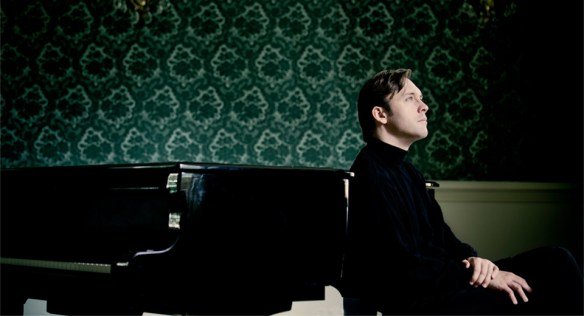
Alexandra Dariescu (piano, above), Royal Philharmonic Orchestra / Cristian Mandeal (below)

Cadogan Hall, London; Tuesday 28 November 2017 (Concert supported by the Romanian Cultural Institute)

Enescu Romanian Rhapsody No. 1 in A, Op. 11 No. 1 (1901)
Grieg Piano Concerto in A minor, Op. 16 (1868)
Lipatti Concertino in Classical Style, Op. 3 (1936)
Tchaikovsky Francesca da Rimini, Op. 32 (1876)

Reviewed by Richard Whitehouse

It has often been remarked that the death of Dinu Lipatti, in 1950 at the age of 33, robbed the musical world of a rare pianist, yet his ability as a composer was by no means inconsiderable. Such was evident throughout the modest and perfectly judged proportions of his Concertino in Classical Style, its four movements discreetly and judiciously evoking formal precedents while also offering up the subtlest of allusions to several then contemporary composers who had drawn productively on a neo-classicism inspired (both more and less directly) by Bach.

The Concertino was given here with style and no little insight by Alexandra Dariescu, who had already appeared prior to the interval for an enjoyable performance of Grieg’s perennial Piano Concerto. If the first movement lacked the last degree of formal cohesion, the extent of its expressive scope was not in doubt – not least during the wide-ranging cadenza which Dariescu dispatched with aplomb. The sentiment of the Adagio never cloyed, then the finale exuded energy and eloquence on its way to a grandiloquent but not overbearing peroration.
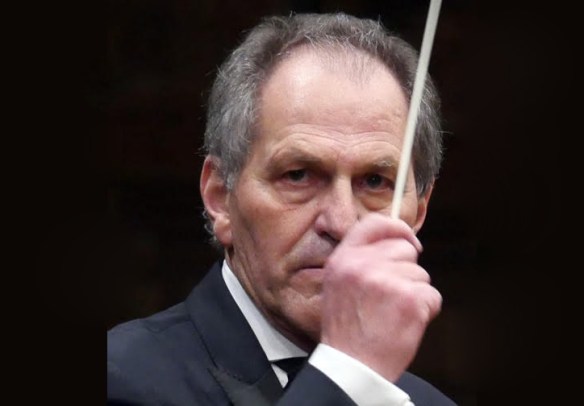
Both these works benefitted from the stylish and attentive accompaniment as secured, from a Royal Philharmonic Orchestra on excellent form, by Cristian Mandeal – assuredly the leading Romanian conductor of his generation. He began proceedings with Enescu’s First Romanian Rhapsody – a piece that, however much its composer might have deplored the fact, continues to represent his music to the public at large. If just a shade hesitant in the initial section, this account audibly hit its stride in a coruscating take on the breathless dance-music that follows.

The programme ended with an impressive account of Francesca da Rimini – if not the most often heard of Tchaikovsky’s symphonic poems, arguably his most involving in terms of its graphic depiction of the heroine’s love and tragic fate. Not the easiest piece to hold together, it benefitted from the conviction with which Mandeal integrated its contrasting episodes; not least the infernal storm which yields even greater terror in those cataclysmic final pages. The Cadogan acoustic strained to take this all in, but orchestra and conductor emerged triumphant.

For more concert information on the Royal Philharmonic Orchestra, head to the What’s On page on their website

You can hear a recording of the Dinu Lipatti Concertino on Spotify below, part of a disc devoted to the composer’s music by Marco Vincenzi:

Distance – Mario Brunello plays Bach, Cage & Weinberg at the National Gallery in London

The Incredulity of Saint Thomas (1502-4), by Giovanni Battista Cima da Conegliano

Mario Brunello (cello, below)

J.S. Bach Solo Cello Suite no.5, BWV1011 (c1720s)
Cage 4’33” (1952)
Weinberg Sonata for Solo Cello no.1, Op.72 (1960)

Room 61, The National Gallery, London; Thursday 7 December 2017

Written by Ben Hogwood

A rare treat indeed – the chance to witness a concert in the very heart of the National Gallery. Given by cellist Mario Brunello, the hour of music was entirely inspired by the Cima work The Incredulity of Saint Thomas, a powerful and colourful depiction of the apostle’s doubting of Christ’s resurrection.

Brunello chose three pieces to bring the work to musical life, the first of which was entirely appropriate. Cellists such as Steven Isserlis have long held a belief that the six suites for solo cello by Johann Sebastian Bach carry a parallel with the story of the crucifixion and resurrection, and in choosing the Fifth Suite Brunello picked the one most closely associated with Christ’s death. The Sarabande in particular is some of Bach’s most extraordinary music, a single line portraying in vivid detail the darkest of moments, dispensing almost entirely with obvious rhythms or harmonic movement. The solemn prelude and faster dance music tends to occupy the lower registers of the instrument, and here it found a perfect match in the rich baritone of Brunello’s 1600 Maggini cello. Meanwhile the wispy lines of the second Gavotte were especially effective, tracing invisible lines around the performing space.

The second piece was a performance of John Cage’s 4’33”, a work that will divide opinions for eternity it seems. Never failing to raise a smile or a more extreme reaction, the three movements of silence – each conducted in by Brunello, as the composer instructs – were here an effective postscript to the Bach. While inevitably there was some extraneous noise from people walking around in the gallery, and a brief solo from a vibrating phone in the middle distance, the period of reflection if anything enhanced the impact of the Bach that had gone before, whilst enabling us to focus afresh on the painting behind Brunello’s left shoulder. I did not time the ‘performance’, though it felt a lot longer than the specified duration – perhaps an indication that, in a busy city, 4’33” can be a surprising length of time.

Coming out of the silence with the Suite no.1 for solo cello by Mieczysław Weinberg was a fascinating move. Only in the last five or so years has the music of this Soviet / Polish composer gained recognition, thanks in part to Brunello’s close associate Gidon Kremer and the Kremerata Baltica. Brunello grew the first movement out of nothing to a powerful apex before dropping back to the low note where it started, while the second movement was a charming yet muted dance, played as though the real drama was being held back. And so it proved, for the final movement started with such ferocity as to knock the listener back in their seat. Three powerful bow strokes of unison ‘C’s – the same tonal centre of the Bach – brought all manner of parallels with the three hours between crucifixion and death, though the violence was also portraying Thomas’s disbelieving prods at Christ’s side.

Either way this was incredibly powerful in its realisation, Brunello making up for the occasional tuning idiosyncrasy with a forceful tone which seemed to grow ever more powerful as the range went higher. Weinberg’s music carries great meaning, given the composer’s responses to the tragedies of his personal life, and its use here with Bach and Cage put it in the best possible context. Even the weather responded in kind – when we entered the gallery it was raining, but we emerged blinking into powerful sunshine. A true darkness to light experience.

Further listening and reading

You can experience the same program from the National Gallery on this Spotify playlist, including Mario Brunello’s recording of the Bach:

Meanwhile if you are interested in more Weinberg, the release below, of chamber symphonies and the Piano Quintet, is a substantial document completed by Gidon Kremer with the ECM label:

Wigmore Mondays: Céline Moinet & Florian Uhlig – Schumann Romances for oboe and piano

Céline Moinet (oboe, above – picture Francois Sechet), Florian Uhlig (piano, below)

Schumann 3 Romances Op.94 (1849)
Nielsen 2 Fantasy Pieces Op.2 (1889)
Clara Schumann 3 Romances Op.22 (1853)
Robert Schumann 12 vierhändige Clavierstücke für kleine und grosse Kinder Op.85/12 – Abendlied (1849)
Pasculli Concerto on ‘La Favorita’ by Donizetti ()

Wigmore Hall, London; Monday 4 December 2017

Written by Ben Hogwood

The broadcast can be heard on the BBC iPlayer by clicking here

Robert Schumann was a composer equally at home in short musical forms as he was in longer constructions – but it seems his most intimate thoughts can be found in the shorter pieces, either his songs or his chamber music. Schumann’s lyrical style of writing means that pieces like the 3 Romances, written for Clara as a gift, transfer effortlessly between treble instruments such as the violin, clarinet or horn. These three, however, work best on the oboe, its tone perfectly suited to the reflective and slightly mournful outer pieces.

The two Nielsen pieces are early works, written by the composer shortly after his graduation from the Copenhagen conservatoire – a Romance and an Intermezzo in the form of a Humoreske.

Returning to Schumann, we hear an arrangement of a piano piece for children, and then three Romances by Schumann’s wife Clara. These were originally written for the violinist Joseph Joachim, but like her husband’s music they transcribe for oboe and piano with ease.

Finally a piece by Antonio Pasculli, regarded as the best oboist of his time – and one who enjoyed arranging operatic themes for the oboe in highly virtuosic pieces with piano accompaniment.

Follow the music

The times used relate to the broadcast link above.

Schumann 3 Romances Op.94 (1:34) (12 minutes)

The first piece (1:34) is lyrical but slightly downcast in its musical though, a time for reflection. The mood becomes more upward looking for the second piece (4:55), Schumann switching towards the major key for a gentle tune that he contrasts with an energetic central section (from 6:04). The third piece (8:54) begins with the bare bones of a melody, played by the oboe and piano together, with darker shades to the texture and harmony that never fully leave the music.

Nielsen 2 Fantasy Pieces Op. 2 (from 15:13) (6 minutes)

Nielsen gives the oboe a sweet melody for the first fantasy piece, a Romance (15:13) but characteristically alters the harmonic setting to throw it just a little out of kilter.

For the Intermezzo – a Humoreske – from 18:32, an impish and slightly mischievous approach makes for a charming piece, especially when the harmony moves into the major key.

Clara Schumann 3 Romances Op.22 (from 22:36) (10 minutes)

The first Romance is a genial piece that goes on to test the oboist’s control of the upper register. There is fluid interplay between the oboe and piano before the piece softens at the close. From 25:34 the second piece moves into a minor key, and once again a darker outlook. The third Romance, from 28:22, is the most expansive of the three, with flowing piano and a long legato oboe line, before Clara introduces a more playful aspect to the oboe’s lines.

Schumann Abendlied Op.85/12 (from 32:56) (2 minutes)

A short but sweet lullaby from Schumann’s Music for Children (Large and Small!), Abendlied (An Evening Song) is beautifully played.

Pasculli Concerto on La Favorita by Donizetti (36:44) (12 minutes)

A carefully considered piano introduction sets the scene, in the spirit of the best concertos, with the oboe following 40 seconds later. The slower introduction includes some extremely tricky passagework for the oboe, but also some broader melodies from Donizetti’s opera. Then after a cadenza from the oboe, the pace quickens (41:45) in a march. Now the oboe line is incredibly demanding, twisting and turning in rapid figurations in what feels like a thorough test of stamina rather than anything more musically meaningful!

Thoughts on the concert

This was quite a short recital for the Wigmore Hall lunchtime, but was beautifully played by Céline Moinet, who showed off technical prowess but more than anything a keen ear for and aptitude with the music. She inhabited Schumann’s world easily, finding the thoughtful intimacy that he pours into his shorter works, not to mention the darker side they inevitably hint at.

For the Pasculli she was really able to cast off the shadows, but here Florian Uhlig’s virtuosity and prompting were just as important, the pianist mastering some tricky runs in response to Moinet’s ever greater athletic feats. That she managed to bring across Donizetti’s operatic melodies was no mean feat, and the end was thrilling in its bravura.

Further listening and reading

You can listen to Céline Moinet and Florian Uhlig in their new album Schumann Romances, available here on Spotify:

Meanwhile Moinet’s previous disc, Meditations, brings together a lovely combination of French, Italian and German works – some original, some arranged:

London Philharmonic Orchestra / Vladimir Jurowski – An Autumn Symphony

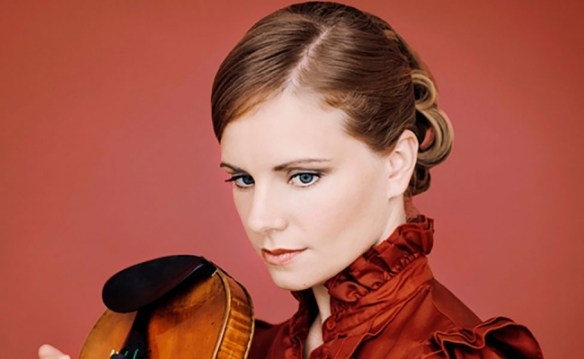
Julia Fischer (violin, below), London Philharmonic Orchestra / Vladimir Jurowski (above)

Royal Festival Hall, London, Wednesday 29 November 2017

Chausson Poème, Op. 25 (1896)

Respighi Poema autunnale, P146 (1925)

Marx Eine Herbstsymphonie (1921) [UK premiere]

Reviewed by Richard Whitehouse

Vladimir Jurowski continues to ring the changes in terms of repertoire, with this evening’s concert by the London Philharmonic Orchestra no exception in featuring the UK premiere of Eine Herbstsymphonie, the most ambitious undertaking from Austrian composer Joseph Marx.

Although best remembered for his substantial output of songs, Marx (1882-1964) spent the decade after the First World War essaying large-scale orchestral works – chief among them being this Autumn Symphony premiered (by Felix Weingartner) in Vienna during 1922 but which went unheard as a complete entity for eight decades after its 1925 revival. Marrying impressionistic harmonies to a Mahlerian formal expansiveness, this is an evocation of its season both in descriptive and philosophical terms – in music as opulent as it is engulfing.

What it lacks is any sense of a cumulative or even over-arching momentum. Sizable forces are deployed expertly if amorphously in terms of the dense yet unvarying texture – though this was hardly the fault of the LPO, which responded to Jurowski’s incisive direction with assurance. Not least in the radiant Autumn Song – less a movement then a prelude to what follows and segueing into Dance of the Noon Spirits, an extensive intermezzo that suffers from its overly uniform waltz-time measure and corresponding lack of rhythmic contrast.

This latter failing is hardly an issue in Autumn Thoughts, a slow movement where serenely unfolding paragraphs and taciturn solos for wind and strings effect a yearning regret such as draws in the listener whatever its lack of defined melodies. After which, An Autumn Poem provides a finale of Dionysian import – the full orchestra (nine percussionists in addition to timpani and keyboards) moving through a series of increasingly heady climaxes before the music subsides into a postlude suffused with eloquent resignation though tinged by regret.

A significant work historically, then, but hardly a neglected masterpiece that warrants regular revival. Jurowski can only be commended for instigating this performance, as for encouraging so committed an orchestral response as will hopefully find its way onto the LPO’s own label.

Even so, it was the first half that brought greater rewards. With its inspiration in a typically melodramatic story from Ivan Turgenev and breathing an aura of fatalistic dread, Chausson’s Poème has made a welcome return to the repertoire and has also found its ideal exponent in Julia Fischer – her warm and caressing though never over-wrought tone teasing out those expressive nuances which lurk beneath the surface of this emotionally all-enveloping score. Whatever else, its composer experienced the essential qualities of his music in graphic terms.

Latter-day revivals have tended to pair this piece with Ravel’s jarringly contrasted Tzigane, but Fischer choice was far more apposite. Even more overlooked, Respighi’s Autumn Poem itself pursues a full-circle trajectory such as takes in reflection and animation, though one whose overall conciseness proves its own justification. Fischer duly spun the deftest of solo lines through the diaphanous and modally-inflected orchestral texture, in which Jurowski’s accompaniment was astute and affecting in equal measure. Sometimes, less really is more.

Wigmore Mondays: Andrei Ioniţă & Itamar Golan – Bach, Shostakovich & Bartók

Andrei Ioniţă (cello, above – picture Daniel Delang), Itamar Golan (piano, below)

J.S. Bach Cello Suite no.1 in G major BWV1006 (c1720)
Shostakovich Cello Sonata in D minor, Op.40 (1934)

Wigmore Hall, London; Monday 27 November 2017

Written by Ben Hogwood

The broadcast can be heard on the BBC iPlayer by clicking here

There is a frustrating lack of information around J.S. Bach’s music for solo cello. Frustrating because the music itself is so good, a cornerstone of the instrument’s repertoire that satisfies experienced players and novices alike. In an interesting program note for this concert Richard Bratby outlined how Bach’s Six Suites for solo cello could indeed have a biblical theme running through them, a conviction that the cellist Steven Isserlis holds, though as he is the first to admit there is no hard and fast evidence for this.

The Suites are beautifully structured, with a Prelude giving way to five different dances – two relatively quick (in this case Allemande and Courante) – then one slow (always a Sarabande) and then two more quick (here two Bourrées) and always ending with a triple time Gigue.

The first cello suite has music you may recognise from Master and Commander among many other film and TV uses.

The Shostakovich is one of the most-played works for cello and piano from the 20th century, and it is easy to see why when you hear it – packed full of incident and tunes. It was written at the start of a new era for the composer, his wife having just moved out – and found him in a particularly rich vein of creativity, completing the half-hour work in just over a month in 1934. It was written for the cellist Viktor Kubatsky, who with the Stradivarius Quartet had taken part in the premiere of the composer’s 2 Pieces for String Octet in 1925. Shostakovich had yet to write any of his 15 string quartets, or his concerti for violin and cello, so this marks his first large scale writing for a stringed instrument. It received a mixed reception, some of its critics branding it too simplistic, but its lyricism and humour have given it a wide audience.

Follow the music

The times used relate to the broadcast link above.

J.S. Bach Cello Suite no.1 in G major BWV1006 (c1720) (1:47) (16 minutes)

The suite follows the outline described above, beginning with an expansive Prelude (1:47) that uses a series of arpeggios to plot its harmonic and melodic course. The dance movements begin with a fairly relaxed Allemande (4:02), where the steps are relatively slow, but steps up in pace with a Courante (7:52).

A slow and gorgeous Sarabande follows (10:20) where the cello uses a lot of ‘multiple stopping’ – playing more than one note with the bow simultaneously – before we move to a pair of Bourrées. The first one (13:14) is boisterous, the second (14:22) more withdrawn – but the first is repeated (15:32) to reclaim the upbeat mood. Then the distinctive triple time of the Gigue (16:09) closes out the suite.

Shostakovich Cello Sonata in D minor Op.40 (from 20:20) (28 minutes)

The Sonata begins in relatively genial mood, with a legato approach to the cello, as lyrical as anything Shostakovich has written. Soon, however, the clouds begin to form – though they are not visible anywhere when the cello gives out the second main theme of the first movement (22:35), a beautiful moment where it sounds suspended in mid-air. The movement ends deep in thought, but with a little frisson of worry around the edges.

That worry is emphatically thrown off in the bold as brass second movement (32:20) where both instruments go at it hammer and tongs. After that outburst we return to quiet and an introspective slow movement (from 35:45), where Shostakovich captures that exquisitely private intimacy only he can in a chamber setting.

When we emerge from deep thought the piano gives out a witty theme (44:06) to signal the start of the finale, where both players duck and dive through a set of highly enjoyable tunes and countermelodies. This is Shostakovich having fun – but even then there is a note of caution in the background.

Thoughts on the concert

Andrei Ioniţă gave a thoughtful performance of the Bach First Cello Suite, though could perhaps have shown us more of the sunnier side of the music, which can come through in the Courante, first Bourrée and Gigue especially. The Courante felt too fast – certainly something you’d have trouble dancing to! – though it did show off his quickfire technique, of which more later. The Sarabande could perhaps have been more outwardly expressive too, though the Gigue had a nice rustic feel.

The Shostakovich was a different story, Ioniţă and Itamar Golan straight to the heart of the work with an intimate yet wholly involving performance. The cellist’s tone was ideal, and so was the balance struck with the piano, who intervened in crushing style where necessary but drew back in the quieter moments. The bracing second movement was powerfully wrought, both players sparring with the gloves off, but the slow movement was especially affecting, helped by Ioniţă’s control of the high melodic line. The finale was brilliantly done, bringing just the right measure of humour and introspection to the performance.

With some time left Ioniţă and Golan gave a generous encore, an arrangement of Bartók’s Six Romanian Folk Dances for cello and piano (from 49:43 on the broadcast). This had all the flair and pizazz you would expect from a native Romanian, brilliantly played and with all the melodic inflections beautifully realised. The accuracy of the harmonics in the third dance (51:41) had to be seen to be believed!

All in all an excellent concert from a prodigious talent, who can only benefit from having someone as experienced as Golan – who has in his time accompanied Mischa Maisky and Maxim Vengerov – alongside him.

Further listening and reading

You can watch Ionita in the final of the 2015 Tchaikovsky competition below, where he plays more Shostakovich:

Meanwhile the pieces making up the concert are grouped in the following Spotify playlist