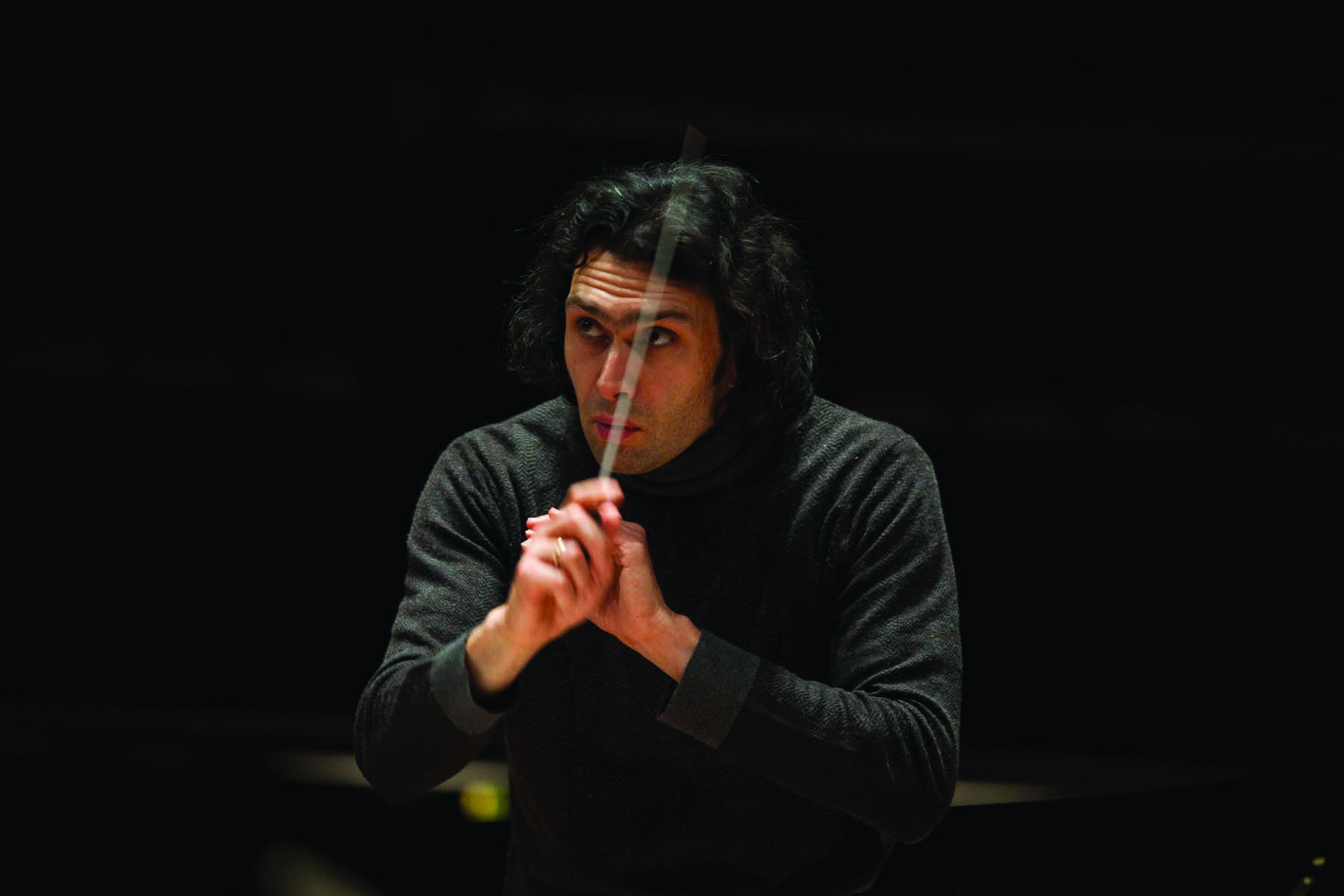
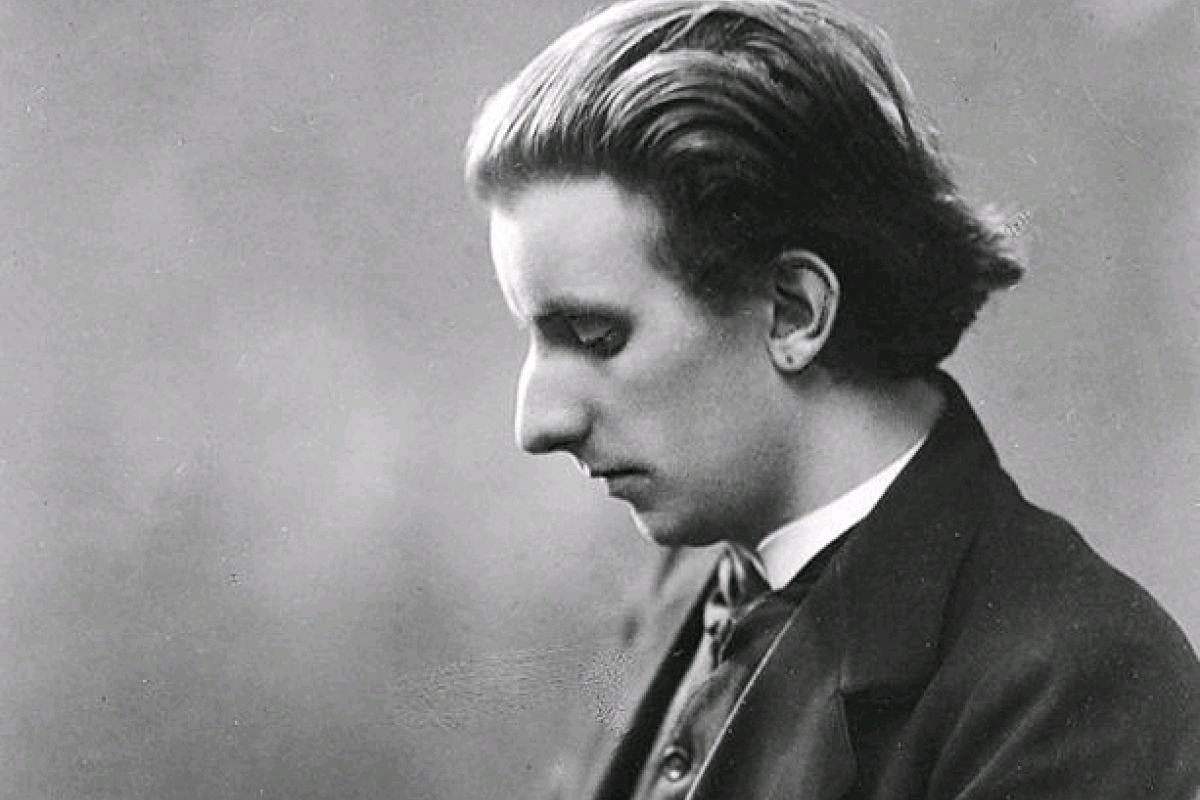
In concert – Julia Fischer, London Philharmonic Orchestra / Vladimir Jurowski: Elgar Violin Concerto & Enescu Symphony no.2

London Philharmonic Orchestra, Julia Fischer (c) Marquee TV

Elgar: Violin Concerto in B minor, Op. 61 (1910)
Enescu: Symphony No. 2 in A, Op. 17 (1912-14)

Julia Fischer (violin), London Philharmonic Orchestra / Vladimir Jurowski

Royal Festival Hall, London
Wednesday 13 April 2022

Written by Richard Whitehouse. Photo (c) Marquee TV (Julia Fischer)

Could there be a more instructive coupling than the pieces in this concert, with the London Philharmonic Orchestra and its conductor emeritus Vladimir Jurowski, for showing where musical Romanticism had arrived in the early 20th century and where it might have gone?

Relatively few concertos number among their composers’ most personal works, but Elgar’s Violin Concerto is one such and it was a measure of Julia Fischer’s identity that her account conveyed its conceptual richness as fully as its technical brilliance. Not least in the opening Allegro, Fischer drawing out that fatalism as germane to the heartfelt second theme as to its forceful predecessor such as pervades the initial tutti then the combative development. Here, as with the impetuous coda, Jurowski ensured textural clarity in even those densest passages.

Similarly in the Andante – the musing wistfulness of its main melody finding accord with the high-flown eloquence of what follows, with no undue lingering here or in those rapt closing bars. Its themes may be less overtly memorable, but the final Allegro molto follows a keenly purposeful trajectory whose dynamism is thrown into relief by that accompanied cadenza in which Elgar recollects earlier ideas as an intuitive interlude; rendered by Fischer with a poise as itself prepared ideally for the resumption of the finale then a powerfully rhetorical ending.

Enescu, who conducted the Paris premiere in 1932 with Yehudi Menuhin prior to the latter’s recording with the composer, might well have reflected on the success of this work compared to that of his Second Symphony – coolly received at the 1915 premiere, its score missing until 1924, and no revival until 1961. This might well have been the first hearing in London, but its formal and syntactical intricacy held no fear for Jurowski who, having previously championed Enescu’s Third Symphony and opera Oedipe, presided over a consistently assured rendition.

Not the least of its successes was in maintaining the impetus of the initial Vivace, whose ‘ma non troppo’ marking can easily lead to loss of focus among those polyphonic layers that were delineated with unfailing precision. Music this harmonically complex is (surprisingly?) direct as to melodic contours – not least its central Andante whose main theme, soulfully phrased by Benjamin Mellefont, has the evocative quality of those found in Russian symphonies several decades before. Here its inherent tenderness and its lingering regret could hardly be gainsaid.

The biggest challenge comes in the finale – not least the gauging of an extended introduction whose processional needs to generate momentum sufficient to propel the main Allegro on its eventful if never discursive course. Here, too, the extent of Enescu’s instrumental prowess is made plain by the dextrous contribution from keyboards and percussion to already extensive forces; variety of textures underpinning stages in musical evolution through to a coda whose heady if methodical accumulation of themes and motifs makes for a resplendent apotheosis.

Such was the impression left by this performance, a tribute to Jurowski’s conviction and the LPO’s executive skill. Maybe Enescu’s Fourth and Fifth Symphonies will yet be heard in the realizations by Pascal Bentoiu, his own symphonies themselves deserving of such advocacy.

To read Arcana’s interview with Julia Fischer, who talks about the Elgar and Mozart violin concertos, click here

For further information on the London Philharmonic Orchestra’s 2021/22 season, click here – and for the newly announced 2022/23 season click here For more on George Enescu, head to a dedicated website – and click on the artist names for more information on Julia Fischer and Vladimir Jurowski
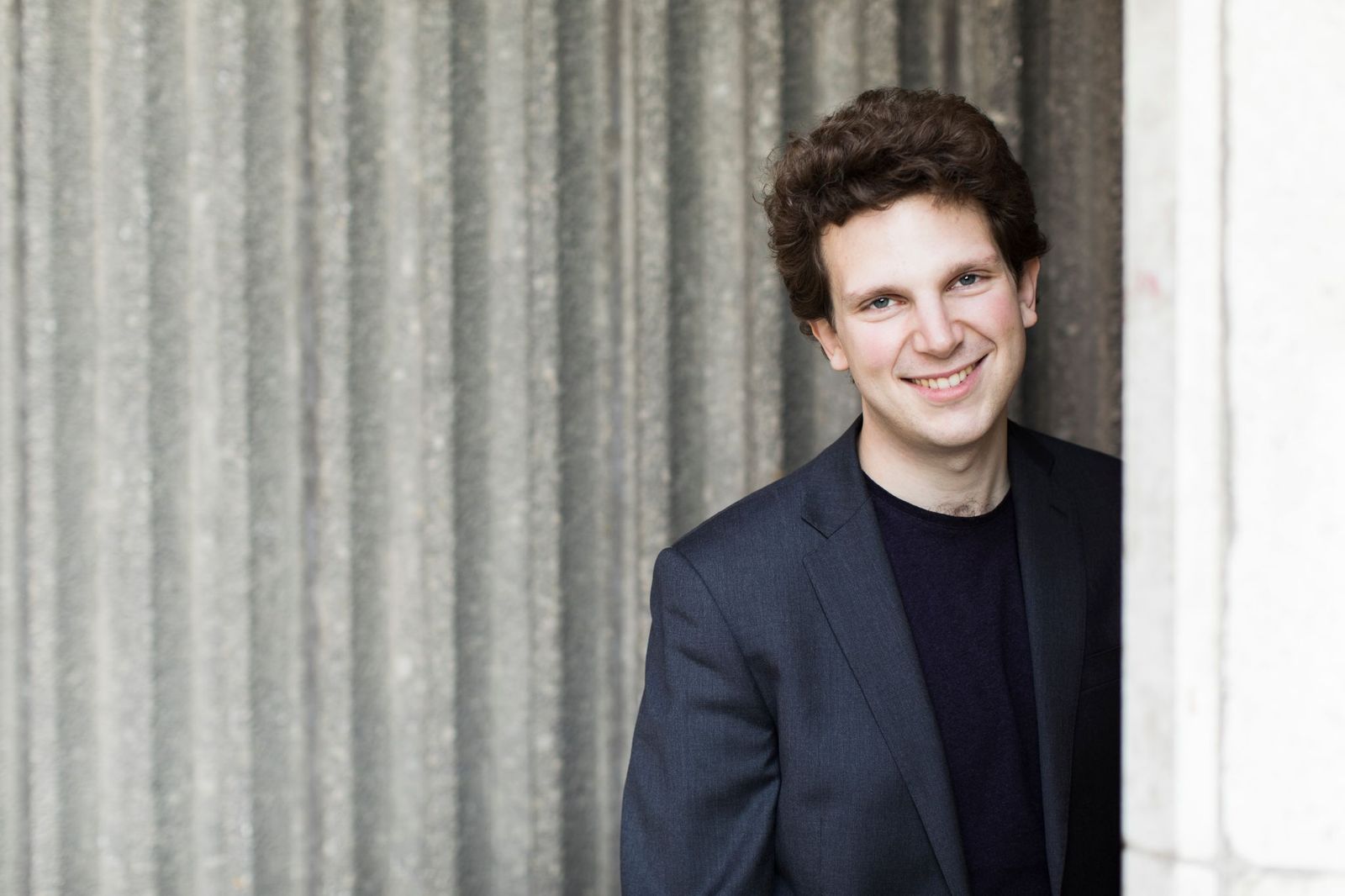
In concert – Jayson Gillham, Royal Philharmonic Orchestra / Owain Arwel Hughes: Grace Williams, Grieg & Sibelius

Williams Penillion (1955)
Grieg
Piano Concerto in A minor Op. 16 (1868)
Sibelius
Symphony no. 5 in E flat major Op. 82 (1919)

Jayson Gillham (piano), Royal Philharmonic Orchestra / Owain Arwel Hughes

Cadogan Hall, London
Tuesday 12 April 2022

Written by Richard Whitehouse. Photos (c) Benjamin Ealovega (Jayson Gillham)

Its high-profile concerts may currently be elsewhere in London, but the Royal Philharmonic Orchestra continues its schedule of regular performances at Cadogan Hall, and this evening was heard under the direction of former principal associate conductor Owain Arwel Hughes.

Hughes has rightly featured Welsh music whenever possible, and this programme began with Penillion that Grace Williams wrote for National Youth Orchestra of Wales. Two symphonies aside, several other of Williams’s pieces are inherently symphonic – not least her ‘symphonic poem in four movements’ whose title infers the Welsh tradition of singing against an existing melody. This is heard at its most evocative in the initial Moderato with solo trumpet intoning its (original) theme in the context of ethereal contributions from woodwind, harp, and strings. There follows a tensile Allegro then haunting Andante as ‘scherzo’ and ‘slow movement’ of a piece where the trenchant final Allegro proceeds toward a gently fatalistic close. Certainly, this is music such as warrants frequent hearings – irrespective of the present cultural climate.

Hard to imagine Grieg’s Piano Concerto undergoing a period of neglect, yet familiarity need not breed contempt at the hands of a skilled and sensitive exponent which Australian-British pianist Jayson Gillham assuredly is. After a commanding start the first movement felt unduly sectional in its unfolding, its orchestral tuttis a little overwrought, but the second main theme was limpidly rendered then Gillham came into his own with a cadenza whose developmental aspect was as audible as its virtuosity. With its poetic contributions from solo horn and cello, the Adagio was no less affecting, then the finale’s lyrical middle section threw into relief the combative dialogue either side. Its flute melody returns in a peroration whose grandiloquence found effective contrast with the Notturno in C (Op.54 No 4) that Gillham gave as an encore.

Even if Sibelius’s Second Symphony had been replaced by his Fifth during the run-up to this concert, the latter’s inclusion played no less to the RPO’s collective strengths. Building those earlier stages of the first movement’s intricate evolution patiently and methodically, Hughes amply brought out this music’s epic as well as ruminative qualities on the way to a powerful central climax – from where its scherzo-like continuation headed stealthily and purposefully to a coda that, if it lacked the last degree of visceral impact, generated undeniable dynamism.

The highlight was an Andante enticingly poised between intermezzo and slow movement – its plaintive repartee of not without its more ominous moments, yet whose winsome essence was itself a telling foil to the finale. Here the coursing interplay of strings and enfolding eloquence of its ‘swan theme’, horns magnetically to the fore, set in motion the eventful progress toward an apotheosis whose affirmation was never in doubt. If some of those concluding chords were not quite unanimous, this hardly detracted from the majesty of Sibelius’s overall conception.

A memorable ending, then, to an appealing programme that found the RPO on fine form and confirmed Hughes’s insights. The orchestra returns here next week in a concert of Schumann, Brahms and Dvořák with the violinist Fumiaki Miura and the conductor Domingo Hindoyan.

The inclusion of Penillion was made possible with funding from the ABO Trust’s Sirens programme, a ten-year initiative to support performance and promotion of music by historical women composers. Further information can be found by clicking here For further information on the Royal Philharmonic Orchestra’s 2021/22 season, click here Click on the performer names to read more about Jayson Gillham and Owain Arwel Hughes, and for more on Grace Williams click here

Song at Wolfson – Ukraine Fundraiser

It is so gratifying to see all the musical initiatives currently underway to raise money for Ukraine. One that I particularly wanted to draw attention to is a concert taking place at the Leonard Wolfson Auditorium in Wolfson College, Oxford, on 9 June.

British-Ukrainian mezzo-soprano Rozanna Madylus will be joined in a celebration of Ukrainian song by pianist and Oxford Lieder Festival founder Sholto Kynoch. Rozanna is a former Oxford Lieder Young Artist, and the programme will be introduced by Philip Bullock, setting the history of Ukrainian music in cultural context.

The program includes songs by the 19th-century Ukrainian composer Mykola Lysenko, as well as music by Yakiv Stepovyi, Kyrylo Stetsenko and Stefania Turkewich. The commentary for the concert reveals that Turkewich studied with Joseph Marx and Arnold Schoenberg, before fleeing the Soviets for England in 1946, where she stayed until her death in 1977. Some of her songs have only recently been discovered. With the inclusion of Ukrainian folk songs, the concert promises to be an eye-opening occasion, bringing the music and poetry of Ukraine to the forefront at such an awful time for the country.

The concert will be presented in support of the DEC Ukraine appeal. With generous support from Breckon & Breckon, all costs of the concert are covered and 100% of ticket sales will go directly to the DEC. Although seating is unreserved as usual, tickets are priced at £15, £20 and £25 to help raise as much as possible. If you would like to donate further, please click here to give directly to DEC.

You can book tickets for the concert at the Oxford Lieder website

In concert – Mitsuko Uchida, London Philharmonic Orchestra / Vladimir Jurowski: Lachenmann, Beethoven & Bruckner

Mitsuko Uchida Justin Pumfrey

Lachenmann Marche fatale (2018) [UK premiere]
Beethoven
Piano Concerto No. 4 in G major Op. 58 (1805-06)
Bruckner Symphony No. 6 in A major (1879-81) [ed. Benjamin-Gunnar Cohrs]

Mitsuko Uchida (piano), London Philharmonic Orchestra / Vladimir Jurowski

Royal Festival Hall, London
Saturday 9 April 2022

Written by Richard Whitehouse. Photos (c) Justin Pumfrey (Mitsuko Uchida), Thomas Kurek (Vladimir Jurowski)

He might now be its Conductor Emeritus, but Vladimir Jurowski (below) clearly has no intention of curtailing his association with the London Philharmonic Orchestra – tonight’s concert being a distinctive take on what might have seemed a straightforward Austro-German programme.

Jurowski’s leisurely traversal through Bruckner’s symphonies (taking in various editions) has now reached the Sixth, long underestimated in the context of its composer’s maturity but now recognized among his most distinctive and resourceful works. Not least for the way Bruckner integrates those two markedly different tempos of the opening Majestoso so it unfolded here as a seamless span – with the heightened cross-rhythmic transition into the reprise thrillingly effected, then the tonal follow-through of the coda rendered for the mesmeric inspiration it is.

The Adagio is often treated as a forerunner of those from Bruckner’s final three symphonies, but Jurowski rightly placed emphasis on its flowing phrases and eloquent paragraphs as they merge into each other across its expansive yet never overly emotive course. The LPO strings, responding with a burnished richness, were no less attentive to the syncopated impetus of the Scherzo – its outer sections pointing up those martial traits in which this piece abounds, with the trio’s teasing ensemble interplay deftly caught. Never an easy movement to bring off, the Finale undeniably succeeded as to its quixotic traversal – the outwardly fragmented contours of its development endowed with a cumulative dynamism; before its coda stealthily drew the almost antagonistic thematic elements together into a striding march-past towards the close.

Whereas Bruckner was writing at a time of relative European stability, Beethoven composed his Fourth Piano Concerto just before France lay siege to Vienna in a marked intensification of the Napoleonic Wars. This may explain the pathos behind the poetry of its first movement, certainly as Mitsuko Uchida (top) now hears it in a reading whose thoughtful understatement was underpinned by a tension such as came to the fore in the stark contrasts of its (more familiar) cadenza before the fatalistic resolve of its coda. Confrontation between piano and strings in the Andante were similarly elided by the former’s improvisatory solo, while the final Rondo stole in with mischievous intent – the wistfulness of its second theme and its transitions not neglected through to an ending where any lingering equivocation was decisively overcome.

As Jurowski emphasized in his introductory remarks, those who equate Helmut Lachenmann with the ‘musique concrète instrumentale’ of his most (in)famous works may be taken aback by the idiom of his recent Marche fatale. Yet what might sound akin to the anarchic take-off of a cartoon score is essentially a parodistic denunciation of Western civilisation as it careers towards a point of no return, the disjunct and increasingly fractured course of this six-minute piece culminating in a percussive onslaught with gong left resounding ominously at its close.

Seeking to open-out the context, Jurowski prefaced this with the fourth then first of Mauricio Kagel’s Zehn Marsche um den Sieg zu verfehlen (1978-9) – the collisions of woodwind, brass and percussion ‘missing the victory’ in ways a near-capacity audience evidently appreciated.

For further information on the London Philharmonic Orchestra’s 2021/22 season, click here Click on the composer names to read more about Helmut Lachenmann and Mauricio Kagel, and click on the artist names for more information on Mitsuko Uchida and Vladimir Jurowski

In concert – Nicola Benedetti, BBC Symphony Orchestra / Sakari Oramo: Romantics in Exile – Korngold & Langgaard

BBC SO/Oramo & Benedetti - Romantics in Exile

Korngold Violin Concerto in D major Op.35 (1945)
Langgaard
Symphony no.1 in B minor BVN32, ‘Mountain Pastorals’ (1908-11)

Nicola Benedetti (violin, below), BBC Symphony Orchestra / Sakari Oramo

Barbican Hall, London
Friday 8 April 2022

Written by Richard Whitehouse. Concert photos by James Watkins / BBC

Sakari Oramo has certainly blazed a trail for tackling little-known symphonic works during his tenure at the BBC Symphony Orchestra – witness his recent revival of the Symphony by Dora Pejačević and now that of the First Symphony from Danish anti-hero Rued Langgaard.

One who frequently snatched defeat from the jaws of victory, Langgaard (below) could not have had a better start to his career than its premiere with the Berlin Philharmonic and Max Fiedler on 10th April 1913, just before his 20th birthday. Its enthusiastic reception was never repeated in his remaining four decades, the composer traversing various stylistic phases while fighting a psychological battle with the Danish musical establishment. With its inspiration in Sweden’s Kullaberg peninsula, this work remains testament to the vaunting ambition of his younger self.

Steering a cohesive course across this almost hour-long piece whose sizable forces (not least four Wagner tubas) is no easy task, but Oramo succeeded more convincingly than on any of the three commercial recordings. Not least in a first movement, Surf and Glimpses of Sun, whose elongated sonata design and increasingly histrionic climaxes could so easily veer into overkill, rather than yielding a recklessly if purposefully cumulative momentum. Mountain Flowers is a slow movement of no mean eloquence, not least with Oramo encouraging the strings to relish the limelight over its opening and closing stages then towards its expressive apex. The undoubted highlight is Legend, less an intermezzo than a dark-hued formal crux whose ominous atmosphere looks on toward those anguished confessionals which lay ahead.

More conventional is Mountain Ascent, a lively and often playful scherzo whose impetus finds ready contrast with the wistful trio at its centre. Rendered here with suitable deftness, this made an admirable foil to Courage – an expansive finale not without its longueurs yet whose development affords some strikingly evocative orchestration, then an apotheosis for which Oramo not only prepared judiciously, but that the BBCSO kept within focus even as the addition of off-stage brass threatened to send those closing pages spinning out of orbit.

An experience, then, such as only a live performance can provide, and which demonstrably played to the strengths of this partnership. Might one hope that Oramo and the BBCSO give Langgaard’s Sixth, arguably his symphonic masterpiece, at a Proms concert in due course?

A thought occurred that had the Danish film industry maintained its promise prior to the First World War, Langgaard might have found as productive an outlet for his abilities as Korngold had for his during the golden age of Hollywood. The latter’s Violin Concerto was not always the familiar item it has now become, and Nicola Benedetti’s rendering assuredly conveyed its essence. Pointing up the discreet contrast between the themes of its opening Moderato, with a trenchant account of its cadenza, she gave a finely shaped if overly generalized account of its central Romance, then projected the final Allegro’s incisiveness and high-flown melodrama with relish. Nor did she undersell the suavity of Jacob Gade’s tango Jalousie – a piece which, 97 years on, confirms what is possible if a composer does not entirely eschew popular appeal.

For further information on the BBC Symphony Orchestra’s 2021/22 season, click here For more on Erich Korngold and Rued Langgaard, click on the composer names – and click on the artist names for more information on Nicola Benedetti and Sakari Oramo