In concert – Mao Fujita, Royal Philharmonic Orchestra / Vasily Petrenko – Dani Howard, Rachmaninov & Holst’s ‘The Planets’

mao-fujita

Howard Ellipsis (2021) [RPO Commission: World Premiere]
Rachmaninov Rhapsody on a Theme of Paganini, Op. 43 (1934)
Holst The Planets, Op. 32 (1914-17)

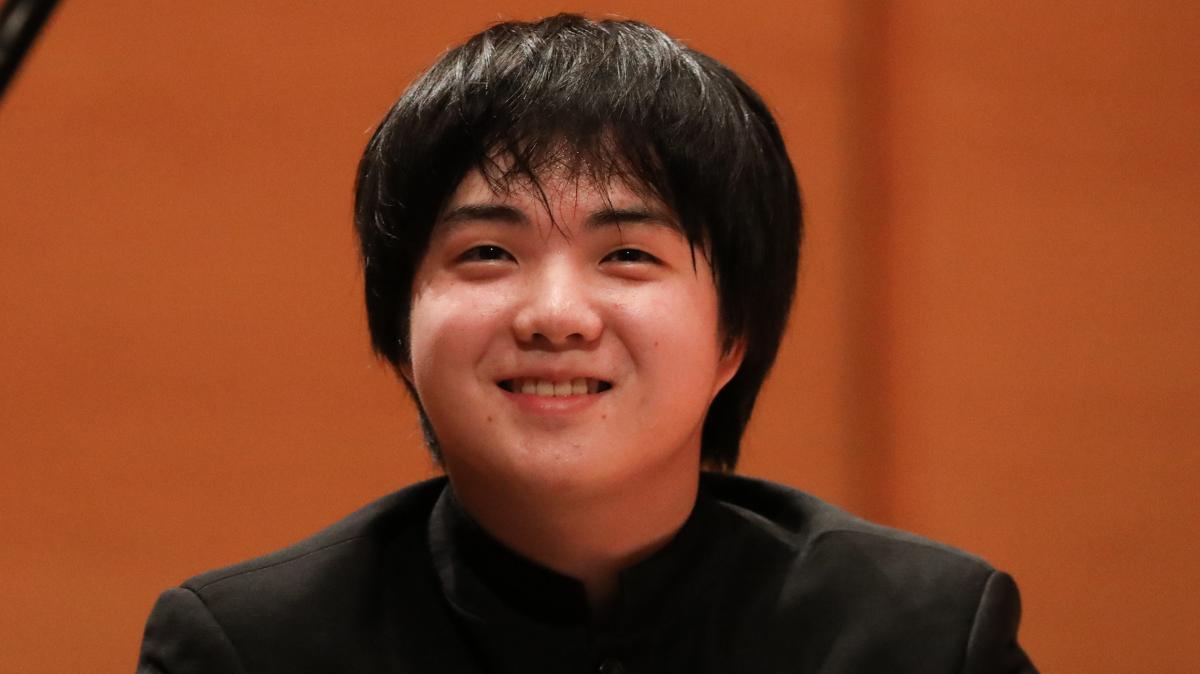
Mao Fujita (piano, above), Royal College of Music Chamber Choir, Royal Philharmonic Orchestra / Vasily Petrenko (below)

Royal Festival Hall, London
Thursday 3 February 2022

Written by Richard Whitehouse. Photo credit (Mao Fujita) Vyacheslav Prokofyev / Getty Images

Great British Music is the theme underlying the Royal Philharmonic Orchestra’s current series of concerts at Royal Festival Hall – a major work of the earlier 20th century complemented by music elsewhere in Europe and, in this instance, a commission from a young British composer.

Her output widely championed, not least by the RPO’s new music director Vasily Petrenko, Dani Howard is already master of the curtain-raiser. Hence the engaging yet never superficial effect of Ellipsis – her tribute to this orchestra in its 75th anniversary which alludes to various pieces and personages in its history, with a deftness that made for an appealing if not overly memorable listen. Not in doubt, though, was the keen motivic resource with which the piece unfolded from its fanfare-like opening bars towards the fervent apotheosis at its culmination.

Only caution through its origins in borrowed material can have prevented Rachmaninov from designating Rhapsody on a Theme of Paganini as his ‘Fifth Piano Concerto’. Certainly, those volatile mood-swings of its initial 15 variations, inward rapture of the next three then tensile incisiveness of the closing six variations constitute a three-movement design whose Classical proportions are informed by the developmental ingenuity of a later era. Qualities Mao Fujita brought out in notable measure during a performance which lacked little in technical finesse.

One of a handful of pieces whose all-round audacity was the incentive rather than deterrent   to its immediate acceptance, The Planets was destined to prove the defining work of Holst’s career whose sheer impact a century and more has not diminished. Petrenko was evidently keen to emphasize its symphonic dimension through allying its seven movements to a broad consistency of pulse – witness the follow-through from his remorseless while never unduly histrionic take on Mars to his sensuous if never cloying approach to Venus. The former saw a suitably galvanic response from the RPO brass, the latter an elegance and poise from its strings which was no less evident in Petrenko’s lithe Mercury, then a Jupiter whose impetuous outer sections framed an eloquent and unaffected handling of the indelible trio.

Even the (doubtless) spontaneous applause which greeted this most familiar section did not undermine contrast with the emotional starkness of Saturn as it headed towards a climax of wrenching plangency, before finding release in a final stage that was nothing if not cathartic. The only passing disappointment came with Petrenko’s skittish and over-hasty rendering of Uranus, such as forced the martial main theme into a rhythmic straitjacket (for all that the climactic organ glissando made its mark) then detracted from the emptiness of its final bars. Not that this prevented Neptune from casting an otherworldly spell – whether in the modal musing at its start, those ethereal textures near its centre, or the gentle evanescing into which orchestra and wordless voices (the laudable RCM Chamber Choir) withdraw toward its close. If not a revelatory account, this was nevertheless a committed and involving performance that renewed admiration for Holst’s magnum opus as well as reinforcing the overall excellence of the Royal Philharmonic in the early stages of what looks set to be an era of real achievement.

For more information on the Royal Philharmonic Orchestra’s 2021-22 season, visit their website. Meanwhile click on the links for information on the artists Mao Fujita and Vasily Petrenko.

In concert – Daniel Lozakovich, CBSO / Fabien Gabel – Beethoven Violin Concerto & Berlioz Symphonie fantastique

daniel-lozakovich

Beethoven Violin Concerto in D major Op. 61 (1806)
Berlioz
Symphonie fantastique Op. 14 (1829-30)

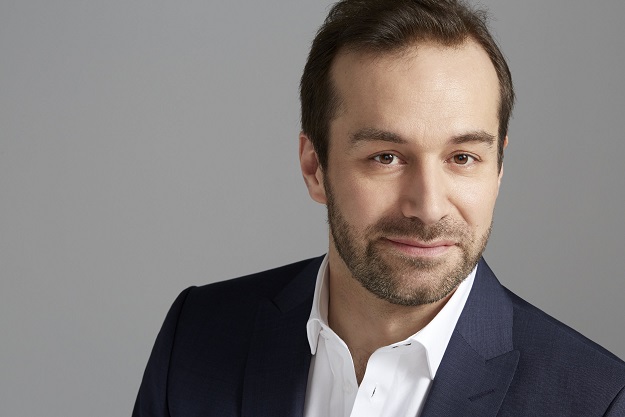
Daniel Lozakovich (violin, above), City of Birmingham Symphony Orchestra / Fabien Gabel

Symphony Hall, Birmingham
Wednesday 2 February 2022

Written by Richard Whitehouse. Photo credit (Lozkanovich) Maison Simons

Juxtaposing these works in a single concert made good sense such that one wonders why this coupling has not been played more often, not least when the City of Birmingham Symphony Orchestra sounded fully aware of the very different motivations which lay behind each piece.

One of several concertos in-itself a first half, Beethoven’s Violin Concerto was performed by Daniel Lozakovich – who, just into his 20s, already has a worldwide reputation. His finespun if never meagre tone proved eminently suited to this most inward of its composer’s orchestral works, as was his deftly inflected vibrato. The expansive first movement proceeded securely, Fabien Gabel galvanizing tuttis and preventing the development from losing momentum (due credit to Matthew Hardy’s immaculate timpani playing) before a heady surge into the reprise.

Any sense of Lozakovich – who gave the Kreisler cadenza with real fervour – eschewing ‘give and take’ with the orchestra had gone by the Larghetto, its variations unfolded eloquently and with no lack of expressive contrasts, abetted by felicitous playing from the CBSO woodwind. His impulsive approach to the linking passage into the ensuing Rondo then set the course for a finale which, though just a shade headlong compared with what went before, had a vitality and insouciance such as carried through to the close. The pathos that Lozakovich brought to its central episode and whimsy teased out of its coda (whose closing chords were a little too emphatic) were undoubted highpoints, and the soloist returned to acknowledge considerable applause with an artless reading of the Allemande that commences Bach’s Second Partita.

Whereas Beethoven’s concerto took over half a century to enjoy wider acceptance, Berlioz’s Symphonie fantastique was immediately recognized (however grudgingly) as a trailblazer in the emergent Romantic aesthetic. It was left to later generations to equal out its ‘symphonic’ undertow with its ‘fantastic’ overlay, Gabel’s astute handling of the prolix if never unwieldy structure making for the best of both worlds – not least his conveying the sonata design that focusses the alternate dejection and elation of Rêveries-Passions, or those ominous asides which offset the ingratiating charms of Un bal. The highlight, though, was an unfailingly cohesive Scène aux champs – its fraught culmination emerging inevitably from then back into the evocative outer sections with plangent cor anglais playing from Rachel Pankhurst.

Having (rightly) included the first movement’s repeat, Gabel did not take that in the Marche au supplice which consequently was over all too soon, though its high drama prepared well for a final Songe d’une nuit du Sabbat whose heightened flights of fancy were once again held in check by a sure sense of where this music was headed. Offstage contributions were convincingly drawn into the overall texture, and if the closing pages can yield even more of a ‘white-knuckle ride’, the visceral impact of Berlioz’s garish imaginings was never in doubt.

Nor, for that matter, was the sheer unanimity of the CBSO’s response across what is so much more than an extended showpiece. After next week’s Rush Hour Concert, the orchestra can be heard in a scarcely less virtuosic programme that concludes with Stravinsky’s Firebird suite.

For more information on the current CBSO season, visit their website. Meanwhile click on the links for information on the artists Daniel Lozakovich and Fabien Gabel.

In concert – CBSO Centre Stage: Mozart and Brahms Quintets

cbso-centre-stage-horn

Mozart Horn Quintet in E flat major K407 (1782)
Brahms
String Quintet no. 1 in F major Op. 88 (1882)

CBSO Soloists: Mark Philips (horn), Philip Brett and Charlotte Skinner (violins),Christopher Yates and Catherine Bower (violas), Arthur Boutillier (cello)

CBSO Centre, Birmingham
Thursday 3 February 2022 2pm

Written by Richard Whitehouse

The Centre Stage series, featuring musicians from City of Birmingham Symphony Orchestra, continued this afternoon with an attractive coupling of quintets written exactly a century apart and which are among the most characteristic works of their respective composers’ maturities.

His first piece for the virtuoso Joseph Leutgeb (quite frequently the butt of Mozart’s scabrous humour, though for whom he went on to write four concertos) the Horn Quintet remains one of Mozart’s most engaging chamber pieces – not least through the presence of two violas that yield additional tonal depth to the lively outer Allegros, besides reinforcing the limpid pathos of the Andante. A little reticent toward the outset, Mark Philips came into his own during that central movement with its wistful poise and elegant interaction with those middle registers of the strings. Nor was there any lack of wit in the scintillating finale, its writing for the horn of no less agility than that found in the parallel movements of Mozart’s concertos; all the while suggesting the association between composer and musician was, after all, an endearing one.

Although he had originally intended his Piano Quintet to be a string quintet with two cellos, Brahms only got round to composing what became his First String Quintet as he was nearing fifty. Eschewing both the immediacy of his sextets and the austerity of his quartets, this piece typifies the ruminative warmth but also the expressive ambivalence of his music henceforth – not least an opening movement whose emotional surges are kept in check by the burnished richness of ensemble. The highlight, of the work as of this performance, is a slow movement that offsets its underlying introspection with two scherzo-like episodes whose effervescence carries over the finale – an Allegro of an impetus not so often encountered in Brahms’s later music, while culminating in a coda such as reinforces the home-key with exhilarating effect.

Such, at any rate, was the impression left by an assured and involving performance of a piece which conveyed the extent of this ‘dark horse’ among Brahms’s chamber compositions. Next week sees an ensemble from the CBSO tackle the epic expanse of Schubert’s String Quintet.

You can read more about that next Centre Stage recital, and book tickets, on the CBSO website

In concert – CBSO Centre Stage: CBSO strings play Kodály & Korngold

CBSO-Strings

Kodály Serenade, Op. 12 (1919-20)
Korngold
String Sextet in D major, Op. 10 (1914-16)

CBSO Strings: Kate Suthers & Charlotte Skinner (violins), Adam Römer & Jessica Tickle (violas), Miguel Fernandes & Helen Edgar (cellos)

CBSO Centre, Birmingham
Thursday 27 January 2022 2pm

Written by Richard Whitehouse

Two unfamiliar while appealing works were featured in this afternoon’s Centre Stage recital given by string players from the City of Birmingham Symphony Orchestra, written during the early stages and in the aftermath of the First World War at a pivotal time in European culture.

The focus on choral and pedagogic music of Kodály’s later years makes his earlier chamber works the more valuable, and while the Serenade for two violins and viola is by no means the most imposing, its deftness and finesse of writing for this unusual line-up cannot be gainsaid. The lively outer movements abound in those allusions to and inflections of folk melodies that Kodály explored extensively in his maturity, with the central Lento touching upon a vein of ‘night music’ less inwardly intense than if equally evocative to that found in the music of his contemporary Bartók. Its relatively extended formal trajectory can make the final Vivo seem unduly prolix, yet in so buoyant and finely integrated a performance, there was no likelihood of this movement forgoing any sense of direction on its way to a decidedly nonchalant close.

Kodály was around 30 when writing this piece, whereas Korngold was barely out of his teens when he finished the Sextet as draws equally on very different (if by no means incompatible) stylistic traits evident in works for this medium by Tchaikovsky and Schoenberg. If the latter composer is to the fore in the lengthy initial Moderato with its intricate thematic interplay and frequent density of texture, the Adagio exudes a melodic eloquence denoting those operas or film-scores to come. The ensuing Intermezzo is arguably the most characteristic movement in its suavity and teasingly coy charm, while the Finale looks back to Brahms and even Dvořák (whose Sextet would be a welcome inclusion in these recitals) for its underlying vitality and easy-going humour as makes the coda’s rush to the finish the more unexpected and engaging.

Such was the impression left by a finely prepared reading by no means lacking in spontaneity or those flights of fancy such as denote the ‘confidence of youth’. Quintets are the order of the day for the next Centre Stage recital, which features contrasting works by Mozart and Brahms.

You can read more about that next Centre Stage recital, and book tickets, on the CBSO website

In Praise of Shostakovich’s String Quartets: The Carducci String Quartet @ Wigmore Hall, London

By John Earls

The string quartets of Dmitri Shostakovich (1906-1977) hold a special place in my heart. At various times they have moved, inspired and consoled me.

Of course, it’s not just me. Wendy Lesser has written an outstanding book about the quartets, Music for Silenced Voices, in which she considers the great Russian composer’s life through the quartets whilst examining the music through a non-musician’s lens.

The quartets have featured amongst the Desert Island Discs selections of castaways as varied as Sheila Hancock, Tariq Ali and Marcus du Sautoy.

Stephen Joseph has written a powerful, honest and compelling essay on the composer, How Shostakovich Changed My Mind, and how his music helped with Joseph’s mental illness, which includes a section on the “exceptional phenomenon” that is the Eighth Quartet.

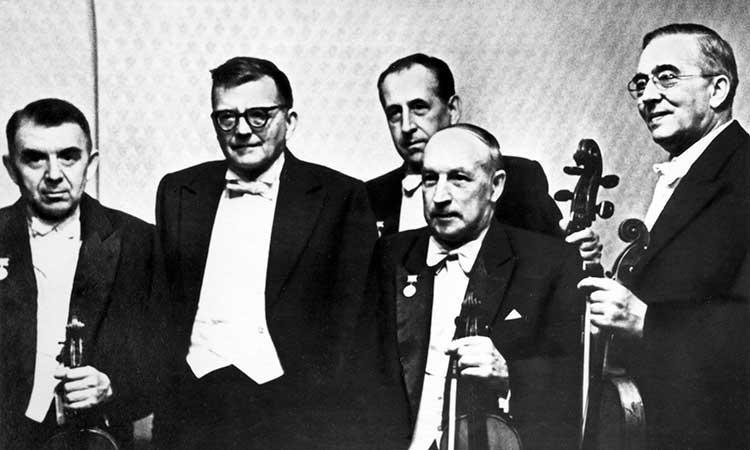
Shostakovich (seen above with the Beethoven Quartet) is renowned for the range of his symphonic work. He completed his first symphony in 1926 and his final symphony (there were also fifteen) was completed in 1971. He worked under the Soviet system and after early official recognition often fell out of favour with the Communist regime including denunciation during the Stalin era. The quartets were written over the period 1938-1974 and are often said to reveal a more personal side of Shostakovich in a way that his symphonies, which were subject to greater scrutiny by the Soviet authorities, don’t. One shouldn’t overstretch this, but there is certainly a deep sense of his own voice in the quartets.

There are a number of recordings of the complete cycle of quartets and amongst the most cited are those by the Emerson String Quartet, the Beethoven Quartet and the Borodin Quartet. All are worth your time – the Emersons (recorded before live audiences) being a good place to start:

Meanwhile the Beethovens are of significant interest because of the special relationship they had with the composer (they premiered most of the quartets):

I have a soft spot for the Borodins, who provided my introduction to the quartets (I still have the brilliantly designed box set of recordings from 1978-1983 reissued in 2006 by the Russian Мелодия label)

Wendy Lesser writes that Shostakovich always knew how his music should sound and her book contains a wonderful story from Valentin Berlinsky, cellist of the Borodin Quartet, concerning one of the  quartets that illustrates this perfectly. Recalling preparing for a performance of the Third Quartet in the company of Shostakovich some years after its premiere, Berlinsky states:

“I said…’we’ve given it some thought…It seems to us that pizzicato [rather than arco] sounds better here.’

‘Yes, yes,’ he hastily interrupted, pizzicato is much better, but please play arco all the same.'”

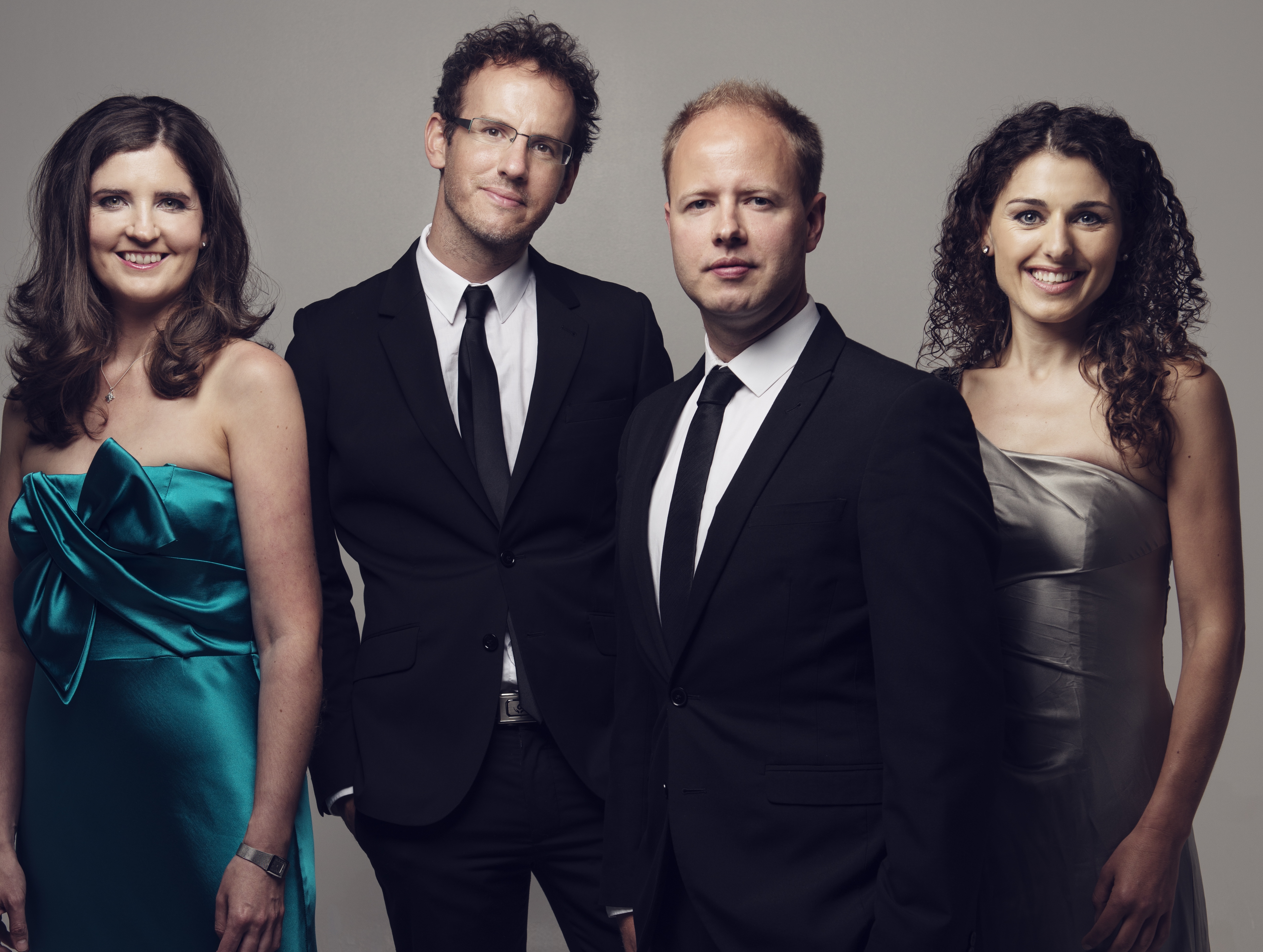
Of course, each of the quartets can be appreciated as an individual piece of music in its own right. But there is also something about hearing them played in one chronological series that gives something of a narrative thread. Lesser also writes of the “vital power” of Shostakovich’s quartets in live performance “that makes any interpretation seem incomplete until it is played before an audience”. Which brings me to the incredible feat that was the Carducci String QuartetMatthew Denton (violin), Michelle Fleming (violin), Eoin Schmidt-Martin (viola) and Emma Denton (cello) – performing the full cycle of all fifteen quartets in chronological order in five magnificent concerts over two days on the weekend of 22-23 January 2022 at London’s Wigmore Hall.

Total admiration must go to the Carduccis for the dedication and application sustained over the two days and evident from the very first concert starting at 11:30 in the morning on the Saturday. Comprising of the first four quartets, it was for me probably the pick of the (pretty consistently impressive) bunch. The First Quartet was bright before the opening of the Second Quartet gripped with its bold first movement and a second movement featuring some absolutely yearning and sorrowful first violin. The stabbing ‘forces of war unleashed’ (to cite Shostakovich’s supposedly original subtitle) in the third movement of the Third Quartet was another arresting highlight.

More has been written about the Eighth Quartet than all the others combined and it has acquired a special status not least because, although dedicated ‘to the victims of fascism and war’, it is often considered to be Shostakovich’s memorial to himself, featuring as it does not only quotations from some of his other works, but his famous ‘DSCH’ musical monogram. It ended the second of the concerts with the Carduccis giving full musical and dramatic effect to the fevered second movement and forceful fourth movement.

Indeed, there were times when watching the Carduccis perform was just as gripping as listening to them play. This was the case in the ‘furioso’ second movement of the Tenth Quartet, which was near-exhausting to watch and featured in the third concert of the series which opened Sunday’s proceedings, as did the Eleventh Quartet with a deft dealing of its repetitions.

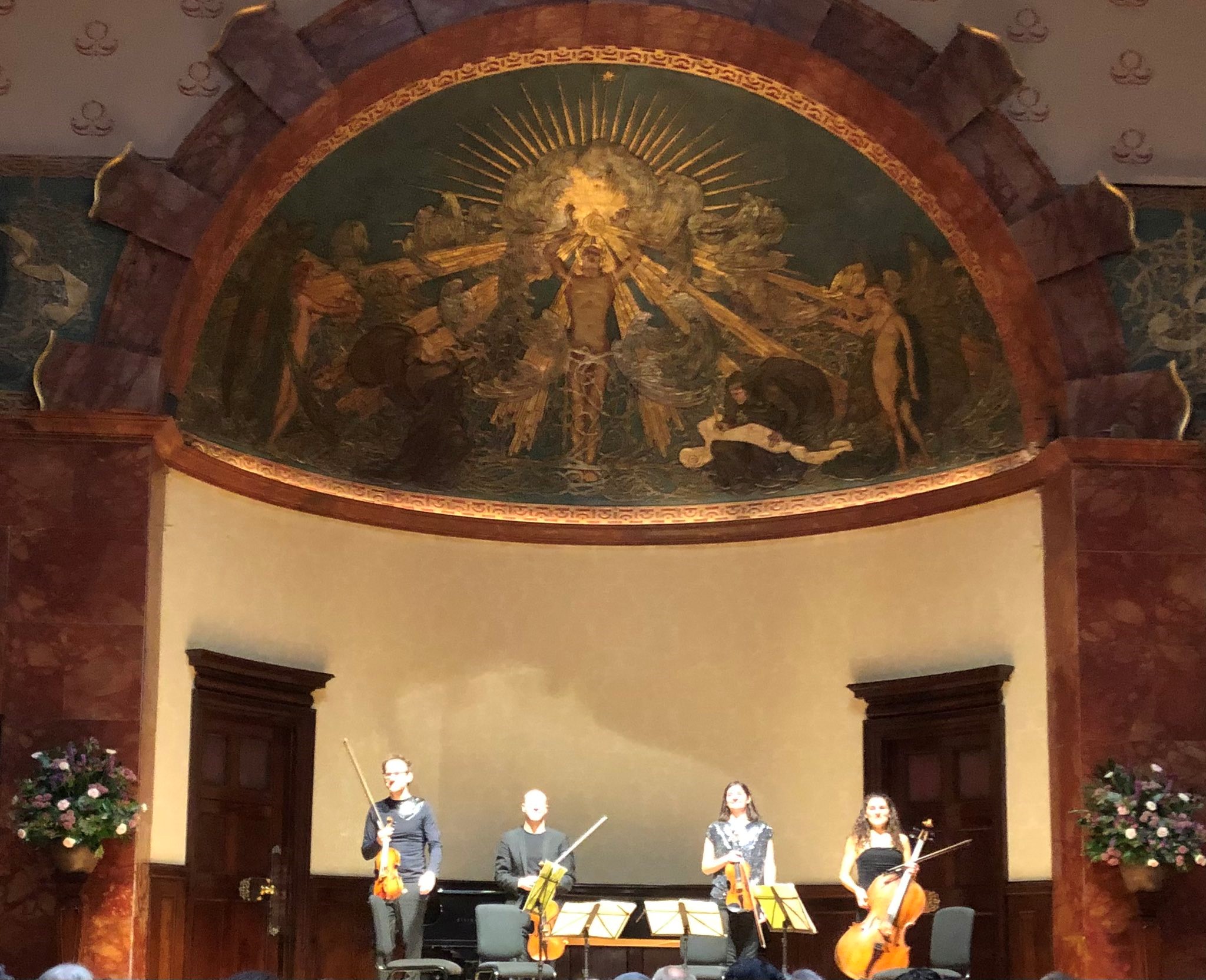
Picture (c) John Earls

The fourth concert gave particular effect to Shostakovich’s inventiveness showcasing the Twelfth Quartet with its mixing of Schoenberg’s twelve-tone serialism and more familiar harmony as well as the unsettling Thirteenth Quartet with the Carduccis opting to tap the fingerboards of their instruments with their fingers rather than bodies of the instruments with bows for the percussive elements. The Thirteenth Quartet also featured some enthrallingly eerie sliding on the viola as well as a wonderfully dramatic finale.

The final concert comprised of the last two quartets ending with the Fifteenth Quartet. The longest of the quartets it was completed in 1974 when Shostakovich was in hospital having been diagnosed with lung cancer. Its six desolate slow movements give a sense of mortality and the lack of a dedication has led to a notion that Shostakovich may have written it as an unofficial elegy for himself. It was played with appropriate respect and sensitivity, something that was recognised by the sustained silence from the audience following its – and the cycle’s – completion before generous and well-earned applause.

This remarkable series of concerts was a precious reminder of what an exceptional body of work Shostakovich’s string quartets are and how any one of them can stand on its own. But there is definitely something special about hearing them together and the Carducci String Quartet in this unforgettable weekend of concerts demonstrated how both hold true. However, it is the full cycle that I want and what I will be asking for on Desert Island Discs.

John Earls is Director of Research at Unite the Union and tweets at @john_earls

posted on 27 January 2022