In concert – Sebastian Rochford & Kit Downes @ Kings Place

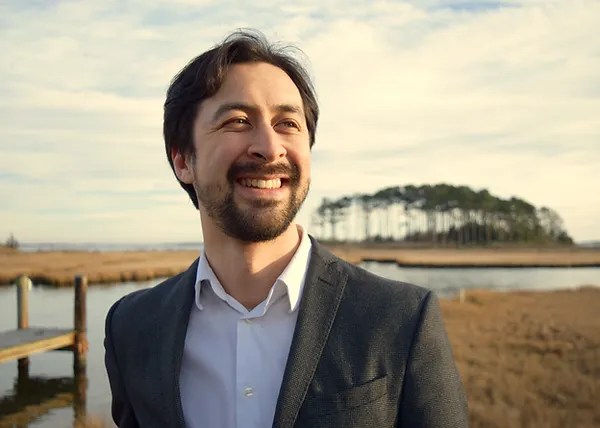
Sebastian Rochford (drums), Kit Downes (piano)

Kings Place, London, 11 January 2024

by John Earls. Photo credit (c) John Earls

In January 2023 Sebastian Rochford (drums) and Kit Downes (piano) released A Short Diary, a profound and moving musical expression of loss for Rochford’s father, the poet and academic Gerard Rochford.

A year on, this concert consisted mainly of a performance of that album and was equally touching, not least because Rochford gave a little commentary between tunes, his voice as soft as his brush strokes and no less affecting.

Both Rochford and Downes have been involved in many different collaborations, but this is a particularly satisfying partnership. It is articulate, sensitive and compelling. It is also beautifully expressive, Downes through the keyboard and Rochford with drums and a mix of drumsticks, brushes, mallets, pedal, hands and fingers. The engagement between them and their listening to each other was something to behold.

The set opened, as does the album, with This Tune Your Ears Will Never Hear where the portentous music and heart-rending title set the tone. Communal Decisions is an astute musical illustration of competing demands with Rochford referring to the experience of balancing familial dynamics at the time of his father’s death (he has two brothers and seven sisters).

The more whimsical Love You Grampa was inspired by the notes Rochford’s niece used to leave for his father around the house. The melodic Silver Light was delicate and wistful. In a slight change of tone, the latter part of Ten of Us (remember all those brothers and sisters?) was played with an energy and passion which saw Rochford and Downes at their most animated.

The final number of the set was the only tune not composed by Rochford. Even Now I Think of Her was composed by his father, who sung it into his phone and sent it to Rochford, who passed it on to Downes’ phone for him to transcribe. It’s as endearing as the story behind it.

There were two new pieces performed. The Energy of Light, played midway in the set, is a rhythmic affair with Rochford and Downes both getting into the tempo. To the Country I Was Born was played as an encore and is a tribute to Rochford’s birthplace of Scotland – a fitting choice as this was the opening concert of Kings Place’s Scotland Unwrapped series which runs throughout the year. It was a tuneful and fitting end to this most personal of musical evenings.

John Earls is Director of Research at Unite the Union and tweets / updates his ‘X’ content at @john_earls

For more information on the album head to the ECM website – and click on the names for websites devoted to the music of Seb Rochford and Kit Downes

In concert – Janine Jansen and friends play Brahms @ Wigmore Hall

Janine Jansen (violin), Timothy Ridout (viola), Daniel Blendulf (cello), Denis Kozhukhin (piano)

Brahms
Violin Sonata no.2 in A major Op.100 (1886)
Viola Sonata no.2 in E flat major Op.120/2 (1894)
Piano Quartet no.3 in C minor Op.60 (1855-75)

Wigmore Hall, London
Thursday 21 December 2023

Reviewed by Ben Hogwood. Photos of Janine Jansen & Timothy Ridout (c) Marco Borggreve

After the unfortunate cancellation of a concert in her series the previous week, violinist Janine Jansen and friends returned to health and to a Christmassy Wigmore Hall for another all-Brahms programme.

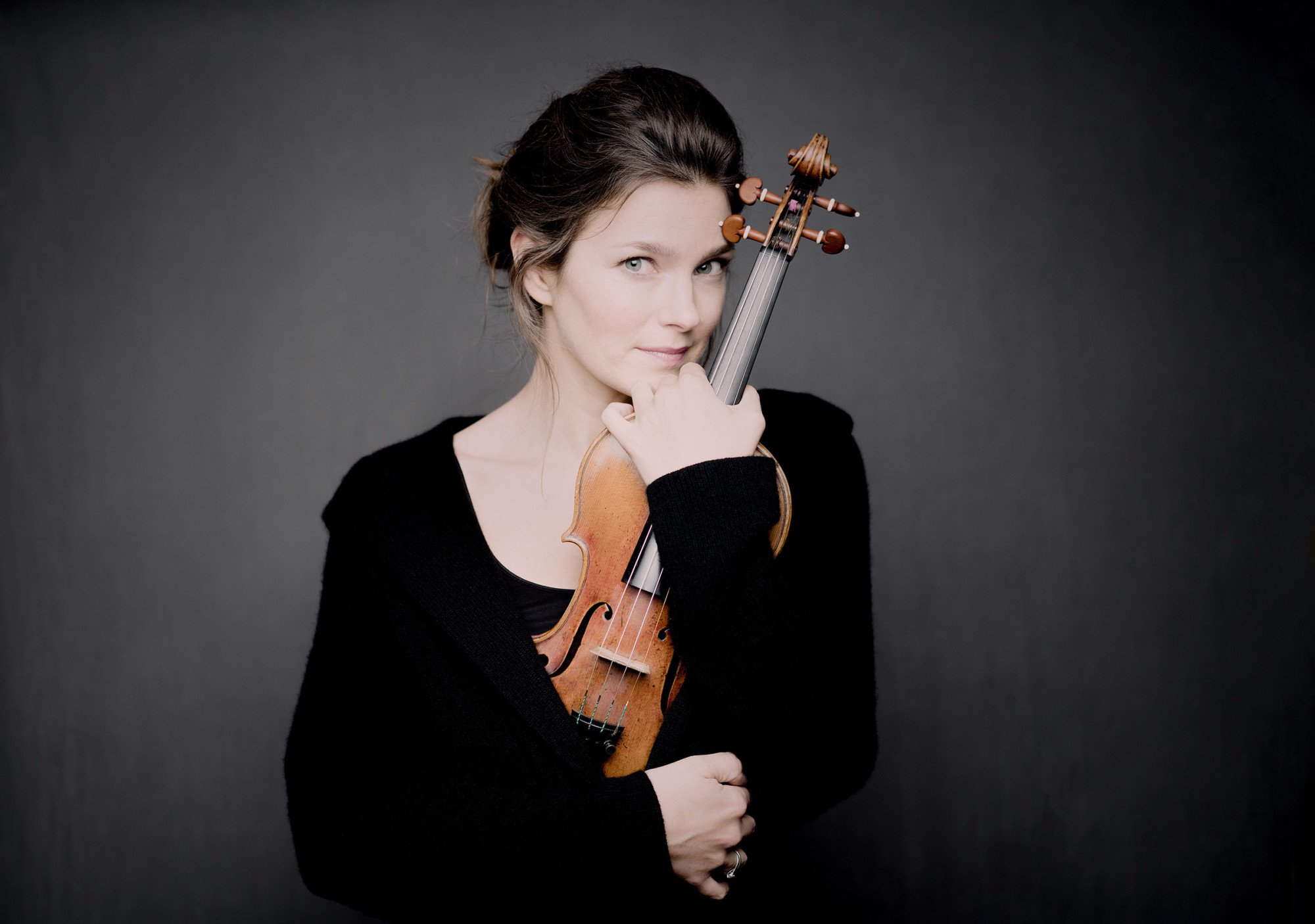
Jansen (above) and pianist Denis Kozhukhin (below) began with the Violin Sonata no.2, a late substitution for the first sonata but a breath of fresh air on a winter evening. One of Brahms’s best-loved chamber piece, its charming first theme has enough to weaken the hardest heart. So it was here, with Jansen’s affectionate playing. Her creamy tone was complemented by the incisive piano playing of Kozhukhin, who was deceptively relaxed in his body language but very much in tune with Brahms’s intricate rhythms and phrasing. The two excelled in the central section of the second movement, which tripped along with admirable definition of those rhythms, and in the finale, where the two enjoyed a more assertive musical dialogue.

Brahms’s last completed chamber work followed, Kozhukhin joined by violist Timothy Ridout (below) for a performance of the Viola Sonata no.2, arranged by Brahms from the clarinet original. This account exhibited elegance, poise and no little power. Ridout’s burnished tone was ideal for the music, capturing the shadowy outlines of music from a composer in his twilight years, but putting down suitably firm markers in the second movement. Ridout’s high register playing was a treat throughout, his tuning exemplary, and as the two players navigated the theme and five variations of the finale there was an ideal give and take between the part-writing. Particularly memorable was the plaintive stillness of the fourth variation, its mystery dispelled by the affirmative ending.

After the interval we heard the Piano Quartet no.3, competed in 1875 when Brahms was working on the completion of his first symphony. The two works have a good deal in common, beyond sharing the same tonality, for Brahms brings an orchestral dimension to his writing for the four instruments. This grouping needed no invitation to take up the mantle, powering through the first movement with relish, their dramatic account notable for strength of tone and unity of ensemble playing. Jansen and Ridout in particular stood out, their unisons absolutely as one, yet the real hero of the performance was Kozhukhin, elevating the heroic elements of a score closely associated with Goethe’s Werther while keeping the nervousness emanating from Brahms’s syncopated rhythms.

Lest he be forgotten, cellist Daniel Blendulf (above) delivered an understated solo of considerable beauty to begin the Andante, providing respite from the high voltage drama elsewhere but getting to the heart of Brahms’s soulful writing for the instrument. The quartet regrouped for the finale, another show of breathtaking power but with room for reverence in the chorale themes and their development. For all the bravura the air of uneasiness remained as an undercurrent, Brahms never quite at rest even when the quartet reached its emphatic conclusion. This was a truly memorable performance, capping an outstanding evening of music making for which all involved should be immensely proud.

Published post no.2,047 – Friday 22 December 2023

In concert – Quatuor Danel: Shostakovich & Weinberg @ Wigmore Hall

Quatuor Danel [Marc Danel & Gilles Millet (violins), Vlad Bogdanas (viola), Yovan Markovitch (cello)]

Shostakovich String Quartet no.1 in C major Op.49 (1938)
Weinberg String Quartet no.1 in C major Op.2/141 (1937, rev. 1985)
Shostakovich String Quartet no.2 in A major Op.68 (1944)

Wigmore Hall, London
Monday 13 November 2023

Reviewed by Richard Whitehouse. Photo (c) Marco Broggreve

No-one could accuse the Quatuor Danel of bowing to circumstance. Having had to abandon its cycle of the combined Shostakovich and Weinberg string quartets some three-and-a-half years ago owing to the COVID pandemic, the ensemble has commendably started again and from scratch. Tonight accordingly saw the first instalment in this survey of 32 quartets, with an evening such as traced the beginnings of what promises to be an enterprising and, above all, rewarding series of recitals from musicians with a palpable empathy for both composers.

A more unassuming start could scarcely be imagined than with Shostakovich‘s First Quartet. Not only did the composer leave it relatively late until tackling this genre, but the result is as understated a debut as could be imagined. Perhaps in its trying to up the emotional ‘ante’, the Danel sacrificed some of the opening movement’s wistful elegance, but the ensuing variations on a Mussorgskian melody were ideally poised, with the quicksilver scherzo and rumbustious finale reinforcing the infectious charm as well as technical mastery of this ingratiating debut.

The most obvious criticism of Weinberg’s First Quartet is that it bears little resemblance with what was to follow. Yet given its indebtedness to Bartók and Szymanowski, the initial Allegro pursues its doggedly eventful course through some torturous chromatic harmonies and dense textures, while the central Andante evokes a tense and even ominous atmosphere enhanced by its being muted throughout. Only with the final Allegro does the future composer come to the fore, its driving rhythms and folk inflections as Weinbergian as is the teasing evanescence of those closing bars. Now that Daniel Elphick’s reconstruction of the original version has been performed publicly, the revision is more clearly one of ‘less is more’ afforded by hindsight – which does not make this teenage effort, or the Danel’s rendering of it, any less impressive.

As the last in a sequence of large-scale chamber works, Shostakovich’s Second Quartet has tended to be overshadowed by his Piano Quintet and Second Piano Trio, but that it does not want for stature was underlined by the Danel’s reading. The fervent while formally lop-sided Overture responded audibly to this trenchant and forthright approach, its modally inflected plangency carried through to the Recitative and Romance in which Marc Danel‘s impulsive take on those florid first violin solos was ably complemented by the fraught interplay toward its climax. Nor was there any lack of purpose in the Waltz and its ominous revisiting of the composer’s past, before the closing Theme with Variations evinced inexorable momentum on route to an implacable restatement of that theme for a warning pure though hardly simple.

Given such music and music-making it might have been churlish to expect an encore, yet the Danel duly provided an additional few minutes in the guise of an Improvisation and Rondo Weinberg wrote around 1950 but which was only premiered 69 years later. More is the pity, as the former proved as affecting as the latter was appealing in melodic directness. January 12th sees the second instalment, with Shostakovich’s Third preceded by Weinberg’s Second and Third Quartets, of a series which one fervently hopes will now run its intended course.

You can read all about the next concert in the series at the Wigmore Hall website – and click on the name to read more about Quatuor Danel.

Published post no.2,011 – Thursday 16 November 2023

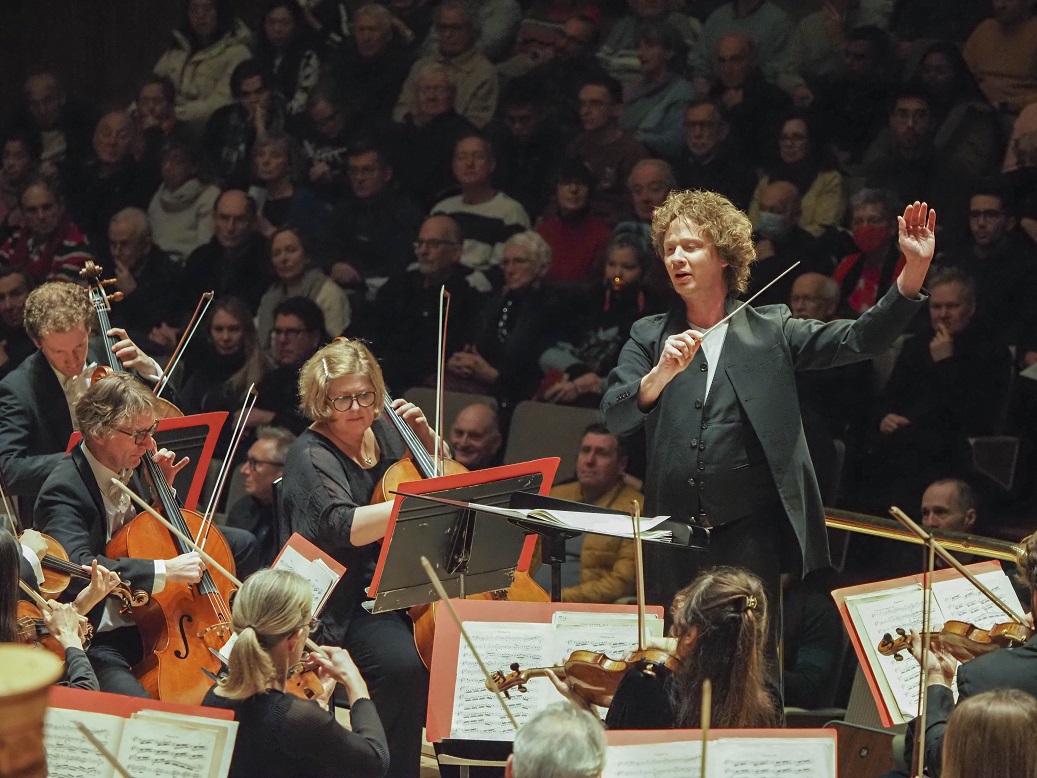
In concert – Musicians of the English Symphony Orchestra / Kenneth Woods: Blown Away – Doolittle, Gál & Dvořák

Musicians of the English Symphony Orchestra / Kenneth Woods

Doolittle Woodwings (2018, arr. 2021)
Gál Divertimento for Wind Octet, Op. 22 (1924)
Dvořák Serenade in D minor, B77 (1878)

Henry Sandon Hall @ Royal Porcelain Works, Worcester
Saturday 14 October 2023 (4pm)

Reviewed by Richard Whitehouse

Entitled Music for Humans, the coming season from the English Symphony Orchestra promises a wide array of pieces such as focus on what can be achieved through the art of communication and, conversely, what can result when that communication breaks down. This afternoon’s concert enabled the ESO woodwind (along with some of its brass and a couple of its strings) to come into its own with a varied programme as featured music from a regular ESO collaborator, one whom the orchestra has often championed and one who ranks among the greatest of any era.

It may have originated as a wind quintet, but Woodwings by Emily Doolittle (from Halifax, Nova Scotia and now based in Glasgow) proved no less effective when recast for 10-strong wind ensemble (with cello and double-bass) – songs and calls of nine Canadian birds heard over five characterful movements. These range from the playfully assertive Bobolink, via the inwardly plaintive Hermit Thrush and the quizzically engaging Winter Wren, to the cumulatively arresting Snow Goose then a Night Owls finale whose freeform evolution makes for an intriguing and enticing pay-off. First played by the ESO in Kidderminster just over two years ago, it once again provided an appealing concert-opener and certainly bodes well for the 2024-25 season, when Doolittle becomes the ESO’s Composer-in-Association.

The success of his Divertimento was a notable marker for the burgeoning career which Hans Gál enjoyed during the earlier inter-war period, and it remains among the most personable of his chamber works. ‘Intrata’ affords a keen indication of what is to come with its juxtaposing of the martial, hilarious and confiding, proceeded by the capricious exchanges of Pagliazza (inspired by the eponymous tower in Florence?) then the wistful interplay of Cavatina with Gál’s handling of wind sonority at its most beguiling. The mood turns towards the whimsical in the by no means genteel humour of Intermezzo grazioso, before the piece is rounded off with those varied character-portrayals of Pifferari – its title alluding to a group of itinerant musicians playing upon a variety of pipes, and thereby bringing matters to a diverting close.

Although less often performed than its earlier counterpart for strings, Dvořák’s Serenade for Winds (plus cello and double-bass) is arguably more indicative of where his genius lay. The martial theme of its opening Moderato is leavened by a ruminative poise that comes into its own with the minuet-like successor, its felicitous contours duly finding contrast through the animated gaiety of its Presto trio-section. The ensuing Andante is undoubtedly this work’s emotional heart – its eloquence redolent of Mozart in its understatement but also intimation of more ambivalent emotion in the ominous central stage or bittersweet fatalism at its close. From here the final Allegro steers an impulsive but also lilting course through to a climactic restatement of the march theme, then on to a coda that ends the work in exhilarating fashion.

In this judiciously balanced selection, ESO woodwind was heard at its most stylish in music whose appeal belies its technical challenges for individuals and ensemble alike. Next month the orchestra heads to Malvern for an imposing double-bill of Tchaikovsky and Shostakovich.

To discover more of the English Symphony Orchestra’s 2023/24 season, head to the English Symphony Orchestra website. Meanwhile click on the names for more on conductor Kenneth Woods, composers Emily Doolittle and Hans Gál, and the Royal Porcelain Works venue

Published post no.1,980 – Monday 16 October 2023

Online Concert: Chouchane Siranossian, Leonardo Garcia Alarcón, Balázs Máté @ Wigmore Hall – Bach, Schmelzer, Farina & Walther

Chouchane Siranossian (violin), Leonardo Garcia Alarcón (harpsichord), Balázs Máté (cello)

J.S. Bach Violin Sonata in G minor BWV1021 (1732-5)
Farina Sonata quinta detta ‘La Farina’ (pub. 1626)
J.S. Bach Violin Sonata in C minor BWV1024: Adagio; Fugue in G minor BWV1026 (before 1712)
Walther Passacaglia from Sonata no.7 (pub. 1688)
Krikor Naregatsi Improvisation on Havun Havun
Locatelli Sonata in D minor for solo violin Op.6/12 (pub. 1737)
Schmelzer Violin Sonata ‘Victori der Christen’ (c1683-4)

Wigmore Hall, Monday 5 June 2023 1pm

by Ben Hogwood

This attractive programme of works for wind ensemble began with a rarity.

September is a prominent line in the sand in the course of the classical music year. The Proms ends, everyone else gears up for the start of an Autumn season, and a fresh wave of creativity begins.

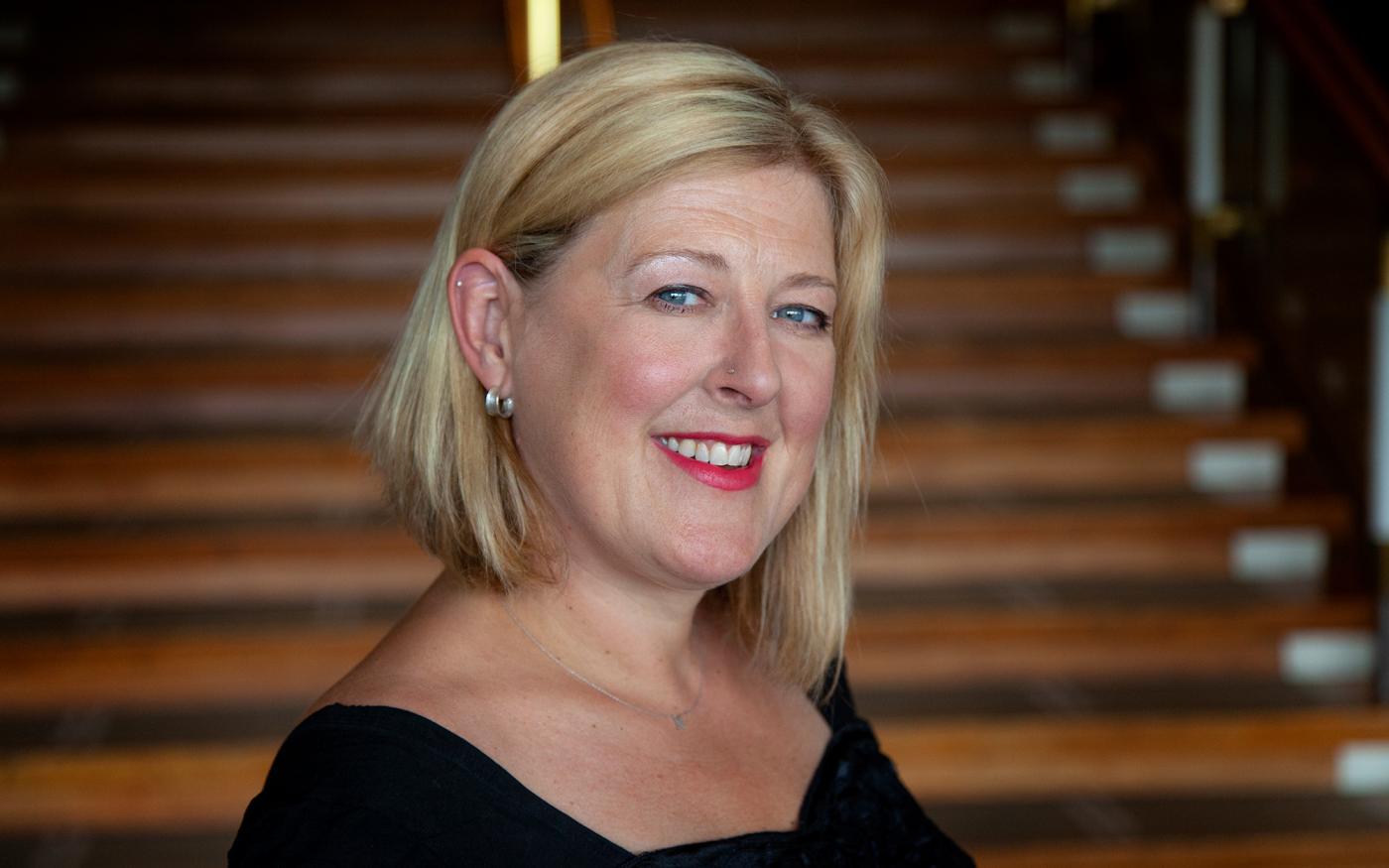
The resumption of the BBC Radio 3 Lunchtime Concert on Mondays at the Wigmore Hall is always a prominent part of the changing of the guard, and the choice to begin the new season with violinist Chouchane Siranossian, harpsichordist Leonardo Garcia Alarcón (both above) and cellist Balázs Máté was an inspired one.

The trio gave a recital based on their Bach Before Bach album of November 2021, bringing forward some of the master’s work for violin and harpsichord but putting it in the context of contemporaries Walther and Schmelzer, as well as some inspired earlier choices.

Bach himself began the programme, the Violin Sonata in G major BWV1021 featuring some effortlessly stylish playing. Siranossian has a particularly beautiful tone and a sense of ornamentation that fits this music instinctively. The same can be said for the fluent harpsichordist Alarcón, an expressive player of exceptional balance, complemented by the burnished tones of cellist Máté. A songful Adagio gave way to an enormously enjoyable, quickfire Vivace, which itself led to a tasteful, florid Largo, led by legato harpsichord. An attractive Presto finished an uplifting account.

We then had a rare opportunity to hear the music of Carlo Farina, whose work is not often heard in concert. With performances like these he deserves much better, for the Sonata quinta detta featured lively passagework and darker colours, the music glinting at the edges as the violin became prone to passionate outbursts over rich harmonies. Siranossian selected a shorter bow for this music, playing to the snappy, playful interjections.

Two Bach movements followed, cleverly linked – a deeply profound Adagio, given great depth and character by the violinist, then a virtuosic Fugue, a very tricky proposition given Bach’s writing but brilliantly played. Walther’s Passacaglia, meanwhile, was a fiery complement, setting out the main theme in relatively polite tones but then liable to explosive outbursts of virtuosity.

After all this activity came the brilliantly timed Improvisation on Havun, Havun, from 10th century Armenian monk Krikor Naregatsi. This introduced a remarkable stillness to the concert, time standing still as the violin turned ornamental phrases over a drone from the cello’s open A and D strings. Siranossian segued straight into the Locatelli, a solo sonata with daring feats of virtuosity here but retaining some of the bird-like qualities found in the Naregatsi. Her impeccable intonation and bow control were striking, but the music reached a truly exalted level in the fifth movement Capriccio ‘prova dell’intonazione’, the sky truly the limit for the violin’s highest register!

There was also a bold opening to Schmelzer‘s pictorial sonata Victori der Christen, with multiple stopping and very descriptive writing, especially in the slow and sorrowful sections. To complement the drama of the Schmelzer, Siranossian introduced the first movement of the Sonata in D major from Georg Muffat. This was another excerpt from the trio’s disc, but one whose sunny countenance was the perfect foil – and which put the seal on a remarkable concert with playing of an exceptional standard.

You can listen to Bach Before Bach via Spotify below:

For more livestreamed concerts from the Wigmore Hall, click here