In concert – Black Mirrors / BCMG NEXT @ Royal Birmingham Conservatoire

pattar

Pattar La Nuit Remue (2002) (a), Acte (1999) (b), Miroir Noir III (2009) (c), Miroir Noir II (2009) (d)

BCMG:NEXT (a, b, c) (Rebecca Speller (flute, a), Emily Wilson (a), Heather Ryall (b) (clarinets), Raddon Stephenson (trombone, b), Maja Pluta (a), Olivia Jago (c) (violins), Cameron Howe (viola) (a, c); Rosie Spinks (cello) (a, c); Michaella Livadiotis (piano (a, b), (celesta) (c), Joe Howson (toy piano) (c) / Melvin Tay (a, c)

L’Instant Donné (d) (Mathieu Steffanus (clarinet), Saori Furukawa (violin), Elsa Balas (viola), Nicolas Carpentier (cello)

Recital Hall, Royal Birmingham Conservatoire, Birmingham
Friday 25 Febuary 2022

Written by Richard Whitehouse

The second half of Birmingham Contemporary Music Group’s current season got off to an intriguing start with this collaboration between BCMG:NEXT and the Paris-based L’Instant Donné. All four of the pieces were by Frédéric Pattar (b1969), the Dijon-born composer who studied in Lyon with Gilbert Amy and who has worked extensively with this latter ensemble – building an extensive output over the past three decades which is audibly in the lineage of French post-war modernism, not least through its emphasis on timbral and colouristic facets.

Such qualities were uppermost in La Nuit Remue, a homage to surrealist poet Henri Michaux whose traversal from Boulezian fastidiousness to Lachenmann-like ‘concrète instrumentale’ was accomplished elegantly if anonymously. Melvin Tay drew a committed response from NEXT, who made a similarly fine impression with Acte. Inspired by a late poem of typically studied fatalism from Arthur Rimbaud, the interplay of its three wind instruments made for stark tonal contrasts such as were variously abetted and mediated by dextrous piano writing.

The remaining works were the latter two instalments from the trilogy Miroirs Noirs, each of which offered a striking take on its chamber format. In Miroir Noir III, the stealthy dialogue between string trio was pointedly offset by interjections from celesta and toy piano in a stern test of coordination the NEXT players met head-on. Members of L’Instant Donné then took the stage for Miroir Noir II, a more extended piece which teased out the possibilities of the ‘clarinet quartet’ with a keen sense of momentum sustained through to its deadpan ending.

A fine performance, then, from a group whose appearance this evening (as at the lunchtime recital in Symphony Hall) was made possible through Diaphonique, a funding body whose support is the more necessary in these post-Brexit times. Hopefully more of Pattar’s music will make its way to the UK (his Second String Quartet is well worth hearing on YouTube), but this collaboration was a worthy means of introducing it to Birmingham listeners in skilful and sympathetic performances.

Further information on BCMG events can be found at their website. To read an interview with Frédéric Pattar click here, while his biography can be found here). For more on L’Instant Donné click here, and for Diaphonique here
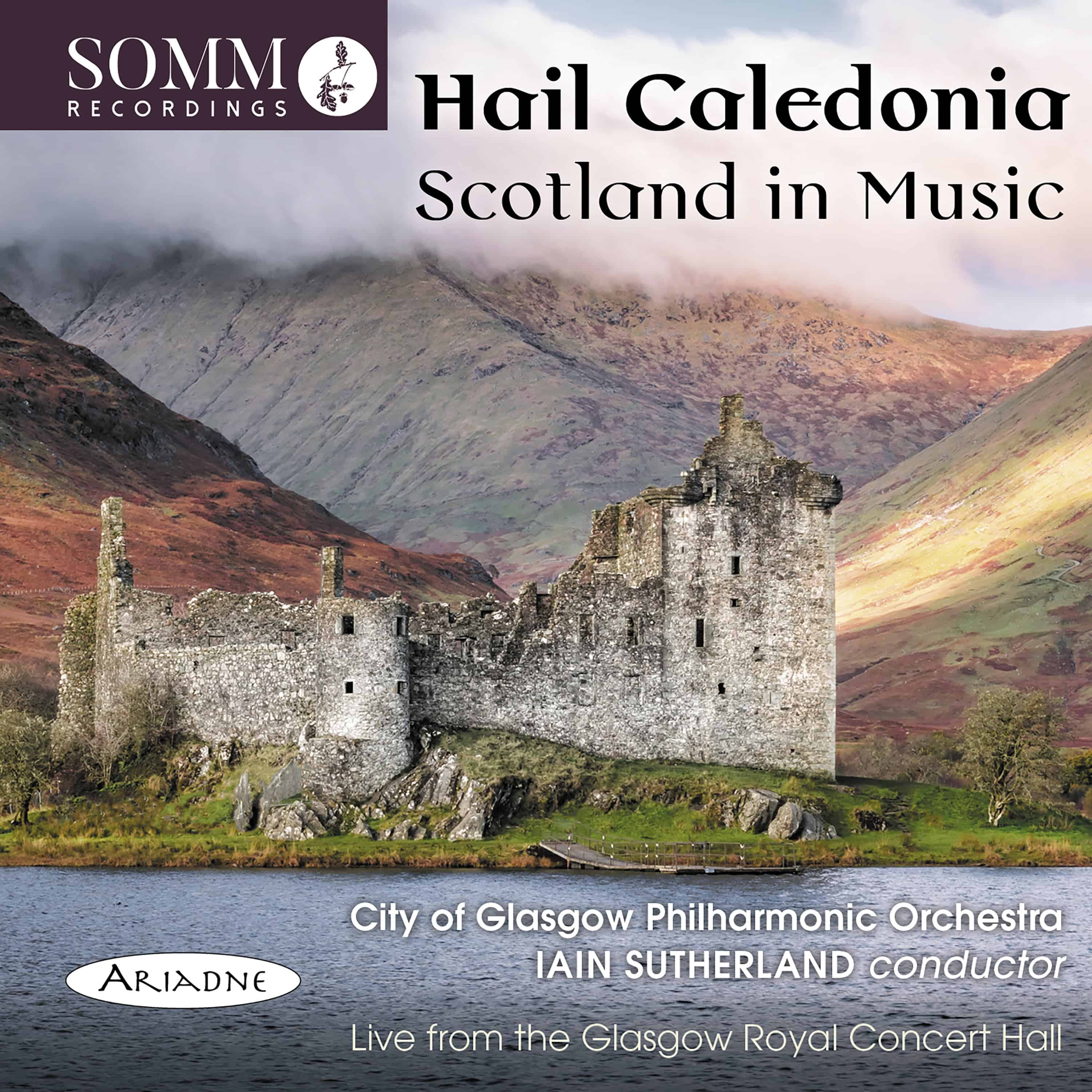
On record – Hail Caledonia: Scotland In Music (City of Glasgow Philharmonic Orchestra / Iain Sutherland) (Somm Recordings)

hail-caledonia

Trad. arr. Sutherland The Black Bear Salute
Docker Abbey Craig (1974)
Tomlinson Cumberland Square (1960)
Coates The Three Elizabeths – Elizabeth of Glamis (1944)
Mendelssohn Symphony No. 3 in A minor, Op. 56, ‘Scottish’ – Vivace non troppo (1842). Blake Take the High Road (1980)
MacCunn (arr. Sutherland) Sutherland’s Law (1886/1973)
Docker Faery Dance Reel (1958)
Sutherland Three Scottish Castles (1966)
MacKenzie (arr. composer) Benedictus, Op. 37 No. 3 (1888/1895)
Bantock Two Heroic Ballads – Kishmul’s Galley (1944)
Arnold Four Scottish Dances, Op. 59 (1957)
Williamson (arr. Sutherland) Flower of Scotland (1967)
Trad. arr. Sutherland Amazing Grace
Whyte Donald of the Burthens – Devil’s Finale/Reel o’ Tulloch (1951)

David Wotherspoon, Iain MacDonald (bagpipes), City of Glasgow Pipe Band, City of Glasgow Chorus, City of Glasgow Philharmonic Orchestra / Iain Sutherland

SOMM Ariadne 5014 [79’32”]

Digital Remastering Paul Arden-Taylor

Live performances at Royal Concert Hall, Glasgow in 1995 and 1996

Written by Richard Whitehouse

What’s the story?

SOMM releases via its Ariadne imprint this compilation of shorter pieces and arrangements which, between them, afford a wide-ranging and not at all hackneyed overview of ‘Scotland in Music’, realized with great flair by Iain Sutherland and the City of Glasgow Philharmonic Orchestra.

What’s the music like?

Whether or not the fastest regimental march in the British army, The Black Bear Salute duly launches proceedings with a gusto continued by Robert Docker’s breezy take on battle-song Scots Wha Hae in Abbey Craig. Ernest Tomlinson furthers the jollity with his amalgam of traditional Borders tunes in Cumberland Square, to which the quiet rapture of Eric Coates’s ‘Elizabeth of Glamis’ (central panel of The Three Elizabeths triptych) provides an admirable foil. The scherzo from Mendelssohn’s Scottish Symphony makes for an ideal interlude in its rhythmic vivacity and formal ingenuity, then come pieces made famous through association with television series – Arthur Blake’s atmospheric theme-tune for the soap drama Take the High Road and the corresponding sequence for crime drama Sutherland’s Law, derived from Hamish MacCunn’s overture Land of the Mountain and the Flood as has regained its place in the concert hall. Docker’s contribution to the light-music repertoire is typified by his Faery Dance Reel, a lively and infectious medley of traditional tunes that wears its heritage lightly.

Iain Sutherland displays his compositional skills (with respective nods to Arnold and Coates) in Three Scottish Castles with its evocative tribute to those of Stirling, Dunvegan (Skye) and Edinburgh. Next comes a contrasting brace of pieces – the burnished eloquence of Alexander MacKenzie’s Benedictus here followed by the unfailing extroversion of Kishmul’s Galley by Granville Bantock, whose immersion in all things Scottish was enduring. Malcolm Arnold’s Four Scottish Dances are then given a memorable reading which points up the trenchant gait of ‘Strathspey’ or the latterly inebriated progress of ‘Reel’, before ‘Hebrides’ casts a suitably rapturous spell that is summarily curtailed with the headlong energy of ‘Highland Fling’. One half of influential folk duo The Corries, Roy Williamson created his own standard in Flower of Scotland, here given an opulent arrangement comparable to that of the ubiquitous Amazing Grace – after which, the closing section from the ballet Donald of the Burthens by Ian Whyte (founder conductor of the BBC Scottish Symphony Orchestra) makes for a scintillating finale.

Does it all work?

Yes. Compilations such as this are often no more than the sum of their parts, however enticing those parts may be, but Hail Caledonia is one to sample at leisure as well as worth playing at a single sitting. It helps when the City of Glasgow Philharmonic renders all these pieces with alacrity and enthusiasm, aided by being captured on various live occasions, and owing in no small part to its founder Iain Sutherland. A familiar radio presence over several decades, he brings an authority to music whose outward flair is not without its corresponding substance.

Is it recommended?

Indeed. The remastered sound lacks nothing in realism or immediacy, while there are detailed and informative notes by composer, critic (and no doubt ecosophile) Robert Matthew-Walker. Any listeners who are looking to add such a compilation to their collections need not hesitate.

Listen & Buy

You can discover more about this release and listen to clips at the SOMM Recordings website, where you can also purchase the recording.

In concert – CBSO Centre Stage: Schubert String Quintet

cbso-centre-stage-schubert

Schubert String Quintet in C major D956 (1828)

CBSO Soloists [Kate Suthers and Bryony Morrison (violins), Amy Thomas (viola), Miguel Fernandes and Helen Edgar (cellos)]

CBSO Centre, Birmingham
Thursday 10 February 2022 2pm

Written by Richard Whitehouse

Just one work in this afternoon’s Centre Stage but, given this was Schubert’s String Quintet, no-one could complain of being short-changed. Music, moreover, that has featured regularly in recitals given by members of the City of Birmingham Symphony Orchestra over the years (not least the first live performance for this reviewer, given at the Birmingham and Midland Institute in the early 1980s as the second half of an imposing programme which opened with Brahms’s First Sextet) and that remains an emotionally involving experience like few others.

Pacing this work so its textural richness is allowed full rein without any loss of momentum is at least half the story, not least an opening movement whose contrasting themes need to find expressive accord from the outset. The present account succeeded handsomely in this respect, not least by varying the balance between these themes in the repeat of the exposition, and if the development marginally lost focus in its earlier stages, the heightened lead-back into the reprise brought an emotional frisson almost matched by the stark conclusiveness of the coda.

Whether or not the finest movement as to actual content, the Adagio is often the highlight of a performance – those outer sections shot through with a yearning regret which was tangibly in evidence. While the central episode could have been even more agitated, the spellbinding transition into the initial music was unerringly judged. Nor was anything amiss in the contrast between the Scherzo and its trio; the former bracingly impetuous, the latter inwardly fatalistic (and making the most of those rapturous two-cello sonorities) without ever becoming turgid.

If the finale often feels anti-climactic, this is not because of its relative concision but through an inherently Viennese ingratiation as was rightly played down in preference for a rhythmic forthrightness maintained through to a close that conveyed defiance as much as decisiveness. It duly set the seal on an impressive reading as drew an enthusiastic response from the near-capacity house. Hopefully an equally sizable attendance will be in evidence for next Friday evening’s recital, featuring Bach and Piazzolla, which comes courtesy of El Ultimo Tango.

You can read more about that next Centre Stage recital, and book tickets, on the CBSO website

In concert – CBSO Centre Stage: Mozart and Brahms Quintets

cbso-centre-stage-horn

Mozart Horn Quintet in E flat major K407 (1782)
Brahms
String Quintet no. 1 in F major Op. 88 (1882)

CBSO Soloists: Mark Philips (horn), Philip Brett and Charlotte Skinner (violins),Christopher Yates and Catherine Bower (violas), Arthur Boutillier (cello)

CBSO Centre, Birmingham
Thursday 3 February 2022 2pm

Written by Richard Whitehouse

The Centre Stage series, featuring musicians from City of Birmingham Symphony Orchestra, continued this afternoon with an attractive coupling of quintets written exactly a century apart and which are among the most characteristic works of their respective composers’ maturities.

His first piece for the virtuoso Joseph Leutgeb (quite frequently the butt of Mozart’s scabrous humour, though for whom he went on to write four concertos) the Horn Quintet remains one of Mozart’s most engaging chamber pieces – not least through the presence of two violas that yield additional tonal depth to the lively outer Allegros, besides reinforcing the limpid pathos of the Andante. A little reticent toward the outset, Mark Philips came into his own during that central movement with its wistful poise and elegant interaction with those middle registers of the strings. Nor was there any lack of wit in the scintillating finale, its writing for the horn of no less agility than that found in the parallel movements of Mozart’s concertos; all the while suggesting the association between composer and musician was, after all, an endearing one.

Although he had originally intended his Piano Quintet to be a string quintet with two cellos, Brahms only got round to composing what became his First String Quintet as he was nearing fifty. Eschewing both the immediacy of his sextets and the austerity of his quartets, this piece typifies the ruminative warmth but also the expressive ambivalence of his music henceforth – not least an opening movement whose emotional surges are kept in check by the burnished richness of ensemble. The highlight, of the work as of this performance, is a slow movement that offsets its underlying introspection with two scherzo-like episodes whose effervescence carries over the finale – an Allegro of an impetus not so often encountered in Brahms’s later music, while culminating in a coda such as reinforces the home-key with exhilarating effect.

Such, at any rate, was the impression left by an assured and involving performance of a piece which conveyed the extent of this ‘dark horse’ among Brahms’s chamber compositions. Next week sees an ensemble from the CBSO tackle the epic expanse of Schubert’s String Quintet.

You can read more about that next Centre Stage recital, and book tickets, on the CBSO website

In concert – CBSO Centre Stage: CBSO strings play Kodály & Korngold

CBSO-Strings

Kodály Serenade, Op. 12 (1919-20)
Korngold
String Sextet in D major, Op. 10 (1914-16)

CBSO Strings: Kate Suthers & Charlotte Skinner (violins), Adam Römer & Jessica Tickle (violas), Miguel Fernandes & Helen Edgar (cellos)

CBSO Centre, Birmingham
Thursday 27 January 2022 2pm

Written by Richard Whitehouse

Two unfamiliar while appealing works were featured in this afternoon’s Centre Stage recital given by string players from the City of Birmingham Symphony Orchestra, written during the early stages and in the aftermath of the First World War at a pivotal time in European culture.

The focus on choral and pedagogic music of Kodály’s later years makes his earlier chamber works the more valuable, and while the Serenade for two violins and viola is by no means the most imposing, its deftness and finesse of writing for this unusual line-up cannot be gainsaid. The lively outer movements abound in those allusions to and inflections of folk melodies that Kodály explored extensively in his maturity, with the central Lento touching upon a vein of ‘night music’ less inwardly intense than if equally evocative to that found in the music of his contemporary Bartók. Its relatively extended formal trajectory can make the final Vivo seem unduly prolix, yet in so buoyant and finely integrated a performance, there was no likelihood of this movement forgoing any sense of direction on its way to a decidedly nonchalant close.

Kodály was around 30 when writing this piece, whereas Korngold was barely out of his teens when he finished the Sextet as draws equally on very different (if by no means incompatible) stylistic traits evident in works for this medium by Tchaikovsky and Schoenberg. If the latter composer is to the fore in the lengthy initial Moderato with its intricate thematic interplay and frequent density of texture, the Adagio exudes a melodic eloquence denoting those operas or film-scores to come. The ensuing Intermezzo is arguably the most characteristic movement in its suavity and teasingly coy charm, while the Finale looks back to Brahms and even Dvořák (whose Sextet would be a welcome inclusion in these recitals) for its underlying vitality and easy-going humour as makes the coda’s rush to the finish the more unexpected and engaging.

Such was the impression left by a finely prepared reading by no means lacking in spontaneity or those flights of fancy such as denote the ‘confidence of youth’. Quintets are the order of the day for the next Centre Stage recital, which features contrasting works by Mozart and Brahms.

You can read more about that next Centre Stage recital, and book tickets, on the CBSO website