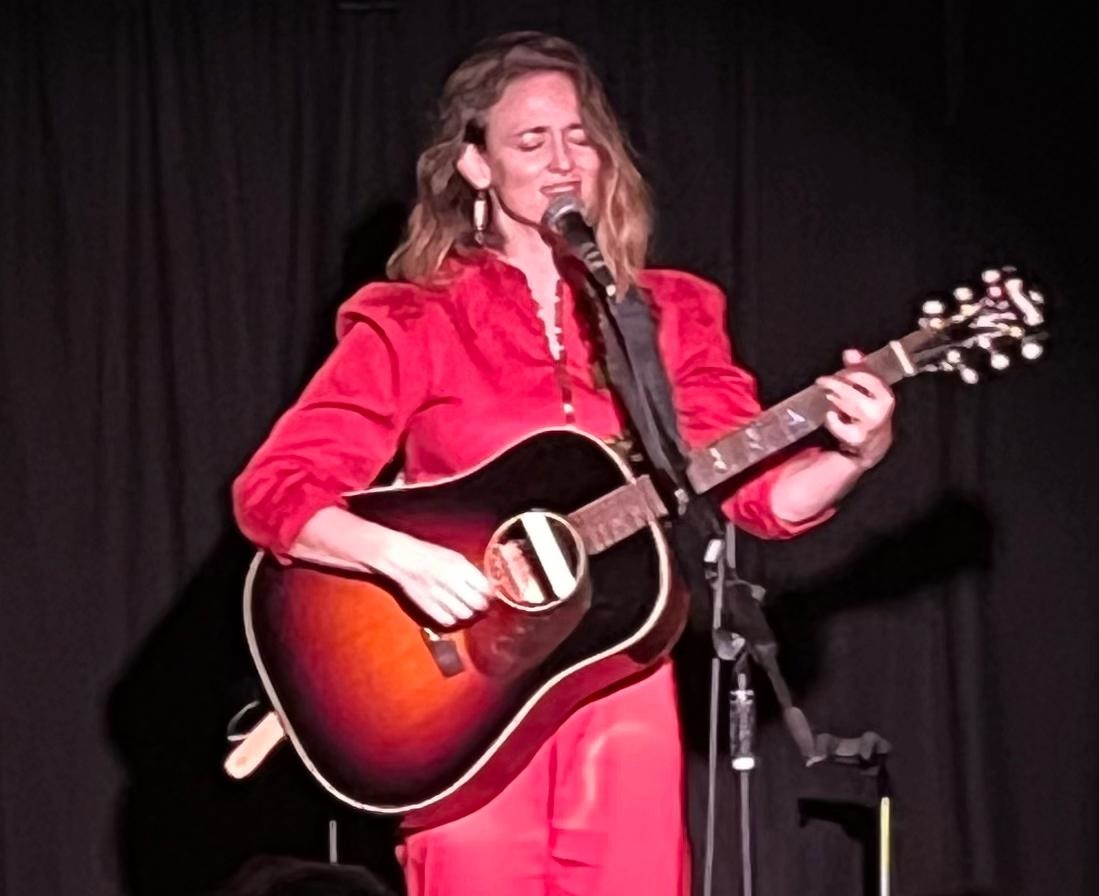
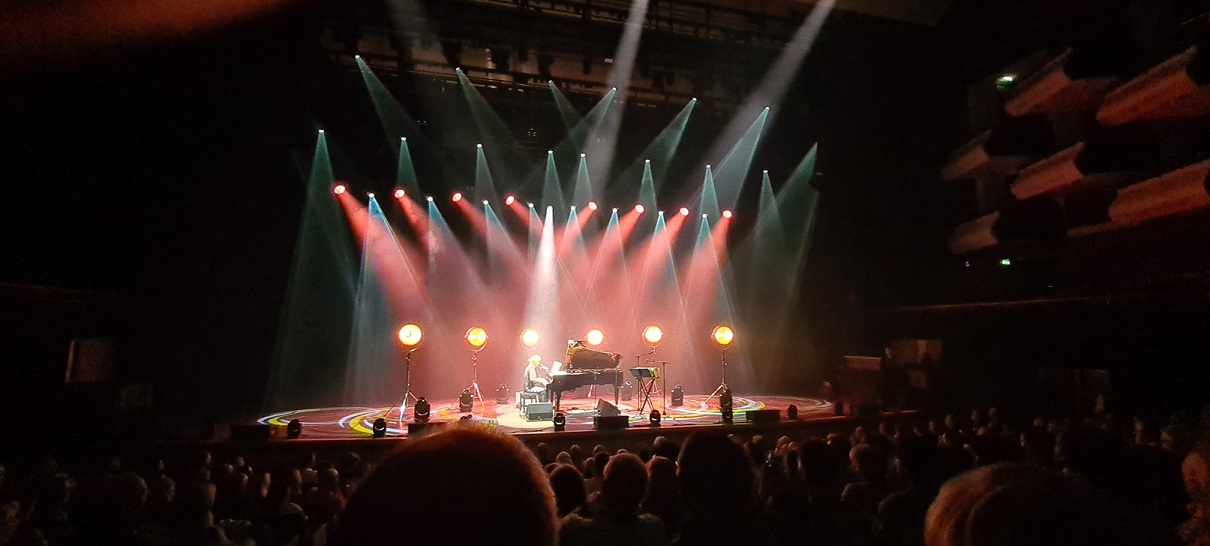
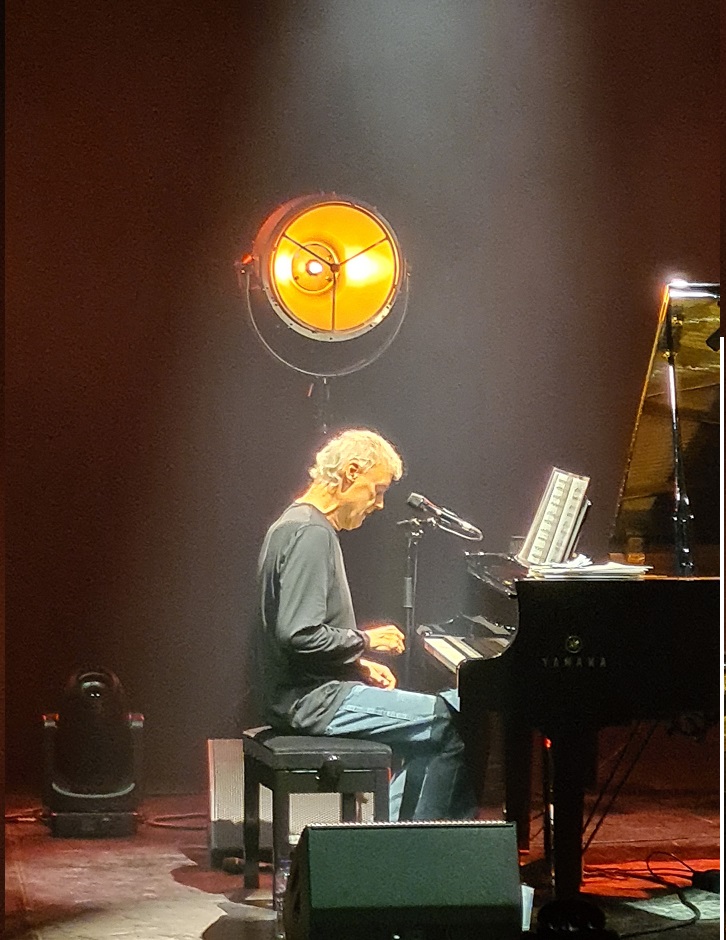
In concert – Summer Music in City Churches: Tier3 Trio @ St Giles Cripplegate

Tier3 Trio [Joseph Wolfe (violin), Jonathan Ayling (cello), Daniel Grimwood (piano)]

Liszt arr. Saint-Saëns Orpheus
Tchaikovsky arr. Grimwood Andante non troppo (second movement of Piano Concerto no.2 in G major Op.44) (1880)
Arensky Piano Trio no.1 in D minor Op.32 (1894)

St Giles Cripplegate, London
Thursday 13 June 2024, 1pm

Reviewed by Ben Hogwood

‘Love’s Labours’ is the title of this year’s Summer Music in City Churches festival, based opposite the Barbican Hall in St Giles Cripplegate. The ten day-long enterprise is proving ample consolation for the much-missed City of London Festival, which once captivated audiences in the Square Mile for three weeks and offers music of equal range and imagination.

For the second year in succession the Tier3 Trio visited for a lunchtime recital, following up last year’s tempestuous Tchaikovsky Piano Trio with an attractive programme subtitled From Russia with Love. They began with a curiosity, playing Saint-Saëns’ little-known arrangement of Liszt’s symphonic poem Orpheus for piano trio. A highly effective transcription, it retained its dramatic thread in this fine performance, notable for its attention to detail and well-balanced lines when reproducing Liszt’s slow-burning music. Pianist Daniel Grimwood successfully evoked Orpheus’ lyre, while Jonathan Ayling’s burnished cello sound probed in counterpoint to Joseph Wolfe’s violin.

Tier3 was formed during lockdown, and in the same period when he was performing Tchaikovsky’s Piano Concerto no.2 in Germany, Grimwood realised the suitability of the work’s slow movement for trio. He rightly complemented ‘the extent to which Tchaikovsky was an experimenter in form’, a trait found in many works but at its inventive peak in the second concerto, whose slow movement is in effect a piano trio with orchestra. Here the arrangement was just right – balanced, elegant and fiercely dramatic towards the end. Clarity of line was secured through sensitive pedalling from Grimwood, the trio using the resonant acoustic to their advantage, while the individual cadenzas were brilliantly played.

These two notable curiosities linked beautifully into one of the best-known works of Anton Arensky, his Piano Trio no.1 in D minor. Arensky is not a well-known composer, fulfilling in part an unkind prophecy from his teacher, Rimsky-Korsakov. However that does not mean his music is without merit – far from it, as in his brief life of 45 years he wrote two symphonies, four orchestral suites, a substantial output of piano and high quality chamber music, of which the first piano trio is the pick.

Dedicated to the cellist Karl Davidov, it is equal parts elegy, drama and ballet – with a powerful first movement setting the tone. The balletic second movement Scherzo demands much of the piano, but Grimwood was its equal, sparkling passagework from the right hand dressed with twinkling figures for cello and piano. The emotional centre of the trio was in the slow movement, with a heartfelt tribute to Davidov in Ayling’s first solo, while the finale rounded everything up in a highly satisfying payoff, a return to the first movement’s profound theme capped with an emphatic closing section.

These were very fine performances from a trio at the top of their game, navigating the resonant acoustic of St Giles with power and precision. On this evidence, Rimsky-Korsakov would have had to eat his words!

You can read more about Summer Music in City Churches at the festival website – and you can listen to a Spotify playlist below, containing the music heard in this concert – with the original version of the Tchaikovsky:

Published post no.2,209 – Friday 14 June 2024

In concert – Quatuor Danel: Shostakovich & Weinberg #5 @ Wigmore Hall

Quatuor Danel [Marc Danel & Gilles Millet (violins), Vlad Bogdanas (viola), Yovan Markovitch (cello)]

Shostakovich String Quartet no.7 in F# minor Op.108 (1959-60)
Weinberg String Quartet no.7 in C major Op.59 (1957)
Weinberg String Quartet no.8 in C minor Op.66 (1959)
Shostakovich String Quartet no.8 in C minor Op.110 (1960)

Wigmore Hall, London
Monday 3 June 2024

by Richard Whitehouse Photo (c) Marco Borggreve

Quatuor Danel’s interleaving of string quartets by Shostakovich and Weinberg arrived at its effective half-way point this evening with a programme featuring the seventh and eighth of their respective cycles: quartets that are as different from each other as are these composers.

His briefest and likely most ambivalent, Shostakovich’s Seventh Quartet is dedicated to the memory of his first wife from the vantage of the short-lived marriage to his second. Its three movements play without pause, their oblique formal and expressive circularity being potently realized here – whether those fugitive speculations of the opening Allegretto, wistful regret of the central Lento, or seething anger of a final Allegro whose fugal aggression pointedly heads back to the opening theme for a close of simmering unease. Music, then, which implies much more than could really be stated, as the Danel underlined throughout this perceptive reading.

Coming 11 years after its monumental predecessor, Weinberg’s Seventh Quartet might seem representative of a (necessary) lowered ambition in the late- and post-Stalin years. Subdued and even enervated, its opening Adagio never strays from a musing uncertainty the ensuing Allegretto (originally preceded by a vivid scherzo, subsequently withdrawn) offsets through its poise and charm. Neither predicts a finale as takes the precedent of that in Shostakovich’s Second Quartet to its logical extreme – these 23 variations on a sombre theme unfolding as a palindrome from sustained grandeur to seething energy, then back to the start for a glowering apotheosis. Undoubtedly one of the great such movements in the history of the string quartet.

Such music would usually mark the end of a programme but, following the trajectory of this double-cycle, it concluded the first half of a recital which continued with Weinberg’s Eighth Quartet. Once relatively familiar through its championing from the Borodin Quartet and, in the UK, the Lindsays, its single movement (reciprocally taken to a new level with the 13th Quartet of Shostakovich) builds from initial reticence to a dance-like section of pronounced Klezmer inflections. Affording a culmination of audible anguish, this duly subsides towards the mood of the opening for a conclusion of becalmed intimacy realized to perfection here.

It is worth recalling how much more frequently played, compared to the rest of his cycle, was Shostakovich’s Eighth Quartet even a quarter-century after its composer’s death. All credit to the Danel for investing it with a continual sense of (re-?) discovery – the pensive allusiveness of its initial movement yielding an anticipation brutalized by the violence of its scherzo then deflected by the quizzical repartee of its intermezzo. The fourth movement assuredly took no hostages to fortune in its graphic alternation between the confrontational and consoling, and it remained for the finale to restore emotional equilibrium with its resumption of the opening music – albeit now devoid of quotations as Shostakovich stands ‘naked’ before his listeners.

A gripping performance and one, moreover, that brought this first phase of the Danel’s cycle to a natural close. It resumes on October 16th with the Ninth and 10th Quartets by Weinberg alongside the Ninth Quartet by Shostakovich – a programme equally eventful and intriguing.

You can hear the music from the concert below, in recordings made by Quatuor Danel -including their most recent cycle of the Shostakovich quartets on Accentus:

For more information on the next concert in the series, visit the Wigmore Hall website. You can click on the names for more on composer Mieczysław Weinberg and Quatuor Danel themselves.

Published post no.2,200 – Wednesday 5 June 2024

In concert – Geneva Lewis & Georgijs Osokins @ Wigmore Hall: Brahms, Scarlatti & Elgar

Geneva Lewis (violin, above) and Georgijs Osokins (piano, below)

Brahms Violin Sonata no.2 in A major Op.100 (1886)
Domenico Scarlatti Sonata in D minor Kk213
Elgar Violin Sonata in E minor Op.82 (1918)

Wigmore Hall, London
Monday 20 May 2024 (1pm)

by Ben Hogwood

The Violin Sonata no.2 is one of Brahms‘s chamber music perennials, a popular recital fixture – but in this recital from BBC New Generation Artist Geneva Lewis and Latvian pianist Georgijs Osokins it was as though the work had received a fresh coat of paint.

The tempo marking Brahms applied to the first movement, Allegro amabile, is seldom found in classical music – ‘amabile’ meaning ‘lovely’. That was certainly the case in this performance, though Lewis and Osokins took a much slower tempo than is the norm. Their daring approach succeeded, however, for the melodic phrasing blossomed, the spring-like main tune given plenty of room to shine. The second theme was laid bare, but again the slow tempo allowed for greater insight, followed attentively by the Wigmore Hall audience.

The dynamic range of both players was also notable, Lewis very much aware of her surroundings in the quiet passages, the audience subconsciously leaning in to the music. At points the music was so quiet that Osokins’ pedalling could be heard…but conversely the pair were not afraid to put the pedal down and play out, as they did in the finale. In between came a tender and affectionate middle movement, its dreamy opening certainly tranquillo, before a most appealing central vivace section.

Elgar’s Violin Sonata was completed when the composer had just turned 60 – and although he would live for another 16 years, very few major works followed. To hear the sonata played by performers in their twenties was eye-opening indeed, with more youthful elements of the piece revealed and a different light shed on a work that often has autumnal reflections to cast.

The first movement was notable for its commanding first paragraph, Lewis setting the tone for the movement as she became immersed in Elgar’s broad phrasing. Osokins, for his part, mastered the full piano textures most impressively, before both performers drew back for a thoughtful second theme. The second movement became a fascinating mini-ballet between the two instruments, its shadowy colours a clue to the composer’s darker thoughts, though the bittersweet melodies were given extra charm by the dance-inflected rhythms.

The finale took flight immediately, the violin surging forward with penetrating melodies that led to a sense of sunlight breaking through the clouds in the closing phrases, Elgar allowing his thoughts to brighten as the music turned to the major key. The imaginatively chosen encore capitalised on this, Lewis and Osokins giving us the rustic finale of Busoni’s Violin Sonata no.2 in E minor, music which might have passed for one of Brahms’s Hungarian-influenced works were it not for some particularly scrunchy harmonies.

In between the two big sonatas, Osokins (above) had the chance to shine alone, one he took with a profound account of one of Domenico Scarlatti‘s many keyboard sonatas. The Sonata in D minor Kk213 is a bittersweet piece, a reminder of how forward looking this composer’s music can. Rooted in the 18th century it may be, but in reality we could have been listening to a Satie Gnossienne, especially with Osokins’ poetic licence drawing out the final harmonic resolution.

Published post no.2,184 – Monday 20 May 2024

In concert – Quatuor Danel: Shostakovich & Weinberg #4 @ Wigmore Hall

Quatuor Danel [Marc Danel & Gilles Millet (violins), Vlad Bogdanas (viola), Yovan Markovitch (cello)]

Weinberg String Quartet no.5 in B flat major Op.27 (1945)
Shostakovich String Quartet no.6 in G major Op.101 (1956)
Weinberg String Quartet no.6 in E minor Op.35 (1946)

Wigmore Hall, London
Monday 29 April 2024

by Richard Whitehouse Photo (c) Marco Borggreve

Quatuor Danel’s ongoing cycle devoted to the string quartets of Shostakovich and Weinberg reached its fourth instalment this evening with a programme in which two of the latter’s most characteristic such pieces framed what is among the most ambivalent of the former’s works.

Composed in the aftermath of the Second World War, Weinberg’s Fifth Quartet emerges as a divertimento in concept but hardly in substance. The opening Melodia underlines this with its brooding theme on violin that intensifies expressively as the movement expands texturally, while the ensuing Humoreska has a dance-like insouciance that takes on ominous overtones as it unfolds. This accrued tension bursts forth in the central Scherzo with its violent motivic and gestural exchanges between the players, then the Improvisation revisits earlier material from an inevitably more troubled perspective. It only remains for the final Serenata to bring closure via its familiar gambit of summing-up the whole from a likely emotional remove, only to take on greater immediacy on the way to a musing close: something ideally conveyed here.

The mid-1950s was a difficult time for Shostakovich, recently widowed and unsure as to his future direction. Dedicated to his second wife, the Sixth Quartet can seem as tentative as this marriage proved short-lived – the genial quality of the opening Allegretto’s themes assuming much more combative guise as the movement evolves, with the Moderato that follows poised uncertainly between scherzo and intermezzo but without committing either way. The second of its composer’s passacaglias in a quartet context, the Lento unfolds as a processional both fatalistic and doubtful before heading into a final Allegretto whose inherent nostalgia exudes a sepia-tinted regret at its core. As previously, the Danel was mindful to vary the expressive intent of that recurrent closing cadence – one whose finality is ultimately borne of resignation.

The last work proved to be a culmination in all senses. Over six decades might have elapsed between its composition and its premiere (by this ensemble), but Weinberg’s Sixth Quartet is one of his finest and a highpoint of quartet-writing in the twentieth century. Although it runs to six movements, there is never risk of diffusiveness or loss of focus – witness the deceptive equability of its initial Allegro, such equivocation decisively countered by the violent Presto whose unbridled energy has barely been dispelled across the brief and recitative-like Allegro.

Despite its fugal mobility, the ensuing Adagio emerges as a slow movement frozen in intent – something the Danel brought out as acutely as it did that bittersweet anxiety of the Moderato which follows. More than in any of Weinberg’s earlier quartets, the final Andante maestoso is a fitting destination – its almost monumental power fashioning elements previously heard into a cumulative structure whose outcome is one of desperation mingled with defiance. Not hard to fathom why the Soviet authorities should have prohibited even a private performance.

Whether or not it has become a ‘signature work’ for the Danel, the sheer emotional input of this reading assuredly took no hostages. Shostakovich’s 1931 arrangement of Katerina’s aria from the third scene of his opera Lady Macbeth of Mtsensk duly made for an eloquent envoi.

You can hear the music from the concert below, in recordings made by Quatuor Danel:

For more information on the next concert in the series, visit the Wigmore Hall website. You can click on the names for more on composer Mieczysław Weinberg and Quatuor Danel themselves.

Published post no.2,167 – Friday 3 May 2024

In concert – Binker Golding @ Ronnie Scott’s

Binker Golding (tenor saxophone), Philip Achille (harmonica), Artie Zaitz (guitar), Sarah Tandy (piano), Dan Casimir (double bass), Jamie Murray (drums)

Ronnie Scott’s, London, 19 April 2024

by John Earls. Photo credits (c) John Earls

The last time I saw Binker Golding at Ronnie Scott’s (June 2021) he and his quintet were performing new material in advance of what was to become the wonderful (and superbly titled) album Dream Like a Dogwood Wild Boy, a collection of tunes traversing across jazz, Americana, country and blues.

Last Friday’s (second house) concert at Ronnie Scott’s was also a showcase for new material, albeit interspersed with a couple of numbers from Dogwood. The new material, played here by a superb sextet, develops the trajectory of Dogwood in innovative and pleasing ways.

Not least is the addition of harmonica player Philip Achille who I’ve previously described as someone “taking his instrument to places you didn’t know it could go”. He did it again here throughout the evening including opening the set with soft, inquisitive and inviting tones. I don’t know if Achille features on the new album (he doesn’t play on Dogwood) but I sincerely hope so.

Of the line-up performing tonight, Sarah Tandy (piano and organ) and recent Arts Foundation Futures Award winner Daniel Casimir (double bass) did play on Dogwood. Artie Zaitz (guitar) and Jamie Murray (drums) completed the sextet. All were excellent, Tandy combining her lyrical piano playing with the organ (sometimes at the same time), Casimir solid and expressive on bass, Zaitz giving an effective guitar edge and Murray particularly impressive with his delicate stick and finger taps (although he can thump too). The Dogwood tracks played were a smoky Love Me Like a Woman and an absolutely captivating version of My Two Dads which saw Golding and Achille engage in a touching call and response of the opening refrain, featuring stunning solos from Casimir, Golding and Tandy. 

The new material is a promising progression and evolution of Golding’s outstanding composing, playing and bandleading qualities. Great tunes with moments of grace and beauty, the last number of the set being a case in point. You don’t always have to finish with an up-tempo banger. Tune titles included I Know I Can Change (whose origin comes from a misconstrued lyric) and Where the Heart Meets the Sky (which might also end up being the title of the new album).

Vocalist Maxine Scott joined Golding (playing piano) and Achille (harmonica) to sing Bob Dylan’s I Shall Be Released for an encore, but it was the sextet’s performance and the prospect of the forthcoming album that truly captured the night.

John Earls is Director of Research at Unite the Union and tweets / updates his ‘X’ content at @john_earls

Published post no.2,155 – Sunday 21 April 2024