
Talking Heads: Joseph Phibbs

joseph-phibbs

Interview with Ben Hogwood

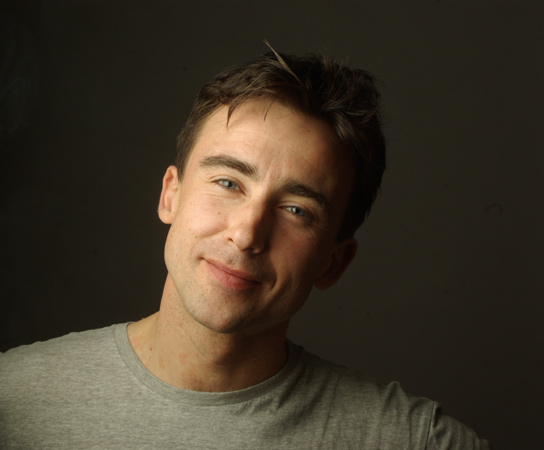
This year in the Summer at Snape series, Britten Pears Arts has been presenting premieres of new arrangements of works by Benjamin Britten. The last in the series will be composer Joseph Phibbs’ arrangement of Britten’s landmark orchestral song cycle Our Hunting Fathers for the chamber forces of the Hebrides Ensemble and soprano Elizabeth Llewellyn. Described by Britten as ‘my real Op.1’, the piece represents the full flowering of his creative relationship with W.H. Auden, who supplied the texts for the three middle poems, writing his own new verse for the Prologue and Epilogue. It is also the first of Britten’s works to explore the theme of humans’ inhumanity, which ran as a thread throughout his life and music. Arcana was able to talk with Joseph about his arrangement, and about the meaningful relationship he has with the music of its composer.

BH: I understand you have a long-standing relationship with Britten’s music. Can you remember the first time you heard anything by him?

JP: I was around 13, and borrowed some cassettes of the String Quartets from my local library. The opening of No.1 immediately captivated me, the violins and viola sustaining a soft cluster of notes at the very top of their registers, with gentle cello pizzicato gestures beneath. The sound world had a disorientating effect, one that was totally alien as well as extraordinarily beautiful. My impressions were of wide landscapes bathed in a glowing, evening light, and it may indeed have been influenced by the impressions Britten had of America around the time he composed it.

A few months later, I heard the Dirge from the Serenade for tenor, horn and strings, which was riveting, and shortly after became obsessed with Peter Grimes, listening to it non-stop, before making a pilgrimage to The Red House when I was about 16.

I was incensed by a documentary that had just been made called J’accuse, which dismissed most of what Britten composed after 1945, and spoke at length to the curator about it, who kindly allowed me look around the Britten-Pears Library (perhaps to calm me down!). I remember picking up a stone from the drive way, in the hope that Britten’s shoe may have graced it 20 years earlier..

It all sounds crazy to me now (it probably was crazy), but my reverence for Britten has never really left me. He strikes me as an extraordinary and mysterious figure, a workaholic who was in some ways compelled to compose because his own irrepressible genius.

When I first heard Our Hunting Fathers it made an incredibly strong impression on me, and I found it emotionally very powerful. How did you respond on first hearing?

Of Britten’s mature works, it was one I knew less well. Having now rediscovered it, I can see how remarkable it is. Britten’s technique was fully formed when he composed it in 1936, at the age of 22, and although it’s his first mature work to include orchestra the scoring is both impeccably judged and extremely imaginative in ways that would have been unusual at the time. He himself regarded it as his first ‘real opus 1’, so clearly felt he had achieved something important. It’s also his first large-scale expression of pacifism. Fascism was on the rise throughout Europe at the time – the Spanish Civil War erupted while the piece was being composed – and Auden’s juxtaposition of ‘German’ and Jew’ (dogs in a hunting pack) at the close of The Dance of Death has a chilling prescience in light of how the world would look ten years later. In some respects it’s an atypical work for Britten, a reason why even some of his detractors have a soft spot for it.

How would you describe Britten’s ability at scoring for orchestra?

As mentioned above, there’s a certain glow to his sound, as well as a clarity and lightness of touch, which I’ve always loved. His music is the opposite of ‘dense’, and he disliked orchestral music that sounded heavy (famously so in the case of Brahms – though also in some Beethoven). He discovered new ways of approaching the orchestra throughout his life; the textures of Peter Grimes, for example, are completely different from those of A Midsummer Night’s Dream or Death in Venice. The melodic and harmonic aspects of his music are always perfectly aligned to his orchestration, and can’t really be divorced from it. For this reason, in this arrangement the original orchestral colour has been kept as possible, and elsewhere I’ve tried to imagine what Britten would have done were he scoring for a small ensemble.

What other Britten works do you particularly admire?

I drift in and out of pieces, and am at the moment re-familiarising myself with Rejoice in the Lamb, another early work. Death in Venice is my favourite opera, and Les Illuminations has always been high on my list. A Boy was Born, which predates Our Hunting Fathers, is to my mind one of the most extraordinary works in the repertoire, and the pinnacle of his choral writing from a technical angle. I discovered the cello suites through the superb Tim Hugh recordings around 15 years ago, and they became a big influence on my work. They are perhaps his most private, intimate pieces.

In recent years I’ve enjoyed getting to know his more obscure works better: Prelude and Fugue, for example, and The Journey of the Magi, both wonderful pieces. Occasionally pieces I haven’t listened to for several years suddenly come alive again through an unfamiliar recording, as with Noseda‘s live LSO recording of War Reqiuem, or Iona Brown‘s riveting take on Variations on a Theme of Frank Bridge.

How did the commission come about?

I was asked last year by Roger Wright at Britten Pears Arts – on Colin Matthew’s recommendation – to make this new arrangement, in part due to COVID restrictions. I discussed the instrumentation with William Conway, Artistic Director of the Hebrides Ensemble, and we decided on a scoring that would be compatible with the Sinfonietta Op.1, in the hope that these two pieces might be programmed together in the future. Boosey and Hawkes, who publish the work, granted permission, and it was then then a matter of gaining an overview of the whole piece, isolating particular sections that might be more challenging than others, and then working from beginning to end.

In Britten’s scoring for Our Hunting Fathers I felt I could detect the influence of in the idea of chamber-like passages in a work set for symphony orchestra. Was this something you were conscious of?

The chamber ensembles that emerge in parts of Mahler were clearly an influence, and his imagination had also been fired by Schoenberg, Berg, and Stravinsky, if not harmonically then in a more transparent, colouristic approach to scoring. It’s an unusual piece for the time in which it was written, when a denser approach to orchestral writing in England would have been more typical. I don’t know a work of Britten’s that is more fastidiously scored; every bar is packed full of instructions, and one has the impression he was setting out the full extent of his orchestral technique for the world to see. It left the audience – including Frank Bridge – fairly baffled after the premiere, and was savaged in most of the press. Though it was performed the following year, under Adrian Boult, it had to wait until 1950 before resurfacing.

Did you refer to other smaller-scale Britten works when you were doing the arrangement? I was thinking of the economical scoring in works like Curlew River or the Nocturne.

The Sinfonietta was my closest reference point, although some of the chamber operas, in particular The Turn of the Screw, were also in my mind. Every one of the 12 instruments were essential to do justice to the piece; without, for example, the strident, brassy quality of the horn, the moments of high drama would have been lost.

It must be quite something having the premiere at Snape, and to have your own work back in the live environment.

To have something of Britten’s performed which I’ve tampered with, in the concert hall he built, feels a bit daunting. I can only hope he’d be pleased that one of his most original and neglected works might reach a wider public, albeit in a new guise.

Has Britten been an influence on your own music? I’m thinking particularly of the string quartets.

His instrumentation and orchestration has probably had the biggest single influence. The way he reinvents old forms, such as the passacaglia – which he used many times – is also intriguing. But more than that, it’s his willingness to be emotionally direct which I find so appealing. His music has a spontaneity which I adore; there’s no struggle in order to enjoy it, since his technique is so impeccable. The music seems to move in a direction that it could only go, and in this sense there’s a mastery of judgement – of effortlessness and inevitability, as in Bach or Mozart – which is extremely seductive. His ability to enthral and yet not confuse is, for me, one of the hallmarks of his genius.

How would you describe your new Cello Sonata?

This is a joint commission between Wigmore Hall and Hatfield House Chamber Music Festival, which will host the premiere by Guy Johnston and Tom Poster at the end of September. I got to know Guy’s playing more intimately while composing the work, and have since become a huge fan. Tom, who I’ve worked with before, is also a superb musician, so I couldn’t hope to be better served. The work is written in memory of someone I’d worked with closely, who passed away in his early 50s, and this lends the piece an elegiac quality at times. It’s in several movements, some linked, and includes an arrangement of a 16th Century pavane, in a movement entitled Ghost Dance, as a link to Hatfield House, where Elizabeth I lived as a child.

Is it important for you to have a friendship / understanding with your performers in the way that Britten had with his?

In a few cases, such as my Clarinet Concerto or Letters from Warsaw, I’ve written for close friends whose playing I know well. In other cases, it’s important for me to have a clear grasp of the technical capabilities of the performers, assuming it’s a commissioned work. Aside from that, it’s a question of trying to ‘ find the right notes’, as Britten put it, and to that extent the process is a personal and sometimes chaotic one, involving a large number of ideas and sketches. I get nervous sharing drafts before the piece is finished, as a player’s response – whether positive, negative, or silent – can divert you from what you intended to do.

What else are you working on at the moment?

I’m writing some guitar miniatures for a superb young player, Alex Hart, as well as a set of pieces for Tom Kimura – a wonderful pianist who I studied with at The Purcell School. After that, I’m starting a string piece for the Britten Sinfonia, and also gathering ideas together for a Violin Concerto.

Joseph Phibbsarrangement of Britten’s orchestral song cycle Our Hunting Fathers for the chamber forces of the Hebrides Ensemble and soprano Elizabeth Llewellyn receives its world premiere at Snape Maltings on Tuesday 24 August. More information can be found here.
Talking Heads: Simon Dobson

simon-dobson

Interview with Alec Snook

Simon Dobson is a man of many disciplines. To date his musical career has found him out front as a conductor and composer, then behind the scenes as an arranger and multi-instrumentalist. On occasion all those disciplines combine, often with the London-based Parallax Orchestra, with whom he has worked on shows for rock and metal bands. The last year has seen a return to solo composition, with his second artist album MDCNL, released by Lo Recordings in May 2021, delivering five substantial musical statements including the single Quiet, Pls. Here he gives Arcana the lowdown…

In the making of your new LP ‘MDCNL’, was your hand forced to change recording styles/techniques due to the on-going pandemic?

Yeah, pretty much everything about the way I work had to change. Until last year I’d mostly worked to commission, one nail biting month to another, but with ensembles not meeting there were no commissions and no conducting work. I’d been looking to move away from that for a while if truth be told and so I got into production.

What is your relationship with electronic music composition as opposed to the more ‘traditional’ orchestral music that you trained in?

Other than loving listening to it and being a huge fan of it, my relationship with it is super new. This was pretty much the first time (other than demoing stuff at home to later be recorded) that I’d produced music electronically…which is pretty weird, actually. Being a composer and a conductor is obviously a bit of a ‘musical control freak’ thing and there’s more control to be had in the production of electronic music and all the infinite variations it contains. I’ve always been a fan of acts like Squarepusher and Aphex Twin though, I feel like all roads were going to lead me here at some point.

Do you feel that instrumental composers have to work harder to create a narrative or tell a story?

Maybe. Telling a story is hard regardless of the forces you’re writing for. I feel like the world of electronic music is just a language with more words or a shelf with more paints, though.

Does taking a more electronic focussed ensemble on the road appeal to you?

For sure. I love the idea of making electronic music live (and I do have some well tekkers plans up my sleeve), but for the moment getting over the panic of being ready to perform again in ANY way (having not played for the longest time in my adult life) is the first thing to tackle.

simon-dobson-2

When writing and arranging for guitar bands, what shifts in focus or strategies need to take place?

Big talk. Firstly, I’m always aware that in those work situations whatever I write is always beholden to someone else’s music. It’s only ever there to back it up and enhance it, so sometimes it’s hard to let go of ego and be utterly cool with stuff getting chopped or dissed if it’s “too far out” (it never is). Secondly, I generally only arrange for acts or a style I’m into (for example metal), that way I can throw myself into it and have fun as a composer/arranger.

Do you feel more pressure when collaborating with another band/artist? Or does it give you a freedom to step away from pieces that weren’t initially conceived by you?

If I’m working for an act or an orchestra I’m well into, I’ll obviously want them to think that my work is rad. So, I work hard at that shit for sure, but yeah, if I don’t have that sense of total ownership of a piece of music it is easier to be subjective about it.

What order of priority do you give to your orchestral work; the film scores; and the contemporary music arranging?

Honestly, music is my life so there is no strict priority order. I love the orchestral arranging work because I know I can add sheen and value to someone’s creations (plus metal/orchestra stuff is literally the funnest job ever, and the culmination of how I grew up loving heavy music but being classically trained). Film score stuff is new to me but again a very specific discipline and super fun; and contemporary composition is often solitary and hardcore but utterly fulfilling. I basically throw myself right into anything I do – ‘cos it’s music, and music is rad.

If you could work with one film director on a project, who would it be and why?

Either Werner Herzog or Wes Anderson. I know these two are miles apart, but they always have music that I absolutely love. I love the fun, quirky thing with Wes, I reckon I could give that a good crack, and I love the abstract serenity and epic emptiness of Herzog film scores; I’d love to write some weird soundscapes with a string quartet for whatever mad thing it is he does next.

Which other contemporary bands/artists, past or present, are you finding inspiring at the moment?

Anna Meredith (obvs, as always), Olly Coates, Colin Stetson, Steve Reich, Brian Eno (of course), Radiohead (for ever and ever), Matt Calvert, Mica Levi, Esbjorn Svensson, Tigran Hamasyan, Grace Lightman, LYR... you know, the normal bunch.

What other projects do you have coming up this year, whether studio or live?

I’m currently working on a big orchestral gig with my London based crew, Parallax Orchestra. This is a live gig with a band, but I can’t say anything about it just yet, safe to say I’m currently buried under a mountain of orchestral arranging. I’ve got an interesting contemporary commission on the horizon in collaboration with my mates LYR, and I will also be writing a sax quartet for my friend Andy Scott‘s group Apollo.

Oh, I’m also involved in a long-term project working with a local beekeeping start-up called Pollenize, writing generative music based on real time data sets coming out of beehives in Plymouth where I live. Other than that, who knows, MDCNL2 maybe…

Simon Dobson’s MDCNL is out now on Lo Recordings, while a new remix from Human Pyramids of Quiet, Pls has been released today (30 July 2021). You can hear that in the Soundcloud embed above.

Let’s Dance – Defected presents House Masters: Todd Edwards (Defected)

house_masters_todd_edwards_4000x4000

Various ArtistsDefected presents House Masters: Todd Edwards (Defected)

reviewed by Ben Hogwood

What’s the story?

The time is ripe for a Todd Edwards retrospective. The much-loved producer, credited as one of the founding fathers of late-90s garage, UK style, has always had a distinctive way of working his beats. With clipped percussion, cleverly-used samples, good humour and a large dose of soul, he has been a go-to man for remix and production for nigh on 30 years. Daft Punk have credited his influence, and worked with him on two albums, while a whole host of chart bothering artists, among them Moloko, Robin S, Wildchild and Wretch 32, have gone his way for a remix.

Recently Defected have taken Edwards under their wing, restoring hundreds of previously unavailable productions to the catalogue, and this double album provides a useful retrospective and a reminder of what might be in store for the collector.

What’s the music like?

Brilliant. You don’t get to be dance music royalty without making good music – and there’s no doubt Edwards makes great music for good times. His fluid grooves are sliced and diced, the clipped percussion sounds putting a skip in each beat.  The approach is largely soulful, and on grooves like God Will Be There and the landmark Edwards production Saved My Life, more than a bit spiritual.

Defected have divided the collection in two, with a set of full length original productions complemented by some excellent examples from the remix collection.  The original productions are equally represented by past and present, with You’re Sorry one of his best recent songs, and the Sinden collaboration Deeper working really well on the vocal front. All I Need is more percussive, while Dancing For Heaven is a buoyant treat and Fly Away is super cool. The Daft Punk association is well represented, with the charmer Face To Face bringing out the best in both sides, and Fragments Of Time, from the Random Access Memories album, a great track for top-down driving.

There is a smoother version of St Germain’s Alabama Blues, with a warm guitar and organ but not quite the heat soaked charm of the earlier version. Indo’s R U Sleeping fares really well, as does Moloko’s Pure Pleasure Seeker – while Zoot Woman’s Taken It All gets a shiny remix.

Does it all work?

Yes. Edwards has an effortlessly cool style and it runs throughout this collection, moving between house and garage with great ease. He always gives the vocal plenty of room, but still packs the production with all kinds of riffs, beats and soundbites, keeping the dancefloor moving at all times.

Is it recommended?

It is – but be warned, listening to this might take you down a Todd Edwards rabbit hole. With so many productions remastered and now available through Defected, it would be churlish to stop here!

Stream

Buy

You can buy David Penn’s House Masters compilation from the Defected website here

Let’s Dance – DJ Kicks mixed by Special Request (!K7)

special-request-dj-kicks

reviewed by Ben Hogwood

What’s the story?

The DJ Kicks story continues apace, and continues to choose imaginatively, with no sign of the quality dipping. Stepping up for this release is Paul Woolford, donning his Special Request moniker. As a listener he saw the DJ Kicks series ‘as a benchmark of quality and a time-stamped gateway into an artist’s state of mind’, going on to say that ‘for this volume, I wanted to focus on lush melodics. I kept that as a constant thread throughout, choosing only records I cherish…it’s not a ‘current snapshot’ by any means, more a chronicle of some of my all-time favourites.’

What’s the music like?

Given Woolford’s history and pedigree, the idea of sharing in his favourite music is too good to resist – and so it proves. It is no surprise to report a varied set of house and break beat, moving from classic disco-house to full blooded drum and bass, by way of variations in between. The mix is pleasingly rough around the edges in its blending of music, giving it a more authentic feel.

Woolford takes us straight to the heart of the dancefloor with Alicia MyersRight Here Right Now, remixed by John Morales, a very cool cut of swooning vocal house, and he backs this up with instrumentals from Harvey and Morgan Geist, complete with trumpet solo. Being such a prolific writer and producer, Woolford can’t resist adding some varied examples of his own canon, so we get KissFM NY87 Mastermix and Vellichor trading riffs and busy percussion while pushing the mix forwards.

Woolford then gives us sun-soaked techno from As One, Virgo (the brilliant synth-heavy R U Hot Enough?) and Ace Mo, complementing them with diverse beats from Krystal Klear, Speedy J, LS1 Housing Authority and μ-Ziq. Bleeps and blips, warm keyboard pads, dynamic percussive runs – all are found in a thrilling sequence of dance music, the direct style of Woolford’s own productions embodied in the music he chooses.

Two of his own remixes form highlights of the later section of the mix, FC Kahuna’s cool Hayling and μ-Ziq’s Twangle Frent, underpinned by a massive, sonorous bass sound. Now the pace is frenetic, with flurries of drums from Galaxian and Four Horsemen Of The Apocalypse cutting to a widescreen breakdown powering the Tim Reaper mix of another Special Request production, Pull Up. The two collaborate on another stormer, Elysian Fields, before a final Woolford collaboration wraps up the mix, the shimmering 96 Back co-write Petrichor.

Does it all work?

Very much so. Woolford is well-versed in pleasing his crowd, so the notion of a CD-length DJ Kicks mix comes easily to him. The only difficulty, you sense, was choosing what to leave out of the mix! In 25 tracks we get an excellent history lesson with no preaching, a view behind Woolford’s own creative process.

Is it recommended?

Highly. Special Request is an inspired, stellar addition to the DJ Kicks series, which just keeps on getting better. As a celebration of dance music’s primal power to move, you couldn’t ask for more.

Stream

Buy


Switched on – Celebrating Daft Punk

As of yesterday, it’s ‘au revoir’ to one of the best and most influential outfits in dance music.

Daft Punk, the duo behind massive hits Around The World, Digital Love, Get Lucky and more – not to mention three huge albums in Homework, Human After All and Random Access Memories – have decided to call it a day. The chances are this decision was made some time ago, for it is a long time since we have heard from them in a collaborative sense, their last released work being two brief cameos on The Weeknd’s Starboy album in 2016.

With Thomas Bangalter and Guy-Manuel de Homem-Christo going their separate ways, it’s a good time to consider their impact on music and culture from the 1990s until now.

I can well remember when Da Funk came out, sneaking through the underground and on to an unexpected initial home, Glasgow label Soma Recordings. It was unusually slow for the techno label, and more guitar-laden than their roster at the time – but label heads Slam – aka Stuart McMillan and Orde Meikle – spotted its potential. The instantly recognisable riff found a home in Chemical Brothers live and DJ sets, like a distorted version of Kraftwerk in the way it strutted across the dancefloor – and in the way it translated effortlessly to radio.

Daft Punk built on this with imaginative samples and utterly brilliant videos – both combining to mesmerising effect on their second UK top 10 hit, Around The World:


Homework, their first long player, appeared in many a ‘best of 1997’ list – by which time the pair had moved onto Virgin, their logo uncannily matching that of their new label. Four years later the second album, Discovery, raised them to another level, propelled by their first no.1 single, One More Time:

The breathy vocals from Romanthony (another unexpected Glasgow link) were initially divisive as they sounded exaggerated…but the longer the single loitered on the radio the bigger it became. The lead track on Discovery, it began an album of true dancefloor happiness, which reached giddy heights with Aerodynamic and Digital Love.

These were sleek, funky club cuts with a healthy slab of disco attached, and went perfectly with the robotic image Daft Punk had now created. Harder, Better, Faster, Stronger – the next cut from the album – fared even better, its vocal calling card and riff picked up by Kanye West years later.

Live, Daft Punk were securing a devoted following, with winning sets at Coachella in 2006 and Hyde Park’s Wireless festival the following year. By that time album number three was on the streets. Human After All – good though it was – did not quite hit the heights of Discovery, in spite of Robot Rock and the title track.

By this time French dance music was enjoying a charmed life through the likes of Cassius and Etienne de Crécy, who worked close to Daft Punk and shared mutual influences in their work. Thomas and Guy-Manuel were enjoying success with their own collaborations, too – and we would soon see the fruit of their influence through the likes of Calvin Harris and David Guetta.

The pair’s next direction was unexpected but made total sense, realised in the Tron:Legacy film soundtrack of 2010. Again a little patience was needed on the part of the reviewers and record buying public, and sure enough after a few weeks it was confirmed to be one of the century’s leading soundtracks to date. The plethora of car adverts that still feature Tron:Legacy’s music are a testament to that, and the merging of electronica and orchestra is seamlessly achieved.

An unexpected treat was to follow in 2013, when Get Lucky surfaced – a superstar collaboration that delivered even more than it promised, with the effortless funk of Nile Rodgers’ guitar and the cool-as-California vocals from Pharrell Williams. The chart topping album Random Access Memories also delivered in this respect, though – Lose Yourself To Dance aside – it did not reach the heights of its lead single and even had an underlying melancholy towards the end.

We hardly ever saw their faces, but that was one of Daft Punk’s enduring qualities. They were friendly, robotic types, unable to make music without injecting a huge dose of funk into proceedings. Yet their soundtrack to Tron: Legacy showed there was so much more to their craft – and who knows, we may hear their work for Dario Argento‘s Occhiali Neri which was due to appear in 2020.

Even if we don’t, there is plenty with which we can treasure this duo and their lovable dance music, which makes the dancefloor a brilliant place to be when it’s on. C’est magnifique!