Switched On – Balance presents Vivrant mixed by Jeremy Olander

Various Artists: Balance presents Vivrant mixed by Jeremy Olander (Balance)

What’s the story?

‘Melancholic’ and ‘cinematic’ are two of the words closely associated with Jeremy Olander’s music. They are often applied to the Swedish producer’s own work and his DJ sets, which often contain a lot of his own music. Time, then, for him to release one of those commercially – which he does here on the Balance label. Olander confesses to feeling a little intimidated by the prospect, with last year’s epic contribution from James Zabiela casting quite a shadow, but he nonetheless steps up with music from his own studio and those of his Vivrant label artists.

What’s the music like?

Yes. Olander goes for an expansive style in his mixing, and often stays rooted to the same pitch for ten minutes or more. This is a really effective tactic, creating wide open spaces and a pleasant feeling of hypnosis for the listener, who after a while will discover their feet are tapping automatically. The introduction of the first mix bears this out, with three tracks from J.Singh that stay rooted to one pitch before long bass notes move the music on. Marino Canal & Miguel Payda’s Hidden Eyes are excellent, with a moody vocal and soaring line.

The mix is like a single, arching structure, as is the second which has an utterly sublime beginning from Olander’s own track Akzo. This is a lovely, starry piece of music and it cuts to more spacey, beat driven material in Yoyo. Again the continuity here is more important than single standout single tracks, and Olander judges the build of intensity in the mix just right, finishing with his own Life After Death.

Is it recommended?

Yes. Olander’s mixes are in for the long haul and work best when heard in full, creating spaced out and hypnotic atmospheres. They may not always be full of hooks but the late night spell is cast to perfection.

Stream

Buy

You can buy this release on the Balance website

Switched On – Pop Ambient 2020 (Kompakt)

What’s the story?

Wolfgang Voigt has every right to be proud as one of the flagship series of the Kompakt label, Pop Ambient, reaches its 20th edition. Cologne’s finest label refuses to rest on its laurels, mind, delivering a set of old and new music, best enjoyed horizontally.

What’s the music like?

Blissful. Kompakt have not been doing this sort of compilation for 20 years without reward – they know the quick routes to peace of body and mind, as made possible in music.

There is a pleasing mix of familiar and relatively new names here. In the former camp sit Thomas Fehlmann and the bubbling textures of Liebesperlen, Raumschmiere‘s brooding Notre-Dame and two Andrew Thomas contributions, Song 9 and Sleep Fall.

Into the latter group come the easy paced guitar instrumental from Urquell, who also contributes Alles Bleibt Anders. On a similar plain is Gen Pop‘s Iron Woman and early Kompakt contributor Klimek‘s All The Little Horses, though the same producer’s Requiem For A Butterfly offers darker, widescreen strings. For even deeper ambience Yui Onodera offers the incredibly calming Cromo 4, while Joachim Spieth is even more immersive on Meteor.

The ambience deepens still further through the thick, soothing blanket of Markus Guentner‘s Clade.

Does it all work?

Yes. The ebb and flow of the tracks is ideally judged, and the high ratio of exclusives and new tracks make the 20th edition of this series as collectable as ever.

Is it recommended?

Without hesitation. Pop Ambient has a reassuringly regular place in the calendar of down tempo music, and this is it’s best collection for some time. On a personal level, with the world experiencing such stress and change at present, this is just the sort of music required to counteract it!

Stream and Buy (from November 29)

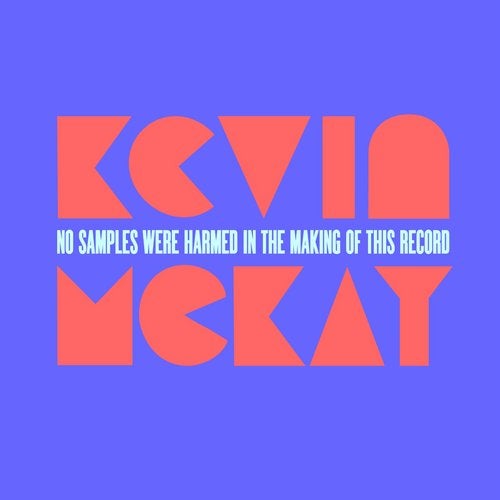
Let’s Dance – Kevin McKay: No Samples Were Harmed In The Making Of This Record (Glasgow Underground)

reviewed by Ben Hogwood

What’s the story?

Traditionally dance music has paid homage to its heroes through the sample rather than the cover version. DJs and producers have tended to use material from the originals, from complete chunks right down to the bare hi-hats, updating them for current and future dancefloors. This has often carried baggage, however, in the time spent clearing samples from their original owners and with money often having to be exchanged prior to the tracks being released.

Glasgow Underground owner Kevin McKay has taken a different approach. Removing the problem stage at a stroke, he releases an album of 14 choice house and disco covers without sampling a single note. The first fruits of this fresh angle were a joint cover with David Penn of Randy Crawford’s Hallelujah in May, followed by a take on Whitney Houston’s Million Dollar Bill in June – and now we have these freshly minted covers to enjoy as an album.

What’s the music like?

Excellent. McKay’s approach works really well, giving us new dancefloor winners but also letting us here the originals in a different light, showing us just how good they really are. The hand-picked vocalists deliver, so much so you can often sense them literally throwing their hands to the sky.

“You blow my troubles away like the winds of autumn”, goes the vocal on Hallelujah, and it’s difficult not to agree when the gospel chorus kicks in afterwards. This is arguably the pick of the tracks, though several run it close. Such A Good Feeling benefits from Joshwa’s excellent contribution, throwing off its cares completely, while the way McKay brings in the piano riff for a cover of XpansionsMove Your Body is also a thrill.

Elsewhere the version of I Got The Feeling is a Nile Rodgers-influenced high, while Million Dollar Bill is brilliantly executed, with disco bounce and classy keyboards. This track was made with Start The Party, who McKay also enlists for the immortal Donna Summer classic I Feel Love. A brave move, but he emerges intact with an excellent cover that doesn’t try to do to much with Moroder’s timeless source material.

Also well worth noting are a suitably deadpan cover of Technologic with Marco Anzalone – excellent cold bass sound here – and a well-judged version of A Deeper Love. Get Ur Freak On takes a while to get used to – the Missy Elliott original is so distinctive it’s odd to hear it done any other way – but the version of Paul Johnson’s Get Get Down, with Matt Fontaine, is spot on. That also applies for the final Start The Party collaboration, Don’t Leave Me This Way wrapping the collection up in style.

Does it all work?

Mostly. McKay has all the experience needed to make the dancefloor a heaving mass of bodies, and the vast majority of these tracks fit the blueprint comfortably. The music is at its best when disco meets house and throws in a few extras, and it is clear these covers are made with a true love of the music and its history.

Is it recommended?

Without hesitation. Who knew when it started in the late 1980s that dance music would be so durable and flexible? Albums like this only prove its longevity and continued ability to raise us from the doldrums.

Stream

Buy

You can buy No Samples Were Harmed… at Traxsource here

Switched On – Quarion: Shades (Drumpoet Community)

reviewed by Ben Hogwood

What’s the story?

Music and colour have a strong relationship of course, one that has been incredibly productive over the years – and which really came to the fore in early 20th century classical music. The bond has remained strong, particularly in electronic music with use of lights and images. It is not a great surprise, then, to find the likes of Quarion – aka Yanneck Salvo – exploiting the connection with an album of different shades. Getting the music to accurately represent a colour, however, is a harder task.

Initially Shades began as a series of EPs but soon outgrew the concept, meaning Quarion’s previously lauded single releases could be knitted together as an album and combined with a few more experimental tracks.

What’s the music like?

The icy washes of Turquoise (’99 til Infinity) begin Shades with a glacial calm, but it’s not long until Indigo (Aries) asserts a rhythm-based presence, with bleeps and percussion that suggest a Detroit influence.

Shades then shows itself to be a really strong albums of tracks that stand as well on their own two feet as they do in the longer playing context. Cobalt is excellent, and is ideally complemented by the beatless Ultramarine. Azure (Émotion), a collaboration with Ripperton, is notable for its subtle layering, while Sapphire lays more acidic squiggles into the electronic mix.

As you might expect Teal allows you to dive deep into lush, exotic textures, while Cerulean is nicely done, with attractive melodic lines and deep beats. Three of the longer tracks are over eight minutes but pass in a flash – Indigo (Aries), Cobalt (Plains) and Azure (Émotion) all develop with an impressive and compelling command of structure.

Blue is definitely the implied colour here, but there are many shades that are beautifully interwoven by Quarion’s craft.

Does it all work?

Yes, and it all feels natural too. The colours and the music behind them are strong matches, and the move between the tougher, more acidic beats and atmospheric washes of sound means that Shades embraces light and dark ends of the spectrum with ease.

Is it recommended?

Yes, strongly. In an age where some seem determined to turn their back on the album format for playlists, while others celebrate the format anew, it is a real plus to see Quarion embracing the format for all its strengths, and putting together such a coherent and ultimately danceable piece of work. From happy experience, Shades is a record that repays many repeated hearings. Ultimately it proves that even if you have been making music at the top level since 2006, as Salvo has, it’s never too late for an album!

Stream

Buy

Switched On – Detroit Love 3 mixed by Wajeed (Detroit Love / !K7)

What’s the story?

Carl Craig is building up some healthy momentum with his Detroit Love mix series. With Stacey Pullen and Craig himself having delivered techno-rich instalments, attention turns to Slum Village co-founder and Dirt Tech Reck label head Wajeed.

His is a very personal take on the city’s music, having grown up with its soul and hip hop, not to mention the rich house and techno tradition to which he has more recently moved. He describes his contribution as a selection of tracks ‘from a small group of my favourite contemporaries from Detroit and abroad’.

What’s the music like?

Pretty bouncy – at least from the start. Wajeed fires the starting gun with a couple of mid-tempo tracks with a spring in their step, 14KT’s We Out Chea and BlackloopsHigher.

Wajeed’s references to hip hop and jazz are subtle but lasting, making themselves known in Tall Black Guy’s Coffee Room before the mix heads for deeper territory with Patrice Scott and the cool vibes of The Detroit Upright.

With the mix settling into its groove quickly this is an ideal way into the evening, whether staying in or going out. If it’s the latter you will definitely benefit from Rocco Rodamaal’s Someday, a gospel-tinged number reworked by Brian Tappert rework, and from the rolling drums of Ninetoes’ Stand Up.

The sound perspective widens for D-Love Music’s Celestrial, a warm-hearted addition with its big brush strokes of spacey synths, which leads into Damon Bell’s Mermaid Blues, with persuasive vocal contribution from Camille Syfia. Roddy Rod’s Overbite has a strong bit of piano work and Matthew Law’s Minimariddim a good instinctive feel, stripping the textures back.

The bounce is back for Joss Moog’s persuasive 196, before the drums roll more for Teflon DonsGonna Tell Me. LADYMONIX gets some really good warehouse-style percussion for WhoRU, leading to the chopped up vocal of Harry Romero’s Revolution.
DJ Rimarkable’s I’m In Trouble has an excellent vocal, one of the stand-outs of the mix, and this paves the way for a closing duo of Lux’s groove The Set Up and Preslav & C. Scott with warm grooves to finish on Achey Breaky.

Does it all work?

Yes. Although Detroit Love is likely to be labelled as a techno series Wajeed proves there is going to be much more to it than that, with a commendable willingness to bring in the city’s other important forms of music commendable and definitely suited for the long term.

Is it recommended?

Yes. It will be interesting to see where Detroit Love goes next, for although we’ve had three volumes there are so many more musical back streets to navigate. Even if it heads for techno again there is a huge pool of more than able DJs from which to choose!

Stream and Buy (from November 15)