New Music – Lawrence English: The Rest Is My Ghost (Room40)

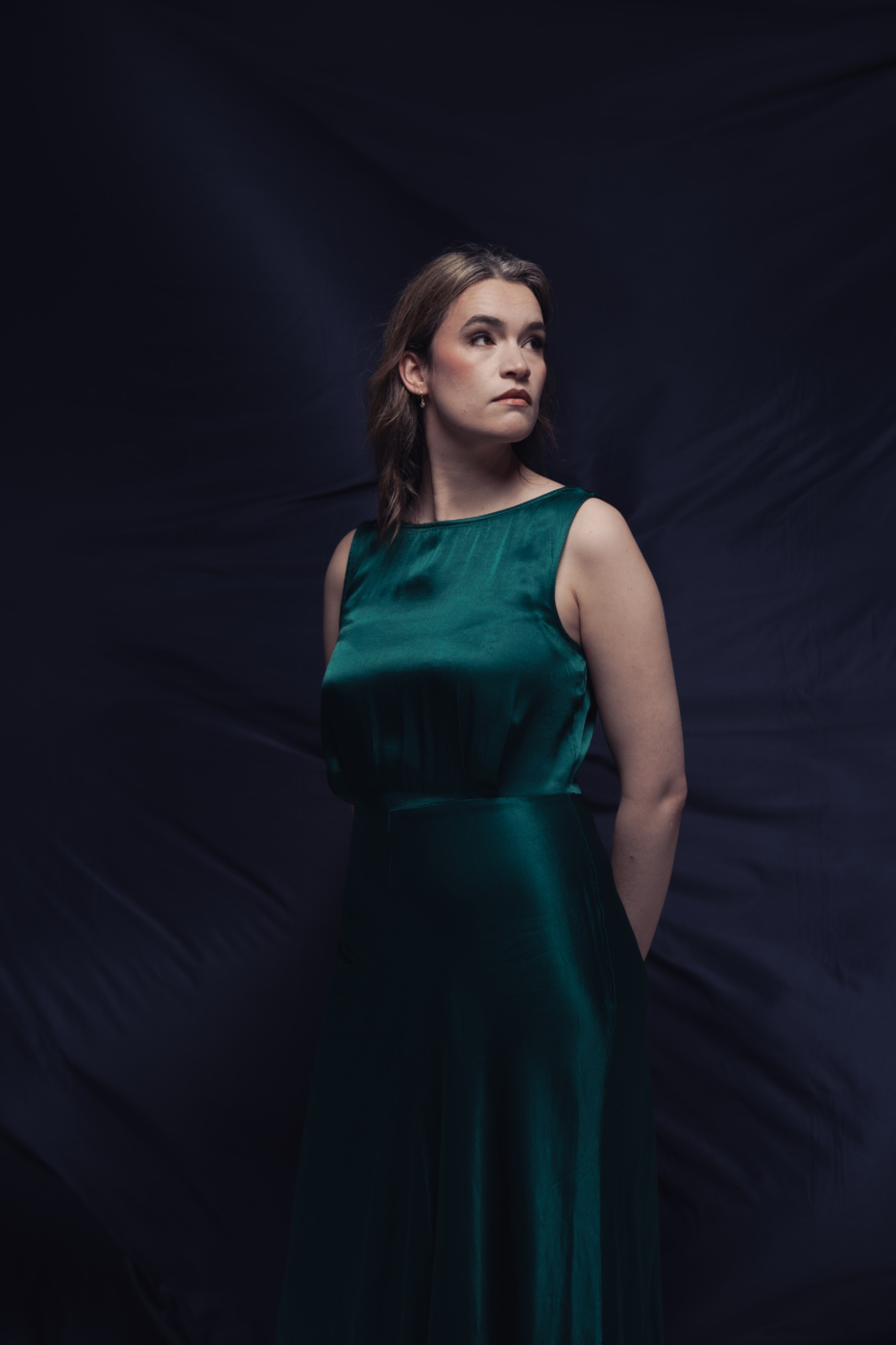
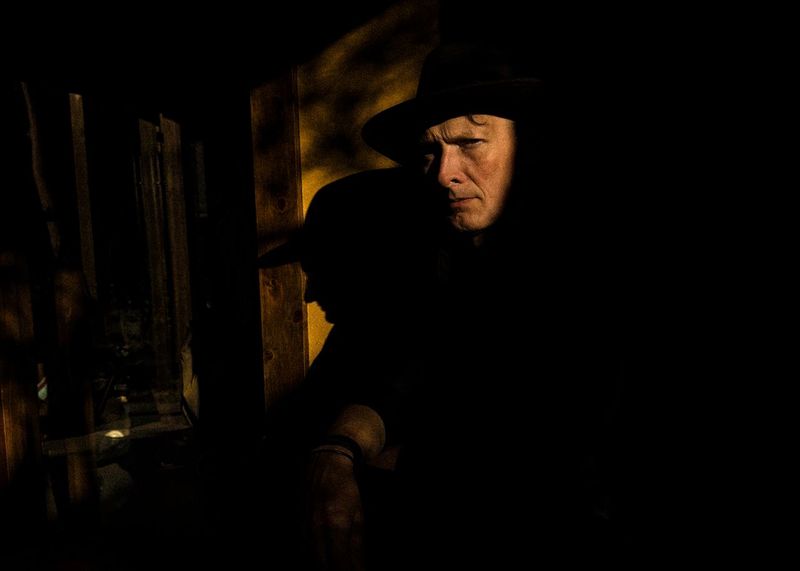
adapted from the press release by Ben Hogwood. Photo (c) F. English

Lawrence English announces a new album The Rest Is My Ghost, which is, to some extent, the conclusion of a trilogy including Wilderness of Mirrors (2014) and Cruel Optimism (2016). The album arrives on Room40 on 7th August and is preceded by the single Sodium Vapour Halo, which you can watch below:

The Rest Is My Ghost is an expression of iteration told through a kind of sedimentary layering and then erosion, a methodology which Lawrence describes as “almost geological”.

“Over the months and years, the pieces would go through massive moments of expansion and compression.” Lawrence comments. “Sometimes they’d crack wide open and something else would erupt through. I’m not always in control, and that’s what keeps me seeking in these sound worlds.”

He continues, “The players on this record are absolutely critical. In some moments, their performances were a catalyst for how a piece might evolve. In other moments, their contributions opened more subtle qualities and suggested new ways the pieces might breath. I am in awe of how people like Chris Abrahams, Madeleine Cocolas or Norman Westberg can add so much to this record through their given instruments.”

Taking in the record as a whole, the music evolves like a storm cloud – at times, it’s heavy like a downpour; sometimes lightning strikes, and sometimes there is a beam of sunlight when the storm passes. The album provides an environment in which to be consumed, one which invites us to find our own path or narrative through it.

A note from Lawrence English:

Nostalgia is not an ideology, though in this moment, we could be mistaken for thinking it might be just that. Over the past years, the idea of nostalgia has been filtered through various political and technological lenses and has become a tool used for forgetting, rather than remembering. Instead of embracing histories’ complexities and inconsistencies, this version of nostalgia seeks only singular recollection. This contemporary phenomenon of nostalgia has become a methodology at best, and a weapon at worst, used to erode the past and project forward a collapsed and unimaginably sanitised version of things, places, and ways of being from former times. It’s this projection that sees it playing a mounting role in a social pathology associated with reducing the imagined possibilities of future.

The Rest Is My Ghost is a record that interrogates the manifestations of this reductive futuring and celebrates those that have tried (and failed), and those who continue to push back against decayed and revisionist positions. It’s a record that considers the weaponisation of nostalgia for the purposes of cloaking possible futures.

In recent times, I’ve proposed a term for this weaponised use of nostalgia, something I have called Acid Nostalgia. I offer it as a shorthand to describe the de-contouring of the future through a corrosive fixation on a flatten rendering of the preceding times. It is, in part, a certain type of lazy cultural scripting where tropes of the past are presented in the absolute, as empty pictorials; photocopies without any original from which to draw actual meaning, or useful detail. Acid Nostalgia describes an increasingly common political projection of nostalgia that exists without any subjective connection to the memory surrounding and contained within it. Like acid poured onto a surface, this use of nostalgia seeks to erodes and smooth out the complexity and texture of lived connection and longing, which has until recently guided contemplations of nostalgia.

Acid Nostalgia instead erases the texture of histories and de-contours the past, and in doing so dematerialises the horizon of possibility, which by its very nature marks the beginning point for any (and all) imaginable futures. Acid Nostalgia is a dreamless screen, where uncertainty, restlessness and aspiration are subjected to corrosion, breaking down and neutralising the wellspring of futures which are birthed from within the ambiguously charged, complex and at times chaotic atmospheres of the present.

The Rest Is My Ghost is not however some universal reading of these things and happenings. Rather it draws its breath from a very personal pathway carved through my own fraught experiences of nostalgia and framed through a disparate collage of chance encounters, situations, places and provocations. It takes oblique notes from civic and architectural references such as Japan’s Metabolist movement, Hong Kong’s ‘one line sky’ and Los Angeles’s vanished Sodium Vapour lights. It interpolates texts – factual and fictional – by authors such as Franco Berardi, Kate Crawford, JG Ballard, Katsuhiro Otomo, Mark Fisher and Alexei Yurchak who have each so wonderfully sought to rupture the familiarity of now, and push us towards other ways of imaging ourselves, our surroundings and our very ways of being in this world.

I also owe a debt of thanks to Adam Curtis in helping launch what has become this edition. It was his provocation, in a conversation we shared about an overwhelming and profound sense of uncertainty around being able to predict the immediate future and how to respond to that, which sparked the earliest inklings of this edition.

The Rest Is My Ghost is ultimately a record about the promise of constructions and connections to come, material, social and political. It’s a record that accepts the fragility of failure as a source of ultimate potential, and a position from which the deepest freedom of imagination might be sought and summoned forth to conjure even the most unimaginable, (but) possible futures.

Published post no.2,880 – Thursday 7 May 2026
News – the 25th Oxford International Song Festival ‘Love Songs’, 9-24 October 2026

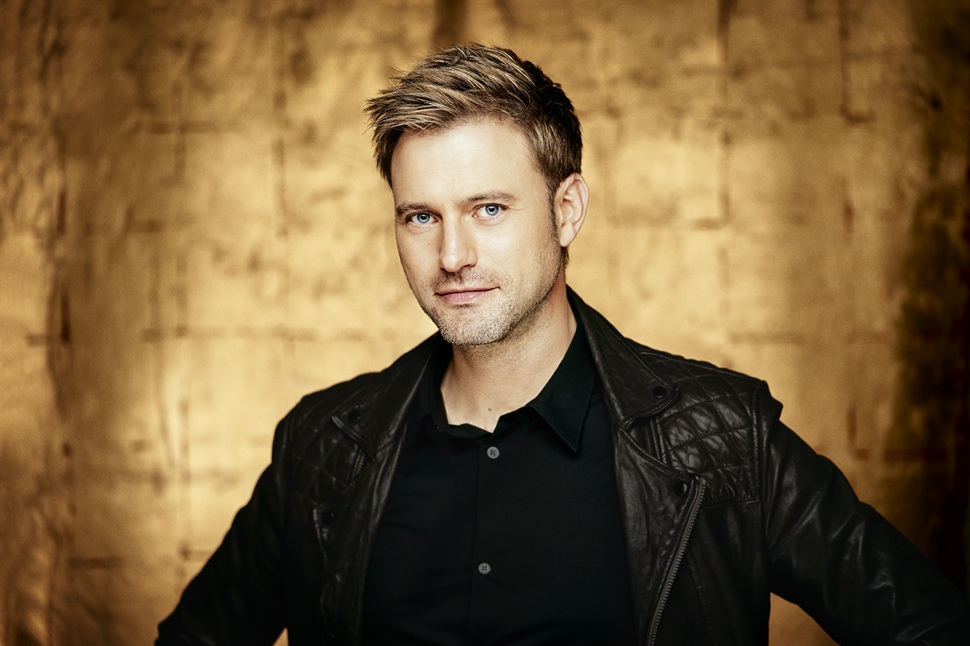
from the press release. Picture of Benjamin Appl (c) David Murano

The Oxford International Song Festival marks its 25th anniversary with a thrilling and wide-ranging programme centred on the theme of love. Spanning 59 events, the Festival explores love in its myriad forms – its joys, complexities, and heartbreaks expressed in music and poetry, and its creative force in the lives of composers and poets. Alongside headline recitals by world-leading artists, audiences can enjoy lunchtime, rush-hour and late-night concerts, as well as study events. The programme is further enriched by choral music, dance, chamber works and discussions.

The Festival opens on 9 October with a recital by Dame Sarah Connolly, also marking the Festival’s first event at the newly opened Schwarzman Centre. Baritone Matthias Goerne makes his Festival debut on 10 October with a performance of Schubert’s Winterreise at the Olivier Hall. Other featured singers include Carolyn Sampson, Benjamin Appl, Katie Bray, Roderick Williams, Alice Coote, Katharina Ruckgaber, Johannes Kammler, Camilla Tilling, Sarah Maria Sun, Anna Prohaska and Christoph Prégardien. They are joined by pianists including Joseph Middleton, Tamara Stefanovich, James Baillieu and Pauliina Tukiainen, among many others, including the Festival’s Artistic Director, Sholto Kynoch.

The programme includes several world premieres: Nardus Williams performs Marriage of…?, a new work by Associate Composer Emily Hazrati and librettist Nazli Tabatabai-Khatambahksh; Katy Thomson and Rustam Khanmurzin premiere a new work by John Webb, exploring the corrupting nature of power; and Anna Dennis and John Reid present The Silent Songs of Josefine, a bold new Kafka-inspired work by Can Bilir.

The Festival’s central weekend (17–18 October) is devoted to the music of Franz Schubert, with Graham Johnson continuing his landmark exploration of the composer’s final years, 200 years on. Other highlights of the weekend include Camilla Tilling returning to perform Schubert’s Rückert settings and Helen Charlston (below) performing Die Schöne Müllerin, both with Sholto Kynoch; and Sarah Maria Sun performing Der Hirt auf dem Felsen with pianist Jan Philip Schulze and clarinettist Julian Bliss.

On Wednesday 21 October, the New Generation Day showcases three concerts in partnership with the BBC Radio 3 New Generation Artists scheme, all recorded for future broadcast. Performers include baritone Andrew Hamilton and pianist Michael Pandya; soprano Erika Baikoff with Sholto Kynoch; and Konstantin Krimmel with Ammiel Bushakevitz, presenting a programme that includes Vaughan Williams’ Songs of Travel.

Louise Alder and Joseph Middleton explore the passing of the year in a programme featuring Helen Grime’s Seasons, written for them in 2025. Alice Coote and Julius Drake present an imaginative recital blending repertoire from David Bowie to Mozart. Renowned pianist Dame Imogen Cooper performs Hugo Wolf’s Italienisches Liederbuch as part of her final concert season before retirement. Juliane Banse returns with pianist Alexander Krichel, dancer István Simon and choreographer Andreas Heise for a danced performance of Mozart songs and piano music.

Instrumental highlights include appearances by the Carducci String Quartet, performing the Mozart Quintet with Julian Bliss and Alec Roth’s Seven Elements with James Gilchrist, guitarists Bryan Brenner and Václav Fuksa, and accordionist Murray Grainger. Eight Oxford Song Young Artist duos each give short showcase slots at the start of headline evening recitals in the first week of the Festival. In the second week, they immerse themselves in the residential Mastercourse, led by Jan Philip Schulze, with daily public masterclasses.

With thousands of tickets priced under £20, discounts for multiple bookings, and £10 tickets available for under-35s, the Festival remains accessible to the widest possible audience.

Each autumn, audiences from around the world are drawn to Oxford for the Festival’s outstanding artistic quality and the city’s unique atmosphere. Performances take place in a range of venues, including the historic Holywell Music Room – Europe’s oldest purpose-built concert hall – as well as the Levine Building, the Olivier Hall, Garsington Studios at the Wormsley Estate and, for the first time, spaces within the Schwarzman Centre.

Public booking opens on Wednesday 20 May. Tickets can be booked online at oxfordsong.org or via the Box Office on 01865 591276 (Monday to Friday, 11am–1pm).

Published post no.2,878 – Tuesday 5 May 2026

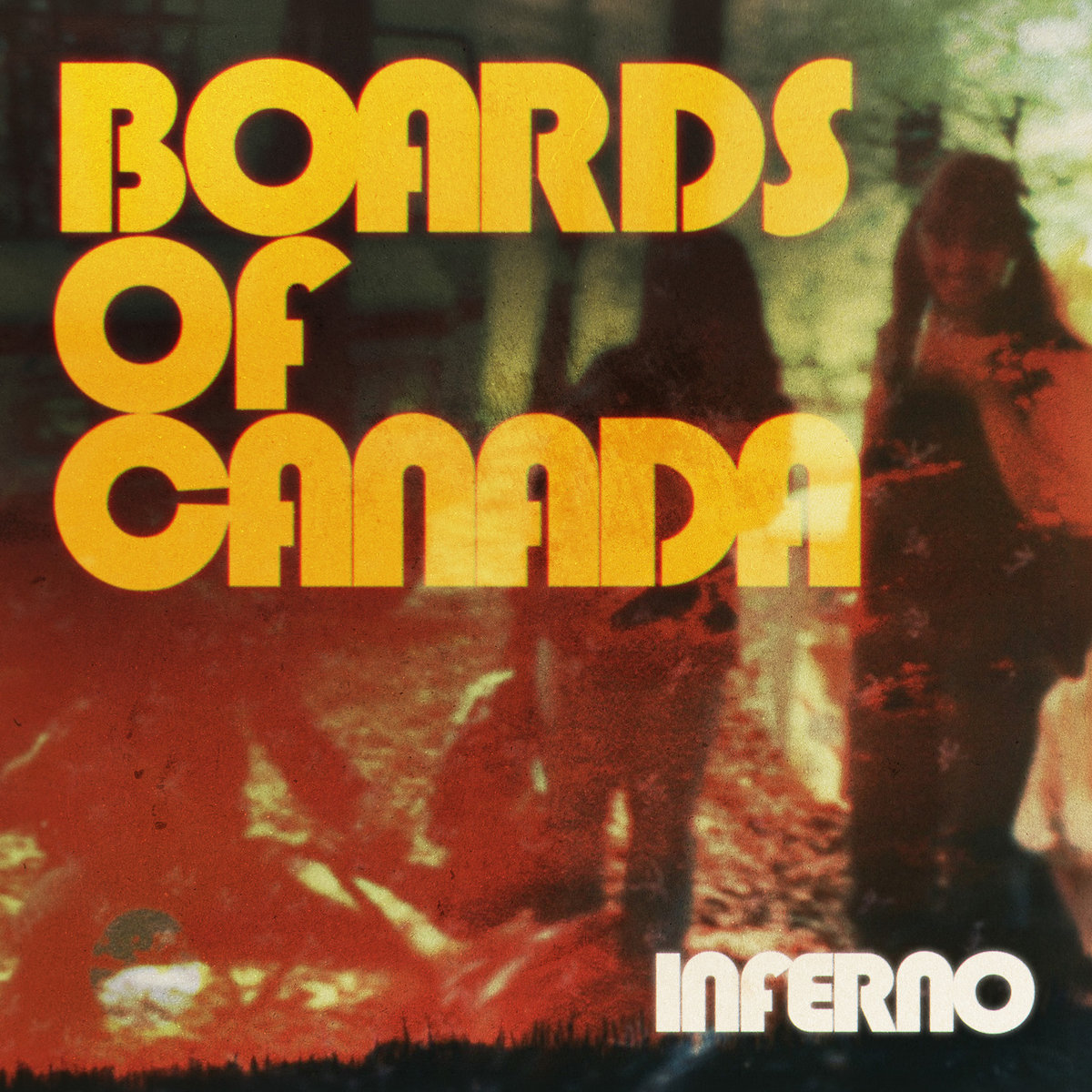
New Music – Boards of Canada – Inferno (Warp Records)

by Ben Hogwood

The rumours are true – after a protracted absence, celebrated electronic Scottish duo Boards of Canada are returning to the long player game with Inferno, to be released by Warp Records on 29 May 2026. Their first album since Tomorrow’s Harvest in 2013, Inferno has 18 tracks and lasts 70 minutes

The album announcement was prefaced by new music from the duo, Tape 05 appearing online last week – and set to take its place in the album as the fifth track, entitled Father and Son. If you haven’t heard it yet, you can listen here:

The album release is typically shrouded in mystery and creativity, though Tape 05 is an extremely promising teaser ahead of D-day.

Published post no.2,867 – Thursday 23 April 2026

New Music – Penelope Trappes: Platinum (Saint Etienne rework)

from the press release

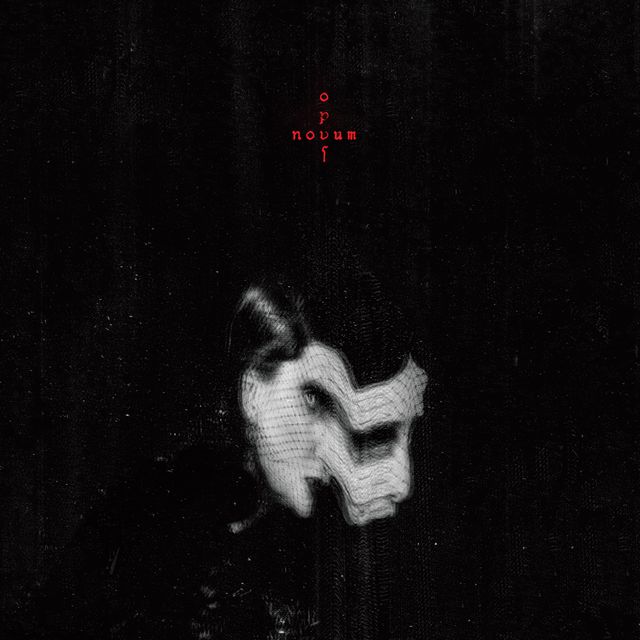
Arriving on May 29th, ‘Opvs Novum: A Requiem Reworked’ finds Penelope Trappes inviting a carefully chosen circle of kindred spirits to dismantle and reanimate the funereal intensity of her fifth full-length album ‘A Requiem’. Conceived as more than a conventional remix record, the project reframes the original work through ten distinct artistic voices.
 
Where the original album was stark, ritualistic, and inward facing, these reinterpretations expand its emotional architecture. Klara Lewis and Flora Yin-Wong sculpt their tracks into glacial drones, Gazelle Twin and PRIZMA9 heighten the gothic unease, while Midwife and Julia Holter draw out its devotional melancholy into something almost hymnal. Contributions from Stephen Mallinder (Cabaret Voltaire), Saint Etienne, Smote, Dania, and Sarahsson underline Trappes’ unique position between sacred lament and avant electronic ritual, transforming her songs into a series of spectral mirrors that refract grief through industrial pulse, haunting ambience, and dream state pop.
 
On the new version of ‘Platinum’, long-running London trio Saint Etienne bring their renowned affinity for blending electronic textures with pop sensibility to Trappes’ world, drawing out the track’s underlying sense of drama and reshaping it into a driving, hypnotic piece that balances tension with release. Leaning into the original’s melodic core and rich instrumentation, they build a dense, immersive arrangement.
 
Pete Wiggs from Saint Etienne tells us; “I love the slightly dark and cinematic moods of Penelope’s music. Platinum was a great track to mix with its haunting melody and heavenly cello arrangement – it felt just right for an ear pummeling trance-inducing rework”
 
Trappes expands; “It takes a collective energy to bring anything to life, and some of my favourite artists came together to bring their own beautifully unique energy to reinvent ‘A Requiem’. I wanted Opvs Novum to feel like an original album with an aura all of its own.
 
The ten artists here exploring these themes of death and grief are humans who have inspired and supported me. It means so much to bring them all together, and I am infinitely humbled by their transcendental creations. I thank you all. As we all comprehend our own collective grief in a world that would rather keep us separated and fearful, I hope this can be a small testament to what it means to reimagine a collective hymnal spirit.”
 
2025’s ‘A Requiem’ was a musical service in honour of the dead, a sanctuary Trappes built for herself to explore familial chaos and history. “I was looking for an equilibrium between a ‘heaven’ and a ‘hell’,” she explained at the time of release, “screaming out to the wisdom of our foremothers, surfacing and leading me into true strength and beauty. I listened to the sorrow closely. Death is a part of our reality. Inevitable. Omnipresent. But nightmares can be beautiful.”
 
The album received support from the likes of Pitchfork, The Wire, MOJO, Uncut, Record Collector, Bandcamp Daily, NPR, PROG, Electronic Sound, The Line of Best Fit, Crack, Clash Magazine, Nowness, Stereogum, Gorilla vs Bear, Resident Advisor, Futurism Restated, BBC Radio 3’s Unclassified, 6 Music’s Forever Dark, New Music Fix Daily, Lauren Laverne, Deb Grant, Tom Ravenscroft, and many more.
 
Despite formal vocal training in opera and jazz when she was younger, it was not until after her daughter was born that Penelope began writing her own music. She says coming into music later has been eye-opening, and she laments the fact that women past 30 are too often discarded by the music industry. “Creativity doesn’t go away when you get older, it flourishes, changes and grows like all of life,” she says. “It amazes me that this is still something for society to wrap its head around.”
 
Penelope released her acclaimed trilogy, ‘Penelope One’, ‘Two’ and ‘Three’, on Fabric’s Houndstooth label. In between instalments of the trilogy, she released a series of experimental EPs. She demonstrated her versatility in the extended 25-minute deep listening composition ‘Gnostic State’, and the arpeggiated electronics and minimalism on the ‘Eel Drip’ EP, inspired by Francesca Woodman’s self-portraits with eels. She also released an album of reworks, ‘Penelope Redeux’, with contributions from Cosey Fanni Tutti, Mogwai and Félicia Atkinson, and the cassette ‘Mother’s Blood’, a vocal free reinterpretation of ‘Penelope Three’, concluding with the live scoring of a one-hour film at Sonica Festival.
 
Penelope’s fourth album, ‘Heavenly Spheres’, was released in 2023 on her own Nite Hive imprint. It was composed using just piano, voice and an old reel-to-reel tape deck during a two-week artist residency for Britten Pears Arts. 2024’s ‘Hommelen’, the austere and beautifully severe result of her Halldorophone residency at EMS Stockholm, was released on Paralaxe Editions.

Published post no.2,860 – Thursday 16 April 2026

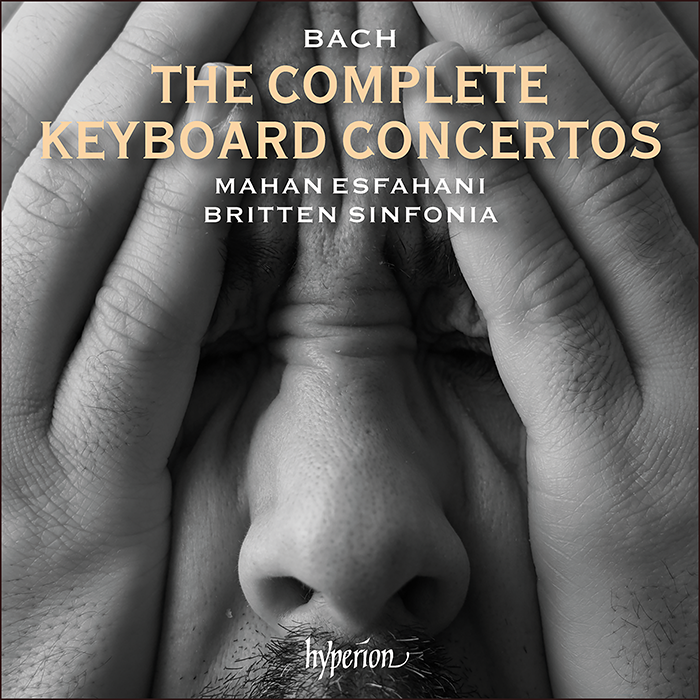
New Music – Mahan Esfahani & Britten Sinfonia – Bach: The Complete Keyboard Concertos (Hyperion)

by Ben Hogwood

Some more Bach for you, midweek…in the shape of an exciting new recording about to be released by Hyperion. Mahan Esfahani, in his quest to record Bach’s complete keyboard music for the label, has reached the keyboard concertos.

With the Britten Sinfonia he has recorded all of these works, and a taster can be heard below:

Published post no.2,859 – Thursday 12 April 2026