
New Music – Penelope Trappes: Platinum (Saint Etienne rework)

from the press release

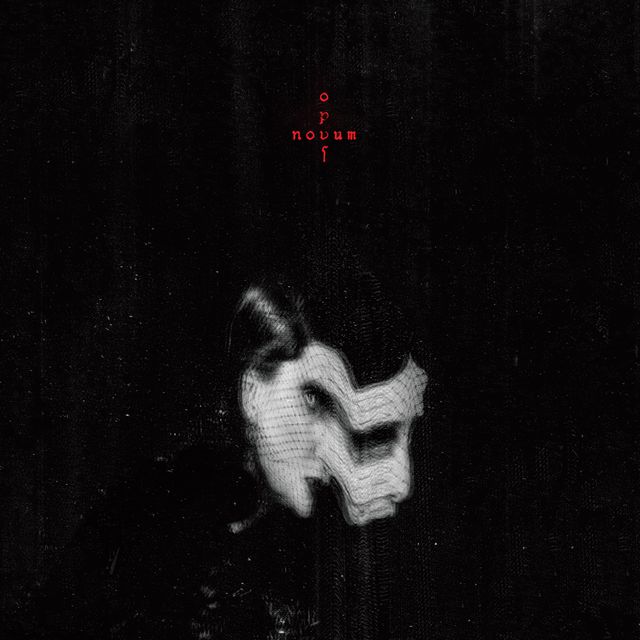
Arriving on May 29th, ‘Opvs Novum: A Requiem Reworked’ finds Penelope Trappes inviting a carefully chosen circle of kindred spirits to dismantle and reanimate the funereal intensity of her fifth full-length album ‘A Requiem’. Conceived as more than a conventional remix record, the project reframes the original work through ten distinct artistic voices.
 
Where the original album was stark, ritualistic, and inward facing, these reinterpretations expand its emotional architecture. Klara Lewis and Flora Yin-Wong sculpt their tracks into glacial drones, Gazelle Twin and PRIZMA9 heighten the gothic unease, while Midwife and Julia Holter draw out its devotional melancholy into something almost hymnal. Contributions from Stephen Mallinder (Cabaret Voltaire), Saint Etienne, Smote, Dania, and Sarahsson underline Trappes’ unique position between sacred lament and avant electronic ritual, transforming her songs into a series of spectral mirrors that refract grief through industrial pulse, haunting ambience, and dream state pop.
 
On the new version of ‘Platinum’, long-running London trio Saint Etienne bring their renowned affinity for blending electronic textures with pop sensibility to Trappes’ world, drawing out the track’s underlying sense of drama and reshaping it into a driving, hypnotic piece that balances tension with release. Leaning into the original’s melodic core and rich instrumentation, they build a dense, immersive arrangement.
 
Pete Wiggs from Saint Etienne tells us; “I love the slightly dark and cinematic moods of Penelope’s music. Platinum was a great track to mix with its haunting melody and heavenly cello arrangement – it felt just right for an ear pummeling trance-inducing rework”
 
Trappes expands; “It takes a collective energy to bring anything to life, and some of my favourite artists came together to bring their own beautifully unique energy to reinvent ‘A Requiem’. I wanted Opvs Novum to feel like an original album with an aura all of its own.
 
The ten artists here exploring these themes of death and grief are humans who have inspired and supported me. It means so much to bring them all together, and I am infinitely humbled by their transcendental creations. I thank you all. As we all comprehend our own collective grief in a world that would rather keep us separated and fearful, I hope this can be a small testament to what it means to reimagine a collective hymnal spirit.”
 
2025’s ‘A Requiem’ was a musical service in honour of the dead, a sanctuary Trappes built for herself to explore familial chaos and history. “I was looking for an equilibrium between a ‘heaven’ and a ‘hell’,” she explained at the time of release, “screaming out to the wisdom of our foremothers, surfacing and leading me into true strength and beauty. I listened to the sorrow closely. Death is a part of our reality. Inevitable. Omnipresent. But nightmares can be beautiful.”
 
The album received support from the likes of Pitchfork, The Wire, MOJO, Uncut, Record Collector, Bandcamp Daily, NPR, PROG, Electronic Sound, The Line of Best Fit, Crack, Clash Magazine, Nowness, Stereogum, Gorilla vs Bear, Resident Advisor, Futurism Restated, BBC Radio 3’s Unclassified, 6 Music’s Forever Dark, New Music Fix Daily, Lauren Laverne, Deb Grant, Tom Ravenscroft, and many more.
 
Despite formal vocal training in opera and jazz when she was younger, it was not until after her daughter was born that Penelope began writing her own music. She says coming into music later has been eye-opening, and she laments the fact that women past 30 are too often discarded by the music industry. “Creativity doesn’t go away when you get older, it flourishes, changes and grows like all of life,” she says. “It amazes me that this is still something for society to wrap its head around.”
 
Penelope released her acclaimed trilogy, ‘Penelope One’, ‘Two’ and ‘Three’, on Fabric’s Houndstooth label. In between instalments of the trilogy, she released a series of experimental EPs. She demonstrated her versatility in the extended 25-minute deep listening composition ‘Gnostic State’, and the arpeggiated electronics and minimalism on the ‘Eel Drip’ EP, inspired by Francesca Woodman’s self-portraits with eels. She also released an album of reworks, ‘Penelope Redeux’, with contributions from Cosey Fanni Tutti, Mogwai and Félicia Atkinson, and the cassette ‘Mother’s Blood’, a vocal free reinterpretation of ‘Penelope Three’, concluding with the live scoring of a one-hour film at Sonica Festival.
 
Penelope’s fourth album, ‘Heavenly Spheres’, was released in 2023 on her own Nite Hive imprint. It was composed using just piano, voice and an old reel-to-reel tape deck during a two-week artist residency for Britten Pears Arts. 2024’s ‘Hommelen’, the austere and beautifully severe result of her Halldorophone residency at EMS Stockholm, was released on Paralaxe Editions.

Published post no.2,860 – Thursday 16 April 2026

On Record – Saint Etienne: International (Heavenly Recordings)

by Ben Hogwood

What’s the story?

After 35 years as a successful pop trio, Saint EtienneSarah Cracknell, Bob Stanley and Pete Wiggs – are finally calling time on their career as a group.

International is the last of their thirteen studio albums, and also the most collaborative, with spots for Tom Rowlands of The Chemical Brothers, Confidence Man, Vince Clarke, Paul Hartnoll, and – strikingly – Nick Heyward.

What’s the music like?

Late summer is the perfect time to be releasing an album like this. Perhaps inevitably there is a rich element of nostalgia, but there is no sitting on laurels or wallowing in sadness – though it has to be said the final few tracks leave a tear in the eye.

Rather, it is more of the same – slightly arty pop but with really rewarding diversions in league with the guests. The breezy Brand New Me, with Confidence Man, is a treat, Cracknell at her most winsome in the vocal. Glad is of a similar vintage, pointing towards the club in Tom Rowlands’ production. Already at the venue are Paul Hartnoll and Vince Clarke, with the former’s work on Take Me To The Pilot creating visions of a 1990s basement. Clarke’s work on Two Lovers is more reflective, but again ideally suited to Cracknell’s versatile voice, which has many more tones than we often give it credit for.

The Nick Heyward collaboration Gobetweens is a lyrical and musical treat, rhyming ‘Letraset’ with ‘internet’ to emphasise the contrast between the late 1980s of the band’s forming and the technology now. Facebook also falls under the microscope, a subtly dismissive take in the closing The Last Time. This is where everything comes to a head and a tear comes to the eye, Saint Etienne’s final statement leaving us all a bit emotional.

Does it all work?

It does – for one last time. This is a winsome collection, the band playing to their strengths, and clearly having fun right up to the end.

Is it recommended?

It is essential for Saint Etienne devotees to have the band’s final album as a keepsake; all the more so when it is revealed to be an ideal summing up of their achievements. Equal parts tenderness and attitude, it does exactly what they promised, delivering bittersweet pop winners that cover nostalgia and the future with panache. A wholly appropriate signing-off.

For fans of… Goldfrapp, Happy Mondays, The Cardigans, Divine Comedy

Listen / Buy

Published post no.2,666 – Tuesday 23 September 2025

On Record – Saint Etienne: The Night (Heavenly Recordings)

by Ben Hogwood

What’s the story?

Saint Etienne’s twelfth album, their first in three years, is written as an antidote to the chaos of daily life, an ambient complement to the sheer speed and noise of 21st century life.

Pete Wiggs captures its essence: “We wanted to continue the mellow and spacey mood of the last album, perhaps even double down on it, but it’s a very different album, not based on samples; Songs, moods and spoken pieces drift in and out whilst rain pours down outside. It’s the kind of record I like to listen to in the dark or with my eyes closed. Half Light is about the edge of night, the last rays of the sun flickering through the branches of trees, communing with nature and seeing things that might not be there.”

Bob Stanley also expressed an interest the band had in finding the state between wakefulness and sleep, a kind of dream space with broken-up thoughts and random memories.

What’s the music like?

Soothing, sonorous and often beautiful. Sarah Cracknell’s voice proves ideal for such an ambient sojourn, whether in spoken word or in the soft vocal tracks that are dotted through the album.

The field recordings create an easy ambience, dressing the music with thoughts that drift in and out of focus. The music, too, finds sharp points of reference among its foggier reminiscences. The clarinet is put to fetching use on the wistful When You Were Young, which has a beautiful chorus – as does Nightingale.

No Rush brings a mottled beauty to its slowly shifting chords, not a million miles from the Romanza of Vaughan Williams’ Symphony no.5 in its ability to stop the senses. Gold is more obviously song-based, while Preflyte opens out into wider textures, bells tolling before Cracknell’s heartfelt vocal. Hear My Heart is a beauty, the voice against a windswept canvas.

Does it all work?

It does. Saint Etienne are masters of pop music dressed with a forlorn beauty, but this clever use of field recordings and textures shows them to be equally adept at making music that supports relaxation of the mind.

Is it recommended?

Enthusiastically. The Night achieves just what it set out to do, which is to provide an antidote to the over stimulation we receive in our daily lives. It is an understated beauty.

For fans of… Broadcast, Stereolab, Yo La Tengo, Bibio, Cocteau Twins

Listen and Buy

Published post no.2,399 – Friday 20 December 2024

On Record – Saint Etienne: I’ve Been Trying To Tell You (Heavenly)

saint-etienne

reviewed by Ben Hogwood

What’s the story?

For their tenth album, Saint Etienne have taken a trip down memory lane. The trio of Bob Stanley, Pete Wiggs and Sarah Cracknell have all been recalling events, thoughts and emotions from 1997 to 2001, a period when the UK was basking in rarefied optimism under New Labour. Was it all a bad dream? Was it as good a time as people thought?

Using samples and clever production techniques, the trio pose these questions and more, in the form of a sample-based album that uses clips from the time period. For the first time – presumably for lockdown reasons – the album was recorded remotely, with no need for a studio – and with assistance from composer Guy Bousfield, who wrote two songs on the album.

What’s the music like?

Very relaxed and dreamy, even for a Saint Etienne album. It is much less song-based than is the norm for the trio, and the aim of the gentle memory jogging is subtle rather than firmly pointed. The focus on sonic snippets and the dubby, instrumental approach could easily be teleported from the period in question. We hear less from Sarah Cracknell as a vocalist, but that means that the times she does appear are accentuated, her phrases given extra importance. The profile of the music yields more satisfaction with each listen, as the manipulation of the samples is made clearer.

The samples themselves are unexpected – with appearances for Honeyz, The Lightning Seeds, Lighthouse Family and Samantha Mumba that if anything emphasise the musical distance we have put between ourselves and the period in focus. The field recordings have a more immediate effect of how society might have been before the pandemic, creating their own form of yearning.

Cracknell it is who starts the album, with several vocal lines competing for the foreground in Music Again, where a loping beat ebbs and flows gently. Fonteyn pans out even further, with the wide open natural spaces including birdsong at the end – a quality shared by many recently-released albums, recorded under lockdown conditions. Fonteyn segues into the gorgeous Little K, a warm fuzz of a track with dappled harp and sun-blushed ambience.

Blue Kite is glitchy in profile, drifting in and out of focus, before working up more of a head of steam. Pond House has a slow, wide open beat with a woozy texture, enhancing the dream state along with Cracknell’s ‘here it comes again’ loop. The singer comes to the front of the virtual stage for Penlop, a lullaby in all but name that calms the senses, before the gentle lapping of Broad River completes the recollections.

Does it all work?

Yes. Albums rooted in nostalgia often make the mistake of over-using the rose tinted spectacles in their longing backwards glances, but if anything I’ve Been Trying To Tell You does the opposite, in an unforced but gently nagging way.

The album is more a single construction than previous Saint Etienne long players, its relative lack of songs compensated by the bigger overall structure.

Is it recommended?

It is. I’ve Been Trying To Tell You poses as many questions as it answers, and although it works extremely well as an album to get horizontal with, there are many layers to its genius. It subtly but pointedly asks where the UK is now, where it is going, and were we all sold a dummy as the millennium approached?

There is an accompanying film from photographer Alasdair McLellan but the music for I’ve Been Trying To Tell You creates its own beautifully rendered imagery for the listener to lose themselves in. It is a rather lovely album.

Stream

Buy