On record: IN-IS: Seven Days (BDi Music Ltd)

in-is

Summary

Sheridan Tongue has always written music for others. In the course of writing music for film, TV and adverts he has earned himself a number of plaudits, not least a BAFTA nomination for Best Original Music on the acclaimed BBC drama Spooks. His work with Robert Plant, Blur and Beverley Knight – among many others – has given him pop sensibilities to go with his prowess as an arranger and orchestrator.

Seven Days has a personal story, though the listener is invited to discover it for themselves. On his blog Tongue indicates how it hit him during the recording session that he was finally making music for himself.

What’s the music like?

Extremely well crafted, and shot through with deep feeling. Tongue’s writing for strings produces some beautiful sounds and chords, but crucially he has the melodies to go with them too.

Scarlette In Love is a good example, with its richly toned cello solo, sounding more than a little like an ITV drama theme – Broadchurch, perhaps, while the opening title track is brilliantly constructed, working a memorable and subtly powerful loop to mesmeric effect with resonant violins. The closing Chorale Wo Soll Ich Fliehen Hin is an eerie update of Bach to muted string orchestra, extending its cold and icy tendrils around a melancholy line for violas.

The mood of Seven Days is essentially one of contemplation, but Tongue adds the light and shade of personal experience to create something much more meaningful.

Does it all work?

Yes. The voice of experience works well here, and although Seven Days is a relatively short listen it is a beautifully written and executed piece of work.

Is it recommended?

Yes. There are a lot of composers writing in this form, which reflects just how popular music for small orchestra or strings can be, with or without classical influences. Seven Days falls squarely between the two forms, and Sheridan Tongue’s craft, application and melodic gifts ensure he is up there with the best writers in his field.

Ben Hogwood

Listen on Spotify

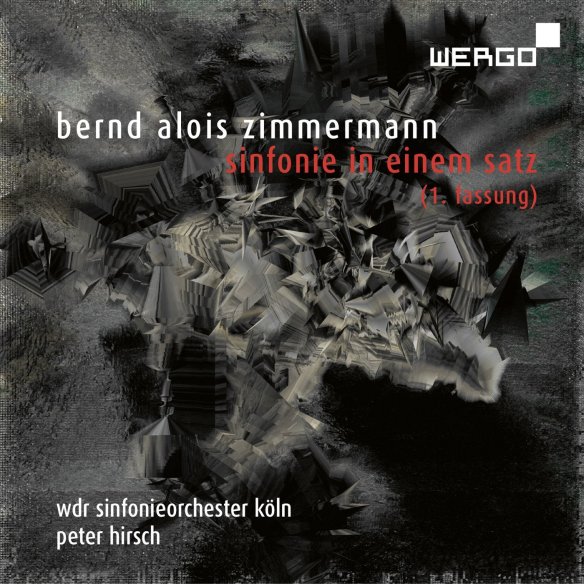
On record: Zimmermann: Symphony in One Movement (Wergo)

zimmermann

Zimmermann: Symphony in One Movement (1951), Giostra Genovese (1962), Concerto for Strings (1948), Musique pour les soupers du Roi Ubu (1966)

WDR Symphony Orchestra Cologne / Peter Hirsch

Summary

Wergo continues its long-term edition devoted to Bernd Alois Zimmermann (1918-70) with this collection of orchestral pieces spanning the greater part of his composing. This is the third such release under the direction of Peter Hirsch – who, as with Zimmermann, hails from Cologne.

What’s the music like?

As varied as Zimmermann’s output when taken overall. Earliest is the Concerto for Strings, derived from a string trio of four years before and whose trenchant ‘Introduction’, plangent ‘Aria’ and incisive ‘Finale’ evince the expected influences of Bartók and Hindemith but also Karl Amadeus Hartmann – conscience of German music during the Third Reich and mentor to numerous post-war composers.

Among the most striking of Zimmermann’s earlier works, the Symphony in One Movement is heard in the 1951 original which, less cohesive than the 1953 revision (transitions tend to be overly rhetorical), impresses with its emotional intensity and visceral organ writing. Coldly received at its premiere, the music’s expressionist manner can now be heard as ahead of rather than behind its time – any formal imperfections arising from recklessness rather than uncertainty of purpose (as in the original version of Varèse’s Amériques when compared to its revision). The composer’s observation that this work ends at the point where symphonic evolution might usually commence never felt more apposite.

The remaining two pieces are closely intertwined conceptually. Zimmermann had previously arranged selections of ‘early’ music for radio broadcast, but with Giostra Genovese he took dances by Susato, Byrd and Gibbons then transformed them to ironic, alienated and even threatening effect. A portent to similar, more self-conscious, stylistic practices by Schnittke and Maxwell Davies, it was later withdrawn and reworked as Musique pour les soupers du Roi Ubu – the ‘Ballet noir’ such as marks the climax of the composer’s ever more fraught relationship to music from the past.

Here those initial dances are overlaid with quotations of other composers and given a serrated edge in scoring for wind and percussion. The blackly humorous scenario sees the personnel of a liberal arts academy humiliated then executed at the hands of Alfred Jarry’s loutish ruler; a back-handed response to Berlin’s Akademie der Künste that had recently elected him a member, not least the final ‘Marche du décervellage’ with its collision of Wagner, Berlioz and Stockhausen in an apotheosis of unsparing violence.

Does it all work?

Yes, with the proviso Zimmermann’s music is increasingly not about stylistic integration or expressive poise. His concept of the ‘spherical plurality of time’, much in evidence here, may be difficult to explain yet is easy to comprehend through the visceral medium of his music.

Is it recommended?

Indeed. Those who respond to these works might consider widening their listening context with the String Trio (as recorded by Trio Berlin on Wergo) and revised version of Symphony in One Movement (an incendiary live account by Witold Lutosławski on Berlin Classics, or no less authoritative one by Günter Wand on Hänssler Profil). The present disc finds Hirsch securing a committed response from the forces of Cologne Radio Symphony, vividly recorded, as well as penning an informative booklet note. Those new to Zimmermann should start here.

Richard Whitehouse

Further information at https://en.schott-music.com/shop/autoren/bernd-alois-zimmermann

On record: Brian Eno – Reflection (Warp)

eno-reflection

Summary

After the musical horror story that was 2016, it is perhaps important to remember there were some good bits along the way as well. One of those very much still with us is Brian Eno, who released the excellent album The Ship in April last year.

The timing of this new ambient album – 1 January 2017 – seems to be making a statement that this should be a year where we start to look forward again, embrace the idea of new music and allow it to soothe our furrowed brows.

What’s the music like?

Reflection is nothing new. That is not a criticism, more an observation that this single-movement work, continuing themes explored in Discreet Music of 1975 and Thursday Afternoon ten years later, retains all of the Brian Eno signature brushstrokes and textures.

From the first flourish of notes the mood is immediately set, and Reflection changes very little over the course of the next hour. After a few listens, however, the structure becomes more obvious and it also becomes clear that there is actually an exquisite tension at work, Eno setting down one pitch centre (G) and gradually working against it with notes based more in the area of C. He does this very subtly, and with consonant harmonies, so there is never any explicit threat to the peaceful nature of the writing, but there are little flecks of dissonance.

As the piece progresses it becomes like a lunar body on a slow journey, with the passing of twinkling stars and unblinking planets all around. Some of these are faster moving bodies, leaving tracers in the sky, while others are slow and ponderous, taking a while to go by. The music does become more animated but not by much, and fades into the distance gracefully.

Does it all work?

It all depends on where you listen to it. Headphones are recommended, and public transport, where the album has mostly been experienced, is the ideal setting. Eno manages to do just enough to avoid Reflections becoming pure background music, but if it is experienced as that it is at once calming and soothing, if a little on the dark side. The occasional frissons of tension keep the listener from sinking into complete complacency.

Is it recommended?

Yes. It is another example of Brian Eno’s mastery of the longer ambient structure, even though Reflections does not have any particular surprises in store. It puts the listener in a heightened state of mindfulness, definitely not a bad thing at this point in January!

Ben Hogwood

Listen on Spotify

On record: Havergal Brian – Symphonies 2 & 14 (Dutton Epoch)

havergal-brian


Havergal Brian Symphonies – No. 2 in E minor (1931); No. 14 in F minor (1960)

Royal Scottish National Symphony Orchestra / Martyn Brabbins

Summary

Dutton continues its traversal of Havergal Brian’s symphonies in the company of the Royal Scottish National and Martyn Brabbins, whose live recording of the Gothic symphony from the 2011 Proms (Hyperion CDA67971/2) confirmed a Brian interpreter of real perception.

What’s the music like?

Brabbins and the RSNO make a persuasive case for the Fourteenth Symphony, unheard since its premiere by Edward Downes in 1969 and here receiving its first recording. In his seminal study of Brian’s symphonies (Kahn & Averill), the late Malcolm MacDonald considered this to be the worst of the whole cycle – but it has arguably greater cohesion than the comparable one-movement works on either side; notably with the brooding introduction that segues into a resolute Allegro then a ‘slow movement’ whose restiveness is typically Brian. The return of the Adagio as a formal pivot brings the most dramatic music, but neither the intermezzo nor Allegro sections that follows sustains momentum on the way to a brutally decisive coda. Less than the sum of its best parts, No. 14 is by no means the low-point as has often been credited.

Brian was never to hear his Second Symphony, its first performance by Leslie Head in 1973 followed in 1979 by a broadcast with Charles Mackerras. An earlier studio recording by Tony Rowe and the Moscow Symphony (Naxos 8.570506) did it scant justice, but Brabbins gets far closer to the heart of a work inspired by Goethe’s play Götz von Berlichingen, and described by Brian as representative of ‘‘MAN in his cosmic loneliness: ambition, loves, battles, death’’.

With its glowering woodwind and stark pizzicato strings over three sets of timpani, the first movement’s Adagio introduction is a striking invention and if the main themes of its Allegro are a little inflexibly drawn, Brabbins ensures their purposeful correlation through an eventful development and on to a coda that collapses into darkness. Even finer is the slow movement whose sequence of developing variations on a plangent cor anglais melody which finds Brian at his most questing harmonically; its dense textures scrupulously rendered here. The scherzo adds eight horns – making a total of 16 – organ and two pianos to a large orchestra, though its surging climactic pages are less memorable than the expectant and resigned music either side. A funereal procession, the finale’s Wagnerian gestures do not impede its powerful unfolding to an eloquent episode for divided cellos, before it builds to a baleful climax and fateful close.

Does it all work?

For the most part, yes. Undeniably among Brian’s lesser symphonies, the Fourteenth can at last be judged on its own terms (the central climax arresting in context), while the Second’s head-on confronting of late-Romantic symphonism at the height of European neo-classicism yields often impressive results; not least in the oblique rhetoric of its Andante (might Brian have heard Henry Wood’s Proms performance of Myaskovsky’s Silentium in 1929?). The status of Brian as one of the last century’s most individual composers is further reinforced.

Is it recommended?

Indeed. As on previous Dutton releases, the sound yields admirable detail within its spacious sound balance, with John Pickard’s notes as extensive as they are informative. A worthwhile coupling of these contrasted yet characteristic works from different periods of Brian’s output.

Richard Whitehouse

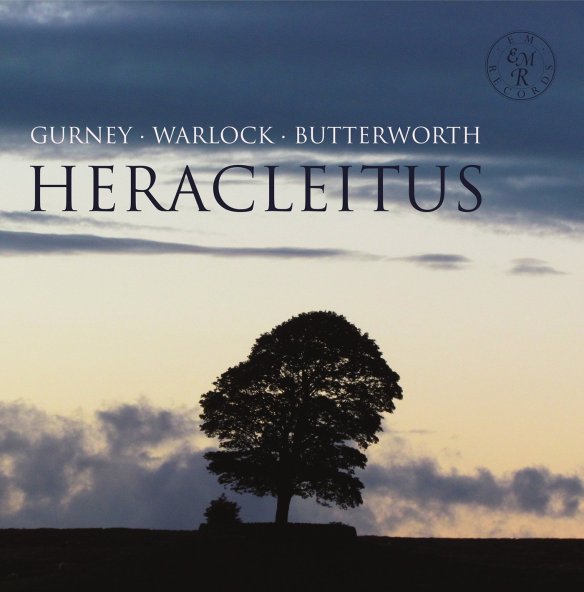
On record: Heracleitus (EM Records)

heracleitus

Butterworth: Songs (1910/11)*/** – When the Lad for Longing Sighs; Bredon Hill; On the Idle Hill of Summer; With Rue My Heart is Laden. Songa (1911/12)*/** – Fill a Glass with Golden Wine; On the Way to Kew

Gurney: Ludlow and Teme (1919)*/**/***. Adagio (1924)***. Songs*/** – The Cloths of Heaven (1918); Severn Meadows (1917); By a Bierside (1916).

Warlock: Songs */*** – Heracleitus (1917); Sweet Content (1919)

*Charles Daniels (tenor); **Michael Dussek (piano); ***Bridge Quartet [Colin Twigg, Catherine Schofield, violins; Michael Schofield, viola; Lucy Wilding, cello]

Summary

The centenary of the Battle of the Somme has seen various commemorations in music, with this latest release from EM Records among the most significant. It centres on two composers – one of whom died during the Somme offensive, while the other never recovered from being gassed at Passchendaele the next year. The disc also opens-out appreciation of their output in featuring autonomous pieces for string quartet and as accompaniment to several of the songs.

What’s the music like?

All these forces are brought together in Ludlow and Teme, Ivor Gurney’s song-cycle on verse from A.E. Housman’s collection A Shropshire Lad. A notable though unstable creative force in those years after the cessation of war, it was long considered among Gurney’s largest and most inclusive works; its expressive range more than compensating for any lack of sustained intensity across its six songs. One of these, ‘On the Idle Hill of Summer’, was set by George Butterworth prior to the War – his version confirming both a greater emotional lightness and textural subtlety which are no less apposite. Also included are two Butterworth settings of W. E. Henley, suffused by that dry wit and wistful charm emblematic of the Edwardian era. The disc closes with more Gurney – moving backwards in time so the pathos of W.B. Yeats’s The Cloths of Heavens, and poignancy of the composer’s Severn Meadows, is rounded-off by the eloquence of John Masefield’s By a Bierside in what ranks among Gurney’s greatest settings.

Two songs by Peter Warlock (aka Philip Heseltine, who seems to have avoided conscription via a mixture of guile and happenstance) are among several conceived with accompaniment for string quartet, and have been idiomatically arranged as such by John Mitchell. Of these, Heracleitus is a setting of W.J. Cory (after Callimachus) as evinces the influence of Bernard van Dieren in its sombre tread and harmonic richness, while that of Thomas Dekker’s Sweet Content exudes the chic vacuity which is often to be encountered in Warlock’s lesser songs.

The other two works are also first recordings. Odd that Butterworth’s Suite for String Quartet should have had to wait 15 years since publication, as it is the composer’s largest extant piece and offers valuable insight into his wresting with abstract forms. The opening Andante is well argued, though the Scherzando and Allegro might profitably have been integrated, while the fourth movement is insufficiently contrasted with a final Moderato whose faltering progress is indication of a project lacking the ultimate focus. Not so the Adagio from a String Quartet in D minor, seemingly the only surviving chamber work from Gurney’s final manic outburst of creativity and whose heightened emotion bodes well for a hearing of the complete work.

Does it all work?

Yes, when seen as an overall programme that skilfully interweaves its vocal and instrumental items to give a thoughtful and revealing portrait of the two main composers featured herein.

Is it recommended?

Indeed, not least as the contribution of Charles Daniels (best known for his interpretation and editions of Baroque music) is so attuned to the songs in question. Michael Dussek is as ever an attentive accompanist, and the Bridge Quartet continues its persuasive exploration of English music. Both recording and annotations are up to the customary high standard of EM Records.

Richard Whitehouse

For more information on their extensive catalogue of English music, visit the EM Records website