Ben Hogwood writes about the first release from an environmentally conscious label.
The first long playing release on Caught By The River’s Rivertones imprint, Be is the simply-titled moniker used by a group of musicians assembled to highlight the importance of the honeybee, their aim to provide a soundtrack for the UK pavilion at Expo 2015. The musicians, headed by Wolfgang Buttress, include the Sigur Rós string section Amiina, Jason Pierce of Spiritualized, Youth and cellist Deirdre Bencsik.
What’s the music like?
Extremely restful. The musicians of Be make their points with great subtlety, using field recordings to aid the imagination of natural sounds as they might be heard by the honey bees themselves.
The Journey, the first extended piece of nearly twenty minutes, begins with the clicking sound of the wren, the chirp of a singing robin and the buzz of the bees. Gradually shimmering strings come into view and a pure chord of C major is established, and then sits suspended in mid-air. The music is deceptive, for although it moves very slowly closer inspection reveals a lot of activity – rather like a beehive.
Bencsik’s cello comes into its own on the following piece Into, given expansive freedom over a soft, consoling piano phrase. Each piece of music is lovingly prepared, but given all the room it needs.
Does it all work?
Yes – this is music for the hazy atmosphere of a sunny early morning, requiring absolutely no effort to enjoy. For background listener it provides an ideal and lasting ambience, while closer inspection reveals the detail of the honeycomb in lovely technicolour. As you might expect from anything headed by Caught By The River, there are some beautiful images in the accompanying booklet, given the love and attention the music deserves.
Is it recommended?
Yes. A set of music that will calm even the most anxious of minds!
Listen on Spotify
You can judge for yourself by hearing the album on Spotify here:
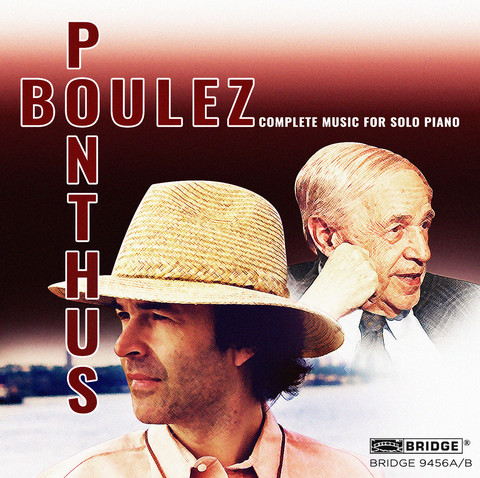
Boulez: Complete Music for Solo Piano [Piano Sonatas – No. 1; No. 2; No. 3 (movements 3a and 2). 12 Notations; Incises (revised version), Un page d’éphéméride]
Marc Ponthus (piano)
Summary
Marc Ponthus, an American pianist in the lineage of Charles Rosen and Paul Jacobs, tackles the (nominally) complete piano music of Pierre Boulez – a select though vital body of work particularly in terms of understanding his evolution over the first decade of creative maturity.
What’s the music like?
Boulez’s meteoric rise to the forefront of the European avant-garde is much in evidence here. Withdrawn for over four decades, the set of 12 Notations (1945) is both an investigation and critique of the serial thinking absorbed from Schoenberg and Webern – brief though eventful miniatures at once intriguing and sardonic.
Ponthus renders them with due precision, then is no less perceptive in the First Piano Sonata (1946) whose two compact movements unfold in respectively speculative and incisive terms. The Second Piano Sonata (1948) is the climax of this phase, its outwardly orthodox four-movement design acknowledging while dismantling Classical antecedents via an often assaultive virtuosity of which Ponthus is fully in command. Those who might know Maurizio Pollini’s magisterial 1976 account will find this version a worthy successor.
Boulez’s subsequent piano music parallels the ambivalence of his work as a whole. Envisaged as an ambitious five-movement format, only the second and third movements (the latter in its retrograde version) of his Third Piano Sonata (1957) have been published – Ponthus relishing glacial expressive contrasts in Constellation-Miroir then underlining the ingenious variation process of Trope.
Incises (1994) began as a competition test-piece, expanded with this 2001 version into a fantasy of headlong dynamism and suspenseful inaction. It might have served as springboard for a concertante piece that remained unrealized, while Un page d’éphéméride (2005) was intended as starting-point for a piano cycle that never was; what remains is a four-minute étude whose enticing sonority and glistening filigree denote the sure hand of a master.
Does it all work?
Yes, but just how and why depends on listeners’ insight into and understanding of a tradition such as Boulez approached via an engaged antagonism that did not atrophy so much as open-out experientially over time. Those who value their musical preconceptions should steer clear.
Is it recommended?
Indeed, with the proviso that the original version of Incises might have been included, as also the opening Antiphonie movement (given at Aldeburgh only last year) of the Third Sonata. The sound has unsparing clarity, with the booklet note and interview a mine of information.
Richard Whitehouse writes about the long-awaited re-release of a landmark album.
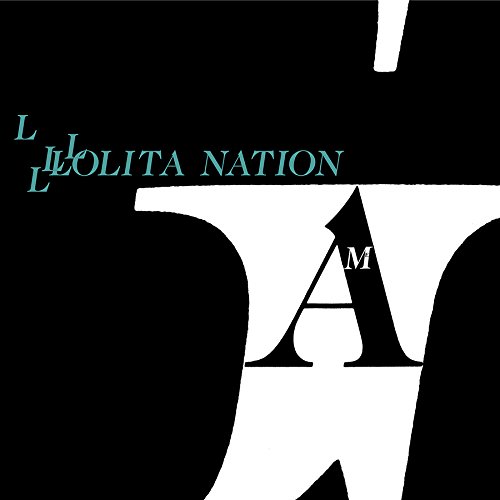
2016 is unlikely to see any more significant reissue than this. For two decades, Lolita Nation has been more talked about than heard – an album which bridged the perceived divide between power pop and college rock, transcending genres for one of the seminal albums of the decade.
How did it come about?
By 1987, Game Theory was a seasoned outfit whose two previous releases – the edgy pop of Real Nighttime and the versatile rock of The Big Shot Chronicles – paved the way for what its leader Scott Miller intended to be both an ambitious summation and reckless leap in the dark. At nearly 75 minutes and spread over two LPs, Lolita Nation was that most unfashionable of 1980s prospects: a concept album as varied as Physical Graffiti and as single-minded as The Wall – with the ‘devil may care’ attitude of The White Album thrown in for good measure. A panoply of songs interspersed with concrete and electronic music, it is best heard as being in four parts – reflecting, despite having appearing at an early peak of the CD era, an allegiance to the LP format: one whose giddying diversity never detracts from its underlying cohesion.
What’s the music like?
Part One is launched with the splintered reportage of Kenneth – What’s The Frequency?, a preamble into the heady surge of Not Because You Can; the pause for breath of Shard and limpidity of Go Ahead You’re Dying To cancelled out by the combative squall of Dripping With Looks then assuaged by the jauntiness of Exactly What We Don’t Want to Hear. With its tensile mashing of keyboards and guitars over off-kilter percussion, We Love You Carol and Alison is a highlight, as also the near-descent into anarchy of The Waist and the Knees.
Part Two eases in with the stately opulence of Nothing New, a likely candidate for Miller’s greatest song – to which the barbed nonchalance of The World’s Easiest Job is an admirable foil. Guitarist Donnette Thayer’s Look Away engagingly verges on Survivor territory, then Slip injects a welcome measure of skedaddling humour before two of the album’s defining songs – the pertness and poignancy of The Real Sheila, another of this band’s ‘hit singles’ in a parallel universe, and the pathos of Andy in Ten Years with its poised world-weariness.
Part Three kicks in with the layered collage of Watch Who You’re Calling Space Garbage Meteor Mouth – Pretty Green Card Shark, proceeding via the incisive workout of drummer Gil Ray’s Where They Have To Let You In and breathlessness of Turn Me On Dead Man to the inviting singalong of Thayer’s Mammoth Gardens. This slams into the glinting irony of Little Ivory, before the mock-drama of Museum of Hopelessness and the shimmering, ethereal Toby Ornette, from the pen of keyboardist Shelley LaFreniere, makes way for the free-form montage of track 22, whose incredibly lengthy title does not bear repeating here! This does not pre-empt the impact of One More For Saint Michael, with its drily sardonic manner and Star Trek allusion, or keyboard-driven fizz of Choose Between Two Sons that rounds off this most unpredictable sequence.
Part Four reverts to first principles with three of Miller’s choicest cuts – thus the irresistible sassiness of Chardonnay, then the ambivalence of Last Day That We’re Young distils the essence of an album which plays out to the wistful elegance of Together Now, Very Minor.
What’s with the second disc?
Its double-album length has necessitated this second disc of sundry tracks which Omnivore has used productively – kicking off with the legendary full-length version of Chardonnay, transformed from the lacklustre bootleg on You-tube. That said, the album version is much superior in context – the narrative as it unfolds over the original’s six verses not quite sharp enough, nor the instrumental backing sufficiently varied, to sustain this song’s duration as Miller conceived it: excision of its almost unaccompanied final verse is the only real loss.
Dripping with Looks is heard in a tentative rough mix, while One More For Saint Michael appears both as an engagingly ragged live version and as in an almost fully realized (i.e. not so rough) mix. The Waist and the Knees similarly evolved between its solo rehearsal demo (with an aborted Pink Floyd intro) and rough mix complete in almost all essentials, and if the rough mix of Andy in Ten Years sounds a little too sluggish for its pathos fully to register, the band rehearsal demo of ‘Little Ivory’ has a glinting irony in advance of the finished cut.
Of the radio sessions, We Love You Carol and Alison works fine as a solo number, as does Together Now, Very Minor. Miller’s versatility comes over in a vividly barbed take on Elvis Costello’s Tiny Steps and almost too musical rendition of Iggy Pop’s Gimme Danger. His eloquence in The Smiths‘ These Things Take Time will delight those partial to Morrissey’s lyrics if not his voice, and a memory lapse in the Sex Pistols‘ God Save the Queen points up this cover’s verve as surely as do any passing over-emphases in David Bowie’s Drive-In Saturday.
Live covers feature a pertly ambivalent take on The Hollies’ Carrie Ann, together with one on Joy Division’s Love Will Tear Us Apart whose uncannily authentic instrumental backing highlights the mismatch with Miller’s vocal. If desultory versions of Bowie’s Candidate and Jonathan Richman’s Roadrunner are of little import, the stark sarcasm of Public Image Ltd’s Public Image triumphs over the sub-fuse sound. The test demo of Miller’s Choose between Two Sons, of which only the title made it onto the album, duly makes for a touching epitaph.
Is it recommended?
This is an impressive resurrection of an album which will hopefully secure a wider and more responsive audience today. The remastered sound retains all the clarity but not the brittleness of its original release, with CD presentation in keeping with Omnivore’s high standards – not least a lavishly illustrated booklet which includes detailed reminiscences from band members and friends.
Whether or not Lolita Nation is Miller’s greatest achievement, it is assuredly his most all-encompassing and its return to active service could not be more timely or welcome.
Alexander Scriabin died in Moscow at Easter 1915 – unaware that, over the Atlantic, Israel Baline (Irving Berlin) had hit pay-dirt with Alexander’s Ragtime Band. The David Gordon Trio here ventures into that potent realm in which ‘musics’ meet in place as so often in time.
What’s the music like?
Praeludium Mysterium evokes Scriabin’s unrealized Himalayan extravaganza in pensive yet probing terms. Integrating his ‘mystic chord’ within the harmonic trajectory of Berlin’s hit in Alexander Scriabin’s Ragtime Band would have given both pause for thought, and Scriabin would surely have been disconcerted by transforming a prelude he never played in public into the incisive modality of Scriabin’s Depressed.
Light relief comes with the Debussian high-jinx of Cakewalk, then the engaging Prelude for Both Hands suggests Scriabin could profitably have deployed jazz and dance idioms. Famous Etude unashamedly transforms his most famous piece into a rumba, with Antonio María Romeu’s danzón Tres Lindas Cubanas a trailblazing number that was hardly less influential on both its listening and dancing public.
Onward to the bluesy sequences of Nuances that suggest Bill Evans as a future acolyte, then the tensile Choro Mazurka gives a Brazilian twist to this most favoured dance of Scriabin’s output. Francisco Canaro’s tango El Pollito vividly overcomes the musical distance between Moscow and Buenos Aires, with the ethereal Rootless Sonata delving further into a putative Scriabin/Evans union.
Comparable possibilities are pursued with the hard-bopping rhythms of Improbable Hip, followed by the limpid piano study that is Pixinguinha’s Passínha and which opened-up the potential of choro music for non-Brazilian audiences. The programme closes with the diffusion of a mazurka into the caressing harmonies of River, most notable for those myriad timbral shades of which the synatheist Scriabin would surely have approved.
Does it all work?
Yes, because the David Gordon Trio is unafraid to stick out its collective neck in pursuit of a singular fusion. Hopefully it will further investigate the bringing together of artists diverse in aim yet kindred in spirit: maybe a Boulez/Bowie synthesis as a fitting double ‘in memoriam’?
Is it recommended?
Absolutely, as those who missed the trio’s memorable recent gig at London’s 606 Club can judge for themselves. Check out the David Gordon Trio website and also Mister Sam Records for previous releases from this thought-provoking jazz outfit.
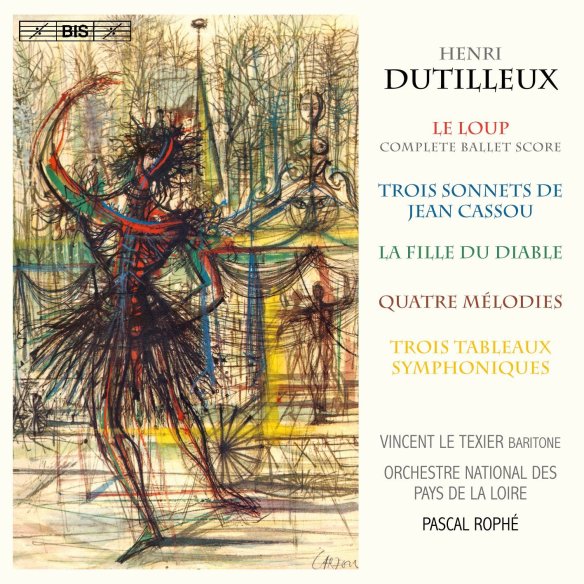
Pascal Rophé, leading exponent of modern French music, conducts this up-and-coming French orchestra in music by a composer whose centenary falls this year, and whose influence on the contemporary music scene is out of all proportion to his modest if fastidiously crafted output.
What’s the music like?
The suite from Henri Decoin’s film La Fille du Diable features six brief items whose elements of Ravel and Stravinsky hardly lessen its attractiveness. Trois Tableaux Symphoniques (1945) derives from a Paris staging of Emily Brontë’s Wuthering Heights and is very different from Alfred Newman’s Hollywood score. Both pieces feature a prominent role for Ondes Martenot (made famous by Messiaen in his Turangalîla-Symphonie), its plangent tone to the fore in a haunting evocation of the Yorkshire moors then poignant depiction of the heroine’s demise.
Le Loup is a special case as though Dutilleux all but rejected the ballet, it occupies a crucial role in his evolution. The only previous complete recording – conducted by Pierre Bonneau in 1954 with co-author Jean Anouilh as narrator – has been restored to circulation (on Erato), but this new account (sans narration) is superior. Rophé finds a palpable momentum over its three tableaux, the influence of Prokofiev uppermost with that of Swiss-born Arthur Honegger – the most important younger French composer during the inter-war years – hardly less pervasive.
What is usually referred to as Deux poèmes de Jean Cassou initially comprised three sonnets by the wartime-resistance poet, these ruminations infused with pained nostalgia being joined by ‘Éloignez-vous’ for this more balanced sequence to which Vincent Le Texier responds in ample measure; his insight enhanced by luminous orchestration. More whimsical in manner, the Quatre Mélodies contains some of Dutilleux’s most appealing early inspirations, audibly increased in this resourceful orchestral version that remained unheard for over seven decades.
Does it all work?
Absolutely. From the outset Dutilleux possessed a technical finesse equalled by few of his peers, and while there is nothing on this disc to match his mature masterpieces, this music’s audible connection between its composer’s past and future makes for pleasurable listening.
Is it recommended?
Indeed. Rophé secures keenly responsive playing which benefits from the immediate yet spacious SACD sound typical of BIS. Pierre Gervasconi contributes informative notes and this disc is a necessary acquisition, not least for those who think they know their Dutilleux.


 written by Richard Whitehouse