New music from Aphex Twin always feels like something of an event, and although this EP has been out in the public domain for over a month the music is still well worth stopping to experience and contemplate.
What’sthemusiclike?
This is Aphex Twin somewhere towards his best, writing music packed with incident but somehow finding time for inward-facing ambience. He achieves this balance perfectly on Blackbox Life Recorder 21f, where a particularly busy rhythm track plays pinball around the stereo picture, but a sonorous bass and overarching keyboard line give time and space.
zin2 test5 is a deeply intimate experience, one man and his machine – its introverted chords leaving their mark long after the active rhythm track is stopped. in a room7 F760 uses cowbells alongside the thick, woolly chords, the experience like a plane flying from sunshine into dense cloud and back out again.
The Parallax mix of Blackbox Life Recorder 21f brings out the fatter low notes, introducing more of a sci-fi feel.
Does it all work?
It does – and all easy on the ear for an Aphex Twin release. Or should that be uneasy? For beyond the ambience lurks a little dread.
Is it recommended?
It is – typically thought provoking work from one of Britain’s finest electronic music makers.
This is the first album Laura Groves has released under her own name. Previously known as Blue Roses, the singer-songwriter marked her move to the Bella Union label with a fresh album of songs recorded with multi-instrumentalist Ben Reed.
The album’s name derives from the two radio transmitting towers near where Groves’s studio is based. The track titles and lyrical content take communication as their theme, providing helpful metaphors for relationship-fuelled feelings with those close by while also noting the interference threatening those connections.
What’sthemusiclike?
There are some beautifully written songs here. The first thing to note is the vocal delivery, for Groves has a naturally appealing voice. To use an old cliché, she could sing the phone book and hold an audience – but when the lyrical content is laden with emotion, as it is here, then the songs are even more meaningful.
Sky At Night sets an airy scene, starlit but with a lingering darkness behind the upward looking melody, which explores the very top of Groves’ range. Good Intention is similarly descriptive, with bittersweet tales of love and vulnerability that extend through the album. This track and D 4 N feature the complementary tones of Sampha, whose rounded timbre is an ideal foil, the latter a lush duet.
At times Groves bursts with positivity, but there is an undercurrent of frustration too, with missed opportunities and misunderstandings. “Can we just get on with it, I’ve got a lot to give!” she sings on I’m Not Crying. There is a strong pull to the yearning Sarah, missing its subject with the line “I hope you’re doing fine”. Time, is irresistible, its winsome melody softly delivered, while in Silver Lining the album has a dreamy coda with underlying resolve.
Does it all work?
It does. The careful shading of the production on this record gives the vocals the ideal platform from which to make maximum expression – which brings parallels with the much-loved Scottish band The Blue Nile to mind. As with them, less is most definitely more.
Is it recommended?
Yes – provided you give it time, Radio Red will have you under its spell by the third listen.
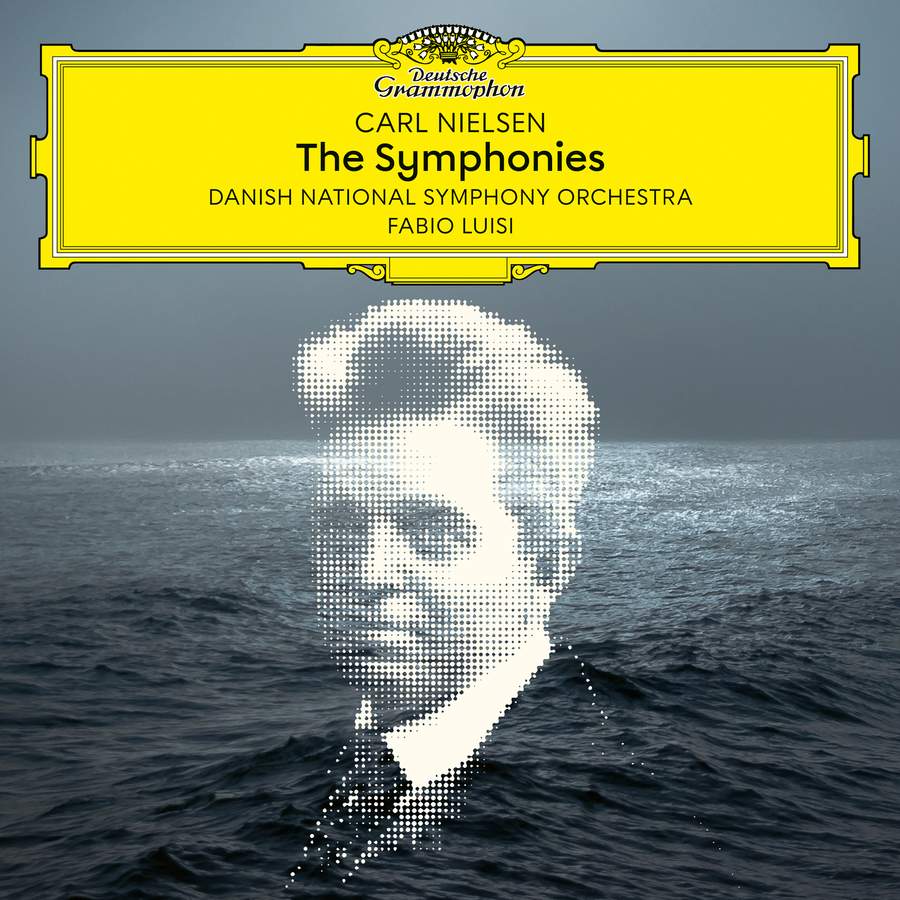
Danish National Symphony Orchestra / Fabio Luisi with Fatma Said (soprano), Palle Knudsen (baritone) (Symphony no.3)
Nielsen Symphonies: no.1 in G minor FS16a; no.2 FS29 ‘The Four Temperaments’b no.3 FS60 ‘Sinfonia espansiva’c; no.4 FS76 ‘The Inextinguishable’d; no.5 FS97e; no.6 FS116 ‘Sinfonia semplice’f
Deutsche Grammophon 4863471 [3 hours 36 minutes] Producer Bernhard Güttler; Engineers Mikkel Nymand, Christoph Stickel
Recorded in live performances at Koncertsalen, DR Koncerthuset, Copenhagen: 1 February (no.4), 3 February (no.2), 3 June (no.6), 17 June (no.1), 26 November (no.3), 28 November (no.5)
Written by Richard Whitehouse
What’s the story?
Deutsche Grammophon continues its latest generation of symphonic cycles (following those first-time traversals of Franz Schmidt and Charles Ives) with that from Carl Nielsen, performed by the Danish National Symphony Orchestra and its incumbent principal conductor Fabio Luisi.
Almost 50 years after the first integral recording of these symphonies (Ole Schmidt with the London Symphony Orchestra on Unicorn/Alto), there are at least 20 such cycles available so that any newcomer needs to bring a fresh perspective on Nielsen’s always distinctive though increasingly unpredictable fusion of innovation with tradition. This pairing of orchestra and conductor is intriguing insofar that the DNSO has been associated with these works from the outset, while Luisi is a musician of broad sympathies with cycles of symphonies by Schmidt (Querstand) and Schumann (Orfeo) plus an incomplete one of tone poems by Strauss (Sony). The result is a Nielsen cycle at times impressive in its conviction if at others dismaying in its inconsistency, and not always in those works or for those reasons one might have expected.
What’s the music like?
Luisi makes his intentions plain at the start of the First Symphony, its initial Allegro launched via an emphatic C major whose impetus is sustained through an impetuous development, with a remorseless acceleration into the implacable coda. Even finer is an Andante by turns elegant and eloquent, strings coming into their own, while only a marginal hesitancy as to the elision between scherzo and intermezzo affects its successor’s stealthy progress. Taut if not inflexible, the final Allegro has innate buoyancy capped with the uninhibited verve generated at its close.
If the Second Symphony is less successful, this is because Luisi does not transcend its status as a symphonic suite. The ‘choleric’ element of the opening Allegro verges on the histrionic, with the humour of the following intermezzo deadpan rather than ‘phlegmatic’. The Andante, though, is superbly sustained over its airily pastoral interlude towards an intensified recall of its ‘melancholic’ opening and coda of fatalistic poise. The ‘sanguine’ trait of the final Allegro is deftly undercut by musing uncertainty, but this yields a slightly tepid resolution in its coda.
Nothing comparable affects the Third Symphony, the ‘expansiveness’ of its opening Allegro abetted by visceral drive in its outer paragraphs and nuanced subtlety in its more speculative passages. The Andante’s interplay of the pastoral and emotional sees a rapturous apotheosis, soprano and baritone vocalises beguilingly intertwined, then the scherzo generates no mean energy prior to its restive ending. Luisi’s steady overall tempo for the final Allegro avoids sluggishness, and not least a coda the more conclusive for its eschewal of wanton triumph.
Despite a properly blazing start to the Fourth Symphony, its opening Allegro emerges as no more than the sum of some admittedly fine parts, with the charm of the ensuing intermezzo just a little too ‘knowing’. The highlight here is a slow movement of real fervency, its dense textures clearly articulated and a transition of simmering intensity into the finale’s headlong fugato on strings. Tension here is ably maintained, but Luisi’s holding back in its peroration replaces that striving onwards Nielsen surely intended with a more generalized affirmation.
This take on the Fifth Symphony is very much a tale of two parts. Luisi audibly locates the ‘tempo giusto’ for the first movement’s opening half – its increasingly ominous expectancy fulfilled in an Adagio of great pathos, albeit with a side-drum cadenza overly reined-in both texturally and emotionally. Too stolid a tempo for the second movement’s initial Allegro is exacerbated by its inhibited Presto, and though Luisi renders its Andante with compassion, his broadening towards the close of the final Allegro is too self-conscious to be convincing.
Is it surprising that the Sixth Symphony rounds off this cycle so perceptively? The complex array of emotions found in its opening movement yields the right ‘innocence to experience’ trajectory, with both the sardonic humour of its Humoreske and the fractured eloquence of its Proposta seria palpably conveyed. Above all, the finale’s outwardly fractious variations unfold with a seamlessness and an inevitability that makes of the coda a culmination whose outcome is held in check until the last bar. A still disputed masterpiece is hereby vindicated.
Does it all work?
Swings and roundabouts. There could be no doubt as to the seriousness with which Luisi has taken on this project, nor of the overall excellence of the DNSO’s playing. Where this cycle falls down is in a lack of focus across the whole, to the extent that there could have been two or even three conductors involved here. Moreover the orchestral sound, warm and immediate but often lacking definition or a consistent balance, feels appreciably different from what this ensemble produces in its home venue – leading one to suspect a modicum of post-production.
For CD adherents the fold-out triple pack is eminently stylish and straightforward, while Jens Cornelius’ note sets the scene adequately enough. The cycle is also available as three separate couplings of Nos. 4 and 5, Nos. 2 and 6 then Nos. 1 and 3 – with the three concertos to follow.
Is it recommended?
Yes, with qualifications. Prospective purchasers are advised to sample the cycle via streaming then proceed accordingly. Certainly, the Third and Sixth Symphonies rank with the finest now available, and listeners should form their own judgement as to the merits of this cycle overall.
John Beltran continues undimmed. The Michigan-born producer has been making albums since 1995, establishing himself as a leading exponent of ambient techno – but along the way showing us that he should not be restricted to that genre alone.
Serendipia finds him exploring his love of all things Balearic for the Oath label, and taking the opportunity to bring in references to Brazilian music and jazz.
What’sthemusiclike?
Music like this demands a cocktail and a large expanse of water. Serendipia will come as a lovely surprise to those who might have had John Beltran pinned down as a home studio producer, for it brings in a wide range of percussion, waves lapping at the shore in its beautifully realised down tempo treats.
Beltran creates a tropical infusion, with typically classy production but with a sultry atmosphere heightened by languid guitars and extra percussion. There are some lovely jazzy solos from guitar and keys, with the opening Taina an excellent example, but these are tasteful and never overdone.
Sa Coma Blue features a vocal cameo from regular collaborator John Arnold and sounds uncannily like the intro to Lady In Red – but styles it out with lazy guitar and hazy textures. It is typical of Beltran’s open air music, where widescreen textures put the listener in an exotic environment, while the close-up detail gives evidence of an expert technician.
Aşk Anları shows off those expansive sound pictures, while the more thoughtful tracks – such as La Hermosa Vista – bring the ideal blend of slow moving chord sequences and thrumming percussion loops.
Does it all work?
It does – effortlessly so. The combination of electronics, easy guitars and jazz-inflected solos is a winning one, especially with the rhythm section Beltran supplies.
Is it recommended?
Yes – an easy decision. An album to spend time with in the hot weather, for sure!
It is relatively rare for electronic albums to be performed ‘as live’ – but that is what Saloli achieves with Canyon. Saloli – the Cherokee word for ‘squirrel’ – is the alias under which Portland pianist and instrumentalist Mary Sutton operates,
The whole album is performed on a Sequential Circuits MultiTrak synthesizer, routed through a delay pedal to add the spatial quality of ‘echoing off canyon walls’.
There is a concept powering Canyon, too, the album evoking ‘a day in the life of a bear in a canyon in the Smoky Mountains’. As the press release explains, ‘in Cherokee teachings, humans and animals are considered to have no essential difference – originally, all the creatures of the earth lived together in harmony.’ The album’s cover art is by Sutton’s father Jerry, its yellow lettering using Cherokee Syllabary and spelling ‘Yona’, which means ‘bear’.
What’sthemusiclike?
Strong in character. Saloli’s writing is very ‘in the moment’, creating portraits full of colour and musical content.
Waterfall shimmers and glistens in the light, the melodic patterns of the synthesizer sustained as they bounce around the sonic picture. At this point Saloli’s music resembles earlier Philip Glass, both in its melodic language and its pleasingly rough timbre. This is clearly music evoking the outside, and is all the better for its untampered state.
Lily Pad is much more fragile, the live setting capturing the surface tension of the water on which it sits, while Snake is more obviously right and left hand, as arpeggios in the left complement higher melodies in the right.
The sonic picture changes strikingly for Yona, the playful bear portrait, whose lack of reverberation makes this feel a close-up, indoor encounter. Panning out again we hear the softer Silhouette, whose vibrato casts a spell and draws parallels with Wendy Carlos.
Full Moon brings a pipe-organ sonority to Saloli’s music, wide-eyed and brightly lit, the echoes used again to playful effect. The slightly jaunty mood continues to the elusive Nighthawk, the left hand on the keyboard establishing a Habañera-type rhythm while trying to pin down an elusive right hand melody.
Saloli ends with the exhilarating Sunrise, its rippling arpeggios telling of the light forcing its way upwards out of the darkness and into the day. Its evocative growth from subtle flickers to stabs of daylight shows Sutton’s skill at painting pictures in sound.
Does it all work?
It does. The intimate portrait of the bear is slightly curious, given the animal’s size, but it is typical of the personality running through Sutton’s music. This is electronic music with a beating heart, for sure.
Is it recommended?
It is. Saloli has made an album of instrumental tone pictures with lasting character and quality.




 Arcana.fm