On Record – James Yorkston, Nina Persson & The Second Hand Orchestra: The Great White Sea Eagle

by Ben Hogwood

What’s the story?

James Yorkston had no plans for a sequel to his 2021 album with The Second Hand Orchestra – but on writing new songs on his piano, and sharing them with the orchestra’s leader Karl-Jonas Winqvist, they realised the opportunity was ripe for a guest singer to enhance the music – and Winqvist suggested The Cardigans’ singer Nina Persson.

The pairing operated in relatively relaxed conditions, with no overriding concept other than the wish to sing a collection of folk-based songs. The orchestral parts are fresh, semi-improvised by the players on the day of recording.

What’s the music like?

This is a joyous collaboration, one that finds the singers and musicians finishing each other’s sentences as though they have been working together all their lives.

Both Yorkston and Persson are natural storytellers, and from Nina’s first verse on Sam and Jeanie McGreagor, the listener hangs on each tale and musical nuance. As the album progresses we get to know their vulnerable sides, but also some touches of light humour, the two singers bouncing off each other’s musical qualities. Try Mary and you will see how well their voices are matched.

There are singalong refrains in a lot of the songs, with the communal Peter Paulo Van Der Heyden a favourite, and in Keeping Up With The Grandchildren an extended guitar soliloquy to complement the vulnerable vocals. Most of the songs have the sort of childlike simplicity you might associate with folk music at its most raw, but the arrangements can propel these through unexpectedly complex forms, as they do in The Heavy Lyric Police.

As for The Second Hand Orchestra, their fresh contributions are beautifully delivered – notably the violin in An Upturned Crab, and Karl-Jonas Winqvist ensures total respect for the lyrical material throughout, moving from a single, plaintive instrument to the full force of an orchestra rich with woodwind colour.

“This is the time”, they sing on the winsome Hold Out For Love – the most wonderful, singalong moment, where everything is suddenly right with the world.

Does it all work?

Yes – mostly because the collaboration is so unforced, and the music making relaxed. That shouldn’t, however, be mistaken for complacency, for both singers deliver deeply felt songs, their voices ideally matched. The orchestrations are beautiful and consistently rewarding.

Is it recommended?

It is – an ideal match of musicians from the northern territories, doing what they do best – and clearly enjoying it immensely.

Listen

Buy

On Record – Michael Collins, BBC Philharmonic Orchestra / Rumon Gamba – Arnold: Clarinet Concerto no.1, Philharmonic Concerto etc (Chandos)

Arnold
Commonwealth Christmas Overture Op.64 (1957)
Clarinet Concerto no.1 Op.20 (1948)
Divertimento no.2 Op.24 / Op.75 (1950)
Larch Trees Op.3 (1943)
Philharmonic Concerto Op.120 (1976)
The Padstow Lifeboat Op.94a (arranged for orchestra by Philip Lane)

BBC Philharmonic Orchestra / Rumon Gamba

Chandos CHAN20152 [68’50″’]
Producers Brian Pidgeon and Mike George Engineers Stephen Rinker, Richard Hannaford and John Cole
Recorded 5 & 6 December 2019, 29 July at MediaCity UK, Salford

Reviewed by Ben Hogwood

What’s the story?

This collection of six pieces from Sir Malcolm Arnold’s composing career stretches from one of his first published pieces, Larch Trees, to one of his last, the Philharmonic Concerto. Both were written for the London Philharmonic Orchestra, for whom he played trumpet from 1941 until 1948, and with whom he maintained a close association as a composer.

In between these pieces Chandos have chosen a satisfying mix of styles to reveal Arnold as a multi-faceted composer, not just the humourous one of which we hear most. That side of his writing is happily celebrated through The Padstow Lifeboat and the Divertimento no.2 for orchestra reveals the happiness he found through writing for children and young people, being young at heart himself.

The Commonwealth Christmas Overture finds Arnold in commission mode, called upon to write the music for Royal Prologue: Crown and Commonwealth, a programme narrated by Sir Laurence Oliver to preface the 25th Christmas speech by a ruling monarch. Completing the collection is the first of many concertos from Arnold’s pen, and the first of two for clarinet.

What’s the music like?

Chandos have already presented us with a good deal of Sir Malcolm Arnold’s music, and this is further enhanced by a programme giving us first recordings and revealing each side of the composer’s personality.

The Commonwealth Christmas Overture gets proceedings off to a suitably ceremonial start, with plenty of bluster and high jinks, all buoyed by colourful percussion. The influence of William Walton is immediately evident, for the main theme has more than a little in common with his own ceremonial march Crown Imperial, but Arnold goes on to develop it in his own inimitable way.

The Clarinet Concerto is a compact piece, deft and slightly bluesy in the outer movements but pausing for meaningful reflection in the Andante, the emotional centre of the work.

The Second Divertimento, long thought lost, is a fun piece where a lot happens in nine minutes! Using a traditional-sounding structure, Arnold has a lot of fun with the bracing Fanfare, atmospheric Nocturne and grand Chaconne, harnessing the power of the large orchestra.

The two pieces for the London Philharmonic are next, and are vividly contrasting pieces of work. Larch Trees is an evocative musical sketch, reminiscent of Moeran in the way it pans out over the rugged terrain of northern England, while also confiding intimately in its listeners through the woodwind. The Philharmonic Concerto is more obviously noisy and confrontational, this late work utilising the dissonance which will be noted by those familiar with Arnold’s later symphonies. This is not comfortable music but it is brilliantly written, challenging the orchestra to throw off their shackles. The probing violin lines of the Aria offer a chance for deeper reflection.

Finally The Padstow Lifeboat, one of Arnold’s brass band treasures, with its persistent ‘wrong note’ which warns all shipping. It makes for the ideal sign-off.

Does it all work?

Yes, and wonderfully so. Rumon Gamba has enjoyed a long and fruitful association with Arnold’s music and comes up trumps here, leading the BBC Philharmonic Orchestra in some characterful and personal accounts. Arnold could hardly wish for better advocacy and understanding, the conductor charting his youthful prowess in Larch Trees, whose softer contours benefit from excellent recording by the Chandos engineers.

The Clarinet Concerto no.1 is brilliantly played by Michael Collins, negotiating the wide leaps of the solo part with aplomb, while responding with grace in the soulful slower sections. The strings of the BBC Philharmonic exploit the depths of the darker slow movement, its temperature appreciably colder by the end.

Is it recommended?

Enthusiastically. This is an anthology that will appeal to seasoned Arnold listeners, for its mix of the familiar and a curio or two, while it is also the ideal place for those new to the composer. If you are after some music to combat the onset of January, you have come to the right place!

Listen

Buy

For more information and purchasing options on this release, visit the Chandos website

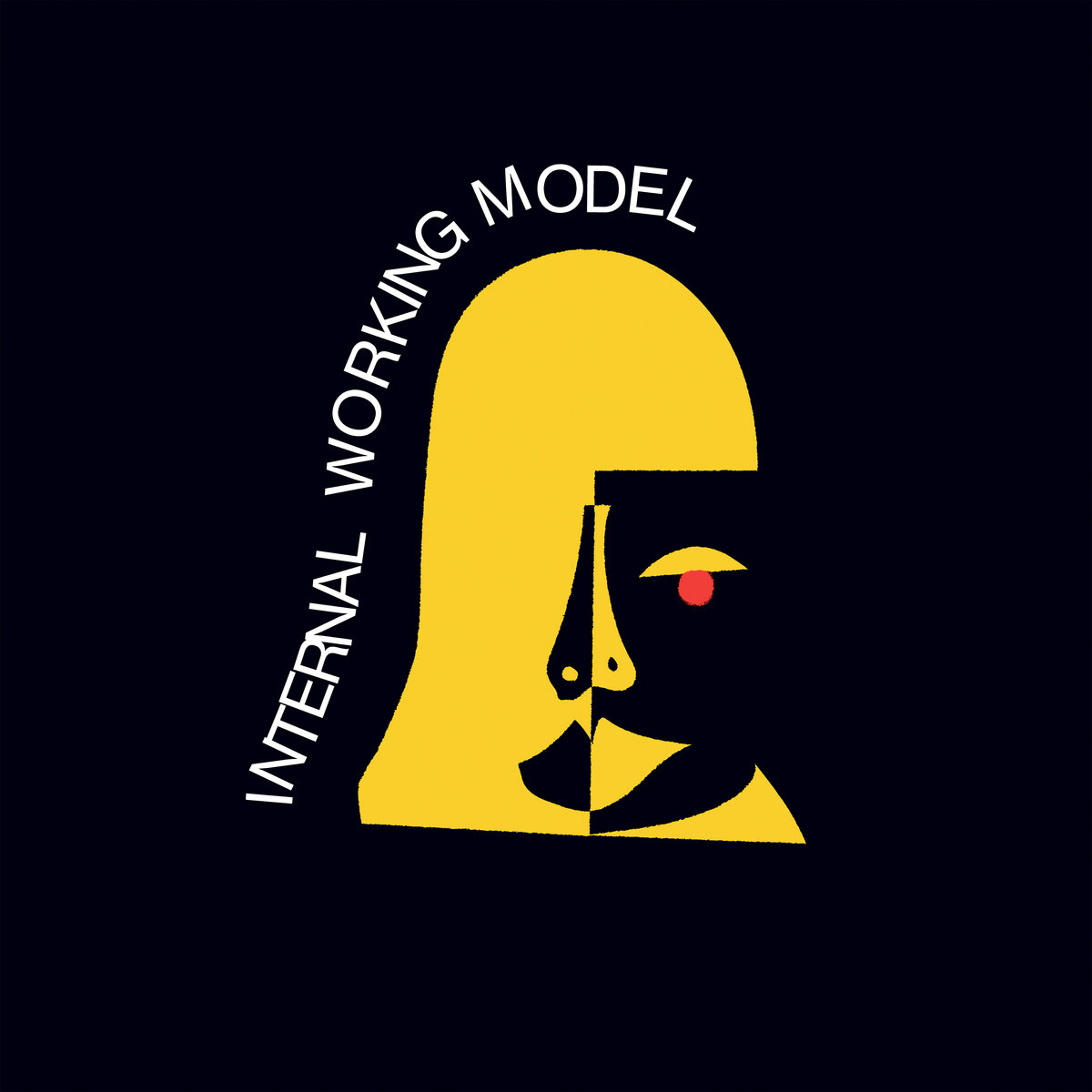
Switched On – Liela Moss: Internal Working Model (Bella Union)

by Ben Hogwood

What’s the story?

Former Duke Spirit vocalist Liela Moss has big plans for her third solo album. Co-written with her partner Toby Butler, Internal Working Model sees her ‘imagining a tribe, navigating away from our very centralized culture, dismantling it and revising the way I think things work’.

Central to her principles are the idea of cooperation rather than competition, and the idea that we should be speaking out more against global manipulators, greed and corruption. To that end, her and Butler chose a more upfront, electronic sound than she has used previously, and also some notable guests – Gary Numan, The Savages’ Jehnny Beth and Dhani Harrison.

What’s the music like?

Sticking to its brief, Internal Working Model presents a bold musical language. Moss is a compelling vocalist, taking charge from the outset and making her points with poise and conviction.

Empathy Files is a very strong opener, both musically and lyrically, with a sinister undertone as the chorus notes, “We’ve got data for miles on you”. Another standout song is Vanishing Shadows, where Moss and Gary Numan have a compelling frisson between the voices, not to mention a standout chorus. Ache In The Middle presents stronger tones of regret (“I could have been so happy, there would have been peace”), while the preceding The Wall From The Floor also speaks with anguished tones. “I can’t tell the wall from the floor any more”, she sings.

The drums play a bit part on Internal Working Model, adding power to Come And Find Me and ballast to the final call to arms, Love As Hard As You Can. With guest Dhani Harrison, Moss signs off on a high, looking to the future with renewed optimism and a steely gaze.

Does it all work?

Largely. Moss has a powerful message to bring, and delivers it with wholly convincing vocals. The electro production has bags of attitude too. On occasion more distinctive melodies would be welcome in the songs, to match the fine production.

Is it recommended?

Yes. As a statement of intent, and a rousing call for the start of a new year, Internal Working Model is a resolute piece of work. Moss is a compelling singer, a voice pushing to be heard.

Listen

Buy

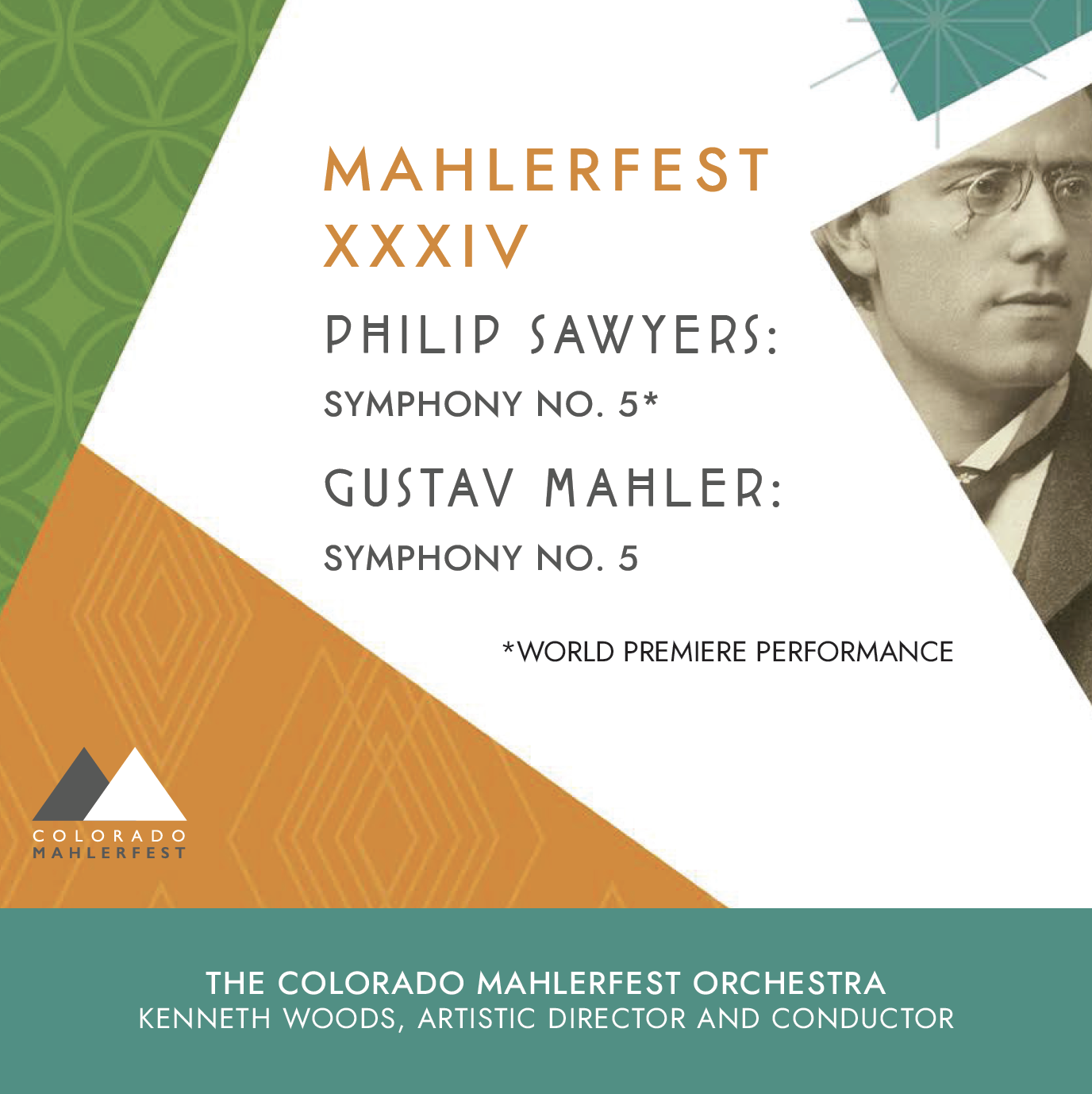
On Record: Colorado MahlerFest Orchestra / Kenneth Woods – MahlerFest XXXIV: Sawyers & Mahler: Fifth Symphonies (Colorado MahlerFest)

Sawyers Symphony no.5 (2021) [World premiere]
Mahler Symphony no.5 in C# minor (1901-02)

Colorado MahlerFest Orchestra / Kenneth Woods

Colorado MahlerFest 195269164287 [two discs, 111’45”]

Recorded Live performances at Macky Auditorium, Boulder, Colorado, 28 August 2021

reviewed by Richard Whitehouse

What’s the story?

Two five-movement Fifths brought the 34th Colorado MahlerFest to an impressive ending. Mahler’s cycle is often seen as ‘end of the line’ for the symphony, yet its further evolution is not hard to discern, and Kenneth Woods is rightly making this a crucial aspect of his tenure.

What’s the music like?

Philip SawyersFifth Symphony pursues a stylistic path comparable to those two before it. Its predecessor ended with an expansive Adagio, and this work continues from such inward seriousness in a Moderato that overrides clear-cut sonata procedures for a gradual unfolding whose thoughtful initial theme takes on greater emotional intensity as it builds to an ominous climax, before closing in a mood of no mean ambivalence. The writing, for an orchestra with fifth horn and harp though no percussion other than timpani, is never less than resourceful.

From here an Allegro increases the tempo to capering and, in its middle stages, wistful effect. The central Lento pursues a sustained course over cumulative paragraphs, the latter climaxing with the work’s most anguished music, before an affecting coda. The ensuing Presto affords greater expressive contrast between impulsive outer sections and a chorale-like trio of musing poise. The final Allegro is the most orthodox movement in its energetic and reflective themes, taking in an intensive development and subtly modified reprise prior to a decisive apotheosis.

Pacing is crucial in Mahler’s symphonies, his Fifth being no exception. The opening Funeral March is ideally judged – its development not too histrionic, then a coda whose eruptive force subsides into numbed uncertainty. Proceeding without pause, its successor steers securely to a climactic yet ill-fated chorale, and if the final return of its initial music lacks vehemence, the pulsating expectancy of the closing bars is tangibly rendered. Woods’ handling of the central Scherzo contrasts a rustically evocative trio with the ländler-infused coyness and contrapuntal contrivance either side, the coda wrapping up this overlong movement with real decisiveness.

The remaining two movements are finely realized, the Adagietto taken at a flowing if flexible pace that enables its inherent rapture to emerge without any risk of indulgence. The deftest of transitions duly prepares for a finale whose elaborate interplay of rondo and sonata elements is replete with a cumulative impetus here carried through to a fervent peroration, the chorale blazing forth during a close in which affirmation and nonchalance are irresistibly combined.

Does it all work?

Almost always. Sawyers’ Fifth symphony is a cohesive and absorbing piece – less arresting in overall content than either of its predecessors, though with an unfailing formal logic and expressive eloquence that are not to be gainsaid. Interesting, moreover, that this Fifth marks something of a rapprochement with ‘classical’ tonality, whereas Mahler’s Fifth sets in motion a fractious discourse which informs almost all this composer’s subsequent symphonic works.

Is it recommended?

Certainly. The playing of the Colorado MahlerFest Orchestra is of a high standard, testifying to the excellence of these musicians in their collective responsiveness to Woods’ technical acumen and interpretive insight. To hear this work so authoritatively realized and within the context of a major new symphonic statement says much for the significance of MahlerFest.

Listen & Buy

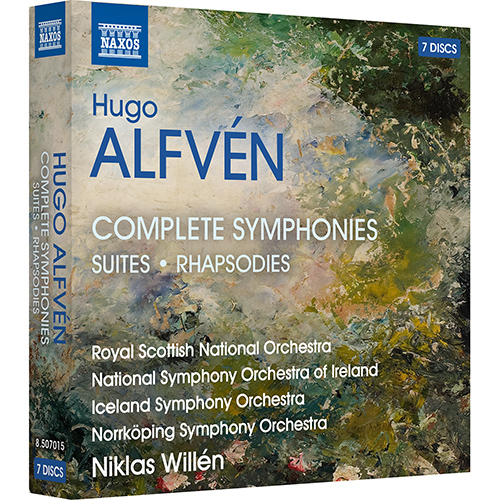
On Record – Various orchestras / Niklas Willén: Alfvén: Complete Symphonies; Suites & Rhapsodies (Naxos)

Alfvén Complete Symphonies; Suites & Rhapsodies

Royal Scottish National Orchestra, National Symphony Orchestra of Ireland, Iceland Symphony Orchestra, Norrköping Symphony Orchestra / Niklas Willén

Naxos 8.507015 [7 discs, including a bonus of Swedish Orchestral favourites]

Reviewed by Ben Hogwood

What’s the story?

Swedish composer Hugo Alfvén was born 150 years ago this year, and this attractive box set from Naxos celebrates the anniversary by bringing together the five symphonies recorded under the baton of fellow countryman Niklas Willén. They are presented alongside a number of Alfvén’s suites and orchestral works.

What’s the music like?

Attractive, airy and extremely enjoyable. Before Alfvén came along, Sweden had very few symphonic composers of note, Berwald excepted, and this cycle of substantial musical structures helped bring the symphony to a new audience.

Listening to each of the five works plots a course through Alfvén’s career, revealing him to be a gifted melodist and orchestrator. He writes with a clarity suggesting he studied the music of Mendelssohn and Schumann, but the orchestral works have an opulence closer to Richard Strauss and Wagner.

The Symphony no.1 in F minor Op.7 is laden with drama, if not yet fully confident in its structural steps. The Symphony no.2 in D major Op.11, which firmly established Alfvén as a composer, finds a glowing, lyrical approach. The Symphony no.3 in E major Op.23 is a joy, celebrating love and nature in the brightest E major, with richly tuneful episodes and rapturous outpourings from the strings. The Symphony no.4 in C minor Op.39, subtitled From The Outermost Skerries, has impressive depth, its four movements running continuously as they tell of the unique landscape of the Stockholm archipelago. Finally the Symphony no.5 in A minor Op.54 has a broader melodic platform, darker in some respects but loaded with extra resolve.

The accompanying suites show off Alfvén’s affinity with the stage and a natural aptitude for storytelling – The Prodigal Son, Synnöve Solbakken and A Country Tale all have good tunes and clear, bright orchestration. The shorter pieces included here should be better known, too – the Swedish Rhapsodies are winsome pieces, while the Festival Overture rises well above its functional role and the Elegy is equally meaningful.

Does it all work?

Yes, thanks to vibrant performances from each of the four orchestras used by Naxos in the gradual assembly of this cycle, all under the expert guidance of Niklas Willén. His choices of tempo are instinctively right, backed by an innate understanding for the flow of this music. An extra disc of Swedish orchestral favourites, featuring works from Alfvén, Larsson, Peterson-Berger, Söderman, Stenhammar and Wirén, is a considerable bonus.

Is it recommended?

Yes, with enthusiasm. While other composers may be ahead of him in the symphonic popularity contest, Alfvén’s music is highly attractive and full of good things for the casual or the attentive listener. Take this chance to explore further and you will not be disappointed!

Listen / Buy

You can find out more about this recording, and explore purchase options, on the Naxos website