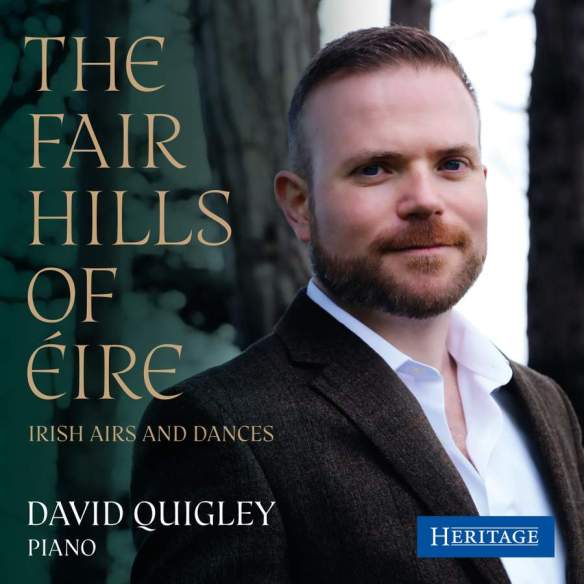
On Record – David Quigley – The Fair Hills of Éire: Irish Airs and Dances (Heritage Records)

david-quigley

David Quigley (piano)

Beach The Fair Hills of Éire Op.91 (1922)
Esposito Two Irish Melodies Op.39 (1883)
Field Go to the Devil and Shake Yourself (1798)
Hammond Miniatures and Modulations (2011) – No. 5, Old Truagh; No. 21, The Beardless Boy
Hennessy Variations sur un air Irlandais ancien Op.28 (1908)
Hough Londonderry Air (2014)
Martin Sionna – Spirit of the Shannon (2018)
Moeran Irish Love Song (1926); The White Mountain (1929)
Smith Paraphrase on ‘The Last Rose of Summer’ Op.173 (1883)
Stanford arr. Grainger Four Irish Dances Op.89 (1916) – no.1: Maguire’s Kick; no.4: A Reel

Heritage Records HTGCD152 [62’39”]
Producer / Engineer David Marshalsea

Recorded 9 & 11 April 2022 at Elgar Concert Hall, The Bramall, University of Birmingham

Reviewed by Richard Whitehouse

What’s the story?

The enterprising Heritage label continues its association with David Quigley in this recital   of Irish piano works as cover over two centuries, reminding listeners of the wealth of folk or traditional music from that island and its influence on successive generations of composers.

What’s the music like?

Published as Favorite (sic) Irish Dance Arranged as a Rondo for the Piano Forte, the first item is not unreasonably attributed to the teenage John Field and make for a breezy recital-opener – following which, pianist Stephen Hough demonstrated his prowess as an arranger with what is surely the most famous of all Irish melodies. Two pieces by the Italian émigré Michele Esposito – the trenchant Avenging and Bright, followed by the pensive Though the Last Glimpse of Erin – complement each other ideally, whereas the first from a set of dances by Charles Villers Stanford exudes bracing humour most likely accentuated in this idiomatic arrangement by no less than Percy Grainger. By some distance the longest piece here is from Swan Hennessy, an Irish/American later resident in France – his 12 variations on an (unidentified) theme in the lineage of various such works from the 19th century but diverting in its ingenuity. Best known as an inquiring pianist, Philip Martin the composer is represented by this evocative set of ‘rhapsodic variations’ written for the present artist.

Sidney Smith’s Paraphrase de concert on another Irish staple is the most virtuosic music and would make a dashing encore even today. Philip Hammond is the other contemporary composer featured – the present brace, part of a sequence of 21 drawn from the Edward Bunting collection and likewise written for Quigley, respectively searching and animated     in their emotional profile. From among her many mood-pieces, that by Amy Beach yields       a limpid poetry that more than deserves to provide the title for this collection overall. An English composer with direct Irish ancestry, Ernest Moeran’s predilection for all-things Celtic is made plain by the two pieces heard here, their recourse to traditional melodies enhanced by an idiomatic pianism which adds greatly to the winsomeness of their appeal. Back, finally, to those Stanford/Grainger dances with the fourth from this set a reminder that the former, whatever his formidable reputation as a pedagogue, was never averse to indulging his Irish roots in the writing of music as scintillating as it remains appealing.

Does it all work?

Admirably. Quigley is as committed to the music of his homeland as have been numerous of his predecessors, not only with performing these pieces in recital but also by finding ways of integrating them into a cohesive overall programme. Only one achieves (just) the 10-minute mark and another is almost eight minutes, making them ideal for combining into a judicious sequence – one which, at little more than an hour’s length, can be enjoyed at a single hearing. Quigley will hopefully have the chance to mine the ‘Irish piano-book’ further in due course.

Is it recommended?

Indeed. Quigley is a perceptive exponent of this repertoire, his Kawai Shigeru SK-EX heard to advantage in the spacious yet detailed acoustic of the Elgar Concert Hall. With succinctly informative notes from Andrew H. King, this recital warrants the warmest recommendation.

For further information on this release, and to purchase, visit the Heritage Records website, and for more on David Quigley click here
On Record – SRSQ: Ever Crashing (Dais)

by Ben Hogwood

What’s the story?

This is the second album from singer-songwriter Kennedy Ashlyn, who goes by the artistic name of SRSQ (pronounced ‘seer-skew’).

It was three years in the making, though when you get a hint of Ashlyn’s story the importance of this record falls into place. Her debut album, after all, was a response to the tragic death of her one time bandmate Cath Askew in Oakland – and Ever Crashing was an expression at the news of her diagnosis with ADHD and bipolar disorder. Music became a necessity, the primary means of expression.

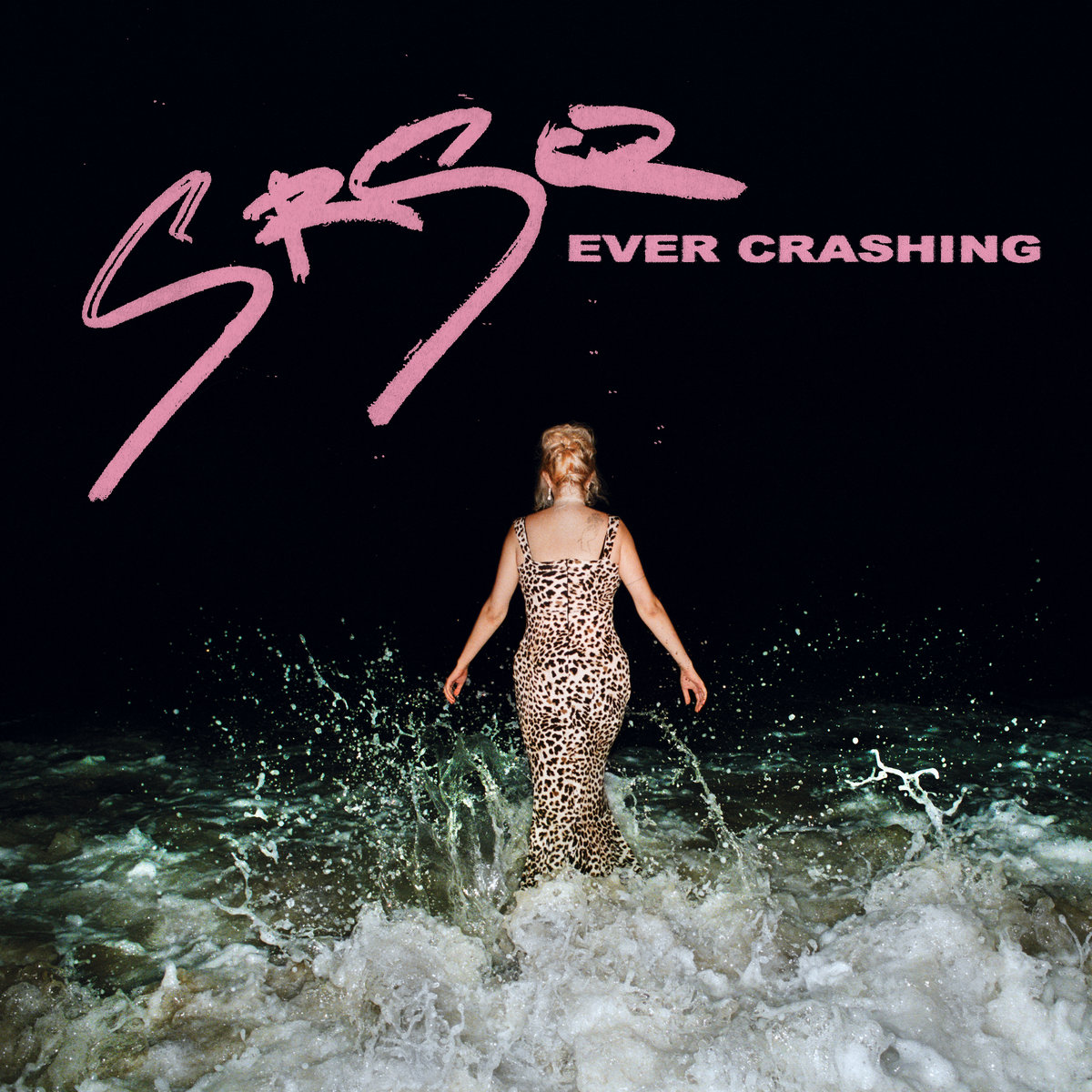
The Ever Crashing title is pertinent, to quote from the press release documenting ‘Ashlyn’s recurring sensation of being trapped in the crest of a wave, turned and churned in the surf, mirroring the cycles of self-flagellation and surrender that she battles being bipolar’.

What’s the music like?

Even without the backstory in mind, Ever Crashing is a powerful experience. Ashlyn’s voice is the primary reason for this, a most impressive instrument capable of holding its own above a wall of guitars but never straining, always relatable, and always clear in its lyrical delivery (an underrated quality!)

It Always Rains gives us a slow and powerful beginning, showing off influences that run from Cocteau Twins and All About Eve to The Cure and School of Seven Bells perhaps – all names speculation because the music fits in next to theirs. Yet the result is that SRSQ does have a distinct identity, Ashlyn’s compelling presence piercing the clouds.

Saved For Summer throws open the windows with a rush of guitars, as does the standout Dead Loss, a really strong pop song with a winning hook. The title track packs a punch, too, as does Élan Vital, which finds the singer noting how ‘winter twists and turns, when the days are cold and sparse’. Later on she asks, “What is it about the cold that makes me sad?”

The closing Someday I Will Bask In The Sun offers a way out. “In my own time I will christen this prison of my own design, I am risen, forgiven,” sings Ashlyn over a fidgety breakbeat.

Does it all work?

Much of it does, especially vocally. The tracks do tend to be quite long, which on the plus side means they have plenty of time to establish the mood but also that they can overrun.

Is it recommended?

It is. There is much to commend this record, its stand against adversity, and its musical assertiveness in the face of the storm. As a listener you will emerge suitably inspired.

Listen

Buy

On record: Sinfonia of London / John Wilson – John Ireland: Orchestral Works (Chandos)

John Ireland
Satyricon Overture (1946)
A Downland Suite [1941, arr. Ireland (movements 2 & 3), Geoffrey Bush (1 & 4)]
Mai-Dun (1920-21)
The Forgotten Rite (1913)
A London Overture (1936)
The Holy Boy (1941, Ireland’s string orchestra arrangement)
Epic March (1941-42)

Sinfonia of London / John Wilson

Chandos CHAN 5293 [67’16”]
Producer Brian Pidgeon
Engineer Ralph Couzens

Recorded 26-28 August 2021, Church of St. Augustine, Kilburn, London, UK

Reviewed by Ben Hogwood

What’s the story?

John Ireland is a well-respected composer in the scope of early 20th century British music. Often writing in shorter forms, his songs and piano music present a fine body of work and enable the listener to get to know this bittersweet musical personality. Meanwhile the more substantial chamber music shows Ireland was capable of handling larger structures.

A good way in to the composer’s output is through his orchestral music, and there are several attractive anthologies already available – from Sir Adrian Boult and from John Wilson himself, conducting the Halle Orchestra. Wilson returns to the composer here in the company of the Sinfonia of London to give us a collection of suites, tone poems and pictorial overtures. Perhaps inevitably, The Holy Boy – Ireland’s best-known song – is also included, in its arrangement for string orchestra.

What’s the music like?

Ireland’s music is simultaneously elusive, heartfelt, melodic and elegiac – and these fine performances get right to the heart of his thinking.

Wilson and his charges begin with a good-natured account of the overture Satyricon, enjoying its syncopations before a smooth and elegant second theme from the strings, who impress with their command of the longer phrases. They come to the fore in a co-arranged version of A Downland Suite, two movements each recast from the brass band original by Ireland himself an Geoffrey Bush. This is music of silvery tone and generous melodic content, with an incisive Prelude, solemn Elegy, poised Minuet and a crisp, upward looking Rondo. Contrasting this with Mai-Dun is a good move, revealing Ireland’s colourful orchestrations and some lavish harmonies while digging deep emotionally.

The Forgotten Rite, a prelude serving as Ireland’s first published orchestral work. also has deep underlying emotion, while The Holy Boy – Ireland’s favoured song – is more sentimental but not excessively so. Bigger sounds are promised by the Epic March, which certainly lives up to its billing and stature, and A London Overture, which may have less bustle than its Elgarian counterpart (Cockaigne) but creates a studied portrait of the English capital city.

Does it all work?

Yes. Wilson has an innate understanding of this music, and with top class performances and clarity of recording there is little if anything to dispute here. The bigger pieces fare particularly well, with a crisply deployed Epic March and a detailed account of A London Overture that has particular insight in the work’s quieter moment. The Sinfonia’s account of A Downland Suite is subtle but affecting, with a gently dancing Minuet and a thoughtful Elegy that tugs softly but insistently at the heartstrings.

Perhaps the most successful piece is Mai-Dun, exploring some glorious shades of colour and texture, while the dappled sunlight of The Forgotten Rite is also exquisitely painted.

Is it recommended?

Yes – even in comparison with the Halle anthology, which shares much of the repertoire recorded here – though that one includes the suite The Overlanders rather than A Downland Suite. Either are very fine collections, but this Sinfonia of London set of recordings is extremely well recorded and performed with rare insight, capturing the composer’s personality to a tee.

Listen

Buy

You can view buying options for this release – on download or SACD – on the Chandos website

On Record – Nightlands: Moonshine (Western Vinyl)

by Ben Hogwood

What’s the story?

Nightlands, the solo project of The War On Drugs bassist Dave Hartley, has reached its third instalment. Moonshine reflects a change in the pace of his home personal life, since leaving Philadelphia for the relatively deserted area of Asheville.

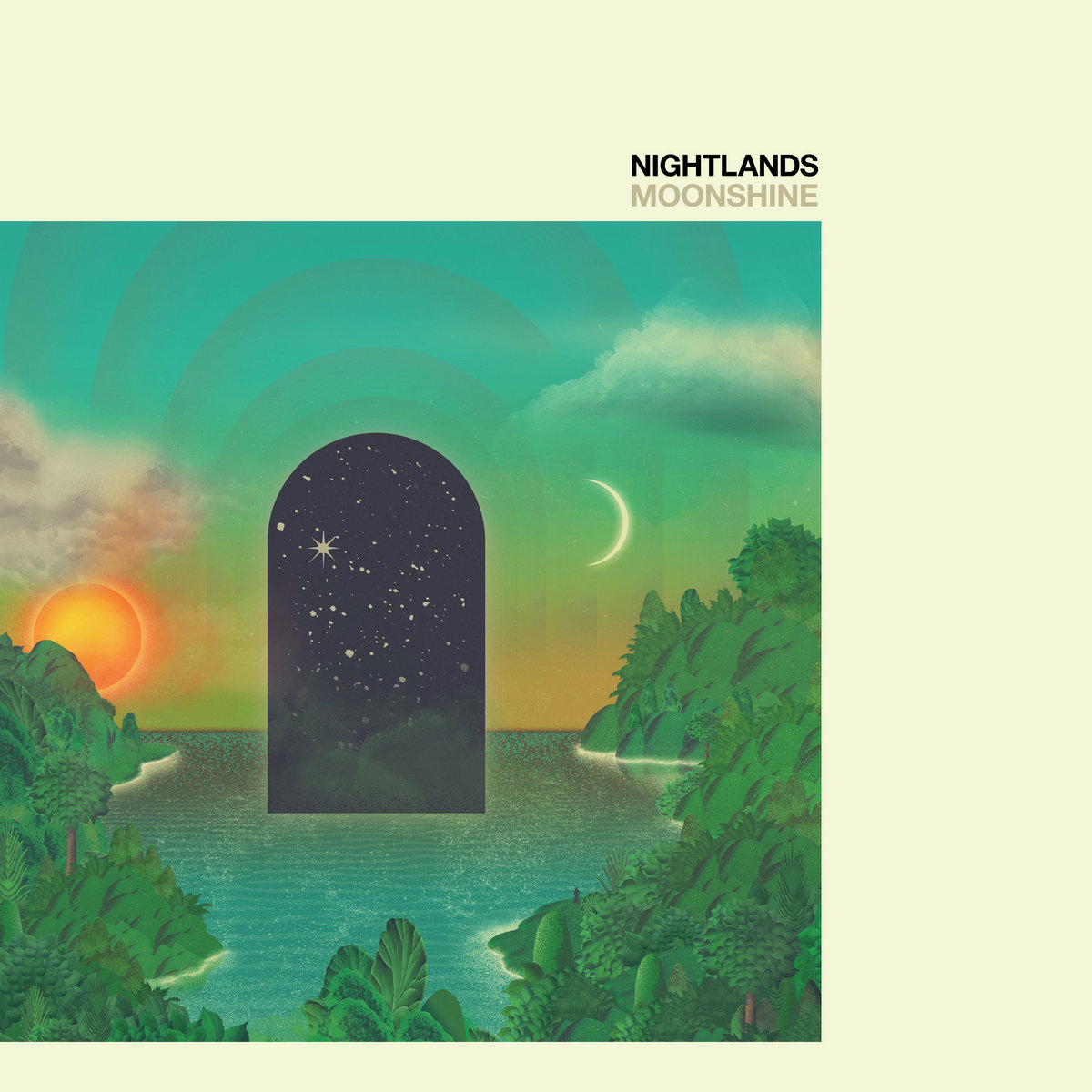
When crafting his music, Hartley has looked to build massive layers of keyboards and vocals on top of each other, creating ‘stacks’ of sound. They are in keeping with the album’s artwork, as the press release describes. “The surrealistic album art by Austin-based illustrator Jaime Zuverza depicts an archway opening to the stars over the surface of an idyllic sea flanked by both moon and sun”, it says. “Similarly, Moonshine reveals portals within portals leading to ever deeper places in Hartley’s vocal-centered labyrinth.”

What’s the music like?

As wide open as that introduction suggests it will be, but in spite of the big textures there is a touching intimacy too. On occasion it feels like the one person you are talking to has gone out for a quick smoke under the stars in a massive vista, and will be back inside shortly. The music pans out to give space to these thoughts, which are often tender and warm.

They are not without sharp-edged feeling, however. Stare Into The Sun has a direct observation on political machinations. “You’ve got your sheep but you’re no shepherd”, sings Hartley. “What does it mean…to buy everyone, and send someone’s son to Afghanistan?” No Kiss For The Lonely is equally pertinent, with its observation of “no love for you refugees, no rest for the weary”.

Most of the time, however, the album inhabits a calming place, the big vocals and keyboards complemented by languid saxophone lines and impressively supple rhythm tracks. The music unfolds with a slow and very natural groove, and Hartley’s warm-hearted vocals become its principle feature, often finding a style of music akin to a less troubled Bon Iver.

With You is a prime example, inhabiting a serene and content place, while Blue Wave goes even calmer, its keyboards like a slowly running stream.

Does it all work?

It does, especially at either end of the day. Moonshine has some very evocative moments, and it is beautifully written, rewarding background listening but also offering more to those paying attention to the lyrics.

Is it recommended?

Is it recommended?

Yes – an album of starry Americana that deserves its place in the moonlight.

Listen

Buy

On Record – Ulf Bästlein & Hedayet Jonas Djeddikar – Martin Plüddemann: Ballads, Songs and Legends (Naxos)

Martin Plüddemann
Liederzyklus. Jung Dietrich (both 1879). Vineta. Venetianisches Gondellied (both 1880). Graf Eberhards Weissdom. Einkehr. Siegfrieds Schwert (all 1881). Der Glockenguss zu Breslau (1882). Die Taufe. Dr Martin Luther. Ritter Kurts Brautfahrt. Arthur Schopenhauer (all 1883). Die Legende vom Hufeisen (1884/9). Altdeutsches Minnelied. Frau Mette. Don Massias. Russisches Lied. Des Sängers Fluch (all 1885). Gute Nacht (1887). Loewe’s Herz (1892). Niels Finn. Die Katzen und der Hauscherr. Der Sarg auf der Maasinsel. Die Meer-maid. Des Lebens Winter (all 1893). Sankt Peter mit der Geiss (1895). Drei Wanderer (1897).

Ulf Bästlein (baritone), Hedayet Jonas Djeddikar (piano)

Naxos 8.551460-61 [two discs, 2h34m15s] Producer/Engineer: Alexander Grün Dates: October 2nd-4th, 2020 and March 19th-22nd, 2021 at Studio TONAL, Pfaffendorf German texts and English translations can be found on the Naxos website, as can the additional notes

Reviewed by Richard Whitehouse

What’s the story?

Naxos once again puts inquiring listeners in its debt with a collection of Ballads, Songs and Legends from the short-lived though influential Martin Plüddemann, admirably realized and extensively documented by artists for whom this project has evidently been a labour of love.

What’s the music like?

Readers might recall the world premiere in late 1978 of an orchestral song Siegfrieds Schwert by Webern. In fact, its brash orchestration was all that the teenage composer had contributed to a ballad written 22 years earlier by Plüddemann – then so obscure that the connection was not made at this time. Born in Kolberg (now Kołobrzeg in Poland) in 1854, he had studied at Leipzig in the early 1870s then worked as a singing teacher, conductor and critic in, among other places, Munich and Graz before heading to Berlin where he died in 1897 aged just 43.

Although he championed the music of Wagner, Plüddemann was most influenced creatively by Carl Loewe – specifically his concept of the ballad which dominates those 50 or so pieces that he completed, and of which 33 are included in this collection. Examples can be found in such as Schubert, Schumann and Brahms, and while Plüddemann took this to a new level of formal and expressive density, the innately Teutonic nature of the genre consigned his music to oblivion once Austro-German culture had moved on near the start of the twentieth century.

The essence of Plüddemann’s thinking is amply conveyed by a collection as includes several of his songs, notably the winsomely understated Liederzyklus and mini-cycle after Heine that is Frau Mette – alongside the more substantial ballads in which the intertwined significances of story-telling and role-playing, coupled with the often graphically illustrative quality of the piano writing, results in music which is highly evocative or excessively mannered according to taste. Never in doubt, though, is the ability to draw each listener into its interiorized world.

Plüddemann’s most ambitious ballads are heard at the end of each disc – the Faustian pact as adumbrated by Wilhelm Müller when truth confronts beauty in Der Glockenguss zu Breslau, then the highly polemical relationship between art and the state in Ludwig Uhland’s familiar Der Sängers Fluch whose undeniably equivocal resolve says much for the aesthetic stance of the composer and many of his contemporaries. The shorter ballads evince a wide range of moods, not least Siegfrieds Schwert which sounds far more appealing in its original guise.

Does it all work?

Yes, provided listeners approach this music in the context of its intentions and limitations. As with Loewe, there is more than a hint of didacticism which might be thought off-putting, but it is to the credit of Ulf Bästlein and Hedayet Jonas Djeddikar that any such aspect has been integrated into the overall content of the piece at hand. Certainly, the former’s burnished yet never cloying baritone, allied to the latter’s dextrous while resourceful pianism, ensures that Plüddemann’s work benefits from a degree of advocacy it can seldom have received hitherto.

Is it recommended?

Indeed, not least as the sound has so realistic a balance between voice and piano, with essays by Bästlein, Michael Wilfert and Susan Youens that yield a wealth of information previously unavailable in English. Those drawn to the Austro-German musical byways need not hesitate.

For further information on this release, you can visit the Naxos website, and you can purchase by clicking on the link from Naxos Direct. Click on the names for more information on the composer Martin Plüddemann, and on the artists Ulf Bästlein and Hedayet Jonas Djeddikar