On record – Myaskovsky: Vocal Works Vol. 1 (Elizaveta Pakhomova, Tatiana Barsukova, Marina Dichenko & Olga Solovieva) (Toccata Classics)

myaskovsky

Myaskovsky
Romances on Verses by Mikhail Lermontov, Op. 40 (1935-6)
Violin Sonata in F major, Op. 70 (1946-7)
Notebook of Lyrics, Op. 72 (1946)

Elizaveta Pakhomova (soprano, Romances), Tatiana Barsukova (soprano, Notebook), Marina Dichenko (violin), Olga Solovieva (piano)

Producer & Engineer Ilya Dontsov (Romances & Notebook), Maria Lenarskaya (Sonata)

Toccata Classics TOCC0355 [68’16”]

Recorded 25 May 2007 at Theatre and Concert Centre, Moscow (Violin Sonata), 29 April & 29 June at Studio One, Russian Radio House, Moscow (Notebook), 23 & 24 January at Production Complex Tonstudio, Mosfilm, Moscow

Written by Richard Whitehouse

What’s the story?

Toccata Classics here inaugurates a significant series which is devoted to the complete vocal works by Nikolay Myaskovsky, whose sizable corpus of songs remains the one aspect of his output still to be explored, together with a further recorded appearance for the Violin Sonata.

What’s the music like?

Myaskovsky’s 115 published songs come predominantly from his formative years and early maturity. Notebook of Lyrics is actually his last cycle so conceived, ‘six romances’ dedicated to Mira Mendelson (second wife of Prokofiev) whose texts furnish the opening four songs – their introspective and confessional mood culminating in the anguished pathos of the fourth, How often at night. Mendelson’s translation of two Burns poems round-off this cycle, the fervour of My heart’s in the Highlands followed with the poignancy of My Bonnie Mary.

Appealing as this cycle is as sung by Tatiana Barsukova, the Romances on Verses by Mikhail Lermontov is the highlight here – its 12 songs confirmation of Myaskovsky’s rootedness in a lineage stemming back from Rachmaninoff via Tchaikovsky to Glinka. The initial A Cossack Lullaby marginally outstays its welcome, but thereafter each of these settings renders its text with unerring candour as they build to the inevitable yet understated climax in Forgive me! We will not meet again – its enveloping valediction ideally caught by Elizaveta Pakhomova. Interestingly, these two cycles were premiered at the same Moscow recital by Nina Dorliak and Sviatoslav Richter on 29th April 1947 such as also featured a first performance for the composer’s Violin Sonata by the formidable partnership of David Oistrakh and Lev Oborin.

As was once remarked about buses, one waits ages for an account of the Violin Sonata only for three to come along in as many years. Ironic when the third to appear should have been the first to be recorded: Marina Dichenko’s predating over a decade those by Alexey Lundin with Mikhail Ludsky (Moscow Conservatory Records, coupled with Myaskovsky’s 11 piano sonatas), then Sasha Rozhdestvensky with Viktoria Postnikova (First Hand Record, coupled with violin sonatas by Shebalin and Nechaev). The present recording is that of the definitive version as published in 1948, which aims to clarify aspects of the interplay between this duo as well as the work’s unusual trajectory – a flowing though restrained Allegro followed by a Theme with Twelve Variations and Coda, which latter brings about the decisive conclusion.

Does it all work?

Very much so. The two cycles featured here confirm Myaskovsky to be no less skilled in his writing for voice than for piano, string quartet or orchestra – while his identification with the text at hand comes through almost all these settings. It helps to have so sensitive and attuned a pianist as Olga Solovieva – already familiar to Russian music enthusiasts for recordings of Lyadov (Northern Flowers), Shebalin (Toccata) or Boris Tchaikovsky (Albany and Naxos) – whose subtle resourcefulness duly enhances the expressive immediacy of the music-making.

Is it recommended?

Indeed. The various dates and localities yield relatively little difference in terms of their sound quality, while Yuri Abdokov’s annotations are exemplary in terms both of specific works and general context. One hopes this is a series which circumstances will enable to run its course.

Listen

Buy

You can discover more about this release and make a purchase at the Toccata Classics website.  For more information on Myaskovsky, click here, and for more on pianist Olga Solovieva, click here

Switched On – Heavenly Remixes 3 & 4: Andrew Weatherall (Heavenly)

heavenly-3

reviewed by Ben Hogwood

What’s the story?

Heavenly have already released two volumes of compilations celebrating the art of the remix on their label. They have turned to a wide range of their artists either as remixers or as providers of the original song, moving from older staples from Saint Etienne and Doves to more recent Heavenly royalty Working Men’s Club, The Orielles and Gwenno.

Volumes 3 and 4 tell a different story, coming to you directly from the mixing desk of the much missed Andrew Weatherall. Weatherall was a shining light in dance music – rock music, too – from the 1990s onwards, sprinkling his production stardust on albums from Primal Scream (notably Screamadelica) and Beth Orton, while providing production and remixes for a huge range of artists.

This selection is all exclusive to the Heavenly label, celebrating his achievements and status with the label, for their first ever remix was from Weatherall himself.

What’s the music like?

In a word, brilliant. Weatherall made so many remixes but managed the difficult juggling act of having his own distinctive style without ever making the same mix twice.

That first remix – the Andrew Weatherall Soul Of Europe Mix of Sly & Lovechild’s The World According To Sly & Lovechild – is an uplifting call to arms at the start of this collection. It may begin with the vocal gambit “These are dark days” but it is a wholly positive vocal, dressed with undulating marimbas and a chunky bassline. Next up is Mark Lanegan, the legendary vocalist who as I write this review sadly passed away only yesterday. Beehive gets an upfront remix with the couplet “lightning coming out of the speakers, wanna hear that sound some more”. After these two heavyweights, an even bigger mix lies in wait in the form of Flowered Up’s ‘Weekender’ from 1992. This is expertly paced over 17 minutes, no less, getting into its groove early on and never letting up. A similar rhythm permeates Gwenno’s Chwyldro but this is a wholly different approach, with a hazy palette and some weird harmonies complementing her softer tones.

Another legendary remix follows, Weatherall taking Saint Etienne to the dancefloor with his take on Only Love Can Break Your Heart, a dub-infused version that drops into a full vocal version half way through. A heady remix of Confidence Man’s Bubblegum follows, then a Sabres of Paradise mix of Espiritu, whose Conquistador goes through the wringer in an up-tempo flurry of percussion and rave riffs. Finally The OriellesSugar Taste Like Salt plays havoc with the stereo placement and rolls out a big set of drum fills, both favourite tricks of Weatherall’s as he succeeds in displacing the listener.

heavenly-4

Volume 4 is just as good – and once again presents a set of shapeshifting beats that manages to twist the original artists almost beyond recognition. audiobooks are first, Weatherall taking them to the electro disco with the groovy, spacey, Dance Your Life Away, before an edit of the Two Lone Swordsmen Dub of Saint Etienne’s Heart Failed In The Back Of A Taxi, a suitably grubby affair.

Next up is DovesCompulsion, an unlikely candidate but packed with reverb and big vocals as it settles into a brilliant chugging groove with constantly flickering electronics. TOY’s Dead and Gone gets a minimal, relatively straight remix with a good deal of white noise, then Confidence Man’s Out The Window makes the most of a vocal that could have been sent from the Hacienda. LCMDF’s Gandhi is a shape-shifter in Weatherall’s hands, then another Espiritu track – Bonita Mañana – gets taken to the cleaners over 13 glorious minutes. Finally – and regretfully – we reach the end with Unloved and a slow, loping take on Devils Angels, doom-laden and disorientating on headphones.

Does it all work?

It does, handsomely – and it matters not a jot that some of these remixes weigh in at more than a quarter of an hour. Flowered Up’s Weekender is a great example of how to make one remix sound like half of a DJ set, and it says a lot for Weatherall’s craft that it would be easy to listen to the track all over again.

Is it recommended?

Yes – for this is the sound of an artist constantly finding new ways to express familiar vocals, always with both eyes on the dancefloor. It is clear that Andrew Weatherall had nothing but fun in his studio! Weatherall fans and anyone wanting to learn the dos and don’ts of a good remix should get this, as should anyone with a passing interest in dance or indie music from the 1990s onwards. Even without any of the historical baggage, this is simply a brilliant set of grooves with a feelgood atmosphere running throughout!

Stream and Buy


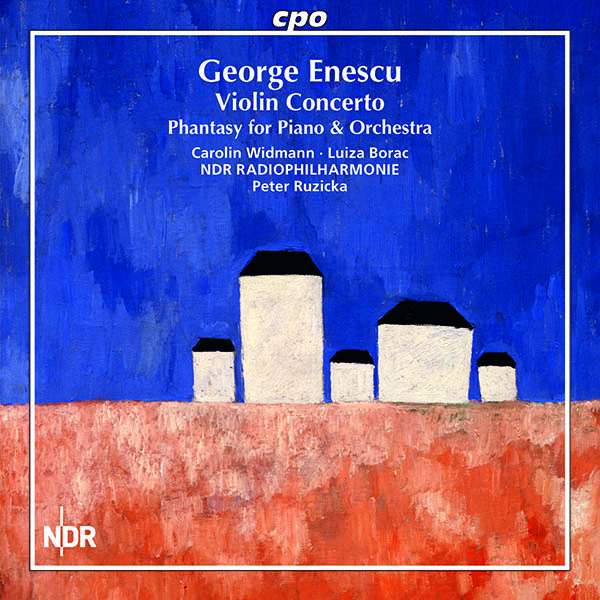
On record – Enescu: Violin Concerto & Phantasy (Carolin Widmann, Luiza Borac, NDR Radiophilharmonie / Peter Ruzicka) (CPO)

enescu

Enescu
Violin Concerto in A minor (1896)
Phantasy in D minor (1896/8)

Carolin Widmann (violin), Luiza Borac (piano), NDR Radiophilharmonie / Peter Ruzicka

Producer Elisabeth Kemper Engineer Daniel Kemper

CPO 555 487-2 [53’32”]

Recorded 25-28 May 2021 at Grosser Sendesaal, Landesfunkhaus, Hannover

Written by Richard Whitehouse

What’s the story?

CPO continues its coverage of little-known Enescu with this coupling of two pieces from the composer’s teenage years, persuasively rendered by leading performers and with a conductor second to none through his expanding the orchestral output of a still under-appreciated figure.

What’s the music like?

Although not his ‘breakthrough’ year, 1896 was a significant one for Enescu in terms of those compositions he at least attempted. He was not yet 15 when premiering the first movement of a Violin Concerto whose Andante was not played and its finale likely never written. Even so, the audience must have been surprised and even a little bemused at the audacity of a teenager who opened with an Allegro moderato rivalling those of the Brahms and Beethoven concertos in its scale and intent, and one whose technical display is secondary to its weight of argument.

Enescu having relocated to Paris after seven years in Vienna, evidence of competing aesthetic influences is not hard to discern – with Brahms the audible precursor of that Allegro, down to the climactic entry of the soloist after a lengthy opening tutti, then a (self-written) cadenza as serves a formal rather than virtuosic purpose. Despite being considerably longer than that of the Brahms, the Andante looks more to French antecedents – notably the Third Concerto of Saint-Saëns whose siciliano profile it utilizes, but not a tendency for pronounced expressive contrasts that is exemplified by the rhythmic impetus of its alternating episodes. Exactly why Enescu never completed this work is uncertain, yet if he felt its influences too obvious, such derivativeness need not be a barrier to appreciation or enjoyment of these movements today.

Enescu unlikely had any knowledge of the Violin Concerto that Busoni was writing at much this time, yet the former’s Phantasy has a tangible aura of the music his older contemporary was then writing. Witness the stealthy introduction as surges forth into the main movement, its alternation of genial assertiveness and ironic rumination itself a Busonian trait, as too the close-knit integration between soloist and orchestra or the subtle ambiguities of its harmonic writing. CPO’s booklet note gives 1898 as the date of composition which other sources give as two years earlier, but there is general agreement that its (only) performance took place at Bucharest in 1900. By then Enescu had written his first undoubted masterpieces, the Second Violin Sonata and Octet for strings, and no doubt felt the piece suffered through comparison.

Does it all work?

Yes, on its own terms. The rapidity with which Enescu evolved as a composer meant he soon left behind the influences as are audible here, which does not make either of these pieces any less worth hearing or merely for enthusiasts. Carolin Widmann is classy casting in the Violin Concerto, articulating its lengthy structures with no mean artistry, while the Enescu specialist Luiza Borac (most recently heard in in the torso of a Piano Concerto from the same period on Profil Hänssler) ensures a cohesion in the Phantasy without limiting its imaginative qualities.

Is it recommended?

Indeed, not least when the recording is unexceptionally fine and Volker Tarnow’s annotations are unfailingly informative. Hopefully CPO and Ruzicka will further their Enescu exploration with the Second and Third ‘School’ Symphonies or sundry orchestral pieces from this period.

Listen

Buy

You can discover more about this release and make a purchase at the Presto website.  For more information on the artists, click on the names for Carolin Widmann, Luiza Borac, Peter Ruzicka and the NDR Radiophilharmonie 

Switched On – Heavenly Remixes 1 & 2 (Heavenly)

heavenly-1

reviewed by Ben Hogwood

What’s the story?

The celebrated record label Heavenly, one of Britain’s most durable independent record labels, was built in part on the art of the remix. It is therefore only right they celebrate the craft with a quartet of compilations. The first two were released in late 2021, while the much-missed Andrew Weatherall who made their first remix, gets the third and fourth volumes all to himself early this year. This review covers the wide selection of music housed in the first two releases.

What’s the music like?

Hugely enjoyable. The great thing here is the planning on the part of the label, who have skilfully blended remixes old and new into a logical order without losing the sheer enjoyment of the process.

Among the many highlights is the now legendary Underworld remix of Saint Etienne’s Cool Kids of Death, with spacey pianos flitting in and out of the picture. This is in contrast to the blasts of distortion given to Jimi Goodwin’s Terracotta Warrior by Andy Votel. The Mother remix of Espiritu’s Los Americanos brings the funk, while a surprise Cherry Ghost cover of CeCe Peniston’s Finally has a meeting with The Cure’s Lullaby in an unexpected turn of events from the studio desk of Time and Space Machine.

The more recent material includes a windswept take on Unloved’s Why Not from Gwenno, while Raf Rundell struts out in the company of the synths of Harvey Sutherland, an excellent take on Monsterpiece. The spatial effects applied to Midlife’s Automatic from Jono Ma Ascend are also a treat for the headphone listener, and the loping beat of Confidence Man’s Out The Window, as managed by Greg Wilson & Ché Wilson, is brilliant.

heavenly-2

The second volume has a similar old-new profile, which once again is brilliantly managed. The enjoyably gritty Monkey Mafia remix of Saint Etienne’s Filthy is very much of its time, with big beats and heavy bass, while The Orielles succumb to a great piano-led house treatment from Dicky Trisco & Pete Herbert on It Makes You Forget. The artfully restrained Mikey Young remix of Boy Azooga’s Face Behind Her Cigarette is nicely done, and leads into typical glittering excellence from Lindstrøm, as he takes DovesJetstream to the cleaners. R. Seiliog’s swirling take on Gwenno’s Chwyldro is a compilation highlight, making a heady impression, while in a similar vein M. Craft’s Chemical Trails is wispy and rather lovely when passed through the studio of Beyond the Wizards Sleeve.

Does it all work?

Yes. A few of the remixes show their age but why shouldn’t they? It all adds to the appeal of a compilation that will leave its listeners more than a little misty-eyed, but will give the rush of familiar vocals in unfamiliar settings. The wide range of styles only makes the package more attractive.

Is it recommended?

Without hesitation. Anyone with a passing interest in dance or indie music will take a lot from listening to these two volumes, and some of the components will fill valuable gaps in many a collection. It is a genuine thrill to hear a remix album as good and as fun as this collection is.

Stream and Buy


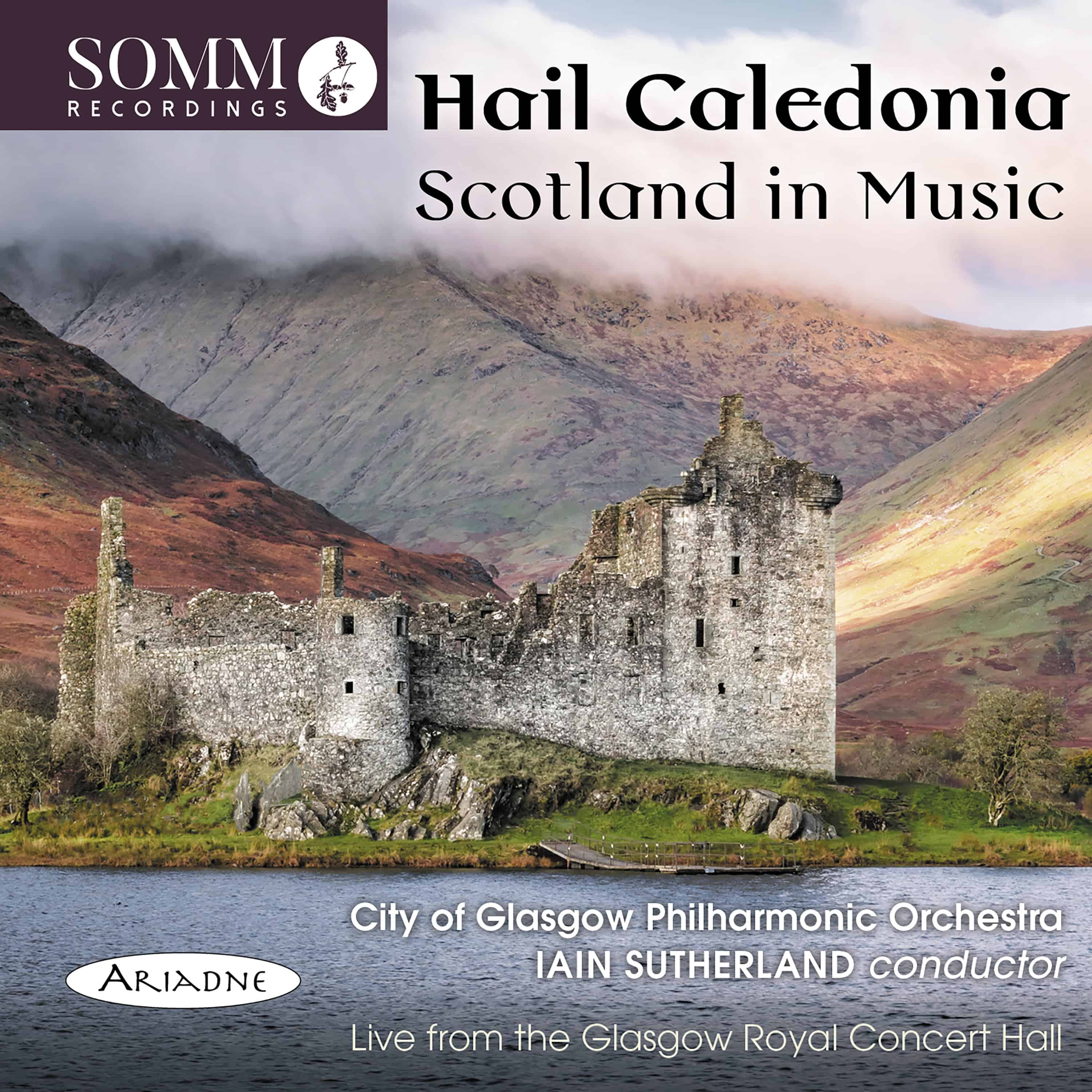
On record – Hail Caledonia: Scotland In Music (City of Glasgow Philharmonic Orchestra / Iain Sutherland) (Somm Recordings)

hail-caledonia

Trad. arr. Sutherland The Black Bear Salute
Docker Abbey Craig (1974)
Tomlinson Cumberland Square (1960)
Coates The Three Elizabeths – Elizabeth of Glamis (1944)
Mendelssohn Symphony No. 3 in A minor, Op. 56, ‘Scottish’ – Vivace non troppo (1842). Blake Take the High Road (1980)
MacCunn (arr. Sutherland) Sutherland’s Law (1886/1973)
Docker Faery Dance Reel (1958)
Sutherland Three Scottish Castles (1966)
MacKenzie (arr. composer) Benedictus, Op. 37 No. 3 (1888/1895)
Bantock Two Heroic Ballads – Kishmul’s Galley (1944)
Arnold Four Scottish Dances, Op. 59 (1957)
Williamson (arr. Sutherland) Flower of Scotland (1967)
Trad. arr. Sutherland Amazing Grace
Whyte Donald of the Burthens – Devil’s Finale/Reel o’ Tulloch (1951)

David Wotherspoon, Iain MacDonald (bagpipes), City of Glasgow Pipe Band, City of Glasgow Chorus, City of Glasgow Philharmonic Orchestra / Iain Sutherland

SOMM Ariadne 5014 [79’32”]

Digital Remastering Paul Arden-Taylor

Live performances at Royal Concert Hall, Glasgow in 1995 and 1996

Written by Richard Whitehouse

What’s the story?

SOMM releases via its Ariadne imprint this compilation of shorter pieces and arrangements which, between them, afford a wide-ranging and not at all hackneyed overview of ‘Scotland in Music’, realized with great flair by Iain Sutherland and the City of Glasgow Philharmonic Orchestra.

What’s the music like?

Whether or not the fastest regimental march in the British army, The Black Bear Salute duly launches proceedings with a gusto continued by Robert Docker’s breezy take on battle-song Scots Wha Hae in Abbey Craig. Ernest Tomlinson furthers the jollity with his amalgam of traditional Borders tunes in Cumberland Square, to which the quiet rapture of Eric Coates’s ‘Elizabeth of Glamis’ (central panel of The Three Elizabeths triptych) provides an admirable foil. The scherzo from Mendelssohn’s Scottish Symphony makes for an ideal interlude in its rhythmic vivacity and formal ingenuity, then come pieces made famous through association with television series – Arthur Blake’s atmospheric theme-tune for the soap drama Take the High Road and the corresponding sequence for crime drama Sutherland’s Law, derived from Hamish MacCunn’s overture Land of the Mountain and the Flood as has regained its place in the concert hall. Docker’s contribution to the light-music repertoire is typified by his Faery Dance Reel, a lively and infectious medley of traditional tunes that wears its heritage lightly.

Iain Sutherland displays his compositional skills (with respective nods to Arnold and Coates) in Three Scottish Castles with its evocative tribute to those of Stirling, Dunvegan (Skye) and Edinburgh. Next comes a contrasting brace of pieces – the burnished eloquence of Alexander MacKenzie’s Benedictus here followed by the unfailing extroversion of Kishmul’s Galley by Granville Bantock, whose immersion in all things Scottish was enduring. Malcolm Arnold’s Four Scottish Dances are then given a memorable reading which points up the trenchant gait of ‘Strathspey’ or the latterly inebriated progress of ‘Reel’, before ‘Hebrides’ casts a suitably rapturous spell that is summarily curtailed with the headlong energy of ‘Highland Fling’. One half of influential folk duo The Corries, Roy Williamson created his own standard in Flower of Scotland, here given an opulent arrangement comparable to that of the ubiquitous Amazing Grace – after which, the closing section from the ballet Donald of the Burthens by Ian Whyte (founder conductor of the BBC Scottish Symphony Orchestra) makes for a scintillating finale.

Does it all work?

Yes. Compilations such as this are often no more than the sum of their parts, however enticing those parts may be, but Hail Caledonia is one to sample at leisure as well as worth playing at a single sitting. It helps when the City of Glasgow Philharmonic renders all these pieces with alacrity and enthusiasm, aided by being captured on various live occasions, and owing in no small part to its founder Iain Sutherland. A familiar radio presence over several decades, he brings an authority to music whose outward flair is not without its corresponding substance.

Is it recommended?

Indeed. The remastered sound lacks nothing in realism or immediacy, while there are detailed and informative notes by composer, critic (and no doubt ecosophile) Robert Matthew-Walker. Any listeners who are looking to add such a compilation to their collections need not hesitate.

Listen & Buy

You can discover more about this release and listen to clips at the SOMM Recordings website, where you can also purchase the recording.