Switched On – Hounah: Broken Land (Feines Tier)

hounah

reviewed by Ben Hogwood

What’s the story?

Daniel Nitsch is an extremely versatile electronic artist who has been making music for more than 20 years. Hounah is his most recent pseudonym, and he is using it to express innermost feelings and thoughts about the world today. Covering subjects such as racism and gentrification, he moves fluidly between a series of different styles, mostly slow in tempo, with the help of a band comprising pianist Johann Blanchard, singer Lena Schmidt and guitarist Marten Pankow.

What’s the music like?

Both thoughtful and thought provoking, Hounah’s musical style is downbeat but diverse too. After an atmospheric instrumental beginning from Reflections, the meditative Fairbanks has an intimate vocal from Schmidt and a production panning out in between the words.

The Robbery has a sort of smokiness you would expect from Massive Attack, creating a late night vista, but also uses a cautionary musical language. That feeling is swept up by A.F.R.O., who entreats ‘my people please rise up’ at the heart of Revolution. He appears again later on with Laid Back Misery, which ironically is a faster track with an urgency to the beats.

Sorrow is very slow, and a bit stately, as is Through The Rain – but this intriguing track feels like an improvisation on a thought, using some musical language that could be loosely appropriated with jazz. From Norton Bay is a thoughtful closing track, almost absent minded in its guitar strumming but with a spoken word vocal.

The interludes are thought-provoking, too – especially Cash For Your Home with its muse on gentrification.

Does it all work?

Yes, largely. On occasion the music of Hounah can feel too preoccupied with itself, weighed down by the surroundings, but more often than not it emerges with resilience and poise.

Is it recommended?

It is. Nitsch is a writer who gets to the heart, and this atmospheric album has a lot of emotional depth to go with it.

Stream

Buy


Switched On – Leo Abrahams: Scene Memory II (figureight records)

leo-abrahams

reviewed by Ben Hogwood

What’s the story?

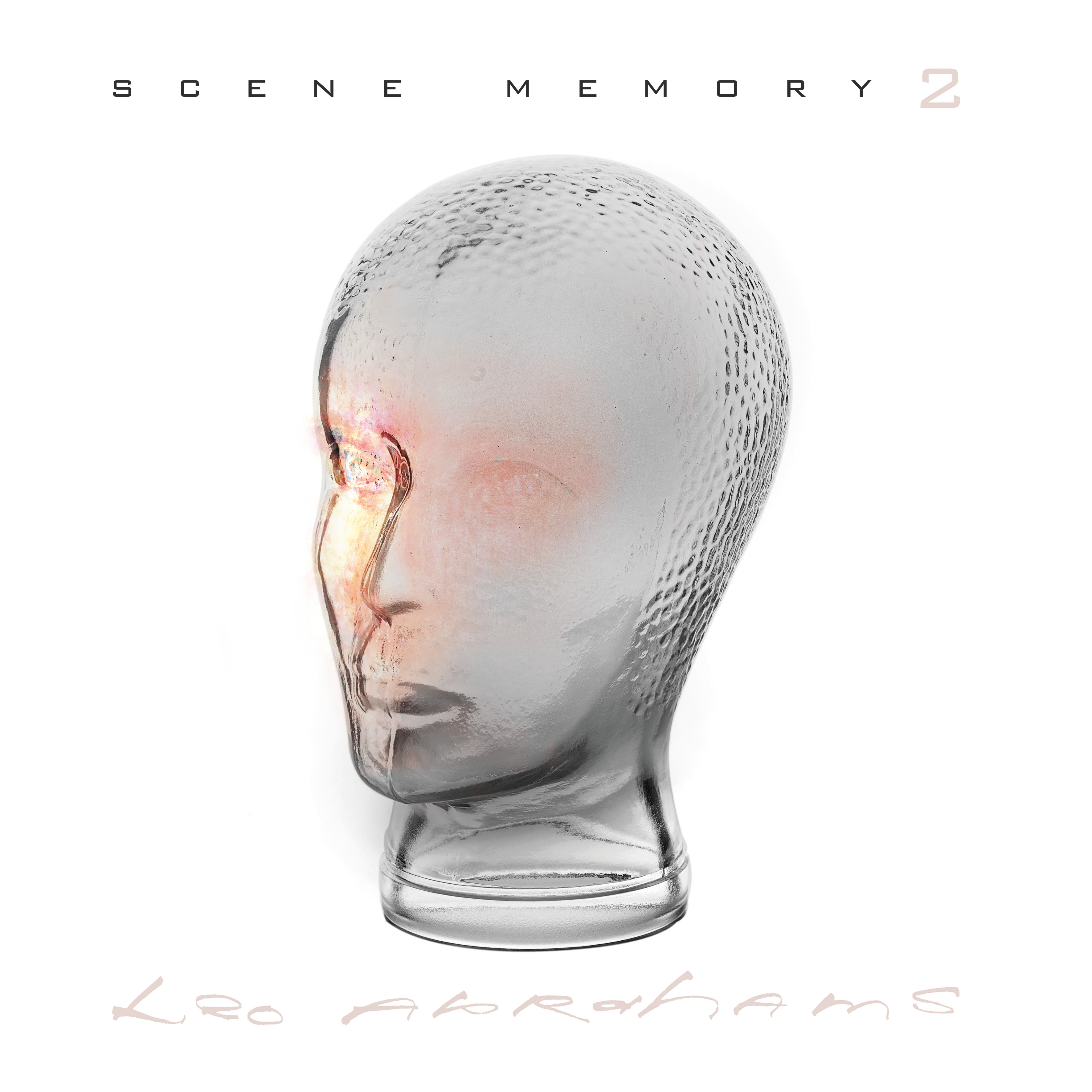
This is a sequel album at a distance of fifteen years from the original. When Scene Memory I came out in 2006, Leo Abrahams was already proficient in a number of musical forms and styles, but since then he has broadened his horizons by working with Brian Eno, David Byrne, Jon Hopkins and Paul Simon, among many others.

Working from his London studio, Abrahams offers both collaboration and solo work, but until recently has tended to prioritise the former. Scene Memory II sees him return to the solo guitar, and all its sounds are conjured from the instrument in some way.

His approach is one largely borne of instinct and improvisation, inspired by a tour of Siberia undertaken in 2019. Many of the melodic ideas have their origin there, being honed to completion in London.

What’s the music like?

There is an intriguing balance of ambience and tension running through Abrahams’ music. The studied guitar lines that come to the forefront are often complemented by more spacious surroundings, rewarding listeners on headphones or wider screen sound systems. There is always a strong sense of direction in his workings, however, and the guitar is used to generate sounds that are by turns percussive, feather-light, melodic and noise-based.

Spiral Trem is glitchy, with bass drum sounds like stepping stones, somehow wrought from the guitar. Supplicant explores the higher range of the instrument with harmonics, which sound like chimes. Its lines recall a similar state of mind to that found in the early ECM recordings of Pat Metheny. Tithe has a calling towards the start and then flickers intermittently, the pauses between its melodic phrases bringing to mind the more intricate works of John Martyn. Alternations retreats to a distance for its reverberating, languid lines, while Ruins is suitably eerie, turning the guitar into a wordless vocal instrument and losing track of a discernible pulse. Troth, meanwhile, has a more severe language secured through its sharper timbres.

Does it all work?

It does. Abrahams’ work has presence and poise, and makes a powerful impact even in its most restrained moments.

Is it recommended?

It certainly is. Abrahams writes music that becomes more compelling the more time you spend with it. It will be interesting to see how his solo work develops as he spends more time on it over the next few years.

Stream

Buy


Switched On – Rival Consoles: Overflow (Erased Tapes)

rival-consoles-overflow

reviewed by Ben Hogwood

What’s the story?

Ryan Lee West’s new album under the pseudonym of Rival Consoles was written for a dance production, Overflow, choreographed by Alexander Whitley. The aim of Whitley’s work was to explore ‘themes of the human and emotional consequences of life surrounded by data’…echoing ‘the concept of social media, advertising, marketing companies and political factions exploiting our data to gain wealth, political advantage and sow division.’

West noted the potential of the combined artform to ‘create an otherworldly space the listener/viewer can escape to and explore’. A big feature of the finished work is a light sculpture created by Children of the Light, with a long LED bar that moves around the stage.

What’s the music like?

Rival Consoles responds to his theme with music of real presence and tension. Right from the off there is an air of foreboding to Monster, with its brooding colours and slightly irregular pitches and rhythms stretched over ten minutes.

I Like ratchets this up still further. Mashing up a short vocal sample, which is effective but also infuriating as the speaker never quite gets to the point. The Cloud Oracle also treats speech intriguingly, with a held note that has talking heads spun around it.

Flow State is a thrilling ride at a high tempo, with crossrhythms generated by the keyboards that are redolent of Steve Reich and which have plenty of opportunity for development over twelve minutes, the percussion hammering more incessantly on the door.

All these examples are an indication of the invention Ryan Lee West gets in response to Whitley’s brief, resulting in music that pushes him further technically and creatively from the previous album Articulation.

Does it all work?

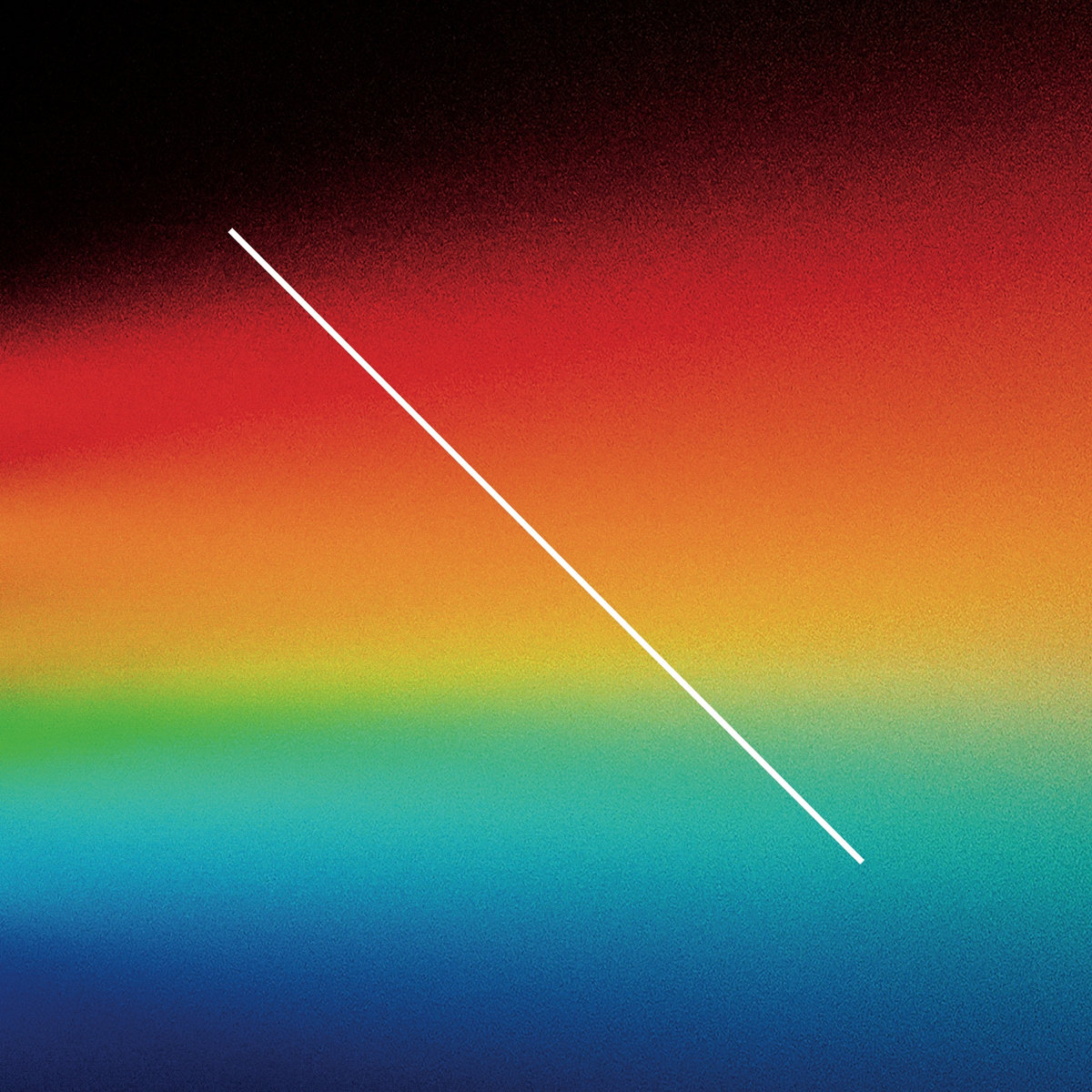
It does. Overflow is a compelling piece of work, a musical equivalent to the striking colours that adorn its cover.

Is it recommended?

Yes. There was a general feeling that Articulation did not quite meet Ryan Lee West’s full potential as Rival Consoles, effective though it was. There can be no such doubt here.

Stream

Buy


On record – Peter Dickinson: Lockdown Blues (Somm Recordings)

lockdown-blues

Barber (arr. Dickinson) Canzonetta Op. 48 (1977-8)*
Berkeley
Andante Op.23/6 (1945)
Cage
In a Landscape (1948)
Dickinson
Blue Rose (1978); Freda’s Blues (2016); Lockdown Blues (2020)
Ellington (arr. Dickinson)
Twelve Melodies (1932-43)*
Gershwin
Three-Quarter Blues (c1925); Who Cares? (1931)
Goossens
Lament for a Departed Doll Op.18/10 (1917)
Lambert
Elegiac Blues (1927)
MacDowell
To a Wild Rose Op.51/1 (1896)
Poulenc
Pastourelle IFP69 (1927); Bal fantôme IFP64/4 (c1934)
Satie
Trois Gymnopédies IES26 (1888); Trois Gnossiennes IES24 Nos.1-3 (1889-90)

Peter Dickinson (piano)

SOMM Recordings SOMMCD0644 [68’24”]

Producer & Engineer Peter Newble

Recorded 16 and 17 April 2021 at Potton Hall, Westleton, Suffolk. * indicates first recordings

Written by Richard Whitehouse

What’s the story?

Peter Dickinson here turns the third phase of lockdown to his – and our – advantage with this collection of piano music touching on the blues and jazz which have long been a mainstay of his careers as performer and composer, and which also includes two notable first recordings.

What’s the music like?

The programme commences with the pensive sadness of Dickinson’s Freda’s Blues, written in memory of the widow of Lennox Berkeley, continuing with a poised and refreshingly non-mawkish take on MacDowell’s perennial To a Wild Rose – its blues and rag idioms made the basis of Dickinson’s Blue Rose. The empathetic feel of Lambert’s Elegiac Blues in memory of singer Florence Mills is affectingly caught, while Dickinson’s marrying of blues and Bach in Lockdown Blues recalls George Shearing’s pioneering such fusions. After the drollery of Poulenc’s Bal fantôme, Dickinson’s reworking of the Canzonetta which Barber intended for his unrealized Oboe Concerto proves a focal-point in its searching pathos. Such a quality is also to the fore in Berkeley’s limpid Andante, as is the alluring charm of Gershwin’s Three-Quarter Blues – and to which the whimsy of Poulenc’s Pastourelle provides a pertinent foil.

Whether as solo pianist or in recital with his sister Meriel, Dickinson has been unstinting in his advocacy of Satie and his reading of the original Gnossiennes (not those three published decades after the composer’s death) lacks for nothing in perception. Such is equally the case when, after the insinuating charm of Gershwin’s Who Cares? then the wistful eloquence of Goossens’s Lament for a Departed Doll, he renders Satie’s evergreen Gymnopédies with an objectivity that not unreasonably plays down the mystical aura often attributed to this music.

Perhaps the highlight here is Twelve Melodies that Dickinson has arranged from Ellington’s big-band numbers in what proved a veritable ‘golden age’ for such music and not previously recorded in this guise. Picking out a selection might hardly seem necessary, but the yearning of Solitude, eloquence of Lost in Meditation, questing emotions of Azure then the expressive warmth of Mood Indigo stand out in a sequence which concludes with the phlegmatic charm of Day-Dream then haunting atmosphere of Prelude to a Kiss. Moreover, Dickinson has one final trick up his sleeve with an elegant rendering of Cage’s In a Landscape – music in which this most recalcitrant of composers comes closest to his beloved Satie with its ineffable grace.

Does it all work?

Very much so, thanks not merely to the range of music covered but also through Dickinson’s insight. Into his 87th year when these recordings were made, his technique remains as fluent as his understanding and enjoyment are audible. Long able to accommodate the populist and the experimental within his own music, such inclusiveness extends to the idiomatic aspect of his interpretation and the deftness of his touch. Surely nothing can now prevent the Ellington set being taken up by pianists everywhere, with the numerous shorter pieces ideal as encores.

Is it recommended?

Indeed. The piano sound has a naturalness and clarity ideal for this music, while few writers other than Dickinson would be equally aware of technical details and chart standings. Here is looking forward to further releases by this always resourceful pianist in his ‘Indian summer’.

Listen & Buy

You can discover more about this release and listen to clips at the SOMM Recordings website, where you can also purchase the recording. For more information on Peter Dickinson, click here.

On Record – Erland Cooper & Shards: Egilsay EP (Mercury KX)

What’s the story?

It has been an extremely productive and musically enriching year for Erland Cooper. This four-track EP is his second collaboration with Shards, the vocal ensemble with whom he worked on a festive release last year. Once again it has a visual accompaniment, with regular collaborator Alex Kozobolis.

What’s the music like?

Beautiful. Once again we are transported to Orkney, but each time we go we either learn something new about the place or are placed in a different context. Egilsay is one of the small isles to the north of the archipelago, and the compositions here are intended as meditations on shifting time and light. The song titles are Orcadian words associated with these phenomena.

This is immediately evident in the swooping vocal lines of Glimro and Lisbealad. The deeply moving first track shows how well Cooper writes for voices nearer the extremes of their range, with an angular line beautifully sung. The second has an even wider range, with soprano soaring and a bass down low, feeling the elemental qualities of the Orkney coastline. Tullimentan has a timeless quality, like an old Mediaeval incantation set against the steadily falling rain and flowing water. It is very emotive.

There is a second take on Glimro, reclothing the song and including a John Keats poem to mark the poet’s bicentenary. Its sotto voce words are read to the accompaniment of string arrangements from Uèle Lamore and Kathryn Joseph that put the piece in a new light, looking back to the previous EP Never Pass Into Nothingness.

Does it all work?

Yes. Once again this is music transporting its listener far away from their environment and directly into the place it reflects. Egilsay has a harsh, striking beauty that feels fully reflected in these concentrated portraits.

Is it recommended?

Absolutely, as another compelling chapter in Erland Cooper’s musical evolution. The voices make for an even more complete human experience.

Stream