On record – Lyadov: Choral Music (Academy of Russian Music Chamber Choir / Ivan Nikiforchin) (Toccata Classics)

lyadov

Lyadov
Two Choruses from the Final Scene of Schiller’s ‘Die Braut von Messina’, Op. 28 (1878)
Glorification for Valdimir Stasov (1894)
Slava, Op. 47 (1899)
10 Russian Folksongs (1899)
Glorification for Vladimir Stasov (1899)
Farewell Song of the Schoolgirls from the Empress Maria Institute, Op. 50 (1900)
‘Drip, Ek’ Fugato (1900)
Glory to Nikolai Andreevich Rimsky-Korsakov (1901)
Hymn to Anton Rubinstein, Op. 54 (1902)
Five Russian Folksongs (1902)
Chorus from Cantata in Memory of Mark Antokolsky (1902)
Music to Maurice Maeterlinck’s ‘Soeur Béatrice’, Op. 60 (1906)
15 Russian Folksongs (1908) – Nos. 3, 9, 10 and 14
10 Settings from the Obikhod, Op. 61 (1909) – Nos. 7 and 10
The Hourly Prayer of St Joasaph Gorlenko (1910)
Three Russian Folksongs (1912)
Glory to Evgeniya Ivanovna Zbrueva (1913)

Academy of Russian Music Chamber Choir / Ivan Nikiforchin

Toccata Classics TOCC0614 [66’46”] Russian (Cyrilic) texts and English translations / summaries

Producer / Engineer Ilya Dontsov

Recorded 5 November – 22 December 2020 at Concert Hall of Academy of Choral Arts, Moscow

Written by Richard Whitehouse

What’s the story?

Toccata Classics continues its intensive exploration of music’s (mainly) worthwhile byways with this anthology of choral music from Anatoly Lyadov (1855-1914), enticingly sung in a sympathetic ambience – with all but two of the 39 pieces featured here being first recordings.

What’s the music like?

The irony that Lyadov is today most remembered for what he did not compose (the score of Diaghilev’s ballet The Firebird, for which he might not actually have been commissioned in any case) should not detract from the sizable corpus of piano music or limited but even more distinctive output of orchestral pieces which duly confirm a miniaturist of rare fastidiousness. Such quality is hardly less apparent in his acapella choral music, most of it featured here and which falls into three distinct categories such as are helpfully presented in generic sequence.

The first three tracks represent Lyadov’s ‘Original Religious Chants’ and find the composer enriching a genre that, almost by definition, went essentially unaltered over the two centuries from Bortnyansky to Gretchaninov. If his contributions lack the expressive fervour that later exponents – notably Rachmaninov – attained, the clarity of his writing and suppleness of his phrasing evince no little mastery and make these pieces as grateful to sing as they are to hear. Sung in English, they would hardly seem out of place within the context of domestic services.

The next 22 tracks survey most of Lyadov’s ‘Arrangements of Russian Folksongs’ which fall into two main categories – choral songs that are mainly slow and introspective, with spiritual or lamentational connotations; and choral dances as are mainly swift and demonstrative, with earthly or celebratory overtones. Again, later composers – notably Stravinsky in this instance – found a new level of harmonic astringency and rhythmic flexibility in such music, which is not to deny those qualities of pathos and charm this composer draws from his arrangements.

The closing 14 tracks comprise Lyadov’s ‘Complete Original Choral Works’ which prove a motley assortment – from choruses for theatrical productions, via homages to distinguished musical personages with a commemorative (not always memorial) function, to pieces of an occasional nature. Those the composer published indicate what he felt worth disseminating, with Op. 50 belying its rather cumbersome title for music whose wistful eloquence amounts to just under four minutes of understated bliss and the undoubted highlight of this collection.

Does it all work?

Yes, in that Lyadov clearly had an innate understanding of what was required when writing for unaccompanied voices. Those who are looking for emotional expansiveness or rhythmic invention will be disappointed, though such an approach was as far removed from Lyadov’s thinking within the choral medium as in those pieces for orchestra or piano. Rather, he opts for an intimacy and poise such as are effortlessly conveyed in these stylish renderings by the Academy of Russian Music Chamber Choir under the assured direction of Ivan Nikiforchin.

Is it recommended?

Indeed. The clear if atmospheric acoustic provides an ideal ambience for these performances, with insightful notes by Igor Prokhorov who also provides English summaries for each of the folksongs. Those already familiar with Lyadov’s orchestral and piano music need not hesitate.

Listen

Buy

You can discover more about this release at the Toccata Classics website, where you can also purchase the recording.
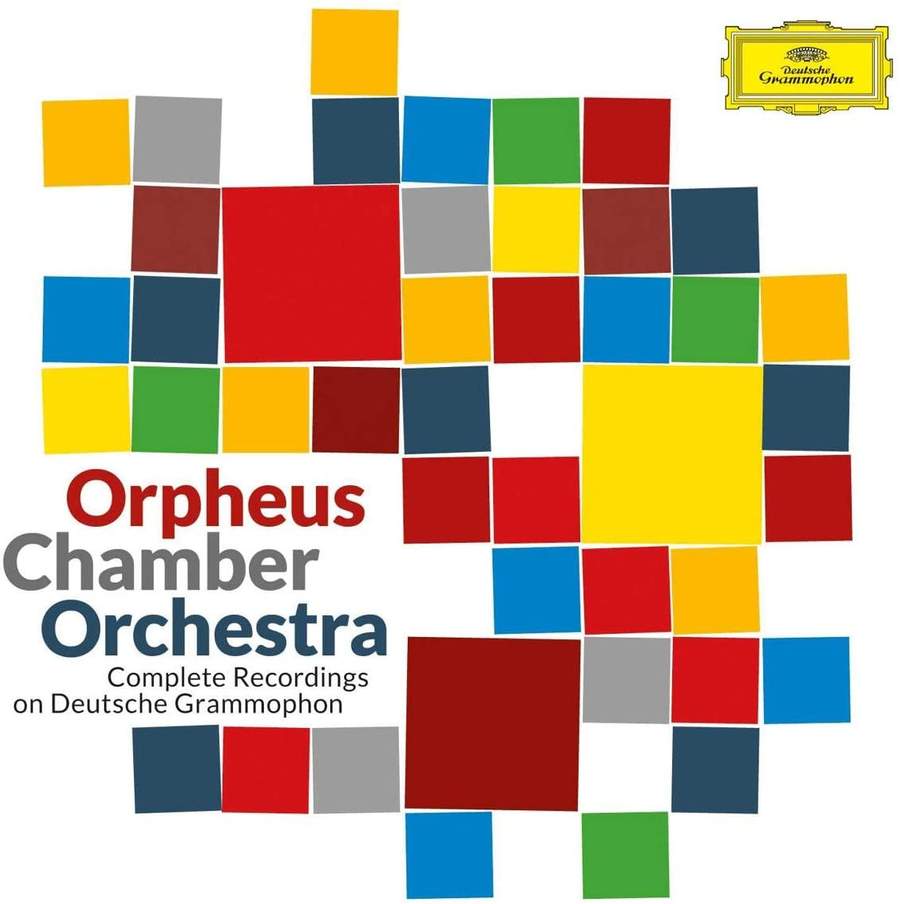
On record – Orpheus Chamber Orchestra: The Complete Recordings On Deutsche Grammophon (Deutsche Grammophon

orpheus-chamber-orchestra-complete

Soloists, Orpheus Chamber Orchestra

Various works (see DG link below for full repertoire details)

Deutsche Grammophon 4839948 (55 CDs)

Written by Ben Hogwood

What’s the story?

This box set tells the story of the Orpheus Chamber Orchestra – soon to celebrate their 50th anniversary – and the recordings they have made to date for Deutsche Grammophon. Formed in 1972, the conductor-less ensemble from New York have amassed an impressive body of work, spanning repertoire from Handel and Vivaldi to Schoenberg and William Bolcom, examined here across 55 CDs.

The group have enjoyed a fruitful relationship with DG, undertaking several projects. Among these are the Mozart wind concertos, with principals from the orchestra employed as soloists, and a clutch of hand-picked Haydn symphonies. Jed Distler’s booklet introduction, meanwhile, reveals a remarkable agreement which saw them commit the Schoenberg Chamber Symphonies and Verklarte Nacht to disc in 1989, in return for a version of Vivaldi’s Four Seasons four years later.

Also included in this set is a previously unavailable account of Mendelssohn’s Italian Symphony, a live recording from Warsaw in 2018.

What’s the music like?

Orpheus Chamber Orchestra records are known for their crisp ensemble and energetic, engaging performances, but also for their poise. While their approach to Baroque music might not appeal to historical purists, nobody can deny the enthusiasm they bring to the Handel Concerti Grossi Op.6, nor their vibrant collection of Vivaldi Cello Concertos with regular collaborator Mischa Maisky, or the Flute Concertos with Patrick Gallois.

Their Mozart is particularly enjoyable, the wind concertos blossoming under the ‘home’ soloists, who have the advantage of an immediate musical rapport with their accompanists. The Sinfonia Concertante, with soloists Todd Phillips (violin) and Maureen Gallagher (viola), is especially good, while horn players William Purvis and David Jolley, clarinettist Charles Neidich, flautist Susan Palma-Nidel, oboist Randall Wolfgang and bassoonist Frank Morelli also excel. The Flute and Harp Concerto, with harpist Nancy Allen, is sublime, while a generous selection of the wind Serenades and string Divertimenti are delightful.

The Haydn symphonies fare particularly well, too, and often have an irresistible zest. The account of the Symphony no.80 in D minor is notable in this respect, but there is restraint and darker feeling in the Symphony no.49 in F minor, ‘La Passione’, its introduction taken at a daringly slow tempo. Meanwhile the disc of Rossini overtures still defies gravity in the absence of a conductor, a remarkable achievement!

The inclusion of Mendelssohn’s Italian symphony boosts an already excellent account of the two piano concertos, with Jan Lisiecki. It is fresh faced and buoyant in the outer movements, with a balletic poise for the inner two. Meanwhile their account of Beethoven’s The Creatures of Prometheus has plenty of spring in its step, as does a wonderful disc devoted to music for strings by Grieg and Tchaikovksy. The Dvořák Serenades, too, fare particularly well, and there are two thoroughly engaging discs devoted to the music of Copland and Ives.

Best of all are the orchestra’s Stravinsky and Schoenberg recordings. The Stravinsky selection has excellent accounts of the ballets Pulcinella (the suite) and Orpheus, but equally valuable are the shorter pieces, where the composer’s gruff humour is caught to rhythmic perfection. The performance of Dumbarton Oaks could hardly be bettered. The Schoenberg has some eye-watering virtuosity in the Chamber Symphony no.1, an ideal way in for doubters of the composer – as is a translucent Chamber Symphony no.2 and a velvet-textured Verklarte Nacht.

Finally a mention for the orchestra’s Respighi, a colourful and moving trio of pieces comprising The Birds, a selection of the Ancient Airs and Dances and a particularly vivid account of the Trittico Botticelliano, showing off the composer’s colourful orchestration but also his deeply felt treatment of long-treasured melodies.

Does it all work?

Largely. One could argue that the disc of French orchestral music is a touch too glossy, or that the recordings of Bartók, Kodály and Suk do not quite have the authority a central European ensemble might bring to them. Even with those reservations, however, they are so well played that there is so much to enjoy, the slow movement of the Bartók Divertimento a particularly chilly example.

Is it recommended?

Unreservedly. This is a superb collection from an orchestra who are essentially a single instrument themselves, so together are their interpretations and their virtuosity. Their recording legacy for DG is unlike any other, and it is to be hoped it will blossom still further over – who knows? – maybe the next 50 years. This is a remarkably solid platform on which to build.

Listen and Buy

You can listen to clips and purchase this disc from the Presto website.

Reading

You can read Arcana’s interview with Orpheus Chamber Orchestra violist Dov Scheindlin here, and listen to a playlist picking out Ben Hogwood’s personal favourites here.

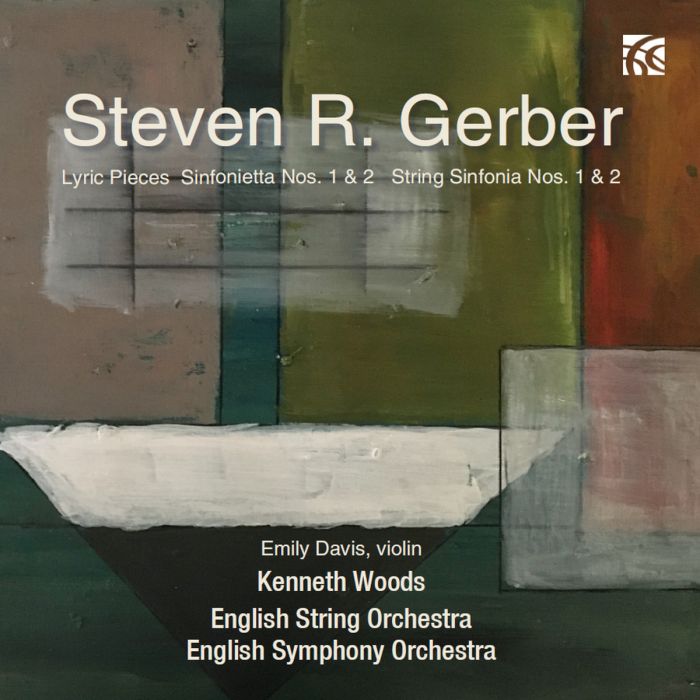
On record – Emily Davis, English String Orchestra, English Symphony Orchestra / Kenneth Woods: Steven R. Gerber: Lyric Pieces, Sinfonietta Nos. 1 & 2, String Sinfonia Nos. 1 & 2 (Nimbus Alliance)

gerber-nimbus

Emily Davis (violin), English String Orchestra, English Symphony Orchestra / Kenneth Woods

Steven R. Gerber
Sinfoniettas – No. 1 (1991, arr. Hagen); No. 2 (2000). String Sinfoniasa – No. 1 (1995); No. 2 (2011, all arr. Williams). Two Lyric Pieces (2005)ab

Nimbus Alliance NI6423 [73’07”]

Producer Phil Rowlands
Engineer Tim Burton

Recorded 7-8 October 2020, Wyastone Concert Hall, Monmouth

Written by Richard Whitehouse

What’s the story?

The English Symphony Orchestra returns with music by American composer Steven R. Gerber (1948-2015). Little known in the UK, it enjoyed wide exposure in the Russia of the immediate post-Soviet era and could well find a new audience through such pieces as those featured here.

What’s the music like?

In common with many composers of his generation, Gerber’s output charts a trajectory from serialism to a direct re-engagement with tonality, but his success in aligning these nominally opposing aesthetics confirms a creative insight matched by (surprisingly?) few of his peers. That four out of the five pieces are arrangements from chamber works should not imply any lack of versatility on the composer’s part; rather, these are all pieces more likely to reach a wider listenership through being reimagined for larger though still relatively modest forces.

This is evident not least in the case of the two Sinfoniettas. The First is an arrangement of the Piano Quintet by Daron Hagen (pupil of David Diamond and Ned Rorem, and a composer of numerous works for the stage) whose five movements evolve from the tensile incisiveness of its preludial first movement, via the capricious then scurrying manner of the Intermezzo and Scherzo that ensue, to a finale whose accrued emotional plangency finds its apogee in a coda whose headlong impetus renders what went before from an appreciably different perspective.

The other arrangements were all undertaken by Adrian Williams, himself a notable composer whose large-scale Symphony the ESO has recently recorded for future release. Derived from Gerber’s Fourth Quartet, the First String Sinfonia is most arresting for the consistent intensity of its central movements – a Lento then a Maestoso that might have functioned as finale had not the composer opted, rightly as it turns out, to let the emotion subside over the course of a brief yet affecting Postlude – one that balances the gentle opening Moderato to potent effect. As derived from Gerber’s Sixth Quartet, the Second String Sinfonia emerges as a much more equivocal work – the angular and ambivalent Allegro followed by the menacing Intermezzo, then a final Theme and Variations which ultimately winds down towards an uncertain repose.

A more elaborate, indeed methodical take on the Variations format is pursued by the second and final movement of Gerber’s Fifth Quartet, here arranged as the Second Sinfonietta which again makes use of fuller instrumentation and exudes more charged expression. Not least the opening Fantasy, whose determined contrasts of mood make for a disjunct overall trajectory such as is countered, though not wholly resolved, through the steady and always inevitable build-up of its finale towards a forceful while by no means decisive or clinching apotheosis.

Does it all work?

Yes. This is engaging music which, if it tends to an unrelieved earnestness, cannot be faulted for emotional sincerity. It was astute programming to include Two Lyric Pieces for violin and strings, the only item in its original guise, whose inward soulfulness finds Gerber at his most approachable – not least when Emily Davis renders the solo part with such fluency and poise.

Is it recommended?

Indeed, directed by Kenneth Woods with unfailing conviction in sound of real clarity. Those who are coming afresh to Gerber should certainly respond positively to what is heard here.

Listen and Buy

You can listen to clips and purchase this disc from the Nimbus website. For more information on Steven R. Gerber, click here. For more on Daron Hagen, click here – and click on the names for more on Adrian Williams, Emily Davis, Kenneth Woods and the English Symphony Orchestra. –

On record – William Wordsworth: Orchestral Music Vol.3 (Toccata Classics)

wordsworth-3

Florian Arnicans (cello), Liepāja Symphony Orchestra / John Gibbons

William Wordsworth
Symphony no.5 in A minor Op.68 (1957-60)
Cello Concerto Op.73 (1963)

Toccata Classics TOCC0600 [65’55”]

Producer Normands Slāva
Engineer Jānis Straume

Recorded 1-5 February 2021, Amber Concert Hall, Liepāja, Latvia

Written by Richard Whitehouse

What’s the story?

Toccata Classics continues its series devoted to the orchestral works of William Wordsworth (1908-88) in a coupling of two pieces from around the turn of the 1960s, when the changing priorities of the British musical establishment meant such music was increasingly overlooked.

What’s the music like?

Although it had to wait over a decade before its first performance in January 1975 (perhaps as it was written with no specific soloist in mind), the Cello Concerto is unerringly conceived for this instrument – not least the substantial opening Allegretto whose brusque initial orchestral tutti hardly prepares one for the wide-ranging if never discursive dialogue that follows. There is a lengthy and developmental cadenza before a reprise which continues the evolution of its pithy ideas prior to the ruminative close. Designated Nocturne, the ensuing Lento is among Wordsworth’s most atmospheric slow movements; the cello’s eloquent main theme provides a focal point thrown into relief by woodwind via a series of haunting asides, without seriously undermining the repose made tangible in the evocative closing bars. The final Allegro vivace is centred on a lively, even nonchalant refrain whose trenchant rhythmic profile comes to the fore in a fugal section whose accrued energy subsides into a musing solo passage – from out of which the earlier repartee continues through to a decisive while not a little sardonic coda.

Although premiered in 1962 and broadcast thereafter, the Fifth Symphony only now receives its first commercial recording – a pity, given this is arguably Wordsworth’s most emotionally involving such piece. A calmly undulating ‘motto’ at the outset is heard in three guises over each of three movements. Thematic in the initial Andante maestoso, its supplicatory writing for strings complemented with plangent woodwind in a discourse where the slowly emergent ‘landscape’ may well be that of the mind – not least its quietly ecstatic writing for solo violin toward the close. Rhythmic in the central Allegro, a scherzo whose spectral writing for tuned percussion and upper woodwind has more than a little malevolence – even with a whimsical trio to provide contrast. Its recalcitrant ebbing away makes the finale’s slow introduction the more striking, strings building to an expressive apex from where the Allegro begins. Here the harmonic aspect of the ‘motto’ is dominant, episodes of tensile fugato alternating with gentler asides on the way to an apotheosis whose affirmation is necessarily tempered by experience.

Does it all work?

Yes, in that both pieces find Wordsworth’s often elusive tonal language at its most searching. Florian Arnicans cannot have known the Cello Concerto before these sessions, but he captures its brooding understatement with undoubted assurance and thereby reinforces its claim to be the deepest and most substantial of this composer’s concertante works. The Fifth Symphony can be heard in a 1979 studio reading by Stewart Robson with the BBC Scottish Symphony (Lyrita), but Gibbons reveals more fully why it is likely the highlight of Wordsworth’s cycle.

Is it recommended?

Indeed. The playing of the Liepāja Symphony Orchestra is on a par with that of the previous two instalments in this series, and Paul Conway contributes his usual thorough booklet notes. Good to hear the fourth volume in this series, featuring the Seventh Symphony, is imminent.

Read, listen and Buy

You can read Richard’s review of the first two volumes in the Wordsworth series on Arcana, clicking here for the first volume and here for the second

You can listen to clips and purchase this disc from the Toccata Classics website. For more information on WIlliam Wordsworth, click here. For more on the performers on this recordings, click on the names for websites devoted to Florian Arnicans, John Gibbons and the Liepāja Symphony Orchestra respectively.

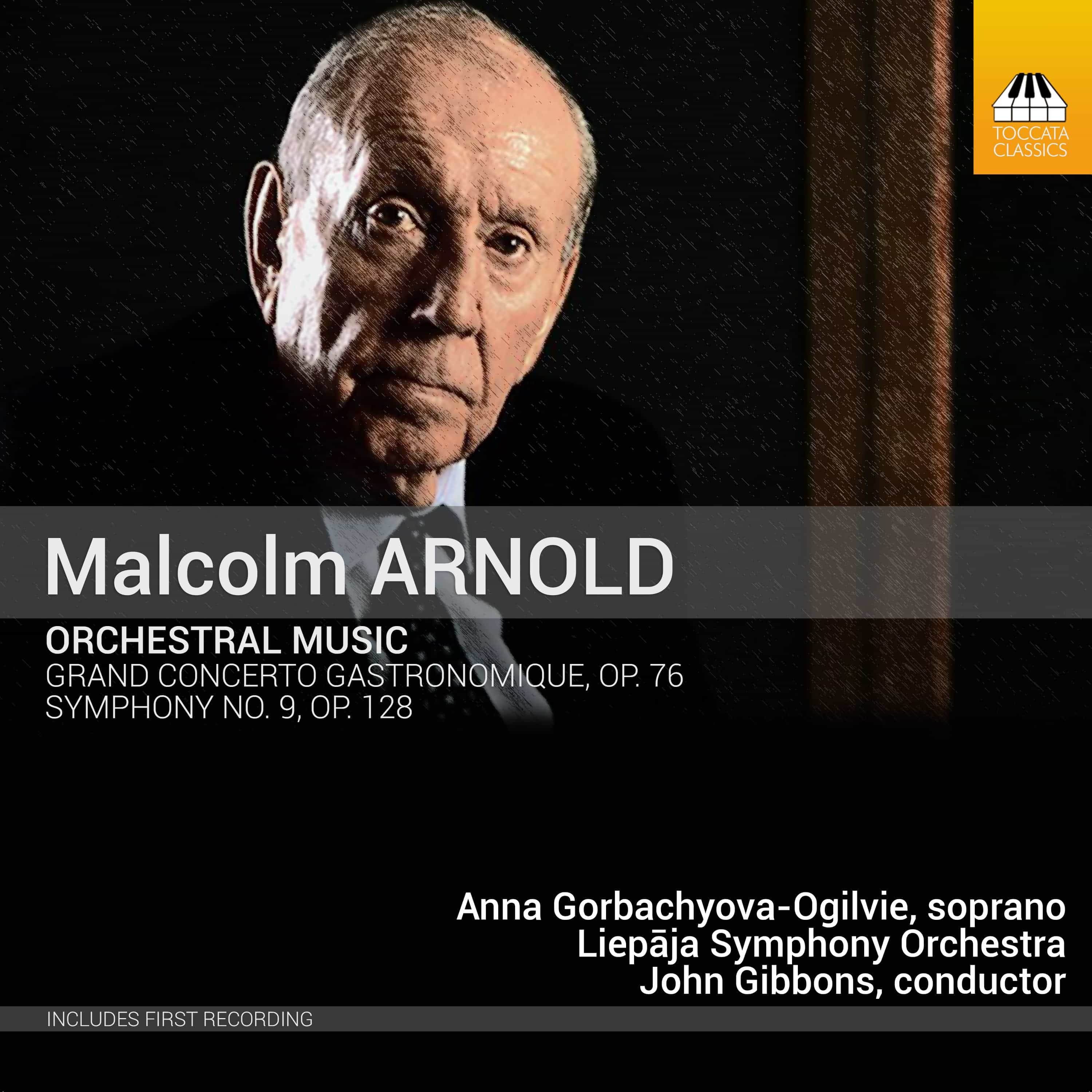
On record – Arnold: Symphony no.9 & Grand Concerto Gastronomique (Liepāja Symphony Orchestra / John Gibbons) (Toccata Classics)

toccata-arnold

Malcolm Arnold
Grand Concerto Gastronomique Op.76 (1961)
Symphony no.9 in D Op.128 (1986)

Anna Gorbachyova-Ogilvie (soprano, Concerto), Liepāja Symphony Orchestra / John Gibbons

Toccata Classics TOCC0613 [57’30”]

Producer Normands Slāva
Engineer Jānis Straume

Recorded 14-16 June 2021 at Great Concert Hall, Liepāja

Written by Richard Whitehouse

What’s the story?

Toccata Classics marks the centenary of Malcolm Arnold’s birth (falling on October 21st) in a pertinent coupling of his final symphonic statement with music finding this composer at his most irreverent and, by so doing, juxtaposes the two sides of his creativity to startling effect.

What’s the music like?

It was the compositional hiatus resulting from emotional breakdown then tortuous recovery as provided the catalyst for the Ninth Symphony, whose superficial simplicity belies the anguish beneath its surface. John Gibbons (who had earlier conducted this work in London, as part of a nine-year Arnold cycle, and Northampton) brings tangible expectancy to the opening Vivace, its arresting initial gestures soon revealing that textural starkness which goes on to define the whole work, with a circuitous evolution even more marked in the Allegretto – an intermezzo whose wistful theme effects less a series of variations than poignant searching for formal and expressive closure. The ensuing Giubiloso is more overtly a scherzo with its headlong motion or trenchant exchanges between wind and strings, yet even here a curious detachment prevails.

Arnold’s eight previous symphonies each concluded in a relatively short and decisive finale, but the Ninth’s final Lento proves anything but – its sustained slowness abetted by restrained dynamics and a sparseness of detail which could have made for unrelieved gloom were it not for those myriad ‘shades of grey’ the composer draws from his reduced palette. An additional factor is Gibbons’s pulse for this movement as a tactus (one-second) rather than crotchet beat, leading to a traversal several minutes less than earlier recordings by Andrew Penny (Naxos), Vernon Handley (BMG) or Rumon Gamba (Chandos) and, as a result, making the cadential chord one of benediction than resignation. Whether or not this approach convinces depends on how one views the symphony overall, but there can be no doubting its sincerity of intent.

Composed for the Astronautical Music Festival – the last of several events inspired by Gerard Hoffnung – Grand Concerto Gastronomique is Arnold at his most uproarious. Its designation ‘for Eater, Waiter Food and Large Orchestra’ betrays a visual aspect not essential for enjoying this 15-minute consumption of Brown Windsor soup, roast beef, cheese, Peach Melba – with a sensuous cameo by soprano Anna Gorbachyova-Ogilvie – then coffee with brandy; framed by a Prologue and Epilogue of due portentousness, but thankfully no ‘Mr Creosote’ in evidence.

Does it all work?

As a coupling, yes. As to content, the Ninth Symphony will likely always divide opinion as to whether it is what Arnold intended or merely the best that he was able to achieve after the traumas of the preceding decade, but no-one could accuse Gibbons of realizing it as other than a cohesive entity whose formal proportions are as precisely judged as its expressive trajectory is purposefully conveyed. Listeners not convinced by those earlier recordings should certainly hear this new account, lucidly and persuasively rendered by the Liepāja Symphony Orchestra.

Is it recommended?

Yes, enhanced by thought-provoking booklet notes from Timothy Bowers along with realistic sound. Should still-missing orchestral pieces by Arnold (notably the Op. 1 First Divertimento or the Op. 12 Symphonic Suite) come to light, Gibbons will hopefully be asked to record them.

Listen

Buy

You can discover more about this release at the Toccata Classics website, where you can also purchase the recording. You can read more about the Malcolm Arnold society at their website, while for more on each of the performers, click on the names Anna Gorbachyova-Ogilvie, Liepāja Symphony Orchestra and John Gibbons