On record: New Philharmonia Orchestra / Sir Charles Groves – Havergal Brian: In Memoriam & Gothic Symphony Part 1 (Heritage Records)

New Philharmonia Orchestra / Sir Charles Groves

Brian
In Memoriam (1910)
Symphony no.1 in D minor, The Gothic (1919-27) – Part One

Heritage Records HTGCD172 [59’31”]
Producer Robert Simpson

Recorded 10 October 1976 in live performances at Royal Albert Hall, London, UK. Released by arrangement with BBC Studios, with funding from the Havergal Brian Society

Reviewed by Richard Whitehouse

What’s the story?

The Heritage label renews its archival coverage of Havergal Brian with this disc of works given at the last concert of those centenary events in 1976, including what is still the only professional account of Part One from the Gothic Symphony heard separately, as sanctioned by the composer.

What’s the music like?

Following three concerts at Alexandra Palace, this final one took place at the Royal Albert Hall. even if a planned performance of the Gothic had to be shelved through financial considerations, a second half featuring Berlioz’s arrangement of La Marseillaise and his Symphonie funèbre et triomphale was no easy option. At the helm was Charles Groves who, having recently given the Ninth Symphony at the Proms, proves a Brian interpreter of real perception. Such is evident in his account of the tone poem In Memoriam, among the best of its composer’s earlier works and unheard for almost 55 years. Whether prompted by thoughts as to the end of an era, or by more personal considerations (its initial title having been ‘Homage to an Artist’), the trajectory of its three continuous ‘scenes’ from impulsive vehemence, via searching contemplation, to sustained affirmation is a striking one made more so through the finesse of Brian’s tonal thinking and his resourceful scoring. These are qualities to the fore with Groves’s interpretation, as convincingly shaped as it is eloquently rendered, and most likely the finest that this work has so far received.

If the performance of Part One of the Gothic Symphony is not quite as good, it more than makes the case for this to be heard as an autonomous entity. Tempi are slightly more measured overall than those of Sir Adrian Boult (Testament) or Martyn Brabbins (Hyperion) in their live readings at the same venue, but this enables Groves to wrest unity from the three movements – not least by bringing those extremes of motion and mood of the Allegro into closest accord, while ensuring a cumulative momentum across the whole. The Lento has all the necessary ‘expressiveness and solemnity’, and at a speed flexible enough to contain its volatile progress towards a powerfully rhetorical climax then a lingering postlude. The Vivace more than fulfils its function as a finale: Groves is mindful to integrate the increasingly disjunct scherzo-and-trio episodes, then keeps a firm hold on its explosive central outburst and surreally imagined ‘night flight’, on the way to a peroration of a grandeur intensified by its tonal audacity and afforded pathos in its limpid coda. That the rather bemused applause has not been retained is maybe of no consequence in context.

Does it all work?

Yes, given Brian always did things his way so that his music often pivots between the visionary and the reckless, yet one where he is almost always justified. Certainly, Groves’s In Memoriam is preferable to the well-paced if technically limited account by Geoffrey Heald-Smith with the City of Hull Youth Symphony Orchestra (Cameo Classics), as also the capably played if most often stop-go approach of Adrian Leaper and the National Symphony of Ireland (Naxos). There is no other version of the Gothic’s Part One, in which Groves’s trenchant advocacy vindicates the decision.

Is it recommended?

Very much so. The (unnamed) remastering engineer has done an admirable job of enhancing the BBC sound, not least in minimizing the bronchial audience contribution on that autumn evening now almost 45 years ago, and John Pickard’s booklet notes are a model of reasoned enthusiasm.

For further information on this release, and to purchase, visit the Heritage Records website. Heritage also offer a recording of Brian’s first opera The Tigers here, and the first commercial recordings of the composer’s music here
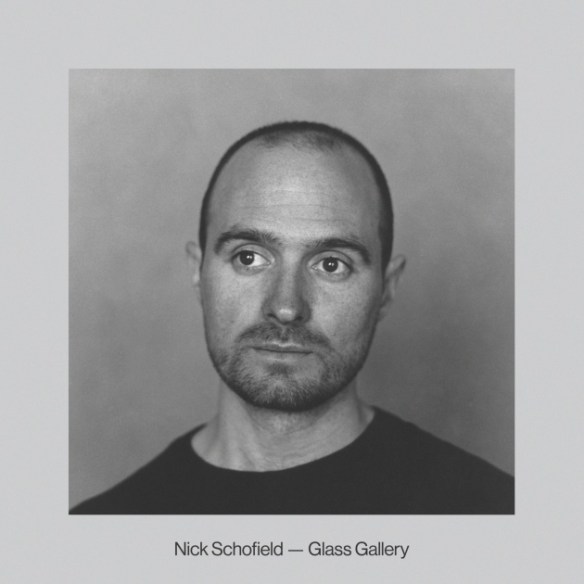
On Record: Nick Schofield: Glass Gallery (Backward Music)

reviewed by Ben Hogwood

What’s the story?

This is the second album from Montreal-based musician Nick Schofield, who has taken two very specific points of reference for Glass Gallery.

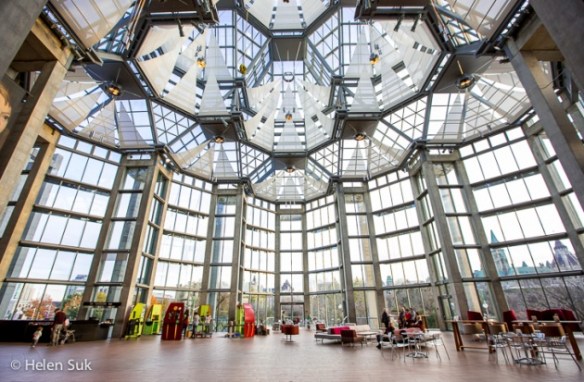
The first is a building – the National Gallery of Canada in Ottawa, to be precise. Schofield draws on its glass atrium for inspiration, depicting in musical form the play of light through its transparent windows.

The second is an instrument, specifically the vintage Prophet-600 synthesizer, on which the whole album was composed. Schofield uses it to paint the different images he has seen through the gallery’s atrium, but also refers to artist Guido Molinari, whose paintings can be seen in the gallery.

What’s the music like?

With so many points of inspiration, it is perhaps inevitable that there is plenty for the ear to hone in on in this album, but like a good art exhibition it also leaves you in a very settled state of mind.

Schofield’s textures with the synth are like the falling of powdery snow – unhurried, never straight, sometimes going up before they come down again, always subtly moving. The melodic cells are beautifully worked, often dovetailing with each other, and the whole album is put together with the assurance that runs through the best ambient music – where a little goes a long way.

Central Atrium sets the scene with its soft oscillations, while Mirror Image has a hint of Eastern promise in its undulating figure, Schofield showing the possibilities of orchestration with just the one instrument. The musical emphasis tends towards the treble, evoking the clear and bright view up through the gallery’s transparent roof.

Molinarism is the standout composition, with pinpricks of musical light against a darker background, like shooting stars – and uncannily portraying the style of the pictures Schofield is evoking. The lightness of touch continues here and throughout, with a lasting elegance and poise to the music, like a flexible slow dancer.

Does it all work?

It does, provided you listen to the whole of Glass Gallery – for again, to use the exhibition parallel, you don’t get the full benefit from just concentrating on highlights. Having listened to it in the middle of softly falling snow, I can confidently say it is the ideal environment for this music.

Is it recommended?

It is. Schofield has made a lovely cold weather album, but one with a warm heart too.

Stream & Buy

On Record: Aria Rostami & Daniel Blomquist: Still (Glacial Movements)

reviewed by Ben Hogwood

What’s the story?

The music of Still reflects the circumstances in which the album came together. Aria Rostami and Daniel Blomquist have already released a collaboration for Glacial Movements – the Wandering Eye album – where they focused on the Antarctic Plateau, and the best places to observe space. Yet during that work the building blocks for Still were already in place.

The music explores a process of change over time, describing how time can change its motion in cases of cold weather. Because of this, each track ends up at a different place from where it started.

What’s the music like?

As deep as the ocean, and as slow as a huge ship in icy water. This is music that works well as background listening but reveals its intensity when experienced up close. The structures are as big as the pair’s first album – ten minutes or more in some cases – but maintain their concentrated level throughout.

The use of fragments of speech in the background of Undercooled works well against the foreground and wide background elements, with flecks of piano appearing towards the end. The lovely wide outlook of Hoarfrost works well, with chords shifting very slowly and peacefully, while Crystal Gazer swirls and then settles on a harmonic bed before floating away.

Does it all work?

Yes. These pieces are like six massive chord progressions over a long period of time, but they link together beautifully to make one big structure. It is the coldest of ambient music – you can literally feel the ice at times! – but leaves the sort of warmth you feel when getting back indoors after a stint outside on a cold winter’s day.

Is it recommended?

Yes, along with the duo’s first album. It ticks all the boxes for a Glacial Movements release while keeping its own individual qualities. A subtly invigorating piece of work that makes its mark.

Stream & Buy

On Record: John Carpenter: Lost Themes III: Alive After Death (Sacred Bones Records)

reviewed by Ben Hogwood

What’s the story?

The further he moves into his seventies, the more John Carpenter blossoms as an artist of many creative disciplines. His work as a composer has built up an impressive momentum which nobody could have foreseen ten years ago, with two sets of Lost Themes in 2015 and 2016, along with the soundtrack to his own reboot of Halloween in 2018.

Lost Themes III: Alive After Death sees him working once again with son Cody on synthesizers and godson Daniel Davies on guitar, the three showing their musical acumen on another ten choice cuts.

What’s the music like?

Deliciously dark. Carpenter instinctively knows how to evoke a scene with instant effect, and many of the themes here have the unmistakable scent of Gothic horror. The music is hugely enjoyable, not afraid of a musical cliché or two when the trio rock out, but there is show a sensitive underbelly to Carpenter’s writing, an emotional depth underpinning each of the selections here.

That side is most evident in Dripping Blood, but the more typical Carpenter sound is the majestic, immediate presence of the title track, or the fabulously dark Cemetery, with a low piano line glinting in the moonlight. The beatless Dead Eyes is a mysterious interlude, its harmonies drifting restlessly, while in contrast The Dead Walk has a hollow beat driving it forward.

Daniel Davies’ guitar work is instrumental to the success of Weeping Ghost, a futuristic rocker with a throbbing beat, and also Vampire’s Touch, where the guitars growl as the groove gets into its stride. Yet Carpenter’s music is at its best when the keyboards dominate. Skeleton shows this best of all, a shapeshifting rock chorale that dazzles with its changing harmonies.

Does it all work?

Yes. These are brilliantly scored and wonderfully evocative instrumentals, each with a different shade of darkness. The only criticism would be that some of the themes – Dead Eyes for instance – pull up short and could be longer than they are. It’s a small point that actually emphasises how good this music is!

Is it recommended?

It is. Carpenter knows how these things work, but is never complacent in his music, which has the ideal blend of suspense, terror, humour and a sense of occasion. If you have the previous two volumes, no need to hesitate – and if you don’t, then what are you waiting for?! Prepare to be scared…

Stream

Buy

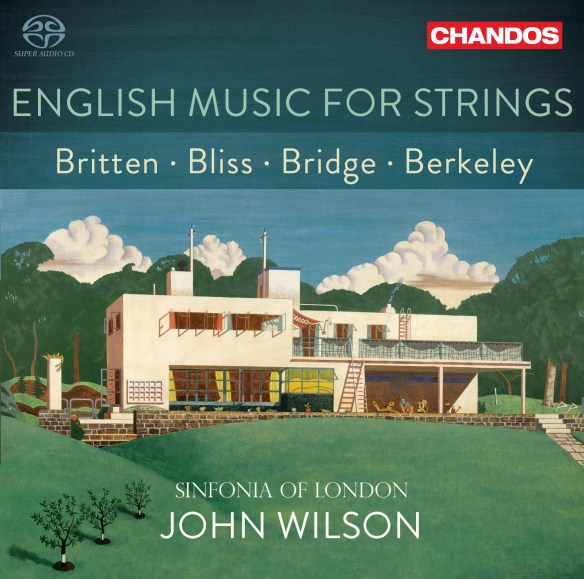
On record: Sinfonia of London / John Wilson – English Music for Strings (Chandos)

Sinfonia of London / John Wilson

Britten Variations on a Theme of Frank Bridge Op.10 (1937)
Bridge Lament (1915)
Berkeley Serenade for Strings Op.12 (1938-9)
Bliss Music for Strings (1935)

Chandos CHAN 5264 [64’46”]
Producer Brian Pidgeon
Engineers Ralph Couzens, Alex James

Recorded 9-11 January 2020, Church of St. Augustine, Kilburn, London, UK

Reviewed by Ben Hogwood

What’s the story?

After three wonderful albums extolling the virtues of French orchestral music, Korngold and Respighi, John Wilson and his Sinfonia of London charges turn much closer to home with a set of British music for strings drawn from the 1930s. They begin with an established classic, Britten’s Variations on a Theme of Frank Bridge, complemented by two neglected works from Sir Lennox Berkeley (his Serenade for Strings) and Sir Arthur Bliss (the Music for Strings), neither of which appears to have been recorded in the last 20 years. There is also room for the brief Lament from 1915 by Bridge himself.

What’s the music like?

Britten’s Variations on a Theme of Frank Bridge will be familiar to many, but rarely in a performance as good as this. The theme, lovingly drawn from the Second Idyll for string quartet of Britten’s teacher, receives a virtuoso treatment, taken through a number of wildly differing dance forms before a powerful fugue and finale. The variations are sharply contrasted, with a crisp March at odds with the loving Romance that follows; the fulsome Wiener Walzer countered by the rush of a Moto perpetuo.

Berkeley’s Serenade for Strings works really well in this company. It is a work beginning with outward optimism but which ultimately falling under the shadow of the imminent Second World War. A busy first movement, its Baroque influences brought out by Wilson, is complemented by an inward looking but tender Andantino. Berkeley finds renewed energy in a quickfire Scherzo, but that is trumped by the closing Lento, which leaves a lasting impression, reflecting the anxiety felt as the 1930s drew to a close.

There is a good deal of positive energy in Bliss’ Music for Strings. Taking a lead from Elgar’s Introduction and Allegro of 1905, the composer writes for a full string orchestra but often picks out a smaller group of soloists. The substantial three movements show a masterly command of the string orchestra, from the wide span of the vigorous first movement to the meaningful Romance that follows, with lovely rich contributions from violas and cellos. The third movement starts hesitantly, in the depths, but soon the light breaks through to an effervescent finale.

Does it all work?

Everything works here, thanks to the thoroughly assertive performances secured by Wilson. He is quite quick on the draw with the theme for Britten’s variations, maybe quicker than some would like, but the thrills and spills that follow make this one of the finest versions available. The Aria Italiana has all guns blazing in a wonderful display of precision and power, while the Funeral March has a searing and chilling clarity.

Successful though the Britten is, it is the Berkeley and Bliss that ultimately give the disc its importance. The Berkeley is keenly felt, positive in its fast music but anxious in its two slower movements and raising emotional questions in the fourth. Wilson catches its air of uncertainty at the world in which we live, as relevant now as it was then.

The Bliss has terrific drive in its faster music, which builds up a thoroughly convincing momentum while succeeding in bringing forward the writing for the chamber ensemble at the front. The textures are beautifully clear thanks to the Chandos recording, the quicker melodies’ punchy phrasing cutting through easily.

The Bridge Lament, though short, proves a mellow complement to the Britten, a chance for the listener to collect their thoughts while the Sinfonia play with a beautiful, muted sound.

Is it recommended?

In every way. John Wilson and the Sinfonia of London breathe new life into this music, and their programme is superbly judged to bring two neglected and very fine works back into contention. The cover, a painting of Bliss’s Pen Pits house by Edward Wadsworth, is the icing on the cake with its classic 1930s style.

For further information on this release, visit the Chandos website.