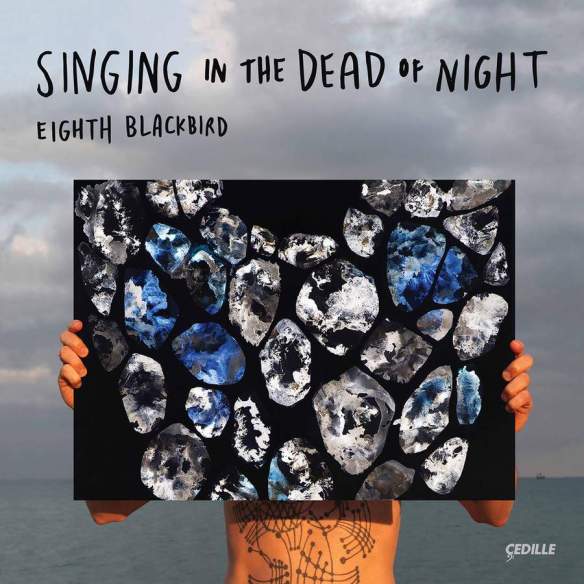
On record – Eighth Blackbird: Singing in the Dead of Night (Cedille Records)

Eighth Blackbird [Matt Albert, Matthew Duvall, Nathalie Joachim, Lisa Kaplan, Nick Photinos, Ken Thomson]

Cedille Records CDR90000 195 [46’02”]

Producer Elaine Martone
Engineer Bill Maylone

Recorded 30 September – 2 October 2019 in the Reva and David Logan Center for the Arts, University of Chicago

Written by Richard Whitehouse

What’s the story?

A major new work from the three composing members of Bang on a Can, which both fulfils a commission from Eighth Blackbird – among the most enterprising of American ensembles who are devoted to new music – and also finds these composers at something near their best.

What’s the music like?

In an introductory note, David Lang explains how he, Michael Gordon and Julia Wolfe have often collaborated on projects, but here determined to create something where their own and naturally gregarious personalities were subsumed into a composite whole. The resulting work offers a stern test even for such virtuosic musicians as those in Eighth Blackbird; in addition offering opportunities for their sometime collaborator, the choreographer Susan Marshall, to create a theatrical context for a score whose often stark contrasts belie its modest dimensions.

The first part of These Broken Wings is the most archetypal in its tightly interlocking patterns along with hard, bright sonorities and rhythmic clarity. The music’s near clinically objective progress continues until being suddenly curtailed then replaced by several seconds of silence.

In contrast to the foregoing, The Light of the Dark focuses on not always controlled anarchy. In addition to this ensemble’s regular line-up, instruments such as guitar and accordion take their place in what the composer terms a ‘‘late-night jam session’’. From the swerving drone of its initial cello solo develops an often deliriously OTT interplay, given unlikely definition by the pauses which cut right across the activity and for no other audible reason. The closing stage initially unfolds in a crescendo of velocity before hurtling into a ‘brick wall’ of silence.

The second part of These Broken Wings is very much the ‘slow movement’ in its held chords and ethereal harmonies. An undetermined element is introduced with musicians told to ‘‘drop things when they are not playing’’, as though smearing paint on an otherwise pristine canvas.

The longest and also most intriguing component, Singing in the Dead of Night (seemingly a reference to a certain Paul McCartney song) is also the most varied in its superimposing of distanced and otherworldly timbres that evolve as dissonant cluster-chords, before suddenly exploding in a maelstrom of undirected energy. This duly alternates with more introspective passages, in the process suggesting a kind of morphed variations on those opening chords as ultimately blow themselves apart in what feels an unnerving corollary to nocturnal isolation.

The third part of These Broken Wings restores something of the initial extroversion, with its heady interplay for ensemble. Not that this is wholly a reversion to type, the melodic line that eventually crests the ensemble opening-out the rhythmic activity on its way to a hectic close.

Does it all work?

Yes, in that the level of cohesion between the three component pieces (necessarily) overrides the contrasts between them. It helps, of course, that the members of Eighth Blackbird are in their collective element as regards the rhythmic and co-ordinational intricacies of this music.

Is it recommended?

Indeed, and its relatively short measure no doubt matters less in the post-CD era. The booklet, which includes succinct and informative notes on each piece from its composer, is enhanced by Susannah Bielak’s cover art such as sets almost all the pages in appealingly varied relief.

Listen & Buy

You can listen to clips from the recording and purchase, either in physical or digital form, at the Cedille Records website
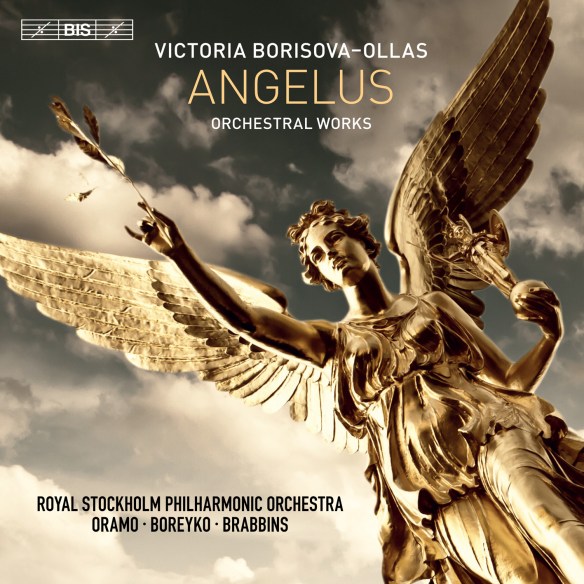
 

On record – Victoria Borisova-Ollas: Angelus (BIS)

Victoria Borisova-Ollas
Angelus (2008)
The Kingdom of Silence (2003)
Before the Mountains Were Born (2005)
Creation of the Hymn (2013)
Open Ground (2006)

Royal Stockholm Philharmonic Orchestra / Andrey Boreyko (Angelus), Martyn Brabbins (The Kingdom of Silence, Before the Mountains Were Born), Sakari Oramo (Open Ground)

BIS BIS2288 SACD [82’08”]

Producers Thore Brinkmann, Ingo Petry
Engineers Marion Schwebel, Matthias Spitzbarth

Recorded August 2016 (Open Ground), November 2017 (Angelus), August 2019 (The Kingdom of Silence, Before the Mountains Were Born) in Stockholm Concert Hall

Written by Richard Whitehouse

What’s the story?

BIS issues what is only the second release dedicated to the music of Victoria Borisova-Ollas (b1969), Vladivostok-born and resident in Sweden for almost three decades, superbly played by the Royal Stockholm Philharmonic Orchestra and sumptuously recorded in Stockholm Concert Hall.

What’s the music like?

UK audiences have had few opportunities to hear Borisova-Ollas, but her piece Wings of the Wind was second at the Masterprize International Music Competition in 1998, and her multi-media drama The Ground Beneath Her Feet was premiered at the Manchester International Festival in 2007. Her orchestral writing is confident and assured – drawing on a lineage that takes in such as Rimsky, Glière and Respighi in music which is never less than evocative or atmospheric, but lacks greater expressive focus so as to convey a more arresting personality.

An in memoriam to her teacher Nikolai Korndorf, The Kingdom of Silence duly proceeds as the ‘journey of a life’ from beatific stasis, through episodes of angst and decisiveness, and on to a serene if underwhelming catharsis. More distinctive is Before the Mountains Were Born, the third of this composer’s works to draw inspiration from the Psalms (here No. 94 – ‘Lord, you have been our dwelling place’) and whose supplicatory yearning informs a cadenza-like passage for the four principal woodwind prior to a decidedly unexpected close.

The nearest thing here to a showpiece, Open Ground picks up on American minimalist traits in its swift and unrelenting while highly eventful progress to a tellingly evanescent conclusion: a tale of reality and stability which could yet find favour with orchestras on both sides of the Atlantic.

Most expansive is Angelus, inspired by a visit to Munich and the sheer range of bell-sounds to be heard there – the result being a ‘morning to evening’ evolution where elements of chant and tintinnabulation are prominent within a texture of lingering and iridescent sonority such as enfolds the senses without engaging the intellect. Moreover, the accumulation of incident toward its centre lacks underlying emotional intensification, or the organ-capped climax any semblance of tension and release. More substantial is Creation of the Hymn – a sequence of variations, on an original theme of some trenchancy, originally written for string quartet and reworked for 15 strings. A range of stylistic associations is evoked, but the astute dovetailing of expressive contrasts and purposeful follow-through to a fervent ending holds the attention.

Does it all work?

Whatever else, this music is certainly good as regards first impressions. Dig deeper, however, and lack of substance in the actual ideas and way by which these generate the larger content is hard to deny – for all that the aural enticement of the orchestration cannot be gainsaid. Nor is there any lack of commitment from the Royal Stockholm Philharmonic, guided by Messrs Boreyko, Brabbins and Oramo to performances of real virtuosity. Those who already have the earlier disc of Borisova-Ollas’s orchestral music on Phono Suecia will certainly want this too.

Is it recommended?

Yes, with reservations. Wide-ranging sound is on a par with BIS’s customary high standards, while the composer’s annotations are quirky but informative. Hopefully releases of Borisova-Ollas’s chamber and instrumental work will emerge to open-out the perspective on her music.

Listen & Buy

You can listen to clips from the recording and purchase, either in physical or digital form, at the BIS website

Spotify

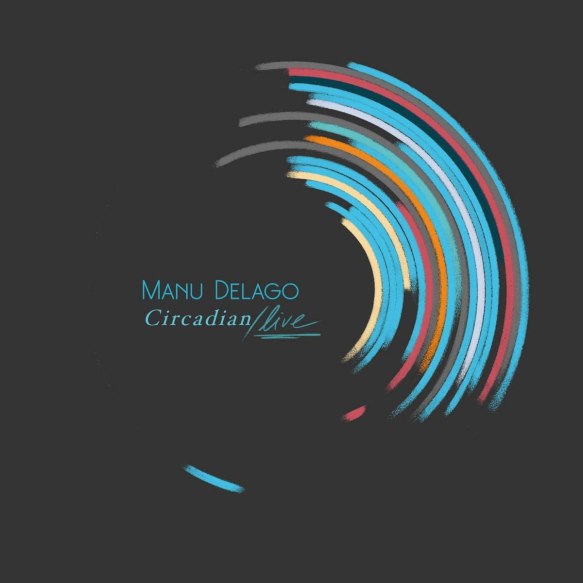
Switched On – Manu Delago: Circadian Live (One Little Independent)

reviewed by Ben Hogwood

What’s the story?

Releasing a live album in these times of isolation is a bittersweet experience. Manu Delago will know more than most, as he has played well over 1,000 gigs – but this is the one program he wanted to freeze frame and share with his home audience.

The music centres on the European tour of Delago’s Cicadian album in late 2019, where the 18 gigs in 21 days were performed by the nine-piece Cicadian Ensemble. This is a band long in the making but with a pleasing symmetry, three players each assigned to the areas of percussion, strings and wind instruments.

The aim of Cicadian Live is to show that while electronic music forms an important part of Delago’s thinking, his musical communication is equally strong – and arguably emotionally deeper – through acoustic performance.

What’s the music like?

Every bit as enchanting as we heard on Cicadian, but with the added frisson of the live music environment. To hear these tracks evolve in the moment is to be there in the cycle with Delago himself, hanging on the next move of each of his instrumentalists.

As tracks like Draem evolve, with their striking textures, the ear is drawn to each new melodic development, each percussive layer and each twang of the string bass. Delago’s enchanting sound world benefits greatly from the intimacy of these live recordings, and the instinctive chemistry between all the players involved.

The collection Immediately creates its own rarefied atmosphere with The Silent Flight Of The Owl, one of Cicadian’s standout moments, and does not let up until we are set down 70 minutes later with B.F.G.

In the middle there are intimate moments of rare beauty, where the listener dare not breathe lest the peace be broken, and these contrasts with powerful bursts of momentum such as Almost Thirty, where a series of crescendos break out into no-holds barred freak-outs, and Zeitgeber, a blend of virtuosity and concentrated feeling which is a testament to the fine musicianship of all involved.

The brassy rasps of Satori work well, building up a head of steam, and contrast nicely with the ripples of Circadian itself, stopping time to mesmerising effect. Down To The Summit, like Almost Thirty a fully scored piece from 2015’s Silver Kobalt, captivates with its twists and turns.

Does it all work?

Yes, because the instincts and musical understanding of the nine ensemble members is compelling the whole way through. This was clearly a special tour, and it serves to hear the new tracks from the Cicadian album rub shoulders with the more established Delago output.

Is it recommended?

Very much so. The live album works even better if you have heard the studio account of Cicadian first – but if not it serves as an excellent introduction to Delago’s craft. Each track sets its own unique atmosphere but captures the attention with intricacy, craft and spontaneity.

Stream

Buy

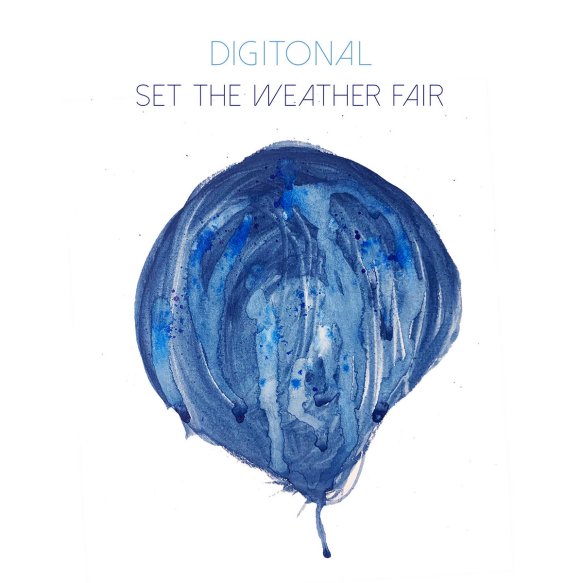
Switched On – Digitonal: Set The Weather Fair (Just Music)

reviewed by Ben Hogwood

What’s the story?

For Digitonal’s fourth studio album, Andrew Dobson is joined by producer Dom Graveson for a fusion of analogue and digital setting natural scenes to vivid music. Set The Weather Fair will be a comforting reassurance to those who have already enjoyed Dobson’s first three albums under the Digitonal moniker, but this one offers greater depths of texture and musicianship.

What’s the music like?

Blissful – but also wholly immersive. This is music that paints vivid pictures but in the same breath possesses a great deal of emotion. One of the biggest pluses here is the way Dobson uses his clarinet and cello to colour the textures and to make the melodies more distinctive. He also knows his way around small and expansive structures – the ten-minute Gold Of The Azure is every bit as captivating as The End Is Just The Beginning that follows it.

Those two tracks are notable for their use of the clarinet, which comes to the fore on Gold Of The Azure, and then the cello on The End Is Just The Beginning, which features a slowly tolling piano. The Dance’s Pattern, too, is ideally paced.

On his Bandcamp page Dobson sets out the story behind the album and its sonic images, citing a number of influences in a modest tribute to the music he listens to. The truth of the matter is however that this music, instrumental thought it is in his make-up, is all used to make a wholly original piece of work, a recognisably British affair where both restraint and bold colours are used to great effect.

Does it all work?

Yes. The colours are captivating, the use of beats and beatless music is just right, and the proportions feel right too. Dobson has a winning way with melody, and Graveson’s production nouse is the icing on the cake.

Is it recommended?

It is. Set The Weather Fair can easily be divided into the nine elements that make up the whole, but it is best experienced in a single sitting, a seamless flow of musical ambience that settles the mind and gently moves the soul. It is right up there with Digitonal’s best work.

Stream

Let’s Dance – Detroit Love 4 mixed by Mirko Loko (Detroit Love / !K7)

by Ben Hogwood

What’s the story?

Carl Craig’s Detroit Love mix series moves onto a fourth instalment under the watchful eye of Mirko Loko, who Craig recruited for the Detroit Electronic Music Festival back in 2001. With such a longstanding attachment to the city and its techno heritage, the Swiss DJ is a natural choice and takes the chance to say thank you to Detroit and its cultural legacy. He does so in the form of a 22-track mix including homegrown talent but also casting an eye further afield to show off the influence of the city.

What’s the music like?

This is a really fine set, mixed with impressive fluidity by Mirko Loko. From the start he creates a good deal of space, Fred P’s Vision In Osaka setting the scene beautifully before Loko’s own excellent Detroit Love Mix of It’s Like, with persuasive vocals from Ursula Rucker. As the mix proceeds Loko moves between quite minimal tracks and bigger, expansive moments like Chaos In The CBD’s Comfort Zone, or the blissful Aos Si of Takuya Yamashita.

However the real high point comes with Derrick May’s appearance on Loko’s Mentors Heritage, a mix made especially for the compilation. The booming voice and percussion are an ideal match, especially when segueing into the bare bones of the piano in Laurent Garnier’s mix of Gilb’R’s Pressure.

From then the mix rolls on, taking in the propulsive Madness of Temo Howard before an excellent finish from Mirko Loko and Stacey Pullen with Tronic Illusion – another exclusive mix – and Lady B’s Cruising Around Motor City.

Does it all work?

It does indeed. Well paced, structured and full of subtly euphoric moments uniting past and present in an effortless blend.

Is it recommended?

Yes – a very strong addition to what is proving to be an extremely collectable series.

Stream

Buy