Online concert – Steven Isserlis & Connie Shih mark the centenary of Saint-Saëns @ Wigmore Hall

steven-isserlis

Saint-Saëns Cello Sonata no.1 in C minor Op.32 (1872)
Liszt Romance oubliée S132 (1880)
Fauré Romance Op.69 (1894)
Saint-Saëns Romance in F major Op.36 (1874)
Bizet arr. Hollman Carmen fantaisie (not known)
Willaume La noce bretonne Op.14 (pub. 1924)
Holmès arr. Isserlis Noël d’Irlande (1897)
Hahn 2 improvisations sur des airs irlandais (1894 rev. 1911)
Saint-Saëns Cello Sonata no.2 in F major Op.123 (1905)

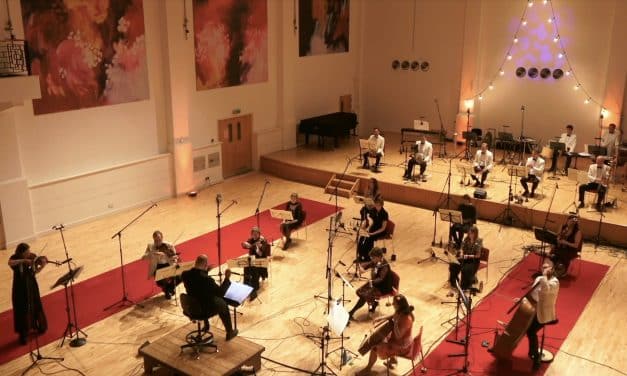
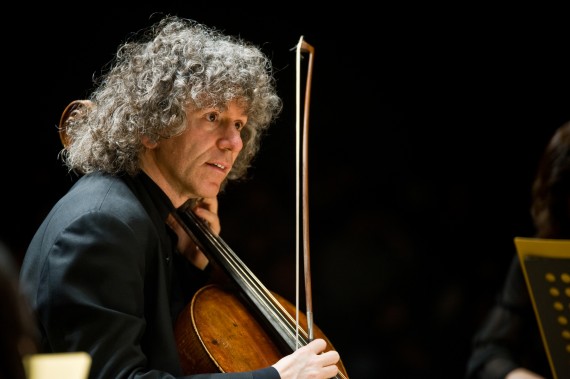
Steven Isserlis (cello, above), Connie Shih (piano, below)

Wigmore Hall, London
Thursday 16 December 2021

Written by Ben Hogwood

This well-devised program to mark the centenary of the death of Saint-Saëns was put together by cellist Steven Isserlis and his regular partner, pianist Connie Shih. They presented the composer’s two cello sonatas, the first of which was recorded by Isserlis back in 1992, in an intriguing historical context.

There is no room for shrinking violets in the first movement of the Cello Sonata no.1 in C minor Op.32, a relatively early work, and both performers threw themselves headlong into the music. Saint-Saëns was a virtuoso pianist, and on occasion his writing for the instrument is as demanding if not more so than the instrument it is ‘accompanying’. Here however the two were on equal terms, with plenty of cut and thrust in a dramatic first movement. The C minor casting and stormy start draw parallels with Beethoven, and these were built upon in the players’ compelling dialogue. The improvisatory slow movement was ideally poised, with an air of mystery in its central section where the cello was in its lowest register, complemented by twinkling figures from the piano. The Allegro moderato third movement returned us to powerful, passionate music, Isserlis’ double stopping passages immaculately delivered and Shih finding the necessary definition and phrasing in a superbly played piano part.

A full 32 years elapsed between the first sonata and its sequel, the Cello Sonata no.2 in F major Op.123. By this time the 70 year-old composer’s style had developed considerably. It is a substantial piece, running over 35 minutes, and is perhaps less-performed on that basis, not to mention the demands made on the performers. Isserlis and Shih showed what a fine work it is, however, in a performance that was gripping from the off, full of passion but also finding the more elusive statements in the quieter music, where Saint-Saëns could be found writing subtle but far-reaching sleights of harmony.

A joyous opening paragraph surged forward with considerable energy, powering an impressive and flowing first movement, Shih harnessing the power of the piano but continuing to hold a sensitive balance. She led off a capricious scherzo, whose variations were brilliantly characterized, from a limpid third variation (marked Tranquille) to a rippling Molto allegro that followed.

The heart of the piece, however, lies in the substantial Romance, a dreamy slow movement with a beautiful melody and a profound middle section turning towards the minor key. Both played with poise and affection, finding the centre of music the audience could fully lose themselves in. The last movement, which the composer promised ‘will wake anyone who’s slept through the rest of the piece’, was terrific, working from its deceptively innocuous opening phrase to throw off the shackles and end in celebratory mood. Isserlis was typically generous with his expression, with Shih deserving credit for her technical command and shapely melodic phrasing. The octaves towards the end were especially well-handled.

While the two sonatas were the main works of the concert, the complementary pieces were no less involving, providing an ideal foil. Firstly we heard from Saint-Saëns’ close friend Liszt, one of his few works for cello and piano. The Romance oubliée began with a recitative, with beautiful tone in the held notes from the cello, setting the (intense) mood. Then another great friend (and pupil), Fauré – whose Romance uses the whole range of the cello, starting in the mysterious depths and ending in the rarefied upper register. Saint-Saens’ own warm-hearted Romance in F major Op.36 was affectionately recounted, before the showstopping Carmen fantasie from Saint-Saëns’ friend and regular recital partner, Joseph Hollman. This was a showstopper, with quickfire dances and a pizzicato Habanera, stylishly done by Isserlis.

Shorter pieces followed from Gabriel Willaume, Reynaldo Hahn and Augusta Holmès, each with fascinating connections to the composer. Willaume’s La noce bretonne (The Breton wedding) was rather moving, its distant drone growing in feeling and power before passing by and disappearing again. Hahn’s 2 improvisations were songlike and affecting in their simplicity, a soulful Willow Tree especially, before an arrangement by Isserlis of Holmès song Noël d’Irlande, its pentatonic language easy to absorb.

This was a very fine concert, with playing of an exceptionally high standard by both artists, but crucially with the involvement that told us how Saint-Saëns, in particular, could combine virtuosity with deep feeling, contrary to some opinion. It is hard to imagine how his centenary could have been better observed – and it ended with a perfectly weighted account of The Swan, one of his most famous shorter pieces – taken as it is from Carnival of the Animals. Isserlis needed only to introduce it with a wave of the hand.

You can watch this concert on the Wigmore Hall website for the next 28 days – and you can hear most of the music played by Isserlis and Shih on the Spotify playlist below, with some of the recordings drawn from their recent album Music from Proust’s Salons. That disc can be heard (and purchased) from the BIS website

In concert – Colorado MahlerFest Orchestra / Kenneth Woods – MahlerFest XXXIV: Sawyers & Mahler Fifth Symphonies

MahlerFest01_square-01

Colorado MahlerFest Orchestra / Kenneth Woods

Sawyers Symphony No. 5 (2020) [World Premiere]
Mahler
Symphony no.5 in C sharp minor (1901-2)

Macky Auditorium, Boulder
Saturday 28th August 2021

Written by Richard Whitehouse

A programme of two five-movement Fifths might not have been what Kenneth Woods had envisaged at this stage of his symphonic traversal in the Colorado MahlerFest but, after an inevitably curtailed season last year, the need to jump-start the festival this time round was evident, and the present double-bill did so impressively. Mahler’s cycle is often viewed as the ‘end of the line’ for the genre of the symphony, yet its ongoing evolution is not hard to discern, and it is to Woods’s credit that he is making this aspect a crucial part of his tenure.

Woods has championed the music of Philip Sawyers for more than a decade, with this Fifth Symphony continuing along a stylistic path comparable to those two before it. Its immediate predecessor ended with an expansive Adagio as was his most impressive such movement so far, and the present work continues from such inward (never self-conscious) seriousness in a Moderato (each of the movements being designated with Shostakovich-like inscrutability) that overrides clear-cut sonata procedures for a gradual unfolding whose thoughtful opening theme takes on greater emotional intensity as it builds to an ominous climax then closes in a mood of some ambivalence. Here, as throughout, the writing for a standard orchestra (with fifth horn and harp though no percussion other than timpani) is never less than resourceful.

From here an Allegro picks-up the pace incrementally to capering and, in its middle stages, wistful effect; before the central Lento pursues a sustained course (not a little unlike that of Rubbra’s slow movements) over two cumulative paragraphs – the second of which climaxes with the most anguished music in the whole work, prior to the brief yet affecting coda from strings. More overtly a scherzo, the ensuing Presto also evinces greater expressive contrast between its impulsive outer sections and a chorale-like ‘trio’ of affecting poise. From here, the final Allegro is the most orthodox movement in its energetic and reflective main themes – taking in an intensive development and subtly modified reprise prior to an apotheosis that ensures a decisive yet, as might be expected from this composer, never bathetic conclusion.

On this first hearing, Sawyers’s new symphony proved a cohesive and absorbing piece – less arresting in content, perhaps, than either of its predecessors but with an unfailing formal logic and expressive eloquence that are not to be gainsaid. Interesting, too, this Fifth should mark something of a rapprochement with ‘classical’ tonality; whereas Mahler’s Fifth, which came after the interval, sets in motion that often fractious discourse which duly informs almost all this composer’s symphonic works from his final decade of creativity – indeed, of existence.

Pacing is crucial in Mahler’s symphonies, with this being no exception. From the outset of a trenchant trumpet solo, the Funeral March was almost ideally judged – its development not too histrionic, and coda whose eruptive force subsided into numbed uncertainty. Proceeding (rightly) without pause, its successor – as if a fantasia to the prelude just heard – steered with unobtrusive authority to its climactic if ill-fated chorale, and if the final return of the opening music lacked vehemence, the pulsating expectancy of the closing bars was tangibly rendered.

That the central Scherzo has long divided opinion is not in doubt (Otto Klemperer avoided the work because of it while Hermann Scherchen reduced it by two-thirds), and though Woods’s conception had its merits – a rustically evocative trio plus the transitions on either side – the unforced equability of its outer portions underlined just how closely this music verges on the platitudinous; its ländler-informed coyness and contrapuntal contrivance over-exploiting the potential of its content. At least the coda wrapped up this movement with real decisiveness.

The remaining movements were finely realized, Woods taking the Adagietto at a flowing yet flexible pace that enabled its rapture to emerge without risk of indulgence (here, as throughout, the strings’ articulation of grace notes served a structural as well as expressive purpose). The deftest of transitions duly prepared for a finale whose elaborate interplay of rondo and sonata elements was replete with a cumulative impetus as carried through to a fervent peroration, the chorale blazing forth during a close where affirmation and nonchalance were irresistibly fused.

It should be added that the playing of the Colorado MahlerFest Orchestra was of a consistently high standard – testifying to the excellence of the individual musicians as, also, their collective responsiveness to Woods’s technical acumen and interpretative insight. Its latter-day status as mainstream repertoire may have obscured its innovative qualities (and drawn attention away from its unevenness), but to hear this work so authoritatively realized and within the context of a major new symphonic statement says much for the continued importance of MahlerFest.

Further information on the Colorado MahlerFest can be found on their YouTube channel. For more on the festival, visit their website – and click on the names to visit the websites of Kenneth Woods and Philip Sawyers respectively.

In concert – English Symphony Orchestra / Kenneth Woods – Sibelius: Symphony no.7

english-symphony-orchestra-sib

English Symphony Orchestra / Kenneth Woods

Sibelius Symphony no.7 in C major Op.105 (1924)

Recorded at Wyastone Concert Hall, Monmouth on 2 May 2021

Written by Richard Whitehouse

It is good to see that, despite resuming its live schedule this autumn, the English Symphony Orchestra has continued the Music from Wyastone online series as was such a boon over 18 months of lockdown. Moreover, this latest instalment begins the ESO’s most ambitious such project – the seven symphonies (with Tapiola) by Sibelius to run across the 65th anniversary of his death next year. Starting with the Seventh Symphony is certainly a provocative gambit, and it remains to be seen whether this cycle unfolds in strictly backward chronological order.

A decisive (but not simple) test in a performance of this work is how the overall trajectory is perceived. In almost all the most successful readings, the music evolves as if intuitively – the end being implicit in the beginning more than with any symphony before or since. This was certainly true of the ESO’s account, in which the formal constituents were hardly tangible as such until after the event. Sibelius may have distilled the thematic aspect to its essentials, yet in so fusing form and content he endowed this piece with an inevitability always evident here.

Following an expectant if not unduly tense introduction, Kenneth Woods built the first main section with unforced eloquence to a first statement of the trombone chorale as provides the formal backbone. His transition into the ‘scherzo’ was less abrupt than many, while picking up energy such that the chorale’s reappearance generated the requisite momentum to sustain the relatively extended ‘intermezzo’ with its felicitous interplay of woodwind and strings. If his approach to the chorale’s last emergence seemed a fraction cautious, the latter’s intensity carried over into the searing string threnody (much emulated but not equalled by generations since) that subsided into pensive uncertainty – from where the music gathered itself one last time for a magisterial crescendo which, rightly, did not so much end as merely cease to be.

A deeply thoughtful and superbly realized performance which launches the ESO’s Sibelius cycle in impressive fashion. A pity, though, that the end-credits should be accompanied with a repeat of music heard earlier. At the close of such a piece, the rest really should be silence.

Further information on the ESO’s current season can be found at their website

In concert – ESO Digital Black History Concert – The Art of the Rag

english-symphony-orchestra-rag

English Symphony Orchestra / Kenneth Woods

Joplin (arr. Schuller) Maple Leaf Rag (1899)
Europe
(arr. Schuller) Castle House Rag (1914)
Blake
(arr. Schuller) Charleston Rag (1917)
Morton
 Black Bottom Stomp (1925)
Joplin
(arr. Schuller) The Entertainer (1902)

Recorded at Wyastone Concert Hall, Monmouth on November 10th, 2020
First broadcast on October 28th, 2021

Written by Richard Whitehouse

Although recorded just over a year ago, the English Symphony Orchestra’s Art of the Rag made an ideal contribution to the most recent Black History Month – focussing on music by four of the most influential practitioners of the dance-form that became known as Ragtime.

He might not actually have attained his 100th birthday, but Eubie Blake remains among the most versatile of those composers who straddled the (apparent) divide between ragtime and jazz – Charleston Rag typical in its harmonic sideslips and rhythmic syncopation confidently rendered here. His contribution to the promoting of Black musicians, furthering the American war-effort, and creating specifically African-American music has overshadowed James Reese Europe’s compositions – Castle House Rag conveying an ambivalent jollity which was surely intended. Because he lived long enough to perform and record extensively, Jelly Roll Morton has no equals in evolving a jazz idiom – Black Bottom Stomp effectively codifying what was merely a dance craze into a musical template which was to have far-reaching consequences.

Framing these items were the two most popular rags by Scott Joplin. Among his earliest such pieces, Maple Leaf Rag was a success immediately on publication, while The Entertainer had chalked up a plethora of arrangements even before the ragtime revival of the early 1970s, but neither secured financial success for their hapless composer. They certainly responded well to dextrous and attentive playing from the ESO, ably directed by Kenneth Woods and given the benefit – as were most of these pieces – of stylish arrangements by the late Gunther Schuller.

An enterprising selection such as more than fulfilled its purpose in promoting music whose familiarity need not detract from its innovative qualities. Perhaps the ESO could yet mount    a concert or even a staged presentation of Joplin’s magnum opus – the opera Treemonisha?

Further information on the ESO’s current season can be found at their website

In concert – Guildhall Chamber Orchestra / Joshua Weilerstein: Music by Andrzej & Roxanna Panufnik, Still & Copland

Joshua Weilerstein 58_credit Sim Canetty-Clark (2)

Heather Brooks (harp), Guildhall Chamber Orchestra / Joshua Weilerstein

Andrzej Panufnik Harmony (1989)
Roxanna Panufnik
Powers & Dominions (2001)
Still
Mother and Child (1943) [UK premiere]
Copland
Appalachian Spring: Suite (1943/5)

Milton Hall, London
Wednesday 27 October 2021

Written by Richard Whitehouse; picture of Joshua Weilerstein by Sam Canetty-Clarke

The Guildhall Chamber Orchestra was heard this evening at its regular base in a programme where works by father and daughter either side of the Millennium complemented music from American composers enjoying their greatest success in the run-up to the Second World War.

A pity that Harmony has remained among the lesser known of Andrzej Panufnik’s works, as this ‘Poem for Chamber Orchestra’ encapsulates traits that define his mature output. Scored for pairs of woodwinds and a group of strings (the size variable according to forces available) placed stereophonically, its 18 minutes effect the gradual coming-together of various textural, harmonic, rhythmic and melodic possibilities in what – unusually for this composer – is less a symmetrical (let alone palindromic) form than a cumulative design unfolding from the most speculative exchanges to sustained outpouring. Commemorating both the 75th anniversary of the composer’s birth and the 25th anniversary of his marriage, it exemplifies those concerns for long-term formal and expressive integration as are achieved here with seamless cohesion.

It received a reading of real commitment by the Guildhall CO under the attentive direction of Joshua Weilerstein (who will hopefully tackle some of the Panufnik symphonies in future), joined by Heather Brooks for Powers & Dominions by Roxanna Panufnik. A composer who has often expressed a love for the instrument, this ‘Concertino for Harp and Orchestra’ falls into two contrasted parts. Enigmatically duly emerges from speculative gestures to take on increasing emotional intensity as melodic elements derived from two of the Psalms come to the fore, while Sinisterly brings a bracing confrontation with the vibraphone and orchestral harp that climaxes in a wide-ranging cadenza then heads into a haunting recessional. Heather Brooks proved an adept and sensitive soloist for one of this composer’s more durable works.

Weilerstein was surely right in his introductory remarks to suggest that William Grant Still’s Mother and Child was tonight receiving its first hearing in the UK. Arranged from the second movement of this composer’s Suite for Violin and Piano and taking inspiration from Sargent Johnson’s eponymous sculpture, its 10 minutes weave diaphanous textures around a melody with overtones of a spiritual and which – as often with this composer – yields an appealing profile. It could yet prove a worthwhile addition to the roster of American works for strings.

The Suite from Copland’s ballet Appalachian Spring may need no such introduction, but it remains a testing assignment which the Guildhall CO tackled with increasing confidence. As a rule it was the more animated episodes that came off best, Weilerstein securing playing of no mean verve and rhythmic definition such as propelled the music forward as a cumulative entity. If the culminating Variations on a Shaker Hymn seemed a little too blatant in overall expression, the ensuing postlude struck a resonance through the sensitivity of its realization.

It certainly made for a fitting conclusion to this concert, and one in which the qualities of the Guildhall CO’s playing were enhanced by the consistency of Weilerstein’s insights across a varied and demanding programme. Hopefully they will be back working together before long.

For further information on the Guildhall current season head to their website. For more Joshua Weilerstein head here