For Saturday, a listening recommendation for you – from the very top of the British Isles. Thanks to the BBC you can spend half an hour on the Orkney islands right now, in the company of ErlandCooper.
The prolific Cooper has enjoyed a rich run of creativity since writing in a solo capacity about the island of his birth. A trilogy of albums based around the elements, begun with SolanGoose and working through SuleSkerry and HetherBlether, have themselves led to fruitful collaborations with the likes of LeoAbrahams, Hannah Peel and Paul Weller.
This programme finds Cooper journeying back to Orkney for the first time since lockdown, in the company of violinist DanielPioro, to celebrate the work of poet GeorgeMackayBrown, a family friend of the Coopers. The two musicians have recorded a substantial three-movement work for violin and strings, but only one reel-to-reel recording exists, and the programme, while celebrating Mackay Brown’s book AnOrkneyTapestry, documents its burial in the Orcadian soil. If it is not found beforehand, the piece will be released in 2024 on the Mercury KX label, where Cooper now resides.
For more behind that and many more stories, listen below!
Various venues in Oxford, Sunday 10 October. Artists as listed below
Written by Ben Hogwood from online streams
“There is no better way to get to know Stenhammar than the songs”, says pianist and scholar of the composer Martin Sturfält. With around half of the composer’s output delivered on this third day of the Oxford Lieder Festival, it was the ideal opportunity to get to know the Swedish composer, 150 years on from his birth. Arcana dipped its toe in four of the online events.
Celebrating Stenhammar, placed second in the substantial quintet of concerts, seemed the best place when approaching this series online. Taking the form of a seminar with musical examples, it doubled as the ideal introduction to the composer and an extremely useful and interesting top-up for those with working knowledge.
Beginning, naturally, with two songs, we were able to enjoy the clear voice of soprano Agnes Auer, giving with Sturfält a radiant account of I Skogen (In The Forest), which they countered with the distracted Adagio.
A panel of Sturfält, Daniel Grimley and Leah Broad then proceeded to give valuable historical context to Stenhammar’s work, brimming over with enthusiasm for the increased exposure his music has enjoyed of late. Broad explained the composer’s continued resolve to compose accessible tonal music in the wave of modernism sweeping Europe, renouncing Schoenberg and Strauss but striking out instead for a clarity of expression. This could be seen in helpful parallels drawn with Swedish art and politics of the time.
Auer illustrated why the fuss is justified, with a special account of Klockan (The Bell), one of Stenhammar’s finest songs stopping time as she sang. Later on Lutad Mot Gärdet (Leaning On The Fence) was a lovely illustration of how the composer’s relative simplicity could fuel profound feelings, especially through the clear tones of this singer.
In between Sturfält played the rather lovely Sensommarnätter (Late Summer Nights) Op.33. This suite captured both the clear light and furtive movements of nature at that time of year, but also found a metaphor for the late summer of life. Though written in 1914 the suite had been in Stenhammar’s mind for some time, and the performance here caught the essence of the five pieces, a tantalising combination of certainty amid darker thoughts and feelings.
Before this the day had begun with a broader celebration of Nordic song, in the company of young artists – soprano Siân Dicker, tenor Alessandro Fisher, mezzo Lotte Betts-Dean and pianist Keval Shah, who proved an excellent guide. As he said, nature provided the drama itself – and these examples, from contemporaries of Stenhammar, brought little-known names to the surface in illustration of the depth of songwriting talent in the Nordic countries in the 20th century.
Adolf Fredrik Lindblad’s Höstkvällen made a strong impact through Betts-Dean, as did Kuula’s slightly troubled Syystunnelma and a slightly playful Serenad from Erik Bergman. Here, Fisher and Shah portrayed the falling leaves with little flourishes. Betts-Dean also caught the unpredictable directions of Grieg‘s Autumn Songs. Definitely a song of two halves, it held the realisation that summer is over and winter is making a play for our affections. Meanwhile the remarkable Sibelius song Norden pushed Dicker’s voice to its limit, successfully, and she also shone in Merikanto and Madetoja.
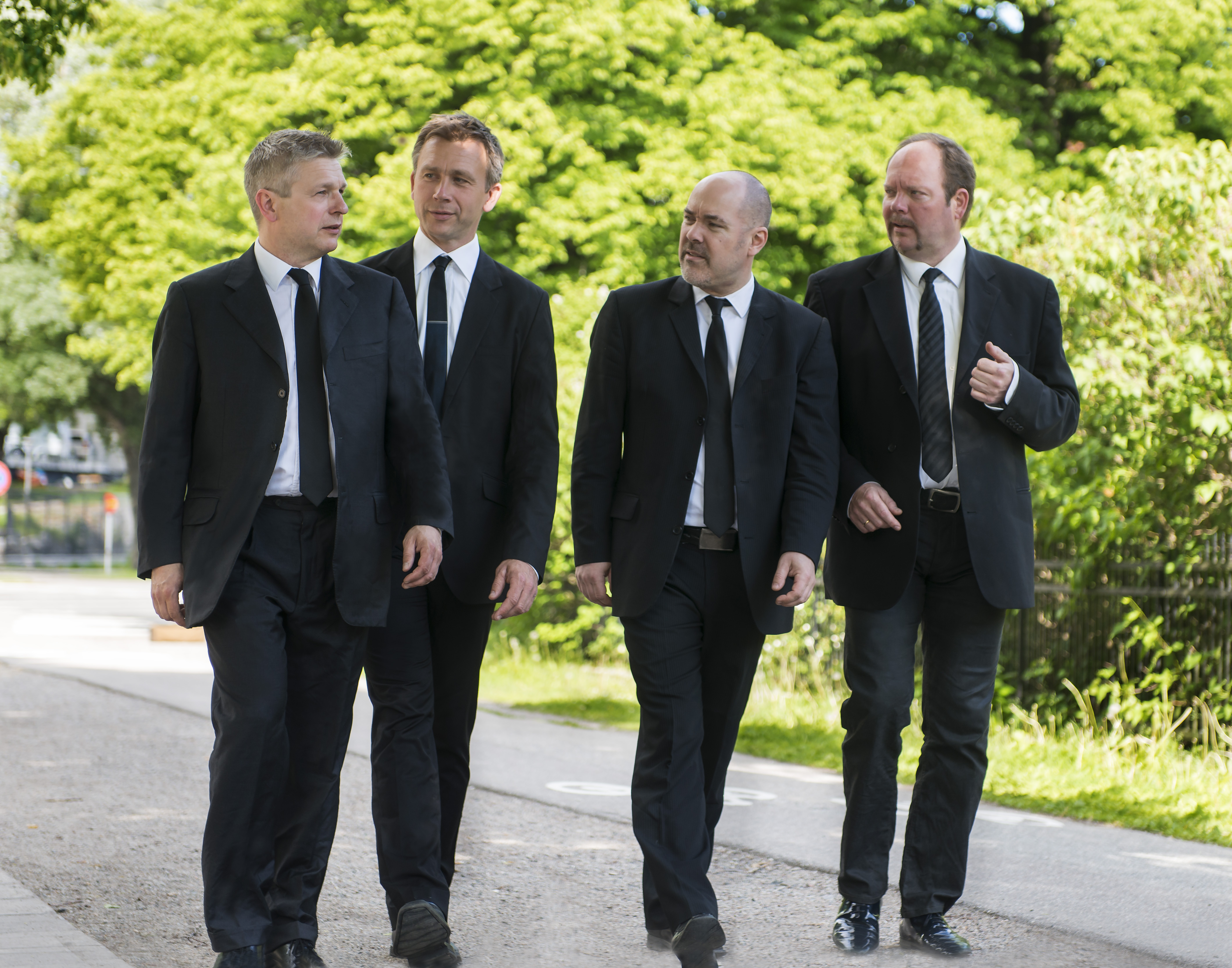
The third concert, subtitled A Swedish Sensation, featured the Stenhammar String Quartet in a tense Elegy and brisk Intermezzo from Lodolezzi sjunger (Lodolezzi sings). Then they were joined by Lotte Betts-Dean for a fascinating set of five songs from Henri Marteau. The viola crept upwards before a portrayal of how the ‘quiet drops fall to earth from the clouds’ was brilliant in Thränentropfen, while the exultant In dem Garten meiner Seele found the ‘magic voice of a violin’ from first violinist Peter Olofsson at the end. Betts Dean set a very high standard, with wonderful tone and full voice in Sonnenlied, pushing to her upper range with impressive poise and power.
The quartet then proceeded to give a fluent account of their namesake’s String Quartet no.4, showing its ready inspiration in a first movement that delighted in a good many tunes, the instruments engaged in confident dialogue. The influence of Mendelssohn could be found in this busy activity, but the richly coloured Adagio made a more lasting mark, Olofsson’s passionate solo floating above the waves created by the other three instruments. There was a busy scherzo with a particularly bright fugal episode, high on energy, before touches of humour imbued the finale with positive spirits. Again, the dialogue between the four was intimate and entertaining.
The fourth concert, given in a starry Saint John the Evangelist church, included a complete performance of Stenhammar’s cycle Songs and Moods. The object of this concert was to show off Stenhammar’s talents to the full in the company of the best possible artists for the task. Agnes Auer returned, while Swedish soprano Camilla Tilling and baritone Jakob Högström gave fully idiomatic performances, all paired with festival director Sholto Kynoch, who had somehow found the time to rehearse the challenging piano parts!
The route to Stenhammar came by the way of Lindblad, Rangström, Nordqvist, Alfvén, Linde and Peterson-Berger, and was again illuminating in its selections. The darker shades of Ture Rangström’s Pan received a nice, airy delivery from Tilling, while Alfven’s Saa tag mit Hjerte was the most affecting song so far with its simple yet searching message and melody. Bo Linde’s Äppelträd och päronträd (The apple tree and the pear tree) sprang forward with renewed energy, while Peterson-Berger set a mood of longing with När jag för mig själv, and the poignant lyric “I think of a friend whom I will never find”.
After six very fine songs from Stenhammar himself – Ingalill Op.16/3 testing the upper range of Tilling and Fylgia Op.16/4 clinging urgently to its subject – we heard Högström in Songs and Moods Op.26. This fulsome baritone was beautifully projected, supported by a crystal clear piano part. There was a sharply rendered portrait of the butterfly orchid that stood out, then a staccato Miss Blonde & Miss Brunette which proved the most substantial song. Kynoch was certainly kept very busy! To the land of bliss was brilliantly judged, tripping along like a slightly tipsy dance, while Prins Aladdin af Lampan, with several twists and turns, wrought its way to a powerful climax.
Tilling returned for more of the composer’s single songs, with Vid fönstret Op.20 offering poignant words on ageing, then Månsken (Op. 20/4) a clear portrayal of the forest. For an encore, soprano and baritone linked in Swedish.
This was an absolutely fascinating day, too much to take in one sitting but consistently revealing when watched back on the different streaming sites. Great credit should go to the video production team, for the songs were expertly filmed, but also to the panelists and performers for clearly relishing their chance to show their respect for one of Sweden’s best-loved composers. This day will surely have won Wilhelm Stenhammar many new friends.
For further information on this year’s Oxford Lieder festival, you can visit the event’s website here
Various venues in Oxford, Saturday 9 October. Artists as listed below
Written by Ben Hogwood from online streams
The Oxford Lieder festival is into its 20th year, a cause for celebration indeed. It has become one of the UK’s finest classical music events, lovingly curated and produced but gathering increasing levels of enthusiasm every year.
The 2021 model is ideally weighted, with live music events streamed and recorded for posterity – an ideally weighted dual approach in these uncertain times. Titled Nature’s Songbook, it has set aside days for anniversary composers Saint-Saëns (100 years since his death) and the lesser-heard Swedish composer Wilhelm Stenhammar (150 years since his birth)
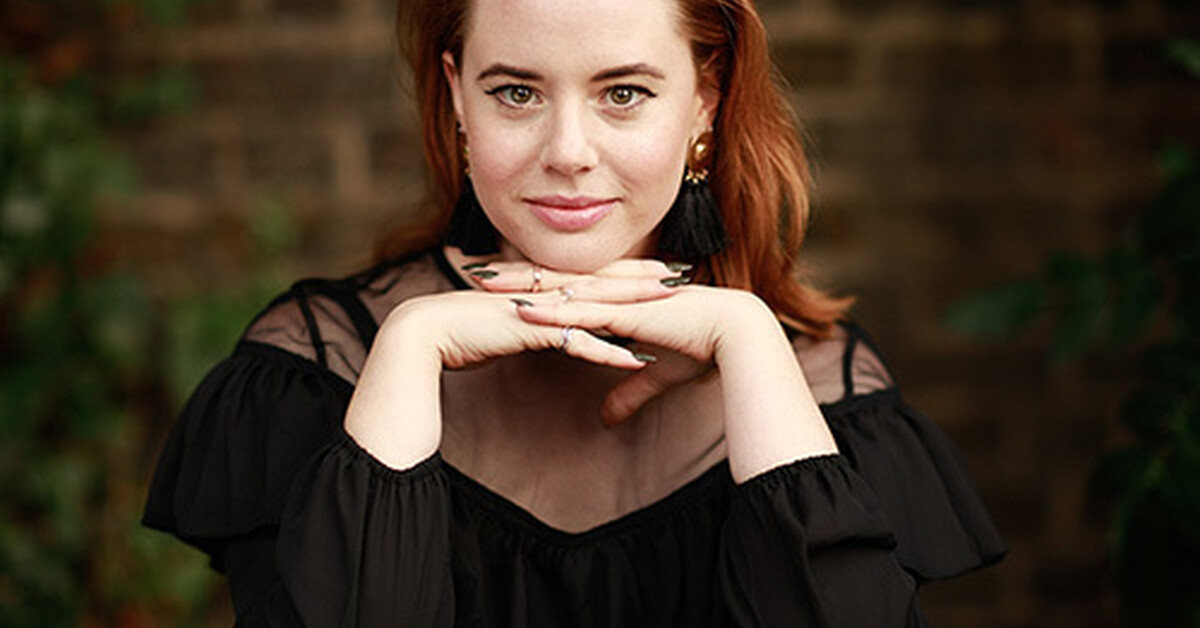
Saint-Saëns had his day on the Saturday, offering audiences a chance to appreciate his under-heard Mélodies in the context of better-known chamber and stage works, not to mention works by pupils and contemporaries. Baritone Victor Sicard & pianist Anna Cardona (above) were on first, the 2011 winners of the festival’s Young Artists Platform giving a recital from the ideal acoustic Saint John the Evangelist.
They began with a pupil and close friend of the featured composer. Gabriel Fauré was to become one of the very finest French composers of the 20th century, his output headed but not restricted to sublime contributions in the world of chamber music, piano and song. We heard his first published song cycle Poème d’un jour Op.21, a brief affair – which is ironic, since the subject of Charles Grandmougin’s verse was exactly that. Sicard found his feet in the slightly sorrowful first song, with an easily flowing piano part from Cardona. There was strength of character in the second, and wistfulness in the third as the day-long love affair fizzled out.
Saint-Saëns melodies followed and – as is often the case with this composer – hit the mark immediately. The attractive La Brise was secured by a rustic drone from Sicard’s left hand, which also gave its urgency to the next song. Emotionally the heart of this selection lay in La splendeur vide Op.26/2, which was followed by the Danse macabre, Saint-Saëns working with inner resolve. Perhaps it lacked a little edginess but a really strong connection between the two was clear.
Fauré’s pupil Ravel was next, and Sicard found the exquisite, timeless quality of Kaddisch, its melodic inflections beautifully expressed and contrasting with the questioning L’Énigme Éternelle. Following this was Histoires Naturelles, the ideal choice given the festival’s theme. Cardona had a strong descriptive role to play, with some lovely detail portraying Crickets, and The Swan too, which had strong characterisation. The Guinea Fowl’s ‘rowdy and shrill’ ending was perfectly judged by the pair – as was an exquisite encore of Chanson française.
Later we further examined the link between teacher and student in the Jacqueline du Pré Music Building, as violinist Fenella Humphreys and pianist Martin Roscoe played sonatas by Saint-Saens and Faure. In an aside to the audience, Humphreys revealed it was the first time the duo had performed the Saint-Saens Violin Sonata no.1 in D minor Op.75 (1885), realising a long-held dream of playing a work in public she had loved since childhood.
The closer acoustics of the hall took a little while to adjust to – certainly on the live stream – but it was easy to admire the duo as they met the challenges of the busy first movement head on, getting beneath the tumultuous phrases to the deeper emotion below. The softer-hearted second theme, a chorale, with rippling arpeggios from the piano, reminded us that the Organ Symphony was not far off – and it was beautifully rendered here. A keenly felt Adagio led to a balletic third movement, initiated by Roscoe’s nicely pointed piano part. There was however a strong sense of everything pointing towards the finale. Its tremendous technical demands were comfortably conquered, but again the music’s feeling won the day, Humphreys playing winsome long phrases. Both players enjoyed the return of the ‘chorale’ theme, but also the peal of bells evoked by Roscoe from the piano.
Fauré’s Violin Sonata no.1 in A major Op.13 is an early work, written nine years earlier, when it was given a glowing review by his teacher. Humphreys spoke affectingly of its significance during lockdown, and it was clearly a tonic for her to be playing it again. The two players dovetailed beautifully, Roscoe’s flowing introduction picked up seamlessly by Humphreys’ lyrical phrases. The slow movement took time for deep thought, its gently undulating piano a foil for the violin’s probing melodies, gradually building to a deeply felt apex. The scherzo was winsome, its syncopations tripping over each other happily. An ardent account of the fourth movement found the players deep in conversation, right up to the end of this richly rewarding piece. It is difficult to write about what makes Fauré such an attractive composer – his gifts are plentiful but elusive – yet this performance had all the qualities that so impressed his teacher.
A strong cast of thirteen musicians assembled for a pair of concerts in the Saint John the Evangelist church. They were led by soprano Elizabeth Watts, and baritone Felix Kemp, with pianists Jâms Coleman, Martin Sturfält joined by principal players of the Echor Chamber Orchestra (Anna Wolstenholme (flute / piccolo), Jernej Albreht (clarinet), Owen Gunnell (percussion), Jonathan Stone and Sara Wolstenholme (violins), William Bender (viola), Nathaniel Boyd (cello), Laurence Ungless (double bass)
It is funny to think Saint-Saëns prohibited performances of Le Carnaval des Animaux in his lifetime, for fear of being dismissed as a frivolous composer. In the event the suite was published a year after his death, and the piece has had an enduring appeal ever since. The Oxford Lieder edition recognised that appeal but interspersed his suite with an array of animal-based songs from contemporaries and countrymen, together with short readings from nonsense verse by Ogden Nash.
The programme was brilliantly conceived but was too big, including a total of 17 songs alongside the Carnival without a break, meaning the flow was difficult to pick up at times. That said, the imaginative set of works largely succeeded thanks to the artistry on stage. Watts’ versatility was evident in the oppressive heat of Chausson’s La Caravane, its powerful vocal line in thrall to Wagner, and also in the amusing tale of La Cigale et la fourmi as set by Offenbach, with some brilliant high notes at the end.
There was a striking duet between Watts and flautist Anna Wolstenholme, portraying Roussel’s Rossignol mon mignon, before the soprano found the nub of Hugo Wolf’s solemn Wie lange schon war immer mein Verlangen. Felix Kemp was an effective foil, capturing the micro portraits of animals as realised by Poulenc from Apollinaire’s poetry, as well as Britten’s elusive Fish in the unruffled lakes.
The Carnival itself was a huge amount of fun. From the boisterous Introduction and Royal March of the Lion onward, it was nice to see the performers enjoying themselves in this irrepressible music. Double bassist Laurence Ungless caught the character of The Elephant, lumbering into view, while The Swan was beautiful and effortless in the hands of Nathaniel Boyd. Pianists evinced some ready laughter, before we returned to Watts for the rather lovely final song, Grieg’s own portrayal of the swan, which found her using a third language of the evening. The Echor soloists wrapped up with a celebratory finale, putting the cap on a concert which may have been too long, but which was ultimately enjoyable.
A packed day ended with a late evening recital from Adèle Charvet & Anne Le Bozec. Subtitled Mélodies on Tour, their program began with three English-language songs – two about sleep from Gounod, by turns perky then lustrous, with a setting of Longfellow’s poem Sleep. Saint-Saëns himself was next, evoking a heady atmosphere with A Voice By The Cedar Tree but then agitated in La mort d’Ophélie, where Charvet held an impressively strong tone.
The recital alternated songs by our chosen composer with a well-chosen selection of eight songs from Pauline Viardot, to whom Saint-Saëns dedicated his opera Samson et Dalila. Her song Lamento was the most directly communicative song, and an indication of why she is finally starting to get the exposure she deserves in a male-dominated field. Noch’Yu, one of two Pushkin settings, was evocative in this setting, but the pick of the eight was Aimez Moi, which brought a rapt stillness to proceedings.
Saint-Saëns‘ two settings of Uhland featured a striking piece of writing in the low register during Antwort, very well handled by Charvet, then the composer exaggerating his feelings rather in Ruhetal. Later we heard Guitares et Mandolines, the composer relishing the chance to depict the instruments in Anne Le Bozec’s deft accompaniment. The agitated Tournoiement spun itself into an eternal whirlpool.
There was time for two songs from Massenet, another underrated songwriter – his Crépuscule and Nuit D’Espagne expertly crafted examples, the latter with a Habanera-like profile – to which we returned in Viardot’s Madrid. The context of these night-time songs helped put the seal on a fascinating and richly rewarding set of concerts, showing the strength of depth French composers have to offer.
For further information on this year’s Oxford Lieder festival, you can visit the event’s website here
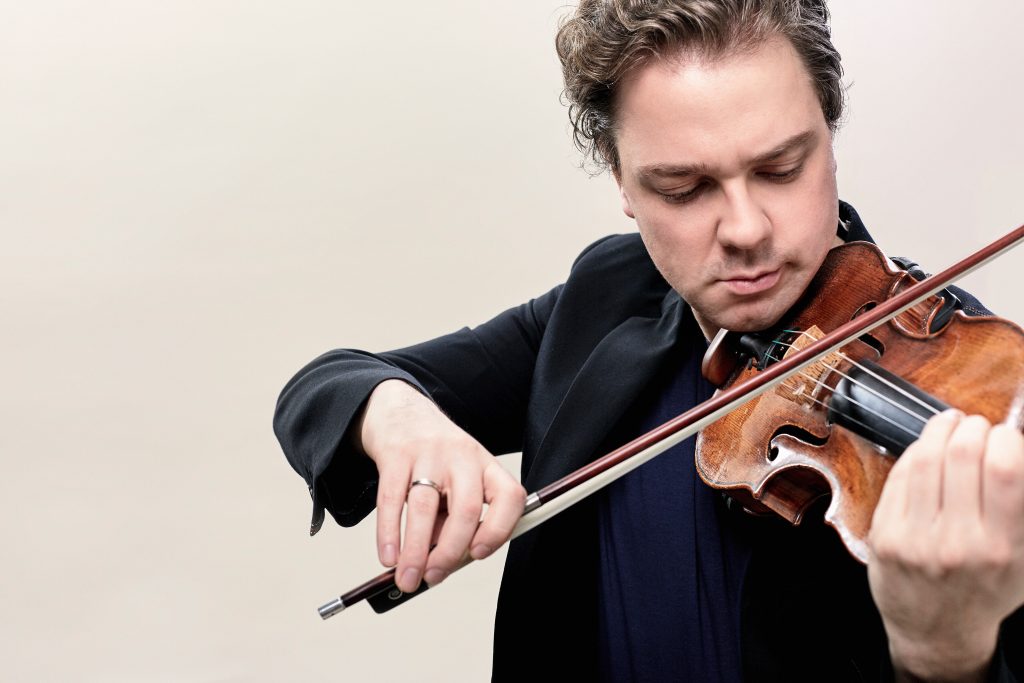
Alexander Sitkovetsky (violin, above), English Symphony Orchestra / Kenneth Woods
Mendelssohn Symphony no.4 in A major Op.90 ‘Italian’ (1833 rev.1834) Carwithen arr. Woods: Lento for Strings (1945 arr. 2020) Beethoven Violin Concerto in D major Op.61 (1806)
St. Peter’s Church, Hereford Sunday 26 July 2021 (3.30pm) (Concert reviewed online via ESO Digital)
Written by Richard Whitehouse
For this first concert in its 2021/22 season, the English Symphony Orchestra was heard at St. Peter’s Church, Hereford in a concert combining familiar classics with an arrangement of the kind that has been a hallmark of its programming under principal conductor Kenneth Woods.
The piece in question was a Lento for Strings that began as the slow movement of the First Quartet by Doreen Carwithen. Although she left a notable output of concert and film music, Carwithen (1922-2003) is remembered mainly through her association with William Alwyn – being his amanuensis from 1961 and second wife from 1975 for the final decade of his life. At the time of this quartet, she was a promising composer in her own right, as confirmed by Woods’s adaptation of the slow movement so that its prevailing intimacy and introspection lose none of their acuity. The ESO played it with requisite poise and finesse, not least those plangent solos for viola and violin that were eloquently rendered here by Matt Maguire and Kate Suthers, thereby resulting in an atmospheric miniature which warrants frequent revival.
Mendelssohn was just a year older when he completed his Italian symphony, long among his most popular works even if heard a mere handful of times then withheld from publication in his lifetime. Maybe the touristic nature of its conception or its unlikely tonal trajectory (A to A minor) created issues he was unable to resolve, but in creating this symphonic suite he had unconsciously set a precedent. Woods undoubtedly had its measure – whether in an Allegro (exposition repeat included) whose joyousness did not exclude more combative energy from its development and coda, an Andante whose journeying pilgrims were evoked with no little pathos, an intermezzo deftly revisiting the wide-eyed enchantment of the composer’s youth, or a finale whose interplay of saltarello and tarantella rhythms surged on to a decisive close.
Beethoven’s Violin Concerto is one of a select few in its genre whose weight and substance justifies its occupying the whole second half. Alexander Sitkovetsky responded accordingly – the opening movement long-breathed but sustaining itself at least until the latter stages of the development, when a sense of expectancy rather failed to materialize. Momentum picked up thereafter, not least during a finely projected account of the (Kreisler) cadenza whose tensile rhetoric subsequently made the orchestra’s heartfelt re-entry in the coda seem more telling.
The highlight of this performance came with the Larghetto, slower than is often now the case but its sequence of variations melding into each other with seamless elegance, with a rapport between soloist and conductor at its most tangible in the theme’s hushed reiteration prior to a spirited transition into the Rondo. This did not lack for impetus, and if Sitkovetsky was most perceptive in the intervening episodes, the anticipation generated as the main theme steals in on the approach to the final tutti carried through to the nonchalant pay-off of the closing bars. An appealing and enjoyable concert in which, moreover, the ESO sounded not at all fazed by the vagaries of the acoustic. It continues its current schedule on October 10th with music by Mendelssohn, Mozart and Schubert – plus a mystery piece ‘‘to be announced on the night’’!
Further information on the ESO’s next concert can be found at their website. For more on Doreen Carwithen, visit the MusicWeb International page here
April Fredrick (soprano, Judith), David Stout [baritone (Bluebeard) / speaker (Prologue)], English Symphony Orchestra / Kenneth Woods
Bartók arr. van Tuinen / Karcher-Young Bluebeard’s Castle (1911/12)
Wyastone Concert Hall, Monmouth
Recorded June 16-17 2021 for online broadcast, premieres 13 August 2021
Written by Richard Whitehouse
The English Symphony Orchestra’s season of online concerts drew to its close tonight with a performance of Duke Bluebeard’s Castle, the only opera by Bartók and seminal work on the cusp between the late-Romanticism and nascent Modernism from the early twentieth century.
While its libretto by Béla Balázs is susceptible to interpretation, that concerning the ultimate impossibility of meaningful human communication is surely the decisive factor for Bartók’s setting of what became his longest work and his most explicitly personal statement. Yet this emotional scope never results in a lack of formal cohesion or expressive focus, ensuring that the duo-drama unfolds both inevitably and inexorably towards a fateful denouement that – by no means coincidentally – brings the piece full circle in terms of its underlying introspection.
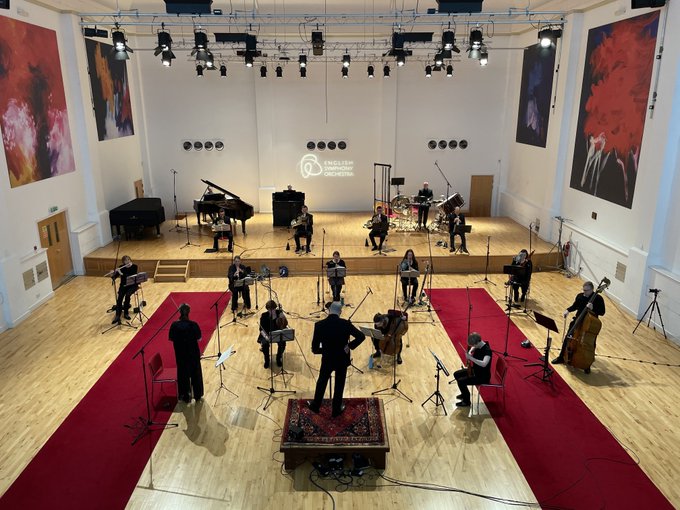
A piece, then, of epic sweep but whose climactic moments only rarely dominate music that is (surprisingly?) well suited to reduction of a kind undertaken here by Christopher van Tuinen and revised by Michael Karcher-Young. The 25-strong ESO copes ably with those undulating contrasts in mood and texture that underpin the traversal of the protagonists through the castle and its environs, through to a culmination whose outcome feels no less tragic for having been ordained almost from the outset – a fable of disillusion whose impact comes across unscathed.
Of course, such considerations are relative to the success of the two singers in conveying the range of their respective roles. Whether or not she had previously sung that of Judith, April Fredrick has its full measure as she moves from confidence, via wariness and imploration, to reluctant acceptance of the part she must play in the completion of a journey that other wives have undergone before her. Rendered with vibrancy but no lack of finesse, this is a perceptive assumption, and one which Fredrick will hopefully be able to repeat on stage before too long.
Not that David Stout is necessarily upstaged in his portrayal of Bluebeard – emerging here as no misogynist, still less a murderer, than a conflicted figure whose avowals of love can never outweigh those inherent failings of self that have led to his repeating the same pattern of loss as before. Having previously taken on the spoken Prologue with thoughtful anticipation, Stout projects the role with no mean impetus as well as a keen eloquence that comes to the fore in those fateful later episodes when the sixth and seventh doors have almost to be prized open.
Otherwise, the ESO plays to its customary high standards throughout a score which, if never as radical as works of this period by Schoenberg or Stravinsky, remains a testing assignment with the integration of overtly expressionist tendencies into music of a Straussian opulence. This reduction loses little in either respect, due notably to a piano part as achieves more than textural filling-in then a harmonium part adding substance and atmosphere in equal measure. Kenneth Woods paces these 65 minutes with an acute sense of where the drama is headed.
Indeed, the only real proviso is the end-credits being accompanying by music from earlier in the opera. Surely it would be possible to have silence for the one minute it takes for these to ‘roll’? Otherwise, this is an excellent conclusion to a worthwhile season of online concerts.
You can watch the concert on the English Symphony Orchestra website here
For further information on future English Symphony Orchestra concerts, click here. ‘Fiddles, Forests and Fowl Fables’ is now available from the English Symphony Orchestra Website.






 Arcana.fm