On Record: Richard Deering – Parry: Piano Music (Heritage Records)

Parry
Piano Sonata no.1 in F major (1876)
Piano Sonata no.2 in A minor (1878)
Sieben Charakterbilder (1872)
Five Miniatures (pub. 1926)

Richard Deering (piano)

Heritage Records HTGCD140-141 [two discs, 87’15’’]
Producer/Engineer: Paul Arden-Taylor
Recorded 15 July 2023 at Wyastone Concert Hall, Wyastone Leys, Monmouth

written by Richard Whitehouse

What’s the story?

Heritage continues its coverage of unfamiliar British music with this set featuring much of the music for solo piano by Hubert Parry, representative of those earlier years when his immersion in the Austro-German tradition was being leavened with a more personal vein of expression.

What’s the music like?

Although he had essayed two sets of shorter pieces in the late 1860s, Parry’s large-scale piano works come from the following decade. The First Piano Sonata owes a debt to Beethoven but also Mendelssohn and Weber, the eddying restraint of its first movement finding contrast with the capricious charm of its scherzo or wistful poise of its Andante. The finale duly heads from a pensive introduction to an elegant Allegretto that, in turn, finds greater animation in its coda. Modest in scope, the whole piece has a limpidity and understatement which is most appealing.

The Second Piano Sonata, if not that much longer, none the less leaves a greater impression – not least as the influences of Schumann and Brahms are more evident. The opening Allegro features a Maestoso introduction that recurs after the development and in the coda to deepen this music’s ingratiating manner, then the Adagio touches on deeper or even darker emotions. The ensuing Scherzo is more rhythmically incisive than its predecessor and while the finale is marked Allegretto, it builds to a decisive close – the introductory music again in evidence.

Before either of these sonatas, Parry composed a set of studies entitled Charakterbilder but with the intriguing subtitle Seven Ages of Mind, which suggests an evolving concept akin to several of Schumann’s collections. The Dreaming of a whimsical Prelude is followed by the impetuosity of Learning then the histrionics of Passion. The trenchancy of Striving precedes the eloquence of Longing then the elation of Triumphing, and though the final Adagio is untitled, its mood of inward rapture might well be thought of as being Fulfilling.

Parry soon went on to write a notable Piano Concerto and engaging Theme and Variations, but little further for the solo instrument until late in life. Published posthumously, the Five Miniatures likely emerged over a quarter-century – the initial Sleepy having an affecting charm complemented by the winsomeness of A Little Christmas Piece then wry humour of Capriccio. Greater profundity is hinted at in the ensuing Pause before this sequence reaches its close with the bittersweet resignation of Envoi – most delicate of miniatures.

Does it all work?

It does. Parry was still in the process of finding his own voice (which, as can be heard from his later choral and orchestral works, was a distinctive one) when writing this music, which should not detract from the technical finish and emotional warmth in much of what is heard here. It helps that Richard Deering brings out its salient qualities through playing responsive to the composer’s idiomatic if stylistically undemanding pianism, as rendered on a Steinway D which clarifies a preponderance of ‘middle range’ keyboard sonorities and passagework.

Is it recommended?

It is. The sound has all the clarity and perspective expected, and there are useful background notes by Lisa Hardy. A follow-up release featuring the Theme and Variations, along with the three sets of Sonnets and Songs without Words and the Schulbrede Tunes, would be welcome.

Listen

Buy

You can explore purchase options for this album at the Heritage Records website. For more information, click on the links for performer Richard Deering and for the Hubert Parry life history

Published post no.1,981 – Tuesday 17 October 2023

Online Concert: Wayne Marshall @ Wigmore Hall

Wayne Marshall (piano)

Wigmore Hall, Monday 9 October 2023 1pm

by Ben Hogwood

And now for something completely different…presenting Wayne Marshall on the piano at the Wigmore Hall, delivering the latest BBC Radio 3 Lunchtime Concert without a script.

Marshall is renowned for his abilities as an improviser, but even he had not tried this approach before, whereby the whole hour’s music took place at the suggestion of the audience – both in the venue, via submissions placed in a box beforehand, and over X / Twitter, where listeners made their own suggestions.

The results are actually remarkable, a testament to the power of music in the moment. Try watching the concert online without knowing what will come up – but if you want a guide for repeat listening, timings can be found at the bottom.

5:51 – Erroll Garner Misty
11:48 – John Williams Hedwig’s Theme (Harry Potter)
18:34 – Gershwin I Got Plenty O’ Nuttin (Porgy & Bess)
25:06 – J.S. Bach Toccata and Fugue
34:33 – Rachmaninov Rhapsody on a Theme of Paganini – as though played by Art Tatum
40:30 – Stevie Wonder You Are The Sunshine Of My Life
44:25 – Cole Porter Let’s Do It (Let’s Fall In Love)
50:03 – Copland Fanfare for the Common Man
56:00 – Stravinsky The Rite of Spring

For more livestreamed concerts from the Wigmore Hall, click here

The 1st of July – musical miniatures from Tchaikovsky and…Bomb The Bass

With the arrival of July 1st, here are two very different musical responses to the month. The first is an extract from Tchaikovsky’s popular cycle for piano, The Seasons – designating July to be The Song of the Reaper:

Then, with the weather here in the UK having been a little downcast this morning, a very different response from Bomb The Bass. Winter In July is a wonderfully moody song, with vocals from Loretta Haywood. It could only be from the early 1990s!

Online Concert: Tom Borrow @ Wigmore Hall – J.S. Bach, Franck & Rachmaninoff

Tom Borrow (piano)

J.S. Bach Italian Concerto in F major BWV971 (pub. 1735)
Franck Prélude, choral et fugue (1884)
Rachmaninoff Variations on a theme of Corelli Op.42 (1931)

Wigmore Hall, Monday 1 May 2023 1pm

by Ben Hogwood

This BBC Radio 3 Lunchtime Concert featured the New Generation pianist Tom Borrow, making his debut at the Wigmore Hall with a very well-judged trio of works casting their eyes back to the past. The Israeli-born performer was notably comfortable in the environment, responding to the intimate atmosphere of the hall with compelling music-making.

Bach’s Italian Concerto was first, a work that is particularly successful on the piano. Borrow’s articulation in a crisp Allegro was very pleasing to the ear, his enjoyment of the counterpoint evident. The Andante was particularly beautiful, and completely unhurried – the pianist not afraid to give the right hand plenty of room to expand Bach’s melodies, the left hand hushed but responsive too. The bustling Presto had plenty of musical activity, the energetic profile maintained throughout but again the shapely melodic phrasing winning through.

Franck’s Prélude, choral et fugue is the best known of his works for solo piano. Its form looks back to the organ works of Bach, inserting a ‘chorale’ section in between the more conventional pair of ‘prelude’ and ‘fugue’. Here the Prélude began softly, Borrow’s light touch bringing delicacy to the decorative arpeggios around the theme, while also bringing the parallels with Brahms into focus. The choral started softy but grew in stature, moving from darkness to bright light, Borrow crossing hands to play the theme with apparent ease. The flowing discourse here was notable, maybe not as loud as some pianists but finding the heart of Franck’s expression nonetheless. The fugue was stately but also mysterious to begin with, the pianist bringing forward its chromatic profile, but then taking full command of the intense exchanges and achieving a most impressive performance in the process. The closing peal of bells was brilliantly played.

Rachmaninoff’s Variations on a theme of Corelli completed the trio of retrospective works, this one another remarkably concentrated piece offering plenty of opportunity for virtuosity and interpretative skill. This was again taken up by Borrow, once again setting a reverent atmosphere with the slow exposition of the theme. The lilting second variation in triple time was persuasively delivered, while a commanding fifth variation and sweeping seventh carried all before them. This only heightened the mysterious eighth and ninth variations, lost in thought.

The dynamic contrasts of the twelfth variation were very well observed, then the anxious syncopations of the thirteenth. The following Intermezzo had the requisite elements of fantasy, followed by a yearning chorale for Variation 14. Borrow’s technical command was impressive throughout, notably in the twists and turns of Variation 16 and the jagged edges of the eighteenth variation onwards. The clarity here was notable, in spite of the volume – and the thunderous finish was complemented by a radiant coda.

Borrow’s encore choice was well-suited – a flowing account of Rachmaninoff’s Prelude in G# minor Op.32/12, with notes that twinkled in the upper right hand at the end.

For more livestreamed concerts from the Wigmore Hall, click here

Preview – Hastings International Piano Competition: Prize Winners’ Gala Concert

If you live in London or the south of England and love the piano, then consider this: Did you know there is a fully-fledged, international piano competition right on your doorstep?

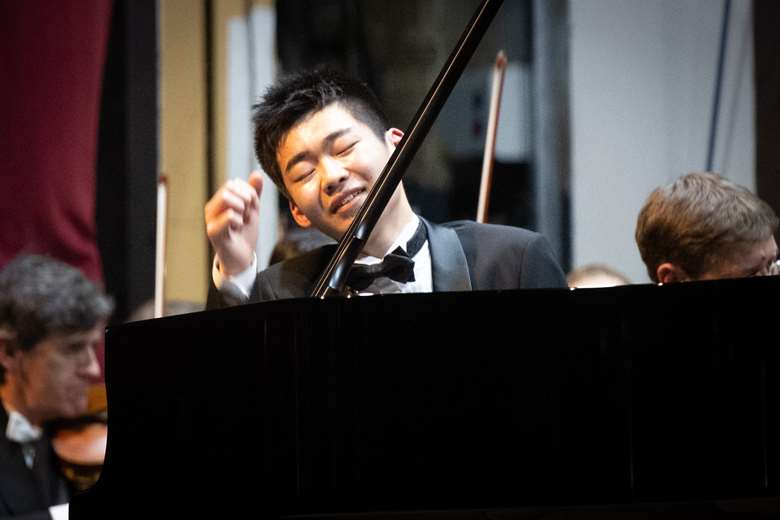
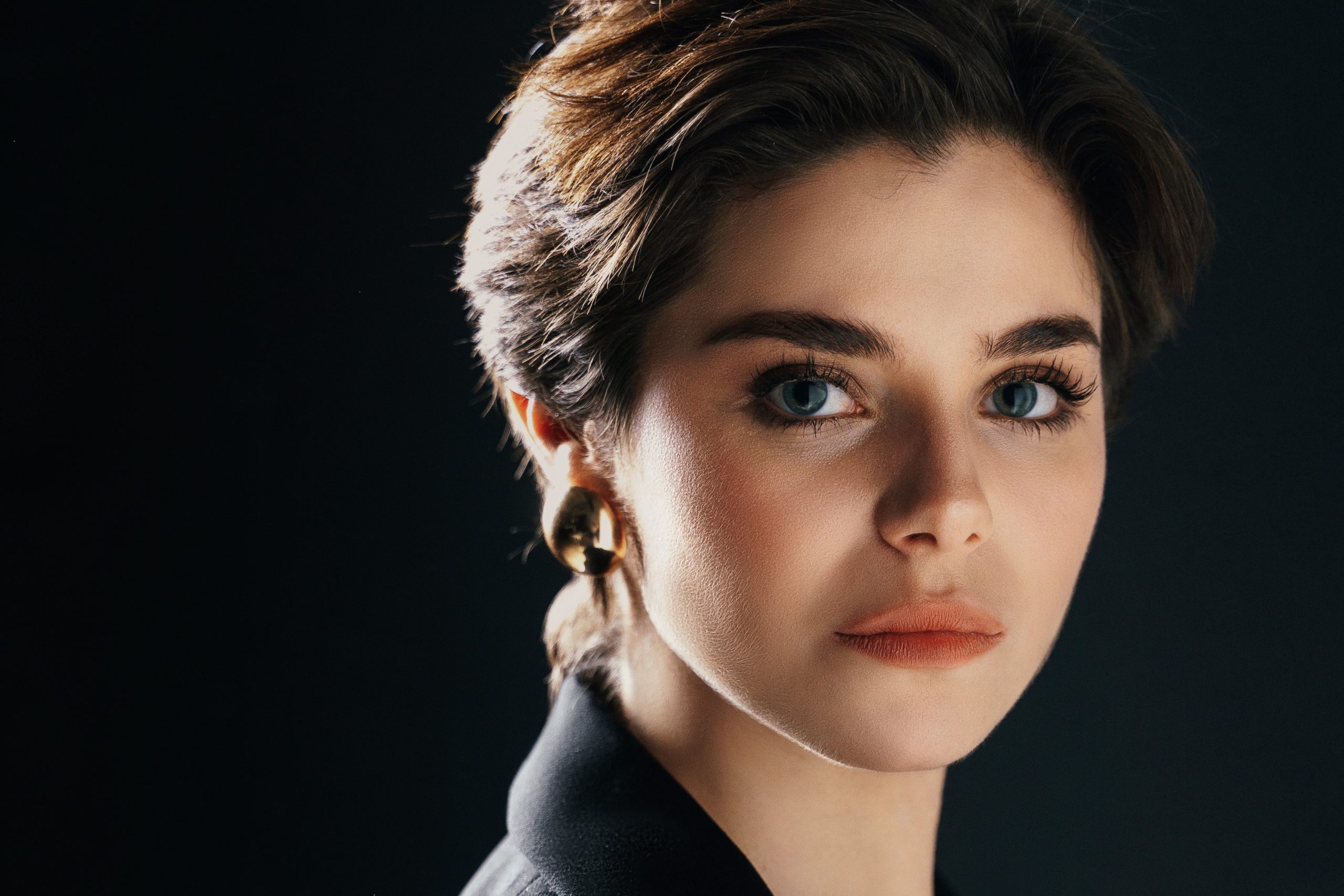
It is, of course, the Hastings International Piano Competition, hosting their Prize Winners’ Gala Concert at the White Rock Theatre in the town this Saturday 4 March. Performing at the concert, and accompanied by the Royal Philharmonic Orchestra under Rory Macdonald, will be two of the stars of last year’s competition. The winner, Japanese pianist Shunta Morimoto (above), will perform Beethoven’s Piano Concerto no.4, while third-placed Mariamna Sherling (below) will close the concert with Rachmaninov’s much-loved Rhapsody On A Theme of Paganini.

“It is a great honour for me to perform again on the historical stage of the White  Rock Theatre”, said Sherling. “The Royal Philharmonic Orchestra is absolutely incredible!  I was lucky to perform with this outstanding orchestra a year ago in the final of the Hastings International Piano Concerto Competition.  I can’t wait to collaborate with them again.”

Shunta, meanwhile, is similarly excited for his performance of the Beethoven. “It will be my greatest delight to bring to my performance with the Royal Philharmonic Orchestra all the beauties I have uncovered studying the 4th concerto of Beethoven. It will be my honour to share this with the public of my most beloved city in England.”

The Hastings International Piano Competition is under the authoritative guidance of Paul Hughes who moved to the role from his previous post as Director of the BBC Symphony Orchestra. The competition itself has its roots in the Hastings Music Festival, which dates all the way back to 1908 – and it evolved from the festival, growing at a startling rate. Last year’s competition, says Hughes, was its best yet. “Yes, very much so. We had a record number of applicants – 360 – and a truly international field.”

Morimoto’s winning concerto in the 2022 competition, says Hughes, “demonstrated his extraordinary musicality and the maturity of his playing, as well as meeting all the technical demands of that particular work. Beethoven’s Piano Concerto no.4 has parallels in that it requires a deep understanding of the music, exceptional phrasing and an appreciation of the architecture of the concerto; all qualities that Shunta has in abundance.”

The concerto will begin with Dvořák‘s effervescent Carnival Overture, while Tchaikovsky’s Romeo and Juliet Fantasy Overture opens the second half – a prelude to Sherling’s Rachmaninov. “Mariamna (above) is the possessor of a fabulous technique, a razor-sharp mind and a sense of fun”, says Hughes. “I am expecting she will employ all of this to demonstrate many facets of Rachmaninov’s set of variations.”

Hastings has a reputation of being ‘The Friendly Competition’, which Hughes attributes to “a combination of the efficient organisation of HIPCC combined with the warmth of the community whose hospitality in looking after and supporting the young pianists at every stage of their progress through the competition makes such a difference. It is also the friendliness and openness of the jury who share insights and give constructive feedback to the competitors.”  

Following the contestants after the competition has finished is imperative. “That is an important part of the Hastings International Piano experience”, he stresses. “We follow, support and offer performance opportunities to our pianists, and not just the finalists.” When choosing the winners, he says that “formally we don’t discuss the artists as a group of jurors.  The range of experience within the jury means we are all looking for different aspects of a performance, and make our selections individually.”

Hughes (above) considers the future of the competition to be rosy. “Professor Vanessa Latarche was President of the jury in 2022 and fulfilled that role magnificently.  She is now Artistic Director of Hastings International Piano and so I am confident we will attract an even wider range of pianists from across the world. One of the elements of the competition that distinguishes it from many others is that it focuses predominantly on the piano concerto; to that end we have conductor Rory Macdonald returning to conduct not just the finals,  but also the semi-final round.   One further innovation new to the Hastings competition is that we are commissioning a new piano solo work that each competitor will be required to perform in their solo recital round.”

These exciting developments are a natural progression from Paul’s previous role with the BBC Symphony Orchestra. “In my role there I have worked with and presented very many pianists, from early career new generation artists to the most distinguished pianists working today.    I have commissioned new work for them, supported and developed long term relationships with these amazing artists and fostered a sense of loyalty that I believe is so important in our profession. I am calling on all those experiences in Hastings to create a platform where we can discover, support and nurture young pianists and engage the Hastings community in the wonderfully exciting journey of a young pianist from competition to the very top of the profession.”

You can book tickets for The Hastings International Piano Competition Prize Winners’ Gala Concert by clicking on the link. Meanwhile the Piano Concerto Competition will return in February-March 2024 – with updates appearing on the competition website