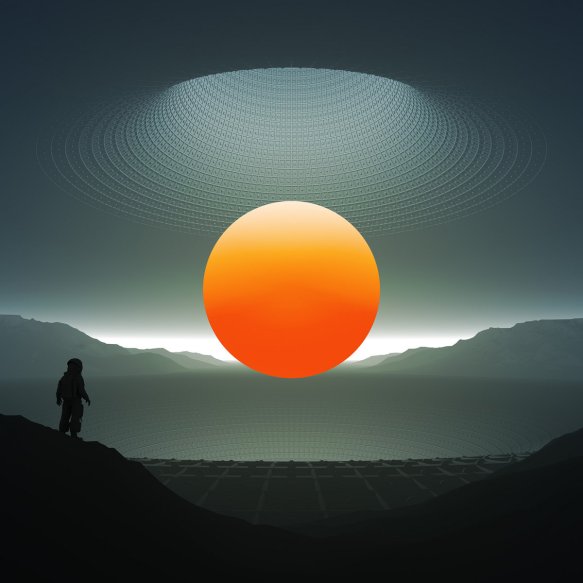
BUNKR’s album The Initiation Wellproved to be one of the sleeper electronic hits of 2019, showing off the ability of Brighton’s James Dean to present an album of really well thought out electronica.
Now as a companion piece he has commissioned an album’s worth of remixes, with eight very different interpretations ranging from Digitonal to preston.outatime.
What’s the music like?
Both calming and invigorating, in equal measure. The collection is presented in a logical order, so we begin with a dreamy Digitonal remix of For The Birds, setting the scene beautifully as the track is left in suspension, bisected by a soft piano.
Fujiya & Miyagi do a typically fuzzy take on Solitary Drift, with added flutter and distortion that suits it really well – and their own half-whispered vocals. Octavcat then ensure Solar Wings takes off with its broad chords and busy rhythm.
The upfront, block beats of preston.outatime take Left For Dust to a tougher dancefloor, while Jonathan Krisp gets some acidic squiggles going against the slow moving backdrop of The Initiation Well itself. East Of Eden acquires more bleeps and movement, a really nice glitchy bit of techno applied by Lextron, while the remix of Docking Procedure finds Infinite Scale going under the surface with a head-nodding bit of dub. Finally label heads Echaskech apply their typically robust beats to a heady remix of Left For Dust.
Does it all work?
Yes. Importantly this set of remixes works as an album too, such is the intelligent arrangement of different tempos, textures and beats. All the BUNKR originals are complemented but remain recognisably the work of Dean himself.
Is it recommended?
Very much so. If you liked the original album you’ll find this imaginatively realised remix collection complements it perfectly.
Most people hate January…but then, from early on in our chat, it is clear Emika is not one of them. “I love January, it’s the one!” she gushes. “Everyone’s moping around, but I’m just on it doing all my work so I can relax in the summer! Everywhere is cold and dark in Berlin currently but I really love it at this time of year.”
We have connected to talk about the many and varied musical projects in which she is currently involved. Head of the queue is new piano album Klavirni Temna, a sequel to 2014’s Klavirni – about which she became Arcana’s very first interviewee in 2014. A lot has changed in her life since then, in particular the arrival of a baby girl. The new addition is heavily connected to Klavirni Temna, of which more later – but first Emika is talking about how her music is developing.
“My creativity is getting a lot worse now I’m a mother! I’m doing more and more, I’m collaborating a lot more. I have a new label concept, working with a lot more artists, and working in much more creative zones. There are things that don’t fit my Emika project but I can do them on someone else’s record. I call it having music kittens, lots of them!”
Klavirni Temna can be thought of as the pedigree in the litter. While the new release schedules and streaming platforms are packed with solo piano records, it has a distinctive voice of its own, and when heard on headphones (listen above!) it is like having someone in the room next door. “That’s what I wanted”, she affirms. I like the feeling that someone’s actually performing, a person in a time and a moment. All the pieces and improvisations are ones that didn’t have mistakes in them, and they were recorded on my phone. Then I went back to them, racked up on a lot of things and recorded them properly.”
Emika was effectively recording for two. “It’s a particularly interesting record because I wrote it while I was pregnant, and I could feel how the baby was responding to the music. When it went too dark I could feel the baby didn’t like it, and it got more uncomfortable! I finished the record and was in a rush, so I whacked plug-ins on it and thought it would be nice, I could put it out, and concentrate on becoming a mother. But when I’d had the baby it sounded rushed and clean, and not really me. I re-did it and used broken, dirty, dusty tape compression and delay. I wasn’t sure what to do, I had the test presses and didn’t know, so I put the test presses on and my daughter came in. She was listening, and then came over and tapped my stomach and said ‘mummy sound’! She understands the piano as being home and me. Forever we have this sound connection, and it’s one of a kind, a strange musical thing.”
Her Czech musical ancestors wrote similarly intimate pieces for piano, the likes of Dvořák, Suk and Janáček putting down some of their most private thoughts in suites and individual pieces, such as the Janáček example played by Piotr Anderszewski above. Emika is no different. “The piano’s my notebook. It feels like a black pencil and a white piece of paper, and it’s how I can set down to work.”
Each of the pieces is identified as Dilo, which means ‘moment’ in Czech. “It is exactly like that, and I feel akin to it”, she says. “Janáček made a lot of pieces for his children, and that was a big confidence boost to me. If he’s done it I will do it! Since the first Klavirni album solo piano has become so popular and trendy, and that’s why I wanted to develop the sound this time. Usually my music is not so trendy but this feels like the height of the trend! And it is five years since I did the last Klavirni album. It’s cool – it could have gone either way, but this release makes the other one safer if you know what I mean.”
There are unexpected twists and turns as the album develops, meaning the listener is kept on their toes while experiencing the darkly meditative scores. Dilo 31 is an example, dropping in pitch as it progresses in an affecting and slightly disturbing way. “The engineer couldn’t believe I wanted it that way, he was really confused! I think bending the piano’s pitch afterwards rather than playing it live is cool.”
Emikae loves the escapism playing the piano affords. “My studio is close to a forest, and that’s what I see when I’m playing, with the weather changing. The piano is right by the window, so it’s connected to the outside world. I’ve shifted from a dark Berlin room to a lofty space outside. The studio is a work in progress, and it’s really inspired by Earthship. I saw how Michael Reynolds builds houses from trash, using glass bottles and tyres. The houses capture energy and heat from the sun and have their own ecosystem, and you can grow food too. I’ve been researching solar power, and the goal is to have somewhere sustainable, rather than being part of a grid system. I am trying to downsize, to not use too much energy and to do more with less. The piano is the ultimate instrument for that…synthesizers, not so much!”
Her enthusiasm for the move is contagious. “The first step was to move out of the city. Then I wanted to look at designs, and to get architects. I’m really inspired by the Tiny House movement, and I would love to build a tiny house studio. You can run them with solar power, and reuse your waste. It’s all about getting ready for the next era of survival and energy, and it’s making me think very differently about shrink wrap, vinyl and all those things. It’s difficult in the digital age to replace that with something meaningful, but we will find a way!”
Now she’s fully installed in the German countryside, Emika can devote more time to her second symphony project. “It’s inspired by the economist Jeremy Rifkin, who delivered a talk with VICE on YouTube (below):
I looked him up and just e-mailed him. I let his chief of staff know that I wanted to do a piece of music inspired by his work, and to my surprise he got back to me! Melanfonie, my first symphony, looked back to the past, but this one is looking 300 years into the future. I’ve been experimenting with using Maxim SP to play synthesizers, deciding what they play with a set of conditions that you program in first. It plays for half an hour, and I’ve got about 80 recordings, each one of them getting better with the process. Now I’d like to get the orchestra to play those parts.”
Emika’s willingness to embrace both the analogue sounds of the piano and the future digital ways of working is inspiring, each complementing the other in her music. “The more we understand technology, the closer it’s getting to nature and feels like it will save it again. I would like this symphony to be a live process. With Melanfonie everyone got it on the CD after, and didn’t get the live experience. For this symphony the idea is to do it in front of a live audience, with no click track or headphones. That creates a lot of pressure, but if you’re going to do it it’s the best thing you can do. This time I want to have synthesizers and to perform with the orchestra. That was the feedback, to have some bass-heavy, epic stuff going on!”
Klavirni Temna, Emika’s second piano album, is released on Friday 14 February on Emika Records. You can listen to extracts and order the album on Bandcamp here:
You can read more detail about Emika’s studio set-up on the Music Tech website (opens in a new window)
Interviewed by Ben Hogwood
Picture courtesy of Decca Classics
Sheku Kanneh-Mason is a rare commodity. In the midst of dazzling publicity, he is helping open doors for classical music by his very approachable demeanour and an approach to album-making that brings it into closer contact with other forms. On the evidence of this interview he is refreshingly grounded and intently focussed on his first love, which of course is music.
While some have expressed concern that the cellist might be overworked early in his career, our discussions around second album Elgar confirm him to be relaxed and deeply satisfied with the newest addition to his discography.
His debut album Inspirations, released this time in 2019, presented the ShostakovichCello Concerto no.1, the piece he played to win the final of the BBC Young Musician of the Year in 2016. Kanneh-Mason coupled it with diverse pieces from Pablo Casals, Offenbach, Leonard Cohen and Bob Marley. This time however his main focus is the work of a much older man, the Cello Concerto in E minor of Sir Edward Elgar.
The recording of this much-loved corner of the cello repertoire was made with conductor Sir Simon Rattle and the London Symphony Orchestra. It has an intensity which belies Kanneh-Mason’s tender years, offering new viewpoints into what will be familiar music to a lot of people. Again the context into which Sheku puts the Elgar on his album is intriguing, of which more later. But where did he first hear the music of Elgar – and was it the piece he has just recorded?
“It would have been the concerto, definitely”, he recalls. “I listened to it a lot when I was younger, and I grew up with the famous Jacqueline du Pré version. While we were working on it I listened to a lot of different recordings of the piece, it’s such a special work. Other recordings I really love are the most recent Steven Isserlis recording, Truls Mørk with Simon Rattle, and the famous one from Beatrice Harrison with Elgar himself conducting. There is a huge range of ways in which people approach the piece, and what strikes me about the piece is that everyone reacts in a different way.”
The second movement (a Scherzo) finds Kanneh-Mason and Rattle scooting along with a particularly quick choice of tempo, and the cellist clearly relishes the fast bow strokes required. “It’s a fun piece to play, and you get swept up in it but you have to work on getting a lightness of touch with the repeated notes.”
Elgar’s concerto may be the main piece on the album but there are a variety of shorter pieces imaginatively included by Kanneh-Mason. One composer in particular we may be hearing from again is the Swiss-born American Ernest Bloch, born to Jewish parents. Two of his shorter pieces are included here. “I love his music”, says Sheku. “For Grade 8 I did the Prayer for cello and piano, which is a piece I knew to play young. It’s music I really love, and there’s also the piece for cello and orchestra, Schelomo, which I hope to record in the future. You can feel some of the pain in the harmonies he uses.”
More obscure still is a piece for cello ensemble, Hymnus, by the German composer Julius Klengel. “It’s an amazing piece”, he says. “He was a cellist as well, so I think that’s how he ended up writing for 12 instruments. Every week at the Royal Academy of Music we had a cello ensemble, and that’s how we got to know it. There’s a nice link there, as there is for all the pieces on the album. It’s very inspiring being around really young hardworking musicians and all of us being based in one place.”
How does Kanneh-Mason balance his studies with days like today, where he has a whole day of promotional interviews to navigate? “I just have to be very organised with my time, which is a good thing for us anyway. I never feel that I have too much on.”
He is particularly gushing when talk turns to his work with Sir Simon Rattle, and the bond they share in the interpretation of the Elgar. “Definitely. I think what I love about working with someone is the freedom to do what I want but knowing that they can do everything as well. It’s the spirit of true collaboration I think”.
The theme of collaborating runs through both albums, and Kanneh-Mason identifies with this original approach. “It’s nice to have a link and a reason for putting them together, like creating a concert program. It’s great to record a masterpiece and a big piece, and put it with smaller pieces that have an equal range of colour and harmony, and perhaps more subtleties.”
For Elgar he was helped by Simon Parkin, with sensitive arrangements for cello and orchestra of Elgar’s Nimrod, from the Enigma Variations, and the Romance originally written for bassoon and orchestra. To that he adds Frank Bridge’s Spring Song, the folksongs Blow The Wind Southerly and Scarborough Fair, and Fauré’s profound Elégie.
“He’s an amazingly skilled arranger”, says Sheku of Parkin, “and he keeps the heart of the pieces while making the most of the instruments. I love mixing the arrangements that complement the pieces of music in their original form, and it’s great to record them in respect of friends and teachers, which makes it more personal. I’m always excited and open to lots of new things and working with new people. I’ve had some amazing experiences with these recordings, and you can hopefully hear the enjoyment from them.”
As you might expect given his album programming, Sheku’s ‘out of hours’ musical tastes are varied. “I listen to a mixture of classical, jazz, reggae, and different kinds of folk music”, he says. “Growing up with music all around me has been really inspiring, and it has kept me grounded and motivated. Now I live with students, and the people below me are also musicians.”
Thinking back to his BBC Young Musician of the Year triumph brings Kanneh-Mason onto a subject close to his heart, musical education. “I think we should have as many young people in music as possible. The Young Musician of the Year is great as it shows people playing to the highest standard. When I did it I found watching people three or four years older than me was really inspiring, and it ultimately gives people the opportunity to do many more things.”
He also notes the importance of after care. “Afterwards there was so much attention, but the BBC really looked after me. It was important to have the right people around me and to be working with the right people. A competition is only good if what comes after is good.”
With time running out, we conclude by discussing his favourite musicians of the moment. “I love Steven Isserlis”, he says. “He’s my favourite cellist to watch…and I also love listening to the violinist Daniel Lozakovich. Martha Argerich is also someone I find really inspiring, I love watching her play the piano.”
This blend of youth and maturity, established and new, is perhaps the most inspiring thing about Sheku Kanneh-Mason’s success. His approach is very inclusive, and his next ventures will be very interesting to chart and appraise. With Elgar reaching the heights of number eight in the album charts so far, the musical world is very open to him right now.
Sheku Kanneh-Mason’s Elgar album is out now on Decca Classics – it can be purchased here, via Apple Music, or streamed below via Spotify:
Various Artists: Balance presents Vivrant mixed by Jeremy Olander (Balance)
What’s the story?
‘Melancholic’ and ‘cinematic’ are two of the words closely associated with Jeremy Olander’s music. They are often applied to the Swedish producer’s own work and his DJ sets, which often contain a lot of his own music. Time, then, for him to release one of those commercially – which he does here on the Balance label. Olander confesses to feeling a little intimidated by the prospect, with last year’s epic contribution from James Zabiela casting quite a shadow, but he nonetheless steps up with music from his own studio and those of his Vivrant label artists.
What’s the music like?
Yes. Olander goes for an expansive style in his mixing, and often stays rooted to the same pitch for ten minutes or more. This is a really effective tactic, creating wide open spaces and a pleasant feeling of hypnosis for the listener, who after a while will discover their feet are tapping automatically. The introduction of the first mix bears this out, with three tracks from J.Singh that stay rooted to one pitch before long bass notes move the music on. Marino Canal & Miguel Payda’s Hidden Eyes are excellent, with a moody vocal and soaring line.
The mix is like a single, arching structure, as is the second which has an utterly sublime beginning from Olander’s own track Akzo. This is a lovely, starry piece of music and it cuts to more spacey, beat driven material in Yoyo. Again the continuity here is more important than single standout single tracks, and Olander judges the build of intensity in the mix just right, finishing with his own Life After Death.
Is it recommended?
Yes. Olander’s mixes are in for the long haul and work best when heard in full, creating spaced out and hypnotic atmospheres. They may not always be full of hooks but the late night spell is cast to perfection.
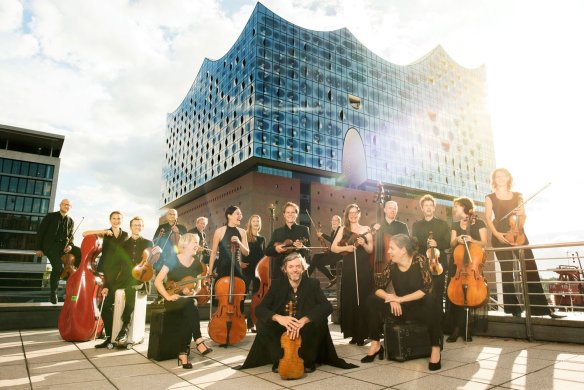
These are exciting times for Ensemble Resonanz. Presenting themselves as an ensemble that functions as a group of soloists as well as a chamber orchestra, the Hamburg-based group are Ensemble in Residence at Germany’s flagship new concert hall, the Elbphilharmonie. From that base they have established themselves as a wide-reaching musical force, capable of interpreting the music of Haydn as naturally as their latest release with Bryce Dessner, composer and guitarist with The National.
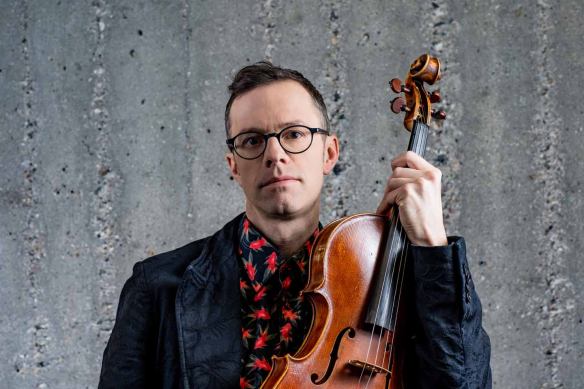
Arcana spoke to one of the ensemble’s lynchpins, viola player Justin Caulley (above), to find out what makes him – and them – tick, and how they achieve their renowned intensity in concert and on record.
As always, we began at the start, and an upbringing that brings both Beethoven and Pearl Jam into the conversation. “I grew up mostly in Kansas”, says Caulley, “and my parents were amateur musicians. My father played piano and a bit of cello, while my mother played the piano. My upbringing was sprinkled with classical CDs that my dad would bring home. I especially remember Richard Strauss’s Also sprach Zarathustra conducted by Herbert von Karajan, and Beethoven’s Symphony no.9 as well. I got started playing the violin in church, then moved to viola. My dad was the preacher there. I played in student concerts in country churches, but like every kid at the time I listened to a lot of rock and grunge music. I was pretty influenced by mixtapes my cousin would make for me, with Pearl Jam, Nirvana and Alice In Chains on them. He was in south Seattle and introduced me to them, as well as bands like Sonic Youth.”
Deciding to pursue music further, Caulley made rapid progress in both his musical attributes and his discoveries. “Having grown up in the United States I was influenced by the idea of crossing genres, or category-less music making. When you grow up in a small town all music is not the same but categories exist as much. Beethoven 9 or Pearl Jam, it’s all there. I was also heavily influenced at the Eastman Rochester School of Music, where I studied. It was there that I first encountered minimal music, and especially quite a few Steve Reich pieces. I was lucky to work with him a couple of times, and with La Monte Young, on the Dream House. We played a version of his String Trio and worked with him on it. This all happened before I came to Europe in 2003, so before Ensemble Resonanz I had a good varied upbringing!”
We move on to discuss the ensemble’s new disc Tenebre, a collection of four pieces by Bryce Dessner. “One of the challenges was to encounter Bryce’s music in the realm outside of categories”, says Caulley, in reference to our earlier points. “He is impossible to put in a box, and the challenge is to approach music with fresh as opposed to tabular thinking. The pieces are great and easy to get to, but each needs its own universe.”
There is a very powerful presence on Aheym, the album’s opening track. Originally written for the Kronos Quartet, it has been expanded by Dessner for the bigger forces of Ensemble Resonanz. “It’s one of those pieces that has such an incredible explosion of ideas and energy”, Justin says enthusiastically. “It’s easy to grab on to. It gets you worked up and very suddenly there is a groove. Some of the changes from section to section in Tenebre itself were astonishing to play, too.”
From previous experience I note Bryce has a really positive presence, softly spoken but fiercely driven. Did that transfer to the recording studio? “I think that’s very well put”, responds Caulley. “Working with him was really nice, and it was interesting to get feedback from him. We were working on this other level outside of the nuts and bolts. What I noticed was this unbelievably broad wisdom outside of the music, in a practiced way but also inside of that practicality there is something bigger going on.”
Dessner was quoted in an interview as being quite taken aback by the intensity of Ensemble Resonanz’s playing, which is surely the ultimate reference for an ensemble. “We were ultimately flattered by that! One of the nice things working with him was us working towards a common goal, our wishes were similar. It was easy to stay intense, with us all in it together.”
Ensemble Resonanz have been recording, too. “I just came from a session of Beethoven’s Piano Concerto no.4 with Gianluca Cascioli, conducted by Riccardo Minasi. We also have a great tour of our version of Bach’s Weihnachts-Oratorium (Christmas Oratorio) coming up, with quite a few concert dates before Christmas. After that we continue with our subscription concerts, with some Shostakovich and Ustvolskaya in January.”
He reflects on the opportunity to play in the Elbphilharmonie. “It’s great, really nice!” he enthuses. “It is totally larger than life, and even though we’ve toured most of our lives it’s not every day such a building opens up.” It must be rewarding moving between music by composers such as Haydn, Schoenberg, Eisler and Dessner, as the ensemble do. “It’s crazy, the breadth of stuff that we do. It’s always a great challenge, and the greatest luxury to have so many opportunities.”
There are moments of creative tension, but Caulley sees these as a sign of healthy artistic dialogue. “As in any group there is a dynamic that can have its moments of tension. One thing I’ve learned of value is the idea that any sort of tension can be resolved, and can also be used towards working for a goal. Where I grew up there was no tension at all, and it could get superficial. Now although sometimes tempers can flare the search for some sort of truth is important to people. They don’t want just to smile and nod and say that’s OK. If that’s tough, just lay it on the table!”
Ensemble Resonanz have a monthly club night, about which Caulley is most enthusiastic. “For me that’s one of the most inspiring things we do, and I’m on the planning committee so am heavily invested. We have our own space, and we do what we want. We don’t necessarily do the most crazy things but we can let our imaginations roll and see what’s possible.”
Tenebre, the collaboration between Bryce Dessner and the Ensemble Resonanz, is out now – and can be purchased here
You can listen to Tenebre on Spotify below:
To illustrate the contrast in the repertoire the ensemble records, their previous release was Haydn’s Die sieben letzten Worte unseres Erlösers am Kreuze (The Seven Last Words of our Saviour on the Cross):



 Arcana.fm