On Record – aus: Everis (Lo Recordings)

by Ben Hogwood

What’s the story?

aus is the solo project of Tokyo-born composer and producer Yasuhiko Fukuzono. He works with a blend of analogue and digital, bringing a keen awareness of orchestration for strings to bear with recordings of everyday life and electronic motifs.

Often these are highly descriptive, capturing movie images or reflecting conversations, dreams, melodies and emotions. As his press material goes on to say, Fukuzono reflects his home city in the activity felt within his music, with dynamics that shift quickly from loud to quiet and back again.

What’s the music like?

Fukuzono writes warm, expressive music with beautiful colours and compelling attention to detail.

Halsar Weiter establishes the rich tableau of sounds, with bright harmonic movements and an initial stillness that gradually gives way to movement, when Landia arrives with distinctive thematic material and the use of a chorus.

Past From brings elements of minimalist composers into the mix, with a busy and slightly percussive piano part complemented by struck percussion and attractive strings that come to the fore towards the end, rather like the postlude on a Björk song.

Make Me Me has quite a plaintive two part harmonisation that grows in strength. The vocal for Flo feels like it’s played on an old record. Memories has a dreamy, sparkling piano against incisive strings.

All these pale into relative insignificance alongside the final track Neanic, which has the fluttering figurations of a violin against a still, wordless choir, then builds to a powerful and moving conclusion.

Does it all work?

Yes, it does – Fukuzono has a keen sense of structure to keep things moving, not to mention an abundance of melodic ideas.

Is it recommended?

It is – this is an album that gives more with each listen, which will appeal to modern classical listeners as well as those with an eye on the cinematic.

Listen

Buy

Switched On – Stefan Węgłowski: Smooth Inertia (Glacial Movements)

by Ben Hogwood

What’s the story?

With this new album from Polish composer Stefan Węgłowski, the Italian label Glacial Movements reach a half century of releases, in which time they have cemented a status as one of the go-to labels for deep musical ambience.

In Stefan’s own words, “Smooth inertia is an album that was created in solitude, after the end of a certain period in which I stagnated. I could call it a blank sheet that I had to fill in. For years I had been trying to create an ambient album that I would be happy with, which would transcend me somehow beyond my full understanding.”

To do this, he uses field recordings, manipulated spoken word (Anna Figurska) and an out of tune piano (Adam Kośmieja). Węgłowski also plays the guitar on two tracks, a return to the instrument after a nine-year break.

What’s the music like?

Haunting. Deep Light sets a dark, mysterious tone, effectively a scene setter before Ray Of Night stretches out before the listener. Here the out of tune piano provides an effective counter to the thick sonic clouds behind, while the field recordings – birdsong high in the mix – bring a softer, lighter complexion to the music.

Time Brings Relief is as long as these two pieces combined, with Figurska’s voice set against another musical cloud, this one with consonant harmony that gives it a bright edge. Yet it is Frozen Edge that leaves a lasting impression, its initial ambience compromised by the glint of metallic tones that come to the sonic foreground. These cast a powerful spell, the harmony alternating slowly between two roots in the background. Towards the end a piano chord tolls meaningfully.

As a bonus, Frozen Edge appears in a remix from Michał Wolski, who delves into its mystery and adds a chilling sonic wind blowing across the picture.

Does it all work?

Yes – and though the durations of the tracks suggest the album might be lopsided, it proves to be well structured.

Is it recommended?

It is. There are dark moments here for sure, suggesting strife and loss, but the deeper impression is that of an overriding calm.

Listen

Buy

Switched On – Jordan Stanley: A Cry For The Moon (Bytes)

by Ben Hogwood

What’s the story?

Jordan Russell-Hall, aka Jordan Stanley, is described in his publicity material as a musical magpie, a sampler pilfering material from Charli XCX, Mr Mitch, Ariana Grande and Jimmy Edgar. To these carefully chosen snippets he adds richly coloured synths and busy rhythms that have garnered stylistic comparisons with the likes of Hudson Mohawke and Rustie.

What’s the music like?

Often thrilling, especially when the synths are involved. Stanley gets big blocks of harmony on his side, using them in scattergun fashion to blaze a trail through the busy percussion.

Sometimes the music can move quickly, as though skating across a dancefloor, but he also knows when to pull it back and pan out for wider thoughts. This happens very effectively on Fog, which hovers on a held chord with vibrato before cutting loose, and Impossible, which starts thoughtfully before chopping up its source material.

Pure Morning has a glitchy outlook, while Fascination works well with the tension it creates through rapid piano fire and a relatively slow beat. Quicksand is a thrill that harks back to early rave in its massive parallel chords, Overt is harder hitting, but then the title track goes for broke, a massive production enveloping the listener in huge, floes of icy sound.

Does it all work?

It does – and Stanley works at speed, meaning his ideas never outstay their welcome. Indeed the whole album, with nine tracks, is wrapped up in less than half an hour.

Is it recommended?

It is – a dazzling and colourful set of synthesizer grooves, cutting their way through the noise.

Listen

Buy

Switched On – The Orb: Prism (Cooking Vinyl)

by Ben Hogwood

What’s the story?

British electronic artists are known for their staying power. Few are more durable than The Orb, however, with Alex Paterson’s band having gone through so many different membership connotations since their formation in 1987.

These days the outlook is relatively settled, as the duo – Paterson and Michael Rendall – have now completed three albums together, bringing the studio album count to 18.

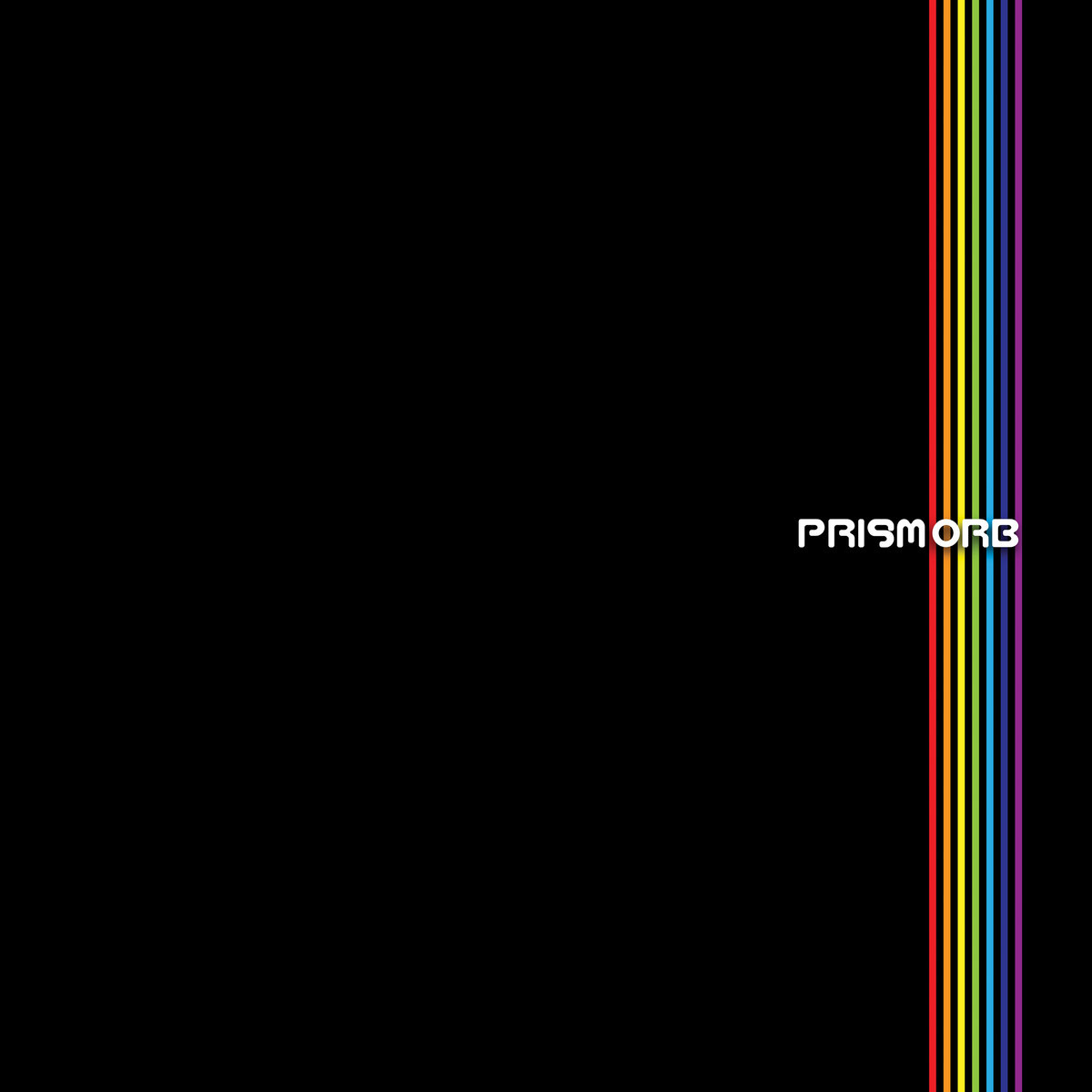
There are plenty of guests adorning Prism, with its artwork homage to Pink Floyd, intentionally or not marking the 50th anniversary of Dark Side Of The Moon.

What’s the music like?

If you know The Orb from the 1990s, the musical content of Prism will come as little surprise. And yet Paterson and Rendall have made an album full of very fresh sounding music, and any familiar formulas that might be used are given the freshest coat of paint.

There are some explicit musical homages made throughout the record. H.O.M.E. (High Orbs Mini Earths) makes direct reference to Mr Fingers’ Can You Feel It in its celebration of Chicago house music, while Living In Recycled Times follows the promise of its title by matching the key, tempo and mood of Adam F’s Circles and Alex Reece’s Feel The Sunshine, both prominent drum ‘n’ bass tunes in the mid-1990s.

These are two excellent tracks, but the pure reggae contributions are best of all. A Ghetto Love Story uses Eric Von Skywalker to bring the sunshine, a great piece of Brixton committed to record – while Tiger makes a powerful impact, its dedication to Paterson’s son and late brother made meaningful in music of strong emotion.

More traditional ambient fayre can be found elsewhere, with the heat-soaked Picking Tea Leaves And Chasing Butterflies a real gem in its use of distant trumpet fanfares and chugging foreground beats.

Does it all work?

It does. Even though Paterson can make this sort of album in his sleep, he shows what a strong instinct he has for structure. Prism works beautifully as a single listen, and although there are a few slightly derivative tracks they all carry the distinctive Orb imprint.

Is it recommended?

Heartily. The Orb have a remarkably consistent discography, but Prism is one of their very best.

Listen

Buy

Switched On – Matthewdavid: Mycelium Music (Leaving Records)

by Ben Hogwood

What’s the story?

It is definitely worth reading the thoughts of Matthewdavid behind his new album, as documented on his Bandcamp page.

In the course of his writing the Los Angeles-based producer documents the importance of the vast, subterranean fungal network known as the ‘mycelium’, and proceeds to explore how he has captured it in musical form.

It is his first long player release in five years.

What’s the music like?

As always, Matthewdavid’s music teems with life, and in this case it feels like a process of continuous growth expressed in musical form. With no drums, and seemingly no pulse under which the music operates, it takes its own elasticated form. The relative lack of bass, too, means that the listener can feel suspended in space, the music taking place all around without ever feeling earthbound.

The music has a closer focus than previous Matthewdavid’s Mindflight material, more psychedelic too – and often carries the impression of tendrils being extended through probing electronic sounds. On occasion the view pans out to take in a wider expanse, as on the tracks Liquidity and Zithercelium.

Does it all work?

It does, and the considerable advantage here is that the listener can sit on the edge of the music, enjoying its calming effect, or go for total immersion on headphones to harness its peak meditative powers.

Is it recommended?

Yes. Matthewdavid’s take on ambient music is a consistently individual one, and this album is full of new life, intriguing sonic tunnels and possibilities.

Listen

Buy