Switched On – John Atkinson: Energy Fields (AKP Recordings)

by Ben Hogwood

What’s the story?

Energy Fields is the response of composer John Atkinson to climate change. Over four tracks it presents field recordings from September 2019 at the Ucross Foundation in Wyoming.

Atkinson’s Bandcamp page describes ‘the largest coal-producing state in America, as well as a burgeoning hub for renewables and carbon capture. These sounds of electrical hums, shuddering coal mines, roaring refineries, and gently clanking wind turbines, along with groaning bison, chattering cranes, and other wildlife, are reshaped into four tracks of heavy drone that veer from anxiety to awe, and from anthropocentric to transcendent.’

What’s the music like?

At times, a riot of colour and activity – at other times reaching a zen level of calm. Spiritual Electricity switches on for a particularly bright opening, with sustained pitches and drones. It conjures up visions of dragonflies as the current passes through, before giving the impression of a radio drifting in and out of focus. Black Thunder has a darker, fragmented outlook, the same electronic fuzz now sounding sinister as it lurks in wait to quash any melodic cells.

By contrast Casper brings a lovely purity to its bright treble pitches, while World Wind is more obviously industrial in its outlook, but the workings are strangely comforting over a held drone and with hints of birdsong in the background. As a consonant harmony makes itself ever clearer, Atkinson’s music takes on a refreshing purity – and we are left with the chatter of the birds.

Does it all work?

Yes – in a very unhurried way, creating some vivid portraits of the Wyoming location. For immersive listening it is hard to rival.

Is it recommended?

It is. Escapism is an all-too common requirement in the music we consume these days, but John Atkinson ensures the trip is a deep and meaningful one.

Listen

Buy

Switched On – Neil Cowley: Battery Life (Mote)

by Ben Hogwood

What’s the story?

Battery Life is a wholly appropriate title for Neil Cowley’s second solo album. It reflects his experience of bittersweet memories – ‘like a battery, they come with a positive and a negative’, he says. Cowley will reveal all in a forthcoming interview with Arcana, but here he plays out the memories through his piano. He uses a slightly modified instrument, with dampeners often applied for more sensitive volume control, while the main melodic material is dressed with complementary electronics and percussion. These materials draw from ambient and semi-classical sources, though Cowley retains an approach that allows for free improvisation.

What’s the music like?

Intimate and often moving. Cowley avoids by some distance the trappings of arpeggiated piano music, staying well away from the café or the hotel bar and drawing the listener in to the front room or the studio.

In fact the feeling grows that as listeners we are sat right next to Cowley at the piano and able to read his thoughts as he plays. Often he will begin with musical fragments that then blossom into meaningful phrases or riffs on which other thoughts can build, often with percussion and ambient brush strokes for company.

Automata is a good example of Cowley’s careful production of the piano sound itself, employing dampeners and giving effective electronic displacements to the sound. Breaka combines short motifs and windswept atmospherics with a slow but solid rhythm, while more detached figures probe and build up momentum on Ticker Tape.

While a good deal of the tone is serious that does not stop more capricious thoughts, such as those on Scarab Beetle, where little hooks blossom into full blown flights of fancy. The closing Cord brings emotions to a height, still restrained yet deeply meaningful.

Does it all work?

It does. The thoughtful approach is an ideal base from which to work, but through the different tracks Cowley is able to apply instinct, humour and the bittersweet nostalgia that comes with memory recall. The use of perspective through the electronics and ambient effects is subtly applied but gives the music extra layers too.

Is it recommended?

Very much so – a fine and lasting sequel to Hall Of Mirrors, and an album that shows Neil Cowley to be an emotive artist whose fingers have plenty to say.

Listen

Buy

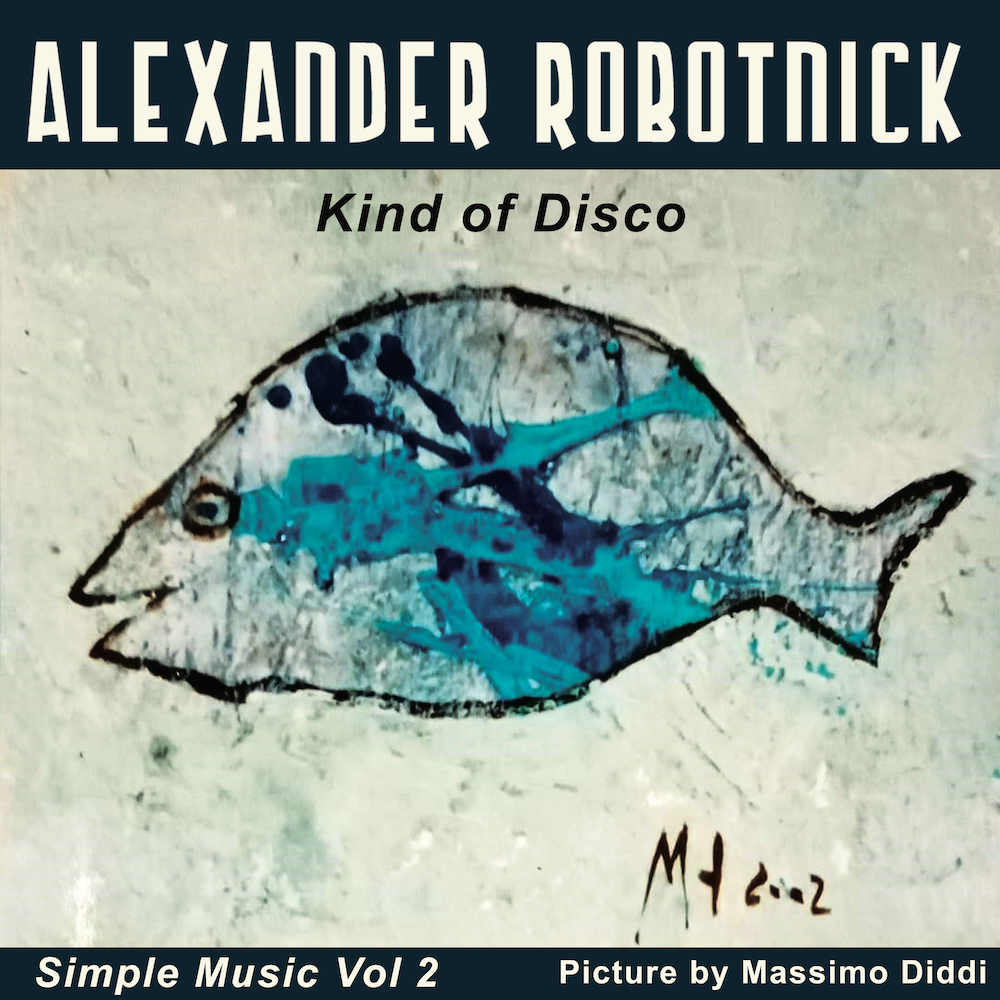
Let’s Dance – Alexander Robotnick: Kind Of Disco: Simple Music Vol. 2 (Hot Elephant Music)

by Ben Hogwood

What’s the story?

Alexander Robotnick doesn’t do anything by halves. The Italian producer – real name Maurizio Dami – has been making disco or disco / house hybrids with great success for more than 30 years now, so it comes as little surprise to report that a second volume of Simple Music follows hot on the heels of the first, at a distance of just three months.

Simple Music refers to the sort of music Robotnick wants to hear when he goes digging for records, and finds him delivering eight new tracks for the dancefloor.

What’s the music like?

Classy. Robotnick is a past master at this sort of stuff, and the music here achieves its aim with the minimum of fuss. Green Past is a great way to start, a bit of mood music with an atmospheric, repeated vocal that would work just as well with opening credits as it does at the start of a disco album. Robotnick knits the melodies together with ease. And Here It Comes Again is a strong Italo-disco cut, and moody with it.

Intergalactic Travel is a brilliant 80s-present day hybrid, with a suitably deadpan vocal and complementary riffs underpinned by a strong beat. Though it is pure escapism the track is actually discounting the possibility of reaching new worlds! Arpico is similarly effective, its oscillating riff bathed in warm textures.

The World Is Dark, proclaims a whispered voice, while its counterpart suggests ‘the world is shiny’. Rippling synthesizers respond, and a bass that glints in the darkness – again a highly effective track. A Blow To The Heart is a burst of nostalgia – ‘listen to your early mixes’, it warns over a squelchy bass. Canzon Triste introduces hints of melancholy, a more minimal and less effective track, but Le Carillon sweeps that away with a riff that bounces around like a game of ping pong, set to a strong rhythm.

Does it all work?

It does. Robotnick knows exactly what he is doing, and the hand of experience delivers eight consistently good tracks primed for the discerning dancefloor.

Is it recommended?

It is – and it’s as good as the first volume.

Listen

Buy

You can listen to clips and purchase at the Juno download website

Switched On – Primitive Motion: Portrait Of An Atmosphere (A Guide To Saints)

by Ben Hogwood

What’s the story?

Brisbane duo Primitive Motion present a new album of unique sound worlds through Lawrence English’s A Guide To Saints imprint.

One look at the credits on their Bandcamp site reveals just how many instruments, colours and textures the two sonic creators have at their disposal. Sandra Selig is credited with contributions through voice, handclap, flute, cymbals, melodica, radio, saxophone, glass bowl, drums, marble in bamboo, zither, wind chimes and bowed cymbal. Meanwhile Leighton Craig contributes on the acoustic guitar, reed organ, cymbals, field recordings (Kyoto Japan), tremolo guitar, miniature saxophone, voice, piano, metal stool, bird call, synthesiser, wind chimes, shaker and timber box.

Between them, Primitive Motion have made a four-part Portrait Suite, bolstered by a fifth track, Trenches Of Time.

What’s the music like?

Intensely descriptive. Although all the instruments above are used, they are of course employed sparingly, and it is immediately clear how much thought has gone into the resultant colours and textures. Yet to their enormous credit Primitive Motion never make anything sound forced. They create their sonic visions with a healthy degree of musical instinct, allowing their material plenty of room to live and breathe.

Portrait is without question an outdoor suite, using field recordings as well as some deeply evocative percussion and instruments where the textures are very clearly thought out. The woozy reed organ with which Portrait II ends is a case in point, and so are Sandra Selig’s vocals, which have a unforced yet primal beauty in the first of the four movements, lost in thought as they are. The mournful and muffled saxophone at the start of Portrait III is striking, its line taken up by Selig’s vocalise. Her mysterious vocal drone on Portrait IV is also a prominent feature, fading in and out over a distracted piano line.

Trenches Of Time sits outside the four-part suite but is more than a coda. Instead it presents what, to this listener at least, feels like a heat-soaked tundra, with distant structures shimmering in the hot sun. Drones reinforce the intense musical humidity.

Does it all work?

It does – though the listening conditions have an important part to play here. This is definitely not an album to experience on the move, as much of the shading and detail will be lost.

Is it recommended?

It is. The name Primitive Motion is well chosen, for Selig and Craig strip music back to its basic elements in order to create pictures and meditations that leave a lasting impression.

Listen

Buy

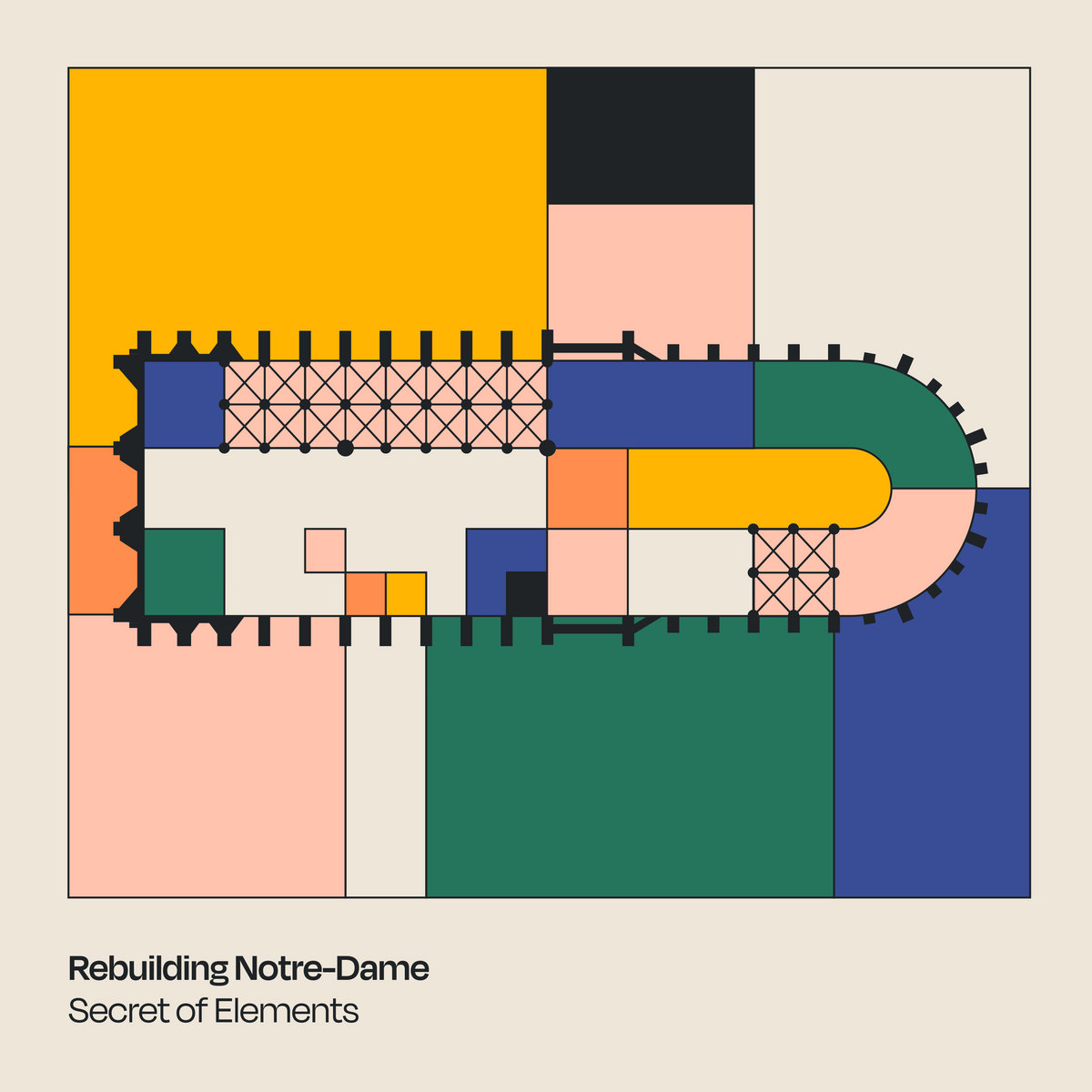
Switched On – Secret of Elements: Rebuilding Notre Dame OST (InFiné)

by Ben Hogwood

What’s the story?

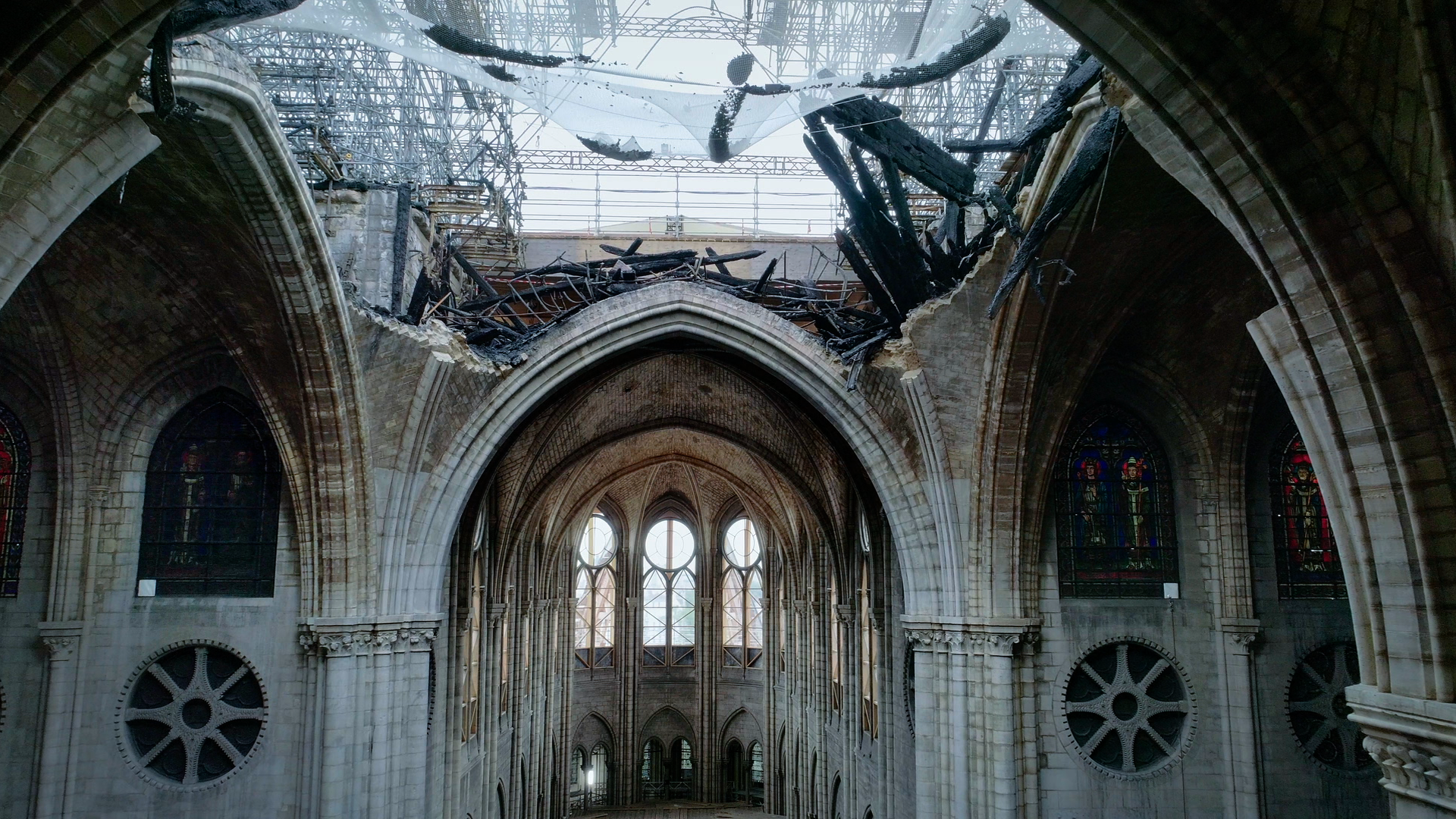
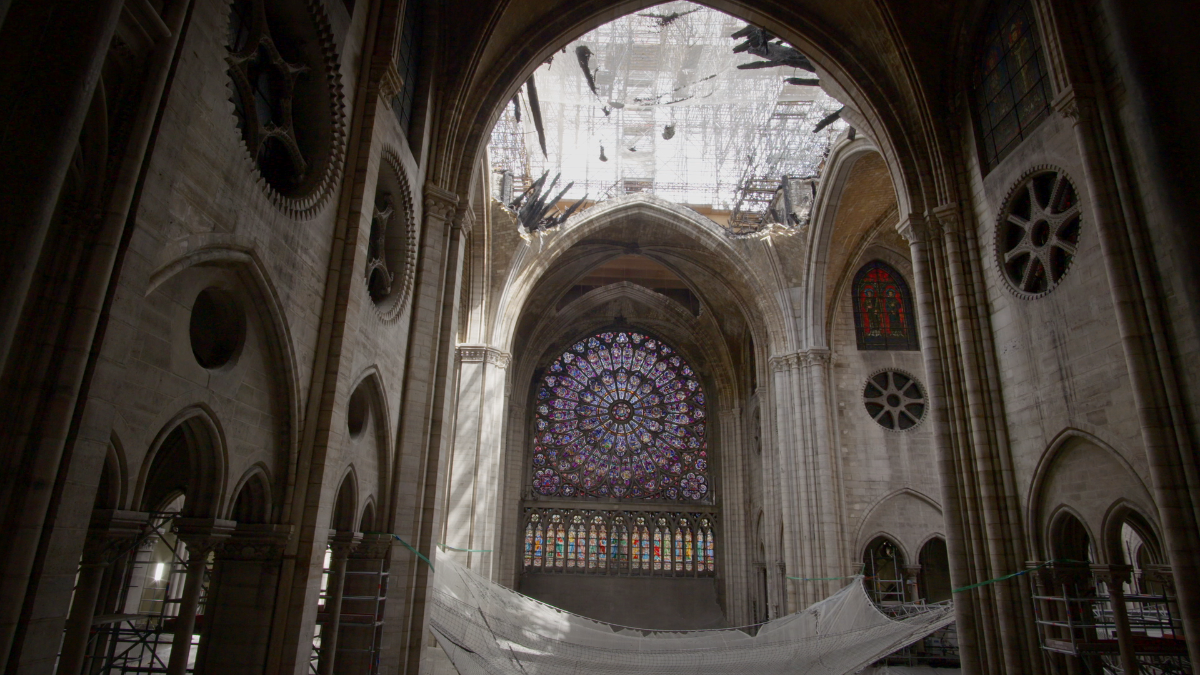
What a daunting prospect it must have been for Rostock composer and multi-instrumentalist Johann Pätzold, when he was approached to write the music for a documentary on the recovery of the great Notre-Dame cathedral in Paris. With well over 1,000 years of musical tradition inside its walls, where would a composer start?

Pätzold – who records under the name Secret of Elements – stripped the ideas back to the elements themselves, with each of the documentary’s three episodes focused on wood, glass and stone. Building on these three fundamentals, he added aspects of spirituality and mechanics, including on the way musical references to the cathedral’s organ and choir.

What’s the music like?

Rebuilding Notre-Dame leaves a lasting and powerful reflection, and for Johann Pätzold it can be counted as a job very well done. He successfully evokes the distant past and the future within a sound framework that conveys the massive spaces in which the workers are restoring the cathedral. There is an air of reverence for sure, but also one of barely concealed horror at the plight in which the building finds itself.

The root of the music is the Adagio for Notre-Dame, composed first, and from this all the other ideas spring. It is a true lament, music of powerful regret and sorrow but also with an undercurrent of hope in its rising from the depths. Ruins also proves a moving utterance, an evocation of the choir, soaring to the heights over the support of the organ.

Born Again ends with a powerful and brilliant chord from the organ, the climactic notes of a surge of movement suggesting strong new beginnings. A New Chapter capitalises on this but with a rhythmic drive.

Shattered Glass is especially effective, while Stones generates urgency, suggesting many hands at work. The figurations in darker lower strings for Holy Grounds could be borne of Philip Glass, also with the organ towards the end, while Wood and Forest draws an exciting combination of scurrying orchestral figures and voices.

The final Resurrection is a suitably majestic way to bow out, restoring the cathedral to its former glory in music of power and splendour, great drums pounding in response to choral and orchestral might.

Does it all work?

Yes. Pätzold makes great use of audio perspective to convey the vast, empty spaces, while also bringing through a potted history of the music heard in the cathedral in the preceding years.

Is it recommended?

It is. This is a deeply impressive achievement from Secret of Elements, who has somehow captured all the emotions at play in the task of restoring one of the world’s most famous sacred buildings to its former glories. The fitting soundtrack suggests they will indeed be restored.

Listen

Buy