Switched On – Gabe Gurnsey: Diablo (Phantasy Sound / PIAS)

Reviewed by Ben Hogwood

What’s the story?

Diablo is an album for transportation. Not the car journey or train ride, though I can confirm it works on both – more the idea of transporting the listener straight into a hot, sweaty basement club somewhere, in the dead of night.

Gabe Gurnsey describes his new opus as being ‘formed out of a lot of trust and lust’, and credits his musical and physical other half, Tilly Morris, for her role in proceedings – not just as vocalist but as quality control and muse. Together they have made an album whose theme is release and escape, and to do it they use banks of keyboard sounds, vocal manipulation and a vocal hook or ten.

What’s the music like?

Hedonistic, in the best possible way. The twisting synth lines appear almost immediately on the horizon and stay for the duration, which is a good thing as they complement Morris’s voice perfectly. A fine first track, the single Push, sets out the stall, then the following Hey Diablo crackles with atmosphere.

With its vocals, Power Passion has an edge, leaning on 80s influences for its source material but also nailing a contemporary sound. The richly coloured Blessings struts forward confidently, while the synths on I Love A Sea On Fire bubble and weave, the deadpan vocal matched with liquid loops. Give Me is especially good, its vocal couplet beginning “Give me your oxygen”.

Special mention should be made of Morris, who proves the ideal foil to his electronics on this record. She brings something of the Eurythmics / Human League vibe to the table, but there is also a strong helping of Blancmange in the deadpan approach – which on repeated listening has a lot more depth than first meets the ear.

Does it all work?

Yes. There is a real frisson in a lot of these tracks, capturing the optimism and escapism we all feel on a good night in a club.

Is it recommended?

It is. Diablo is one of those albums looking backwards and forwards simultaneously, and Gurnsey’s awareness of both directions means that this new album works a treat.

Listen

Buy

Switched On – Slumberville: Harmony (Nettwerk)

Reviewed by Ben Hogwood

What’s the story?

Harmony is the first album from Swedish producer Sebastian Fronda under his new Slumberville alias. Fronda has been making music for more than two decades, labelled as one of Sweden’s hip hop pioneers, and has established a strong live presence in the Nordic countries with more than 500 shows.

Slumberville is intended as a moniker under which he can make lo-fi music, dipping into his hip hop sensibilities but  making room for samples and appropriations from a number of musical forms. For Harmony, he ‘Google-watched’ a number of different places around the world, such as Paraná River, assembling a set of travelcards to document his findings in musical form.

What’s the music like?

Slumberville veers towards the horizontal in his approach on this album, but there are some enjoyably quirky moments that keep the listener guessing. For The Win is quite spiky, with its staccato cello, while Chinatown plays loosely with an Oriental melody.

The  most enjoyable track is Paraná River, with a couple of winsome melodies over a low slung bass and endearing hip hop beat, but a close second to this is the singalong What A Great Feeling, with its dreamy optimism. Fronda’s musical humour ensures there are plenty of wry smiles throughout.

Does it all work?

It does, largely – though some of the ideas here could be more fully developed into more tracks double the length. This is a compliment to the humour and subtle inspiration that runs through these tracks and their source material.

Is it recommended?

It is. Slumberville has made a diverting, quirky album that is a good deal of fun. It has endearing, light humour, and its beats have a spring in their step that lightens the mood.

Listen

Buy

Switched On – Collisions: Collisions (Naive / Believe)

Reviewed by Ben Hogwood

What’s the story?

Collisions is so-named because it is the coming together of a musical trio. Tom Hodge, Ollie Howell and Ciaran Morahan are the three musicians in question, and each brings a different skill-set. Hodge is a film composer whose connections include Max Cooper and Floex, Howell is a composer and drummer, while Morahan is described as a ‘post-rock composer’, whose output includes work with Codes In The Clouds and VLMV.

What’s the music like?

There are two elements to the collaboration album – ‘Collisions’ tracks and ‘Motions’. The former set the scene and the sonic perspectives, while the latter offer free-form musical explorations, allowing Hodge’s piano and clarinet and Howell’s drums to work their magic largely unfiltered. This works particularly well. While the Collisions have a curious order (beginning with the spacious II then moving through I, III and IV), they are ideally paced. II offers a big panorama, with concrete heavy drums and spacey synths, while I is a really good blend of subtle, brushed drums and with a thoughtfully probing piano line, before bringing in a sonorous clarinet. III has a similar profile, though this time the piano is given more space to air its thoughts.

Does it all work?

Yes – and the three artists have managed to get the ideal blend of musical events and time for reflection. Collisions is in effect two genres – an underlying ambience, but with carefully thought out ideas above them that bring positive energy and vibrant colours.

Is it recommended?

Yes – enthusiastically. Collisions will reward those who enjoy musical ambience of a wider scope, such as Erland Cooper, or those who enjoy the chattering electronics of an artist such as Max Cooper, who has close connections here. Get it and revel in the musical inspiration.

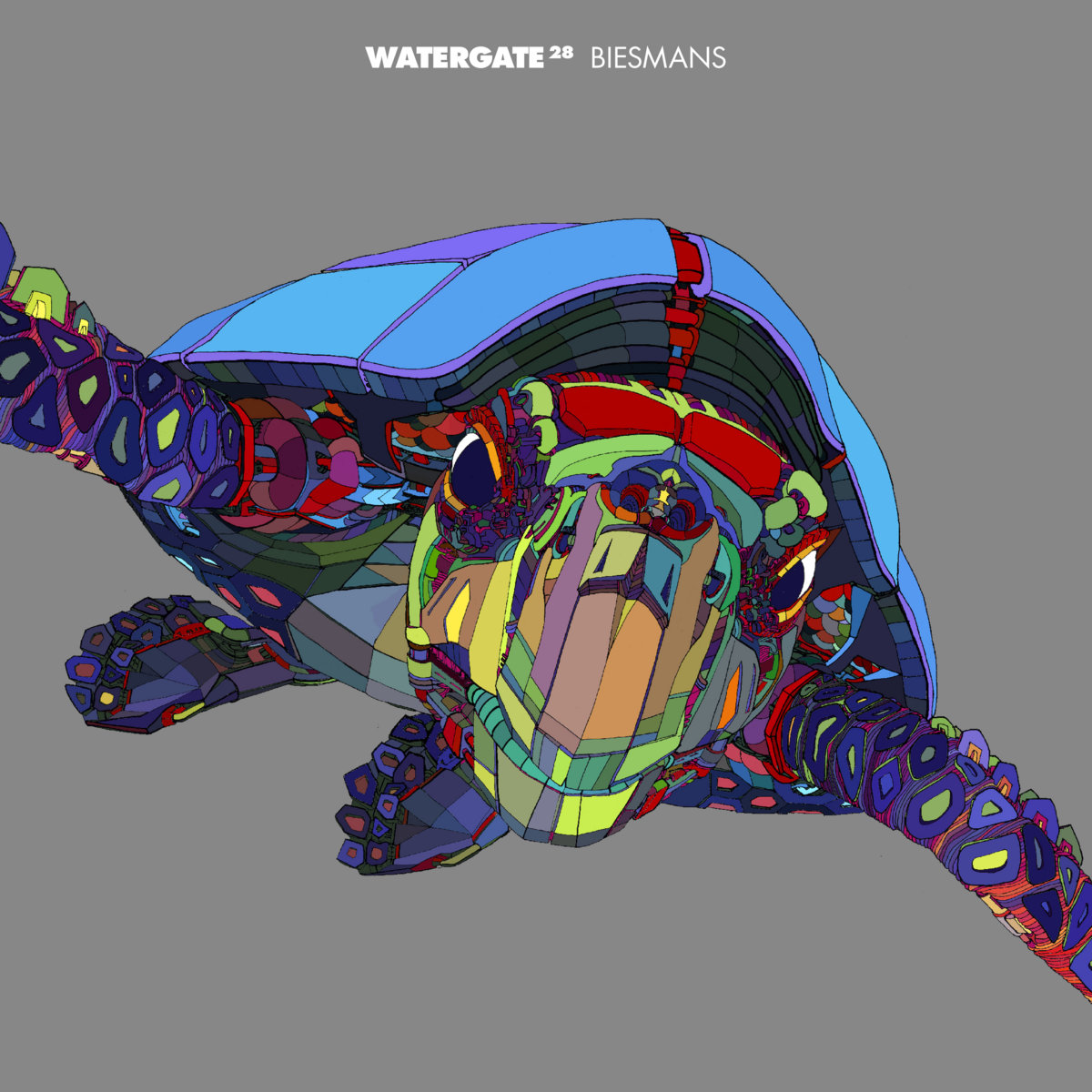
Let’s Dance – Various Artists: Watergate 28 mixed by Biesmans (Watergate Records)

Reviewed by Ben Hogwood

What’s the story?

As the Watergate series continues its colourful journey, Belgian artist Biesmans steps up with a set made entirely of his own compositions.

He does not do this alone, working with a string of luminaries including Dusky, Mathew Jonson, Adana Twins, Kasper Bjørke, Shubostar and Mala Ika, to create a busy 80-minute mix.

What’s the music like?

This is a fine mix, make no mistake, and Biesmans wastes no time in heading for the centre of the house dancefloor. Much of the content is instrumental, but structured in such a way that the mix feels like one big piece.

Wistful entreaty let’s go on a holiday from 13:30. There are some nice, floaty big room moments at 16:04 and 21:09, then 24:39 with a reassuringly fat bass sound. Excellent 30:28 brings back memories of Let Me Show You. A big player at 51 minutes, 40 minutes excellent too. Gets a bit more old school around 61:30. 67 – 68 very good vocal from former riff from latter

Does it all work?

Pretty much. The beats may be of the solid four-to-the-floor variety, but Yamagucci is always at work within, creating interesting cross-rhythms and collections of mini hooks.

Is it recommended?

Yes, enthusiastically. Biesman hits the spot right from the start!

Listen

Buy

Switched On – Sascha Funke: Treets EP (Kompakt)

Reviewed by Ben Hogwood

What’s the story?

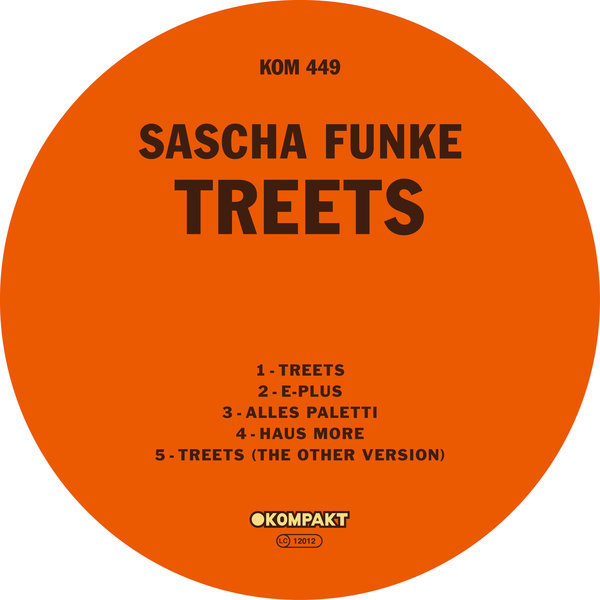
Berlin-based DJ Sascha Funke marks his return to the Kompakt label with a five-track EP, his first release for them since 2014. In that time he has been very busy, recording for a multitude of labels, while continuing to flit between genres, a musical butterfly who rarely alights in the same area for too long.

And yet, as the press release for Treets states, his style is very distinctive, bringing in snatches of electro pop and rave to new and vibrant rhythms.

What’s the music like?

The title track is more than a bit odd, a straight break beat given a very odd, disembodied vocal to play with – but then a bass line and riff straight from the 1980s are teleported in, and everything makes sense. E-Plus mines similar territory for its source material, but now the sounds are nocturnal and give off a foreboding atmosphere.

Alles Paletti is another story, a beauty with richly layered textures producing golden colours over a solid, two-step rhythm that keeps it zipping along. Haus More enjoys textures of a similar warmth, though the riff itself has a bit of a wary profile, more monotone and watchful.

Finally Treets (The Other Version) is stripped back, more percussive and industrial, striking out for the corners of the room it’s in – and with that weird vocal back to create some sinister shivers again.

Does it all work?

It does. Funke gets a good blend of challenging his listener and giving them free rein on the dancefloor, an effective combination that gives the EP a solid sense of continuity.

Is it recommended?

Yes – followers of the producer will not hesitate, and it’s a good way back in to Sasche Funke’s music if you haven’t heard any of his more recent productions. On this evidence, he remains on good form.

Listen

Buy