Switched On: Loscil – The Sails p.1 & 2 (Bandcamp)

by Ben Hogwood

What’s the story?

The Sails is a two-part collection of music written by Loscil for dance projects over the last eight years. It brings together a number of specially commissioned projects, many of which were performed only once – and the Vancouver producer has arranged them into two collections of nine pieces each. These available on Bandcamp at a ‘name your price’ rate for the digital files, or as a double CD edition with special artwork.

What’s the music like?

This is a very interesting insight into Loscil’s creativity, and is a more animated complement to the serenity and vastness of his artist albums.

The two collections work well when listening back to back. There are the flickering messages of Wells, and it soon becomes apparent that there is more nervous energy in the foreground than we are used to in a Loscil set of pieces. This movement it is counteracted by slow, measured steps that are beautifully poised, sometimes acting as drones or operating with slowly shifting harmonies.

Some of the pieces are structured like an arch, with a composition like Still progressing from bare elements to richly textured loops with more movement, and then panning out again. Wolf Wind, a striking evocation, has a settled backdrop of a single held drone that changes colour thanks to the subtle movement in the middle ground.

Loscil also uses beats in a subtle but meaningful way. In Never they ricochet across the stereo picture, increasing their dominance over the slower musical processes going on behind. By contrast a work like Century has a stately beauty, like the opening of a flower.

Does it all work?

It does. The music has a different ambience to it from Loscil’s through-composed albums, but the use of more animated musical figures against a background stillness is still immensely reassuring, panning out into some richly shaded scenes.

Is it recommended?

Yes – the ideal complement if you already own a good deal of Loscil’s music. If you don’t, the ‘name your price’ option gives you no excuse not to get acquainted!

Listen & Acquire
Online concert / Switched On – Jorge E. López: Im Innersten: János Bolyai stirbt

lopez

López Im Innersten: János Bolyai stirbt, Op. 30

5.1 Radiophonic Composition

Broadcast via station ORF1 on Sunday 8th May 2022 [11.00pm]

by Richard Whitehouse

Radiophonic compositions are less often encountered nowadays than their heyday during the third quarter from last century, but the impact of a piece such as Xenakis’s La Légende d”Eer (which is being revived as part of Birmingham Contemporary Music Group’s programme to mark this composer’s centenary on May 29th) remains comparable to that achieved with any medium, and Austrian Radio’s recent broadcast of Im Innersten: János Bolyai stirbt by Jorge E. López confirms a necessary addition to this select though distinctive and influential genre.

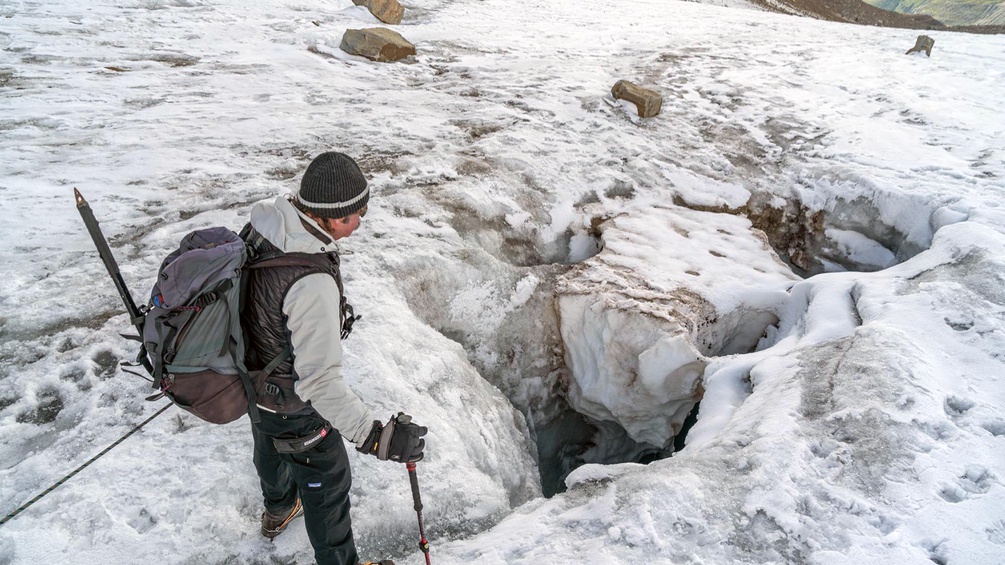
Although he has utilized electronics in previous works, this work is López’s first specifically for the radiophonic medium. The source material stems largely from field recordings, made inside ice caves and glaciers of the Grosser Burgstall in Austria’s region of Carinthia during August 2021.  López draws attention to the ‘‘decay and disintegration’’ that has affected this area; what was once pristine now abounds in the blackness of cliff-faces, earth and stones as testament to the effect of climate change. Not a little of this is conveyed by his composition.

With its duration of just under 17 minutes, the work unfolds a polyphonic and multi-layered trajectory in which these environs are firstly evoked before being explored and opened-out   in increasingly graphic terms. Beginning with a gently percolating sound of water, the sonic outlook diversifies before intensifying considerably; notably around the seven-minute mark, when the hitherto accumulated textures assume an ominous and even threatening aura that doubtless reflects those physical conditions from which the initial recordings had emerged.

Near the 12-minute mark a likely climax, even catharsis, is reached with the declamation by male then female voices of words whose translation might be ‘‘Just one short line at the end, (there being) nothing else to say: Mr Captain is no more’’ and then ‘‘As I wrote this letter, he died, and therefore there is nothing more to say than: the Captain has left’’. After which, the composer can be heard reciting the closing paragraph from Zsolt Láng’s novel Bolyai before the music gradually retreats – as might the figure having apprehended this disturbing vision.

The broadcast was (to use the currently much abused term) an ‘immersive’ one, such as even those without access to 5.1 encoding could perceive with decent headphones. Absorbing on its own terms, this ‘‘symphonic etude’ should be no less so as the final interlude of the opera Bolyai – that recounts the last hours of the Hungarian mathematician and geometrist – López is currently planning. Note too that the composer has reached an agreement with the publisher Doblinger to disseminate his recent works, details of which will be announced in due course.

For further information on this performance, you can head to the ORF player here. Meanwhile Richard’s 65th birthday tribute to Jorge E. López can be found here on the Arcana website

Switched On: NETHERWORLD – Vanishing Lands (Glacial Movements)

by Ben Hogwood

What’s the story?

There is a powerful message behind Vanishing Lands. The most recent album from Glacial Movements‘ head Alessandro Tedeschi under the guise of NETHERWORLD, it is – in his words – ‘a cry of desperation…the realization that we are one step away from the abyss’.

Whereas many Glacial Movements albums celebrate the vast spaces of our environment, particularly the cold ones, this one does so in a troubling context. During lockdown, Tedeschi committed his thoughts to record on the gradual disappearance of the vast white expanses over which you can see the Northern Lights – ‘ice-covered volcanoes and silent expanses of snow and ice stretching as far as the eye can see;.

What’s the music like?

What’s the music like?

Rather appropriately, Vanishing Lands starts out with what sounds like the tolling of a very distant bell. There is the strong implication of a soft breeze, with shrill treble sounds blowing across the stereo picture of Last Sunset, the album’s first track. Towards the end, pure treble voices calmly coo across the picture, a snapshot taken in the middle of a much longer phrase. This first track runs for a quarter of an hour, serene but darkly coloured and ominous, too.

Thwaites is deeply mysterious, presenting a very intriguing perspective on headphones. The movement is in the middle foreground, like flecks of cloud or interference, while a sonorous mid-range hum at the very back throws the perspective wide open. Then Slow Moving Streams is an intriguing call and answer, whereby a slightly guttural, low synthesizer tone is responded to by a higher, vibrato-rich vocal.

The album’s progression is compelling. The Beauty Of Places Where There Is Nothing To See has an appealing remoteness but there is also a note of sorrow in the far-off cries of electronic birds and mammals. Comet has piercing timbres that streak across the cold surface beneath, before Vanishing Lands enhances the anguish. Initially cool and ambient, it has elements of protest in the voices that rise up, as well as primal pain.

Does it all work?

Yes. Be warned though, as while this is still essentially an ambient album it is a painful one too, an acknowledgement that those big spaces so often celebrated by Glacial Movements are under serious threat. As NETHERWORLD shows us the plight of those spaces, it operates under a very wide dynamic range, with some moments where the music is so quiet that you will have to lean into it.

Is it recommended?

Yes. Vanishing Lands is a brave set of searing observations packed into an album. One of Alessandro Tedeschi’s most intense pieces of work, it is a powerful and wholly meaningful addition to his canon. Make sure you hear it.

Listen & Buy

Let’s Dance – Various Artists: DJ Kicks: Cinthie (!K7)

cinthie

written by Ben Hogwood

What’s the story?

Berlin DJ Cinthie steps up to take the baton for the latest in !K7’s ever-successful DJ Kicks series. She has been busy of late as a producer, releasing her debut album Citylights, under the Skylines alias, on Will Saul’s Aus label in 2020. Since then she has been producing a wealth of excellent house music singles on her own labels.

Her aim with this generous 24-track selection was to bring together a sequence including her old heroes but also new house music sounds. In her words, the music ranges from ‘deep to Detroit, from banging to smooth, from jazzy to stomping, from Disco to Chicago, from dubby to big room’.

That means big names from Chicago, New York and Detroit – including Paul Johnson, Boo Williams, Amir Alexander and Spencer Parker – and new ones too, such as Amy Dabbs, Logic1000, Lis Sarocca, Anna Wall and Cinthie herself.

What’s the music like?

Hugely enjoyable. From the moment Terence Parker’s I Love The Way You Hold Me bursts out of the blocks, the mood is set for over an hour of good, uptempo grooves, and Cinthie gets a brilliant mix together to ensure the momentum is never broken.

Highlights include the bouncy, vibrant start from Parker which gets a complement from the suitably uplifting Oldtown Dub from Niles Cooper and Shinichiro Yokota’s Time Lapse. The home-style piano and springy beats of Sandilé‘s Jammin and Slammin work well, while  Amir Alexander‘s Blessed Are The Meek is really good, transitioning beautifully into UC BeatzCrash Nerd. Later on the heavier, rolling beats of Adryiano’s Non___Stop lead into a brilliant choice, Paul Johnson’s Y All Stole Them Dances. The music is motoring now, the beats broken up more for selections such as the funky Logic1000 selection I Won’t Forget, the momentum carrying through a fine finishing pay-off of Amy Dabbs, Chevals and Anna Wall.

Does it all work?

Yes, so much so that you’ll be more than happy to go round again. The ratio between old and new feels just right, and Cinthie’s enjoyment throughout is clear as day.

Is it recommended?

With gusto! A feelgood selection celebrating house music’s power to inspire, and acknowledging along the way the part disco has played in its evolution. Absolutely top stuff.

Stream

Buy

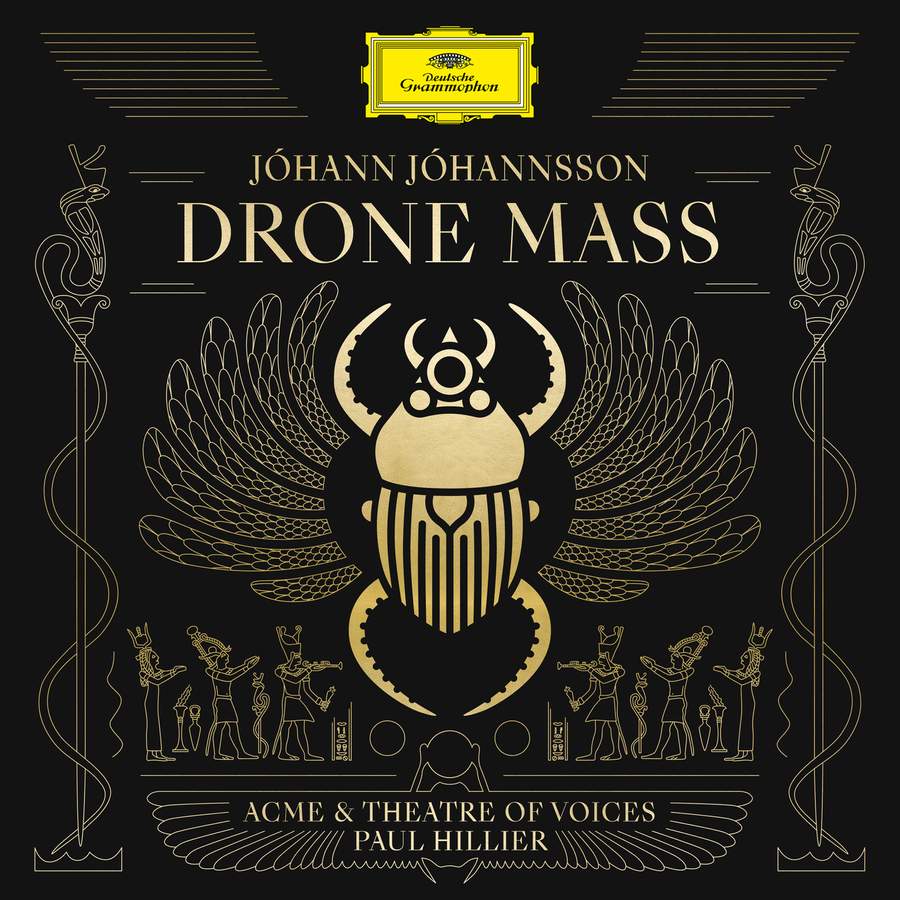
On Record – Jóhann Jóhannsson: Drone Mass (Deutsche Grammophon)

drone-mass

written by Ben Hogwood

What’s the story?

Drone Mass is one of the last completed works from the late and much missed Jóhann Jóhannsson. It was commissioned by the American Contemporary Music Ensemble, and given its first performance in 2015, at the Temple of Dendur in New York’s Metropolitan Music of Art. Jóhannsson took part in early performances of the work, but due to his sudden and sad death in 2018 was not present for this recording, made by ACME and their director Clarice Jensen in 2019. Joining the members of the ensemble were Theatre of Voices, conducted by Paul Hillier, who also took part in the early performances.

As Jensen makes clear in the booklet, Drone Mass is ‘neither a setting of the mass nor a piece that simply drones’ – but it is a sacred piece that has recurring drones throughout the work. It also has new technology as a background theme, Jóhannsson using his mastery of electronic music to write about drones as a force in the world today. The work’s vocals are drawn from the ancient Nag Hammadi scriptures and are written in Coptic, leading to a billing for Drone Mass as ‘an electroacoustic oratorio’.

What’s the music like?

The music takes its lead from the vocals, bringing together elements of ancient polyphony and new, drone-filled electronic textures. Because of this it is possible to approach Jóhannsson’s music from several directions, hearing old, unaccompanied melodies that can switch to electronics with little to no warning. The two work well together, especially as Jóhannsson’s music moves at a relatively slow pace. His language takes its lead from the ‘holy minimalism’ of Arvo Pärt and John Tavener, but is never derivative, searching as it does for a successful fusion of old and new methods of communication.

That search breeds a great deal of tension, which brings depth to the Drone Mass. The work starts with what sounds like an old, ornamented melody on One is True that gradually evolves into a substantial statement from all performing forces. Two Is Apochryphal is a meditative study with high, remarkably pure vocals, then Triptych In Mass contrasts plaintive violin arpeggios with two vocal lines, one drone like and the other much more mannered. The emotional centre of the work, however, lies in the two Divine Objects settings. Part one has a particularly haunting motif which develops into a powerfully wrought statement.

Does it all work?

It does. Although its constituent sections work well out of context, the Drone Mass is at its most effective when heard beginning to end in one sitting, taking shape and growing slowly but surely as it proceeds. The standard of performance is commendably high, too – thanks to outstanding singing from the Theatre of Voices, holding the sustained notes with impressive surety and accuracy. Meanwhile ACME provide the exquisitely shaded instrumental contributions.

Is it recommended?

Yes, without hesitation. Often pieces like this go for too many gestures or try to hit the harmonic sweet spots too often. Jóhann Jóhannsson is different, writing fluently to a larger scale, with music that grows in stature across its hour-long length. It leaves us with much to ponder, the only shame of course being that its composer is no longer around to hear what a fine recording has been made in his honour. In Drone Mass, he leaves a deeply felt and starkly effective representation of our times.

Stream

Buy

You can purchase this compilation at the Deutsche Grammophon website, where you can hear more clips and read more about the project.