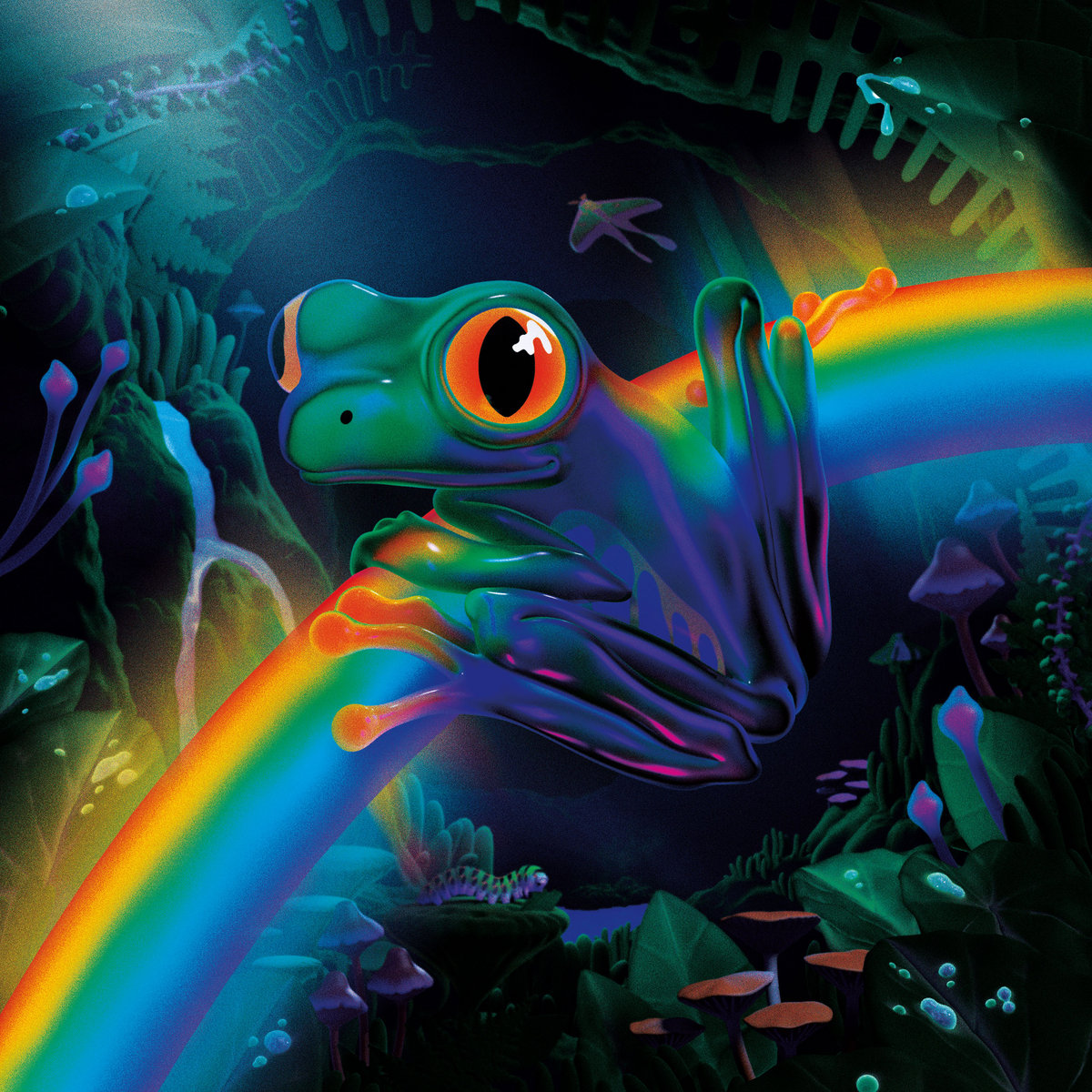
Switched On – Connecting The Dots mixed by Alex Paterson (Kompakt)

reviewed by Ben Hogwood

What’s the story?

In a little less than a year, Kompakt’s Connecting The Dots series has proved remarkably popular, as the label explore their substantial catalogue of electronic music. Now Alex Paterson, original founding member of The Orb, steps up to mine the more ambient side of the warehouse, pulling 17 out of the 15,000 available recordings to make a mix that would fall naturally into Kompakt’s Pop Ambient division.

The mix has been out for a while digitally, but has found its way on to Arcana’s early morning playlist in the last few weeks!

What’s the music like?

Extremely restful, providing a blissful 90-minute time out when needed – but also rewarding the closer listener, who can follow Paterson’s thought patterns as the meditative mood grows.

The Orb lynchpin starts with big, loping beats from Mohn, Schwarzer Schwan imposing a subtly menacing mood on proceedings. It doesn’t last, for the expansive Milk from Klimek is on hand. This track has like a series of long, slow breaths, taking its sweet time as each repetition leads gradually to a bigger, thicker sound.

Regular beats arrive once more with Markus Guentner’s mix of label founder Michael Mayer, Pensum held in place by a lovely suspended chord that you can dive into completely. The Orb’s own mix of Because Before by Ulf Lohmann is next, with lush slowly moving chords like a warm weather system. This blissful mood holds through the Fresco & Pfeiffer remix of Christian Löffler’s Pigment to ex-Orb member Thomas Fehlmann, and Treatment.

Each of the tracks is a good four and half minutes long at least, the slowly shifting mix paced just right. As it progresses we hear from Simon Scott, who spaces out his musical thoughts beautifully in Für Betty, and Andrew Thomas, static but meditative in I Am Here Where Are You. The mix reaches its zenith, however, with the quarter-hour penultimate track from Klimek. Music To Fall Asleep is a thing of beauty, drifting into a slow trance with a spatially altered guitar, against a background of softly pitched white noise. The coda is The Orb’s own Glen Coe, a cotton-wool glow of positive ambience and spoken word.

Does it all work?

It does – and a sure sign of this on the first few listens was that I couldn’t be bothered to check my player to see what the tracks were, or if indeed at some points we had even changed track! Such is the vibe behind Paterson’s choices, mixing and presentation.

Is it recommended?

Without hesitation. Paterson has so much experience in making fully immersive ambient music, and he clearly knows the corners of the Kompakt catalogue where the best possible mindful examples can be found. The artists not mentioned above – such as Gas and Walls – are testament to that. Nothing more need be said – just go and listen!

Stream

https://open.spotify.com/album/46L9tNr4y1nCwpwDkYIyIT?si=2MDlseB5SyKzFvQHf1ZmMw

Buy

You can listen to clips from the mix and purchase from the Kompakt website


Guest mix – Room of Wires collide with Rednetic

It is our great pleasure to welcome Room of Wires and their Rednetic label to the Arcana playlist section.

With their new EP Fever Switch out now, Room of Wires have shared with us a mix they did of their favourite artists on the label. This includes the duo’s own work, with one of the standout tracks from the EP, the shuffling Never Seen Before, blending into the powerful Silent Lines from their distinctive plague of people album released earlier this year, with the strong presence of industry amid the ambience.

The mix unfolds at a natural pace, with plenty of room to breathe – and settles after the dense mass of sound that begins the mix. Gradually the textures thin to reveal flickering electronic figures, and a steady beat asserts itself, from where the duo progress across an hour of excellent music. Later on the view pans out to the dub-infused electronica of Lachrylic, whose Tacet makes a strong impression, before the rich tones of Garden of Meditating Maqam Rast, by Lowriders Deluxe. Finally Room of Wires sign off themselves, with the expansive TouchToneOne, a sonic exploration prompted by steady beats.

Our thanks to Room of Wires for this special mix:

Switched On – GLOK: Pattern Recognition (Bytes)

What’s the story?

There is a sense that Andy Bell was pleasantly surprised by the success of Dissident, his first album as GLOK. Until then it seemed he was happy to let the project simmer beneath the surface, but as soon as that first album made its presence felt it gave him the confidence to spread his wings and spend more time in the studio.

Pattern Recognition builds on that success, taking the building blocks of Krautrock-influenced instrumentals and running with them, adding more nuances and possibilities. That means several vocal tracks for the first time.

The Bandcamp guide to the album reveals that it ‘has a loose thread which takes in a week of life, from weekend to weekend, with each of the vinyl’s four sides capturing different mind states across that transition. Each side has a distinct feel that’s different to the last but inherently cohesive – much like the changes an individual goes through over 7 days.’

What’s the music like?

Pattern Recognition has a greater breadth of styles than Dissident did, and now it has the vocalists to add extra depth and variety. The guests are all excellent, especially punk poet Sinead O’Brien on Maintaining the Machine, where her words dovetail beautifully with the GLOK synths and loping beats. Entanglement, featuring Chloé ‘C.A.R.’ Raunet, is cut from similar cloth, with more guitar in the mix and a really full, solid wall of sound to back it up.

Shamon Cassette is a brooding presence on the nocturnal Process, which bubbles atmospherically, while his wife Shiarra’s voice works really well against the pulsing figures and fat bass of That Time Of Night.

If you are already familiar with the music of Dissident you will appreciate the broad scope of the brilliantly named album opener Dirty Hugs. On it Bell gives himself nearly 20 minutes to unpack a throbbing groove in thrall to Krautrock and containing a lot of good things, which unwind at a really satisfying pace. It serves as a form guide for the rest of the album, as Pattern Recognition is a very substantial piece of work.

Closer nods a bit more to the techno of Mr Fingers in its square beat and bass line, but in contrast Memorial Device has an improvised piano line drifting past. Kintsugi is lovely, with its wide open sounds, while the woozy Day Three cuts to Invocation, where Bell’s sonic blender works a treat as part of a monotone and hypnotic groove, spun out again to more than 15 minutes as a track the listener can really immerse themselves in.

Two edits of Dirty Hugs and Closer complete an attractive bonus package.

Does it all work?

Yes, making it two out of two for Bell. Pattern Recognition does everything you would want from a follow-up to Dissident, and even accusations of it being too long would be brought up short. There is ample evidence of just how much Bell is enjoying his electronic incarnation, and the well-chosen vocal guests are the icing on the cake.

Is it recommended?

Heartily – as long as you already have the first installment of Bell’s GLOK incarnation!

Stream and Buy

Switched On – BUNKR: Graveyard Orbit (VLSI Records)

What’s the story?

It’s second album time for BUNKR. His time between albums one and two appears to have been well spent, with a keen emphasis on open textures and broad synth lines. The second BUNKR album is inspired by where satellites go when they die – Graveyard Orbit being a term for the universal car park they are moved to when operational life is done, and they are retired as space junk.

What’s the music like?

In a word, vibrant. The music for Graveyard Orbit is every bit as enjoyable as the BUNKR debut, and if anything a little more nuanced. There is also a touch of sadness about the satellites’ fate, felt most keenly in the beatless Vanguard Distress Signal.

Terminus 23 has an appealing warmth, while the glittering synths of Stargazing are rather special. 6am Eternal plays with expansive drones as a Bach-like synth line snakes through the textures, while Graveyard Orbit itself summons up a shuffling percussion track to go with its cool expanse. Glacial Shift is a woozy affair, the keyboards shimmering like the northern lights, while Astral Spectral pulses with activity, its quick beat and urgent lines rushing forwards. Dark Chorale has a subtle similarity to the harmonic movement of Primal Scream’s Come Together, which turns out to be a kindred spirit in feeling too.

Does it all work?

It does. BUNKR’S second album keeps everything that was good about the first, and builds on it rather effortlessly What’s not to like?

Is it recommended?

Very much so – as long as it is purchased in tandem with the first. With fluent writing and rhythmic invention, the Brighton-based producer has moved on a step from his already impressive achievements!

Stream and Buy

Switched On – Gaspar Claus: Tancade (InFiné)

What’s the story?

Tancade is an imaginary beach, portrayed here by a single instrument – the cello of Gaspar Claus. With technical imagination and a little bit of electronic trickery he has made an entire album with the cello, using every millimetre to conjure up wooden and metallic sounds to add depth and shade to his musical pictures.

What’s the music like?

Ghostly harmonics and trills on the outer reaches of the cello usher in Une île, which is a brief contemplation in front of the waves. Un rivage portrays the gentle lapping of water through the pizzicato (plucking) across the strings, with a slow, lamenting figure that plays out in several parts.

These first two tracks are an indication of the powerful, meditative qualities Claus brings to his work, employing great imagination to get the sounds he wants.

2359 is a great example, playing out like a game of pinball with small musical ideas pinging across the sound picture as bigger, distorted waves threaten disruption. Meanwhile E.T. (Extra Terre Version) has a ghostly presence, with Claus playing two short fragments of arpeggios together but at a distance of a microtone, creating a disquieting mood in spite of the birdsong in the background.

1999 is a foreboding presence, Claus expanding the intimacy of the solo cello into quasi-orchestral sounds. Ô Sélénites goes a step further, using a wide array of textures to portray a lunar environment. Finally Mor des mystères amoureux finds relative stillness, with sustained harmonics and pizzicato flicking lazily in the breeze before a brief but affecting spoken word passage from Lyna Zouaoui.

Does it all work?

Yes, thanks to Claus’s imagination and deep knowledge of the capabilities of the cello. He creates very personal and meaningful ideas, but against bigger backdrops the listener can dive into.

Is it recommended?

It is, especially for lovers of solo cello music by Bach – Claus offers an interesting and viable alternative for the instrument as it is now.

Stream

Buy