Talking Heads: Beethoven 250 – Cyprien Katsaris

interview by Ben Hogwood

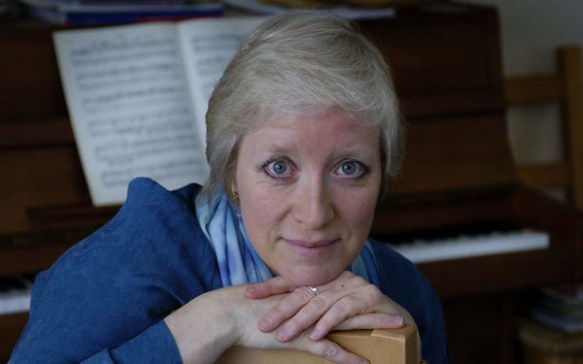
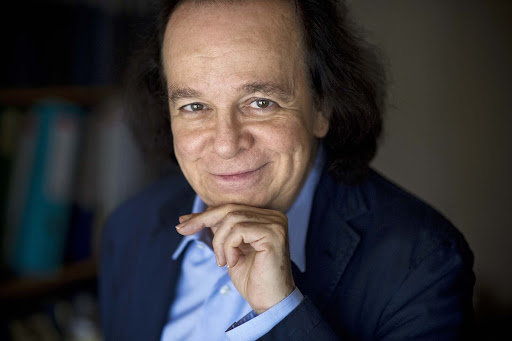
Celebrated pianist Cyprien Katsaris is on the phone to Arcana from Paris. We are to talk about the music of Beethoven, which he has celebrated with the release of a fascinating new box set, exploring a number of different corners of the composer’s piano output. Not for him a disc of sonatas – this includes some of Beethoven’s earliest and latest works, plus familiar utterances in unexpected guises, for instance Saint-Saëns’ and Musorgsky in arrangements of movements from the string quartets.

Cyprien is an extremely generous interviewee, and our chat is punctuated by musical examples given on the piano of his Paris apartment. He is also incredibly good-humoured and engaging. We begin the interview by discussing his first experiences of Beethoven’s music, which on the way reveal important aspects of his upbringing.

“We used to live in French Cameroon in the 1950s”, he says, “and I was raised there because my family emigrated from Cyprus. My parents were among the few people who had an LP collection, and I remember very well my first Beethoven listening was the Pastoral symphony and the Ninth, because they had those LPs. This could explain why I went into recording the transcriptions by Liszt of the nine Beethoven symphonies in the 1980s for Teldec, because since I was a kid I loved that music. I was always wondering if it was possible to enjoy this music with my own fingers on the piano, so you can guess the shock when I found out about those transcriptions, which were published by the French publisher Durand.”

He is a natural storyteller who draws some unexpected parallels. “As you might also guess, when you like something and you can’t get it, you want it more. It’s like having a girlfriend who is very beautiful, but when I walk down the street and I see another woman I want her even more because I know that I cannot get her. When I say this to my girlfriend she laughs, you know?! The same thing happened with the Pastoral symphony, and that could be the explanation for my very strong attraction towards transcriptions. I always try in my life to keep a balance in my concert programmes and recordings between normal, standard repertoire and forgotten pieces or transcriptions.”

His contribution to Beethoven’s anniversary is A Chronological Odyssey, a set of six CDs available on his own Piano 21 label. “The idea came to me in April last year, because I was wondering what to do for the 250th anniversary. Doing the 32 sonatas again did not seem like a good idea. There are so many, and I was told there are more than 70 versions. The idea was to do this chronological odyssey, mixing standard repertoire and transcriptions, and I also had a photocopy of the Kreutzer Sonata arranged for piano. I have had that for several years, and received it from a musicologist at the Beethoven-Haus in Bonn. He told me that the second movement was arranged by Carl Czerny. Nobody knows who did the other two movements, maybe Czerny and maybe someone else, and I was wondering if I should record it. That was the perfect combination, and the Spring Sonata too. They sound so nice on the piano. I only found out then that the Mozart and Beethoven sonatas, and the cello sonatas, are not written for violin and piano, but for piano with violin.”

We turn to Beethoven’s output of sonatas for solo piano. “As you know there are not 32 sonatas but 35”, he tells me, “because you have to include the first three ones that Beethoven wrote, known as the Electoral sonatas. I also wanted to include a rarity, the 2 Preludes in all 12 major keys. There is also the small Ritterballet, a commission from Count Waldstein. On the day of the premiere the Count said to the audience that he was the composer! It’s crazy. There is a piano transcription by Beethoven himself.”

Katsaris does also include some well-known works, such as the Moonlight and Appassionata sonatas. “I made a selection of eight sonatas in addition to the youth sonatas, and I tried to be careful about the combination of personal ideas and the information written by Beethoven himself on the score, considering that the pianos now are different to his years. For example, in the last movement of the Appassionata Sonata, it says Allegro ma non troppo, and almost all the big names who recorded or played it played it too fast! This is not what Beethoven wants. Of course it is a temptation to do that, but it’s not what he wrote!” By way of illustration he sings the theme. “These little details are important, in order to respect the wishes of the composer.”

A good deal of detective work has resulted in the unearthing of some unusual arrangements. “I have spent all those years – I’m 69 now – and I have been in libraries, specialist shops of antique scores, and sometimes you are lucky and sometimes not so lucky. Saint-Saëns, by the way, his anniversary is next year. He died in 1921, on 16 December – the exact anniversary of when Beethoven is supposed to have been born. I had invitations for a Beethoven recital in Bonn in May and September, where I was going to play the Symphony no.9 in a two-piano version with my good friend Etsuko Hirose. She lives in Paris, and won the Martha Argerich competition. We were going to play the Symphony no.9 together, and then I have an invitation on 16 December into the Beethoven Haus with several musicians playing a piece each. I hope the confinement t will allow us to do this. Saint-Saëns arranged for piano three movements from string quartets, and Musorgsky two movements from the last quartet, Op.135. It’s quite fascinating, and also the Wagner transcription of the Symphony no.9. It’s not as good as the Liszt version, but Wagner discovered the music of Beethoven when he was 18 years old, and he claimed that Beethoven and Shakespeare were visiting him in his dreams. He copied the Fifth and Ninth symphonies entirely, and transcribed the Fifth, so I wanted to include that transcription. It also allowed me to cover all the scores in my collection. Some of them I was not even aware of!”

There were more arrangements to come. “I found out about Louis Winkler, who made these great transcriptions of the Spring Sonata and some other pieces, and as I explained in the booklet, he did a lot and transcribed so many things! There was also Franz Kullak who transcribed the last movement of the Violin Concerto. It’s all very fascinating, and the idea was to have a chronological order from the very first transcription when Beethoven was 11 or 12 years old, up to the very last one. I didn’t even know that Beethoven wrote the short canons which he used to call a musical joke, which is very interesting and funny!”

He recounts his thoughts on Beethoven’s first work. “The very first piece is based on a march by Dressler. They didn’t find out where this march comes from, and I remember a German musicologist told me 25 years or so ago in Berlin that we pianists only play 2% of everything which has been published for the piano in the 19th century. Anyway, this piece is variations by a kid, and it could be considered in the beginning a little bit boring. I decided to change the tempi of the variations to make it a little bit more interesting, but this is not of course the only way to perform this piece. You can stay in the same tempo, like the theme. My argument is that when you consider Beethoven was a great improviser, like Mozart, Chopin, Bach or Liszt, the problem of composing music is that you have just one version put down in writing. For example, Chopin, when he played the same piece again, would change tempi, dynamics, the notes, even – we found several versions.”

The same applies here. “When you look at Beethoven maybe I am maybe the first pianist who recorded the four versions of that famous theme of the last movement of the Eroica Symphony. He wrote it first as a dance, part of a group of dances for orchestra with piano arrangements, and then he used it again as the last number of his ballet The Creatures of Prometheus. Then he uses it again in the last movement of the Eroica Symphony, and his Eroica Variations Op.35. It shows that sometimes they have these different ideas about a theme. We know he was a great improviser, and from the writings of Carl Czerny that he played quite fast and full of fire. I think that allows some freedom, especially in the Variations, and especially those that could become a little bit boring if you don’t add something a little bit more spicy. Of course Beethoven was a kid, and his teacher probably told him to keep the same tempo, but I think there is a probability that if Beethoven played that piece as an adult he would play it in a different way to when he was under the guidance of that teacher. What a pity we didn’t have recordings earlier!”

Cyprien also includes the Fantasy, published as Op.77 in Beethoven’s output. “What a difficult piece!” he exclaims. “This is a perfect example of what could have been an improvisation of Beethoven, right? It is a very interesting piece, and not often performed unfortunately. I don’t know if that is because it’s difficult. Is it because when a pianist wants to include the music of Beethoven in a program it’s always sonatas, and sometimes variations, and almost nothing else? I found out that some colleagues don’t even know about the existence of this piece. It’s a pity because it’s a great piece, and it’s interesting to have an overview between the first sonata and the last one.”

He has a special place for the last of Beethoven’s 32 sonatas, published as Op.111. “The last sonata is of course this great masterpiece. It’s all written in the booklet to the release, but it is expressing so much of what were the feelings and philosophy of Beethoven. With the Fantasy, you have at the end this strange theme which could be an embryo of the Ninth Symphony and the Ode To Joy theme. The same thing happened with Mozart. We are going to release the complete concertos in a few months, live recordings made in Salzburg, and one theme he used in his Piano Concerto no.8 in C major K246, and this theme he uses again a little bit differently in a later concerto, also in C major, and again in his last C major concerto, no.25. It’s so interesting to find out about all these connections. I remember about 15 years ago I made a CD devoted to the family of Mozart, the father and his son. I recorded one of the three sonatas of Leopold Mozart, which is a strange situation because he was a violinist but has not left any violin pieces! I found in his Piano Sonata in C major that the second movement contains some elements which are obviously used again by Mozart the son when he wrote the divine slow movement of the Piano Concerto no.21. This means that he remembered the slow movement of his father’s sonata.”

Katsaris is on something of a roll. “When I met your former prime minister Tony Blair at a dinner, I went to the piano of my friends and I improvised. First, I played the British national anthem, and then I improvised on the Warsaw Concerto, and Rule Britannia, and I asked him how many times did you meet the Queen in those Tuesday meetings? He could not remember because he did not write it down. But you know that Beethoven wrote variations on God Save The King and Rule Britannia, don’t you? On one of my CDs called Album d’un voyager, I recorded a piece, a set of variations on Rule Britannia composed and published in London something like 200 years ago by a French composer called Latour. He was established in London, and that was in my collection of old scores. Many people were writing fantasies, potpourris and variations on old tunes from Wales, England and Scotland.”

Our time is sadly up – which gives me time for one last question, on how Cyprien has reacted to lockdown conditions. “I am practising continuously”, he says with characteristic enthusiasm, “even without the confinement. I practise every day of the year. Life is too short and I have too many scores to still learn before I pass away! I have decided I will not pass away for several decades more. I practise every day except for the day of the concert. If you have a nice dinner in the evening you will spoil it by having a dinner before, so I always do not play on the day of the concert itself. The confinement here does not concern me at all.”

Beethoven: A Chronological Odyssey is a 6D anthology of the composer played by Cyprien Katsaris, and released by Piano 21. You can listen to the collection on the Spotfy link below, and you can explore purchase options at the Presto website
Talking Heads: Beethoven 250 – Chen Reiss

interview by Ben Hogwood

If you ask a classical listener to name their favourite works by Beethoven, it is unlikely that the vocal works will sit towards the top of their list. This is partly due to the invention and inspiration of Beethoven’s instrumental works, but also because the vocal works have been rendered unfashionable, and therefore easy to dismiss, for decades.

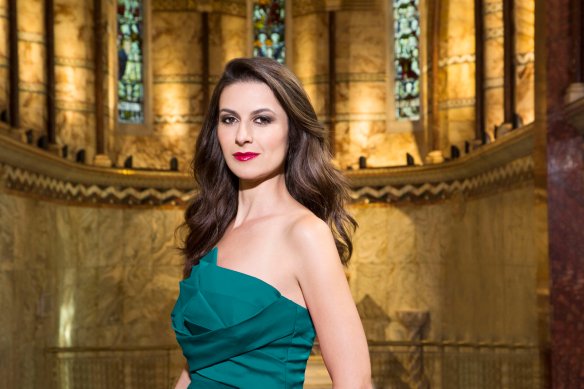
While Arcana have been listening to the works of Beethoven it has emerged that this verdict on the vocal works is less than fair. With that in mind it seemed only right to seek out a performer whose love for the vocal works of Beethoven has really come to the fore in this, the composer’s 250th anniversary year. Soprano Chen Reiss has made a number of contributions, headed by a disc of arias for Onyx Classics with the Academy of Ancient Music and Richard Egarr. In the course of our discussion Reiss, born in Israel and now living in the UK, sheds new light on these neglected works.

Our chat finds Reiss on holiday. “I’m on vacation! she says excitedly. “I have two children, and I have been locked down with them in Vienna since March, and we couldn’t go anywhere. Now they have been to school for a bit but not full time, it was an arrangement of three days a week, something like that. Since the end of June they are on vacation completely, and it has been quite a challenge at times, as parents. Luckily I wasn’t working, so I could deal with it, but I’m not used to being a 24-7 mum!”

She responds warmly to my observations on the vocal works heard so far. “I’m very glad to hear you saying that. Beethoven has such a reputation of writing badly for the voice, which I don’t understand. His writing is challenging, that is true, and that may have kept a lot of singers away from his music – but the music is fantastic, you know, as he is a genius after all. Anything that he writes, even if it is not the best in his standards, is much better than many other composers. When I did the research for my CD, it was also a surprise for me how few recordings there are of his vocal music. Everybody is recording the Ninth Symphony and Fidelio, but only these. With the arias that are on my CD, a lot of them are early works, that were not published in Beethoven’s lifetime. After the research that I did with some scholars, I found he approved the pieces to be published, and they just didn’t manage to happen. Each aria has an interesting story behind it. That was the reason why I did this CD, not just because it’s Beethoven year but because of a strong belief that these arias belong in the main repertoire and should be performed as often as Ah! Perfido.”

Her reference is Beethoven’s most popular work for solo voice. “Everybody is singing Ah! Perfido, and I agree that the form and dramatic development of the piece is probably the most complete. It was written later, but the earlier pieces are also excellent, and very interesting. Beethoven was a revolutionary composer, and you have one foot in the classical tradition, maybe Haydn or Mozart, and the other foot is already in the future. Maybe the sound of the early pieces reminds us more of Haydn – not Salieri, in my opinion – and even though he wrote them before he started with Haydn he knew his music and was very much in the period. We shouldn’t forget that Beethoven wrote those works around 1790, when Haydn was still active. The music of Mozart was also very much known to Beethoven, and so you hear the influence of those masters.”

Her opinion of the pieces, as a singer, has never been in doubt. “I do think they belong in the main repertoire, not only because they are good vocally. Maybe you need to practice them a little more, but then you would practice a Donizetti aria too. Of course you have the Italian masters, where the music sits in the voice much more authentically than Beethoven, because he wasn’t really in my opinion thinking vocally at this point, it was instrumentally. For example, the concept of ‘solfeggio’ in the voice, that is the transfer between the register of the mid voice to the high voice, it didn’t exist with Beethoven! Many times he writes in that particular part of the voice, which is not so comfortable, and this is why one needs to have a clear tone, and not just a dramatic plan but a vocal one too. This is a challenge, but it is the case for the music of Bach too. It’s not like Beethoven is the only one. Bach writes in a very instrumental way, and there are some recitatives that lie in the solfeggio area and are not so comfortable. Beethoven is not the only composer to do it.”

Reiss has done a good deal of background reading. “I found from research that Beethoven did not do it on purpose to upset the singers, not at all. He actually had contact with the singers and constantly spoke with them, and he wanted to get their input and improve his writing for the voice. In my opinion this is also the reason he went to have lessons with Salieri, and we shouldn’t forget that when he took these lessons he was already an established composer. He felt that to write for the voice was not as natural for him as writing for the piano, which was his instrument. He chose Salieri, who was the master in Vienna at writing for the voice, and I think that although musically there was no comparison with the genius of Beethoven, Salieri had a skill of writing for the voice. That was why Beethoven studied with him.”

When performing Beethoven, Reiss is keenly aware of the role played by her allies. “The other challenge in Beethoven is not so much for the singer but more for the conductor. In many of the pieces he writes for the voice in a very low register, and not very loud, but he would write passages where the orchestra is really loud. Beethoven was relying on the fact that he would have good conductors conducting his music, and that they would know how to balance. His writing is very dramatic, in Ah! Perfido especially, but also in Primo amore.”

She elaborates on the latter piece, an earlier work for soprano and orchestra. “You really need a good conductor for this piece because of the dynamics and the balance. There are a lot of different sections in this aria, and they have very different characteristics, so it is really down to the conductor to create magic and for the orchestra to be very soft and transparent, but also to give the oomph and the drama when needed. We definitely rely on the conductor!”

This approach extends further. “My arguments here also apply to the Missa Solemnis”, she says. “I have spoken with several big conductors, and they have said it is really not an easy piece to conduct, and that it is very challenging because of the balancing. The orchestra is large and there is a quartet of singers, so in order not to cover them you have to really take a delicate approach. When the music is written as forte the orchestra does not have to blast, it has to be relative to the quartet of voices that you have. You really rely on the fact that you have a good conductor to give the right interpretation of what is on the page.”

Would this explain why Beethoven’s vocal works were not so well known; that he had trouble finding the right conductor for them as much as the right singers? “I am not sure what the reason is”, she says honestly. “There is an aria on the CD from the Cantata on the Accession of Emperor Leopold (Fliesse, Wonnezähre, fliesse!) and there is a rumour I read that orchestras of the time did not want to play it because it was unplayable. For an orchestra of today that is no problem, because our technical level is higher than it was 200 years ago. Physically it was a problem, but that became musical too. You need very sensitive musicians to play it, because it is very technically challenging not just for the soprano but for the soloists in the orchestra – the cello and the flute solos are not easy. Beethoven was a challenging composer, he wanted to push the boundaries as much as he could. The pianists back then found his music challenging, maybe not so much now because if you play Rachmaninov or something then Beethoven is not quite so difficult.”

Reiss expands her thinking to consider other operatic composers. “I do agree that Verdi or Puccini wrote for the voice in a more confident way, but I’m now learning Zaïde, the early Mozart opera, and I’m finding similar challenges to Beethoven. There are long phrases where you need impeccable breath control, which in my opinion is not easier for the voice. That is no reason not to sing it, though! Primo amore shows what I love about Beethoven, in that he was very human. He writes about very fundamental feelings and he writes about them with his heart on his sleeve. It is romantic but not pathetic, it is substantial and filled with feeling. Today they would probably give him Prozac, because he was someone with very grand feelings! Those feelings are very true, there is no melodrama. I don’t want to insult other composers, but there are others who were melodramatic. Some of the French and Italian composers wrote on a very grand scale.”

The accompanying interview for Chen’s Beethoven release features not just conductor Richard Egarr’s clear enjoyment of the music, but also Reiss talking about how she really identified with how Beethoven was feeling, and that he felt he was reflecting what a lot of us feel in relationships and romantic situations in his music. “He was misfortunate with love”, she says, “but then who could stand up to his standards? At first, I chose the arias that I thought were good for my voice and also good dramatically. I find the orchestras love them too, as it gives them the possibility to shine. If you think of a composer like Donizetti, it’s not as challenging for the orchestra, and I think they like challenges. There is so much character in the writing for the orchestra in these pieces, not so much ‘oom-pah oom-pah’ as there is in Salieri or a lot of the Italian composers of that time. Here the orchestral players are just as important as the singer. I really enjoyed working with Richard and the Academy of Ancient Music, because they took this role and played with real gusto and passion.”

On the Odradek release, Chen sings the substantial aria Tremate, empi, tremate (Tremble, guilty ones, tremble) with tenor Paul Armin Edelmann and bass Jan Petryka. “My ambition was try to record or sing the Beethoven music that is suitable for my voice”, she explains. “In July this summer I was supposed to do the Missa Solemnis, which I have never performed before. Unfortunately it was cancelled because of COVID, but I did learn the piece. Other than that I managed to do everything. I sang in Lenore, which was marvellous, and then Fidelio itself, and these arias. The only thing I didn’t do was this trio, so I’m very glad that we found the possibility to record it in another city. It was a coincidence that I met Thomas Rösner, the conductor. It was in Liege where I was singing, two years ago, and he said, ‘I’m doing a disc with the Piano Concerto arrangement of the Violin Concerto, do you think we could do something?’ We thought we could do the Mozart aria Ch’io mi scordi di te?, and I said, ‘Listen, there is a Beethoven trio I would really like to record’. When I did this Tremate it reminded me a little of the trio in Fidelio with the Father and the two lovers. Marzelline is thinking that Fidelio is a man, and she’s in love with him, and the father basically gives his blessing. It is of course a different story altogether, but the ending is very dramatic. I think it’s a very good piece to perform as an encore in a concert, wouldn’t you agree?”

Given the way the voices combine, and the dramatic third part, she has a strong point. “Yes. I think it is very well conducted, with the middle part which has these beautiful long lines. I think it is an early piece, and of course Beethoven has these dramatic parts, which come later, but he also has a very good sense of lyricism and melodic beauty, a pureness which reminds me very much of Mozart and Haydn. You see it in these early works that he was more classical, and then he became much more dramatic. The third version of Fidelio, which we play today, is much more dramatic than the first two versions because I think the magic aspect was less interesting for him ten years later. Then he was more interested in the political aspect of the scene. He steps away from a beautiful sound to make music in the service of the emotion, rather than in the service of just beauty, which we have more with Donizetti.”

She considers once again the operatic works of Beethoven’s contemporaries. “Of course Mozart also wrote operas with political aspects. It’s really interesting with Zaïde, which I’m learning at the moment. It is an early piece, but he presents the conflict between East and West, the Christians and the Muslims. It’s amazing how nothing has changed in the tension between the regions, and between people who come from different cultures and mentalities. We have not really changed. Of course, today we are much more politically correct. Back then the European culture, manners and way of life was seen as superior to the Turks, for example, or the Muslims. Mozart was always talking about these things politically, but I think the music always has to sound beautiful and eloquent. In Beethoven the drama and the emotion are very much in the foreground.”

Reiss’s Immortal Beloved program finishes with perhaps Beethoven’s best-known solo vocal piece. “Ah, Perfido! is a real joy to sing”, she says passionately. “What is so great about these pieces is that lighter voices can sing them. It depends what approach you take – do you take the Baroque approach, the Classical approach, or do you take the more Romantic, Wagnerian approach? Are you presenting where he is coming from, or where he is going to? In my case, doing this CD, I was presenting with where he was coming from. I started with an early piece from 1791, and I finished with the later Ah! Perfido. It is about showing his development as a composer for the voice, how he maxed out his way in writing for voices.”

Has Chen recorded many of the songs with piano? “I haven’t done those this year, I have concentrated more on the orchestral pieces. My friends at the opera were struggling with them. I do think that people who claim it is really difficult to sing Beethoven perhaps approach from heavier productions such as Wagner and Verdi. My idea was that if you approach the instrumental, classical / baroque approach – in German we call it ‘schlicht’, which means ‘simple’. The voice production has to be more like you would sing Mozart, and when you approach from that direction it is easier to manage the ‘solfeggio’ and his vocal lines, which are often instrumental. If you sing with a lot of weight on the voice then you might find the songs quite tiring, because they do not always lie in the sweet part of the voice. But, if you approach them with a little less vibrato but still a warm sound – but not heavy – then I think you sing them much more easily.

Given some of the versions heard in our journey through listening to Beethoven’s works, this makes sense. “Or even Schubert”, offers Reiss. “A lot of people who sing Beethoven like Wagner, why not sing like Schubert? After all he was a contemporary, and again Schubert could be sung in a Romantic way. That doesn’t mean you have to sing Beethoven in a Baroque way, as he was a very Romantic composer. If you go in the direction of Schubert it would be much more manageable. I don’t think Beethoven would have expected a Wagner sound, it was not the way they sang in Vienna back then. This is how we often play his symphonies, for example, with a very rich sound, but instruments are different from back then, the piano now is different from how it was back then. The voice is not.”

Outside of the vocal music, what would Reiss class as her favourite Beethoven? She hesitates, laughing a little. “For me, the Piano Concertos. I really love these – number one, four and five. I am a frustrated pianist, and it is an instrument that can express so much. I wish I had the patience when I was seven or eight to practice more!”

Chen Reiss’s Beethoven album Immortal Beloved is out now on Onyx. You can listen to clips and explore purchase options from the Onyx website

Chen Reiss also appears on Voices, an album of works by Beethoven and Mozart under the direction of conductor Thomas Rösner. You can read about it and listen to clips on the Odradek website. Meanwhile the soprano’s own website is here

Talking Heads: Beethoven through the eyes of Susan Tomes

interview by Ben Hogwood

As part of our celebrations of the 250th anniversary of Beethoven’s birth in 2020, Arcana is talking to leading classical performers to get their perspective on the composer’s music. Pianist and writer Susan Tomes has a rich, four-decade history of Beethoven performance and recording, culminating in a complete set of the Beethoven piano trios made with the Florestan Trio for Hyperion. In this interview she talks of the challenges and rewards in playing the composer’s music – and why he remains the most original of all.

We begin, however, at the start. “I don’t remember the first time I ever played Beethoven’s music,” she says, “but there must have been a number of pieces I learned when I was a child, in Associated Board exams. My music teacher gradually introduced me to the easier sonatas and pieces, so I don’t have a moment where I remember first encountering Beethoven. It has always been an important thread, as it is for all pianists.”

Was there a specific line in the sand with the piano trios? “Not as such, but Britain has always been a great nation of sight readers, and that has always made it possible to read through things when you get to playing chamber music with colleagues. As a teenager, when I attended a Saturday school at the Royal Scottish Academy of Music, I started playing chamber music, and we would sight read some of the easier Beethoven piano trios – not that any of them are very easy! Then I was in a number of different chamber music settings such as Prussia Cove, and over the years I think I’ve played all of them there with all kinds of different people. I must have played all these pieces not just with my professional, long standing groups but with different combinations of people. I really have played them a lot, and it’s amazing how every time you work on them with somebody there is a load of stuff to discuss.”

She tells of the many layers in Beethoven’s writing. “It’s difficult to know where to start, because they are very multifaceted pieces of music, and an awful lot of thought went into them on Beethoven’s part. There is always a lot you have to discuss and work through with whoever you’re playing them with. That’s something that is amazing about his music; you never get to the point where you think, “Well, I’ve cracked that, I know how that needs to be performed!” Sometimes you get that with other composers, where you feel like you’ve ‘got the measure’ of it, and you know how it needs to be put across so the audience can understand it. With Beethoven it’s not like that, it’s like a very deep well you are always having to look into, and every group of three people who play it will have slightly different ingredients to bring to it. It’s always a big task, even if you know them, a huge mountain that you have to climb all over again. I do know how to play the notes, and I know how I feel about lots of things with the pieces, but if you’ve got three very good musicians, each with their own kind of hinterland of musical experience, a lot of ingredients get mixed in and you start having to look at things from other points of view.”

Tomes is passionate about the effect the composer’s music has had on her own life. “It’s always a very enriching experience playing Beethoven trios. Before we had the Florestan Trio we had the quartet, Domus, and we all found that if the group was going to break in a division of opinion it was either two against two or three against one, or four different views. With a trio it is mysteriously different and feels like a more balanced set, as you have one of each type of instrument, so it feels like a tripod with a more stable structure. Everyone has their responsibility within the piece, which is theirs alone and not shared with anybody else.”

It is a natural presumption that a string quartet might be more balanced, but she is not so sure. “There is something interesting about the dynamic of a trio, where you tend to get three different personalities that work well together, perhaps more so than in a string quartet – if they’re all very different then they have perhaps got problems! A string quartet has to sound so blended to be really convincing; somehow with a piano trio you can even get three soloists that will work well as a piano trio, and that’s sometimes how you hear them. However I did come to feel that three well-known soloists working together briefly on a trio is never going to be as satisfying a result as three people who had really put the work in with one another over a long period of time on this music. I believe you can still get further if you’re really committed to doing it with the same group. It’s a difficult thing to explain but there is something about the mental landscape that you get to share, and the experience of playing it together. It’s a satisfying thing to work at a body of pieces like the Beethoven trios.”


Beethoven’s musical autograph for the Piano Trio in D Major Op.70/1, the ‘Ghost’ – an exhibit in the Morgan Library & Museum, New York

Talk turns to each of the trios individually. “My experience of them is that they are all very different in character”, she says. “There are seven of the major trios – the three of Op.1, Op.11, the two of Op.70, then the Archduke and a few miscellaneous pieces. There are seven big ones, and six that are strictly for violin, cello and piano as the Op.11 piece is for clarinet. It’s very sweet and works better with the clarinet I think.”

Each work has its own identity. “I feel these pieces have very distinct personalities of their own, which is a thing I think Beethoven was particularly good at. If you compare them with the piano trios of Mozart, which are perhaps more similar to one another, I always feel that he posed himself different questions with each of the trios, and set out to answer those questions. Because of that the trios have a different artistic personality, which I think is quite an achievement of Beethoven’s.”

Is Beethoven picking up the baton from Mozart rather than Haydn in his writing for the piano trio? “When Beethoven was in his early twenties and studying with Haydn I think Haydn had not yet been to England, and he hadn’t published what we think of as his great piano trios, so probably it was Mozart if anyone that Beethoven was picking up from. It is as though he made a conscious choice to start with trios because it was a format that was perhaps not Mozart’s greatest success. Mozart had mastered the string quartet and the opera, the symphony and the piano concerto, but the piano trios are possibly not one of his really top genres. Perhaps it was a smart idea of Beethoven’s to set out with a type of music where there was room to show that he had something new to offer. He probably intended them for amateur musicians of a rather posh kind or in aristocratic circles, and was probably writing for experienced musicians more than the public concert hall at that point.”

The Florestan Trio made their Hyperion recordings in the Henry Wood Hall in London, and Tomes gives an honest appraisal of them. “Recording sessions I have always found very arduous”, she says. “At no other point do you have to play pieces of music over and over and over, with absolute maximum attention to detail and energy, so I have always found it a very stressful experience. It became obvious very early on that you really didn’t want to leave mistakes on the finished product. I started off saying to our producer that I felt as long as the atmosphere was right and the spirit was right then I didn’t mind about mistakes. Our producer said, ‘Trust me, you will mind if you hear wrong notes and mistakes on the finished product, you will wish that you had taken the time to correct them!’ So we took that attitude the whole way through, and we did make sure that everything was absolutely right at some point during the day. Hopefully we tried to get as many things right as we could on the first take, but that is never possible and the more people you have involved the less possible it is. Even you yourself might hit a lucky streak, but as sure as eggs is eggs somebody else will not play ball, and then you can’t use it. With three people playing exposed parts it multiplies the things that could go wrong simultaneously.”

The demands are clear. “I can’t say I’m a fan of recording, because I’m concentrating so hard on accuracy and at the same time trying to maintain the right kind of mood and spirit, which is really hard. As it goes through the day you find the accuracy rate tends to go down, and sometimes the atmosphere or spirit of the thing can go up. If that happens at a time when you’re making mistakes and getting tired, then that’s not good either. I think most of our recordings ended up being a patchwork of takes from different parts of the day, put together in such a way that they were accurate and had the right feeling behind them. I would not personally have been involved in the editing process, because I just thought I would get so confused by trying to put things together, and would be listening for those takes where I was good or played everything right! I might be tempted to select those rather than one where one of my colleagues was absolutely brilliant. I would happily leave that mainly to Andrew Keener, who as a producer is a brilliant editor. He knew us well enough to know we wouldn’t be happy with just the accurate takes; that he had to find something which had the right feeling about it as well.”

Are there any particular technical challenges about playing Beethoven? “One thing I would like to make clear about the piano trios is that I think the piano parts are as demanding as any of his piano parts, be they solo sonatas, even the concertos. I have played that repertoire as well and honestly think the piano parts in the trios contain as many technical challenges. There is the additional challenge of collaborating with others. Technically they are very challenging, and even from the start. Op.1/2 is extremely difficult for the piano particularly, and it has to sound so effervescent, like a Mozart opera in piano trio form. It’s actually very difficult. At the other end of the spectrum is the Archduke trio, where you need a lot of stamina and a lot of physical strength and energy to play. It keeps going at such a pitch for 40 minutes that you really do need to work up to that.”

As for Beethoven’s originality and invention, Tomes is in no doubt. “Whenever I was working at the trios I always had the feeling that Beethoven could really out-think any composer who came after. Today’s composers know so much about compositional techniques, and modern techniques that he never thought of, but in a way Beethoven has more inventiveness than anyone. Although he was writing in conventional keys, rhythms and notation, the way he constructs from little cells of musical material, and the way he can build enormous structures from small things, and the range of moods and emotions that he can somehow convey; he has such an extraordinary brain and imagination. I always came out feeling that one has to respect Beethoven more than anyone. The power of his thinking is quite amazing really.”

Initially this could be intimidating. “When I was a child I found a lot of Beethoven’s music off-putting almost, I found it over dramatic. You know his typical sudden changes of mood and pace – when I was young I couldn’t understand what he was driving at, I thought it was showing off. It gradually dawned on me, the kind of enormous terrain of feeling and imagination that he was trying to get down on paper. The more I got to know it the more I could see what a giant composer he was, and in a way I think more than anybody else – and I say that as someone whose favourite composer is Mozart – but I think Beethoven is so varied. One can say that even in the six or seven trios, just the number of styles he can write in and the number of things he can suggest to the listener puts him practically in a category of his own.”

You can listen to clips from the Florestan Trio’s recordings of the complete Beethoven Piano Trios at the Hyperion website here For more on Susan Tomes’ writings, head to her own website. Her book Beyond The Notes – which is strongly recommended – includes a chapter on rehearsing Beethoven’s first published trio, which Arcana will be appraising soon.

Talking Heads: Jess Gillam

Interviewed by Ben Hogwood

Jess Gillam’s bright tones will be familiar to many a BBC Radio 3 listener, both as a saxophonist and a regular broadcaster with her program This Classical Life. Often (rightly!) referred to as a breath of fresh air, the Cumbrian-born musician has recently moved to London and is on to the second chapter of her album-making career with Decca. When we talk Kentish Town, where she lives, has just emerged from lockdown. As she confesses, “It’s all a bit weird!”

Gillam’s progression from the wide open, wild spaces of Cumbria to the cramped streets of North London is a striking one. “I lived in Manchester for three years, and then moved to London,” she says. “It was a big shock, a completely different atmosphere. London never stops and that is quite difficult to adapt to sometimes. Culturally the difference is unbelievable. Cumbria has incredible landscapes and scenery, really lovely people, and a really strong sense of community, but there is nowhere near as much culture and things going on as London.”

She had to be careful not to over commit her diary. “I found as soon as I was in London that I was really busy, but also that I wasn’t in London so much as I thought as I was touring and playing in different places. I remember moving on the Monday, I had a rehearsal in the afternoon and a concert the next day. It was a mixture as before I couldn’t commit to too much, but now I love the different challenges. I would love to go to more theatres and watch more concerts though – that’s something I plan to do much more of when they reopen.”

We move on to talk about TIME, that second album for Decca, due for release at the end of September. It was recorded with the Jess Gillam Ensemble, a chamber-sized group of accomplished session musicians and percussionists. Several teasers for the album have appeared, in the exciting form of new and specially commissioned pieces by Luke Howard (Dappled Light) and Will Gregory (Orbit). The tracklisting is pleasingly adventurous, with new interpretations of tracks by James Blake, RadioheadPhilip Glass and Michael Nyman.

Gillam was already aware of Gregory’s pop music. “I’ve been a fan of Goldfrapp since I was quite young”, she explains, “and have listened to their albums. I knew that Will was a sax player and have played various pieces by him – so I just approached him and asked if he could write a piece. Goldfrapp have blossomed as they have gone on, and that’s one of the things I find really inspiring about Will, is that he can write in a classical style, with a score for orchestra, but he can write in so many areas and have a distinctive voice still. For me it makes his music more authentic, and it’s one of the reasons I love it.”

On Dappled Light, I comment that the colours of the cover and match up to Luke Howard’s music rather nicely. “I think he wrote beautifully for the forces that we had”, says Gillam, “and the way he used the percussion was really interesting with the piano. It really paints a picture and a scene I think. The cover art wasn’t planned but we ended up with it because of lockdown. I think it went together really well!”

Jess has a number of new commissions under her belt already. Does she feel it is important for a new composer to capture her personality as well as writing well for the saxophone itself? “I think for me music is all about people, about telling people stories and communication”, she says. “It is a deep level of communication and conveying a story, an emotion or a feeling. I think with whatever piece it is – a Mahler symphony or a Shostakovich string quartet for instance – each one has a history that is linked to a particular person. I find the interpersonal relationships interesting, to find out that music a lot of the time is about people, for people or with somebody in mind. It is really nice to have that human interaction and quality to a new piece, but it’s not essential. I think it’s really nice when a composer listens to your sound and captures that, but I think it’s nice and not essential.”

While listening through the album, the big surprise for this particular listener was Gillam’s cover of James Blake’s Retrograde, in an arrangement by Benjamin Rimmer. The surprise in this case was the vocal qualities of the instrument. “I think it’s an underrated element of the saxophone, it’s almost insane the vocal quality that it has! The way a sound is produced is quite akin to how you would sing, and quite similar to how you would produce the sound if you were a singer, and the things you would think about where the sound is being made are similar through your vocal chords. Whatever you put through the saxophone is a direct representation of how sound comes out. If you’re shouting or whispering, it would be totally different. You get that to some extent on a piano, but it is so connected to our bodies and the physicality of it is just like singing. When I was recording Retrograde it was about looking at how James Blake had got that sound, and replicating some of it on the saxophone.”

Jess has shown through her concerts how adaptable the saxophone can be, showing in an hour-long recital at Wigmore Hall how composers from the last 400 years can find their music in a new dimension. “It is unbelievably versatile, and I have been saying for a while how it’s like a chameleon of instruments. I was reading the famous David Bowie quote where he says people describe him as a chameleon but he’s not a chameleon of styles, because a chameleon puts a lot of effort into changing its colour! It’s the same with the saxophone, you don’t really have to change that much. Of course there is a whole different set of equipment and techniques to play jazz and classical, and you can learn to do it very well, but on a very basic level you don’t need to change anything to be able to play baroque music or Motown or classical, whatever it might be. It has the versatility of sitting right in that hole.”

She may be two albums in, but Jess is still at a very early point in her career – which is something of a double-edged sword. “It’s amazing but also terrifying!” she exclaims. “There is so much to explore with the instruments. The way we consume music now means that people have such eclectic tastes, because you can listen to whatever you like whenever you like on a streaming platform, and you don’t have to sit down and listen to a whole album before getting up and changing the gramophone. It’s a lot easier listening to music now, so the styles we like and are listening to I find are much more based on mood and what we feed our emotions, to inspire or to concentrate. I think people are using music in quite a different way now. The saxophone feels like an instrument that has the potential to sit in so many different places and to explore so many new possibilities. There is so much music still to be made for it I think, because it’s such a young instrument and has so many places to go.”

These new ways of experiencing music, primarily through digital platforms, are at the heart of This Classical Life, her successful weekly show on BBC Radio 3. It appeals to a wide range of listeners, and not just the new technology recruits – from experience, much older gramophone lovers are enjoying her open and diverse approach to music, casting off the genre stereotypes. “There has been a big range in the response I have had, with all age groups from primary school children to 90-year-olds. I think the most magical thing about music is the sense of discovery, and knowing that you can never listen to all the music in the world. There is always something to discover. Regardless of what age you are, that never leaves you, the idea of hearing new sounds, stories and different people!”

These principles are at the heart of her approach, both as a performer and a presenter. “I think listening to new music and finding new artists that they love brings people so much joy. When you find somebody new you can listen to all their music and find out who they are, and what they’re like. It’s one of the greatest things to discover.”

Has the lockdown period given her a greater appreciation of music? “It’s been such a strange time, but it has made me realise even more that I don’t go a single day without putting on some kind of music. It can completely change the surroundings, it can transform your mood, it can make you think a different way, and it can really transform a day. You can be locked down like we have been inside our houses, but listen to music and suddenly you’re in a completely different country, thinking completely different thoughts, and you’re with someone else. It’s an amazing thing.”

Gillam has done a good deal of work over Zoom in the last few months, setting up the hugely successful Virtual Scratch Orchestra during lockdown. It brought musicians of all abilities together for the closest experience to live performance they could achieve in isolated conditions – and in total 900 people were assembled online for a distanced account of Let It Be.

Although Zoom has to an extent saved live music during the Coronavirus pandemic, there are still keen limitations, as Gillam freely admits. “Technology is amazing, and it’s incredible that we can still be a part of something bigger and still connect via the internet in the way we can, but nothing will be able to replicate the feeling of playing with other people in a room, or playing to other people. I’ve been taking part in the Royal Albert At Home concert, and practising playing to a screen is the most bizarre feeling. There is no clapping, no communication with the audience, no way of judging how it’s going! It’s the most inhuman experience in a way but at the same time you know people will watch it and you hope they will enjoy it. It’s a very strange feeling.”

Her set for the Royal Albert Hall was typically varied, including music from Marcello to David Bowie – which puts me in mind of how important the saxophone was through his music. Gillam emphatically agrees. “He played the saxophone himself, and often in his music it acts as a catalyst for the next section, or the next drop, or the next rise in emotion and intensity. The way he would use it, he deployed it as an instrument to take things to the next level.”

She has also used Zoom for lessons with her teacher, renowned British saxophonist John Harle. “I’m just finishing my Masters year at Guildhall School of Music & Drama, and I submitted my recital only yesterday. We’ve been having video lessons leading up to that. It’s great to be able to keep studying, but again it isn’t quite the same, it’s quite a strange method over the internet!”

Now the recital is submitted, TIME is of the essence. We’re getting everything together for the September release – the cover and booklet notes, the track order. The whole album was mixed in lockdown, which was quite a technological feat! The producer Jonathan Allen was incredible, he was giving a live feed over to me and we could comment in real time, using WhatsApp. It’s amazing to see what’s actually possible when you need it to be!”

Jess Gillam‘s album TIME will be released by Decca on 25 September. It will include the singles Dappled Light, Suspirium, Orbit, Truman Sleeps and Joby Talbot‘s Transit of Venus. You can read more about the album on her website, and keep up with new audio releases via her Spotify and YouTube pages

Talking Heads: Paavo Järvi

Interviewed by Ben Hogwood

If anyone typifies the flexibility of the modern conductor today, that person is Paavo Järvi. Like his father Neeme and younger brother Kristjan, he has an eye-watering workload and schedule, but such is his deep love for his art that it is not a factor in his musical life.

When our conversation starts, Järvi has just finished rehearsing in Estonia – in his home city of Tallinn. This time his role is that of a visiting conductor, in charge of the NHK Symphony Orchestra. The Japanese group, now 95 years old, appointed him as their chief conductor in 2016 and recently extended the arrangement until 2022. Their recent recording releases present a partnership that can only be described as going from strength to strength.

On the night of our conversation they have a concert in Tallinn itself, followed by a visit to the Royal Festival Hall in London three days later. Their program is an enticing one, beginning with Takemitsu’s orchestral piece How slow the wind. Järvi confesses to being a slow starter with his music. “I have been an admirer of his music for a long time, but recently in the last couple of years we have recorded his works with the orchestra. It has just been released in Japan, and it includes all of his orchestral music. In the last couple of years it was a big project that we took on, especially with him being so big in Japan. He died before I ever had a chance to meet him unfortunately, but as you know he is a major figure in Japanese musical life. His is the only real name from the Western world that we would know as being from Japanese music. I grew up knowing the name but not the music. It’s been a new experience for me but something I am very proud of, a new musical experience.”

One of the NHK Symphony Orchestra’s recent releases with Järvi is a searing account of Mahler’s Symphony no.6, which they gave to great acclaim in London in 2017. Wishful thinking it may be, but I suggest that some of Takemitsu’s writing draws from Mahler’s ability to write chamber-like music in the depths of the Sixth. “I think it is more likely that the influences are Messiaen”, says Järvi, his sonorous voice deeper than ever. “It was Messiaen who taught him, and the line goes back to Debussy before that, but there are echoes of certain other worlds in Takemitsu’s music for sure. Mahler could have been one of them.”

Sol Gabetta joins the orchestra for Schumann’s Cello Concerto, a work which has seen its fortunes on the stage revitalised in more recent years, before Järvi leads the orchestra in Rachmaninov’s Symphony no.2 in E minor. This is a work he recorded with the Cincinnati Symphony Orchestra back in 2006, but as he admits his view of the piece has changed since then. “It has changed, and I have changed in that time too”, he admits. “I have fewer inhibitions since I made that recording, and I am not as cautious about the piece as I used to be. It is one of the most Russian works of Rachmaninov’s output, but it cannot be taken too literally. The orchestra have played the Second quite a lot, and it is extremely familiar music within Japan. There is certain music that they play really well, and the Second Symphony is certainly one of those pieces.”

Nor have they required much persuasion or coaching to make the move to Mahler in their recorded output. “The orchestra is extremely well versed in German Romantic music, and they have had a lot of conductors who have encouraged them to play it. Herbert von Karajan and Karl Böhm used to conduct regularly in Japan, and so did Eugen Jochum. Most of the Western conductors came with their own orchestras. A lot of Western conductors were connected with the NHK Symphony Orchestra – Wolfgang Sawallisch, Herbert Blomstedt and Horst Stein just to name a few – so they know the repertoire extremely well.

Alongside the Mahler release is a programme of Bartók orchestral works, comprising the Divertimento for string orchestra, the Dance Suite and the Music for Strings, Percussion and Celesta. Jarvi prides himself on the output, and the overall orchestral sound, which has an extraordinary clarity. “That’s something we have been trying to get”, he admits, “the directness of sound, so that it is transparent and clear. We had to work on that a bit for the Bartók, but as you can hear the orchestra is very versatile.”

The London leg of the NHK’s mini tour will take place on Estonia’s Independence Day, which Järvi describes as ‘a very nice coincidence’. This helpfully leads me on to a new recording he has made with the Estonian Festival Orchestra of the music of fellow countryman Erkki-Sven Tüür. The main work here is his Symphony no.9, dedicated to Järvi himself, with orchestral pieces Sow the Wind… and Incantation of Tempest.

He describes the new Ninth. “It’s a big piece, and very interesting. It describes the Estonian history from its beginnings right up to today, so it is a very long narrative – but it is very atmospheric too. He (Tüür) is a master of creating great layers of sound. I think it’s an epic piece, and because I have a lot of years performing his music it is very special for me as a culmination with the Estonian Festival Orchestra. It makes it even more special because it is very close to home.”

Järvi’s familiarity with the music of Tüür goes right back to the 1990s, and a disc of new music by him and fellow Estonian contemporaries. “It’s a great place for new music”, says Järvi of his home country. We have a lot of good new music, and established composers like Arvo Pärt and others.” In spite of his worldwide travelling, he keeps up with developments. “ It’s not difficult to keep in touch with the possibilities for Estonia”, he says, “as they are all there with the internet. I am always looking at what’s happening in musical life in Estonia, and even when I am far away my heart is here all the time.”

This year will see the tenth season of the Pärnu festival, founded by Paavo Järvi in 2011 together with his father, Neeme. How does he look to bring new audiences to classical music? “This is what we are always thinking about”, he says with feeling. “I don’t have a magic formula, other than one has to do it really well and be engaged. If the programme is interesting then that is the first important thing. The other thing is to enjoy the music. Very often with orchestras it can look like business as usual, and they play as if they are working.”

That was emphatically not the case with the Estonian Festival Orchestra when they made their BBC Proms debut last August, and who were noticeably all smiles. “I think that’s the way it should be”, says Järvi. “It is very hard for me to imagine playing music and looking like you’re not enjoying it, it’s not logical to me. Orchestras that come together occasionally, like the festival orchestra does, have an advantage, but it has to happen with every orchestra. It’s such a very logical thing, and if you enjoy it makes sense to do something which is very contagious. Energy comes through being contagious!”

The NHK Symphony Orchestra and Paavo Järvi perform Takemitsu, Schumann and Rachmaninov at the Royal Festival Hall on Monday 24 February.

You can listen to the orchestra’s new recordings of Mahler and Bartók on Sony Music on Spotify above, and follow the link to find samples and buying options on the Presto website – the Mahler here and the
Bartók here.

Järvi’s disc of Tüür’s Symphony no.9 will be available on the Alpha label in March – for more details click here