
On this day – the death of George Gershwin

by Ben Hogwood. Picture of Gershwin used courtesy of Wikipedia, unknown author

The great composer and songwriter George Gershwin died on this day in 1937. Here is his sparky Cuban Overture:

What tune does it use?

The first movement of the Sinfonietta, by Leoš Janáček (born on this day in 1854):

The Sinfonietta is a thrilling orchestral work, begun with a powerful brass fanfare but containing five incident-packed movements.

How does it work?

The main melody of the first movement Fanfare is the basis for Emerson, Lake & Palmer’s song, but in his keyboard part Keith Emerson refers to other parts of the work.

Then, on his solo from 2’40”, Emerson departs from Janáček’s blueprint with a characteristically incisive solo, backed by a virtuosic drum track. From 3’25” the style broadens to include explicit references to J.S. Bach, the Allemande of his French Suite no.1 in D minor:

What else is new?

You can hear the whole of the Sinfonietta below, in a thrilling performance from the Vienna Philharmonic Orchestra under Sir Charles Mackerras, in a recording made in 1980:

Published post no.2,929 – Friday 26 June 2026
On this day 100 years ago – the first performance of Janáček’s Sinfonietta

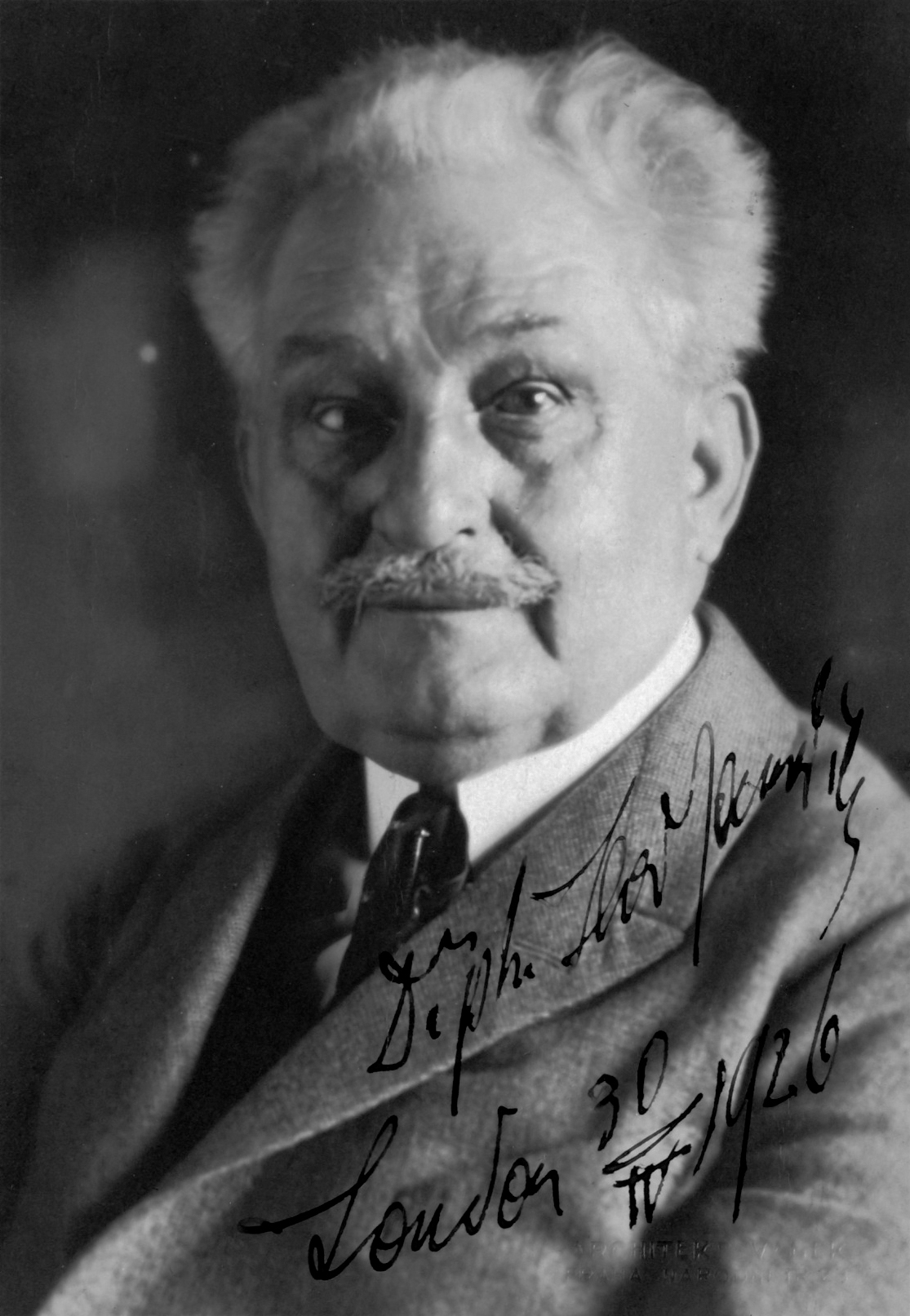
by Ben Hogwood. Picture of Janáček used courtesy of Wikipedia, unknown author

On this day, 100 years ago, the first performance of Janáček’s Sinfonietta took place in Prague, under the direction of Václav Talich.

Arcana has examined this piece before, but in a very different context – as approached by Emerson, Lake & Palmer! Here are the details of Knife-Edge:

What tune does it use?

The first movement of the Sinfonietta, by Leoš Janáček (born on this day in 1854):

The Sinfonietta is a thrilling orchestral work, begun with a powerful brass fanfare but containing five incident-packed movements.

How does it work?

The main melody of the first movement Fanfare is the basis for Emerson, Lake & Palmer’s song, but in his keyboard part Keith Emerson refers to other parts of the work.

Then, on his solo from 2’40”, Emerson departs from Janáček’s blueprint with a characteristically incisive solo, backed by a virtuosic drum track. From 3’25” the style broadens to include explicit references to J.S. Bach, the Allemande of his French Suite no.1 in D minor:

What else is new?

You can hear the whole of the Sinfonietta below, in a thrilling performance from the Vienna Philharmonic Orchestra under Sir Charles Mackerras, in a recording made in 1980:

Published post no.2,929 – Friday 26 June 2026
The Borrowers – Emerson, Lake & Palmer: Knife-Edge

What tune does it use?

The first movement of the Sinfonietta, by Leoš Janáček (born on this day in 1854):

The Sinfonietta is a thrilling orchestral work, begun with a powerful brass fanfare but containing five incident-packed movements.

How does it work?

The main melody of the first movement Fanfare is the basis for Emerson, Lake & Palmer’s song, but in his keyboard part Keith Emerson refers to other parts of the work.

Then, on his solo from 2’40”, Emerson departs from Janáček’s blueprint with a characteristically incisive solo, backed by a virtuosic drum track. From 3’25” the style broadens to include explicit references to J.S. Bach, the Allemande of his French Suite no.1 in D minor:

What else is new?

You can hear the whole of the Sinfonietta below, in a thrilling performance from the Vienna Philharmonic Orchestra under Sir Charles Mackerras, in a recording made in 1980:

Published post no.2,584 – Thursday 3 July 2025

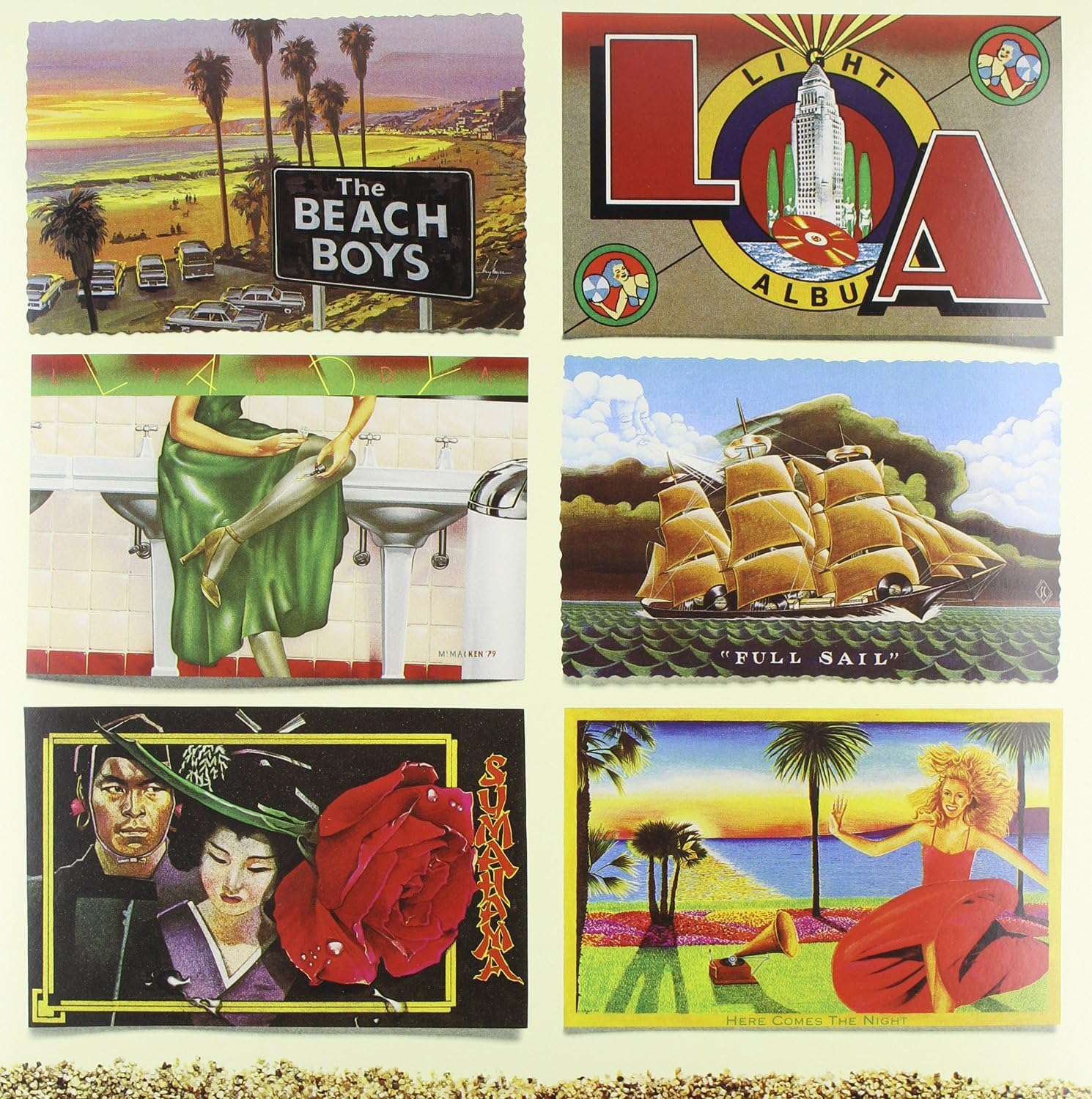
The Borrowers – The Beach Boys: Lady Lynda

by Ben Hogwood

What tune does it use?

A choral piece by Johann Sebastian Bach, called Jesu Bleibet Meine Freude (Jesu, Joy of Man’s Desiring). It is the tenth movement of his cantata Herz und Mund und Tat und Leben (Heart and mouth and deed and life), written early in Bach’s time in Leipzig, thought to have been in 1723. The melody, however, is understood to have been written by Johann Schop, with Bach providing the harmonisation.

The song itself was written by Beach Boys co-founder Al Jardine, paying tribute to his wife Lynda – with a co-credit also given to keyboard player Ron Altbach. Jardine sings the main vocals, with a large ensemble of session musicians given credit at the song’s Wikipedia page.

How does it work?

The song begins with a note-for-note reproduction of the Bach / Schop melody, with the harpsichord adding a metallic brightness to the thick string sound. Then Jardine starts to play around with the speed of Bach’s work, making the transition to the full-blown Beach Boys sound reasonably seamless, with the addition of some woozy syncopations.

The song has the Beach Boys’ characteristically sunny sound, but there is a certain flatness to its delivery, perhaps belying the band’s fraught relationship at the time and even foretelling the fate of Al and Lynda’s marriage.

That said, it is a bright and relatively positive song, its dappled textures and syncopations presenting Bach’s work in a new and imaginative light.

What else is new?

Lady Lynda was the third single from the Beach Boys’ relatively unsuccessful album L.A. (Light Album), released in the spring of 1979. In a streamlined radio edit, with the introduction removed, it reached no.6 in the UK singles chart.

It was however recast when Jardine and his wife divorced, pointing towards a different Lady (the Statue of Liberty) and becoming Lady Liberty instead.

Published post no.2,406 – Thursday 9 January 2025

The Borrowers – Robbie Williams: Party Like A Russian

What tune does it use?

The Dance of the Knights from Sergei Prokofiev’s ballet Romeo and Juliet.

Arguably Prokofiev’s most famous piece of music, Romeo and Juliet has some fantastic music and tunes – and the Dance of the Knights is one of its most impressive calling cards. It has recently gained extra exposure as the opening titles for the BBC programme The Apprentice.

How does it work?

Williams uses the two heavy bass notes from the start to power the chorus:

A bigger sample gets used for the first chorus:

Then some snippets from later in the dance are incorporated:

The Prokofiev material appears to be replayed throughout, and Robbie adds a big male chorus for some bits, but unfortunately the bluster of verse and chorus, plus some really clunky rhyming (Russian – concussion!), mean the song itself is relatively unmemorable. The posturing in the video takes away from the music – of which Prokofiev’s contribution is arguably the most memorable.

What else is new?

Williams made far more effective use of a sample in his UK no.1 hit from 1998 Millennium, where a loop of John Barry’s You Only Live Twice tied together with a beat and a much more memorable chorus:

Prokofiev is no stranger to pop music, and has been used by Emerson, Lake and Palmer on a number of occasions. Here is their slightly foursquare take on the Dance of the Knights:

A much more effective Prokofiev transcription can be found with their transcription of the Scythian Suite – its second movement, The Enemy God Dances with the Black Spirits:

Where can I hear more Prokofiev?

The playlist below gives an introduction to Prokofiev’s symphonies and includes his Classical Symphony and Symphony no.5 – with brilliant tunes at every turn:

The second album is music for the stage, a brilliant collection under Claudio Abbado that includes Alexander Nevsky, Lieutenant Kije (with the brilliant Sleigh Ride as used by Greg Lake!) and the Scythian Suite:

Let’s also not forget Peter and the Wolf…here voiced by none other than Alice Cooper in a new version!