The latest addition to the English Symphony Orchestra library of online music is the first performance of Philip Sawyers‘ major choral work, Mayflower on the Sea of Time.
With its ‘luminous and ecstatic choruses’ picked out by Richard Whitehouse in his review of the initial concert, this is an affirmative and major piece by one of the finest contemporary English composers.
Soprano April Fredrick and baritone Thomas Humphreys are joined by the ESOChorus and English Symphony Orchestra in the premiere from Worcester Cathedral, given on 17 June this year.
With the release of Christopher Nolan’s film Oppenheimer last Friday, it is worth noting that opera also has its own high quality biopic of the scientist.
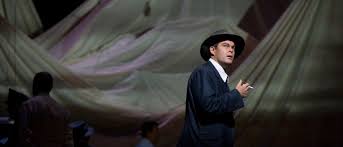
John Adams wrote Doctor Atomic in 2005 to a libretto by Peter Sellars. It is a compelling tale, bolstered by some of the composer’s best music.
The Metropolitan Opera have made their Penny Woolcock production available online, and you can view it here… it is highly recommended!
With the arrival of July 1st, here are two very different musical responses to the month. The first is an extract from Tchaikovsky’s popular cycle for piano, The Seasons – designating July to be The Song of the Reaper:
Then, with the weather here in the UK having been a little downcast this morning, a very different response from Bomb The Bass. Winter In July is a wonderfully moody song, with vocals from Loretta Haywood. It could only be from the early 1990s!
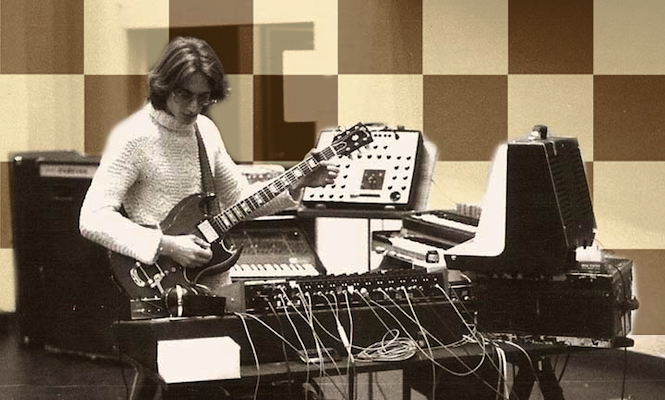
Yesterday we learned the sad news of the passing of the highly influential German musician Manuel Göttsching. He was the leader of two 1970s groups, Ash Ra Tempel and Ashra, but was best known as a solo artist.
In spite of his solo role he managed to sound like a whole ensemble on the remarkable E2-E4, which remains his calling card today. Written between 1981 and 1984, the epic composition predates dance music as we know it by many years, tapping into the minimalism of composers such as Reich and Glass but taking a different, even more hypnotic approach. Little wonder that this beauty found many fans in Ibiza, becoming one of the key early Balearic successes that the likes of Sueno Latino would draw upon.
Here it is in full:
I was fortunate enough to see a two-part Göttsching concert at the Convergence Festival at the Barbican in 2017, which you can read about here
This package is a treat for all those with a misty-eyed persuasion towards a certain legendary nightclub in Manchester. Opened by Rob Gretton and Tony Wilson under the auspices of Factory Records, The Haçienda turns 40 this year, and the anniversary has been marked by Cherry Red with a handsome 4CD set and book documenting the occasion.
The prime objective is to document the club’s open music policy, and this happens across a rich array of 65 tracks, covering almost every style capable of making people dance in 1982.
What’s the music like?
Extremely varied, and in the best possible way. There really is something for everyone here, and not just from 1982, though most of the selections are from then.
The open door policy is best illustrated from the choices that run from Suicide‘s peerless Dream Baby Dream right through to Dexys Midnight Runners‘ Come On Eileen. The latter is one of several massive hits of the time we get to hear as the compilation unfolds, with biggies from Shalamar, Simple Minds, ABC, Blancmange and Tears For Fears – as well as legendary articles from Grandmaster Flash & The Furious Five (The Message), Sugarhill Gang (Apache) and Edwin Starr (War).
Slowing things down a bit, there is some wonderful downtempo stuff from Gregory Isaacs (Night Nurse) and the heart-melting Love Has Found Its Way from Dennis Brown. Moving slightly quicker are the funky asides of Chaz Jankel (Glad To Know You) and the excellent Fiat Lux (Feels Like Winter Again), not to mention 23 Skidoo‘s The Gospel Comes To New Guinea.
Meanwhile the darkness of the club is also in evidence, with some tunes destined for the shadowy corners to come alive. Falling into this category is much of the third disc, which begins with Iggy & The Stooges‘ I’m Sick Of You and develops with John Cooper Clarke‘s Night People, Stockholm Monsters and Josef K.
Does it all work?
It does – the wide range of music means that the broad canvas of music in Manchester at that time is fully represented. There is room for humour, too – the theme music for Thunderbirds making an appearance in its legendary original recording from The Barry Gray Orchestra!
Is it recommended?
Wholeheartedly – thoroughly enjoyable from start to finish, and a musical education to boot.




 Arcana.fm