St-Martin-in-the-Fields launches first Music for Mindfulness concert

published by Ben Hogwood, text from the press release

Thursday 10 October, 19:00
Tenebrae: Meditatio – Music for Mindfulness

Sandström / Praetorius Es ist ein Ros entsprungen
Donna McKevitt Lumen
Rachmaninov We Hymn Thee
Gibbons / Forshaw Drop, drop slow tears
Chilcott The Last Invocation
Kedrov Otche nash
Rachmaninov Rejoice, O Virgin
Lobo Versa est in luctum
Allegri Miserere
Stanford The Blue Bird
Golovanov Cherubic Hymn
Chilcott Even Such Is Time
Howells Requiem aeternum II

In a new initiative that combines well-being and musical excellence, St Martin-in-the-Fields presents an evening of Music for Mindfulness with award-winning vocal group Tenebrae and mindfulness coach Michael McCaffrey. Tenebrae’s Artistic Director Nigel Short has devised a sequence of beautiful and calming vocal masterpieces by Lobo, Allegri and Rachmaninov and others, while Michael McCaffrey will guide the audience towards deeper listening through a focus on the breath. No previous experience of meditation or mindfulness practice is required, and in the inspiring candlelit surroundings of St Martin-in-the-Fields, the unbroken sequence of music and mindfulness invites the audience to take an hour at the end of the day to relax and centre themselves.

Nigel Short explains, “I’ve wanted to experiment with this format ever since I
conducted a similar concert in Denmark several years ago. We all know that
people are living increasingly busy lives, and the constant stream of
information we receive through our phones is making it harder and harder to
switch off. Music has always been something that people have turned to for
comfort and solace, and arguably we need this now more than ever. We hope that
this combination of beautiful music and guided breathwork will allow everyone a
small bit of time and space to take some time out and slow down.”

Reversing the emotional arch of a standard concert programme, Short and McCaffrey have worked together to shape the evening to guide the audience towards deeper tranquillity at the midpoint of the concert, before gently bringing them back to the present moment. The concert will include choral masterpieces such as Allegri’s Miserere, and extracts from Rachmaninov’s Vespers and Howells’ Requiem. Analysing their social media, Tenebrae noticed that many listeners discovered their recordings through YouTube searches for music to aid relaxation and sleep, and wanted to create a live concert experience that would help people to switch off and slow down.

Michael McCaffrey says, “As both a musician and experienced mindfulness teacher, the power of music as a tool to tap into deeper states of being is apparent. Music speaks to those same states that meditation often guides us into. A sense of calm, a present moment consciousness, the alive, immediate ‘now’ of each moment. It is no coincidence that ancient practices that encourage these states often use sound as a direct means by which to enter the stream of calm that mindfulness delivers.”

Michael McCaffrey is a dedicated meditation, mindfulness and breathwork
guide, passionately committed to making the transformative benefits of these practices accessible to all. With a rich background in these various techniques, his teachings focus on demystifying mindfulness, offering clarity and guidance to beginners while providing depth and insight for seasoned practitioners. It is his belief that anyone can take something positive from these practices and achieve an overall sense of wellbeing. Michael creates an inclusive space where individuals can embark on a journey of self-discovery and
inner peace. Over the last decade he has built up a dedicated following for his sessions, working with individuals and also with companies such as Chelsea FC, NBC Universal, Amazon and Google.

Described as “phenomenal” (The Times) and “devastatingly beautiful” (Gramophone Magazine), award-winning choir Tenebrae is one of the world’s leading vocal
ensembles, renowned for its passion and precision. Under the direction of Nigel Short, Tenebrae performs at major festivals and venues across the globe, including the BBC Proms, Wigmore Hall, Elbphilharmonie Hamburg, Rheingau Musik Festival and Sydney Festival. The choir has earned international acclaim for its interpretations of choral music from the Renaissance through to contemporary masterpieces, and has commissioned new
music from composers including Judith Bingham, Joanna Marsh, Owain Park, Josephine Stephenson, Joby Talbot and Roderick Williams. Tenebrae has enjoyed collaborations with some of the UK’s leading orchestras, including the London Symphony Orchestra, Aurora Orchestra, the Academy of Ancient Music and Britten Sinfonia. The choir also undertakes regular session work, having contributed the vocals for Max Richter’s Voices (2020), Jean-Jacques Annaud’s Notre Dame brûle (2022), and blockbuster sci-fi movie Avatar: The Way of Water (2022) among others. Its extensive recording catalogue comprises a wide range of music on labels including Signum, LSO Live and Warner Classics, and has earned the choir two BBC Music Magazine Awards, an Edison Classical Award and a Grammy nomination.

Alongside its performance schedule, the choir runs a thriving Learning & Connection programme encompassing activities with London Youth Choirs, Tenebrae Effect workshops with amateur choirs, and Tenebrae Schools. In partnership with Ealing Music Service, this programme aims to embed a long-lasting culture of singing activities in local primary schools which might otherwise face barriers to music-making Through its Associate Artists programme, Tenebrae also provides talented young professional singers with vital experience and support in the early stages of their careers.

‘Passion and Precision’ are Tenebrae’s core values. Through its continued dedication to
performance of the highest quality, Tenebrae’s vision is to inspire audiences
around the world through dramatic programming, flawless performances and
unforgettable experiences.

St Martin-in-the-Fields is a landmark church, concert venue and visitor attraction on London’s Trafalgar Square. It is a friendly and forward-thinking community and the
building itself is steeped in beautiful Georgian architecture. With a huge
programme of services, concerts, events, exhibitions and lectures, St Martin’s
welcomes hundreds of thousands of visitors from all over the world each year.

A strong musical tradition flourishes at St Martin’s. Their concert series includes over 350 performances and gigs every year, featuring some of the UK’s finest ensembles, chamber orchestras, choirs and musicians. An outstanding music programme is provided by the Choir and Choral Scholars of St Martin-in-the-Fields, some of London’s finest voices who are regular performers on the BBC and in concert. In the Crypt you can find St Martin’s award-winning Café, Shop, Brass Rubbing Centre and a number of excellent spaces available for hire for meetings, celebrations and corporate events.

For further information, please head to the websites for St Martin-in-the-Fields or Tenebrae, where you can purchase tickets

Published post no.2,295 – Monday 9 September 2024

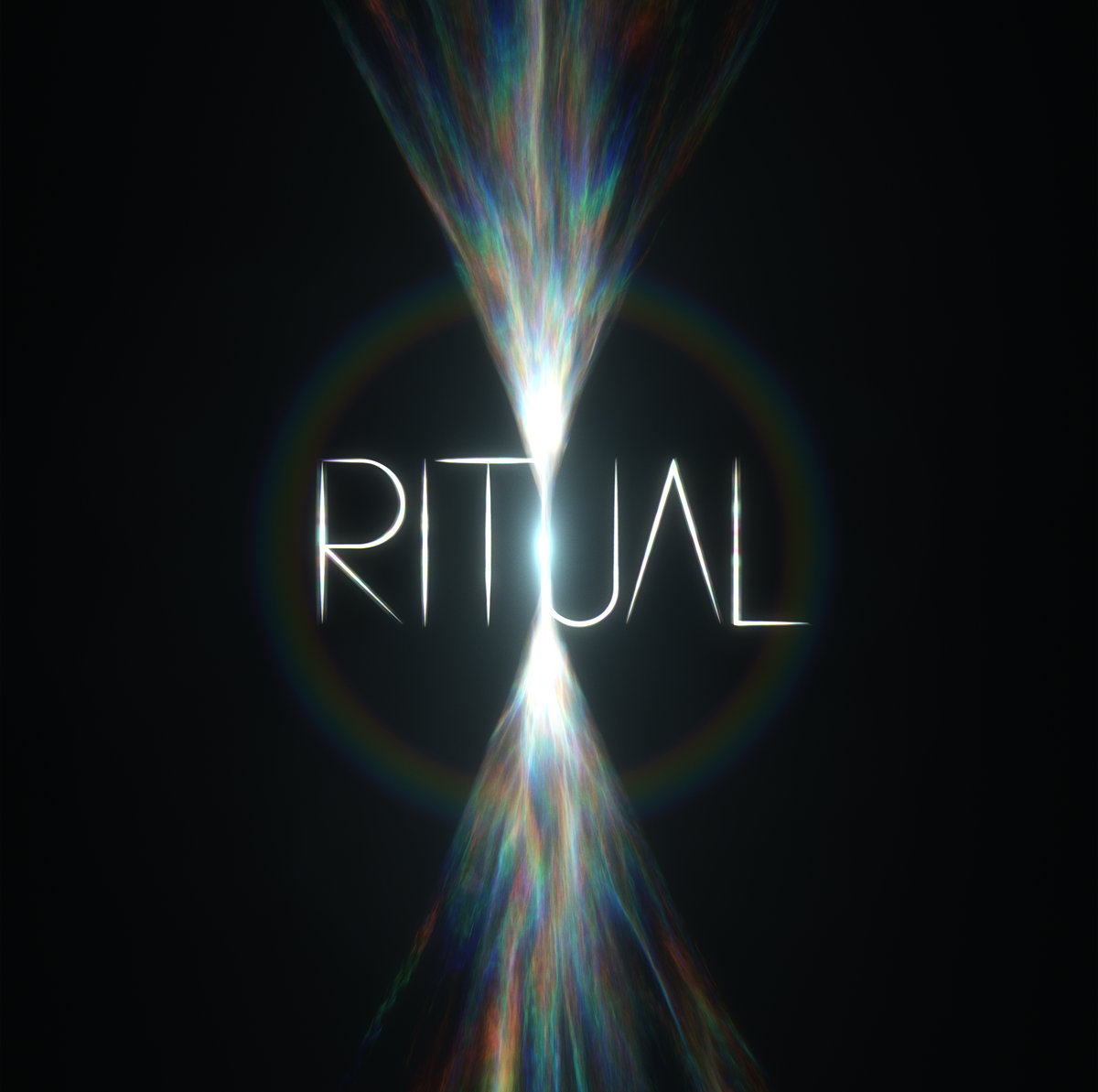
Switched On – Jon Hopkins – RITUAL (Domino)

by Ben Hogwood

What’s the story?

RITUAL, the latest from the ever-ambitious Jon Hopkins, is described as ‘a 41-minute electronic symphony built from cavernous subs, hypnotic drumming and transcendent melodic interplay’.

The project was conceived in 2022, when Hopkins received a commission for London’s Dreamachine experience. He wrote a shorter piece that became the cell from which RITUAL grew, with the help of collaborators Vylana, 7RAYS, Ishq, Clark, Emma Smith, Daisy Vatalaro and Cherif Hashizume.

What’s the music like?

RITUAL is a compelling piece of work – and a mindful treat. Best experienced in a single sitting, it grows from a small cell, a single pitch of ‘G’ – and a very similar opening to that of friend Brian Eno’s Reflection album.

Soon the differences become more pronounced, and Hopkins gathers the forces at his disposal – wordless voices, sonorous bass, slow moving drones at both ends of the audible scale, and rising energy levels, such as on the palace / illusion section, where a steady throb emanates from the bass drum.

The music expands still further, reaching its ultimate apex on solar goddess return, where the bass is joined by a bold treble and a rush of white noise, like walking outside and standing under a starry sky. Soon the bottom drops out of the sound, the listener left suspended through dissolution, before nothing is lost offers consolation through its piano loop.

Does it all work?

It does – thanks to a firm grip on the structure, Hopkins allowing the music to move at a natural pace.

Is it recommended?

It is. Jon Hopkins is becoming a very impressive long form composer, his credentials surely leading him towards a full-blown orchestral piece before long, bigger even than the music heard in his BBC Proms concert in 2023. RITUAL works both as a serious piece of keenly structured music, and as a musical mind cleanser. A very fine piece of work.

For fans of… Ólafur Arnalds, Jóhann Jóhannsson, A Winged Victory For The Sullen, Max Richter

Listen & Buy

Published post no.2,295 – Sunday 8 September 2024

Arcana at the Proms – Prom 62: Bavarian Radio Symphony Orchestra / Sir Simon Rattle – Mahler: Symphony no.6

Mahler Symphony no.6 in A minor (1903-04)

Bavarian Radio Symphony Orchestra / Sir Simon Rattle

Royal Albert Hall, London
Friday 6 September 2024

reviewed by Ben Hogwood Photos (c) Chris Christodoulou (taken from the previous night’s Prom)

This was Sir Simon Rattle‘s fifteenth encounter with the music of Gustav Mahler at the BBC Proms – and a third outing under his baton for the Sixth Symphony, which he first conducted in charge of the National Youth Orchestra of Great Britain 40 years ago.

This time he was visiting, having returned to Germany to take charge of the Bavarian Radio Symphony Orchestra, a feeling for the concertgoers akin to welcoming a distant relative and hearing about their latest job. The Munich ensemble have formidable Mahler credentials, no doubt introduced by Eugen Jochum from their founding in 1949 but notably honed by Rafael Kubelík, with whom they recorded all the symphonies for Deutsche Grammophon. This account of the Sixth proved them to be the ideal foil for Rattle, the Liverpudlian welcomed with great cheers around the hall.

Sir Simon knows his Mahler better than arguably any other living conductor, and the breadth and depth he brought to his interpretation was breathtaking. So too was the sheer audible spectrum, for which we have to thank Mahler, for this is one of those works that has simply everything, from the tiniest murmur from bass strings to the thunderous hammer strokes of the finale. Some way between that lies the tender theme he wrote for his wife Alma, a glowing light in the first movement under the tender caress of its beautiful wind choir. Around this and in the last movement were fleeting glimmers of sunshine from the cowbells, an unusual addition to the percussion section that charmed from their offstage position, evoking the open meadows but with shivers of cold wind from the rest of the orchestra, outlines icily drawn by strings and brass.

These moments were welcome respite from the tumult of Mahler’s marching music, obsessively hammered home in the fast movements, the orchestra turning this way and that at quick speed. The marching music, so virulent in the first movement, quickly develops a sour taste, and Rattle was alive to that in the scherzo – placed third. This is a time-honoured practice for him, in accordance with Mahler’s order of performance when conducting but not his initial order of composition. The controversy continues to follow the work around, and although many (this author included) prefer the scherzo placed second – ratcheting up the tension – Rattle’s shaping of the piece overall made his own choice a convincing one.

The orchestra were simply stunning. The strings – rarely given due credit in big symphonic performances such as this – were united beyond criticism, the violins in remarkable unison – and particularly beautiful in the serene opening to a magical slow movement. Brass were also as one in their clarion calls, but turned vulgar when they needed to. The wind section was beautifully shaped and coloured, with an appropriately plaintive oboe solo in the trio section of the scherzo. Underpinning the performance were the rolling timpani, the thunder to the lightning strikes of the percussion, whose power was simply brutal at times, The hammer blows, struck twice in the finale, were terrifying strokes of fate and delivered with appropriately cold theatre.

This was a performance that will stick in the memory for years, one from which my ears are still ringing. Mahler’s ghastly premonitions of later existence were brought to life in shocking technicolour, though Rattle revelled at the same time in its beautiful evocations of nature. These were ultimately swept aside, with red-blooded highs and cold-blooded lows, all blended into the same intoxicating musical cocktail. For sheer emotional power, this symphony – and this performance – had it all.

You can listen to the Bavarian Radio Symphony Orchestra and Sir Simon Rattle in their recent live recording of the Sixth symphony below:

Published post no.2,294 – Saturday 7 September 2024

Switched On – Tycho – Infinite Health (Ninja Tune)

by Ben Hogwood

What’s the story?

San Franciscan producer Scott Hansen returns to his Tycho alias for a first long player since 2020’s Simulcast.

The aim this time around was, in his words, “about creating a space for healing and reflection, a mantra for spiritual, emotional, and physical healing. At the end of the day, all we really have is our health – both physical and mental – and we wish infinite health to our family and friends. So in those ways, infinite health is a salutation and an imperative.”

The synths and samplers still form the basis for the Tycho sound, but Hansen has looked to use acoustic topping in creating an individual sound, helped by regular collaborators Zac Brown (guitar), Rory O’Connor (drums) and producer Chris Taylor.

What’s the music like?

Tycho have always made beautiful sounds that somehow capture the wide expanse and warmth of their Californian home – and Infinite Health is no different.

This is an upbeat album, full of energizing, positive grooves and laden with hooks. Hansen’s breezy textures, helped by Grizzly Bear’s Taylor, are a treat, especially on their own favourite, the single Phantom:

The punchy groove they achieve here is used to good effect elsewhere, with breaks successfully employed alongside springy, four to the floor rhythm tracks. Restraint is a dreamy reverie, as is the lovely Green, dressed with earthy drums, while Devices and DX Odyssey are more of the electro-disco school.

For this author the best track is Totem, a really catchy acoustic-led number that is fertile in its invention and packs a good groove.

Does it all work?

It does, comfortably – with Infinite Health having all the positive energy and breezy textures of previous releases, while facing firmly forward in its musical outlook.

Is it recommended?

It is – Tycho bring a burst of late summer sunshine to the party, dressed in production you want to dive into. First class chillout music.

For fans of… Ulrich Schnauss, Explosions In The Sky, Rival Consoles, Minotaur Shock

Listen & Buy

Published post no.2,293 – Friday 6 September 2024

Arcana at the Proms – Prom 57 – Ultra Lounge: Henry Mancini and Beyond

For full repertoire list, see the bottom of this article

Monica Mancini, Rachel John, Oliver Tompsett (vocals), Freddie Benedict, Kevin Fox, Johanna Marshall, Liz Swain (backing vocals), BBC Concert Orchestra / Edwin Outwater

Royal Albert Hall, London
Monday 2 September 2024

reviewed by Richard Whitehouse Photo (c) Andy Paradise

Among a plethora of centenary commemorations for composers classical or otherwise, it was good to see that of Henry Mancini marked with a Prom that featured a decent selection of his music next to that of relative contemporaries in this programme of unalloyed ‘easy listening’. The period 1955-75 was an era when such music not only flourished but was taken seriously by moguls in the music industry, witnessed by the sheer number of in-house orchestras with ‘their’ conductors who secured reputations comparable to those of their pop contemporaries.

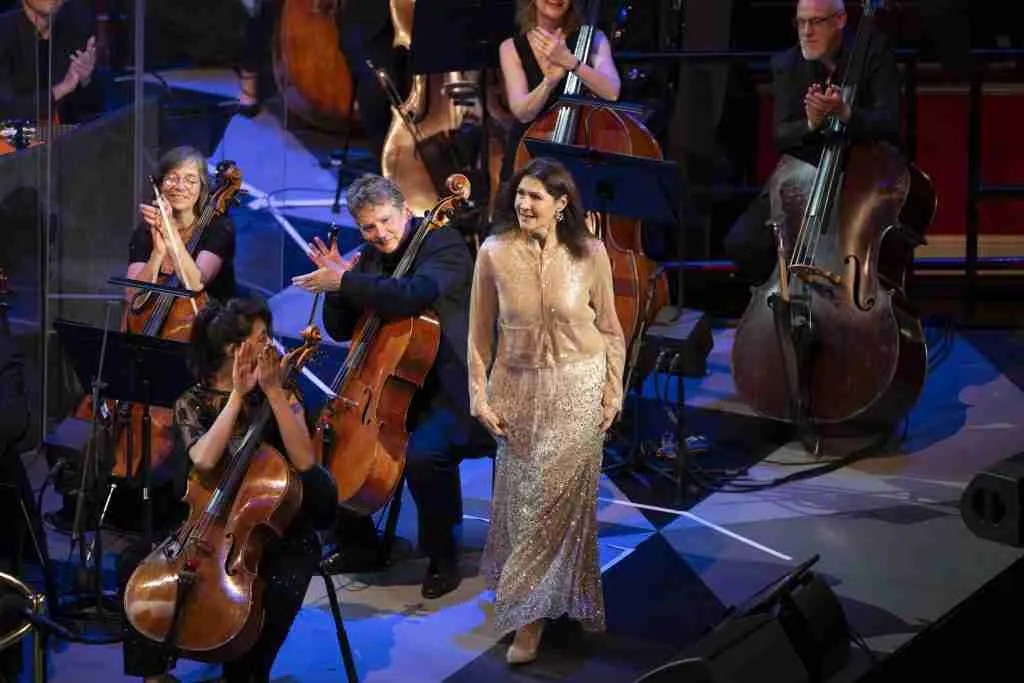
The BBC Concert Orchestra has long flown the flag for this music, as has its principal guest conductor Edwin Outwater. They launched this evening in fine style with the main title from Mancini’s Charade, its ominous allure complemented by the panache of the theme from Peter Gunn then the slinky humour of Baby Elephant Walk; a mellifluous Days of Wine and Roses bringing the first appearance from tonight’s quartet of backing vocalists. The evergreen Moon River had an elegant cameo by the composer’s daughter Monica Mancini (above), its pathos set in relief by the enigmatic theme from The Pink Panther then irresistible sleaziness of Harold Arlen’s Blues in the Night. More Mancini followed with the driven percussive of Rain Drops in Rio then sultry Lujon with its eponymous percussion instrument. Quincy Jones hit an early high with his ricocheting Soul Bossa Nova, as also Juan García Esquivel with his catchy Mucha Muchacha and Les Baxter in his stealthy Quiet Village. Burt Bacharach’s bittersweet Alfie was graced with an eloquent vocal by Rachel John, then Nicholas RoubanisMisirlou evocatively brought up the interval.

The late Laurie Johnson created TV gold with the suave tones of The Shake, theme from The Avengers, as did Morton Stevens with his high-octane Hawaii Five-O. Rachel John sounded a shade coy in Bacharach’s The Look of Love (memorably covered by Scott Walker), his genial Casino Royale hitting the spot as did Julius Wechter’s breezy Spanish Flea. The vocal quartet added ambivalence to Bobby Scott / Ric Marlow co-write A Taste of Honey then ethereality to Michel Legrand’s The Windmills of Your Mind or a neat line in scat to Mancini’s Party Poop. If Oliver Tompsett undersold the sassiness of Sid Ramin’s Music to Watch Girls By, there was no mistaking the faux-chinoiserie of Mancini’s Hong Kong Fireworks and suavity of Baxter’s Shooting Star. Rachel John made Bacharach’s This Guy’s in Love With You a candidate for the most perfect pop-song, with Baxter’s Saturday Night on Saturn more inane in context. Not so Esquivel’s Whatchamacallit with its quirky Ondioline (more stylophone then theremin), then Oliver Tompsett pointed the double-entendre of Bacharach’s What’s New Pussycat? before a gyrating take on Les Reed’s / Gordon Mills’ It’s Not Unusual, indelibly linked with Tom Jones.

It would have been perfectly feasible to assemble a evening devoted to Mancini by taking in his edgier film-scores to such 1950s classics as The Creature of the Black Lagoon and Touch of Evil, but making this a nostalgia-fest doubtless commended itself to a near-capacity house – not that you had to be over a certain age to enjoy what was on offer or to have seen the TV series Animal Magic whose theme-tune, Johnson’s Las Vegas, made an effervescent encore.

List of repertoire performed:

Mancini (arr. Stanley Black): Charade – Main Title (1963)
Mancini: Peter Gunn – Theme (1958)
Mancini (arr. Black): Baby Elephant Walk (1961)
Mancini: Days of Wine and Roses (1962)*d
Mancini: Moon River (1961)a
Mancini (arr. Gavin Sutherland): The Pink Panther – Theme (1963)*
Arlen (arr. Fiona Brice): Blues in the Night (1941)*
Mancini (arr. George Moore): Rain Drops in Rio (1961)
Mancini: Lujon (1961)
Jones (arr. Alasdair Malloy): Soul Bossa Nova (1962)*
Esquivel (arr. Sam Gale): Mucha Muchacha (1962)d
Baxter (arr. Moore): Quiet Village (1951)
Bacharach (arr. Les Reed): Alfie (1966)b
Roubanis (arr. Callum Au): Misirlou (1941)

Johnson (arr. Mike Townend): The Shake (1965)
Stevens (arr. Malloy): Hawaii Five-O (1968)
Bacharach (arr. Richard Balcombe): The Look of Love (1967)b
Bacharach (arr. Balcome): Casino Royale (1967)
Wechter (arr. Malloy): Spanish Flea (1965)
Scott/Marlow (arr. Brice): A Taste of Honey (1960)d
Legrand (arr. Balcombe): The Windmills of Your Mind (1968)d
Ramin (arr. Balcombe): Music to Watch Girls By (1967)c
Mancini (arr. Moore): Party Poop (1968)d
Mancini (arr. Black): Hong Kong Fireworks (1978)
Baxter (arr. Moore): Shooting Star (1968)
Bacharach (arr. Balcombe): This Guy’s in Love With You (1968)b
Baxter (arr. Moore): Saturday Night on Saturn (1957)
Esquivel (arr. Gale): Whatchamacallit (1959)
Bacharach (arr. Balcombe): What’s New Pussycat (1965)c
Reed/Mills (arr. Balcombe): It’s Not Unusual (1965)c

(All titles Proms premieres except *)

aMonica Mancini, bRachel John, cOliver Tompsett (vocals), dFreddie Benedict, Kevin Fox, Johanna Marshall, Liz Swain (backing vocals), BBC Concert Orchestra / Edwin Outwater

You can get details about this year’s season at the BBC Proms website – and you can click on the names to read more about the BBC Concert Orchestra and conductor Edwin Outwater

Published post no.2,292 – Thursday 5 September 2024