Switched On: Saloli – Canyon (Kranky)

by Ben Hogwood

What’s the story?

It is relatively rare for electronic albums to be performed ‘as live’ – but that is what Saloli achieves with Canyon. Saloli – the Cherokee word for ‘squirrel’ – is the alias under which Portland pianist and instrumentalist Mary Sutton operates,

The whole album is performed on a Sequential Circuits MultiTrak synthesizer, routed through a delay pedal to add the spatial quality of ‘echoing off canyon walls’.

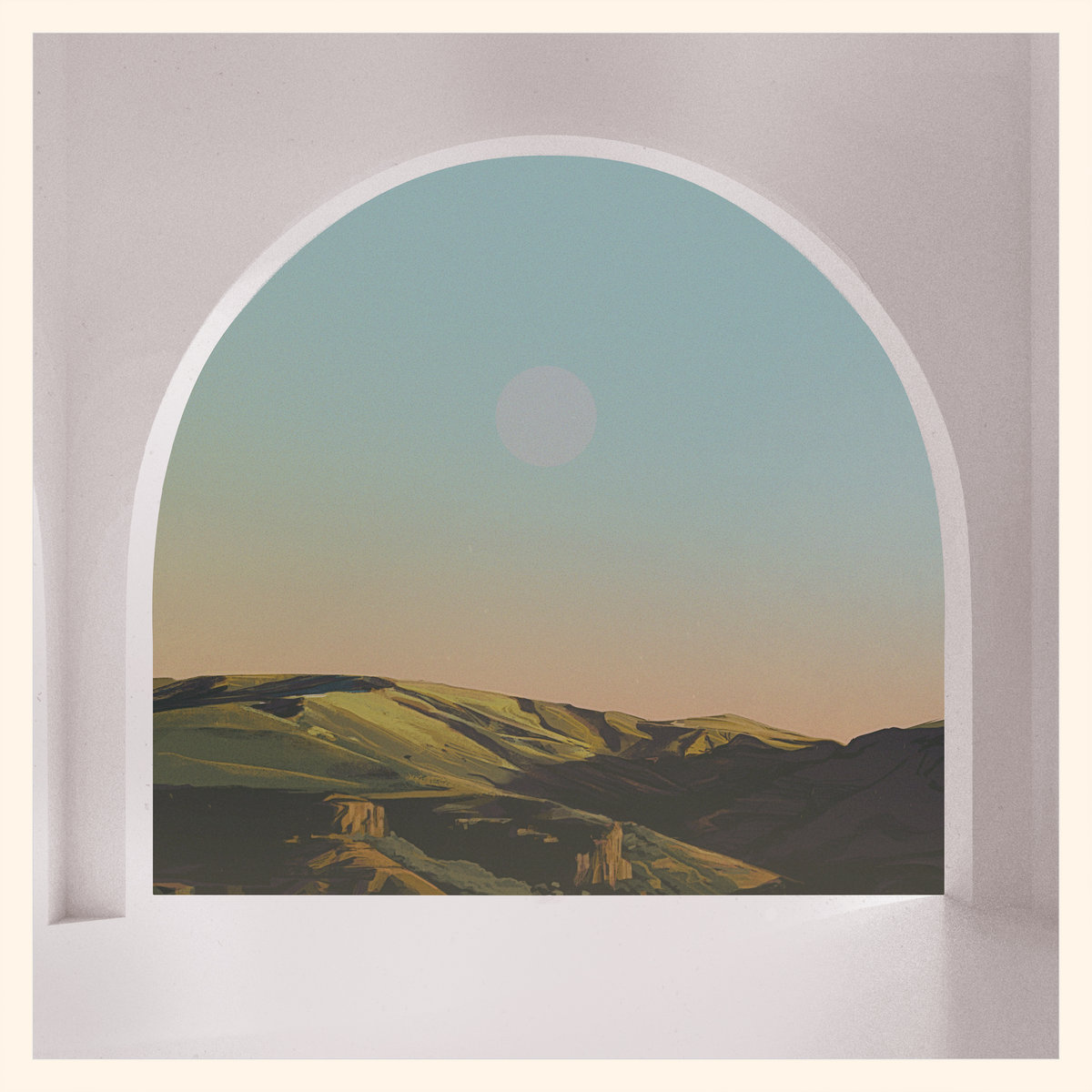
There is a concept powering Canyon, too, the album evoking ‘a day in the life of a bear in a canyon in the Smoky Mountains’. As the press release explains, ‘in Cherokee teachings, humans and animals are considered to have no essential difference – originally, all the creatures of the earth lived together in harmony.’ The album’s cover art is by Sutton’s father Jerry, its yellow lettering using Cherokee Syllabary and spelling ‘Yona’, which means ‘bear’.

What’s the music like?

Strong in character. Saloli’s writing is very ‘in the moment’, creating portraits full of colour and musical content.

Waterfall shimmers and glistens in the light, the melodic patterns of the synthesizer sustained as they bounce around the sonic picture. At this point Saloli’s music resembles earlier Philip Glass, both in its melodic language and its pleasingly rough timbre. This is clearly music evoking the outside, and is all the better for its untampered state.

Lily Pad is much more fragile, the live setting capturing the surface tension of the water on which it sits, while Snake is more obviously right and left hand, as arpeggios in the left complement higher melodies in the right.

The sonic picture changes strikingly for Yona, the playful bear portrait, whose lack of reverberation makes this feel a close-up, indoor encounter. Panning out again we hear the softer Silhouette, whose vibrato casts a spell and draws parallels with Wendy Carlos.

Full Moon brings a pipe-organ sonority to Saloli’s music, wide-eyed and brightly lit, the echoes used again to playful effect. The slightly jaunty mood continues to the elusive Nighthawk, the left hand on the keyboard establishing a Habañera-type rhythm while trying to pin down an elusive right hand melody.

Saloli ends with the exhilarating Sunrise, its rippling arpeggios telling of the light forcing its way upwards out of the darkness and into the day. Its evocative growth from subtle flickers to stabs of daylight shows Sutton’s skill at painting pictures in sound.

Does it all work?

It does. The intimate portrait of the bear is slightly curious, given the animal’s size, but it is typical of the personality running through Sutton’s music. This is electronic music with a beating heart, for sure.

Is it recommended?

It is. Saloli has made an album of instrumental tone pictures with lasting character and quality.

Listen

Buy

BBC Proms 2023 – Stevie Wonder’s ‘Innervisions’ with Jules Buckley and guests

Prom 48 – Stevie Wonder‘s Innervisions (1973)

Too High (arr. Rob Taggart)
Visions (arr. Callum Au)
Living for the City (arr. Jochen Neuffer)
Golden Lady (arr. Neuffer )
All in Love is Fair (arr. Tommy Laurence)
Superwoman (Where Were You When I Needed You) (Music of my Mind, arr. Neuffer)
They Won’t Go When I Go (arr. Tim Davies)a
Jesus Children of America (arr. Davies)
He’s Misstra Know-It-Allb
Creepin’ (Fulfillingness’ First Finale, arr. Taggart)c
Something Out of Blue (Where I’m Coming From, arr. Davies)c
Higher Ground (arr. Neuffer)
Never Dreamed You’d Leave in Summer (Where I’m Coming From, arr. Davies)d
Don’t You Worry ’bout a Thing (arr. Tom Richards)d
Superstition (Talking Book)
If It’s Magic (Songs in the Key of Life)

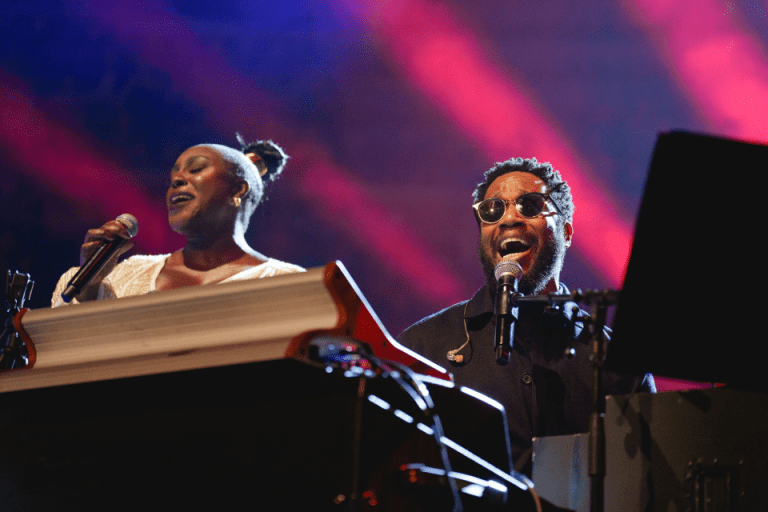
Cory Henry (vocals / keyboards), aLaura Mvula, bLianne Le Havas, cVula Malinga, dSheléa (vocals), Vula’s Chorale, Jules Buckley Orchestra / Jules Buckley

Royal Albert Hall, London
Monday 21 August 2023

by Richard Whitehouse photos by Andy Paradise / BBC

From Nina Simone then Aretha Franklin to Stevie Wonder – these ‘tributes’ masterminded by Jules Buckley have become as much a Proms staple as were John Wilson’s stage-and-screen projects, with the 50th anniversary of Innervisions too notable an occasion to be passed over.

Now routinely hailed as one of the greatest albums, Innervisions was not always held in such esteem – being considered strong in atmosphere if short on hooks, which is rather to miss the point of its nine numbers merging into a seamless continuity broken only with the side-break of the LP. It duly elides between songs of love, self-awareness and social commentary with a mastery abetted by Wonder’s ingenuity as a musician and his skill as a producer; indeed, few albums, from what was to be the heyday for production, can rival its tangible space or depth.

Wonder’s distinctive if by no means inimitable voice makes his songs ideal for covering and, in Cory Henry, have a consummate keyboardist and eloquent singer able to encompass their conceptual and emotional range. Hence the dextrous organ intro’ then big-band stylings that underpinned the breezy ambivalence of Too High, or soulful communing of Visions with its textural enhancements from flute and electric guitar. It may have lacked the original’s urban ambience, but Living for the City emerged as an anthemic parable of racial injustice; then the amorous overtones of Golden Lady were enhanced by its shimmering slow shuffle.

An edgy vocal complemented the insistent groove of Higher Ground with its electronic and synthesized sounds which are no less intriguing today, while the Christian confessional that is Jesus Christ of America exuded piety but no undue emoting. The moodily reflective aura of All in Love is Fair benefitted from that deft backdrop of strings, as did the Latino-inflected jive of Don’t You Worry ’bout a Thing as here made for an irresistibly upbeat ending to the album itself. Typical of Wonder, though, that he should have concluded the original’s playing order with the snide political diatribe of He’s Misstra Know-It-All and which can still punch like a velveted fist when rendered, as here, with the allure of guest vocalist Lianne La Havas.

This begs the question as to whether such a classic album is best heard as an integral unity or interspersed, as was its second side, with other items – which latter course enabled a capacity house to sample each of those albums from Wonder’s ‘golden age’. Thus, the composite that is Superwoman (Where Were You When I Needed You), its interplay of easy grooves with fatalistic thoughts ably rendered by Henry, but the pensively resigned They Won’t Go When I Go felt coarsened and sentimentalized by histrionics from guest vocalist Laura Mvula. Not so the darkly insinuating Creepin’ with superb lead from backing vocalist Vula Malinga, who duetted with Henry on the burnished Something out of the Blue. A star of last year’s Aretha tribute, Sheléa handled the soaring pathos of Never Dreamed You’d Leave in Summer with aplomb, then all reassembled for a rousing send-off in the inevitable guise of Superstition.

It could have ended there, but Henry returned for a rendition of If It’s Magic in its original (and superior) version – confirmation that Stevie’s output will long remain a thing of Wonder.

For more on the 2023 BBC Proms, visit the festival’s website at the BBC. Click on the names for more information on Cory Henry, Laura Mvula, Lianne La Havas, Vula Malinga, Sheléa, Vula’s Chorale, Jules Buckley and Stevie Wonder himself

BBC Proms 2023 – Isabelle Faust, Alexander Melnikov, Les Siècles / François-Xavier Roth – Ligeti & Mozart

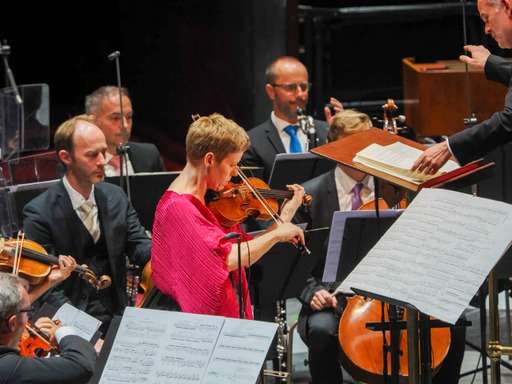
Prom 47 – Isabelle Faust (violin), Alexander Melnikov (fortepiano), Les Siècles / François-Xavier Roth

Ligeti Concert Românesc (1951)
Ligeti Violin Concerto (1989-93)
Mozart Piano Concerto No. 23 in A, K488 (1786)
Mozart Symphony No. 41 in C, K551, ‘Jupiter (1788)

Royal Albert Hall, London
Sunday 20 August 2023

by Richard Whitehouse photos by Sisi Burn / BBC

A major step in the evolution of musical ‘authenticity’ or vanity project of its artistic director? Celebrating its 20th anniversary, the Paris-based Les Siècles and François-Xavier Roth tonight made their third appearance at the Proms in a programme divided between Ligeti and Mozart.

Long in limbo as with most works of Ligeti’s early years, Concert Românesc now ranks as its composer’s primary crowd-pleaser – a ‘concerto for orchestra’ compact yet entertaining. Roth drew winsome charm from its initial Andantino and no mean impetus from its scherzo, before an Adagio whose dialogue of two horns (one high in the gallery) prefigures those intonational experiments three decades on. The finale did not lack verve, but anyone having heard Jonathan Nott give this piece for a Proms encore will recall just how much more scintillating it can be.

It may have had a long gestation, but Ligeti’s Violin Concerto is now established as the most recent such piece to have entered the repertoire. Technically assured but never merely showy, Isabelle Faust is a fine exponent, and it was not her fault if a lengthy platform reset made for a restive audience response in the teasingly understated Praeludium or plangent fervency of Aria, Hoquetus, Chorale which is one of the composer’s most potent inspirations. Diversely yet modestly scored, this work needs to be projected for its emotional impact to be felt and a certain bemusement met its coruscating Intermezzo and anguished Passacaglia, but not its engaging Appassionato in which Faust’s methodical cadenza fitted seamlessly into context. As, also, did the sparse Andante of Erwin Schulhoff’s Solo Violin Sonata given as an encore.

There was a similar sense of ends not always equating with means in Mozart’s Twenty-Third Piano Concerto after the interval. Playing a (Graf?) fortepiano from deep within the orchestra, Alexander Melnikov summoned playing of admirable dynamic subtlety and emotional poise – notably an Adagio whose bittersweet fatalism was consummately rendered. Just how much detail and articulation could be heard in the farther reaches of this acoustic was uncertain, but the rapport between soloist and orchestra in a sparkling final Allegro could hardly be gainsaid.

Playing to period-pitch in the second half (just occasionally offset by vagaries of intonation), Les Siècles came into its collective own with an engrossing account of Mozart’s Forty-First Symphony, its Jupiterian connotations evident from the outset of an opening Allegro whose distinction between (relative) dynamism and stasis was thrown into relief with Roth’s use of pause for expressive punctuation. Best here were an Andante whose muted while often dense textures were precisely articulated, then a Menuetto whose sweeping gait found contrast in a quizzical trio whose closing phrase was pointedly curtailed. Not that Roth had other than the measure of the finale, fully integrating its thematic unity into a powerfully controlled overall structure, but its underlying progress felt just a shade dogged in the light of what preceded it. That said, there was no lack of impetus when, after the longest of those pauses, Roth led his forces through the magisterial coda; duly setting the seal on a programme that played to this orchestra’s strengths if not always having been designed with the Royal Albert Hall in mind.

For more on the 2023 BBC Proms, visit the festival’s website at the BBC. Meanwhile click on the names for more information on artists Les Siècles, conductor François-Xavier Roth, violinist Isabelle Faust and pianist Alexander Melnikov. You can discover more about Ligeti at this dedicated website

Switched On: Helios – Espera (Ghostly International)

by Ben Hogwood

What’s the story?

Keith Kenniff releases his third album as Helios on Ghostly International, a label he joined in 2018. Kenniff, though, has been making music under this alias since 2004 – a complement to his other active persona of Goldmund. Kenniff, who also explores poppier climbs with partner Hollie as Mint Julep, is a prolific composer who likes to record at night.

Espera took on its form in this way, using layers of guitar, piano and percussion and concentrating on texture and colour just as much as melody and rhythm.

What’s the music like?

In a word, lush. Espera presents wide open vistas, sunny outlooks, a light wind in the branches, an ebbing tide – all of those ambient things that we look for on holiday, presented in audio form. He presents those textures with subtly catchy hooks and melodies, the sounds warm to the touch and the harmonies easy on the ear.

From the moment Fainted Fog floats in the mood is set, and you can practically feel the sand in your toes as Intertwine takes shape. As well as pure relaxation, Kenniff’s music as Helios does have an emotional dimension, as the excellent later cuts Well Within and Rounds show. The latter has some softly voiced melodic loops linked together rather beautifully.

Meanwhile the likes of Impossible Valleys present a calming meander, outdoors in nature with not a care in the world.

Does it all work?

It does indeed, especially in the sunshine!

Is it recommended?

Yes. There are no surprises here, but that’s because Helios knows exactly what to do to set the mood. The mood here being relaxation and hot weather bliss.

Listen

Buy

New music – Modern Nature

Here’s a calming video for a Saturday morning – the visual accompaniment to new music from Jack Cooper’s project Modern Nature. Enjoy Cascade, the second cut from forthcoming album No Fixed Point In Space on Bella Union next month.

Jack Cooper had this to say about the single: “Cascade is a link between the abstract colours of this record and the rhythms of the last one Island Of Noise. The imagery is an attempt to convey how overwhelming the world can be when you make the time to really observe it. Beautiful, intricate and infinite. I was honoured to be able to sing this round a microphone with the great Julie Tippetts… something I’ll never forget.”