Yesterday saw the start of the biggest festival in British classical music, the BBC Proms – broadcast live from the Royal Albert Hall.
Dalia Stasevska, guest conductor of the BBC Symphony Orchestra, led passionate Nordic music from Sibelius (the choral version of Finlandia with the BBC Singersand BBC Symphony Chorus, and a new arrangement of Snöfrid, narrated by actress Lesley Manville) and Grieg, whose evergreen Piano Concerto was given a new lick of paint by a wonderful interpretation from Paul Lewis.
Also featured was a Sibelian new work, Let There Be Light, from Ukrainian composer Bohdana Frolyak – a composer definitely worth seeking out in this evidence – and the concert closed with Britten‘s Young Person’s Guide To The Orchestra, with its triumphant fugal finale.
A recent survey by the BBC Music Magazine invited 167 performers and composers to choose their five favourite British composers – resulting in a very interesting feature titled The 25 Greatest British Composers of all time.
The results were perhaps inevitable, with a top five comprising (not in order to avoid spoilers!) Elgar, Purcell, Britten, Vaughan Williams and Byrd.
Accompanying this was a gracious paragraph where the magazine included ‘some surprising non-appearances’ – headed by Sullivan, Finzi, Delius and Bax.
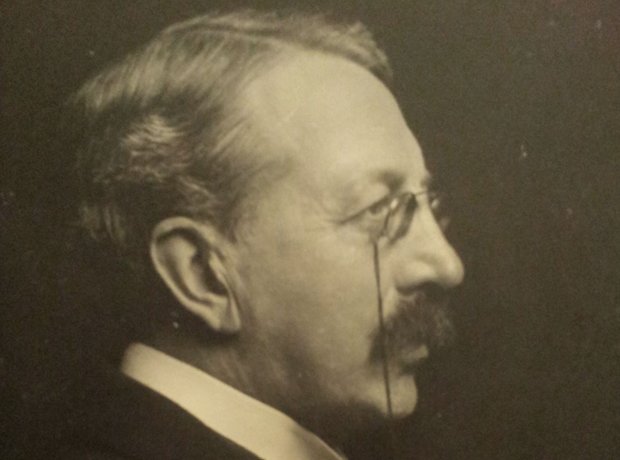
However, there were no mentions – at all – for the music of Charles Villiers Stanford. This might have been on account of his birth in Ireland, but Stanford is regarded as one of the key figures in the evolution of British music as we know it today. While none but his fiercest protagonists would expect him to make a top five, I thought it would be nice to recognise his compositional craft, so below are two of his finest works, the heroic Piano Concerto no.2 and the bright sunshine of the Symphony no.6:
Tiny Leaves is the name under which mult-instrumentalist and composer Joel Pike operates. Having toured the US recently with Julianna Barwick, he has worked closely with nature, writing music for the RSPB compilation Simmerdim: Curlew Sounds.
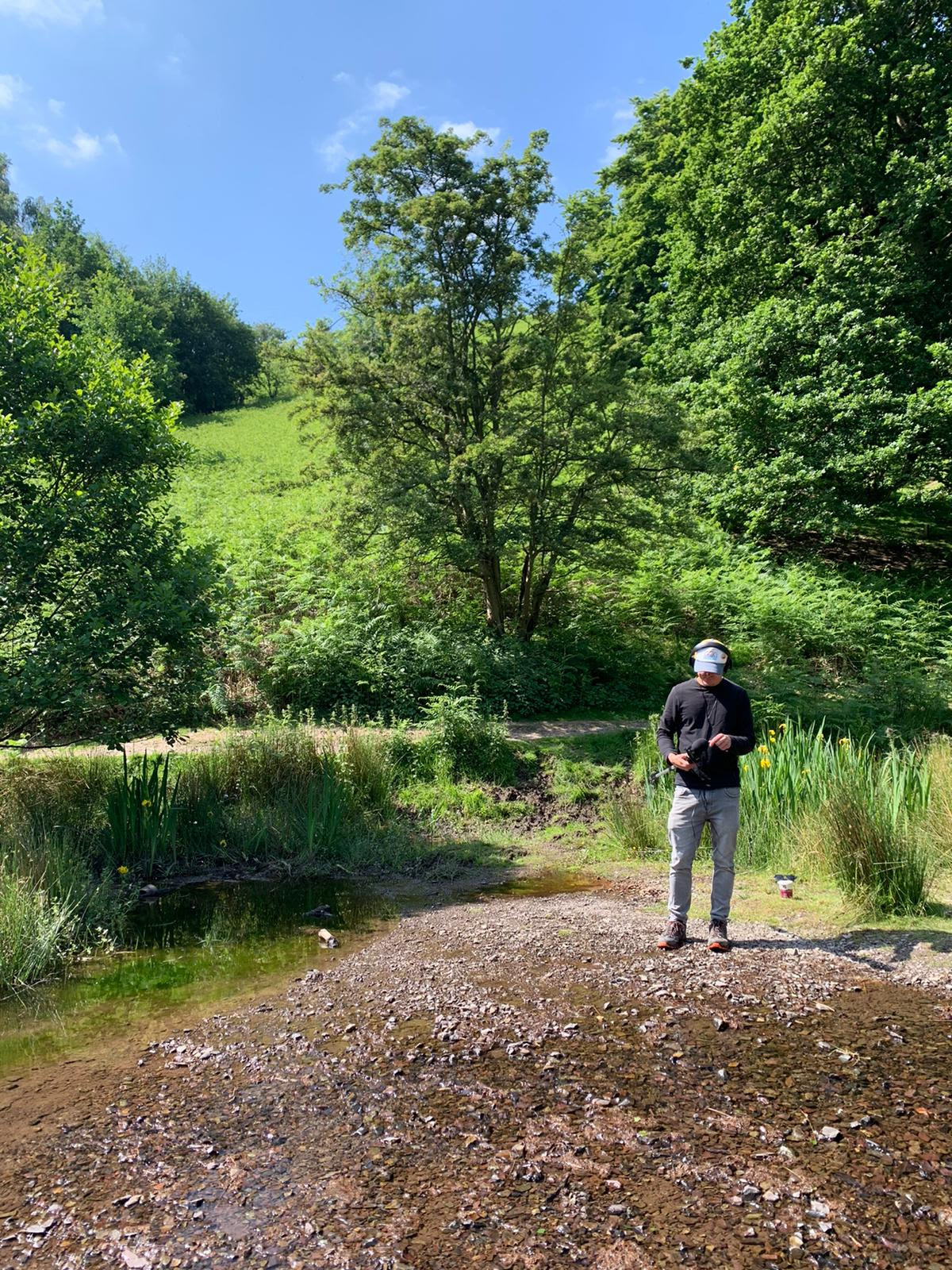
Mynd is his fifth album, and is intended as a portrait of the Shropshire hills and valleys near his home. While strings and piano are used, arguably the most important instruments are those of the field recordings Pike has sourced from his residency with the National Trust at The Long Mynd, an Area of Outstanding Natural Beauty.
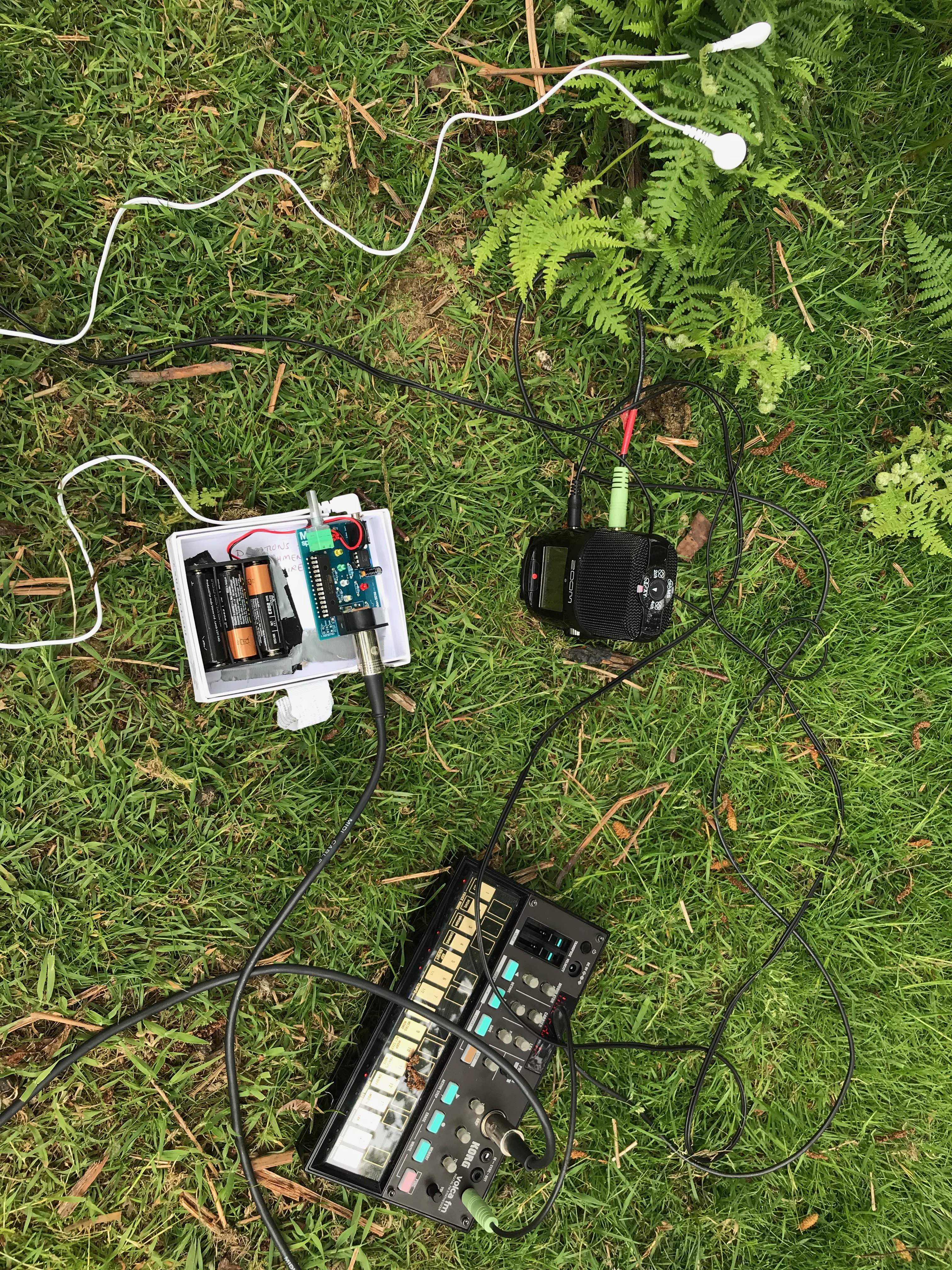
With that area very much in mind, Pike looks to reflect its beauty in sound. In this he is mindful of the pandemic, which brought home the fragility of nature but also the sounds it makes when you listen closely. Yet Pike has been listening more closely than anybody, using a biodata kit to sample the pulses of trees, by way of electrodes attached to their leaves.
What’sthemusiclike?
To get the full benefit of Mynd, an immersive approach is best. Sit in a still room and listen through headphones or in the middle of a stereo picture, and you will get a full sense of the perspective and beauty of The Long Mynd. This is because Pike makes nature the soloist, but dresses it with music of attractive, verdant colouring and consonant harmonic and melodic cells that speak of growth and flourishing life.
This is of course in contrast to what we know of the environmental problems through the world, but it is so heartening to have a celebration of nature’s resolve in this way. Lower Valley, while it pipes through the chatter of people in the middle distance, is taken over by a burrowing violin line and silvery harmonics (beautifully played by Faith Brackenbury) with distant birdsong.
Pike makes rather beautiful use of mottled piano lines, acting as the basis for more fluttery sounds up top from violin in Portway and With The Hollow At My Feet. By contrast Long Mynd Snow carries the chill of winter in held string harmonics and cold chimes from the piano.
The close inspection of tree sounds are fascinating. Song Of The Trees – CMV 2 has violin drones and slightly mysterious, plucked motifs along with rich morning birdsong, which move straight into the watery Ascent From New Pool Hollow. Meanwhile, Together, Alder is about the discovery that Alder trees communicate through their roots through a frequency corresponding to A3 on the piano. Naturally this appears in Pike’s mysterious response.
The unmistakeable sound of the curlew comes through in Pike’s RSPB contribution, Runner, Messenger ii, the bird’s call complemented by guitar and rounded piano chords. while Pike evokes harebells in the fluttering piano of Campanula Rotundifolia.
Does it all work?
Yes – this is an album best experienced as a whole, with the sections linking beautifully. Pike has an instinct for large-scale composition, the result being that this is really a single suite of 11 movements.
Is it recommended?
Very much so. Mynd is a beautiful antidote to our busy, technology-dominated lives, reminding us of the complex beauty of nature in a deceptively simple way. You will emerge from your encounter with this album as a calmer, lighter soul – and that’s guaranteed!
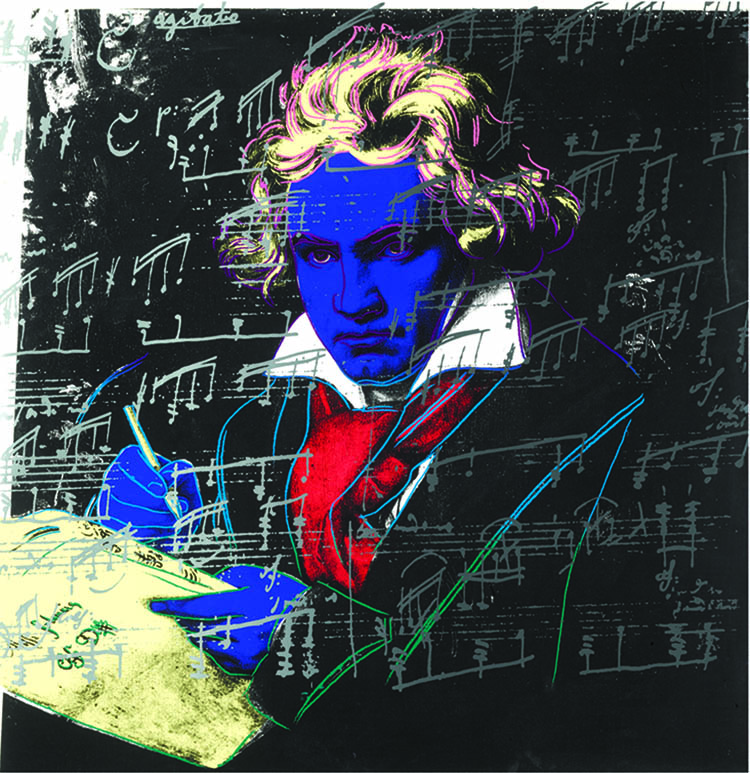
If you are a regular visitor to these pages you will (hopefully!) have noticed that Arcana’s traversal of Beethoven‘s complete works has been going at a very slow pace (i.e. it’s stopped!) So far we have listened to everything written up to and including Beethoven’s 34th birthday…which means a lot of the best music is still to come!
I wanted, then, to put this as a placeholder to reassure the throng that the project has not stopped, and that it will resume with Beethoven’s first full opera, Leonore, very shortly. Stay tuned!
Inheritance is the debut album from Palestinian-American artist Omar Ahmad. Ahmad is a multi-instrumentalist, and as the only contributor to this record his list of instruments makes impressive reading. On Bandcamp he is credited with contributions on cello, synthesizer, guitar, percussion, voice, programming, CDJ, field recordings and effects – so pretty much everything bar the kitchen sink!
Ahmad hones his talents into emotive music that provides a soundtrack for some of the bigger questions. As stated on his Bandcamp page, they are: What is a right to a land? What is the responsibility of the youth to carry forward the struggles and undertakings of their elders? How can we break the recurrence of intergenerational trauma that gives rise to the cyclical conflicts that tear away at the heart of humanity?
Ahmad does not pretend to have any answers to hand, but his wish is to provide music that grants the listener a chance to react freely, either in animation or in reflection, and to connect not just with their inner adult but with the inner child as well.
What’sthemusiclike?
Ahmad’s music rewards close inspection – but it is equally effective if the listener chooses to listen from afar, and let the overall mood wash over them.
Close up, there is a good deal going on. Fragments of melody, often fitting into the ‘pentatonic’ scale, are consistently attractive features of the music, as is the texture, with the ear often panning out for a wide-angle sonic lens. Here the field recordings, and other vocal snippets, are helpful. The start of Gesso, for instance, has middle ground voices but soon cuts to running water and a soft, held chord the listener can easily dive into.
Often there is a heat haze in Ahmad’s workings, so when the rhythm kicks in during A Little Time For Me it creates a shimmering horizon in the mind’s eye. Rhythm plays a bigger part in Sham Oasis and Lapses, both of which create dubby profiles while Ahmad bends a few samples in and out of focus. The excellent Usra generates more energy through a quicker rhythm.
There are some mind bending sonics here, too. Descended from a Wanaque Tree (Borrowed Memory) is the standout, with some bewitching timbres and playful execution that prove hypnotic on headphones.
Does it all work?
Yes, it does. Ahmad’s musical language is immediately attractive, and its cosmopolitan outlook will wind many friends, as will his sonic invention.
Is it recommended?
Yes, enthusiastically. Omar Ahmad offers something a little different, something well above the average, run of the mill. This is certainly an album to chill out with, but the rewards are ultimately far greater.




 Arcana.fm