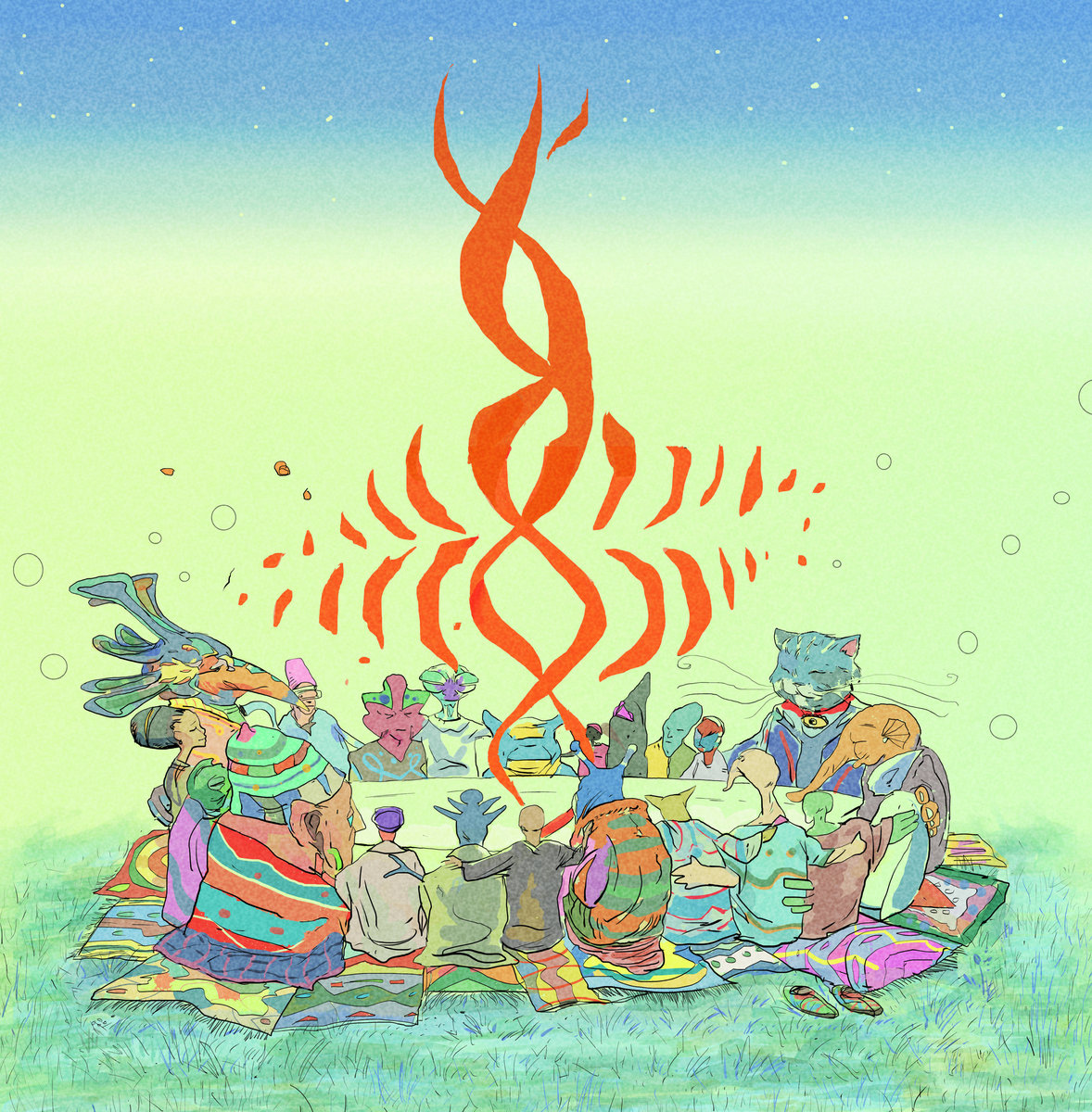
Four albums down, James Holden is showing another side to his artistry. Holden has always been closely associated with electronic music, but this instalment finds him looking to recreate what rave music was about in the early 1990s.
To do that he has in tandem a fleet of classic analogue synthesizers, and has personalized his approach with recordings of the young Holden on violin and piano.
What’s the music like?
The wordy title is a homage both to rave classics of the time but also brings to mind early Pink Floyd or 1970s Krautrock excursions. All are present in Holden’s music, though he keeps well away from derivative writing, instead bringing through riffs that are fresh, vital and energetic.
It is a big but wholly enjoyable album, one that goes back to first principles in making music for enjoyment, pure and simple. You Are In A Clearing is evidence of that, referring to some of the work Steve Hillage has done with System 7. Like Hillage, Holden gets his synths to talk, sometimes with dolphin-like keening noises, other times with soaring arpeggios.
The young Holden gets his look-in on Contains Multitudes, a longer expression of musical warmth where the violin and piano recordings complement the synths. Worlds Collide Mountains Form also uses the violin, though here it acts of a drone with a dubby bass for company. Common Land occupies similar ground, returning to the early Ibiza triumphs of 808 State for inspiration.
Does it all work?
It does. It may be a long album, but the high dimensional space does indeed realise all possibilities.
Is it recommended?
Enthusiastically. This is a joyous homage not just to early 1990s rave but also the more fantastical end of 1970s Krautrock – and yet James Holden makes the album even more than a sum of those parts. A wonderful and essential album that somehow works.
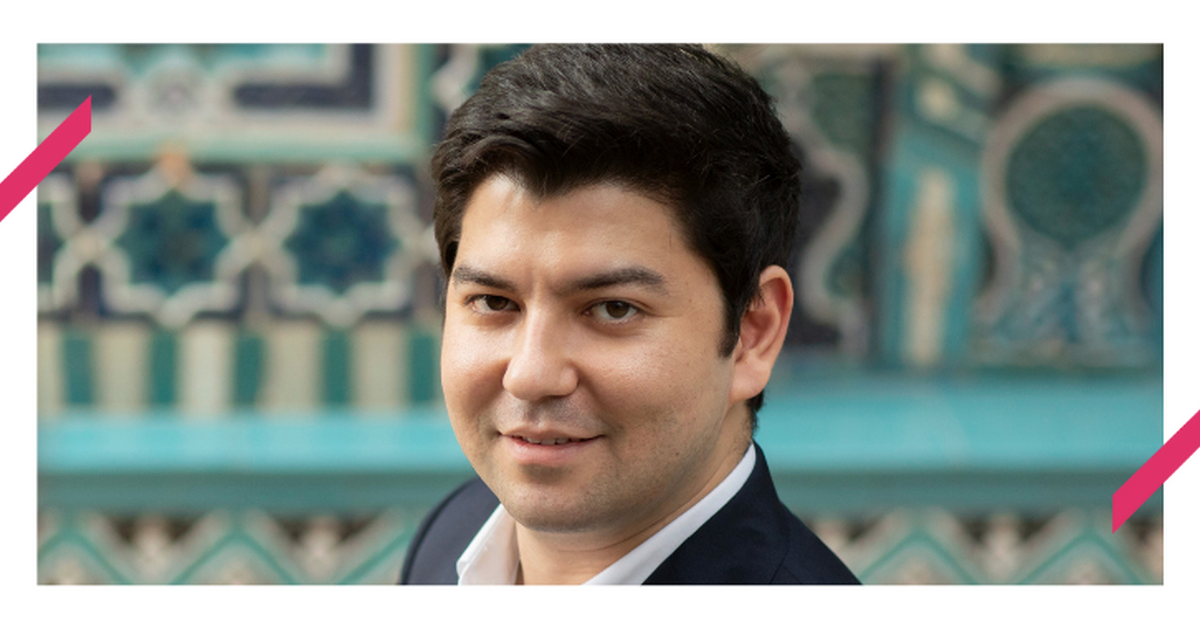
Behzod Abduraimov (piano, above), City of Birmingham Symphony Orchestra / François Leleux (below)
Brahms Academic Festival Overture Op. 80 (1880) Rachmaninoff Piano Concerto no.2 in C minor Op.18 (1900-1901) Brahms Serenade no.1 in D major Op.11 (1858-9)
Symphony Hall, Birmingham Thursday 13 April 2023
Reviewed by Richard Whitehouse
Its first concert since returning from a European tour saw the City of Birmingham Symphony Orchestra in a programme which tellingly placed Rachmaninoff’s most famous composition within the context of less often heard or uncharacteristically (?) humorous pieces by Brahms.
Cinematic and other extra-musical associations often obscure the purely musical qualities of Rachmaninoff’s Second Piano Concerto, so credit to the Uzbek pianist Behzod Abduraimov for duly underlining these in a reading full of incident and unfailingly cohesive. Among the former might be mentioned the limpid elegance of the first movement’s second theme and its improvisatory continuation before the coda, bewitching transition from the Adagio’s central scherzo back to the main melody, and those evocative interludes after the finale’s ‘big tune’ – this latter returning to cap the whole work in unforced ardour. Integration between piano and orchestra was unfailing, as too the emotional immediacy of the CBSO’s response, and who could question Abduraimov’s decision not to provide an encore after so fine a performance.
Rachmaninoff and Brahms seldom complement each other in concert, though the Academic Festival Overture provided an ideal curtain-raiser. Typically more than a potpourri of student songs (drinking or otherwise), the cunningly fashioned sonata design was deftly unfolded by François Leleux so that its portentous and uproarious elements were held in perfect accord. The percussion audibly relished its rare outing in a Brahms score, not least at the close when the hymn-like ‘Gaudeamus igitur’ emerges to see this piece through to its exhilarating close.
Following the interval, a relatively infrequent hearing for Brahms’s First Serenade. Originally planned for chamber ensemble and later rescored for late-Classical forces (with four horns), its equivocally symphonic ambitions and proportions were inevitably overshadowed by what Brahms went on to achieve, but its musical attractions are many and Leleux had its measure. Not least during an initial Allegro, its dextrous horn theme setting the tone for a movement whose impetus was engagingly maintained through to the touching insouciance of its coda.
Omitting repeats in this movement’s exposition and the first half of the Scherzo – which latter anticipates Brahms’s intermezzos in its speculative aura and understated progress – ensured a viable balance with the Adagio. A pre-echo of slow movements to come, the observance of its ‘non troppo’ marking prevented any loss of expressive focus across the methodically evolving whole. If the remaining movements are closer conceptually to serenade rather than symphony, Leleux gave them their due – whether the twin Menuettos with their enticing contrast between woodwind and strings, a second and more rhythmic Scherzo with rustic horn writing here and in the trio, then the final Rondo in which Brahms looks back to those comparable movements from early Beethoven and Schubert with a lack of inhibition he was only rarely to recapture.
Such was the effect of an account that received an enthusiastic response from the near-capacity house. The CBSO strings take the stage next Saturday for a coupling of Schubert arranged by Mahler and Vivaldi interspersed with Piazolla, directed by their leader Eugene Tzikindelean.
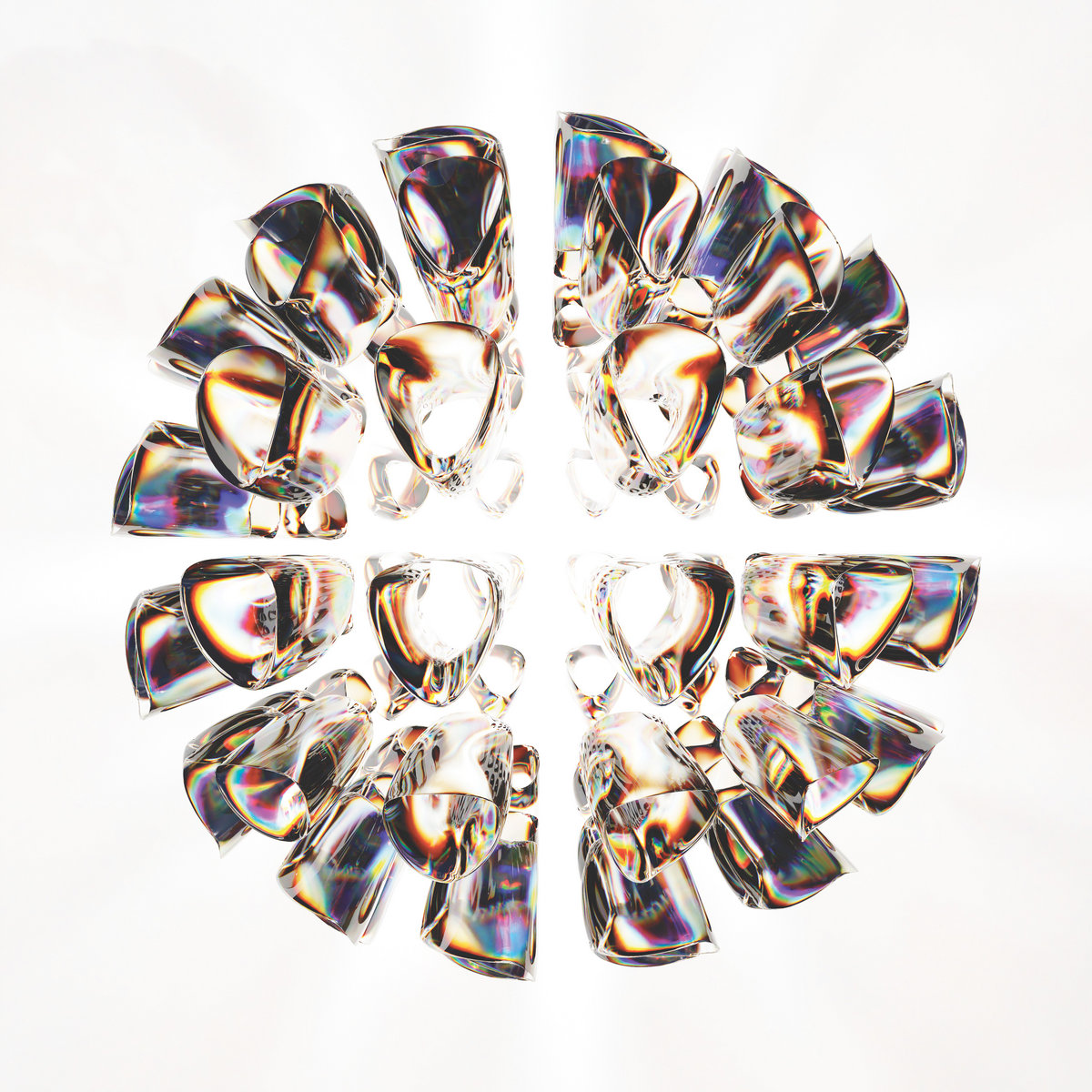
There is no sub plot to Crystal Vision, Nathan Fake’s sixth album.
The Norfolk-based producer describes his approach as “music for music’s sake – recorded without angles, agendas and themes”. This means a continuation of his energetic electronica, creating powerful minds-eye visions with its bold colours and busy rhythms.
What’s the music like?
Crystal Vision pulses with energy. The music here often feels like part of a bigger machine, especially in the cymbal-rich percussion, which on tracks like Boss Core feels like some sort of euphoric process, the repetitive motion of its beats leading to greater highs.
Vimana is a bracing and colourful track, using its synths to trace bright lights across the sky. Bibled grows inexorably over a thudding breakbeat, while the urgency of Hawk also whips up a storm, while uncannily describing its subject matter.
Wizard Apprentice gives an appropriately cool vocal to The Grass, while the closing Outsider is a busy and rewarding collaboration with Clark that takes a restless, probing single line and spins it out across an urgent beat and a wide sonic panorama, the music becoming ever more dense and thrilling as it progresses.
Does it all work?
Yes, it does – fulfilling Fake’s promise that the music is there for its own sake, creating positive energy and thoroughly rewarding experiences.
Is it recommended?
It is indeed, enthusiastically so – a strong addition to what is now a formidable discography.
Don Banks Horn Trio (1962) a Five North Country Folk Songs (1953) b Prologue, Night Piece and Blues (1968) c Three Studies (1954) d Piano Sonatina in C sharp minor (1948) e Violin Sonata (1953) f Tirade (1968) g
(bg) Jenny Duck-Chong (mezzo-soprano), (c) Francesco Celata (clarinet), (a) Robert Johnson (horn), (af) Ole Böhn (violin), (d) Geoffrey Gartner (cello), (g): Rowan Phemister (harp), David Kim-Boyle (siren), Alison Pratt, Daryl Pratt, Joshua Hill (percussion), Daniel Herscovitch (piano)
Toccata Classics TOCC0591 [81’34″]
Producer David Kim-Boyle Engineer David Kinney
Recorded (cdf) 21 September (ag) 24 September and (be) 5 November 2020 at Recital Hall West, Conservatorium of Music, Sydney
Reviewed by Richard Whitehouse
What’s the story?
Toccata Classics provides a strong case for the greater recognition of Don Banks (1923-80) with this release of a representative cross-section of vocal and chamber works, performed by Australian and Australia-based musicians who are never less than empathetic with his music.
What’s the music like?
Wholly neglected following his untimely death, Banks was a senior figure in the generation of Australian composers – featuring such as Malcolm Williamson, David Lumsdaine and Nigel Butterley – who posited a decisive if hardly uniform course for the country’s music during the post-war era. Based in London for two decades, he made a living through teaching (notably at Goldsmith’s College) or writing music for horror films (notably Hammer productions), while evolving an increasingly personal language which can be heard in those works included here.
Earliest is the Piano Sonatina whose three movements – an agile Allegro, pensive Largo that nimbly amalgamates elements of fugue and chorale, then an impulsive Risoluto – constitute no mean statement of intent. It was the Violin Sonata which Banks considered his Op. 1, its pithy if contrasted ideas drawn into intensive development that effortlessly sustains a single movement whose 15 minutes seem never less than eventful. More unexpected is his identity with traditional sources in Five North Country Folk Songs (written for Sophie Wyss no less), whose piano accompaniments enhance the sentiment of each text with deadpan humour and audible affection. Reflecting his time spent with Dallapiccola (and, by extension, Webern), Three Studies for cello and piano applies its serial thinking both deftly and resourcefully.
By the 1960s, Banks had fashioned an idiom that was demonstrably but never slavishly of its time. One of the finest instances is the Horn Trio that, for all its inherent abstraction, pursues a tangible emotional trajectory from its forceful opening Allegro, via an Adagio of no mean eloquence, to a final Moderato in which the work’s arresting slow introduction is transformed through hunt-like gestures. Conversely, Prologue, Night Piece and Blues for Two underlines his love for jazz and its deployment within a ‘third stream’ context; here, the music’s restraint affords a sultriness alluring and ominous. Tirade could hardly be more different – its setting of Peter Porter’s impassioned poem on the increasing commercialization of Australian culture notable for a virtuoso vocal part and its imaginative writing for a sizable array of percussion.
Does it all work?
Almost always. Banks took a compositional path that assuredly takes no prisoners, yet which is rarely less than engrossing and, on occasion, affecting. Almost all these pieces would stand up well in recital today, not least for the opportunities they provide to enterprising performers. Other than the concertos for horn and violin (Lyrita), few of his major works are available in modern accounts, and if Toccata could undertake or even licence recordings of his orchestral Divisions or such cross-genre conceptions as Nexus and Meeting Place, so much the better.
Is it recommended?
Very much so. These performances, rarely less than authoritative, are heard to advantage in a spacious but never diffuse ambience. Daniel Herscovitch contributes detailed and informative annotations, and this release hopefully marks a first stage in the rediscovery of a major figure.
Listen & Buy
For buying options, and to listen to clips from the album, visit the Toccata Classics website. For more information on Don Banks, click here
Enescu Romanian Rhapsody no.1 in A major Op.11/1 (1901, arr. 1957) Impressions roumaines (1925, arr, 2008) Sonata Torso in A minor (1911) Impromptu concertant in G flat major (1903) Regrets in G flat major (1898, compl. 2018) Adagio in B flat major Op.3/3 (1897, arr. 1929) Valse lente ‘L’Enjôleuse’ (1902) Caprice Roumain (1925-49, compl. 1994-6)
Sherban Lupu (violin) with Viorela Ciucur (piano); Sinfonia da Camera / Ian Hobson (Caprice Roumain), Ian Hobson (piano, Romanian Rhapsody)
Toccata Classics TOCC0647 [72’52″]
Producers / Engineers Florentina Herghelegiu, Christopher Ericson (Romanian Rhapsody), Jon Schoenoff (Caprice Roumain)
Recorded 7-8 April 2022 at George Enescu Auditorium, University of Music, Bucharest, 2 February 2001 at Krannert Center for Performing Arts, Urbana, Illinois (Caprice Roumain), 15 March 2004 at Krannert Art Museum, Champagne Illinois (Romanian Rhapsody)
Reviewed by Richard Whitehouse
What’s the story?
The expansion and enrichment of George Enescu’s catalogue has been in progress for several decades. Toccata Classics now issues a follow-up of works realized by others, posthumously published or performed in unfamiliar arrangements, all featuring the violinist Sherban Lupu.
What’s the music like?
Enescu’s early output charts a steady incline from precociousness to mastery, evidenced by the melodic poise of the Adagio from his First Piano Suite arranged by violinist Sandu Albu, or a fragmentary transcription of the bittersweet piano waltz Regrets as completed by Lupu. L’Enjouleuse might well have been a hit had its composer chosen not to publish it under the pseudonym ‘Camille Grozza’, its smouldering pathos in contrast to the objectified elegance of Impromptu concertant which was intended as a test-piece for the Paris Conservatoire.
Much the most significant among these earlier items, Sonata Torso belongs to a sequence of unfinished or unpublished pieces from between the First and Second Symphonies (1905-12) that find Enescu reassessing and extending his musical idiom. For all its prolixity, as would have made further movements unfeasible, this yields a wealth of tonal and harmonic incident within its rarefied ambit. Realized by Lupu from extensive sketches, Impressions roumaines makes for an invigorating entrée into the Third Violin Sonata for which this was preparation.
Lupu was also the catalyst behind Caprice Roumain on which Enescu intermittently worked for almost a quarter-century and the nearest he came to a violin concerto in his maturity. As completed by Cornel Țăranu, its compact design takes in a sombre and often ominous initial Moderato, a lightly sardonic scherzo modelled on the hora, a Lento of understated eloquence then a final Allegro whose synthesis of folk and art elements resembles Bartók in procedure if not aesthetic. Happily, this realization is increasingly being taken up by younger violinists.
Opening the collection with the First Romanian Rhapsody might seem unnecessary given its popularity over more than 120 years, yet this arrangement by composer and violinist Marcel Stern remains little known despite being published 65 years ago. The initial stages faithfully recreate the instrument interplay of Enescu’s original, and though the heady continuation can only hint at its scintillating orchestration, what results is a bravura concert-piece in its own right. Duo partnerships everywhere could do worse than try out this version in their recitals.
Does it all work?
Pretty much. This is a collection which, drawn from various sources and recorded at several locations, is given focus by the commanding presence and unstinting advocacy of Lupu. His playing may not be technically immaculate, though it does convey the essence of Enescu’s increasingly personal language; not least in Caprice Roumain, which he previously recorded with Cristian Mandeal (Electrecord) and to which this is a more than worthy successor. Ian Hobson’s credentials in Enescu hardly need restating, and neither do those of Viorela Ciucur.
Is it recommended?
Yes. Those who are primarily interested in the Caprice should investigate David Grimal’s superb account with Les Dissonances (La Dolce Vita) but this release, enhanced by detailed notes from Valentina Sandu-Dediu, makes a valuable addition to the Enescu discography.



 Arcana.fm