On Record – Ghost Power: Ghost Power (Duophonic Super 45s)

ghost-power

written by Ben Hogwood

What’s the story?

Ghost Power is the meeting of two minds – Jeremy Novak (Dymaxion) and Timothy Gane (Stereolab, Cavern of Anti-Matter and Turn On). The pair have both made tracks for Duophonic Super 45s in a solo capacity, but now they unite for a ten-track instrumental album, recorded both remotely and in person in Berlin and New York.

What’s the music like?

A lot of fun. This is music made for pure enjoyment, but there are plenty of levels to it as well. Both musicians are clearly well voiced in 1970s funk and movie music, for they make descriptive pieces that use the band in a virtuosic way.

Panic In The Isles Of Splendour is a great example of this, with drum fills, keyboard bleeps and propulsive bass lines that tell of the influence of Krautrock, too. By this time Asteroid Witch has already given us a burst of break beats, the equivalent of a Ghost Power signature tune.

On the softer side sit atmospheric tracks like Inchwork, a smoky affair laden with suspense – again offering the listener the equivalent of a 70s crime series or movie. It is one of the album’s best tracks.

Grimalkin combines the two elements. In music Lalo Schifrin would be proud of, it evokes a sultry day but with all sorts of shenanigans taking place in the shadows over another dusty drum beat. Then we have the crowning glory, the Astral Melancholy Suite, a fifteen minute epic. Early drone sections sandwich a mysterious interlude, the listener seemingly underground with eerie echoes and atmospherics, before the music starts to bubble and oscillate, as a classic Krautrock track might do, gathering momentum. Then the bottom falls away and we are left with some wonderful synth sounds, and a rippling mid-range texture to finish.

Does it all work?

It does. There is no pretence on this album, just a clutch of really good instrumentals packed with great riffs. They never outstay their welcome.

Is it recommended?

It is. Fans of Stereolab should drink it up, but to be honest if you are a fan of Can and the like then there is a good deal to enjoy here.

Stream

Buy

On record – William Wordsworth: Orchestral Music Vol.4 (Toccata Classics)

wordsworth-4

Liepāja Symphony Orchestra / John Gibbons

William Wordsworth
Jubilation Op.78 (1965)
A Spring Festival Overture Op.90 (1970)
Confluence Op.100 (1976)
Symphony No. 7, Op. 107, ‘Cosmos’ (1980)

Toccata Classics TOCC0618 [59’21”]

Producer Normands Slāva
Engineer Jānis Straume

Recorded 4-5 February and 16-18 June 2021, Amber Concert Hall, Liepāja, Latvia

Written by Richard Whitehouse

What’s the story?

Toccata Classics continues its survey of William Wordsworth’s orchestral music with a fourth volume featuring the composer’s Seventh Symphony, alongside three other pieces that reflect his increasing concentration and refinement of thought during those latter decades of his life.

What’s the music like?

If the Fifth Symphony and Cello Concerto (recorded on TOCC0600) represent a highpoint of Wordsworth’s orchestral output, the works that follow are only relatively less ambitious and equally personal. The four heard here appeared at five-year intervals. Subtitled ‘A Festivity for Orchestra’, Jubilation is akin to a ‘concerto for orchestra’ in its intensive while unshowy pursual of those possibilities inherent in its opening fanfare-like idea; one which returns near the close of this engaging piece to provide a rounding-off of good-humoured decisiveness.

A Spring Festival Overture is even more self-contained in its demeanour, though the gradual emergence of activity out of the sombre introduction is a telling metaphor for the coming of this season and the musical discourse attracts attention purely through its dexterity of thought.

Had Confluence been Wordsworth’s ‘sixth symphony’, no-one could surely have doubted its rightness given this music’s motivic density and textural subtlety. As it is, these ‘Symphonic Variations’ are a notable staging-post in the composer’s odyssey towards ever more distilled expression – the variations proceeding as distinct yet interrelated episodes where most of the instruments have a soloistic spot. The penultimate section, with its allusion to Elgar’s Violin Concerto, finds Words worth at his most felicitous and the final build-up at his most visceral.

Scored for comparably sizable forces, the Seventh Symphony continues a process of formal elaboration across a single, unbroken span – its seven sections less a series of variations as a succession of paraphrases on ideas which are nothing if not rarefied. Appropriate, then, that its ‘Cosmos’ subtitle should embody a lifelong fascination with the universe – whether in its astronomical or spiritual dimensions. Inclusion of a prepared tape suggests something more radical than is the case – pre-recorded material limited to two slowly repeating string chords that recur at crucial formal and expressive junctures to channel underlying momentum over   a course inevitable as to its ultimate destination. Paul Conway’s booklet note implies this as being Wordsworth’s most original orchestral work and the present writer would not disagree.

Does it all work?

Yes, though this is not the place to start for anyone new to Wordsworth’s music (the previous instalment with the Fifth Symphony makes for an ideal point of entry). Playing the works in chronological order (rather than Opp. 90, 107, 78 and 100 as on this disc) reveals ever greater focus on motivic essentials allied to an understated while often questing harmonic sense that may have reflected their composer’s immersion in the Scottish East Highlands or the wisdom accrued with age, yet the experience feels never less than absorbing and sometimes profound.

Is it recommended?

Indeed. The playing of the Liepāja Symphony Orchestra is comparable to that on earlier volumes, while John Gibbons directs with his customary ear for detail and care for balance. Hopefully a fifth volume, perhaps including the hitherto unheard Sixth Symphony, will not be long in coming.

Read, listen and Buy

You can read Richard’s review of the first three volumes in the Wordsworth series on Arcana, clicking here for the first volume, here for the second and here for the third

You can listen to clips and purchase this disc from the Toccata Classics website. For more information on WIlliam Wordsworth, click here. For more on the performers on this recordings, click on the names for websites devoted to John Gibbons and the Liepāja Symphony Orchestra respectively.

In concert – Gabriela Montero, CBSO / Mirga Gražinytė-Tyla: Tchaikovsky & Bruckner

Gabreila-Montero

Tchaikovsky Piano Concerto No. 1 in B flat minor Op.23 (1874-5)
Bruckner
Symphony no.6 in A major (1879-81)

Gabriela Montero (piano), City of Birmingham Symphony Orchestra / Mirga Gražinytė-Tyla

Symphony Hall, Birmingham
Wednesday 11 May 2022

Written by Richard Whitehouse

Tchaikovsky and Bruckner might not be the likeliest coupling, but this evening’s programme by the City of Birmingham Symphony Orchestra juxtaposed two works of less than a decade apart to arresting and even thought-provoking effect under the baton of Mirga Gražinytė-Tyla.

Gabriela Montero can almost always be relied upon to ring the changes in standard repertoire, as it proved in this account of Tchaikovsky’s First Piano Concerto. Its introduction opulent if not unduly grandiloquent, the opening movement proceeded securely and often imaginatively – Montero unafraid to tackle the orchestra head on in this most elemental confrontation, even while her tone was not free of clatter on occasion. Powerfully shaped and incisively rendered, the cadenza brought forth a spontaneous response to this composer at his most imaginative.

At less than half the length of their predecessor, the remaining movements can feel almost an afterthought, though Montero had the measure of the Andantino with its winsome main theme (elegantly phrased by flautist Marie-Christine Zupancic) with its capricious central section incisively fleet of foot. Heading straight into the final Allegro con fuoco (mention of which was omitted from the programme), she duly balanced pianistic fireworks with tangible pathos on the way to an apotheosis with piano and orchestra at one in conveying the music’s unchecked elation.

From the outset of her career, Montero has advocated the almost lost art (with pianists if not organists) of improvisation, and her encore duly took the title-theme from Ennio Morricone’s score to Cinema Paradiso as basis for an engaging workout along the lines of a Bach fugue.

It was Bruckner’s Sixth that MG-T should have conducted (replaced by Omer Meir-Wellber) at what proved the CBSO’s last ‘home’ concert prior to the corona virus ushering in the first lockdown. Good she has been able to reschedule it, even if the overall result was inconsistent. The initial Majestoso was mostly well judged, even if her modification of tempo between its first and second themes then her hairpin crescendos towards the apexes of the development and coda – the latter being one of Bruckner’s finest inspirations – impeded formal continuity. No such issues affected the Adagio, its ineffable expanse guided with assurance and no little insight towards those climaxes supporting the structure as though pillars of an ecclesiastical edifice – the coda ensuring a benediction whose repose remained after this music had ceased.

Nor was there anything to take issue in a Scherzo whose outer sections had all the requisite verve and wit, with the insouciance of its trio ideally judged. A pity when things rather fell apart in the Finale – its genial second theme just avoiding sentimentality at this halting pace, but whose development unfolded at so inhibited a tempo as to become parenthetical to the movement overall. By the time the coda emerged, any consistency of pulse had long been sacrificed so not even the splendour of the CBSO’s collective response could save the day.

Hopefully MG-T will be able to tackle this recalcitrant work again soon, though tomorrow sees the Tchaikovsky paired with Brahms’s Third Symphony. The CBSO then embarks on another European tour before returning for a History of Soul event at the end of this month.

For more information on the CBSO’s 2021/22 season, visit their website, and for details on the newly announced 2022/23 season click here. Meanwhile for more information on the artists, click on the names to access the websites of Gabriela Montero and Mirga Gražinytė-Tyla

Online concert – English Symphony Orchestra / Kenneth Woods: Composer Portrait – Walter Arlen

Walter Arlen
Songs of Songs (1955)
The Poet in Exile (1991)

Anna Huntley (mezzo-soprano), Gwilym Bowen (tenor), Thomas Mole (baritone), BBC National Chorus of Wales, English Symphony Orchestra / Kenneth Woods

Studio recording at BBC Hoddinott Hall, Cardiff, 17-20 February 2022

by Richard Whitehouse

Although he is likely best known by his trenchant music criticism for the Los Angeles Times, Vienna-born Walter Arlen has made a distinguished contribution to music administration and is increasingly being recognized as a composer. Several releases of his songs and piano music can be heard on the Gramola label, and this latest of the English Symphony Orchestra online concerts provides a welcome introduction to two of his works that feature orchestra – the one drawing on ancient Jewish sources with the other on poems from a leading modern author.

Whether The Song of Songs is indeed harbinger of monogamy in the Judeo-Christian moral code, it contains some of the eloquent expression in either of the Biblical testaments and has long provided a potent inspiration for musical treatment. In just under 30 minutes, Arlen’s ‘dramatic poem’ takes in the main narrative – the lively opening chorus features much sub-divided writing for female chorus underpinned by incisive orchestral textures. As the piece unfolds, it becomes evident that emotional emphasis is placed upon the solo contributions – whether those of King Solomon as sung with burnished warmth by Thomas Mole, those of the Shepherdess rendered with winsome poise and not a little insouciance by Anna Huntley, or those of the Shepherd which Gwilym Bowen here projects with no mean virility but also tenderness. Nor is the BBC National Chorus of Wales found wanting in passages with textural intricacy and intonational accuracy at a premium. If the final resolution does not bring the expected closure, the direct and unaffected appeal of this setting certainly warrants revival.

Yet the real discovery is The Poet in Exile, a song-cycle to texts by the Polish-American author and cultural eminence Czesław Miłosz. For all its undoubted depth and profundity, these texts are not easily rendered in musical terms, and it is to Arlen’s credit that he goes a considerable way towards elucidating them thus. As the latter states, these poems ‘‘dealt with situations echoing my own remembrance of things past’’; a quality which holds good from the trenchant rhetoric of ‘Incantation’, via the sombre rumination of ‘Island’ then the whimsical elegance of ‘In Music’ and controlled fervour of ‘For J.L.’ (with its distinctive obligato for harpsichord), to the confiding intimacy of ‘Recovery’. Inquiring listeners may already have heard these songs with piano on one of the Gramola releases with Christian Immler accompanied by Danny Driver (GRAM98946), but this version – as orchestrated by Kenneth Woods after an arrangement by Eskender Bekmembatov – makes for a richer and wider-ranging context for a vocal line projected with real assurance by Thomas Mole.

Throughout these works, the musicians of the ESO are heard to advantage in the spacious acoustic of Hoddinott Hall and are directed by Woods with sure sense of where to place the emotional emphasis – especially important in conveying the meaning of the songs. If not a major voice, Arlen’s output is always approachable and often thought-provoking. Anyone who has encountered it will enjoy getting to know his music on a larger scale and hearing it played so persuasively: a worthy present for the composer in advance of his 102nd birthday.

These works are available for free public viewing from 13-17 May on the English Symphony Orchestra website

For further information on Walter Arlen, click here – and for the appropriate Gramola Records link click here. Meanwhile click on the names for more on Czesław Miłosz, the English Symphony Orchestra and Kenneth Woods

Online concert / Switched On – Jorge E. López: Im Innersten: János Bolyai stirbt

lopez

López Im Innersten: János Bolyai stirbt, Op. 30

5.1 Radiophonic Composition

Broadcast via station ORF1 on Sunday 8th May 2022 [11.00pm]

by Richard Whitehouse

Radiophonic compositions are less often encountered nowadays than their heyday during the third quarter from last century, but the impact of a piece such as Xenakis’s La Légende d”Eer (which is being revived as part of Birmingham Contemporary Music Group’s programme to mark this composer’s centenary on May 29th) remains comparable to that achieved with any medium, and Austrian Radio’s recent broadcast of Im Innersten: János Bolyai stirbt by Jorge E. López confirms a necessary addition to this select though distinctive and influential genre.

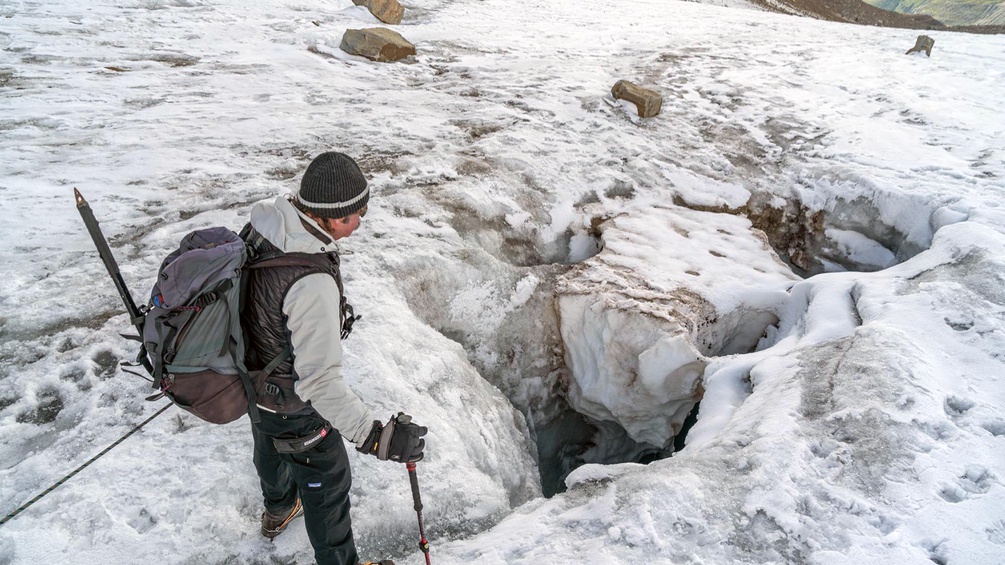
Although he has utilized electronics in previous works, this work is López’s first specifically for the radiophonic medium. The source material stems largely from field recordings, made inside ice caves and glaciers of the Grosser Burgstall in Austria’s region of Carinthia during August 2021.  López draws attention to the ‘‘decay and disintegration’’ that has affected this area; what was once pristine now abounds in the blackness of cliff-faces, earth and stones as testament to the effect of climate change. Not a little of this is conveyed by his composition.

With its duration of just under 17 minutes, the work unfolds a polyphonic and multi-layered trajectory in which these environs are firstly evoked before being explored and opened-out   in increasingly graphic terms. Beginning with a gently percolating sound of water, the sonic outlook diversifies before intensifying considerably; notably around the seven-minute mark, when the hitherto accumulated textures assume an ominous and even threatening aura that doubtless reflects those physical conditions from which the initial recordings had emerged.

Near the 12-minute mark a likely climax, even catharsis, is reached with the declamation by male then female voices of words whose translation might be ‘‘Just one short line at the end, (there being) nothing else to say: Mr Captain is no more’’ and then ‘‘As I wrote this letter, he died, and therefore there is nothing more to say than: the Captain has left’’. After which, the composer can be heard reciting the closing paragraph from Zsolt Láng’s novel Bolyai before the music gradually retreats – as might the figure having apprehended this disturbing vision.

The broadcast was (to use the currently much abused term) an ‘immersive’ one, such as even those without access to 5.1 encoding could perceive with decent headphones. Absorbing on its own terms, this ‘‘symphonic etude’ should be no less so as the final interlude of the opera Bolyai – that recounts the last hours of the Hungarian mathematician and geometrist – López is currently planning. Note too that the composer has reached an agreement with the publisher Doblinger to disseminate his recent works, details of which will be announced in due course.

For further information on this performance, you can head to the ORF player here. Meanwhile Richard’s 65th birthday tribute to Jorge E. López can be found here on the Arcana website