
Another spring symphony – Benjamin Britten

by Ben Hogwood

In the last week Arcana have explored three very different symphonies with a springtime theme or feel. Now here is a fourth, a very different beast, from the pen of Benjamin Britten.

A number of years back I wrote about this piece for my Good Morning Britten blog, marking the composer’s centenary. There is a lot of scholarly debate as to whether this really is a proper symphony, but as Michael Kennedy points out in his booklet note for Britten’s own recording on Decca, it follows in the tradition of choral symphonies from Vaughan Williams and Holst, while taking more influence from the Mahler symphonies in which voices were used.

The Spring Symphony was commissioned by Serge Koussevitsky for the Boston Symphony Orchestra, and began with a rather different concept. When Britten wrote to the conductor, he said, ‘I am planning it for chorus and soloists, as I think you wanted; but it is a real symphony (the emphasis is on the orchestra) and consequently I am using Latin words’.

Things changed, as Humphrey Carpenter’s biography of the composer details. ‘Both Eric Crozier and Elizabeth Sweeting believe that the Spring Symphony owes its existence to a particular Suffolk landscape, ‘somewhere between Snape and Ufford’, writes Crozier. According to Sweeting, Britten visited this spot on a picnic with her, his housekeeper and Pears. It was ‘a glorious spring day, one of those that seem to be out of time; and she believes that this experience crystallized his love of the Suffolk countryside.’

The work actually enjoyed its first performance in the Netherlands, where, with Koussevitsky’s blessing, Eduard van Beinum conducted the first performance at the Concertgebouw in Amsterdam on 14 July 1949. A little Latin remained, Britten including the ancient song Sumer is icumen in in the work’s climactic final pages.

Britten says this is ‘a symphony not only dealing with the Spring itself, but with the progress of Winter to Spring and the reawakening of the earth and life which that means’. Carpenter maintains that ‘sweetness is the work’s predominant character – most of the poems are in the pastoral tradition – and it is much to Britten’s credit that the music never becomes cloying. This is largely due to the orchestration. Coming to it from the exigencies of the English Opera Group chamber ensemble, Britten treats the full-size symphony orchestra of the Spring Symphony (triple woodwind, four percussionists and two harps) as a palette from which he selects only a few colours at a time, with stunning results.’

Britten recorded the work first, though the version below is a live concert given by Leonard Bernstein in 1963. Once the ear becomes used to the sound it is easy to appreciate the intensity of the performance from singers and orchestra alike:
A spring symphony from anniversary composer Joachim Raff

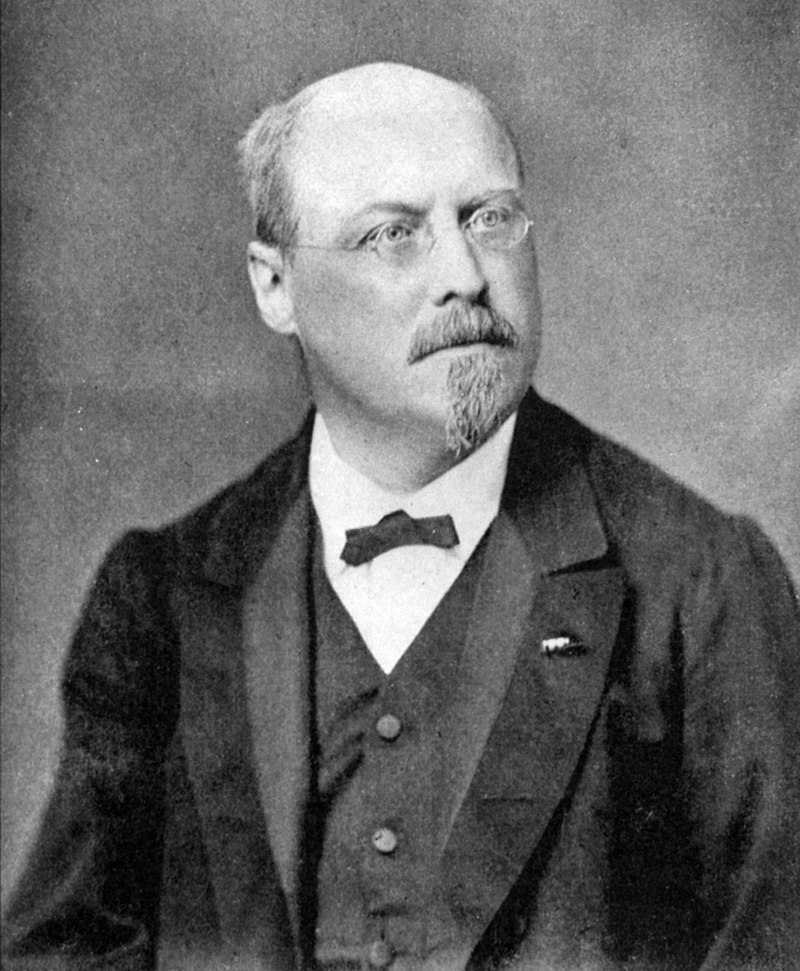
Here is a third symphony on the theme of spring in four days! This one is not so well known as the works we have enjoyed from Dvořák and Schumann – but it was well-received in its time.

Composer Joachim Raff was born 200 years ago this month. A big part of his prodigious output of compositions are the eleven symphonies, of which the last four are based on the four seasons.

That means the Symphony no.8 in A major, his Op.205, is based on spring, taking the title Frühlingsklänge (Sounds of Spring) Completed in 1876, it is mostly a bright and airy piece, with elements of Mendelssohn, Brahms and Schumann but also with Raff’s own fresh melodic inspiration.

The first movement delights in Spring’s Return, while the second – During Walpurgis Night – is much darker. The slow Larghetto, subtitled With the first bunch of flowers, is a tender aside, before the energetic Wanderlust completes a most enjoyable piece. Have a listen below, in a recording available on CPO from the Philharmonia Hungarica and conductor Werner Andreas Albert:

In concert – CBSO Centre Stage: Beethoven & Schumann string quartets

Schumann String Quartet no.3 in A major, Op.41 No. 3 (1842)
Beethoven
String Quartet no.11 in F minor, Op.95 ‘Serioso’ (1810-11)

CBSO Soloists [Jonathan Martindale and Stefano Mengoli (violins), Christopher Yates (viola), Helen Edgar (cello)]

CBSO Centre, Birmingham
Friday 6 May 2022

Written by Richard Whitehouse

The Centre Stage series, featuring members of the City of Birmingham Symphony Orchestra, continued this afternoon with a coupling of string quartets which, written just three decades apart, could hardly be more contrasted in terms of their aesthetic stance or emotional impact.

It made sense to reverse the advertised playing order. Schumann’s Third Quartet may be the last of his trilogy, but the initial movement is an ideal means of ushering in any programme – its gentle introduction then ruminative Allegro segueing with an unforced eloquence amply conveyed by these players. Most impressive was the ensuing scherzo – its variations on an agitated theme maintaining impetus right through to the restive closing bars. In his opening remarks, Jonathan Martindale spoke of the anguish beneath this music’s seeming sanguinity as is confirmed by those stealthy episodes that twice disrupt the Adagio’s repose before its main ideas find uneasy accord. No such issue affects the final Allegro, its rhythmic dexterity faltering a little but its determined progress towards an affirmative outcome never in doubt.

Whereas Schumann’s quartet typifies the mid-Romantic zeitgeist, Beethoven’s Serioso finds the latter composer’s late-Classicism at its most provocative – not least in terms of a formal concentration that barely exceeds 20 minutes. The present account underlined this in a lithe take on the opening Allegro which exuded a volatility such as (rightly) carried over into the next movement – its Allegretto marking indicative of a restlessness made more poignant by the extended coda’s burgeoning lyricism. Yet, as the ambiguous final cadence attests, there can be no let-up with a scherzo whose ‘serioso’ marking reinforces this as music-making in earnest. Its tense angularity is hardly less evident in the lurching progress of a finale whose breezily nonchalant conclusion is as unexpected as it was vividly realized on this occasion.

An arresting and persuasive juxtaposition which will hopefully be evident (if a little less starkly) in the next Centre Stage concert just over a month from now, when several of this afternoon’s players reassemble for early chamber works by Vaughan Williams and Fauré.

You can find further information on CBSO Centre Stage concerts on the CBSO website

More spring sunshine from Schumann

Continuing the theme of spring started by Dvořák‘s Eighth Symphony yesterday, here is a performance of Schumann‘s equally uplifting First Symphony, the ‘Spring’, in an account from the Chamber Orchestra of Europe and Yannick Nézet-Séguin:

Spring sunshine from Dvořák

It is a beautiful spring day outside Arcana’s ‘head office’ today…so to celebrate, one of Dvořák‘s sunniest symphonies is on the playlist. Here is a performance given by the Frankfurt Radio Symphony Orchestra and Manfred Honeck, in celebration of the green season: