In concert – Daishin Kashimoto, CBSO / Kazuki Yamada: Prokofiev, Bruch & Mendelssohn

kazuki-yamada-2

Prokofiev Symphony no.1 in D major Op.25 ‘Classical’ (1916-17)
Bruch
Violin Concerto no.1 in G minor Op.26 (1866-8)
Mendelssohn
Symphony no.3 in A minor Op.56 ‘Scottish’ (1829-42)

Daishin Kashimoto (violin, below), City of Birmingham Symphony Orchestra / Kazuki Yamada (above)

Symphony Hall, Birmingham
Wednesday 4 May 2022, 2.15pm

Written by Richard Whitehouse

Just under a year before he becomes chief conductor, Kazuki Yamada was back with the City of Birmingham Symphony Orchestra for a programme of well-established favourites, which no doubt accounted for the gratifyingly full house that duly greeted his arrival on the podium.

There was humour aplenty in this account of Prokofiev’s Classical Symphony – not least with Yamada almost acting out the initial Allegro’s whimsical second theme, but the highlight was a Larghetto whose sometimes disjunct episodes came together effortlessly. The outer sections of the ensuing Gavotte seemed a little too mannered to be convincing, but the Finale found conductor and orchestra at one in conveying the scintillating wit but also winsome pathos of its main themes, with a pointing of incidental detail then audible ‘lift off’ to the closing bars.

His decade as first concert-master of the Berlin Philharmonic likely accorded him less profile as a soloist, but his take on Bruch’s First Violin Concerto confirmed Daishin Kashimoto as a force to be reckoned with. Determined not to undersell the Prelude, he and Yamada brought out this music’s sombreness as keenly as its lyricism and, at its climax, a tempestuous energy that found the CBSO at its collective best. Nor was there any lack of emotional gravitas in the Adagio, Kashimoto drawing out its rapturous lyricism without neglecting those more intimate asides which resonate long after the music ceases. Emerging with real anticipation, the final Allegro had no lack of underlying impetus and, in its second theme, a high-flown eloquence that set the seal on this movement, and this piece overall, going into the decisive closing bars.

If the second-half performance of Mendelssohn’s Scottish Symphony was not so consistently satisfying, it reaffirmed just why this work (and this composer) has remained a favourite of Birmingham audiences over the decades. Many latter-day accounts tend toward a decidedly Classical brusqueness, but Yamada chose never to rush the opening movement such that the poignancy of its introduction (rightly) persisted through those agitated contrasts of its main Allegro – the absence of an exposition repeat barely detracting from the music’s emotional weight. Effervescent without being overdriven, the scherzo provided ideal contrast between this and an Adagio whose alternate fervour and rhetoric never skirted that sentimentality as was once all too familiar – with Yamada ensuring clarity through even the densest textures.

As in the Bruch, this performance adhered to the ‘attacca’ indications by which Mendelssohn helps to maintain long-term cohesion. That into the finale launched this movement in bracing fashion and if impetus marginally faltered over the latter stages, the pathos at the outset of its coda made for an ideal transition into the peroration which, uplifting or grandstanding as one hears it, ensures a rousing conclusion that seldom fails to bring the house down. Which it did at the close of a reading that found the burgeoning CBSO/Yamada partnership in fine fettle.

Yamada will be back with this orchestra for the start of the 2022/23 season (details of which have just been announced), while next week brings the season’s last appearances with Mirga Gražinytė-Tyla for a brace of programmes that feature Tchaikovsky, Bruckner and Brahms.

For more information on the CBSO’s 2021/22 season, visit their website, and for details on the newly announced 2022/23 season click here. Meanwhile for more information on the artists, click on the names to access the websites of Kazuki Yamada and Daishin Kashimoto

Switched On: NETHERWORLD – Vanishing Lands (Glacial Movements)

by Ben Hogwood

What’s the story?

There is a powerful message behind Vanishing Lands. The most recent album from Glacial Movements‘ head Alessandro Tedeschi under the guise of NETHERWORLD, it is – in his words – ‘a cry of desperation…the realization that we are one step away from the abyss’.

Whereas many Glacial Movements albums celebrate the vast spaces of our environment, particularly the cold ones, this one does so in a troubling context. During lockdown, Tedeschi committed his thoughts to record on the gradual disappearance of the vast white expanses over which you can see the Northern Lights – ‘ice-covered volcanoes and silent expanses of snow and ice stretching as far as the eye can see;.

What’s the music like?

What’s the music like?

Rather appropriately, Vanishing Lands starts out with what sounds like the tolling of a very distant bell. There is the strong implication of a soft breeze, with shrill treble sounds blowing across the stereo picture of Last Sunset, the album’s first track. Towards the end, pure treble voices calmly coo across the picture, a snapshot taken in the middle of a much longer phrase. This first track runs for a quarter of an hour, serene but darkly coloured and ominous, too.

Thwaites is deeply mysterious, presenting a very intriguing perspective on headphones. The movement is in the middle foreground, like flecks of cloud or interference, while a sonorous mid-range hum at the very back throws the perspective wide open. Then Slow Moving Streams is an intriguing call and answer, whereby a slightly guttural, low synthesizer tone is responded to by a higher, vibrato-rich vocal.

The album’s progression is compelling. The Beauty Of Places Where There Is Nothing To See has an appealing remoteness but there is also a note of sorrow in the far-off cries of electronic birds and mammals. Comet has piercing timbres that streak across the cold surface beneath, before Vanishing Lands enhances the anguish. Initially cool and ambient, it has elements of protest in the voices that rise up, as well as primal pain.

Does it all work?

Yes. Be warned though, as while this is still essentially an ambient album it is a painful one too, an acknowledgement that those big spaces so often celebrated by Glacial Movements are under serious threat. As NETHERWORLD shows us the plight of those spaces, it operates under a very wide dynamic range, with some moments where the music is so quiet that you will have to lean into it.

Is it recommended?

Yes. Vanishing Lands is a brave set of searing observations packed into an album. One of Alessandro Tedeschi’s most intense pieces of work, it is a powerful and wholly meaningful addition to his canon. Make sure you hear it.

Listen & Buy

Playlist – Spring Serenades

To celebrate the month of May, and what should in theory be a passage of warmer weather (!), Arcana is celebrating the art of the Serenade in a playlist.

Serenades have been a form in classical music for a good 250 years now, elevated to a higher form by Mozart but also perfected by 19th century composers such as Tchaikovksy, Dvorak and Brahms.

This playlist chooses selections from some of the best, venturing into the 20th century for examples by Elgar, Britten and Swedish composer Dag Wirén, while drawing on wonderful ‘drawing room’ music from the 18th century by composers including Mozart, Beethoven and Hummel.

Find a quiet hour if you can, and enjoy…

On Record – Broadcast: Mother Is The Milky Way / Maida Vale Sessions / Microtronics Vols. 1 & 2 (Warp Records)

mother-is-the-milky-way

written by Ben Hogwood

What’s the story?

Broadcast were one of Warp Records’ treasures in the label’s earlier years, yet their output came to a sudden halt with the tragic early death of singer Trish Keenan in 2011. At that point the band were at the peak of their creative powers, which makes this set of reissues and rarities all the more poignant.

The triple pack of rarities is effectively a companion piece to the band’s discography, bringing forward a lost album (2009’s tour-only release Mother Is The Milky Way), a set of BBC sessions from Maida Vale, including three appearances for John Peel, and Microtronics, a two-volume set of 21 instrumentals released as tour-only specials in 2003 and 2005.

What’s the music like?

Fans of the band will not be disappointed – and while many will surely own a good deal of this music, having it reissued in a single pack with due love and attention gives it extra special appeal. It is instructive to be reminded just how imaginative the band were, and how their Englishness shines through in the meeting point of acoustic and electronic.

Mother Is The Milky Way makes a strong impression, and could almost have been recorded during lockdown given its quotient of birdsong and field recordings. The murmured awakening of In Here The World Begins makes a strong impression on headphones, while scenes such as the fuzzy backdrop to Elegant Elephant evoke dappled sunlight. Meanwhile I’m Just A Person In This Roomy Verse has a low register musing but also interference as the listener crosses the dials on the imaginary radio.

maida-vale-sessions

The Maida Vale Sessions are special. Drawn from four different sessions between 1996 and 2003, they have poise and elegance, but also macabre elements and psychedelic tendencies that give the music an appealing unpredictability. The autumnal waltz of The Note (Message From Home) is the perfect place to start, while the wonderful Come On Let’s Go is great to hear again. The insistent phrases of Look Outside make a strong impression, as do the willowy, chromatic arpeggios of the harpsichord on The Book Lovers. A stately Long Was The Year, and the exquisite twilight shadows of Echoes Answer, with an extended coda, are highlights of a session from 2000, while the twinkling lights of Pendulum are the highlight of a session from August 2003.

microtronics

The Microtronics album is fascinating. These snippets are descriptive musical postcards, colourfully shaded and showing off a broad range of styles. The electronic bossa nova of Microtronics 2 is striking, while Microtronics 3 – as with many of the recordings – give a strong sense of eavesdropping in the band’s workshop. Microtronics 6 throws some sonic grenades, while other snippets of note include the clattering drums of Microtronics 12 and the playful keyboard stabs of Microtronics 17.

Does it all work?

Yes. These three documents give a fascinating look under the bonnet of Broadcast’s creative process, while the fully formed songs prove their worth in the sessions. The pastoral element of Mother Is The Milky Way, meanwhile, are full of springtime vitality and promise.

Is it recommended?

Yes – to fans and newcomers alike, providing the newcomers avail themselves of the band’s studio albums too. They will not be disappointed.

Stream & Buy

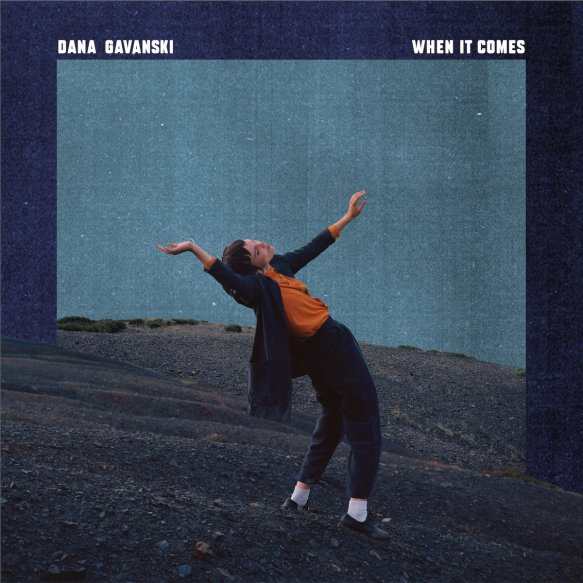
On Record – Dana Gavanski: When It Comes (Full Time Hobby)

written by Ben Hogwood

What’s the story?

The story behind When It Comes is a powerful one. The second album from singer-songwriter Dana Gavanski, it celebrates the voice as an instrument, from the perspective of recovering lost vocal cords. She uses the album to bring her voice back to a musical way of thinking, a celebration of music itself.

The story explains the album’s precise but very natural vocal style, with strong communication the name of the game.

What’s the music like?

Bewitching. Gavanski has a lovely voice, bolstered by an accent that celebrates her heritage – Canadian raised and of Serbian descent, recording in the UK – as much as it celebrates her voice as an instrument. Gavanski’s partner James Howard deserves a great deal of credit for the instrumental support, and how he makes the voice the star of the show but creates a lovely tapestry behind it.

There is simplicity to this music, but welcome quirks too. I Kiss The Night, with its pure arpeggios, is the most obvious example, rooted in the ‘simple’ key of C major but actually revealing more layers with closer listening. The Reaper finds subtle humour in its straight faced delivery, with increasingly hypnotic offbeat vocals as it progresses. Gavanski’s vocal is beautifully weighted throughout both songs, as it is for Letting Go, an expressive admission that “I need your love” with hints of vulnerability around the edges in the oblique harmonies.

Bend Away & Fall has a different atmosphere entirely, powered by metallic harpsichord but with comforting sighs in the vocal line. It is a charming song. By contrast, Lisa – the most substantial song on the album – creates a portrait from the viewpoint of the sea, watching subjects pass by day after day. For the author it is about recognising what’s in front of her, in this case a richly coloured and textured seascape, brought to life in multicolour.

There are elements of Stereolab vocalist Laetitia Sadier in her delivery, also a little Jane Birkin and Cate Le Bon, but these should be used as guides rather than influences, as Gavanski’s style is very definitely her own. Knowing To Trust, the closing song, shows the voice at its purest and most romantic, bringing the listener in close with its often hushed delivery. “I know your face”, she coos at the end.

The instrumentation is often worth listening to on its own, responding to the voice with music of dexterity and colour. The Day Unfolds gets locked into a charming, hypnotic repetition, and the same fate befalls Indigo Highway, its gentle triple time oscillations complemented by Gavanski’s longer phrases.

Does it all work?

It does. There is both strength and vulnerability in Gavanski’s singing, and the album works its magic through this combination, with a rich mixture of styles and moods.

Is it recommended?

It is. When It Comes is often a memorising album. Dana Gavanski has created a rarefied atmosphere that offers us a route in to the very soul of her music. She is a profound singer and songwriter whose emotive music deserves to be heard far and wide.

Stream

Buy

Warp Records website